
Interview Transcript
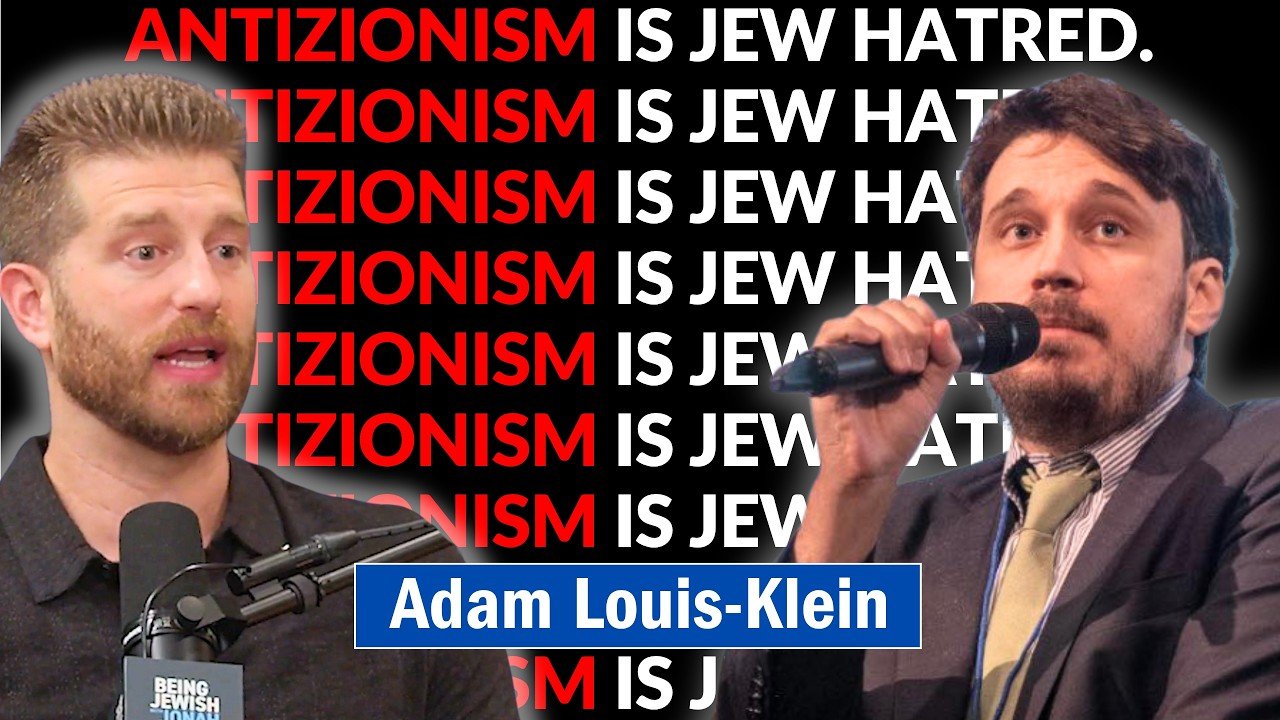
Does Anti-Zionism = Antisemitism? The Definitive Answer From MAAZ Founder Adam Louis-Klein
Is there any version of a legitimate anti-Zionist?
I really don't think so.
That anti-Zionism really is something.
You can name it and you can talk about it.
The goal is to say, "You're a bully.
Cut it out.
Get out of here." Just responding and saying, "Well, Israel is awesome, and I love being Jewish," doesn't really speak to their concerns.
How does anti-Zionism harm Palestinians?
Israel has a right to be a minority enclave.
It has a right to have a Jewish majority state as a refugee state for Jews, as a state that cultivates Jewish culture.
Anyone who does not believe that is racist This episode is brought to you by the Birthright Israel Foundation.
Please donate now at www.onetripchangeseverything.org.
We've all heard the phrase October 8th Jew, someone whose life mission switched on following the devastation wrought on the 7th.
My guest today is an October 9th Jew.
Why?
Because for months prior to October 9th, 2023, he was doing anthropological field work with the indigenous Desana people deep in the Amazon rainforest.
You know what the Desana people don't have?
Instagram or cell phones or internet.
This man walked out of the jungle after months without so much as a text message, logged onto Facebook, and was suddenly face to face with the horrific footage from the Nova Music Festival.
What happened next, the loss of friends, the ostracism from colleagues, the awakening to the rot in the academy, became the catalyst for an entirely new personal mission.
He has since become one of the leading voices in the fight against anti-Zionism, shifting the mindsets of people all over the world through his articles, podcast appearances, social media posts, and his organization, The Movement Against Anti-Zionism.
He certainly influenced my thinking, and now he's here to influence yours.
Please welcome a Columbia professor's worst nightmare, Mr.
Adam Louis Klein.
Thank you so much for having me, Jonah.
Wonderful introduction.
Really appreciate it.
You got it, man.
All true, and quite a unique story, and one that I'm excited to get into.
But what I wanna start with is the core of what we're here to talk about today.
How do you define anti-Zionism, and how is your definition different from how an anti-Zionist themselves might define it?
So the short answer, which is kind of underwhelming, because it's exactly just taking anti-Zionism at face value, is that anti-Zionism is a hatred of Israel.
Anti-Zionists are people who hate Israel, right?
And the reason this sometimes feels kind of underwhelming is we wanna hear a big explanation about how anti-Zionism is antisemitic, right?
But we don't necessarily look directly at anti-Zionism and what anti-Zionists themselves are saying, which is that they hate Zionists.
And very often, in fact, they are saying they hate Israelis.
And they're often saying, "Well, if I don't hate Jews, and I just hate Israelis, it's somehow okay." Right?
Of course, it's not okay, right?
This is a bigotry.
This is a systemic hatred against an entire country, and that is wrong.
And at that level, my understanding of anti-Zionism is not so different from anti-Zionists themselves.
I just point out directly that it is a bigotry and that it is a hatred, and I show how it is irrational, and based on fundamental systemic libels that have been developed over years, and that they are ways of coding Israel as evil, and they are not rational claims about Israel's behavior.
Now, going with that definition, I know for many of these people They essentially, as you have outlined, they hate Israel in the way and w- with the understanding that Israel is a truly unique evil in this world, the way someone might have looked at the Nazis in the '30s and '40s based on, of course, a, a misunderstanding and, you know, disinformation.
But to the individual who's received that information through no fault of their own, let's say, but, you know, it's been taught to them, it's been repeated to them, it's been pressed on them, they think, understandably, if you're working from that information, that, you know, it makes perfect sense to hate all Nazis, and thus it would make perfect sense to hate all Israelis.
So, you know, how do you respond to that and, and color that version of, yes, it is a hate movement, but to these people, it's a totally justified hate movement?
You know, it's kinda surprising because there's so much talk about racism, right, coming out of these left-wing spaces, coming out of the whole woke social justice progressive movement, right?
But the understanding of racism that's emerged in those circles when it comes to thinking about anti-Zionism suddenly becomes extremely crude, right?
So o- on that conception, right, racism is just being like, "I think these people are inherently worse than other people," right?
Well, actually racism, it usually doesn't function like that.
Racists don't always say that directly.
What they try and do is they justify their hatred by spreading libels, obsessive accusations about the behavior of that group.
So if you look at the Jim Crow South, for example, this is how, uh, Black people were often persecuted, right?
So a rumor would spread that a Black person had committed some crime, right?
Often it was rape, in fact, and then a kind of lynch mob would form, and they would go and commit violence, or there would be kind of a show trial, and these claims about Black people, uh, engaging in this immoral behavior were used then to justify violence.
So that's actually the same thing we see with Israel.
Obsessive, hostile accusations, spreading of these libels are used to justify violence against Israelis.
They're used to justify a project of eliminating Israel, and they're used to justify violence against Jews who get marked as so-called Zionists or people who are, um, associated with Israel.
So it's really not just saying, "I think this group is worse." It's saying, "I'm gonna be obsessed with all of the supposed evils this group is doing," and that's gonna convince you that they're evil and that it's justified.
So i- in the case that you brought up, like the Jim Crow South, and, you know, I know he's, um, fallen from grace in many ways, but I remember reading in Ibram Kendi's book, uh, Stamped from the Beginning, sort of the idea that you just brought up, which is that the racist ideas come first, and then it's like the, the laws and the stories are sort of built to justify the, the racism, which is basically what you just laid out.
But in the case of Anti-Zionism, is that always true that, you know, people, it essentially have these racist ideas against Jews or Israelis, and now it's like, boom, great, I have an excuse to sort of bring them out?
Because it seems like a lot of people are just responding to, you know, I'm seeing, I'm being told these people are the absolute worst.
They're killing babies.
They're… I'm seeing the video.
The people I trust are saying this.
Like, you'd be crazy not to also think these are actually the worst people ever, and if they stopped doing that stuff, I wouldn't think that anymore.
Yeah, I mean, I think there's kind of a feedback loop, and I think you're right.
Many people get drawn into this because they first are just hearing these accusations.
And now if we think about what the accusations are, they are meant to resonate with people's moral sensibilities today.
Right.
So when I look at anti-Zionism, I really see three core libels or accusations against Israel that are constantly repeated and that form a kind of basic narrative meme through which people today understand what Israel is, and that's the colonizer, apartheid, and gen***de libels.
And they form one story basically.
So Jews are foreign Europeans or white people who don't belong in the Middle East but arrived, um, to set up a state for their own purposes, right?
And since they, uh, had to set up this state in someone else's land, in the land of Brown Arab Muslims, they had to be racist.
They thought they could basically do this against those Arabs' will, and that's the apartheid libel.
So they set up a racist state, and they were eventually gen***dal, right?
They had to be gen***dal 'cause they had to remove these Arabs, uh, from the land in order to establish a state.
So that's the basic structure of anti-Zionist ideology, and it's meant to appeal to our sensibilities today, right?
What are the three great moral crimes that basically everyone in our society grows up associating with evil, right?
It's colonialism, it's racism, it's gen***de, you know, after apartheid, after the Holocaust, right?
We have learned as a, as a global society that these are great moral wrongs.
Now, when someone comes to you and you don't know anything about Israel, right, and they say, "Well, there's this white supremacist gen***dal state mass murdering Brown people Right?
E- almost anyone would just start getting angry at this state, right?
Yeah.
Because it just, it just, it slides so easily into the grooves of our moral sensibility.
What I wanna sort of tease out a little bit is, and I think so many anti-Zionists don't understand this, is that there's really sort of two groups of anti-Zionists.
There's the, for lack of a better word, the, the sheeple who are getting sort of swept up in all of this, and then there's the actual leaders of this hate movement, who, who are the ones creating the libels, spreading the libels, organizing the libels, who have a, an actual demonize the Jews, get rid of the Jews, kill the Jews agenda.
At least from where I'm sitting, it seems like those are two distinct groups.
Do you, do you see it that way as well?
I do.
I, I think there is one level that is the mobs on the street.
There's the online mobs.
There's the various ringleaders that are engaging in hate speech that are most actively circulating the libels.
But then there's also kind of normalized institutional penetration that we're seeing.
You know, our universities are completely captured, right?
Yeah.
You cannot be an open so-called Zionist at a university.
You cannot object to anti-Zionist pseudoscience, basically the kind of respectable theory that's all about seemingly legitimizing these libels as if they're kind of axioms of the discourse that you can't even debate with, right?
And then we see kind of increasingly liberal governments around the world, they participate in this same kind of lynch mob, but as if it's a more kind of respectable, uh, behavior.
So a great example of this is just the other day, so Ben-Gvir had some kind of stunt in which the, the people of the flotilla, uh, they basically came into Israel, uh, the territorial waters around Israel.
Israel seized them, arrest them.
Ben-Gvir was kind of mocking them, manhandling them.
In my view, you know, Ben-Gvir is an unlikable politician.
Uh, this was a stunt, but it was not global news.
It was not an international crime.
Uh, and it wasn't a particularly significant event, right?
But we saw European governments around the world feeling that they needed to magnify this event into an event of global significance, and then release their sort of stereotyped, "I condemn Israel," which they do whenever there's a new libel, right?
And I thought this was really stunning, and which it just shows how much anti-Zionism has become normalized within the global culture.
Well, that's for sure.
I mean, and, and to go onto this specific example, I mean, what I saw a lot of then were specific to Jews who are staunchly pro-Zionist, like a lot of activists f- feeling like they needed to go out and condemn Ben-Gvir as well, and sort of state that people like Ben-Gvir are terrible for world Jewry and make things a lot harder for everybody.
Do you find that to be a valid statement, that Ben-Gvir makes the world worse for Jews around the world?
I think that's a big mistake, unfortunately.
Mm-hmm.
I, I think I see the impulse, right?
It's to say, "You know, I also don't like Ben-Gvir." Right?
But I think that conflation, I don't like Ben-Gvir, they don't like Ben-Gvir, that's the same thing, is very dangerous, right?
Because you might not like Ben-Gvir because you think he's not what you want Israel to be as a Jew or as someone who supports Israel.
That is not the way anti-Zionists see Ben-Gvir.
For them, Ben-Gvir is always a symbol of Israelis' collective guilt as a fundamentally evil society.
That's why they're interested in Ben-Gvir.
That's their motivation, right, for obsessing about Ben-Gvir.
And it's the same level, again, at those, at those more respectable, uh, levels, like the Canadian government, Spain, Cyprus, all these different governments that are condemning Ben-Gvir.
It's the same.
Those governments don't have some deep investment, right, in making Israel a better place when they're attacking Ben-Gvir.
They're participating in the same global culture, uh, of scapegoating, right?
So I think there are Jews who feel in the moment that that's a way to gain credibility, 'cause they wanna say, "Look, you can criticize Israel.
There are things I don't like about Israel.
I'm gonna perform that for you by using Ben-Gvir as a kind of punching bag." Right?
But what they're actually doing is they're signaling to the broader world that, one, their anti-Zionist behavior is, uh, permissible, and two, that we are sort of duped by it, right?
That we don't fully understand that they actually just hate us, right?
That these anti-Zionists are actually just engaging in a bigotry, right, and we're not able to draw those clear boundaries.
I think one of the struggles here for a lot of people is, is just the labels themselves, right?
People, w- with all these words, antisemitism, people can't agree on what that is.
Zionism, people don't agree on what that is.
So anti-Zionism, people don't agree on what that is.
When you want people to understand anti-Zionism, what's the top line thing you're wanting people to be able to define that as, and how is that different from how others are defining th- that phrase?
We have seen that across the history of Jew hatred, there's a kind of movement from anti-Semitism, classical anti-Semitism, right, people in the 19th century were anti-Semites called themselves anti-Semites, as if it was a politically legitimate thing, to anti-Zionism, people now calling themselves anti-Zionists, if, as if it's a politically legitimate thing.
And it mirrors two different imaginaries about the Jew.
So the Jew was imagined as a Semite, right, as a non-European infiltrator, and now the Jew is imagined and constructed as what they think of as a Zionist, as a white colonizer colonizing and stealing land from someone else's country instead of your own, uh, country, right?
So I think the parallelism and the du- duality of those terms is kind of important.
And when we're always calling it anti-Semitism, you know, we think this term is completely neutral, right?
We say, "Well, anti-Semitism, that just means you hate Jews," right?
That it, it applies across the board, right?
Mm-hmm.
But of course, then we're stuck with being like, "Well, why do we have this super weird word," like you're talking about, anti-Semitism, for all Jew hatred, right?
And anti-Semitism actually was a specific thing, and actually was a hatred of Jews as Semites.
So I prefer to actually let anti-Semitism be that specific thing, and now just start looking at, at anti-Zionism as a specific thing.
Because I don't think that a keffiyeh-clad activist chanting for, uh, the slaughter of, uh, white colonizers as resistance is a secret anti-Semite in the sense that they are a Nazi, that they're a right-wing fascist, that they're worried about, uh, Jews bringing in Brown people into the United States, right?
I think they really are a left-wing, uh, let's say hipster Marxist who studies, uh, you know, art history, right?
They really are that, and the Jew hatred they're doing is a specific Jew hatred that is adapted to left-wing forms, right?
So they hate Jews as colonizers.
So the question is, is that secretly anti-Semitic, or are we able to condemn it directly?
The anti-Zionist construction of Jews as white colonizers is unacceptable.
It erases Jewish history.
It erases Jewish indigeneity.
It's hostile.
It's meant to justify, uh, violence.
I don't need to look behind the mask of anti-Zionism to find anti-Semitism.
I see anti-Zionism as directly harmful.
In the situation of, I oppose Israel because, you know, Israelis kicked my grandparents out of my house So I'm an anti-Zionist.
Is that by nature a harmful position, or is that a reasonable position?
You're saying if someone is Palestinian?
Yeah, if somebody's Palestinian.
That's a specific question here.
Yeah.
You know what I mean?
So the Palestinians have a very specific, uh, i- identity and peoplehood that comes from their experience of displacement and refugeehood f- you know, during Israel's 1948 war.
Uh, one can litigate that endlessly, who did what wrong- Sure … you know, et cetera.
But we know that in the wake of, uh, Israel's 1948 war, something called anti-Zionism emerged that based itself on eliminating Israel.
Now, of course, the Palestinian right of return was formulated, uh, with that intention.
So of course, there are many Palestinians today who've embraced anti-Zionism, but I wouldn't conflate anti-Zionism with, uh, Palestinians, uh, as such.
But if a Palestinian wants to annihilate Israel, I, I, I don't think that's acceptable.
So in, in that case, it sounds like, and correct me if I'm wrong, I'm trying to translate a little, like the distinction is between I'm mad at you, I don't like you, you like, you've wronged me And then the next level being either dealing with those emotions versus, "Thus I want to kill all of you and get rid of all of you and have you not, you know, exist." I think I saw recently that there was a Gazan who was actually trying to go to the ICC to hold Hamas accountable, uh- Hmm … for the suffering that he had experienced during the Gaza war.
Right, so I think the assumption that, that, you know, something happens to me that's harmful, and I connect it to Israel, I'm immediately justified, right, in hating Israel is, is also a little bit unclear, right?
So let's say I was a Gazan.
I had to leave my house, and then Israel demolished my house.
Like, I am homeless, and Israel demolished my house, right?
Yeah.
But it is true that the war started that way because, uh, anti-Zionist militias committed a gen***de on October 7th, and they built massive tunnels, et cetera, right?
And, and, and you could even say maybe Israel was disproportionate, right?
But if that's all going to feed into an ideology that blames Israel for everything, that sees no complexity in the world, and that tries to annihilate Israel, then it, it's not okay, right, even if one has suffered.
I mean, I mean, often, you know, the people who commit horrible atrocities are people who've suffered or been humiliated or, or, uh, are resentful in, in some ways, right?
Right.
So I would not want any framework, uh, that legitimizes kind of anti-Israel resentment.
The other thing from your, your previous response I wanna tease out is it sounds like, and again, please correct me if I'm wrong, essentially the, the discussion of is anti-Zionism antisemitism, where do they overlap, like how do you fi- is sort of irrelevant to you.
You're saying there's antisemitism, there's anti-Zionism, and they're both under the umbrella of types of hate against Jews.
Is that sort of an accurate representation?
Essentially, but, but look at it this way.
So a lot of Jews, right, will wanna hear from me, for example, anti-Zionism is antisemitism.
So occasionally, I receive a little bit of frustration, right, when I'm not gonna directly use that term antisemitism.
I'm not gonna directly anchor anti-Zionism in antisemitism.
Because the reason is very understandable, right?
Jews experience anti-Zionism as Jew hatred, and we're often attached to this term antisemitism, especially in the wake of the Holocaust and the incredible harms that classical antisemitism did, and so we wanna say it's antisemitic.
That feels like it reaffirms, uh, our experience.
What I try and give is a language that can affirm our experience of being discriminated against by anti-Zionists, but, but translate it better to the public.
Because now when you go to the non-Jewish world, you will find that they want the opposite.
They actually feel a sense of relief when someone tells them that anti-Zionism, uh, is its own thing, right?
Even if you're not gonna legitimize it, even if you're gonna say anti-Zionism is bad.
Because what they don't understand a lot of the time is, is, is this discourse that maps it onto anti-Semitism, right?
Even if all of this behavior around Israel, these attacks on Israel are irrational, they're evil, they're gen***al, right?
When you try say it's anti-Semitic, right, when you try say someone who hates Israel secretly just dislikes their Jewish neighbor down the street, it sounds like you're talking about something else, right?
Mm-hmm.
There is a war going on, right?
Like, there is a real- Yeah … conflict in the Middle East.
There, there are real people dying, right?
And now you're just being like, "Oh, well, that person just doesn't like Jews in general." It, it sounds kind of evasive of the actual problem.
If you're a random, you know, Westerner with no, no skin in the game, and you think Palestinians have a stronger claim to the land based on what you've learned, are you a Jew hater?
Well, so if you think Palestinians sort of intrinsically own the entire region, right, if you think that whole region is sort of inherently Arab land, right, that is kind of a chauvinistic Uh, belief, right?
Why exactly would the entire land be enti- intrinsically Arab, right?
We don't have to go into all the history, right?
But we know that it was controlled by the Ottomans, then it was controlled by the British, right?
It, it was under different legal forms.
The Arabs arrived through conquest, right?
There's no actual independent reason why a Westerner would believe that land was inherently Arab, uh, except that they don't think Jews belong in the land, right?
So I would say that is kind of- Right … anti-Zionist hatred of Jews, constructing Jews as foreign colonizers who, who don't belong there.
So I think that is, that is not a legitimate opinion.
Uh, a legitimate opinion is that Palestinians should be able to have some political autonomy or a state or some kind of, uh, arrangement in, in the places where they, where they currently live.
Is there a way to be anti-Zionist that is intellectually valid?
I really don't think so.
So, so I mean, I mean, if we look at history, so before 1948, there were many Jewish, uh, streams, there were many Jewish groups, and they had different notions about Zionism.
There were critiques, there was opposition.
So you had people like reformed Jews at the time, uh, in the late 19th century who said, "We should actually become… We should assimilate into the United States, redefine Judaism just as a religion, not as a nation, uh, or as a people, and we don't wanna return to Israel." They had their own reasons.
That was not a bigotry.
They, they just, uh, wanted to assimilate into American society.
They didn't think it was right to go back to Israel at that time.
You had Bundists, right, which was a kind of, uh, federation of Jewish working class movements who wanted a kind of Yiddish, uh, cultural nationalism in, in the places where they lived.
They didn't wanna go back to Israel.
They didn't think that was the solution to anti-Semitism at the time.
That was not a bigotry, right?
You had ultra-Orthodox Jews who thought you couldn't go back to Israel before the Messiah came, and that was just part of the mainstream, uh, rabbinic tradition, and that was not a bigotry, right?
That anti-Zionism, I like to write, uh, with a hyphen, because it really was an anti-Zionism.
There was a debate, there was a critique between Zionists and anti-Zionists.
Zionism was a really existing political movement.
Anti-Zionism today, despite the claims by certain Jewish academics like Shaul Magid, does not come from those early forms of Jewish anti-Zionism.
That's not the historical source, right?
If you wanna say that Jews haven't always been Zionists- Correct.
If you want to say that anti-Zionism that we see today is somehow Jewish, completely false, right?
The anti-Zionism we see today essentially emerged, uh, from Arab nationalist propagandists, right?
Like Fayez Sayegh or Constantine Zureiq, who, who created the term Nakba to describe the, the Arab defeat, and then Soviet anti-Zionist propaganda, uh, particularly after 1967, that was broadcast globally to construct Jews and Zionists as fascists, as racists, and as Nazis, right?
So there's a whole story and a whole lineage to the anti-Zionism we see today.
It doesn't come from, uh, Jewish anti-Zionism.
But now today, there are some Haredi who stay out of politics.
They have the same kind of so-called anti-Zionist position that they've always had, that you shouldn't return to Israel.
Many of those people are not even haters of Israel.
Uh, they may not see Israel as a legitimate Jewish state.
They're not trying to annihilate Israel.
They're not really anti-Zionists in the, in the sense that everyone understands this term, uh, today.
And then there are some small Haredi groups like Neturei Karta, right, who actively align themselves with anti-Zionism, and they use the kind of Haredi anti-Zionism with a hyphen to legitimize the one without a hyphen.
They're actually just sort of bigoted anti-Zionists.
So let's talk about that hyphen.
So, um, in print, when you talk anti-Zionism, you're doing it all lowercase, no hyphen.
And that's still, you know, not widely accepted.
If you're, if you're using style guides, you know, in journalistic publications, it's still anti-dash capital Z Zionism.
Getting rid of the hyphen is a lit- a little bit like what I was saying earlier.
It's not fusing anti-Zionism and antisemitism.
It's allowing them to be parallel Right?
It's saying anti-Zio- 'cause we also write antisemitism without a hyphen.
Why?
Right?
We write antisemitism without a hyphen 'cause we wanna make clear that antisemitism isn't some political debate or opposition to Semitism.
Right?
Sometimes you hear people explain this by saying, "Oh, it's because Semitism isn't real." That's actually a misconception, right?
So Semitism in the 19th century was basically an academic term to refer to Semitic languages and peoples, right?
Peoples basically who came from the Middle East, and it was also kind of racialized at the time.
But the overall idea was not inherently wrong.
It was that Jews are a Middle Eastern people, right?
That's Semitism.
The Jewish civilization comes from the Middle East.
It's actually something you hear a lot today, especially in response to the white colonizer discourse.
There's nothing inherently wrong with Semitism or saying Jews come from the Middle East.
It was antisemitism that was a problem, right?
It wasn't a debate with Semitism.
It was a way of constructing Jews as Semitic in the sense of being foreign and evil, and they don't belong, and they're dirty, and they're infiltrating your society.
Now, when we move to anti-Zionism, it's the same thing, right?
It, there's actually nothing wrong with being a Zionist, uh, right, and Zionism is sort of real.
I mean, you can say that Zionism ended in 1948, but if, if you wanna- Yeah … for whatever reason, identify still as a Zionist today, fine, right?
It's anti-Zionism, however, that's constructing and imagining a specific figure of the Zionist, right?
The, the, the, the evil white, inherently gen***al, fascist colonizer.
In actual fact, all of these so-called criticisms of Zionism are actually just stereotypes.
They're new stereotypes about who Jews are as these evil gen***al white colonizers, right?
So it's not that it's the same as antisemitism, but it's, it's also not critique Right.
So, so, so there's this third category What if my anti-Zionism with a hyphen position is that, you know, the Israel's Declaration of Independence says it's, there should be complete equality of social political rights to all inhabitants, respective of religion, race, or sex.
Why then is it anti-Israel to hold Israel to that standard, uh, when thinking about who can move there and be a citizen and in what numbers?
But that's not actually the standard that anti-Zionism uses.
Now, of course, anti-Zionism's constructed as if it's this progressive movement, that it's fighting for equality, right?
The, the core of this, right, is Zionism is racism, right?
The 1975 Soviet-sponsored, uh, resolution, it was actually Fayez Sayegh, the Arab nationalist propagandist who had a major role in, in formulating this, who invented the concept of settler colonialism as well, or the apartheid libel, right?
We're gonna appropriate the prestige of the struggle against apartheid in South Africa to say that Israel's an apartheid state and should be annihilated, right?
We're gonna use that as a, a, a, as a euphemism, you know, we're dismantling this oppressive regime, to actually say we wanna annihilate a whole country, right?
So it claims that it is about equality because it claims that Israel's inherently racist and exclusivist, right?
But its demands to strip Jews of political rights, right, is not a demand for equality.
So help people who might not understand, explain why I think there should be One state where Palestinians and Israelis all have equal rights.
That's what it says that it should have.
What's wrong with that?
How is that anti-Jewish?
You know, how is that anti-Israel?
I'm not trying to strip anybody of anything.
I'm trying to give everybody the same rights.
So that completely ignores the regional and global context.
So, so, so in the, in the larger context, Israel is a minority enclave within a sea of Arab states.
So an example I like to give is imagine a Black student society, uh, at, at, at a majority white school.
Okay.
The Black student society says, "We actually don't have-- accept white students in our Black student society," or, "We have a very small minority of white students, but actually this Black student society needs to be majority Black because it's a space for Black people who are an oppressed minority within a white majority school." Now imagine that all of the white students started saying that the Black students were being racist to the white students in the, in the Black student society because they were saying they wanted their own Black majority space in this sea of white majority society.
That would be completely absurd.
And then they said, "Well, actually, you need to have, uh, half and half white Black students in this society, or even have a white majority society," so it wouldn't even be a Black student society anymore.
Because in some visions, uh, this one state would actually be a majority, uh, Arab state, for example, if all the Palestinians who, who are g- granted the so-called right of return currently moved back to Israel.
Now, you can see the absurdity of it.
If you, uh, zoom in so you don't see the white majority school, you could maybe conclude that the Black people were racist, right?
If you zoom out, it's the people who are trying to say, "You're not allowed to have a Black student society," that are being completely racist.
That is a, is an act of domination.
So Israel has a right to be a minority enclave within the broader society.
It has a right to have a Jewish majority state as a refugee state for Jews, as a, as a state that cultivates Jewish culture.
Anyone who does not believe that is racist.
It seems like everyone has an opinion about Israel these days, on campus, online, in Congress, but most of those people opining about Israel have never even visited.
Meanwhile, Birthright Israel has sent nearly one million young Jews to Israel for free, and they come back more informed with a stronger bond to their Jewish community.
But free trips aren't free.
They happen thanks to donors like you.
Please make a gift to Birthright Israel Foundation so they can keep sending young Jews to Israel and build a new generation of proud Jewish leaders.
Donate now at onetrippchangeseverything.org.
Let's bring it back to anti-Zionism broadly.
How, w- what are the most common ways- Big and small that people can recognize the expression of anti-Zionism around them today.
What does it look like?
What shape is it taking?
Well, I think if anyone comes along and they start calling you a Zionist, and you didn't ask them to, yeah, that, that's always an anti-Zionist.
What if it's true?
You are a Zionist, and they're just, they're just correctly labeling you.
But, you know, to be honest, most people outside of the Jewish community don't really have a deep understanding of, of what, what a Jew would, might mean by a Zionist.
So if they come along and say, "You're a Zionist, you think this," it's, it's usually a violation, right?
And anyone who goes, "Well, the Zionists always do this," I mean, it's, uh, pretty much always a dog whistle.
Right.
It's always negative.
It's always stigmatizing.
Um, it's actually very easy to recognize anti-Zionist rhetoric.
Why do more people not do it, right?
I really think it's just a kind of denial complex.
People don't want to acknowledge that there is, uh, something like an anti-Zionist hate movement.
It, it's hard to.
It's a little scary.
Um, it's a huge movement.
It's very violent, and it's very powerful.
And then there are others who've, who, who've partially internalized it, and of course, as we've already discussed, the kind of anti-Semitism framework that, that, that won't condemn it until it's anti-Semitism keeps it alive.
It actually keeps giving it fuel because it says, "Okay, you didn't show yourself as a classical anti-Semite.
I'm gonna sort of tolerate this.
You're just saying, oh, Zionists are, are committing a gen***de.
Well, I don't know because you didn't say Jews, and you didn't say Jews have big noses and control the banks," right?
There's this kind of inability to, to directly name the problem, and if we had a discourse on anti-Zionism, I don't think it would be that hard for people to actually start shutting it down.
Is somebody saying Zionists commit gen***de, is that hate speech?
100%.
That is definitionally hate speech in, in my view, right?
Anti-Zionism bigotry, it's based on the gen***de libel.
It's a hatred of Jews as Zionists, or it's a hatred of Zionists, however you wanna put it.
Uh, that kind of speech really needs to start to be seen in society as something morally wrong and as something unacceptable.
What about the Israeli government committed gen***de?
Is that hate speech?
Yes, because it's the gen***de libel, right?
If someone was like, uh, uh, um, in, in the Middle Ages, let's say, uh, like, uh, Shlomo Dov killed a Christian kid Right?
I'd ask the same thing.
Is that hate speech?
Let's say we imported the, the discourse that exists today around anti-Zionist libels back to the middle a- Middle Ages.
Someone could be like, "Oh, well, no, it's, it's true.
I believe it.
I believe that Shlomo Dov killed a Christian kid.
Murder's a serious accusation.
We should take this seriously.
Are you saying we can't be against murder?" Right?
Like, that would be the same thing.
We don't ever think about what happened in the Middle Ages in that way because we have a concept of blood libel, right?
We know that these libels of Jews murdering people was a way to harm Jews, right?
We know that it was a way to code J- Jews as evil, and that it itself was immoral, right?
That's the kind of shift we need to understand for today.
What will happen to sort of this plank of the argument that gen***de is a libel and everyone who uses it is therefore committing hate speech if With evidence and under a certain legal framing, Israel is in fact found guilty of it.
What happens then?
Well, I mean, there's two different situations.
There's one in which the ICJ finds Israel guilty of gen***de, but it's not true, and there's another in which the ICJ were to find Israel of gen***de and, and it were true.
Right.
Now, I think there are libels that can have partial truths and stuff, but when it comes to gen***de, it is such a serious crime, right?
Yeah.
I think if, if it was true, we, we would have to accept it.
Um, uh, uh, but if the ICJ found that Israel committed gen***de and it wasn't true, right, that would just be an abuse of justice.
Sure.
That would just mean that, that, that the institutions at the level of the ICJ were captured by anti-Zionist libels.
I mean, we already have certain institutions that are supposedly respectable, that are completely captured by these anti-Zionist libels, and claim Israel is doing a gen***de, uh, in ways that are false or malicious or ideological, right?
So Israel, like you said, there are different definitions, right?
What most of the human rights groups do is they e- either use directly settler colonial theory, which basically says Israel is inherently gen***idal.
It's just one protracted process of gen***de over 75 years.
Right.
So there's no- The ongoing gen***de.
The ongoing gen***de, so there's nothing Israel can do that would make it not gen***idal, meaning this is just a, a meaningless claim that no one can even disagree with.
They'll either state that basically explicitly, like, uh, uh, at B'Tselem, which actually cites Patrick Wolf, who invented the theory, his 2006 paper, uh, in the Journal of Gen***de Research against Israel.
They actually directly cite it.
They gave the smoking gun on that one.
Um, or you get people like Amnesty International, where all of their staff members will engage in all settler colonial discourse.
They can't directly say this in a, in… because they're a legal mandate NGO, but they'll create new concepts, like you said, that are basically ways of trying to create pseudo legal interpretations of settler colonial theory.
When Amnesty finally put out their report on Hamas's attack, they, they refused to call it gen***de, even though Hama- if you want to talk about legal gen***des that are slightly different than our intuitive definition, that is October 7th Because October 7th was a legal gen***de, but, uh, its scale was much smaller than what we associate with, with gen***des like the Holocaust or the Armenian Gen***de, the Rwandan Gen***de.
But they had the requisite intent where they were seeking to annihilate a protected group under the Gen***de Convention, and they took acts included under the Gen***de Convention, like mass murdering civilians, to achieve those ends.
That is gen***de, um, under international law.
Now, Amnesty, if they actually cared about law, they would immediately recognize that, and if they were honest, they would've said Hamas committed a gen***de on October 7th.
Yeah.
They didn't.
They tried to downgrade it slightly, of course, to maintain their narrative coherence that Israel was the true evil, so that Israel committed gen***de, but Hamas had done something slightly less bad, which was extermination.
And extermination, it does depend on intent basically to, to kill civilians, directly targeting, uh, and mass murdering basically as, as, as many civilians as possible.
But it doesn't have that group-defined intent where you're specifically trying to annihilate them as a group.
Now, of course, Hamas did have that group-defined intent, right?
Anyone, uh, can just look at anything they've said.
So they did commit gen***de, not just extermination.
You also have spoken about, and your foundation has spoken about, the harm that anti-Zionism causes not just to Jews, but to many other groups, the Palestinians themselves, to non-Jewish allies, to other victims of worldwide crises, and even to anti-Zionists themselves.
So I'd love to break down those categories.
How, how does anti-Zionism harm Palestinians?
Genocidal anti-Zionist militia like Hamas or Islamic Jihad, they basically reorganize an entire society towards eliminating Israel, a more powerful and military advanced neighbor, embedding themselves in civilians, and subjecting Palestinians to, to endless war.
This tactic that they did in Gaza, it's not unique to Gaza, right?
There are other genocidal, uh, anti-Zionist militias who do this in other places.
So Hezbollah did the same thing in South Lebanon.
They basically colonized an entire region, embedded themselves in that region.
They become a kind of authoritarian, repressive government in that region that strips, uh, freedoms and rights from the people they control.
Then they start a major war with Israel, and then civilians suffer, right?
And now, even outside of the s- specifically warring against Israel, the Houthis, I mean, I would… They're also a genocidal anti-Zionist militia, but they did the same thing with Saudi Arabia.
What happened in Gaza is actually quite similar, uh, to what happened, uh, in the war between Saudi Arabia a- and the Houthis.
The Iranian regime, a genocidal anti-Zionist regime, right, obviously has, you know- kind of organized their entire society, their entire social project around annihilating Israel at the end of time.
It's a repressive, totalitarian regime.
Uh, they have murdered, uh, you know, thousands of, of protesters, right?
These are not, uh, nice people.
To put it mildly.
Okay, the next group, non-Jewish allies.
How are non-Jewish allies suffering as a result of anti-Zionism?
Well, non-Jewish allies are targeted all the time in the same way, so they get marked as Zionists.
And re- this is why I think it's important, again, to hone in on anti-Zionism.
It has its own targeting structure.
The way it targets Jews is very different than antisemitism.
So antisemitism targets Jews more directly in terms of kind of concepts of ancestry and descent, right?
So if you're ethnically Jewish, if you have this many parents or grandparents, right, in the Nazi Nuremberg Laws, for example, you know, uh, you're cooked, right?
Anti-Zionism is different, right?
It's a hatred of Israel.
It's a hatred of Israelis who are a protected national group.
You're actually not allowed to discriminate against them.
But then it constructs these Zionists as proxies for Israel, right?
So if you're a Zionist, it means you're sort of imagined as a, as a version of an Israeli, right?
And usually that's Jews, right?
Jews are largely the target of anti-Zionism in the diaspora, but other people who associate with Jews, who support Israel, who refuse to join the anti-Zionist movement, don't pass a litmus test, right?
They talk about antisemitism even.
These people get marked as Zionists, and they are purged and discriminated against and excluded in, in very similar ways.
Unfortunately.
Um, what about other victims of other worldwide crises?
How do they suffer?
Well, of course, so hatred of Israel absorbs global attention, and that's what I was saying about Ben-Gvir as well, right?
That attention on Ben-Gvir, where governments around the world would think it necessary to condemn some kind of unlikable random Israeli minister, right, i- i- is deeply pathological.
It's a structuring of attention that's not based on moral priorities, right?
The moral priority at this moment of humanity today, right, is not talking about how horrible Ben-Gvir is.
It's, I don't know, actually solving starvation in, in parts of Africa, right?
Actually solving many of the conflicts that exist all over the world, right?
So if, if, if, if you really wanna be a moral person or, and try and heal the world and do tikkun olam, right, you shouldn't participate in this complex.
And that's also what I kinda have to say to the progressive Jewish world, as someone who I think that I do have progressive values, right?
I don't think anti-Zionism is aiding, right, our mission to heal the world.
I don't think it's helping us make the world a better place.
I think the more we absorb it, the more we legitimize it, the more we cause harm and suffering.
And the last group, anti-Zionists themselves, how are they harmed by their own anti-Zionism?
I think the anti-Zionists who are starting endless wars with Israel are going to be harmed physically.
But I think, you know, also the, uh, the anti-Zionists in the West as well are just kind of becoming completely pathological.
They are diverting all of their resources and their concerns and attention onto hatred of Israel, and they're also going to destroy their societies, right?
Because anti-Zionism is not a liberal behavior.
It's one that- That allows itself to transform language into a weapon, right?
That substitutes truth with power, right?
That's kind of what libel is as well, right?
So you don't actually think the words you use about Israel, gen***de, apartheid, colonizer, et cetera, you don't think the truth matters, right?
That's why those definitions fluctuate, too.
It doesn't really matter exactly what they say.
What matters is how you can smear.
What matters is how you can turn language into a weapon so that you can use it to harm people rather than to seek the truth.
And you can't have a democracy, you can't have a real, you know, stable civilization with people who treat language, um, like that.
So let's talk about education.
How do we ensure that education actually is the answer and isn't, you know, a, a losing battle that we've sort of already lost?
And, and are there ways to change incentive structures that, that change folks' behavior while sort of bypassing the need to change their minds about this particular thing?
I think the, the, the problem is the kind of education we've done.
We- we've tried to educate people about Israel, right?
We've tried to defend against the libels and tell people how Israel is great, and we'll give our side of the story, and we'll give all these facts about what really happened in 1948, right?
And that doesn't really contend what, with what the libel is really doing.
People who spread these libels, they're not concerned with facts.
They're not concerned with counterevidence.
Again, they're concerned with the power of these labels and these smears to construct Jews and Israel as the evil, uh, of the time, right?
So what we should do with education is use it to teach people about anti-Zionism as a thing and teach people where it came from, because that will also pull the veil over its, uh, you know, its legitimacy, right?
It came from Nazi-Islamist axis, you know, alliances between the Muslim Brotherhood and the Nazis and the Mufti of Jerusalem pre-1948.
It came from Soviet anti-Zionist propaganda, which was then absorbed into the Western academy in the 2000s, and its propaganda origins were basically, uh, erased and obscured, right?
So, so, so its history is not a pretty one.
It has a whole trail of harm.
You know, 850,000 Mizrahi Jews expelled from the Middle East because of anti-Zionism.
They were marked as so-called Zionist traitors.
Cultural gen***de in the Soviet Union, destroying Jewish life under anti-Zionism, right?
If we educate people about how anti-Zionism comes from a harmful place, is rooted in propaganda and totalitarianism, then people will see that it's something bad, in the same way that people see Nazism as bad.
Who needs this education more?
Or is there a more, Jews or non-Jews?
Is it equal, or is, does one need this more than the other?
In order for us to educate non-Jews about the discrimination and bigotry that's targeting us, of course, we need to understand it well.
We need to internalize the shift, right?
That is the challenge right now that the Jewish community, I think, is undergoing.
So I think more and more people, thankfully, are beginning to make the shifts, right?
Or, you know, it's been only two and a half years since October 7th.
It was traumatic for our community, um, not only the events themselves, but also just the chaos that immediately unfolded, the wave of hatred, the wave of anti-Zionist libels.
Just trying to make sense also of what happened.
How is it possible that anti-Zionism swept society so quickly, dividing families and friends?
You know, what has taken place?
So I think our community is going through a, a transformation, um, but I think more and more people are internalizing this shift, seeing an- anti-Zionism, understanding what it is, understanding that it has a history.
So our big challenge as a community now is, is to have the courage to make that shift fully and to start institutionalizing it, and start actually building those educational programs, and start, uh, using a more effective language so that in the public space more largely, because the public actually listens to what Jews say, right?
When it comes to Israel anti-Semitism discourse, they're gonna look at the Jews and be like, "What are you saying about it?" But a lot of our mainstream institutions, the language they give to the public is basically criticism of Israel and anti-Semitism.
When does criticism of Israel cross the line as anti-Semitism?
And so that becomes the language of the broader discourse.
In your calculation, it is sort of larger Jewish institutions who have a vital role to play here in, in disseminating this paradigm.
It's those institutions that have leverage, they have resources, they have the kind of connections, right?
They have a seat at the table, right?
It's something you often hear, right, with politicians, et cetera, to make this happen.
So I'll give you a more concrete example, right?
You often have politicians after some anti-Jewish violent event, for example, right, like Bondi Beach in Australia, right, or Boulder in the US.
They'll come out and they say, you know, "I condemn anti-Semitism.
This was a horrible attack." It never does anything.
The, we just wait for the next horrible attack against our community.
Um, what if- Our community, our mainstream organizations that have leverage over them said, "Actually, we won't accept these statements you make unless you say, 'I condemn anti-Semitism and anti-Zionism.' Unless you clearly say anti-Zionism is causing this violence, anti-Zionism is a problem, anti-Zionism is a hate movement." Imagine how much things would change because after every one of these attacks, well, then Mehdi Hasan comes along and says, "Well, it's anti-Semitic to conflate Israel with Jews.
We're not anti-Semitic, we're just anti-Zionist.
We just hate Israel.
Maybe if Israel wasn't doing a gen***de, then these Jews wouldn't have been killed." Now imagine all of those statements say the gen***de libel is, is anti-Zionist bigotry that's causing violence against Jews.
Now what's Mehdi Hasan gonna say?
So if, if those organizations can use that leverage to get condemnations of anti-Zionism in, again, that's gonna be, uh, really where the mainstream, the most mainstream discourse, and at the highest level institutions, we're gonna have the power to start dampening and pushing down anti-Zionism back into the shadows.
Let's talk a little bit about anti-Zionist Jews.
Um, you've sort of described their re- existence, this phenomenon as collapsing pre-1948 Jewish debates about Zionism into today's anti-Zionist hate movement furnishes the intellectual alibi for what is otherwise the blunt mechanism of tokenism.
Yeah.
Um, it's similar to what I was getting at a little bit earlier, but let's say someone like Shaul Magid, for example.
He says, "I'm a Jew who's against Zionism, therefore anti-Zionism isn't anti-Semitic.
It's not against Jews," right?
That's the big argument, and then he gives that intellectual authority by pairing it with this historical claim, well, there have been Jews who, who, uh, you know, haven't been Zionists, uh, across time, right?
Again, it's that hyphen, non-hyphen distinction that he can't accept, right?
He can't accept that there may have been Jews who were against Zionism with a hyphen, it was actual opposition to Zionism, but that's not what anti-Zionism is today, right?
So it may sound kinda weird.
Okay, it's anti-Zionism, it's not against Zionism, but if you think about it and compare it to anti-Semitism, it's actually the same, right?
No one says today, right, if you're against anti-Semitism, then you're a Semite.
Right.
It's not like there's a debate between the anti-Semites and the Semites, but today people think it's all about some debate between the anti-Zionists and the Zionists, right?
We need to show that anti-Zionism's just its own category of bigotry.
Once it's its own category of bigotry, then it's really clear that being against anti-Zionism doesn't mean you're the most Zionist person in the world, right?
It's actually anyone should be against anti-Zionism, even if you're not a Zionist.
So conceivably, someone could be against Zionism and anti-Zionism, right?
But, but, you know, the real point is just that anti-Zionism's its own bigotry.
That's why my movement, too, it's, it's called The Movement Against Anti-Zionism.
It's not necessarily the movement for Zionism.
Hmm.
We don't need people to be Zion- I think you said this maybe in a podcast.
Yes.
We don't need people to be Zionists.
Um- Right … we just need them to be against anti-Zionism.
Right.
How do you reach anti-Zionist Jews specifically, and have you attempted this, and if so, have you had any success with it?
Yeah, so I think we can win back, uh, anti-Zionist Jews if we can sh- really make the argument that anti-Zionism is against progressive values.
It's against universal values.
So a lot of so-called Zionist advocacy, unfortunately, is very inward.
It's very particularistic.
It just responds to anti-Zionism by say, by saying, "Well, I'm a proud Zionist.
Zionism is great.
Look how great Israel is," right?
That doesn't convince- Lots of people on the left, because they are invested in universal moral values, right?
They want equality for all, right?
They want to be compassionate to all people.
Mm-hmm.
Just responding and saying, "Well, Israel is awesome, and I love being Jewish," and that's great, right?
Doesn't really speak to their concerns.
If you say that anti-Zionism is wrong, anti-Zionism is discriminatory, anti-Zionism is racist, then you're actually arguing within their own plane, you know, the plane of universal moral values, progressive values.
Anti-Zionism is bigotry.
So if we can convince, uh, people on the left to see that anti-Zionism is wrong, and they can stay on the left, right?
If you try and demand that they become right-wing conservative Zionists, it's never gonna work.
They wanna stay progressives.
So again, I think this was a term you used, uh, uh, uh, giving people an off-ramp.
Yeah.
I think that's extremely important.
They need to be able to largely maintain many of their political views.
They don't have to radically transform their entire worldview, but they have to see that their hatred of Israel is not acceptable and that it's harmful.
What do you say to the anti-Zionist who says, "Well, I don't like what I see in the, happening in the West Bank, what Israel is doing to Palestinians there.
I'm completely against that, and if they're gonna continue that, I think they're, you know, a totally I- illegitimate government and I don't think that makes me a bigot.
Well, I think there's several layers of collective guilt there.
What Israel is doing in the West Bank is, is very vague.
Is some crime committed by one, uh, settler who's part of a teenage gang i, i, in the West Bank, uh, reflect on Israel as a whole, as a country, as its right to exist, as its essence?
That's collective guilt.
You can't hold Israelis collectively responsible for some crimes that take place in the West Bank.
Now, even terms like settler violence, right, they place collective guilt on all of the settlers and all of the people who live in the West Bank.
Area C is under Israeli control.
These are some of the, uh, you know, oldest and most ancient and important parts of, of Jewish history.
You know, uh, Judea and Samaria, it's, it's really not a problem actually that Israelis live in that region.
Many of them were ethnically cleansed by Jordan, actually, in 1948.
Many settlements, though not all, are, you know, returning to, to, to land that Jews had actually legally purchased in the past.
So saying that the, the mere existence of settlers is evil, that's a very problematic statement to me.
What about, you know, the, like, military law, the occupation piece of it that people, uh, disagree with, and using that as, again, I guess like putting the h- they're trying to put the hyphen back in.
They're saying, "I'm against, you know, what I, what I define Zionism as, which is this government, its policies, the way it treats people, therefore, I have a justified hatred of Israel." Well, look, there's been military control over the West Bank, uh, since 1967.
This has emerged from the endless anti-Zionist wars waged against Israel.
Israel was victorious in some of those wars, expanded its territory.
You know, it, Israel has not annexed those regions, so there's a complex legal patchwork in those regions.
There's, uh, you know, Ottoman law, Jordanian law.
You can just… It, it's endless, right?
There's Israeli law.
There's the Oslo Accords.
It's a complex situation.
There is a lot of military and security presence because there's also continual, uh, violent attacks by anti-Zionists, uh, from the West Bank on Israeli, uh, civilians.
That doesn't legitimize criminal behavior by Israelis against Ind- uh, you know, Palestinians either.
But that's just the reality of the situation.
Are you able to measure the impact that your work has had, and, and you know, if so, how are you measuring that?
What are you looking for, and, and what has the impact been?
We see more and more people using our language.
We see people willing to call out anti-Zionists directly.
We see more and more people dropping the hyphen, and we see the response of anti-Zionists, right?
The response of anti-Zionists is more back-footed, right?
They have a harder time with the strong, confident Jews who directly name anti-Zionism and place boundaries.
So we also see a shift in the emotional tenor of the Jewish community, which, i- in my opinion, is becoming more self-conscious.
It's thinking more clearly about the problems, and it's more confident in, in, in naming and opposing anti-Zionism.
So I think we have made great progress in, in beginning to change the discourse, but like I said before, the next stage is the institutional stage.
You just mentioned, you know, what you're observing on social media, and I think it's important to, to sort of state this.
What does a desired outcome look like in an interaction between a, a Jew and an anti-Zionist?
Our group actually does trainings, which I'd recommend listeners if they're interested to, to come to one, where we actually teach people how you respond to an anti-Zionist, wh- you know, whether you're in a workplace, whether you're in a K through 12 situation trying to deal with a teacher, for example, or labor unions, right, or just simply online, a very common experience many of us have today.
We say something Jewish, a bunch of anti-Zionists kind of swarm us i- in the comments.
Mm-hmm.
Right?
How do you shut them down, preserve your boundaries, and get them to go away, right?
And, and part of doing that, part of that is, is having that goal in mind, right?
You say, "My goal is to get them to go away and stop harassing me, 'cause I know that this is just harassment," right?
I'm not going to engage in some endless debate about facts about Israel, facts about the Gaza war, trying to endlessly explain who Jews are to some- Non-Jew or token Jew who just hates you Yeah And one of the things we do is, is, is, is you directly name it, and you just call it out with the language that you have, right?
Very confidently you say, "Anti-Zionism is a hate movement.
Anti-Zionism is wrong." And you keep the attention on anti-Zionism.
They always have power through shifting attention onto Israel.
If you allow the attention to shift onto Israel, you have already lost.
If this is gonna be about Israel and Israel's crimes, and some great trial of Israel, you've lost.
They're getting exactly what they want.
They wanna put you on trial, and they wanna make you the object of their hostility.
If you just continually make it about anti-Zionism, it won't be fun for them.
And you also gotta learn to be a little bit, um, aggressive and confrontational, uh, yourself, especially if you're dealing with a kind of anonymous person online.
You really shouldn't be afraid to just be like, "Well, anti-Zionism is gen***de or hate movement," or y- you know, "You're an evil anti-Zionist," right?
I think Jews should, should feel that they are confident enough to directly speak back and, and just say no to the bully.
Yeah, I think that's really critical to, to voice, is the goal here is not I need to change these people's minds and bring them around.
The goal is to say, "You're a bully.
Cut it out.
Get out of here.
You're, you're being a bad person." Exactly.
They wanna make it about how we are immoral.
It's a moral trial, right?
And that's very specific to Jew hatred, I think.
It's extremely moralized, right?
Like, the Jews are bad people, right?
You're someone who supports killing children.
You're a bad human being.
Yeah.
Right?
And of course, this is extremely itself- horrible and racist.
You're basically just saying someone, because of their ethno-religious background, is sort of inherently an immoral person.
So that is really why we have to flip it, right?
That itself is immoral.
And if we can't make the broader case that anti-Zionism is itself immoral, w- we actually will never win, right?
Because they will always have the high ground to accuse us of every crime they can conceive of.
So we need to put anti-Zionism on trial, and there needs to be a larger public reckoning with anti-Zionism and its harms.
Last question for you.
Um, you have a great area of your website, this vision document, that really talks about what a post anti-Zionism world would look like.
So if, if you could, obviously anybody can go check this out, uh, but I, I'd love for you to articulate a couple of sort of the key pillars of that.
What should it look like, and, and what are some of the critical steps, even the first step, of orienting us in that direction?
This might sound a little bit grandiose, but I think there is kind of a, uh, a sort of fog of darkness and untruth that anti-Zionism's placed over society since October 7th, right?
We have just been submitted to endless propaganda and disinformation.
We have been subjects of a hate movement that is not recognized by society, right?
There is an anti-Zionist hate movement.
The Jewish community is largely just being gaslighted by the mainstream discourse saying that it is criticism of Israel and people supporting Palestinians when that's not what it is.
So I really think my vision is truth and reconciliation.
We will recognize the harms that anti-Zionism did.
You know, the people that anti-Zionism murdered.
These weren't just random events in Bondi, in Manchester, uh, in Boulder.
Uh, Yaron Lashinsky and Sarah Milgram, today is the year anniversary- Mm … from when an anti-Zionist, Elias Rodriguez, murdered them based on anti-Zionist libels.
So the 14,000 babies were about to starve to death, uh, was being reported in the mainstream media, and I believe, uh, well, a, a UN or maybe World Food Program or someone official basically spread that libel.
That anti-Zionist libel led to the murder of those two human beings, right?
We need, uh, reconciliation and truth.
So society needs to recognize what it did.
All of those mainstream media outlets need to commit to Overcoming systemic anti-Zionism and anti-Israeli bias in their reporting.
The universities, uh, uh, need transformation.
That happens through anti-Zionism studies, investment in building, uh, uh, academic discourses of anti-Zionism studies at universities.
Uh, we need memorialization.
So the website also talks about w- you know, we need museums committed to telling the story of anti-Zionism, telling the story of the main exodus of Mizrahi Jews who were pushed out by anti-Zionism.
People like Shafiq Ades, who was hanged in front of his mansion in 1948 in Basra, Iraq, in front of a cheering crowd because he was marked as a Zionist traitor, right?
And no one even knows that story today.
We need plays, we need movies, we need to tell the story of anti-Zionism, and get our society to, to understand anti-Zionism as a crime in the same way that, you know, classical anti-Semitism is understood as a crime, the Holocaust is understood as a crime.
So we've only done one half of the work, right?
There are two main Jew hatreds in our time.
The one that's home is more on the right, and the one that's home is more on the left.
Our current discourse and everything we've learned is just about classical anti-Semitism and the Holocaust.
It's only half of the work.
We now need to do the other half of the work before it's too late.
Adam, where can people learn more if they wanna follow what you're writing and what you're talking about, and learn more about the organization that you're leading?
You can go to my website.
It's adamlouiscline.com, and you can also find links there to my writings, uh, articles at, at the Free Press, uh, Tablet, and Sapir.
Uh, you can also go to the Movement Against Anti-Zionism website, maazaction.org, M-A-A-Z action.org.
Uh, and you can follow me on Twitter, adamlouis-cline, uh, and, uh, Instagram, Facebook, et cetera.
I post very regularly talking about anti-Zionism.
That you do.
All right, sir.
Thank you so much for being here.
Thanks for all of this food for thought.
Uh, I know this is gonna be one that sticks with folks.
I hope people will be considering this one carefully.
Please let Adam and I know what you thought of this episode.
Drop a comment, ask a question.
Uh, there's a lot to unpack here.
We would love to hear from you.
Adam, thank you so much.
Until next time, my friend.
Thank you so much, Jonah.
That was great.
If this conversation gave you language or framing you didn't have before, please send it to someone who needs to hear it.
And as always, please take a moment to like, subscribe, and comment on this episode.
It very literally helps grow the show so that we can keep doing what needs doing.
All right.
That's all I got.
I'll see you right back here for the next clear-eyed episode of Being Jewish with me, Jonah Platt.
This episode is brought to you by the Birthright Israel Foundation.
Please donate now at www.onetripchangeseverything.org.