
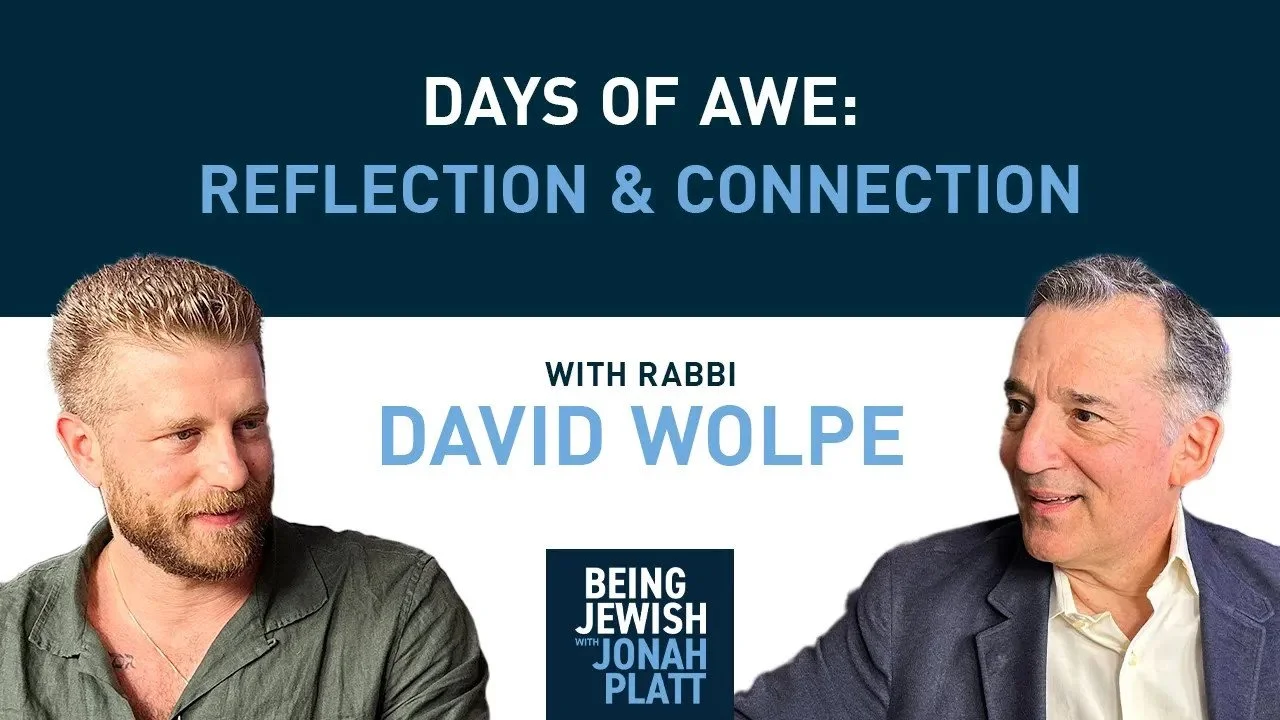
Interview Transcript
Embracing His Jewish Identity, Challenges at Sinai Temple & Harvard
Yom kippur the holiest day on the Jewish calendar is coming up this weekend for those of us who observe we will spend the day reflecting on our mistakes and wrongdoings of the last year doing heartfelt repentance for them and setting Our intention for the year ahead but what if you're not good at recognizing your own flaws and errors how do you apologize for harmful actions if you don't even realize you've taken them there are a number of psychological biases that reflect this very human inability to objectively take stock of ourselves and I've especially noticed them hard at work over this past painful year there's the blind spot bias when a person is easily able to find fault in the thinking of others but not their own allowing them to subconsciously Overlook any evidence that doesn't support their own already established ideas closely related is confirmation bias where we give more weight to information that supports what we already believe again mistakenly thinking ourselves objective fair and now I'd like to submit my own psychological fallacy into the mix something I call shortcut empathy I've observed that we as a modern-day Western Society grossly overe exaggerate our natural ability to be empathetic while at the same time underestimating the effort required to actually empathize after all we are living in the era of inclusion of Wellness training and Trigger warning wargs gofundmes and preferred pronouns as Jo Bluth says in my favorite show Arrested Development we're really nice now yet all these positive behavioral shifts have I believe also come with a false sense of superiority the thinking goes that if I embody this new societal ethos and support the right causes and think of myself as a generally good human then I've checked all the boxes of a highly empathetic person right but in reality none of those things are an automatic substitute for the actual work of empathizing in fact many of the folks who likely style themselves as the most empathetic are in fact the most callous unreasonable and inflexible when it comes to Jews and Israel now I do believe that intellectually we in 2024 possess a greater sensitivity to the negative impact of harm if we see or hear about something horrible we say oh my God that's horrible and we feel horrible but that is not empathy that's sympathy which is lovely but it's different and it's not how you resolve conflict to exhibit true empathy we must adopt the process of the actor we must imagine ourselves into a specific set of circumstances using our own personal relationships as substitutes for the people involved to truly understand the feeling we need to go there completely Body and Soul no matter how painful especially when it's painful we must close our eyes and literally play the scene in our minds What would would it look like sound like feel like smell like If This Were happening to me and my loved ones so why don't more people do this well number one we're lazy doing this work takes energy and effort and care and we got a lot of other stuff to do number two I think there is a fear to go there that somehow allowing ourselves to feel the pain and Humanity of others weakens our own position or the righteousness of our cause but in fact the opposite is true because it's only by allowing our eles to truly feel the pain of others that we can verify the moral character of our own beliefs about a year ago I had the opportunity to appear on a YouTube show called Middle Ground where I and three other Israel Advocates sat across the table from four Palestinian Americans and we agreed or disagreed with various prompts as you might imagine it was a very tense afternoon but I did my best to engage in a spirit of Middle Ground looking for ways to connect with and relate to the people across from me I kept asking myself if I were Palestinian American and can I honestly say that I'd think or feel any different I'd like to think I'd still be able to hold space for the truth of the Jewish narrative despite the Primacy of my own narrative and my immense feelings of pain and futility but I also recognized that I'm a human being fallible as any other so maybe not it was in that Spirit of Grace and understanding that I reached out to one of the women across the table from me after the show she seemed the most familiar to me a person who if she had been born Jewish would maybe sound like me and if I were born Palestinian maybe I'd sound like her her so we met up for lunch and just got to know each other as human beings I felt proud honestly and reinforced in my belief that empathy doesn't have to mean agreement that understanding does not mean capitulation but rather an open door to conversation then in the wake of October 7th this woman posted a video on her Instagram in full support of Hamas calling their atrocities justifiable and their resistance a human right a felt sick to my stomach and I felt I had to respond so I carefully composed a personal text quick tip never do the heavy convos on social media but before I wrote it I practiced some empathy I really tried to put myself in her shoes and asked myself if I felt my people were being slaughtered and oppressed and nothing was working would I too come to the conclusion that all means are Justified I could feel her anger disillusionment and Desperation but still I knew the answer to my question was a resounding no and I know this because I've heard the equivalent on the Jewish side they want to support Hamas they all deserve to go and that's not who I am there are lines I will never be willing to cross and yet because of my empathy I was able to reach out to her from a place of calm and moral Clarity having genuinely tried to understand her she never responded to my text and has since spent the last year using her social media to express support for terrorists and hate for Israel but it doesn't get under my skin because I know that not only is she wrong but I did my part in trying to connect so I could let it go which brings me back to shortcut empathy we have to do better and push ourselves to do the hard work of the real thing not just because it's right but because it makes us better people more open to connection and cooperation with folks who are different from us the only way forward is together this is the fourth episode of being Jewish with me Jonah Platt [Music] [Music] my guest today is a special one he officiated my bar mitzvah and my wedding and those of my siblings I think he officiated my bris I don't remember I was pretty young maybe you can clear that up uh and if that weren't enough he's a bestselling author a fixture in both print and television news media a vaunted scholar and the rabbi Meritus of Sinai Temple in Los Angeles Newsweek called him the most influential Rabbi in America welcome welcome Rabbi David WPI thank you thank you for being here remember your bris very well so what I thought so good that makes one of us yeah um okay so I I want to start back at the beginning you grew up the son of a rabbi yep I feel like kids who grow up with the rabbi parent are either Junior rabbis or Rebels as kids which one were you I was actually both I started off as the rebel and then ended up as the rabbi I I mean if You' ask me when I was a kid what do you want to do I would say I'm not sure I think I want to be a writer but one thing I know is I don't want to be a rabbi right and then I ended up being a rabbi so I it's a very influential thing to be as a parent partly because one of the things I do remember as a kid is when my father spoke all the other parents listened and that's a really powerful thing for a kid to see so that affects you in different ways and did you always feel ownership of your own Jewish Identity or did it feel like it was an extension of your father's it was definitely we were part of like a corporation you know there were I had three brothers so we were the rabbis family right and it took a while for me to I guess figure out what my own voice was and but I but I must say even to this day sometimes when I'm speaking I hear my father come out of me so I'm not sure I ever completely individuated from that but yeah I think that's pretty normal for any fatherson relationship probably true especially if you're lucky enough to have a really good father and I had a really really good father so hearing about your really good father what's what's one of the best things about being a rabbis kid and what's one of the worst things the worst thing is that people assume you are what you're not um that is like I would go to people's houses and I would be six or seven years old and they would say what's your name David walpy are you Rabbi walpy son yes and they would say I used to keep kosher and I would like think I'm six years old lady I don't care I was like take it up with my father um so you and sometimes that affects your peers too that they see you as a rabbi's kid um the thing that was good about it was that I think if you're lucky enough to be the child of a rabbi who is well thought of by his community there's a real sense of pride in being the rabbi's kid that's so nice so yeah and I felt that and what role did your mother and and your brother's play in shaping your Jewish identity so my mother was the person that I sat next to in synagogue so in some ways I mean not only did she make the home but even my synagogue experience was in some ways more about my mother than my father although my mother was also the person who I think was responsible for my sense of public self because my mother cared a lot about how like that we were dressed right when we walked into synagogue had a lot of eyes on you and yes and and believe me when someone walked in who wasn't dressed the way she thought they should be my mother was not uh shy about letting that be known um with an eye roll or a look that s nice yeah what was one of your favorite Jewish Family Traditions in your house um oh for it was easy hands down Friday night was our favorite like everybody was always at the Friday night dinner table we always argued about something um and whoever made everybody else laugh one it was like definitely the that's how we all became like you know used to making jokes in conversations and so on th this podcast could like basically be called I love Shabbat like every guest comes in like their favorite thing is Shabbat it's really a beautiful gift great it was great okay so when and how and why do you decide to become a rabbi it's kind of a a bizarre story in the sense that I was I I mean I was still very much attached to Judaism um and I was at Camp Rama and I had graduated college and I had spent a year writing and I was going to continue writing and try to publish something and iot dorf who was a rabbi who taught and still teaches at what's now called American Jewish University said to me what do you want to do with your life and I said Elliot I know that you spend your time talking people to go to for binal school I grew up with I know what it is I want to be a writer he said well what do you want to write about I said I I don't know I don't really know anything I just always knew that I wanted to write and he said how about if you go to rabinal school for a year you're not doing anything the worst that happens is you'll learn something and the best that happens is you'll find your subject and I said okay just like that and that was it and I went to ainal school and I loved it wow and he was right I think what was important here was that it wasn't my father asking because as much as I loved my father had he said why don't you go to retical school I think I would have said no I I got to do my own thing I totally understand that have your reasons for continuing to be a rabbi always been the same as why you became in the first place H um I think not uh I started off being a rabbi because I really loved studying and learning and writing and and because I'm a little bit asocial by which I mean like my default is to sit in a room and read a book my default is not to go out to a dinner party and in fact one of the nice things about being a rabbi is because you are supposed to be social it forces me out of what would normally be a lot less um right interactive but because of that that's what I thought I would do I would be at a university and I would teach and then I would go home and I would read and I would study and I would go back and teach and then when I went to a synagogue which happened because we were going to have a child and we I was doing a lot of traveling and we thought it's better to be in one place at one time I realized how much I actually got out of doing things like weddings and funerals and barn B Mitzvah um and it didn't change who I was like if you said to me tonight do you want to go do the wedding or do you want to sit at home and read I would definitely go for sit at home read but then when I did the wedding I would say actually that was really I really enjoyed that what what do you love about being a part of those life moment well it depends which life moment for a wedding it's just kind of a high there's just Joy and it's like you get to be a part of that joy and you get to contribute to it and that's great for a funeral it is um much more of a sense of being needed because I remember my father saying to me you can skimp on anything except a eulogy he said you give a bad sermon you'll give a better sermon next week you give a bad wedding talk they're still married right nobody's going to say the wedding was ruined because the rabbi didn't give a good talk because they got married but they'll NE people will never forget what you say at their loved ones funeral right so I work hard at that and I really think um when you get it right there's an enormous sense of sad satisfaction yeah that you were able to sum up this person's life for the people who needed that to be done so and and I can attest and to your you know skill at that uh recently when you spoke at I'm at a year ago at my friend Mark's funeral and so did you and so did I very beautifully thank you and I mean you encapsulated him so well so that matters and that's and when you do something that's important and that it matters and it works it's a it's a wonderful feeling even though it's obviously very sad right yeah so you were the senior Rabbi at Sinai Temple for many many years how long 26 years 26 years in what ways do you feel you left it stronger than when you arrived um well when I arrived it was actually not in very good shape they'd had um a series of unsuccessful Rabbi figures um the last five or six had all left after a relatively short time or before they were supposed to so first of all just the fact they had a stable leader for a long time in fact when I was going to go there my father didn't want me to go he said he heard it was in ER at Yos which is the Hebrew phrase that means a land that eats its own Los Angeles or the Sy sin boy that's what they had said that's what the spies say about Canan about Canan in the Bible and he'd heard terrible things about Sin it's like every Rabbi has he said so I really don't want you to go and and I went anyway obviously um but I think the first thing was that actually this is a successful and stable and decent congregation and you can keep a rabbi for a long time if it's the right match and uh I think there was much more of a divide than there is now between the Persian and non-persian members of the congregation that took a lot of work and a lot of time but I thought that that also strengthened the show a lot H how did that you know dichotomy affect your your time there I mean it was probably pretty Central to it it was pretty Central because the two populations were really antagonistic towards each other not everybody obviously but many of them and it was for really very understandable reasons on both sides you have a synagogue and like you have a country or anything else and all of a sudden a huge population comes in that speaks a different language has different ways of being and has different cultural patterns and says your home is my home so we're here now too and you're like but what about all the things I was used to that have changed and what about the fact that you're speaking a language my own home that I don't understand and so the ashkanazi population felt put upon and the Persian population felt we just ran away from our country we came here with almost nothing we are also Jews and this is our refuge and you're telling us like that we're not wanted and so the way that you bring them together is to let both understand how the other one is feeling how do you do that um by telling them Honestly by telling I gave a sermon saying many of the things that I just said and talking about how we were now going to create like various groups and dinners at each other's homes and so on said not so that you can become the same but just so that you can appreciate who each of you are and I think that over time that got first of all um the Persian population got much more used to being in Los Angeles were less afraid were felt less prejudiced from losel in general because when they first came what the average person on the street thought about them was they're from Iran and we hated Iran at the time it was at right after the hostage crisis and so on um and then for the ashkanazi population they felt like much more comforted accepted went to each other's bar and B Mitzvah and weddings and it just both time and effort like helped helped so I think could probably still use a little more help can always use more help it's always hard to keep populations that are different um un anagon istic towards each other in certain ways it's it's never a perfect solution which is why all over the world immigration is such a touchy issue sure yeah do you have a favorite paraa I I mean I do but it's not really fair it's my bar mitzvah portion was Genesis so it's a good one it's a really good one it's the creation of the world it's Adam and Eve you know it's it's a lot of good stuff um so I got to say that that's my favorite but it just for for obvious reasons that's now you didn't have one of the you know leprosy ones exctly I was very I was very lucky in your eyes not necessarily in the congregation's eyes but what in your eyes were one or two of the most important sermons that you gave um I think that the most important ones were first of all that Persian ashkanazi sermon no question about it at the time it was a huge uh I think I mean obviously the one that made the biggest Stir of a single sermon was one where I said The Exodus didn't happen the way the Bible said right which I still hear about all the time um and then probably um it wasn't exactly a sermon but there was a morning during the second inato when we raised millions of dollars on a Shabbat morning W and I remember how I started which was I said imagine a cell phone and the cell phone's in a backpack back and it's ringing but there's no one to answer and that cell phone belongs to a child who was on his way to school and the parents are calling but the child will never answer that phone and and I said we wanted to bring millions of doll as much as we could to victims of Terror to help people like those parents get over what happened um to the extent that it was even conceivable or possible yeah and uh and we brought we ended up bringing $3 million to various Terror victim groups um and that was that was a powerful uh experience that's amazing it was you were very early in the Jewish Community to say that you would officiate gay marriages when when legalization of gay marriage happened what was the reaction to that and have you seen the Jewish Community shift at all in that regard since those early days so um the reaction was kind of explosive um uh let me just explain how what my thought was about timing first of all it was it ended up on the front page of the New York and the LA times because there was such a reaction in the synagogue at the time because especially not only but especially inside the Persian Community they were socially very conservative and I knew that I couldn't do it until I had at least a couple of Persian parents whom I could then send other Persian parents too because you couldn't send them to ashkanazi parents because they wouldn't trust them to understand what they were going through right so once the first couple of very courageous young Persians came out and their parents had to deal with it then I said okay now I can now I can say this is what we're going to do and in fact that's exactly what happened was Persian kids then came out to their parents and the parents said what do I do now and I said oh well you can go to this person and she'll tell you like what she went through and so on and so forth because there was so much a lot of it was just the sense of shame in your community that the ashkenazim didn't have as much it wasn't it was so much more accepted in the non-persian community that when ashkanazi parents had kids who were gay it wasn't like they thought oh my God all my friends are going to think what did you do right right but in the Persian Community that's what it was like and so it took work makes sense how do you maintain your sense of self while being devoted to such a large community it's very difficult because the weird dynamic of a lot of rabbis is you're telling other people to live a life of family and you don't because you're always at other I used to say I spend my life living other people's lives right I would go to their Simas and the thing is if it's a small school it's different in a big synagogue I mean you can only be close to a hand really close to a handful of families so a lot of the time you were the pivotal person for a family that you didn't really know but they felt like they knew you right and and that's both a privilege but also not always easy so the the real reason why I had you on to being Jewish is because you wrote a book called why be Jewish so had to have you on uh which you know I actually received that book as a temple gift for my bar mitzvah I know uh so in it you say judaism's most important single teaching is that each human being is created in the image of God yeah why is that the most important thing it enables you to understand that even people that you dismiss dislike think are foolish think our enemies think our whatever have the same essential worth that you do there's no such thing as a worthless human being and it's so easy especially now we're in essentially wartime it's so easy to think that they their lives are not worth as much as ours and and that's e that's easy to do with any difference I mean throughout history people have done it with race with religion with ethnicity with nationality it's always if you're not like me you don't count as much as me and really Judaism I see came into the world to insist that that is not true and it as far as I know is the only real Universal principle that ties all human beings together right it's not genetics no it's the fact that we have the image of God in us and and I think if that were universally believed the world would be an infinitely better place I know that's true yeah how do you reconcile that idea with someone who is you know truly evil a mass murderer the way I reconcile it is that's why we call them evil because when a lion does something you don't say that's an evil lion right the only reason that someone terrible is evil is because they have the image of God in them and betray it so horribly otherwise it doesn't make sense to call them evil I like that you also wrote In the book if you wish to know the character of a people look to its Heroes who should be our heroes the thing about Jewish Heroes that makes them especially biblical Heroes that makes them distinctive is they're all flawed they are all flawed like we don't have any Perfect People there's nobody in the Bible you can't criticize you criticize Moses you criticize Abraham criticize Sarah you criticize everyone right um I wrote a book about King David God knows there is a lot in King David to criticize yeah so I would say that the important thing about having a hero is not to make them perfect um to say given the limitations and flaws of Being Human they still did great and good things and all the people I just mentioned did that and and so I'm bullish on Heroes that are imperfect you know yeah that's beautiful yeah okay so a lot I I actually got a lot of people who wanted me to talk about this subject that I'm about to with you which is your time at Harvard the past year lot lot of interest um so you retired as senior Rabbi and you were a visiting professor at Harvard University in the Divinity School yes so first how did you define how did you find the Divinity School itself to be I'm going to start with a caveat that every place at Harvard has wonderful people profound Scholars interesting thinkers and it shouldn't and there's no place that is absent of that certainly including the Divinity School um but I think that it was also a place that uh was deeply unsympathetic to what we might call Mainstream jewelry and certainly to Israel that's unfortunate to discover um yeah so you happen to be at Harvard the year there was this enormous explosion of anti-u bigotry um you've t at other universities before was there ever any indication that this kind of anti-jewish hate was brewing in higher education or this a brand new phenomenon no it wasn't a brand new phenomenon I mean at Harvard already it was known when when I was going to Harvard people asked me if I thought I would encounter it um and and it's it's a combination of a lot of different factors one is remember that um especially the Divinity School but Harvard like a lot of universities has a long history of protestant Christianity which was sometimes very hostile to Judaism so some of the germs of that hostility existed um institutionally institutionally that's one thing the second is that with the increase of students who came from the Middle East where there's a lot of anti-Semitism um and money that came from the Middle East which was promoting programs that were hostile to Israel that fought fostered that same lack of sympathy um for certainly for Zionism and and also as a corollary to Jews so no I don't think that it's entirely surprising although the explosion of it and the force of it and the breadth of it was shocking yeah so while all this is happening this explosion of anti-jewish hate you're asked by the then president Claudine gay of the school to serve on this anti-Semitism commission right uh from which you ended up resigning after how long couple months couple months cuz as as you've said you felt like the whole thing was a cover for Harvard and they had no intention of listening or doing anything what specifically did you encounter while serving on the commission like what what were the red flags that led you to resign so this actually gives me a chance to tell you my favorite line ever from TV Great which is from BoJack Horseman a brilliant show somewhere in BoJack Horseman they say if you're wearing rosecolor glasses all red flags look like Flags which is really brilliant I heard that I thought that is fantastic um and and so when I started off people told me this is not real but I was like new to Harvard and I was a little bit wearing rosecolor glass I thought it's you got to give it a chance sure the people on the anti-Semitism commission committee were wonderful and we developed recommendations and and proposals and and no matter how often we would recommend stuff nothing was happening and and at a certain point a core of us four five of us wrote a resignation letter and um we were helped very much and I want to give him credit by the advice of Larry Summers who was a past president of Harvard uh among his many other distinctions and and we delivered the resignation letter and that was the only time a member of the corporation showed up the corporation is the group that runs Harvard right uh so she showed up these were all the meetings were on zoom and said please don't resign we really we have a plan we're really getting started and so on and so for and we said okay we'll give you a chance so it wasn't as though David walpi thought nothing was happening but the other members of the commission thought it was great we all saw the same thing okay and then the hearings happened the Congressional hearings the Congressional hearings where the three presidents um whatever the opposite of distinguished yourself is very much undistinguished themselves and and I felt like after that it was almost embarrassing to still pretend that we were doing anything so I called the president or actually she called me and I told her I said look I know that you're in an impossible position because it was very hard to know how to handle this it's very gracious of you to say I said but I'm also in an impossible position I just regret that my getting out of my impossible position is going to make yours harder she asked what could we do and I gave her all the recommendations that we' said and it was clear that they were not going to happen and so the next day I I and I spoke to the other members of the committee next day I resigned I did not think I really didn't think that it was going to get millions and millions and millions of views but it did because I think there was an enormous pent up frustration of why isn't anyone in this University standing up and saying the emperor has no clothes and so when I did people were relieved I think when you say you know you spoke to her directly and it was clear none of these recommendations were going to be taken like what was her response to you with them so I have a different interpretation of her conduct from many other people um which is the way you become president of a university some people said for example oh she was president of Harvard because she was a black woman and I think that's foolish because there are a lot of black women and a lot of them are mously accomplished why did this person get to be and the answer usually for a position like that which is not unlike a synagog rabbi is you get appointed because people like you right but the Trap of that is if you're a person who's used to being liked and you have to take positions that will make people dislike you it's very hard so I think that she found it very difficult to take positions that the faculty would be angry at that the board would be angry at because these were her contemporaries and they all liked her and she liked them and so and especially at Harvard I think the ideology and not only hers was we're Harvard right we'll be fine we can do whatever we've been here for hundreds of years and by the way that I mention we're Harvard right there was a lot of that and also the fact that she was getting I'm sure a lot of pressure from I mean we talk about Jewish donors but there were hundreds of millions of dollars coming from places like cutter right and other places in the Middle East and those were also in Peril and I think you put all that together and it was going to be like we will just wait until this storm dies down and and none of us were prepared for that it it's interesting the way you just described her is you know you made me think of a lot of figures in entertainment and in social media who have this fear of they have this strong need to be liked an insecurity about it and they they have this fear of upsetting people upsetting their fans and you know more important to them than doing what's right let me just honestly like you could easily have done that I mean the tack that you've taken a lot of the reason that people admire what you've done is because you know that by being so upfront about being Jewish at a time like this you're going to get a lot of flack so I yeah but but the answer of this is not the the way most people answer that the way most people answer that is yeah that's where I'm not going to do it yeah so I don't know feels like to you thank you I appreciate you know just doing what you got to do that's how I feel about it um so you said in a in a recent speech that Dei is broken can you elaborate on that thought and explain what role if any you felt Dei played at Harvard this is the ideology behind it societies are built in systems systems discriminate sometimes against certain groups especially in America there was redlining and housing there was systematic discrimination against African-Americans so on and therefore if there's inequality among groups it must not be because of Merit it must be because the system is broken and if you fix the system right you will get perfect equality among various groups the problem is the system can be broken but you're still not going to get perfect equality when you fix it among various groups because and this is the metaphor I used the only way you get an even lawn is with a lawn mower it doesn't matter how much fertilizer you throw on a lawn it's not going to become even and the same thing's true with people the only way you get e equality of outcome is if you cut down the top not if you incentivize the bottom because cutting down the top will make sure that everybody only reaches this level so if you're a small group that overachieves you're G to get it in the neck and a small group that overachieves is another way of of it's like a synonym for Jews right and therefore the view of the Jewish people was not ah look you have unusual Merit and we want to encourage that because it's good for the world it was you have achieved unusual outcomes therefore there obviously is something unfair about the position that you occupy in society and so when you say no no no but actually don't you know that in the lifetime of people who are still walking this Earth a third of all the Jews in the world we're killed right we actually don't come from a position of privilege this has been a real struggle to get here it does not Accord with the life experience of most of the people at Harvard who the only Jews they know are Jews who are successful and Jews who have not had terrible hardships in their own individual lives right and so there is this tremendous gap between the reality and what the perception is and most de is built on that perception my own take on it is Dei should be adversity based not race-based if you make it adversity based it will disproportionately be people of color in our society because disproportionately people of color have faced adversity in growing up but also the white kid from Appalachia right whose parents were opioid addicts and has never gone to school will also get help through Dei even though he doesn't have a race-based claim but he has an adversity claim and that's what I would hope for is that we would see adversity as the standard by which we have to help people makes sense to me no what advice would you give to current Jewish students right now navigating anti-jewish racism on campus I actually literally just wrote this this morning for the ADL I think the first thing to know is that you're not alone that the Jewish Community really wants to support you that kabad Hill ADL your Rabbi your synagogue so on all of them stand with you you aren't alone yeah um and second is to recognize that a lot of this a lot of this comes from ignorance and not hatred and that what you think of as oh this person hates me they probably know really as much about Israel as you know about like nagorno carab I don't even know right exact so sometimes it's really important to recognize that that just because something is important to you um someone else it may be important to them for a second because it's on social media but they don't really know about it or care about it um and uh and also you have to find like you do at every in every place in life you have to find people who share your values and you care about um because without some kind of Social Circle you're you're really um it will be very difficult yeah so usually uh on this show I aim to have Jews or non-jewish Allies who are known for their work in other fields and I offer them this chance to open up about the connection to jewishness you are unique and that you are obviously a Jewish professional of the highest order so uh I want to take this opportunity to tap into some rinic wisdom since I got you here sure so you have emphasized the importance of Jews seeking God yes how can individuals jewi or not cultivate a deeper relationship with the Divine in their everyday lives well the first the first way is to want it um and and then there are usually the way that people go about seeking God is through nature some people find it you can find it in the woods in the mountain in the river in the Stars through Community other people who care about that like sometimes you have an experience uh of something Transcendent with you sing with other people that you don't get any other way right um and in synagogue you sing together there aren't that many places in American society where people actually get to sing together um and then there is study there are there are um beautiful books and texts and so on that can really Elevate people and make them feel differently about the world I always tell people that books like hessel's the Sabbath or um frankl's man search for meaning books that really elevate your spirit and and allow you to find parts of yourself that otherwise you wouldn't know is believing in God a requirement for being Jewish no it's not a requirement for being Jewish um I mean our name Israel means struggling with God right if you struggle with it if you think about it if you are like reab nman AB brot beautifully said he said I'm a moonman my faith waxes and waines you know sometimes it shines bright sometimes it's dark if it meet it matters to you and I think it should then I think you're right in the mainstream of the Jewish tradition the important thing is is to just be struggling be mix is right is that you're not indifferent to it right yeah speaking of that struggle yest that was my bar mitzvah portion was Jacob wrestling with the angel talked all about struggle yeah as a clergyman is there any distinction in your connection to being Jewish between the religious peace and the nation personhood peace or is it just one and the same for you I mean Herzel was a great Jew he was not at all religious right but obviously his effect on the Jewish tradition was much more profound than a lot of religious Jews sure so I see the distinction I I'm I don't live it in my own life but I certainly appreciate it okay so you were the person who gave my wife Courtney weekly shout out to Courtney uh you gave her and me the confidence to have tattoos as Jews so can you please explain for my audience the the kosher of tto okay so um I didn't know you were going to put me in this now I'm in trouble with every Jewish parent who is watching the show so here's the story like the only thing that most Jews know about tattoos is not true right which is that you're not allowed to be buried in a Jewish cemetery if you get a tattoo and that's totally false totally false it is no Jewish Authority has ever said that I mean just think about it like yes if you break the Sabbath if you murder someone you can be buried but get a tattoo you're out you're out um and I don't know where it started uh but if you don't believe me just Google can you be buried and you'll see that that's not it was some some mom who didn't want their kid getting a tattoo so the issue with a tattoo is this you are not allowed to deface your body and the reason you're not allowed to is that your body is a gift it's it's a right you have to return it so if you see for example piercing your ear for a an earring as a defacement you shouldn't do it but if you see it as an enhancement to Beauty then it's permitted mhm if you see a tattoo as an enhancement to Beauty then I think there's a very good argument why you could get a tattoo because it's not defacing your body that's I don't I don't have any tattoos in case um so this is a good segue to my next question H how do you balance which laws and rituals should continue to be upheld in 2024 and what can we leave to history I think that there are certain Jewish laws that we ought to recognize no just no longer applies I I mean I think it would be wonderful to have a third Temple I do not want to sacrifice animals there especially as a vegetarian so I think that the way you do this is organically in community that is you create communities that value this or that or the other and that's why it's really good that Jews don't have a hierarchy because there isn't a pope Jew who can say this is a law that you cannot change instead there are different kinds of communities of Jews and I think increasingly that will be true as mainstream institutions speak less to younger people and I think they do younger people will create their own kinds of Institutions that speak more to them right and and that's just the way based on their own values and priorities what's your perspective on the role of Israel in Jewish identity I think that people who don't think it's Central don't realize how Central it would be if they didn't have it like a lot of things you don't know how um how much modern Jewish identity is buttressed by the reality that we have a state um and if it were God forbid a thousand times if it were gone it would be an incomparable loss to everyone's sense of Jewish identity even those people who think they don't want it to be there I really believe that what do you say to the Jew who identifi Jewish strongly and thinks Israel should not exist I actually don't start the conversation by saying anything right I start the conversation by asking them why and asking them to tell me more and trying to understand how they could come to that weirdly anomalous position of believing in a tradition whose sacred scripture is all about getting to the land whose prayers constantly mention being in the land whose holidays talk about living in the land next year and say that I'm actually part of this tradition but I don't think the land piece is part of it um and so I guess once I understand that I know better how to figure out how they could hold those positions at the same time because the truth is that that from my point of view they either deeply misunderstand Judaism or deeply misunderstand Israel does it you know diminish their standing as a Jew and some way or is is it you know I'm not I don't I don't give out the cards you know about who gets into heaven what you're standing is as a Jew um I think that it makes it very difficult for the mainstream Jewish Community to embrace them because here we are in a real existential struggle for the life of six or seven million of our Brethren the majority of the Jews in the world and and here somebody who claims to stand with us who does not all stand with us right so in that sense I think it's hard for the community um to say we don't judge you in any way right yeah so this episode's going to air during a period of the Jewish calendar called the days of awe right what are the days of a there are the days in which self-examination of yourself and your deeds and your relationship to God are Paramount and what you're looking for I'll go back to your um to your Torah portion um because I thought of this when you said it it's like when Jacob's wrestling with the angel and then the Dawn is Breaking and he says to the angel bless me what the angel says is what's your name and he says Jacob um because the last time he was asked his name he lied about it he said I'm asau um so the angel wants to know that he's really going to fess up to who he is and then he says your name is no longer Jacob now it's Israel and I thought about that a lot because in my life as a rabbi people often ask me for blessings and what do they want they want like Health success children comfort from the if I ever said to someone here's a blessing your name is no longer Jonah it's Fred they would say that's not a blessing um but the idea of course is what the Angel's blessing him with is self- Transcendence that in the next year you don't have to be the same person that you were last year you can be better it feels significant to me that the first anniversary of October 7th is falling during these days of awe what do you make of that I think that the same thing is true for the Jewish people and for the world that we have to really take a hard look at what we did wrong and what we did right in this year and even as we remember that there was a tremendous loss of innocent life and there are hostage is still in Gaza and it's been an incredibly painful year on so many fronts um as human beings and and as Jews and as uh citizens of the world I think we could all do better always yeah how if if at all has your connection to being Jewish changed since October 7th I think that I have gotten a little bit more binary because I really feel the Peril of in a way that I didn't before because of the explosion of anti-Semitism and hostility towards Israel I have I think less bandwidth for people who um I think don't uh don't have some sympathy both for my people and for the land of Israel um I'm sorry that that's true but I think that the part of part of being uh part of having principles is also having limits um and boundaries are important to life as well and I think my boundaries and certain ways have hardened Mak sense as I mentioned uh this coming weekend after this airs is yon po where we repent for our sins so that they can be wiped out and will be inscribed in The Book of Life do you really believe that we can control our own destiny in such a linear way no but I do believe what the unan toef says which is the prayer where it says you know who shall live and who shall die and who by this and who by that and so on and then it says but um f Chua and Saka prayer repentance and charity can avert the severity of the decree the decree is death everybody's going to die but the Legacy you leave how you die that actually is in your hands and I think that that's more the lesson of yon kipur than you're not going to get inscribed in the book of life every year sooner or later you won't right but how you get inscribed in the book of memory that's really up to you and I know having done now many many funerals um that how you get inscribed in the book of memory has to do with how the people who are close to you have experienced you in life mhm that's a great thought to take into the holiday okay tell me the truth yeah do you drink water on your own ke because you stand up there and talk for a lot of hours no I don't drink that's very impressive you're just talking and talking all day it's much easier to be a rabbi on your ke poor than to be a congregate cuz you're in you're in the flow you're in the zone because I have something to do I've always got something to do I don't don't have that much time to think about it the people who amaze me are not the rabbis because I can keep quiet for a while the caners the caners I don't know I don't ask but I can't imagine the caners go for 25 hours they sing and they never take a sip of water it's like inconceivable to me we've been talking for an hour I drink a whole glass of water it's so it's it's crazy but you really do but when you're boy when you're a congregant I don't know how congregants fast you sleep in as late as possible before you show up you got to give yourself a head yeah all right so now we're going to do a little seg where we take questions from our Instagram audience they've left some questions for you sure uh actually this first question is not from Instagram it's from my story producer Shan but I really liked it so we included it if you could invite any historical figure to Shabbat dinner who would it be and what do you think they'd find most surprising about modern Jewish life King David because I wrote a book about him and because he fascinates me I got to say um and I think he would find the most I think think what he would probably find most remarkable is um that we still invoke him like thousands of years later yeah I think about that a lot with people like mozard we're talking like 3,000 years later really I'm still like on the books pretty cool that is pretty amazing right cuz he was honestly was a king in like a little part of a little you know in the world and and like all these people that he fought with they're gone and we still talk about him so yeah orang G8 shout out out to my Camp buddy Orin uh he ask who is Rabbi wp's Rabbi um I mean for many many years it was my father uh now I don't so much have a rabbi as I have good friends that I talk to so yeah that that provide you wisdom and Council exactly yep another Camp buddy shout out at rubbe T he has a few questions first he asks what's the best piece of advice you've ever received when I was going off to rabinal school my father said to me when you get there there's going to be something called the development department he said they're the people that raise money right they I'm sure have students go out and speak for the school go to the development department and tell them you probably have students speak for the school I'd like to be that student he said you will get experience speaking to 10 people and to a thousand people you'll get to know the entire Community you'll get to know the people who raise money and the people who have money the people who support Jewish institutions and in fact it's exactly what I did and now every time I talk to college students I tell them to do the same thing say if you want a a career where you're going to be in front of other people go to the development department of your college and say I would like to represent the college and it was great advice wow yeah you got vocational training exactly yep second question from Ruben how do you get Jewish kids not to spoil Santa Claus for their non-jewish friends this is a question to which I have given no thought yeah right got you on the spot on this one exactly uh I mean I would say it's the only way to do it is to tell them don't spoil Santa Claus for non spoil sport exactly it's like do you know that Mel Brooks routine about tearing paper no oh so Mel Brooks has this routine about he said went to his psychiatrist because he was compulsively tearing paper he said and he cured me he said so Carl Riner says what did he do he said don't tear paper so the same thing like don't spoil Sant just don't do it love it yeah and Ruben's last question was Jonah a good alter boy um Jonah was a really wonderful I mean look I I will tell the story um Jonah is the only person I think in my congregation who at age what was it 15 14 younger I feel like was it younger 13 Around Bar MIT we walked around the block and talked like about Jewish philosophy and Jewish ideas and Jewish belief CU you really had questions and that was so you weren't an alter boy but you were a great young man thank you I appreciate that I feel like we got to end it there you know I'm going to go out on a high note exactly thank you so much for being here it's a great pleasure this has been so enlightening on so many levels it's like walking around the block again there you go I love it [Music]