
Episode Transcript
HOSTAGE: Eli Sharabi’s Incredible Story of Surviving Hamas Captivity for 491 Days After October 7th
When they drug me on October 7th from my house, I shouted at them, I'll be back.
It's not just that you survived, but how you did it.
Be proud to be Jewish and don't hide it.
Does anything scare you?
Now?
That's a good question.
They used violence against me.
They humiliated me, but I didn't let them get my soul.
Hi there, folks.
Today's episode is a special one.
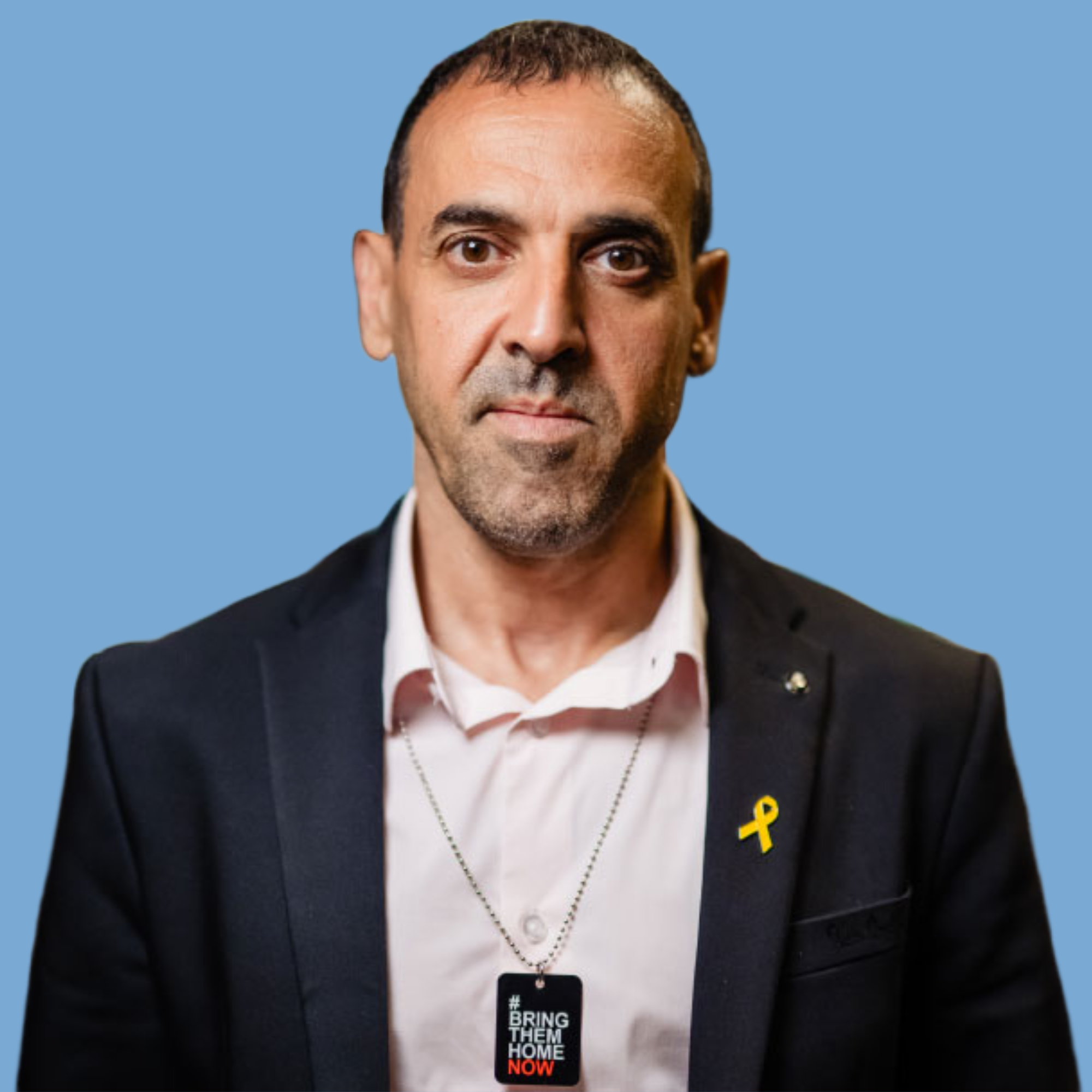
In it, I'll be sitting down with Eli Sharabi, the 52-year-old former hostage who survived 491 days in Hamas captivity following his abduction from Kibbutz Be'eri near the Israel-Gaza border on October 7th, 2023.
The episode is divided into two segments.
The first was filmed live on December 15th, 2024 (2025), at the Miami Beach Convention Center as the main event for a gala benefiting Magen David Adom,
Israel's only national Emergency medical service organization.
The second segment will be filmed right here in Studio one-on-one with Eli as soon as I finish shooting this introduction.
So, strap in, grab your Kleenex, and join me for a one of a kind intimate two-part conversation with Mr. Eli Sharabi.
Good evening, everybody.
It is my distinct pleasure to be here with you tonight in beautiful Miami as we honor and celebrate the brave men and women of Magen David Adom.
Tonight's theme from darkness to light is more than just a phrase.
It's a journey one that Israel has been arduously undertaking step by step every single day since October 7th.
There are few individuals on this earth that personify such a journey more than our guest of honor tonight.
He's the embodiment of faith and resilience in the face of utter darkness.
Both figuratively and literally, and tonight we all have the privilege of hearing his story from his own mouth.
Right now as part of a special live recording for my show, being Jewish with Jonah Platt, of which you are now all apart from tragedy to worldwide advocacy from the Hamas tunnels to Time Magazine.
Ladies and gentlemen, please joining me in welcoming our guest of honor the singular, Eli Sharabi.
Welcome Eli.
Thank you so much for being here.
Thank you.
You have chosen to spend your precious freedom traveling the world, reliving your nightmarish experience for strangers.
Preparing for this conversation, even, I have to be honest, it, it felt a bit invasive to even be asking you about this yet.
Obviously this is something you are committed to doing.
You have spoken to hundreds of communities in such a short while, so I wanna start by asking how does it feel to return to this chapter of your life again and again, and, and why are you doing this for me, speaking about October 7th?
About my wife, my daughters, my captivity time, and my loss of my brother and writing this book, it's a very therapeutic process.
I understood about me, only me.
It doesn't mean it's suit to all hostages.
Um.
To me speaking about it and being in touch with this trauma, um, it's a part of my healing.
So, um, I'm speaking about it, um, with my therapist and for me every evening like that, it's like, um, speaking with my therapist again, so it's good.
Why do you feel it's so important to share your story with rooms like this one tonight?
I think after the UN speech, it's become very obvious that, um, people want to hear, people want to know what, it was obvious for me, um, after two months of my release, I understood it's not really obvious for other people.
I start to understand it's not a story, it's a testimony.
And it's a part of the history of Israel, a part of the history of October seven, one of many, um, stories especially, I wanted that people around the world, uh, that are not Israelis to hear about the facts about what people lose and about, um, the cruelty of Hamas as a terror organization.
And, um, you know, because there are lots of disinformation in the social media, lots of fake news, and nobody can stand, um, in front of me and said, I'm lying.
Yeah.
So let's start with October 7th.
If you could take us back to that morning, when did you first realize the magnitude of what was happening?
That this was not an ordinary alert, that this was something different?
It started of course, with um.
Red alarm.
And after that, um, half an hour later it was, uh, a message from the emergency team of the kibbutz that, uh, there's a possibility of terror terrorists infiltrated berry.
And then we start to see the videos from ster, from of Akim, from the Nova Festival of Run, young people running for their lives.
And then yet we didn't really understood, um.
That is going to come massively inside the kibbutz.
Uh, but when kids start to send messages on WhatsApp groups, kids we know of course, and they start to send this, someone shot Dad, someone shot mom, our house is burning and actually screaming.
Help.
And, and you can, you can hear that.
Yes, of course.
It's, uh, it was all around us and, uh, the fight was around us and then we understood that, um, it's coming to our house as well.
So Leon and I made a decision that we are not going to fight with them.
We cannot going to resist.
We don't have any weapon with us anyway.
And it's most important, it's to protect our daughters.
And I don't know why, I would presume, but that alki, I'll be kidnapped, but their British passports will protect them and they've been with their British passports.
When the terrorists arrive to the kibbutz to, to our house, sorry.
And unfortunately our plan didn't really work and they'd been murdered five minutes after I've been kidnapped in our house.
I.
You said just now, you said already in your mind before they're even, there you go.
I think I'm going to be kidnapped.
Your mind is already thinking logically through this.
You say in your book hostage, uh, you immediately shift from Eli, the man to Eli, the survivor.
You have this, this ability to, to think levelheaded and and rational through this all.
What has prepared you in your life to, to shift into such a mindset and maintain it for such a long period of time?
First of all, I'm very practical person, as in my personality.
Um, and I always try to find solutions to problems.
I think 20 years of, um, being manager, um, in Berry printers in other.
Things in the kibbutz as a CFO dealing with numbers and getting dozens of decisions every day.
And most of the time you're trying to separate your feeling from these decisions.
So I think all these tools, uh, prepared me, um, as much as I could to be prepared for something like that.
I just remember that I said to myself.
I'm in surviving mode now.
I don't care what happened to me.
They can hit me, they can a humiliate me, they can do lots of things.
I'm going to come back.
I'm going to come back to my daughters like I promised them.
And, um, that's what happened.
Thank you.
We are at Amada event, so I would be remiss if I did not mention the brave men and women of Magen David Adom, who gave their lives in the line of duty at Berry, including Amit man, who we saw earlier tonight who refused to abandon her community, and Avia Scon, head of the medical team at the kibbutz.
Can you tell us anything personally that you knew about these two?
Was, um, a grandfather of Yna and that'd been murdered, um, in Spec House, as you all know this story, uh, from Barry and they've been, um.
Great friends, hel Maya.
Hell, um, my youngest daughter, they've been in our house almost every day and Avia was, uh, a good friend, um, of us because his wife was British as well.
And you know, originally, and Ian was British, so it was lots of connection.
And Avi was amazing, man.
I just remember him.
Um.
Almost every day I saw him, he was with Matt's uniform and going to save life every day.
And it was amazing.
Me, this, you know, his dedication, saving lives and that was Avia that was in, was really well known in the berry in the area.
Um, I miss him a lot.
And Amit, man, I just knew her just um, a little bit.
Um, because in that time she arrived to Berry.
I was walking outside of Berry, so I didn't have too much in contact with her.
I knew who is she?
Um, and that's it.
May their memories be a blessing, may.
Throughout your captivity, you were housed with two different groups of people, Palestinians and your fellow hostages.
Uh, I want to ask about your connection with both of these groups during your time, starting with your Hamas captors, who you all gave nicknames to, like the square, the triangle, the mask.
These men tortured you, starved you beat you for 491 days.
If you came face to face with any of them now, what would you want to say or do to them?
Of course most of them probably would kill them, um, because they humiliate us.
They beat us.
Um, they use lots of psychological terror against me, especially.
And when they said to me from time to time, they seeing my wife and my daughters, um, with my photos fighting for me in Tel Aviv.
I think most of it, my rage was, uh, about, um, the starvation.
Uh, that they used against us on purpose because in that time we ate one meal a day.
And when I say one meal a day, it's a bowl of pasta, bowl of rice.
This is a meal, uh, or maybe one and a half p of bread.
Very dry.
In that time, they used to eat five meals a day.
We used to see, um, dozens of boxes coming into the tunnels.
Uh, from the humanitarian humanitarian aid, we've seen the signs of un and un round these boxes that come from Turkey and Egypt.
And, um, so we knew that there's lots of food in, uh, in the tunnel.
Um, but then they, um, you know, they really stared us.
And when I arrived on October 7th to Gaza, I was more than 70 kilos.
And the day of my release on February 8th, 2025, 16 months later, I've been, um, 44 kilos.
And, um.
We were sure that it another month or two like that, we probably will die.
So most of them, I would kill them.
It was one of them, um, that from time to time, um, tried to help us and show a bit of compassion to us.
And so probably him.
I would say thank you because they saved our lives many, many times.
Um, when it was a big danger for his life from his fellows.
Um, if you, if they would know how much food he gave us.
You mentioned when you left your 44 kilos, I, I couldn't help but wonder as they were showing this video earlier, what is the experience of seeing yourself on that screen from those, from that moment, from that day?
You know, it took me time to see these photos.
Um, I think the first time I understood how I look like it was, um, four days before, uh, my release when I met, um, OAD benami.
Um, my friend from Berry that we used to work together, um, for 10 years and suddenly to see him, um, after 16 months, I didn't see him and to see him 30 kilo less and 20 years older, maybe that was the first time I understood how I look like, because we didn't have any mirror and.
After that when I was released and actually President Trump called me the Holocaust survivor when he saw them, this, you know, these photos.
Um, it took me time to understand what happened.
You were kept for most of your captivity with three other hostages, and you go into great detail in the book about the close connection you made with alone oel, uh, that you guys built a, a father son kind of bond, and he was held alone another seven months after you were released.
What was that seven month period like for you?
Thinking of him still being there?
First of all, um, on November 27th, 2023, I met alone, uh, for the first time, 52, uh, days later, um, after October seven, I met him on the, uh, in the tunnels.
And after one hour of conversation, I found amazing guy.
Um, really kind, good heart.
Um.
Very naive.
I understood, um, that he doesn't have, um, the right tools to survive on his own.
If he will need, I start to walk with him to, you know, to say his, his opinion in that group and to fight for his food when he needs, uh, otherwise he will not come back to his parents and I wouldn't allow it to happen.
Um.
Actually through, uh, helping, um, alone, I had like meaning to wake up every morning.
I found the meaning after I was separated from my daughters and, um.
I promised him to look for him, look after him, um, in all that time in captivity.
So the day, um, we were separated and I was released.
It was one of the hardest moment for me.
Uh, it was very difficult to leave him on his own, but I promised him I will fight for him outside, and in the meantime, I will be with his parents.
And that's what exactly I did.
I did two phone calls on the day of my release.
One was, was to my wife's parents, um, in to England.
And it was very difficult conversation.
And uh, the second one was to Alan's parent, to Alan's parents to edit and Kobe.
And I told them immediately that he.
He's able to survive that.
Um, it's not the same kid they remember, and he has the strength and the resilience to do that on his own.
And to see him release on his legs smiling eight months later, um, I couldn't be more proud than this guy.
And to meet him a day later after his release was, uh, very, um, very emotional moment for me.
We cried a lot.
We hold hands for one hour just to understand it's real and I'm real.
And since then we are together.
We meeting each other.
We texting each other every day.
Actually, now he's in Miami.
Yeah, let's get him over here.
So Eli, I, I once volunteered in Africa where we had no running water and I've had appreciation for hot showers for 20 years since then.
I can only imagine the things that you must appreciate now that you as never before.
Can you share with us a few of the things that pop in your head, as you mentioned, um, for us shower was, um, every six weeks with half bucket of cold water.
Uh, you, you can't imagine how filthy can you can be and um, and you can survive something like that.
And to see soap or um, or tooth space, it's luxury.
It wasn't in the tunnels.
So since then, um, of course I appreciate all the basic things in life.
I appreciate that I'm alive.
I appreciate that.
I'm a free man because freedom is priceless.
And to be able to choose every morning what to do and how much to eat or drink or, or if you want to shower or if you want to speak without asking any permission from anyone.
It's amazing.
And, but especially I appreciate, um, my amazing family that fought for me for 500 days.
Um, I appreciate my friends that support them.
I appreciate am Israel that fought the streets, uh, and marching for us and pray for us.
And then I start to go abroad and to meet all these Jewish communities and Jewish people and to see the solidarity they had with Israel and as a state and Israelis.
Um, that was amazing.
Very warming, uh, very moving, and I appreciate that.
I'm very grateful to that.
Um, thank you very much to each one of you, um, personally for me.
You have a part of my release.
Thank you very much.
It's very gracious.
We're getting close to the end here, so I'm gonna, I'm gonna bring it to, to a close.
You talk often in your book about hope.
And how critical it was to fuel your survival, to have something to to hope for.
Now that you are free, what fuels you to keep going and where do you find hope for the future?
Again, I find hope, um, and meaning in life, um, the things I'm doing.
Um, for others, this is the meaning now for me.
It's not numbers anymore.
It's about caring about people and speak, um, for Israel.
And, um, you know, it's amazed me every time and the power of.
We have together, um, as a nation, as am Israel, 1:00 AM Israel, despite of all these agreements we have, and it's good, we have disagreements because we are democracy and each one deserve his own opinion.
But, uh, we have to stay united as one nation, Jewish Israel, and this is the only way we defeat our our enemies.
Amen.
Amen.
Amen.
Before we continue, I wanna highlight an institution that is not only impacting Israel and the Negev, but the world.
Ben Gorian University, Israel's only university in the Negev.
Has become a beacon of hope from the desert, advancing research that changes lives from brain and health sciences to sustainability and climate change.
This is research driven by resilience, purpose, and vision.
This may you are invited to join Americans for Bengo University at BGU in Israel to celebrate the connections that bind us and draw strength from our common roots.
Hear from Eli Sharabi in person, immerse yourself in the negative and even be as student again.
Without the exams, don't miss this Once in a lifetime experience.
To learn more about b's groundbreaking research and innovation, and to get details about Eli Shay's appearance, visit a four bg.org/jonah.
That's a, the number four bg.org/j ONAH.
Many of you have likely heard about spere, the quarterly journal of ideas for a thriving Jewish future edited by New York Times columnist, Brett Steven.
But have you heard that print subscriptions to Superior are free?
That's right.
You can receive four beautiful issues a year right in your mailbox at home, each on a theme of importance to the Jewish community, such as activism, diversity, faith, or Zionism at no charge, and requiring no credit card info like every episode of this show.
Every issue of Spire explores important questions at the intersection of Jewish and American culture and politics, and features, contributions from amazing writers, many of whom have appeared on this show, including Sarah Hurwitz, Noah tpi, Dara Horn, rabbi David Wal, chef Michael Solomonov, and many others.
Subscribe today@superiorjournal.org slash being Jewish.
Completely free of charge.
That's superior.
S-A-P-I-R journal.org/bing Jewish, or click the link in the episode notes of wherever you're getting this pod.
Eli, welcome to Los Angeles.
Welcome to the studio.
It's fantastic to have you here and get the opportunity to chat with you in a bit of a different setting than the last time we spoke.
Thank you very much.
It's a big honor for me to be here.
Thank you.
Thank you.
How was the event for you in Miami?
You've been doing so many events.
Do they, do they blur together or does, do they stand out at all?
It was amazing event, I think, um, really well organized.
Um, not every time it's like that, but I've done more than 200 events already.
In how long of a span of time?
In six, seven months.
So you started immediately then?
Yes.
Started immediately, uh, after, because you've only been, you've only been out since February.
Yeah.
But after the UN speech on March, uh, people approached me and said, please.
Speak talk.
We want to hear, we want to listen.
And then I came back writing this book.
Um, that was two months of hard work, but it was very therapeutic process.
It was amazing.
What was amazing about putting it down paper, talking about day after day, about some, you know, specific situations that you, you know, it's like, it was like sitting in.
Frontal therapist every day for five, six hours.
Uh, it was very emotional process, um, especially about October 7th and to remember my wife and my daughters and the last minutes and talking about, uh, you know, time in captivity that, uh, was, you know, when you was talking about the details, about the specific details, you start.
To process what you have been through.
Um, but again, I'm fortunate.
I'm sitting here.
I'm free.
Thank God I'm alive and I'm very busy and I'm going to rebuild my life.
It's amazing.
As you were in captivity, I mean, what you just said makes me curious, like h how, how much of a mental sort of.
Box are you shoving things into just to get through them to where, you know, you process them only later?
Because if you were thinking about it all in real time, you would collapse well in captivity.
Um, from the first moment I have been in a mission to survive.
And when I'm in a mission, I'm separate in this mission with, with my emotions, my feelings.
I didn't care how I feel and if I'm, you know, um, if I'm in pain or something like that, I promised my daughters I'll come back to them.
And that was my mission.
Um, I love life.
I wanted to be, you know, to survive this.
Hell, I knew that I need to stay optimistic about his chances.
Of course, I'm a very practical person.
I knew that in every moment it can be changed.
In every moment.
I can find my death there.
Um, but for me, staying optimistic helped me a lot.
That makes me wonder, you know, how much is that thought?
I could die any second.
Like, how much is that popping up?
And how do you swat that down?
It's find you every day, every morning there.
Uh, you understand, you know.
They holding their guns, um, next to you, um, all days.
And, um, you know, it's can be just, uh, a second of things, you know, to upset them, right?
Or, um, and you know, to risk your life and.
You understand that, but again, you're trying not to think about it all the time.
You're trying to think about, uh, positive things.
Uh, you're talking about positive things when alone used to have, you know, these nightmares from October 7th.
Day in the shelter in front of Rocky Kibbutz, and he used to tell me about, well, he used to wake up screaming.
Mm-hmm.
And I just, you know, hugged him in the same moment.
But we spoke about it, you know, a few hours later in the morning and we've tried to talk about positive things and I said to him in every time we spoke about positive things, uh, his night will be better and.
Fortunately it helped.
And, um, he could pass the last, uh, months without nightmares and it was amazing.
So I wanted to ask you about, um, alone.
Okay.
You, you were released many months before he was, what did you leave him with?
That he was able to withstand so many months by himself, which, you know, has to be so much harder than when you have the comfort of.
You're fellow man.
I found a guy on November 27th.
After one hour conversation, I realized, uh, that you cannot survive, um, being so naive and being so gentle.
And I tried to speak with him about it, that he need to change a little bit of his, um, you know.
Way of behave if he want to survive this hell, um, that he need to fight for some things and to say to his, say his opinion about things, uh, that other, I know people will not step on him all the time.
It took him time, but eventually he was there.
He got this, you know, um, strength and resilience and he start.
To think he's capable to survive on, on his own.
And that was most important.
Yeah.
Because we knew, we knew, we didn't talk about it too much, but we knew that if it'll be an agreement, it's not that everyone go the same time.
Mm-hmm.
And we presume my age will release me first.
Right.
And he was going to stay on his own, you know, for.
I wanted to, you know, to believe that he would stay maybe a week or two weeks on his own.
Unfortunately, he stayed eight months on his own and the day after his release, I met him on hos in hospital and he said that immediately that he said he saved me.
Um, I thought about all the things you, you taught me.
And I just said to him, I'm, I'm so proud of him and you know that he's so brave because I was, I'm not sure I was survive on my own and staying sane.
And, and he did a great job and I'm so proud of him.
Really.
It's unbelievable.
Unbelievable.
You were kidnapped from your home.
You're just Eli Sharabi.
You get released.
You're one of the most famous people in your country.
You're on Time Magazine.
What does that feel like to all of a sudden you come out from this hell and you're a celebrity?
I'm sorry, I don't like this word because Yeah.
I don't know what else to say.
You know, celebrity is someone that celebrate or something like that.
I'm a very familiar person now.
Right.
Um, my life changed under 80 degrees.
Then it was before October 7th.
My family fought for me for 500 days every day.
My dear brother Sharon was, um, on television in many, many, uh, programs, and it took care of that, that nobody would forget us, me and my brother, and.
And the other family as well that, um, been marched and prayed and each one of them, they were so united to this mission to release me, and I'm so grateful for that.
And a week or 10 days after my release, I've done the first, um, interview hostages, didn't speak until then, that they were released and didn't really speak.
About time in captivity and about, you know, and I felt that it have nothing to be ashamed of.
I wanted, that my government will not forget, um, the other hostages that remained there.
My brothers Jose's body, uh, was still there.
Yeah.
At that time.
I promised that alone.
I will fight for him.
The minute I was released and I will be with his parents.
So, um, and that program just, um, you know, just made me in one day, one night was very impact, um, on people in Israel.
I was surprised about that.
I didn't understand the beginning, what I've said differently from others.
Um.
And then I start to meet presidents and prime ministers and foreign ministers and Parliament members fighting for the other hostages, and I become very, very familiar.
In the media and for all Israel, all the Jewish, uh, people around the world.
Yeah.
But I'm trying not to think about someone that's celebrity because Sure.
Uh, because, you know, I'm only Eli Sharabi.
Um, anyone can approach me.
I speak with anyone.
I hug anyone.
Um, I'm grateful to all of these people that prayed for me, that fought for me, and they didn't even know me before.
Yeah.
You mentioned your brother Yossi, who was killed in captivity.
What was the sense of, you know, relief or closure when you, when his body was returned and you were able to actually, you know, grieve him and bury him?
It was very important, uh, to our family to tell, you know, his wife, his daughters amazing.
Three daughters would've a grave to cry on.
And they can come there every day and speak to him and be with him.
And we need a disclosure, of course, as a family.
Um, and after disclosure, we, we start to filter from that.
From now on we can start hill.
Yeah.
You know, the entire family was in this situation two years.
I joined them only for, um.
The last eight, nine months in this battle, this struggle.
It's a very sad ending for us of course, but, um, I miss him a lot to my brother and, um, we'll never forget him.
Um, it's a very important for us' home.
Finally.
Thank God.
You speak in the book about the psychological terror that Hamas, you know, was working on you constantly.
One of the things being that they kept telling you, they were seeing your wife and your daughters on tv, did that hurt you or did that help you because it gave you some kind of hope or was it both?
No, definitely.
It gave me a lot of hope.
I dunno why they did it, because you know, to listen to.
The Israeli news, and they, and there was, they were listening all the time, right?
And not to understand that, um, the hostage that called Rabi, his wi, his wife and daughters been murdered the same day of October 7th.
Uh, I don't believe it's, it's a possibility, really.
It's a possibility.
Uh, so they probably knew about my family.
For sure they knew about the OC that was kidnapped as well on October 7th, and they didn't tell me that.
Right.
Um, but again, I think it was very good that I didn't know about, um, li Noia and the hair death.
It helped me a lot to think there is a possibility that survived that and I was surviving, um, especially for them.
Right.
Again, I love life.
I love my entire family, my mothers, my brothers and sisters.
Uh, but my first mission was to come back to my wife and my daughters as I promised them when they drug me at October 7th from my house.
I shouted them, I'll be back, and I've tried to make this promise.
I remember even on February 8th in this horrible ceremony, one of the questions that was asked on this stage.
And a half an hour before I was released, um, they asked me how I feel that I'm going to meet my wife and my daughters in a minute.
And again, I really hope that that will be the, you know, um, the case that I'm going to meet them in half an hour.
Um, unfortunately, um, I was announced, um, about them, uh, by the social worker of the IDF.
It was devastating moment.
Um, I remember that I needed disclosure again.
I need closures in my life lots of times.
And a week after in hospital, I've asked to go to the graveyard because, um.
I understood and I decided to rebuild my life, but I needed to start from one point, and for me, going to the graveyard was this point for a closure.
Um, most of it in the beginning was to apologize my wife and my daughter that they didn't protect them well on October 7th and probably I will think.
Forever.
Um, maybe I could, did, could do, um, things differently that day to save them.
What could you have done differently?
I have no idea.
Yeah.
But I will probably will always think about that.
Sure.
I promise them that in any place I'm going to speak about them and that will be, um, the most respectful, um, uh, for their memory to do.
Um, I will not let anyone to forget them.
You kept your promise that you'd come back to them.
You did Speaking about the Israeli news that the Hamas captors would watch constantly in, in the book you speak about a time when they heard a, a line from Itamar Ben Veer, and that news led directly to them starving you more.
How much.
Anger did that instill in you and, and resentment for the government and the way they pursued your release?
I remember 50 meters underground after they said that to us.
Um, we talked between ourselves, um, how stupid you can be, um, talking about these things.
I mean, the media, I can understand it served his own interest, uh, things like that to talk about that.
You know, people elected, uh, voted for you to do some things.
Do it, don't speak about it when it don't go on tv, when hostages, when somebody other, other people can be influenced about that, about your actions, about your talking.
And when they go out to our, um, room and said to us that they're going to reduce our meals from two meals to one mil because of Vir, what he said to them about their prisoners.
Um.
It was, um, something we couldn't forget.
Uh, we start to feel that immediately.
Uh, we were starved.
After three weeks, we start to, you know, feel dizzy and, um, fainted from time to time.
Uh, we were very worried about our life at that time.
And think about Yom Kippur, the Jewish eating.
Amazing meal before you fast 24 hours.
We ate 180 days, a bowl of pasta, a day every 24 hours and day after day and all of that because someone is not.
Thinking about before talking, did he or anyone ever apologize to you?
No way.
Even then they, again, they said that we are, um, like Hama send us to say these things and we actually just say the truth and the facts.
You know, I'm not really expected someone to apologize about that.
Um, especially not him.
How often are you back there in your mind now?
I remember everything from my captivity.
I remember lots of situations.
Um, I know all the faces.
What I mean is how much are you, you know, you're eating lunch and then all of a sudden is something sending you back there.
So captivity, all these situations and all these things.
Um, they're with me all the time, but I don't let it to, um, interrupt.
Uh.
Rebuilding my life.
Uh, don't let it to interrupt of me having a normal life.
Um, I don't suffer from, um, from, you know, nightmares and things like that.
I don't say about certain food that I can't eat that or see that.
I'm not saying that, uh, that if I hear Arabic it's take me to a place that I don't want to be, or something like that.
I'm fine.
No.
No triggers.
No triggers.
Wow.
I know how to separate my emotion, uh, um, from these situations so they could reach my body.
Um, they used violence against me.
They humiliated me.
They starved me, but I didn't let them to get through my soul.
It's unbelievable.
It's like a steel trap in there.
You locked it down.
Yes.
It's really unbelievable.
Exactly.
I locked it down.
That's it.
And I think that's.
What makes your story so inspiring is not just that you survived, which is amazing, but how you did it with such strength and commitment to how you were gonna do it and, and the way you executed on your plan.
It's really just unbelievable, truly.
Thank you very much.
Yeah.
I know the answer to this question now, but I'm gonna ask it anyways.
I mean, you lived through hell that none of us could imagine going through.
Does anything scare you now?
That's a good question.
Not a lot of people ask me that for me to be with my family again.
Uh, it's so precious time, so I'm just worried about them.
If something happened to them, um, that's what worries me.
Hmm.
Um.
Nothing scares me.
Really.
Nothing.
It's like, how could it, after what you've been through, yes, you can, you've been through everything.
Yeah.
I appreciate all the basic things now.
Um, I love every moment of my life now.
Um, I'm so grateful to be free and, um, to be with my family and surrounded by my friends.
All this love.
It's amazing for me.
When you were released, uh, what was the first meal that you were like, I can't wait to eat this food?
It was, it's a Yemen dish, it's called, uh, and I didn't eat egg, a boiled egg, um, for 16 months.
Um, so.
It was with this Nu and it's this egg.
And that's, that was great meal.
Did you make it for yourself or you went, went to a restaurant?
No, no.
Um, uh, in the hospital they made me that, uh, immediately they gave me that.
You asked for it?
Uh, I asked for it.
Uh, my family probably prepared them that I will want to eat that.
Again, since I was released and after captivity, everything is tasty.
Hmm.
Um, right.
You know, I'm not spoiled, uh, about food.
Um, I eat everything and it's great.
I understand that.
What is your relationship if you have one to God today and is it different than it was before October 7th?
It's, it's definitely different.
Um, I was raised in traditional family.
I know synagogues, I know Kush, I know, um, you know, every Jewish holiday.
Um, I'm familiar with that.
I know all the blessing by hearts of the Kush.
Uh, but I've lived 35 years in Unreligious place, uh, and religious life.
Um, and I'm not religious now, but you know.
This extreme, um, experience, um, helped me a lot to find my faith in, in God.
Again, disbelief, uh, gave me lots of strength and after I seen death so many times in captivity and I'm still alive, after each one of them made me believe that something someone protect me and wanted to be.
To me, me to be alive.
Uh, this is how I look at that now.
It's amazing.
Thank you.
Talk about a glass half full attitude all the time.
Clearly, it's so important for, for, you know, your ability to, to move forward and be who you're being.
Again, if somebody show me that.
Me crying or, um, self pities will give me strength or bring me back.
My brother, my wife, my daughters.
I will be in bed and cry all day, believe me.
Mm-hmm.
But I'm a very practical person.
Yeah.
So for me, being positive and look at the future and to be optimistic, and it's more than half, um, glass, you know, full.
It's much more than that.
Um.
Life is beautiful.
It's in what we make from them.
And, um, I'm really looking forward, um, many new chapters in life.
Well, let's go down that road.
Okay, I have two questions about that.
First is, you know, as you mentioned, you've done 200 plus events.
H how will you know when it's time to rest?
I believe it'll come in in a few months, uh, probably three to four months.
I will, uh, reduce that.
Um, I've done my thing.
Most of the hostages, only one unfortunately, stay there.
His body is, yeah.
And I hope it'll bodies return soon.
Mm-hmm.
Um, but most of the.
What I've done until now was for, um, the hostages for the awareness that nobody will forget them and how much is important that it'll be at home with their, with their families.
It doesn't really matter if it's life or death.
Um, and, uh, most of it, it's, you know, accomplished.
Yeah.
And again.
There's many things to do about, uh, you know, advocacy for Israel and Jewish and against antisemitism in the world.
Um, so I'm talking about that now.
Um, there's no way that Jewish people need to be afraid for their life and walking in the streets in 2025.
We are not 90 forties.
Um.
And what happened just now in Australia, just show us, uh, when the government give, um, the opportunity to people to hate other people, um, can, you know, finish that, uh, result.
Yeah, like in Australia, it's awful for us.
Um, so we need to speak in a stronger voice against antisemitism.
It doesn't matter how disagree about the Israeli policy.
Um, there's no way hate, uh, be the result for that.
Absolutely.
So you said, you know, you're looking forward to your new chapters.
Do you have some ideas of what your, your next mission will be or your next chapter?
First of all, um, I need a peaceful in my life.
I like to, uh, open my day with, uh, walking by the beach and, um, going to the gym and.
I promise myself that I'll make time, you know, helping children, um, teach them some mathematics.
It give me loads of meaning in my life.
Why mathematics?
That's what I'm good at.
And I know, uh, some kids struggle with that and I probably find kids that cannot afford, um, a private lessons and I'm going want to help them.
Amazing.
Yeah.
I I don't think they'll.
Be a shortage of institutions that will want to keep hearing from you on, on Jewish strength and, and survival mentality, Jewish spaces and non-Jewish spaces.
So I think you certainly have a, a long future in, in public speaking, if that's something you want to continue.
I don't want, um, you know, certainly not politics.
Um, but, um, if I can find myself, uh, helping others, it would be okay.
In any, in anything, even just learning the, the Eli Sharabi mindset of how to, you know, get through hell.
Like, that's, that's something that can help a lot of people in a lot of situations, in a lot of different ways.
Thank you.
Oh yeah.
Is there anything fun that you're like looking forward to doing that, um, that you're excited about?
I, I love traveling around the world.
Yeah.
Um, I'm waiting for, um, for me and the alone be free and we can go to scuba diving together.
And where did you talk about doing that?
Thailand and Philippines.
Uh, we to each other and it'll happen in the future for sure, and we find the time for that.
In the meantime, I've been three months ago, um, in Thailand on my own.
With a friend, with friends, um, and I've, I've done my scuba diving in every bus I did for Yahel, my youngest daughter that just finished her course of diving, uh, scuba diving, uh, two months before October 7th, and every bus was for her and for alone as well at that time that it wasn't released.
I know how to have fun in my life.
I know what make me fun and happy, and I'm willing to do it.
Good.
Do you speak at all to e or or, or Kun?
I'm texting from time to time with the, with Elia and or, uh, I didn't manage to, uh, reach to Con yet.
Um, you know.
People asked me because I left him some orders, I knew he's going to be released.
Uh, and he was released a day after, um, me being taken from the house to the tunnels.
Oh, wow.
And I left him some orders to give to the IDF and some messages to my family.
Did he do it?
Unfortunately, they scared him too much.
Mm-hmm.
But, um, two weeks later, after he came back to Thailand, uh, he phoned.
Someone in Israel probably by the embassy and said that he saw me for two seconds and I'm fine, not worried about me.
And um, so I'm thankful for that because it was the first probably life sign to my family that I'm alive.
And maybe in the future I'll, I'll find him in.
I know he is, he lives in Cha Shangri in Thailand.
Um, so.
Maybe, maybe one day.
And the other guys you're texting with Elia or, yes, yes.
Uh, we're texting to each other.
We're supporting each other.
And, um, it's good to see each one of them how is continue with his life.
What is that bond like that you have, not just with alone and Elia and or, but with this, you know, these.
Dozens of people who have, who have gone through something similar to what you've gone through.
Yeah, it's similar, but each one of us has his own experience, of course, and where he's kidnapped, kidnapped from and what he has been through in captivity and the time he was in captivity.
So each one of us, it's other story.
For me, listening to other peoples and to understand sometimes it's too much.
I'm concentrating in my experience, I'm not, um, can't be able to, you know, maybe to, to understand, uh, what other people have been through.
And that's it.
I guess what I'm pointing towards is like, is there a certain connection that you feel with each of these people or.
Of course there's connection when you hear about other people and uh, you see them from time to time in the media or something like that.
It make you something and, um, but it's doesn't mean that we are one big family and, uh, something like that.
Correct.
One of the beautiful rituals that you talk about in the book that you guys found a way to do in those tunnels is keep Shabbat.
Uh, you know, with whatever you could find, the candles, the Kush, the, the motzi.
Um, how has that experience changed the way that you experienced Shabbat now that you're free?
There's not one time that I'm doing Shabbat now Kush with my mother, and that I'm not, I don't remember the time that we did it 50 meters underground.
Uh, I remember.
All four of us unreligious, but we all waited for Friday evening and we can say, um, all this blessing and do this kiddo.
And, um, especially in that time, it was very emotional of course, as we remembered.
Um, we imagine our family.
Gathered around the table on Friday and thinking about us.
Um, so now to do it and to understand where we've been just a year ago, it makes all the differences, you know, about your feelings and about how you feel that, that way now, and how it's important for me to do it with my mother now.
Special.
It's beautiful.
All right.
Last question for you, Eli.
Obviously no one is gonna experience what you experienced in, in the way that you experienced it.
Um, and not that there needs to be a lesson from it all, but if there is anything that you think you learned that you want to share with the audience, something that they can, they can try to hold onto to help them get through adversity where they see it, what would, what would that be?
First of all, I want to say to them, to the listeners, be proud to be Jewish, first of all, and don't hide it.
Um, but again, one big lesson from my experience, it's appreciation.
Appreciate all the basic things in life.
Don't try to reach all the time to other things.
Um.
Appreciate what we have now.
Appreciate your family, appreciate your friends, appreciate the basic things in life, um, that will be the most important.
Um, because 50 meters underground, you don't miss any material things.
Just love from your family and friends, and you are willing to pay everything you have for five more minutes with them.
Very important.
Thank you, Elliot.
I, I can't say enough how meaningful this conversation has been.
Truly what a, what an honor it is for me, not just because you are a familiar figure from this historical moment, and not just because you survived hell, but as I said, because of how you survived it.
That's what really makes you a hero.
It's just.
Remarkable.
Uh, and I feel grateful to have had this opportunity to be inspired by your strength and resilience, and I know my audience will be too.
If you can lock into that survivor mindset and endure what you have endured.
We have no excuse not to do the same in our lives.
Whatever life may throw at us.
Thank you.
So thank you for that.
Thank you very much.
Thank you for having me.
That was Eli Sharabi, and his book is called Hostage.
It's the fastest selling book in Israeli history, and it's available in English wherever you get your books.
Now, I invite you to join me in Eli for a final reflection from the Miami event to bring this special episode to a close.
Again, I thank Eli for this honor.
I thank you for being with us and I'll see you all back here for the next precious episode of being Jewish with me, Jonah Pat.
There is one more blessing that we usually reserve for only the first night of Hanukkah, but it feels especially meaningful and necessary tonight and it is the Nu, a prayer of gratitude that the divine has allowed us the privilege of reaching this moment in time.
Eli, like the famous jar of oil that sustained a nation.
Your strength and determination sustained not only your own life, but those of your fellow hostages in the tunnels.
And your presence here tonight sustains us all your survival, your unbelievable courage, and your commitment to spreading light all around the world.
All of these are miracles worthy of prayer.
And so it's fitting that you should please lead us in the nu and like the daily gratitude practice you led in the worst imaginable conditions.
Lead us now in our appreciation of how good and sweet it is that we are here with you to reach this precious moment to together.
Baruch atah Adonai, Eloheinu Melech ha’olam, shehecheyanu v’kiy’manu v’higiyanu lazman hazeh.
Amen.
May these flames shine brightly?
May they honor the past and may they illuminate a future of healing, unity, and strength.
Thank you again to our sponsor, Americans for Ben Gorian University.
For more ways to support Israel, visit a four bg.org/jonah.