
Interview Transcript
How to Bridge the Perception Gap Between Democrats & Republicans with Tangle News
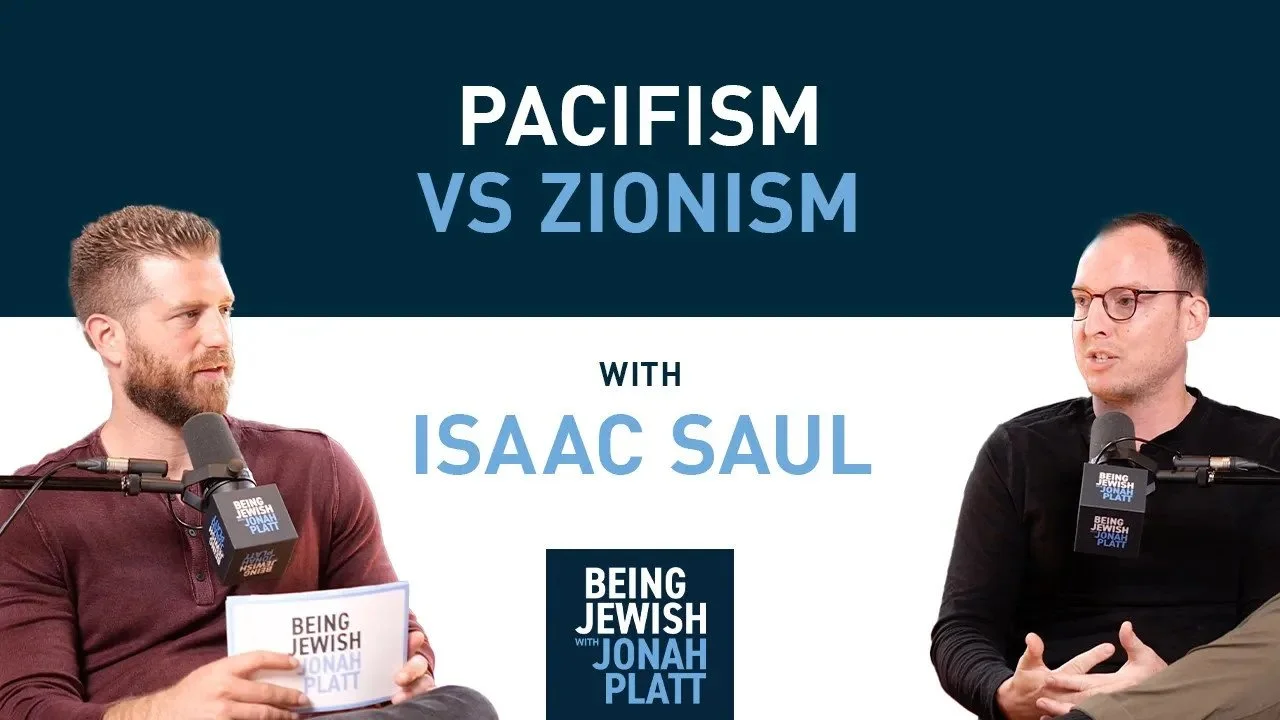
most of us have heard the adage that anti-jew hate is the oldest form of hate in the world and if you haven't heard that hi welcome to being Jewish we have seen the cyclical emergence and reemergence of hate against Jews all over the world Century after Century for literally thousands of years but a core feature of anti-jewish bigotry is that it shape shifts in each time and place where this hatred emerges it does so in new packaging deafly tailored to most effective weaponized that specific society's fear and weaknesses against the Jewish people the current strain of the anti-jewish bigotry virus has a number of strategies and costumes it employs but today I'd like to single out one inversion taking something connected to Jews twisting it all backwards and using it against us this anti-jew inversion comes in four parts allow me to offer a simple example imagine a kid we'll call him Cody is standing next to his brother who we'll call Peter and Peter is holding a baseball bat Cody grabs Peter's bat hits Peter with it then cries mom Peter hit me did you catch all four parts Part One ownership the bat is Peter's it is his to hold his to use his to Define part two weaponization not only is the bat Peter but now his own bat has been used against him to cause him harm part three false blame Peter is blamed for hitting Cody something that factually did not occur in part four because it's kind of just straight up villainy I call the dagger not only has Peter been blamed for harm he did not cause but the blame is coming from the person who actually victimized Peter in the way for which Peter is now being blamed ownership weaponization false blame the dagger so now let's look at a few of the most common examples of anti-jew inversion shall we first up Jews are white not only are Jews their own distinct ethnicity that precedes and exceeds any idea of American racial construct but even if he bought that framework at least half of the world's Jews are black or brown we're talking millions of people including the majority of all Jews in the Jewish homeland being erased so let's break that down into the four parts ownership Jewish identity is just that our identity no one gets to Define it for us or take it from US weaponization Today's Elite Society being white is synonymous with being privileged or oppressive both of which are bad false blame if Jews are white then they are the evil villains oppressing the rest of society but again not only are Jews not white but aside from a few golden decades here in America we've always been seen as less than white or other and this is certainly true again today visibly Jewish people are seen foremost as Jews regardless of their skin color I mean ask Jewish kids on college campuses if they feel white and then of course the dagger many of the folks perpetrating this inversion are themselves white they are the ones actually persecuting an ethnic minority in the name of their own white guilt I mean that is Twisted another one we hear a lot Jews are colonizers this notion inverts the entire factual history of the Jewish people ownership We Were A persecuted nation in Exile who returned to our homeland you cannot colonize the place you are from weaponization as with white a colonizing imperialist is the most evil thing you can be in today's society despite the fact that you know most of us come from countries that were created via colonization and imperialism false blame Jews haven't colonized anybody first of all half the world's Jews don't even live in the land folks claim they've colonized so to say Jews are colonizers is just a bigoted conflation and second Jews are indigenous to the land and have been living in it continuously for thousands of years if Israel is a colonizer why are 20% of israeli's Arab Muslims with freedom of religion and public signage in Arabic in addition to Hebrew and English finally the dagger Israel has itself been colonized and conquered by many different civilizations over thousands of years including certain populations of Arabs who now claim to have been colonized by Israel Twisted let's apply these principles to another outrageous inversion Israel is an apartheid state again Outsiders feel they have free reign to dictate to Israel what it is in the most condescending overconfident inaccurate and oversimplified of terms the apartheid system in South Africa where you had a white minority ruling over a black majority under a separate system of laws was terrible and glob condemned so if you're looking to demonize somebody it's a partti all the way as for false blame all Israeli citizens Jewish or not enjoy completely equal rights under the law there are Arabs in every level of society and civil service from the Supreme Court to the Army to the knesset now the West Bank which is not part of the state of Israel has its own issues of course that deserve to be fairly investigated but the specifics and context are highly unique to that situation one that deserves to be examined on its own merits not just be lazily labeled as a parthe for shortcut demonization and as for the dagger basically every other part of the Middle East including Gaza to even step foot in there as a Jew is a death sentence and yet you're going to say Jews are the ones with different rules for different fools Fatima please can't forget about ethnic cleansing That Old Chestnut not only has the Palestinian population grown tfold since isra establishment but Jews have themselves been ethnically cleansed by Muslims and Arabs repeatedly from nearly every country in the Middle East and North Africa next I want to mention the word genocide though it could be its own monologue entirely and probably will be at some point but it's important to include here because this one hurts so much and cuts so deep into a wound that is still raw and Fresh So yala ownership the word genocide itself was literally invented by a Jew to describe the systematic extermination of six million Jews during the holocost it is our word weaponization there could be no greater crime against humanity than seeking to wipe out a People based solely on its identity false blame there are dozens of facts I could point to that illustrate how Israel is not committing any kind of genocide and never has but for now I'll just use this one in the Holocaust 66% of Europe's were murdered in the Rwandan Genocide 70% of the tootsie population was slaughtered in Cambodia 25% of the population was systematically eliminated in Gaza this year during a defensive War Israel did not want that number is 2% and this according to hamas's own count which we know also includes terrorists and natural deaths as well as civilians 2% call it a tragedy call it an outrage call it whatever you feel it should be called but don't call it a genocide why the dagger it is Jews who were the victims of the worst genocide in human history and not that long ago and it is Hamas who tried to indiscriminately butcher as many Israelis as they could on October 7th including survivors of the Holocaust and they have sworn to continue this attempted genocide again and again until they finish the job and the last in verion at least of this monologue is for me the most frustrating the world's use of the phrase never again never again is our term our pledge that rose with our people From the Ashes of the Holocaust it is our ethos our Anthem our Cry of resistance its appropriation by other groups and its weaponization against us is a cruelty of the highest order by co-opting this phrase the implication is that Jews who suffered the worst genocide imaginable are now perpetrators of the same not only is this horrendously false but it is terribly hurtful then there's the updated version never again means never again for anyone says who who says that's what it means because we the Jews who invented the slogan did not say that we meant it for us and look obviously it's not that I take umbrage with protecting people from genocide of course not I take issue with anti-israel folks appropriating our slogan for their own designs and palis plaining to us what our words mean and then even worse weaponizing the words against their actual intent which is the promise of the Jewish people to be masters of their own fate the Israeli response to October 7th and to the genocidal aims of Iran and its proxies is precisely what never again looks like Jews taking their safety into their own hands whether the world likes it or not because usually they don't we have got to denormalize this crap point out how bigot it and harmful it is and create a social cost for its use to those who have employed anti-jew to demonize our people I say never again and in fact in this case never again means never again for anyone this is the eighth episode of being Jewish with me Jonah Platt [Music] [Music] today I'm coming to you from the City of Brotherly Love Philadelphia my old College stomping grounds and as part of being a college kid in Philly I learned the names of all the suburbs around the city including Bucks County which was also the name of a short-lived coffee shop on campus my guest today hails from Bucks County which he calls one of the most divided counties in the country so it tracks that he has devoted his career to depolarizing politics through his online newsletter tangle which provides thoughts from the left the right and his own take on a single topic each day tangle has over 135,000 subscribers myself among them and you might think that's his crowning achievement but he's also a national champion in competitive Ultimate Frisbee so you know it's a a please welcome journalist entrepreneur and one time Yeshiva boy Isaac Saul thanks for having me Jon glad to be here so when I say earliest Keystone Jewish memories like what image pops into your mind oh man uh JCC Ying Township New Jersey you know being a three-year-old running around playing soccer in the gym and basketball uh and then definitely you know snickering and whispering and misbehaving in the back of synagogue with my family for sure at the har sin temple in Trenton New Jersey so those are those are my early earliest Jewish memories probably along with the the beautiful smell of my grandmother's brisket you know that barbecue brisket nothing better than that good old Jewish grandmother brisket that wafting from the kitchen and then you know fighting my brothers to to get there for the first bite I think those are some of my my earliest Keystone Jewish memories I love those so specific it's great um so you you like played at The JCC you went to synagogue did you go to Jewish school or summer camp or yeah I did like you know Tuesday School Sunday school um and but but like a lot of American Jews I mean I was raised reform pretty low-key uh Jewish upbringing and remember quite vividly after I was Bar Mitzvah I was 13 14 telling my parents that I was an atheist and I wasn't going to go to synagogue because that was like the cool radical thing to do in the early 2000 a teenager uh and really between thees of 13 and 18 had very little connection or contact with the Jewish world I mean culturally I was still in it and you know Hanukkah and yum kapor and rashash Shana and the high holidays and stuff my family would observe and go to synagogue but I was sort of in those Rebel years where I you know I'd been forced to go to Tuesday School forced go to Sunday school forc exactly I I rebelled too in like Middle School like this sucks it's not making me pray all the time yeah I think I'm probably more observant and more tied into the Jewish Community now that I've ever been so I I went to the University of Pittsburgh and I think it was the second week of being on campus as a college freshman that I was walking through the quad and one of the campus rabbis just you know pointed me out hey are you Jewish I'm like yeah how'd you know uh there's just everybody kind of has their their judar one you when you've been in the tribe for a while and he invited me to Shabbat dinner at his house and you know broke college freshman away from home for the first time been two weeks since I had a home-cooked meal free dinner I'm weigh in yeah say less you know I'm coming and uh and it was beautiful and he was an orthodox Rabbi and he just made it a really warm fun experience and I basically went every Friday for all four years of college and over that experience became really connected to the the experience of doing Shabbat dinner and then went to Israel on Birthright and then after I graduated college I ended up going and living in Israel for a bit and I think all that kind of just snowballed into being a little bit more observant caring a little bit more about the religious side thinking more critically about that stuff and now today you know I I say the shama every morning I have Shabbat dinners host Shabbat dinners at my house with my wife um and try and plug in with the different Jewish communities depending on where we're living which has been a really fulfilling experience for me right on I I keep just hearing so many parallels with you to me like I there was a rabbi in college who invited me to his house for Shad who I'm still like in touch with and I say shamat my son every night so we got we got a lot of the same same ideas yeah um and I I saw you wrote your unique spin on Shabbat observance is no social media and no news over Shabbat for 24 hours I love that yeah what does that say to you about like the individuality of being Jewish what I've sort of come to is you know it's my relationship ship with God that matters it doesn't really matter what other people think about it or how they view it and I have to develop that kind of on my own in private and for me uh you know I I know what makes it easier for me to connect in the way that I'm supposed to connect on a holiday like Shabbat and that's unplugging from the news because that's my dominant thing that happens throughout life and I also know that like you know I connect a lot with some of the sacrifice of certain observances like fasting or you know eating Kos or whatever so on Shabbat I try and be like as observant of a Jew as I can be you know I might like sneak a piece of bacon on Sunday morning but on Saturday morning no way that's cool you know like I do so like I I try and plug in in that way too and um it helps me it helps me connect it keeps me grounded I think it's like a really it's a powerful tradition for me personally and the the unplugging from the news stuff just related to my work is such a relief it makes me look forward to sundown at Friday you know it really does give me that kind of anticipation that I feel like I'm supposed to have for Shabbat where it's like I want it to come I welcome it and uh it's a relief honestly when I get there I love that like every guest talks about how shot's like the greatest thing and most meaningful thing yeah so we're just you know we're trying to spread Shabbat love everywhere y so as as you just mentioned you studied in Israel um at Yeshiva right what was that like I was there for about six or seven months it was a BAL Yeshiva so for people who grew up secular and are sort of considering be converting to be more religious so very specifically designed for Jews with with my background called yeah it's called orak in in East Jerusalem actually so a place that especially right now is really interesting and at the center of a lot of Israeli conflicts because um for those not familiar it's like a very diverse part of Jerusalem a lot of Muslims lot of Jews lot of Arabs lots of different kind of faith leanings and layers of different Judaism that exists there and it's it's one of the really core melting pots and a place where there's a lot of friction and I think that was really interesting for me uh I was I mean personally it was the most intellectually stimulating time in my life Wow because all my fundamental worldviews were being challenged as somebody who was you know culturally Jewish but not religiously Jewish and a lot of questions that I was asked about why I believe certain things I didn't really have great answers for and I realized that my worldview was pretty Half Baked and that I just had kind of adopted the world view of a lot of the people and a lot of the Jews that I lived around and being challenged in certain ways made me think more critically about why I believe certain things and why I didn't and I found it just tremendous fun everyone in life should face a moment where they have to question their held beliefs where huh I never thought about where that came from or why I actually believe that and it's great that you had that opportunity you you got to get out of your comfort zone to get it definitely and it's a good way to do it if you ever want to get out of your comfort zone go to Yeshiva Jerusalem for six months and it'll do the trick I'm sure and like if if you could distill your experience in East Jerusalem down to like what was like a big takeaway from your time that that surprised you H uh you know I would say that the people who fundamentally disagree about what happened over the last 3,000 years in a place like Jerusalem are very capable of living side by side in Harmony and peace and with those you know contradictions and challenges and disagreements perfectly present and on the surface and I saw it it can be done it can be done yeah now moving into journalism how would you describe the state of Journalism in America today journalism is broken in a lot of really fundamental ways I think we live in information ecosystem that is pretty corrupted I log on to Twitter Instagram and I see a bunch of news quote unquote that is pretty much nonsense and I open up you know the New York Times or the Wall Street Journal or Fox News and I see slightly more reliable information that's been edited and fact checked but is often presented in a way that's clearly trying to tell a specific story which I don't think is the job of journalists yeah so I see an industry that is definitely in need of some reform and some help and some introspection I think the industry is going through that right now I think we're living through it and you know I'm trying to play my role and producing something that's a little bit more big tent and reliable and you know North Star of transparency and honesty and balance and I think we're doing that but uh it's it's really not easy I mean you realize when you do the work that the truth is very subjective was identifying this you know Brokenness of the system the impetus to begin tangle or did it come from somewhere else yeah I mean my you know I I have a pretty classic kind of startup entrepreneurial story which is I wanted a product and I went looking for it and it didn't exist so I tried to build it I mean the the story for me was I you know I'm I'm politics journalist by trade that's my background writing and Reporting are the things that I tend to be pretty good at and I would hear something happened in the news a proposal maybe comes up say Trump wants to build a border wall and I want to know what's the pro argument for this border wall and what's the against argument for this border wall and who who are the who are the people making the best Arguments for and against and I want to just go to one place and read it for 10 minutes 15 minutes and figure it out Y and my experience was okay I'd read about the story and the Associated Press or Reuters then I'd read the New York Times coverage then the Wall Street Journal coverage then I'd watch some Fox News then maybe I go listen to the Pod save America guys then I go on YouTube and check out my favorite political pundit and I do 10 hours of this and then at the end of the day I'm like okay now I feel like I have a good understanding of the best Arguments for and against Trump's border wall why couldn't I just go find that all in one place why isn't there a news organization putting all those things in one place and I didn't really see it being done and the places I saw it being done I thought we doing it pretty poorly and so I created this product that was basically founded on that idea so anybody who's been following me for any length of time would not be surprised to hear like this is right up my alley so I I'm a big fan but I hadn't heard about tangle until our mutual acquaintance Adam Grant hooked us up for this interview who are you trying to reach and have you been successful in reaching those people the North Star for me is I want to bring conservatives and liberals and everybody in the middle Under One Roof one of the biggest issues that we have in media and journalism today is people are just operating on different set of facts or a different set of narratives whatever you want to call it so you know Fox News Watchers tend to not read the New York Times and vice versa that strikes me as a massive problem we don't have a shared reality that we can agree on even a foundational reality and so the conversations become basically impossible so what I'm doing would not be a success in my view if we weren't bringing People Under One Roof who disagree with each other the audience and so the biggest Pride point that I have is that about a third of our audience self-identifies as liberal about a third self-identifies as conservative and a third says that they're independent or they don't view themselves as you know associated with any political ideology and that that's an audience now that's you know over 150,000 people on the newsletter a YouTube channel podcast whatever and they're all coming together they're acting with each other in the comments they're you know talking to each other when we do live streams they're doing all these things where they get to see and experience each other together I would say the other element of it is that I really want to provide representation so if you're a conservative Trump magga voter and you read our newsletter and you don't see your worldview represented somewhere in the newsletter then we're failing if you're Die Hard Bernie Progressive bro whatever and you read our newsletter you don't see that leftist opinion that you think is part of the conversation represented somewhere in the newsletter then we're failing we you know we we can't possibly cover 100% of all the views that are out there right but I want to get that 90% how do you draw the line between what's a valid opinion to feature versus what might be just harmful like is there an extreme that's too extreme to be legit or in an impartial newsletter is it all on the table Yeah so this is the biggest challenge of our work I would say you know one of the things that informs my view on this is I think the way a lot of other media organizations have failed trying to do this is they don't fundamentally represent kind of the new Trump right that exists so there's magazines like the week out there where they I was going to ask you about the week because I've been I've subscribed to the week for years great magaz doing the same thing that you're doing yeah and I I love it it's a great magazine I I'm a subscriber I read it I recommend other people subscribe to it I will criticize it now by just saying that I think like the conservative views that are represented in a magazine like the week are traditional establishment Republican views almost always get a lot of like David French exactly which like is a small sliver of what the actual right is in America today so I think a lot of people fail in that regard and I think actually similarly kind of the reflection of that is that the sort of leftist farle progressive view is often also underrepresented so I try to not be the Arbiter of what's an acceptable opinion or not and that's a really hard part of my job because sometimes we publish stuff that I find really fundamentally offensive where we draw the line is you know real true facts or something that can be backed up with a cogent argument I mean this is the thing that's really difficult about my job is I might read something that I find really offensive but if I can see the person's logic they show their work and there's an actual argument there then I'll publish it and we piss a lot of people off doing that but that's part of the work we have to except the fact that you know a lot of people are not going to like the things that they find in our newsletter it's really hard there's no I mean there's no I know that's a little bit of a squishy answer yeah no I mean it makes sense it's probably a case by case kind of thing and you can't draw hard lines because the truth kind of moves and the story moves you know like um I'll give a really quick example and then I'll stop talking but the the quick one is like you know we had a really big debate early on in Co about whether it came from a lab or not right and early days of Co it was a quote quot conspiracy the idea that coron virus leaked from a lab and early on in tangle we represented that view because a lot of people were saying back then and we didn't frame it as a conspiracy theory we said some people are arguing this they have scientific backgrounds here's what they're saying and a lot of people are really pissed that we did that C said that we're elevating platforming conspiracies whatever three years later it looks like it's a pretty legit kind of you know both sides have a very strong argument to make their case and and it's been a much more legitimized by mainstream science that maybe it's possible it came from a lab so that's why we treat it that way is because the truth kind of moves sometimes and what's a conspiracy you know three years ago might not be one today and that's why it's important to allow people to kind of have the debate in the open yeah I I find it interesting that people coming to your newsletter would be upset by certain viewpoints it's like this is what you're coming to get it's you if you don't want them all go read something else you know I've been doing this for over 5 years now I feel more encourag enaged about the kind of psyche of the country and the state of polarization than I ever have after doing this work for 5 years because I don't think it's that people aren't capable I don't think it's that people don't want this kind of news or want to be exposed to opinions they don't like I think in their normal day-to-day it just doesn't happen very often and they're not good at it and it's a muscle they have to learn to flex and I think they can learn to do it I learn to do it uh from doing the work but it's it's not easy it takes a lot I I think that's a great way to frame it for people so here's a a specific thing that you covered of the claims that the 2020 election was stolen you wrote we have to accept the fact that ignoring those views or pretending that there is zero validity to them or that they're totally not worth engaging is not a productive way to get closer to the quote unquote truth now what I think you meant is that refusing to acknowledge one's side of an argument even if just to debunk it doesn't really help anybody is that the right read 70% of conservatives in our country believe that the 2020 election was somehow fishy stolen not quite right that's the world that we live in I disagree with those conservatives I agree with them about a lot of other stuff I don't agree with them about that but the way to get through to them is to not just tell them that you know some democracy group looked at the election and determine that it wasn't stolen and you're an idiot if you believe that that's not an effective way to communicate with somebody so what I do is I take the claims seriously I look into them with an open mind and I acknowledge the fact that election fraud does happen voter fraud does happen these are things that are rare but they occur in the country they occur in every election we know that people get caught people get arrested people go to court so it's okay to say those things happen and also the idea that you know Democrats organized this plot where thousands of people and all the swing states were stuffing ballots into mailboxes didn't actually change the election and wasn't a real thing you can hold both those things at once and the people who need to hear you will hear you a lot more easily if you acknowledge some of the stuff that they want you to acknowledge that like elections could be more secure we could improve the system we have all that kind of stuff 100% so I've seen a lot of this kind of like defensiveness with the presidential election where I'll raise some legitimate point about either candidate and I just get sort of like a knee-jerk defensive response that doesn't actually speak to any part of the concern as you just sort of outlined does that sound familiar to you in regards to this election yeah yeah I would say uh we are living in a time where people are really emot tied to the outcome of national politics and national elections like this which in some regards I think is great people are dialed in you know we had I think in 2020 63% of Americans voted in the election it was one of the biggest turnouts we've ever had that's good I want people to participate I want them to care I want them to be engaged I think we could do a much better job of kind of hearing each other and one of the core things that I think is driving sort of what you just described the knee-jerk reactions the emotional attachment people have to certain candidates whether it's hating them or loving them is that we really fundamentally don't understand the quote unquote other side so you know the perception Gap is kind of the academic term for it but the basic fundamentals of it are if you ask a Democrat how what percentage of Republicans think that immigration is bad for the country their estimate of that percentage is wildly off on average they think that 80% of Republicans feel that way when really 40% of them do if you ask Republicans you know what percentage of Democrats think police are fundamentally bad people they'll say 90% of them think that when it's 20% they there is a huge massive Ocean between the reality of what these sides View and what their kind of political opponents think they view what they what they hold so because that's the case when somebody hears that you know Donald Trump did X Y or Z they view whatever the bad thing Trump might have done as representative of Republicans as a whole and it makes them hate half the country which I don't think is very good but it's kind of the world that we're operating in right now okay so speaking of the election uh this episode is going to air on Election Day on November 5th you just released your predictions for what's going to happen in this election I read that you believe Harris is going to pick up North Carolina and this state Pennsylvania But ultimately she's going to lose the election to Trump how did it feel to analyze the data and come to that conclusion this is a coin flip election I mean it really is it's razor thin and it's super close and I think anything that happens in the next two weeks as we record this could change the outcome of the race I was a little shocked to get there not because Trump is in my view is a little bit at the advantage right now and is going to win but because the idea that kamla Harris could win Pennsylvania North Carolina and lose the election bucks most sort of mainstream understanding of how this race will go but when you take all the states individually as I did and you just look at the fundamentals on the ground the polling the funding the you know Democratic and Republican politicians who are in different races whether it's gubernatorial races or Senate races or house races it's just where I landed and you know living in Pennsylvania I look around and I see Harris running a really good ground game here I mean she's in the state a lot they have a popular Governor here Governor Josh Shapiro the sign Wars are pretty even counties like Bucks County which is not good for the Trump side I would say typically you know the Trump right kind of dominates the sign Wars and a lot of the on the ground stuff and these weird little quirky things we all watch and she just has momentum I think in the state and Pennsylvania is a state that tends to be pretty kind of purple and moderate in a lot of the places that matter and I think Trump's turned off a lot of moderate voters here uh but then you know the idea that she's going to win Pennsylvania North Carolina and lose Wisconsin and Michigan you have to have an explanation for that Divergence you know Pennsylvania Wisconsin Michigan they typically all go together and they in most elections they kind of Swing the same way but the truth is we've gotten some really good reporting from you know Democratic insiders who are on the ground running campaigns in States like Wisconsin and Michigan they're very worried about what they're seeing they have bad internal polling the ground game is a mess the funding isn't what they want it to be and I think to me that's going to matter in a race where there's you know 10 or 20,000 voters that are probably going to decide the outcome uh especially in a state like Michigan where you know we have the protest movement around the Israel palestin conflict and a lot of arab-american Voters are saying they're going to sit out if 20 or 30,000 of them actually follow through and do that that could decide the election yeah that was an excellent response from the journalistic point of view what about personally what did it feel like seeing like I think Trump's going to win this thing for me personally one of the things that I've really struggled with covering Trump is that he did did something after the 2020 election that is just like an indelible mark on his record forever which is he denied the results and he oversaw the only non-p peaceful transfer of power in US history yeah I think those things will be the lead on him when the history books are written about him in 50 or 100 years and I think they should be and a lot of my readers and supporters and you know Trump supporters who follow my work they hate that I talk and frame the issue that way because he did things during his presidency that were good that I think we're good that they think we're good sure and uh I understand why they don't like my framing there but my sensibilities that's something that I just have a really hard time forgiving so the idea that he's going to come back into office makes me very nervous because I think he was incredibly divisive as a president I think he he tore the country apart in a lot of ways with his actions and his words and I live through that I you know my friend groups that are very politically eclectic I felt that I felt the Divide I felt the way it was so hard for people to talk to each other and I worry about what happens if he gets reelected because I think a lot of people are going to basically lose their minds about it not me personally but a lot of Democrats and liberals I think are going to be kind of driven into a really really really difficult dark mindset where they're very upset and feel very disconnected from the country and that's going to be a really hard thing to work through so yeah a lot of it makes me me nervous but uh I think the whole my one thing I'll say is you know we can handle it as a country I think we are more together our institutions are more stable and we're more ready to navigate you know another four years of maybe a divisive presidency than a lot of people give us credit for so Trump and his Maga colleagues have actually done pretty poorly as a political movement in a lot of Elections they've lost a lot more than they've won what do you think has changed so much that now they're going to win the Senate and they're going to win the White House house the best case against Trump winning this election is pretty much what you just said I mean they lost in 2018 they got wiped out in midterms 2019 special elections they basically lost all the competitive ones 2020 Joe Biden wins he wins the popular vote by a pretty healthy margin and you know they lose the house of the Senate 2022 they're supposed to have this big red wave it doesn't actually materialize Democrats do much better in that election than people think basically in order to say okay all of a sudden this losing streak is going to be undone you have to have something that sort of balances out things like you know roie Wade falling which I think has motivated a lot of democratic voters for sure to me it's the inflation Story I mean I think it's the economy stupid is a famous political quote for a reason I think you look at how people feel not just about the economy today but what they think about the future of the economy and they're really nervous and they feel really pessimistic and that's a really bad thing for the sitting President we also have a dynamic that we've been observing especially in the last 20 or 30 years of us politics where the the electorate is uh what we call thermostatic so we change based on who's in the White House what the temperature is so you know that's why midterms are typically bad for the people who hold the white house because the electorate is thermostatic they want change it's like a very American thing the moderates in the middle they see what's happening they're upset and so they decide to punch a vote for somebody else so that has been the dynamic that we've been living in for some time now and I think Harris and Biden have not had a successful enough presidency to sort of overcome the fact that the voters who are really going to matter the kind of moderate swing voters are thermostatic and they're going to vote against what we currently have also just for what it's worth you know a lot of what Biden has done and a lot of what Harris has done especially on foreign policy has I think self-evidently failed Russia is in Ukraine right now hundreds of thousands of people have died there's an incredible amount of instability in Eastern Europe the war in Gaza has been going on for a year no ceasefire deal the things that Biden has been pushing for the relationship with Israel is totally Fray this stuff does not give an aura of stability and competence and I think that's going to hurt them for a lot of people who vote on those kinds of issues all right so you mentioned the war in Gaza so I'm going to get into Israel stuff of it all um you are an avowed Zionist with as you say a deep love for Israel but you also hesitate to call yourself pro-israel I I believe that distinction you're making is that you believe the Jewish State Should exist but under its current government some of its policies you feel like you have to refrain from saying you're fully pro- Israel is that accurate yes I fundamentally believe in Israel's right to exist I think that there's a future for Israel that I could and would be really proud of and really supportive of I think think the current incarnation of the government and the the conflict that I'm watching unfold I'm deeply uncomfortable with and I struggle with on a on a personal note and it's really hard to feel that way because I do love Israel and I do think you know the Jewish people have a legitimate claim to the land at least in the sense that we came from there and we belong there in a lot of ways and um I wish we could all do a better job sharing it not just the Jews but the Arabs and the Christians and the Muslims and everybody who's there uh but you know we're living in a really really difficult state of conflict and there are a lot of really hard decisions I'm glad I don't have to make but I'll certainly sit here and criticize some of them from afar so on October 10th of last year you wrote you cannot keep 2 million people living in the conditions people in Gaza are living in and expect peace violent Rebellion is guaranteed so what I draw from this are two implications one that you believe the attack of October 7th was motivated by something Israel's doing other than the ideology to kill all Israelis and take the land and two that Israel Bears the brunt of responsibility for conditions in Gaza uh rather than blaming Egypt or the Palestinian leadership who've received billions of dollars and not spent it on the territory of the people are those assertions accurate I I love that you picked that because it's was by far the most controversial two sentences that I wrote in that like 5,000 word piece and it was the one I got the most feedback to and so I think the one I've had kind of the most practice defending I would say this I think you can hold that Israel has some responsibility for the conditions in Gaza you can hold that a group like Hamas gets support in Gaza because of the conditions the people who aren't Hamas live in and you can also hold that Hamas is responsible for the actions that they took knowing that they were in fighting the war the the kind of war that they got I mean one of my big objections to what Netanyahu and the war cabinet have done in the last year is that in my view Hamas is getting exactly what they want maybe not so much recently Yaya senoir dead you know a lot of leaders have been killed we're a year out though I would say the first few months of the conflict Hamas got exactly what they wanted right which I think is a damning indictment of Hamas and also a little bit of an indictment of Israel in the sense that it it it does not strike me as particularly complicated that Hamas was inviting this response that they knew this response would come and that they thought they could turn the tide of the kind of global opinion on the conflict in the way they did which by the way they've done quite successfully which worries me a great deal uh so man like Gaza is not if I could take back something I wrote then and you actually didn't quote it I think it came in the next sentence you know I use some of the kind of activist language saying Gaza is a you know open air prison which I I regret writing that because what it's done I think or that language sort of distracts from the fact that they're actually was quite a good deal in Gaza of you know restaurants schools hospitals these things that were valuable that the society had built despite Hamas despite embargos despite you know how difficult go it is to bring things in and out of the strip they had prevailed in some ways the people who wanted to build a better future for Gaza had done that and in the war a lot of that stuff has been destroyed I mean 60% of the infrastructure in Gaza is gone basically and you know by in a weird way by Framing the difficulties that they face in such extreme terms it almost undermines and takes away from the value of what a lot of them have lost and I think I regret that because it both speaks to what was possible there and it also was sort of exaggerating in some ways the actions of Israel and you know demonizing Israel in a way that wasn't necessary and made it difficult for a lot of my kind of pro-israeli readers to hear me and so my job every day is holding these really difficult contradictory views that have to co exist and um I think it's really really possible that you can view as I do leaders of Hamas people like Yaya senoir as you know evil really in fundamental ways and you know have your mind blown when you see you know I The Experience Yaya simar gets killed I go online I see leftist like celebrating the iconic last moments of his life with one arm and then you go read the New York Times or you read some Arabic news where people are reporting on it where they're interviewing Gins who are celebrating the fact he's dead right and I'm like there are leftist in America idolizing this guy while actual Palestinians in Gaza are happy he's dead because they understand what he's done yeah they know what he's done and so I I believe all that I see all that it looks very clear to me uh and at the same time you know Benjamin Netanyahu bet on Hamas right he funded them he allowed that he he thought that they were going to be this formist group and he holds responsibility for that and so um you know it's a really hard thing to hold at the same time but I try and do it because I think you know it sort of uh it diminishes the conflict it makes it too black and white to do anything else in my opinion something else he wrote they have already stopped the flow of water electricity and food to two million people and killed dozens of civilians in their retaliatory bombings we should never accept this without addressing the fact that Gaza gets very love its water and electricity from Israel to begin with and should probably be nothing is is that not just a description of War I think what I saw in the very early days was the reality that in order to conduct the war there was going to be two million people who are going to experience incredible suffering all of the sudden any notion of Peace any opportunity to sort of reconcile is just push back generations and what we got was is worse than that thing that I feared I think which has been a year of war and tens of thousands civilians dead the hostage is still not home you know I mean good God in a different in a different world where Hamas experienced the first week of the Israeli bombardment and decided they wanted nothing to do with this and let the hostages Go I mean how different does our world look if that happen you know like you know it makes me so hopeless about the future I mean I talked about the hope had after living in East Jerusalem and like so much of that has been sapped because I understand why people on different sides of the conflict are so far apart now today and I really struggle to imagine a world where they take steps back toward each other in the near future which sucks yeah um it's a grim picture one one of my readers said to me one time he said your pacifism and your Zionism always fight and in the end you always seem to pick your pacifism and you might be right I mean it's not just for what Palestinians experienced in Gaza but you know Israelis are being fired on by Iran and the houti rebels came into it and Hezbollah came into it and you know on October 8th all that stuff was unknown at the time and a lot of the worst case stuff is now happened you throughout this conflict have called a lot for a ceasefire and you have not article the Zionist case for a ceasefire how do you feel they should achieve a ceasefire in a way that doesn't just kick the can down the road to start this thing all over again in another year I could frame I think what's happening now as sort of history repeating itself right um Israel has fought Ground Wars in Lebanon they've gone into Lebanon before in response to attacks or threats uh they've gone into Gaza they've been in Gaza and withdrawn and gone back and withdrawn we've experienced a lot of the things that we're experiencing right now I mean the the sort of exceptional stuff is you know Iran firing directly on Israel that's never happened before in history um but a lot of the stuff is sort of these cyclical things that we've seen before and so what I argue a lot in the in you know my quote unquote Zionist case for a ceasefire is that I don't think Israel is much safer today than it was on October 8th uh I think it's self-evident by the fact that you know Israelis are Sheltering in Tel Aviv as Rockets rain down from the skies I think it's it's self-evident from the fact that more Israeli soldiers have died in the last year then you know in the last 20 years whatever I mean there's all these different stuff that you could point to and say look Israelis are in danger and the way that we've reacted to this horrific 911 like tragedy has not actually made Israel much safer the kind of opposite case and one that I understand as compelling but also scares me is well that's exactly right we are doing right now what we've done every time before and so we actually have to finish the job this time and that's the Israeli perspective I mean you know we as like Western Americans I think we like love to talk about this conflict and view it from afar but the reality is you go to Israel and you ask people probably 80 90% of them that's the view right it's not we're worried about these half measures it's like yeah the half measure is the thing we've done over and over again and if we want to do something new it's like take this war to its end what scares me is when I ask people what they by that or what that actually looks like there's a huge wide degree of responses some of which you know include just like turning Gaza into a parking lot or going to direct war with Iran and just fighting that war now when it feels like maybe Israel has an advantage which I think for a million different reasons terrifies me um because I don't know who it would invite Russia China whatever uh I don't know that Israel could definitely win the war I think they probably would especially with us backing but you know it only takes one big bomb in Jerusalem or Tel Aviv for the Contour of what's the success to really change I I hear the the pacifist and the zionists meeting in Conflict right now yeah and and look I I don't two things I'll say that maybe I should have said the very top a uh I'm not a quote unquote expert I consult a lot of experts I have opinions and Views about this stuff and my pledge to readers and listeners is I'll share them honestly and I have very you know specific views about it but the view that I have that to me seems very obvious is like the more violence has never stopped the cycle of violence it's also squishy to say oh it's an ideology and we have to kill the ideology it's not that simple either there has to be a show of force and you have to deter people and you have to respond and defend your civilians and all this stuff and I get it but um I just don't think repeating some of the things that we've seen done ground war in Lebanon you know uh operating in Gaza for an extended indefinite period of time and trying to install the leaders that we want there is going to actually meaningfully change the future from what we just lived through in the last five or 10 years what would you like to see happen I would like that you think would change the trajectory I would like to see Israel basically propagandized the Arabic world into understanding that the propaganda they're getting right now is not actually real I mean you look at how much money a country like Israel BRS on um you know Media news PR whatever you want to sort of bucket it in English compared to what it spends in Arabic interesting and it's it's tfold more why is that we don't have to convince Republican senators in Oklahoma to send more money to Israel for arms what we have to do is convince a 12-year-old who lives in Gaza not to go join Hamas that's what we have to do and right now they're not getting contacted by Israel they're not hearing the Israel story they're not hearing the Hebrew story they're not hearing they're not hearing about a future of a two-state solution or a one-state solution where Palestinian citizens are living side by side with Israelis and whatever we want to call this great big land of Israel depending on where you come from they're not hearing that story they're not hearing that Vision what they're getting is they see their cousins killed in aomin and then there's somebody there who has a gun and says you want to stand up and fight and avenge your cousin or not I don't want to patronize the Hamas side or the Arabic side and pretend that they're just like simple-minded children that's not what it is there's so much depth and history and thought and intellectualism behind their worldviews that we have to address and deal with but like Israel is not working to win those people over right now they aren't I'm sorry and like and until they do or until they attempt to none of that's going to change look I'm not saying it's easy I'm not saying it's going to take 2 years it won't it's going to take we are Generations away from peace it's a long road hate to break it to you but like this war is not going to be over anytime soon and we are Generations away from resolving this conflict in a way that doesn't involve War but the pacifist side of me is like we've tried this part we've tried the invasions we've tried the bombings we've tried beheading the extremist groups we've done all that stuff and it might work as a temporary fix but it's not gonna get us to like the long-term Vision that I think a lot of people want for the country and for the region as a whole all right now to take a little turn a little more lighthearted we're going to go to some uh questions from our social media audience that they' they've written in for you Sean Lev 378 asks who's your favorite Jewish comedian favorite Jewish comedian I mean is it too like simple to say Adam Sandler that's who I would have said I'm like a you know grew up when he was doing like water boy and stuff and God it's still I go back like you can turn me into a 12-year-old pretty quick by just throwing on like some really dumb Adam Sandler humor he can still make me laugh and last one ra.
FL uh says it's been a tough year what's your favorite Jewish comfort food and where do you get it in Philly my favorite Jewish comfort food is my grandmother's brisket which I mentioned at the top she's my late grandmother now but the recipe lives on in the family it's very simple and and uh whenever I really need to go there I cook it though I will give a shout out to my mom's best friend Susan makes the best cookle I've ever had in my life what kind of coule flavor you know Apple flavor uh and it's it's so I mean like I look forward to the high holidays to go to her house and eat it I was just there a couple weeks ago um and that's makes me I eat that and I feel like I'm at home it takes me back to my childhood so that's one of them Isaac thank you so much been really enlight really enjoyed our conversation thank you for being so candid and open about everything I appreciate it man great questions love you challenging me on stuff that's the real Spirit of what I'm doing and uh I'm glad to be here love the podcast love what you're doing with the show thank you so much [Music]