
Episode Transcript
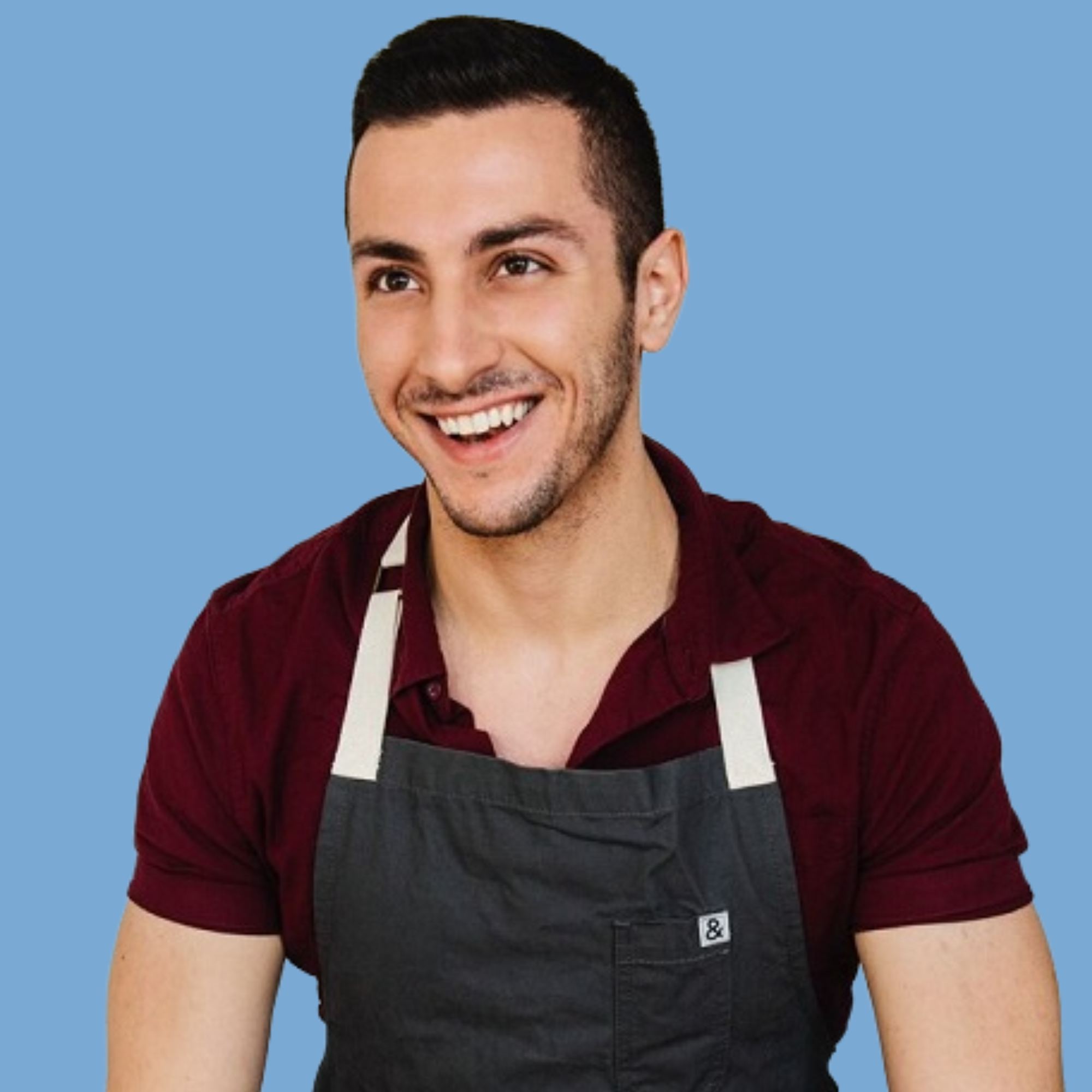
Shabbat Is For Everyone! Jewish Cooking as Universal Spiritual Practice with “Food Rabbi” Jake Cohen
A lot of your listeners, they're looking for a specific viewpoint.
What are you learning about where the Jewish community is at at the end of 2025?
I have some of the crazy stories, many of which you'll never hear shared publicly.
I mean, you're not wearing a kippah, but you are like a food rabbi.
My job is to make you feel proud about cooking Jewish food, period.
This episode is brought to you by American Friends of the Hebrew University.
To learn more, visit afhu.org today.
What up Fam Bruchim Haba’im, welcome one and all to the final.
Being Jewish with Jonah Platt of 2025 time, she is a fly in.
We are smack dab in the middle of Hanukkah, the Festival of Lights with Christmas and New Year's Eve on the horizon for those who celebrate and with all these marvelous holidays on the calendar.
Who better to have in studio for today's episode than the Crown Prince of the Festive Meal himself?
He's a New York Times bestselling cookbook author, a culinary connector, a recipe raconteur, and one of the most joyful and unapologetically Jewish voices in pop culture today.
His recipes are not just instructions for how to cook, but how to create a warm and inviting space for connection and take full ownership of your Jewish identity while you're at it.
He's a mensch, a mocker, and the tallest person I've spoken to in quite some time.
Please welcome the Dinner Party animal, Mr. Jake Cohen.
That is like hands down, the best introduction I think I've ever had on a podcast, on a TV show.
Anything.
No, that was, uh, that was really sweet.
Thank you.
You nailed it.
Yeah.
I take a lot of pride in that.
Amazing.
It's so great to see you here, to have you here in studio.
The last time we saw each other was at the big Shabbat.
Yeah.
Congrats on your Guinness record.
I mean, we did it.
It's, it's so funny because I've been so involved with.
The Stryker Center kind of since the beginning of my career.
Oh, that's nice.
When they ask Jump, I say, how high?
Because they really have made some incredible life changing event focused, uh, Jewish experiences, which I think is what we need as we look at like, what's the future of Jews actually going to Temple.
It's creating new, novel, experiential, uh, things like, like what they do programmatically.
Well, that was a.
Sick free ad for the Striker Center.
Shout out to you guys.
They think outside the box.
Same the deal with like a 3000 person Shabbat dinner, which was so wild.
It was so beautifully done.
Yeah, like the execution of it was pretty amazing.
Pretty amazing.
And for such a massive scale, and yet it still felt quite intimate.
Yeah.
What, what was your role at the Shabb?
Honestly, I helped, uh, provide some recipes for the menu itself.
It was a combination of some of the, the brightest names in, in Jewish food.
Yeah, the icon, Joe Nathan, who kind of paved the way for everyone.
Adina Sussman iconic cookbook author, um, BJ Bari, who's a wonderful cookbook author.
And, um, Ethiopian Israeli chef from, uh, who lives in Harlem.
What's the name of her spot?
Uh, cion Cafe.
That's right.
We did that.
And then they asked us obviously to lead the prayers and.
Uh, I chose the Hale 'cause I'm kind of like, you're the Hale guy.
I'm the hale guy.
Makes perfect sense.
Yeah.
Uh, amazing.
So you have found such a beautiful way to be so Jewish as a professional, like as Jewish as one can be as a professional and what they do, but appeal to such a broad audience.
What's interesting to me though, is how you got there, because you know, from what I've read and heard from you, it's not like you were destined to be the Jewish.
Cook guy at all.
You grew up, as you say, uh, uh, as a high holiday Jew.
Yeah.
Not super engaged or connected, but you, you were in Dix Hills, is that right?
For high school?
I grew up in Bayside, Queens up until high school, and then I went to, uh, to Melville, Dix Hills.
I was a part of like the New York City Magnet program.
So it was the same class every year and it was a very diverse class, but not of Jews.
Um, and at least in my neighborhood, and then going to.
Dix Hills.
It was just, it just flipped.
And we, we moved out right for, for Bar bat Mitzvah season.
And it was just, it was a little, a little daunting.
It was very, um, keeping up with the Steins.
Mm-hmm.
Mm-hmm.
It was a new experience, but like so many, I went through Hebrew school, got Bar Mitzvah, and then you fall off the cliff and then we fall off the Cliff Dix Hills Jewish Center.
The Habad of Dix Hills.
The Habad of Dix Hills.
Yeah.
Okay.
My wife is from Dix Hills.
Okay.
She went to Comac.
She went to Mak.
Nice.
Yeah, so I'm, I'm heading to Dix Hills in a couple, couple weeks.
Magical.
I'll say hi for you.
After your bar mitzvah you, you go off this cliff of so many American Jews do.
Yeah.
We've talked about that a lot on this show.
What's your next turning point that sort of leads you on your journey, sort of the next big step?
Between that and you know, releasing a cookbook called Jewish.
I went straight from high school as a culinary school.
I had kind of then worked my way back into restaurants, which was more fine dining, like hoe American cuisine.
I knew I never wanted to like run a restaurant or own a restaurant.
So I quickly moved to where I really have always known I was gonna be, which is the food guy.
I always wanted to be a personality.
I always wanted to be doing kind of exactly what I'm doing.
That was like always the plan and I.
Moved into test kitchens running, uh, recipe development and testing for, uh, food magazines.
And this was kind of where I really first got a taste of editorial.
And when given the opportunity to like write, there weren't a ton of.
Ways to kind of crack your way in.
With the exception of there weren't a ton of Jews on staff at the first magazine I worked at Sever.
And as a result, when Rosh Hashanah would come around, when Passover would come around, they would come to me and they'd be like, would you like to write about something from your family?
A family recipe?
And it was around Rosh Hashanah and I wrote this piece on my.
Uh, great-grandmother's apple cake, and it was the first time that I really kind of had a focus on food through my own personal identity and not just cooking.
Right.
And it was just so easy.
And not only was it easy, but it resonated so strongly because that's what everyone craves.
No one's craving a specific viewpoint.
I mean, some people are like, I'm not gonna lie, a lot of your listeners, they're looking for a specific viewpoint.
Yeah, that's of course, that being said, the most important thing is.
Authenticity.
Yes.
And so if you are able to convey your own truth, your own narrative, your own anecdote, people will start to see those dynamics, whether they're Jewish or not.
They'll see the, the concept of a diaspora is a shared experience across immigrant communities everywhere that have ended up in America.
By us continuing to create content that both serves as really a way for Jews to feel seen, as well as people from other cultures to find common ground with us.
That's, that's the real goal.
Love that answer.
What I'm curious about what you said is, you know, they came to you and said, would you like to write about Rosh Hashanah?
Yeah.
Did they come to you because you're like the token Jew and they just knew your last name was Cohen, or like you were already like, I'm a Jewish guy.
Not even.
It was one of those things where I.
I was looking to, I was really kind of making it clear that I wanted to get some bylines in the magazine.
And in the magazine was much more difficult.
It was something that was reserved for kind of higher end.
Mm-hmm.
Uh, food writers.
There was like a little test kitchen section in the back that I would contribute to every month.
Um, but this was the beginning.
I, a lot of it's just timing.
I entered food editorial.
At the real transition of the end of this heightened print era where we had these crazy budgets and we'd send writers on these wild trips, and I would run around the city buying these crazy ingredients, just dropping hundreds of dollars for recipe testing.
And it was very much a Devil Wear's Prada, but for food.
And this was the moment as we transitioned away from print and into digital.
Mm-hmm.
And with that came just.
Absolute no limits in terms of word count, no limits in terms of the amount of content.
All they wanted was more content, and so I'm the one who's begging to get some experience and so they're like, okay, this is what we're gonna give to you.
I, I think it really also kind of just awoke something in me of when I saw the way that it made me feel to both adapt.
Um.
A family recipe and have it be through this lens of Jewish identity.
You start to understand that so much of my viewpoint around hospitality is through this lens of, of the Jewish holidays.
When I think about my like core food memories, it was around Passover, Rosh Hashanah.
Meals at my grandmother's meals at my Aunt Susie's, uh, meals that my mother would host, and it was these Jewish matriarchs of the family that really took these moments where they were pure abundance when it came to hospitality, food gathering, fighting, all of it.
Mm-hmm.
It was all, all at one.
When I think of.
The core of why I love what I do, it comes from that and I, I think that foundation is what led me to eventually start like throwing my own dinner parties when I was in high school and really kind of getting into the idea of, of cooking for others as more than just a hobby and into something that I had to make a professional endeavor.
Right.
You start to feel this connection through food.
Yeah.
To your Jewish identity, to your.
Family.
How do you explore that?
Do you explore that outside of food or is it really your full connection is through food and hospitality?
Through food and hospitality.
It wasn't until post culinary school, living in New York.
Where I had, I just had my head down in my twenties working about just like building up my career.
Yeah.
And I, I think there was really a day where, um, my ex and I woke up and we realized we never put some emphasis on like building community.
And that's where we really kind of started focusing on Shabbat and hosting Shabbat, which was not something that we really did more than.
Once a year, but it was definitely something that I became quickly obsessed with.
I became, uh, involved with this organization called One Table.
Sure.
Um, which I'm now on the board of, and I think is truly one of the most magical organizations that's helping.
Um, really young people in their twenties and thirties find and maintain a sustainable Shabbat practice through resources, through, uh, monetary grants to help pay for groceries, to help pay for a table, to help buy you cookbooks, to help buy you candlesticks.
Wow.
Anything you might need.
They help kind of lower the barrier for entry for really anyone to start hosting Shabbat.
Shout out to one table.
It's shout out to one table.
Always.
And, and when I think about it, so much of it is this like.
A lot of the things that you'll probably take from this podcast from a lot of Jewish, uh, Jewish media is these ideas of, of like ancient Jewish wisdom being wildly applicable to the universe.
Mm-hmm.
And I, I always compare it to yoga, which obviously began as a, a Hindi practice and is now something that everyone does because it is good for you.
And I feel very passionately that Shabbat is the same thing.
Right.
How have your Shabbat dinners evolved since you started?
I used to throw really big ones.
I think I, I grew, there would be 12 people every Friday, and then like every quarter I would throw one with like 60 to 80.
Oh my God.
And again, I was, I was a 26-year-old doing this in like the, the lounge of my mother's building in Long Island City because I have a table that could fit 12.
She was like, you can use my table.
I just get to sit every time you host a bot.
Where do you put the 60 people?
The 60 people would be in, they had like a, an event space lounge in her building and we'd just take it over and I'd come down and make a giant pot of soup, bunch of Chas, a bunch of dips.
We do cre.
I would work with, um, Murray's cheese and they would, I would go over and they would just give me, we.
Pounds and pounds of cheese.
And I would make these giant cheese boards that would like span over tables for like grazing.
Oh my God.
And everyone would come and they would eat.
And who's everyone?
Who, who were the 80 people that you're inviting to Shaba?
These were friends.
These were people from the internet.
These were, this was intergenerational.
These were like big food writers and, and cookbook authors.
People that have now become kind of larger internet personalities.
Um, I'll say like the, at the first Shabbat, it was myself.
My sister, um, it was Evan Ross Katz and Adam Eli.
It was just like this ground level of so many Jewish personalities that now very much have very differing, uh, opinions on everything.
And now I would say Shabbat's a lot more sacred to me.
I think I was using it really to build community, and now I'm in a place of.
A little more protection where people all the time will come up to me at book signings and all these things and be like, how do I get an invite to Shabbat?
Right.
And it maybe it's like, I don't know.
I, I try to be very kind about it, but it's like, you're a stranger, right?
Like, I don't invite, we have to have had a meal outside of Shabbat for you to get an invite to Shabbat.
Mm.
Shabbat is like the.
The top of the top right of intimacy for me.
I find it wildly intimate and I've been burned many times before of opening my shops table to people who I think have not respected that I find like cooking a meal for someone.
I find hosting a dinner and inviting you very intimate, like more intimate than sex.
And so when I feel disrespected by someone, by either.
Not showing up or not be, not fi like I don't do it for any reason other than extending myself to them.
Right.
But when I feel like that's not appreciated, it is information that I, I then take and I completely understand.
That seems totally fair to me.
How do you make Shabbat holy intention?
It's, it really is.
It's, it's, it's very simple.
I think the issue that a lot of people come is that they, they lead with stress.
They lead with this idea that they're, that it's stressful to host.
Yeah, it's labor intensive, but it's not stressful.
'cause a lot of this just comes down to your own, um, your own mindset.
If you, if you are going to label this as a stressful experience, then you will find stress.
If you label this as a fun experience, that is a challenge that you are taking with joy because you're getting to host people you love.
You will have a great time whether things go awry or not.
When people have their, their mindset on this like Martha Stewart esque thing, it's like that should be a goal for you if that's what you want your Shabbat to look like.
But to create that as a barrier to entry that unless it looks like that you can't start.
That is crazy.
To me.
It feels a little bit like.
Like fitness.
It's exactly, I say this and this goes back to the yoga thing.
So glad you said that.
So.
You go and you take a yoga class and you don't beat yourself up because you can't touch your toes yet.
Right.
You know, you were there because it's a discipline to get you towards your goal, and the more you do it, the closer you get towards your goal.
Hosting is no different.
Right.
To me, it's like when you see on Instagram people who are totally ripped and you're like me.
Well, like you.
Yeah.
And you're like, well, those people do it and breathe it and think it and live it all day every day, which is you.
Yeah.
Yeah.
And.
You're not gonna be at that level the first time.
Wasn't first.
You walk into a gym, wasn't, I know my answer.
I'm just curious to yours, what do you think is the ideal number of people at a table?
The maximum to be having a single intimate conversation?
Six people I.
You think six?
I go five.
That's, yeah, five.
Five is good.
I think once you get to six, you can split into two.
It kind of depends.
It depends on, on the dynamic of five individuals.
If you're getting into couple territory, then you can just go for six mm.
So you're in this intimate setting at these Shabbats with Jews every week.
Yeah.
What are you learning about where the Jewish community is at right now, at the end of 2025, I think, uh, one of the things that I'm really proud of is a lot of the, the Shabbat tables that I'm a part of.
I have a lot of, of heated debates.
A lot of people are just looking for an echo chamber mm-hmm.
Of people that they can just like rant with about the same old things and not end up having real discussions to find differing opinions, find common ground, find ways forward, solution oriented, um, conversations.
And I'm not saying that that should be what you crave or what you need for every Shabbat.
People say it a lot in terms of, uh.
Relationships where, when in like therapy talk of, are you looking for, are you looking for comfort or solutions?
Right?
And I feel the same way about hosting.
A dinner?
Mm.
Are you looking for deep conversation?
Are you looking for levity?
What is the vibe of the crew?
What has their week look like?
It's that idea of like basic people talk about people, uh, one level over, talks about events and then real intellectual talk about ideas.
Yes.
I think you have to have all three at every Shabbat.
I am both talking about like people and pop culture in addition to kind of deeper political conversations in which we have very heated debates.
Screaming.
Screaming, yeah.
And it's still with love and there is no one.
One route for each opinion.
And again, people are gonna be listening to this and they're gonna be projecting their own idea of what I'm talking about.
So can you give me one?
I I would say, I think really what I.
Find as my like core thing of these spaces that I build.
It's the intersection of the Jewish world and the queer world.
Mm-hmm.
And where the two overlap, where we find common ground, where we find incredible difference.
I think there's this idea of like, are you a queer Jew?
Where you a Jewish queer?
And everyone has a different answer to that.
Sure.
And all are valid and all create different nuance to what their priorities are and how their mindset applies to really every issue.
And so I love having a table of people that you would expect to all feel the same way, and really we don't.
Right.
So to circle back to the, the question that sent us down this path is what are, what are you hearing?
If you had to sort of distill a couple of, you know, temp checks of, of where the Jewish community is at, like, at your, at your table, what are the the most.
Prevalent conversations.
I would say the most prevalent conversations are where we move forward for coexistence in the Middle East.
Where do we move forward in terms of the American Jewish narrative and what our priorities are?
Where do we move forward with our place and, um, comfort within the greater civil rights movement and where.
Do we start to create actual understanding of Jewish identity as an ethno religion and in which ways you are practicing Judaism and in which ways you are using your identity based on just simple ethnicity.
Um, and there's validity to all of these viewpoints.
But I think it's very interesting because I.
I'm having these conversations through the lens of practicing Judaism.
However, the way that I am practicing this Judaism looks very different than a lot of other communities, and there is no, I would say personal opinion on like what's the right way to do it.
Mm-hmm.
But I do think that there is a line around actually practicing ritual versus just using identity for.
Argument, what do you do in your Shabbat?
That is, that one would categorize as the religious component.
The rituals of prayer around Shabbat are really rooted in, in self-care and, and a lot of spirituality.
So you have the idea of like lighting the candles, which is super important.
That's the last piece of work, and you are igniting these candles, and that's the last piece of work.
You do that before you sanctify this moment as a day of rest.
Then you go into the wine and that could be.
I just launched an edible with Token Jew and Nice.
We were doing the kiddish over.
People got to choose whether they wanted to have wine or an edible, because really what it is, is it's taking the mundane, something like grapes, something like, uh, something like marijuana, a leaf.
And it's this transformative process into really the divine of how it feels to drink, how it feels to partake or even if you are sober, how you create the real sanctification of this day as separate from your work week.
Yeah.
As this moment of rest.
And then we go into the challah, which is like obviously the thing that I'm most proud of, the thing that I'm, I'm most passionate about, even if as projects might ebb and flow out of, uh, in and out of, of intense Judaism.
At my core challah is such like a foundational element that it's just always gonna be, I'm always gonna be the hala guy.
I've gotten very like witchy spiritual, and the last time I was in Jerusalem was the first time that I really went after becoming like a lot more spiritual and witchy, and I was at the hotel and.
I had this like really wild revelation of, of why the experience is so powerful for me.
I see this as not necessarily this connection to the temple, this connection to to direct line to Hashem.
It is a physical item that our entire community touches and puts in energy and prayer into.
And that is what supercharges it so that when you are going and praying at the hotel, you are finding your energy connected to your community.
And I'm big on energy, and I truly believe that just because we've chosen the hotel doesn't mean that that's the only place that we could have this kind of experience with.
I do say it's like if we decided to all touch the walls at Zabars and pray into them, eventually it would turn into an equally powerful Jewish experience.
And to me, the challah is the equivalent of that on a small weekly level because you all sit around the table and say a prayer of gratitude and infuse that challah and that meal with this gratitude that you then eat.
And by doing that, you're able to embody what this is all about.
I mean, you're not wearing a kippah, but you are like a food rabbi.
Yeah, I get that a lot.
I'm very inspired already by this conversation.
I mean, we talk about Shabbat on the show all the time, how amazing it is.
Yeah.
I've, I've joked like this show could be called the Shabbat Show.
Like Ev, everybody loves Shabbat so deeply.
You're bringing something new to it that I, you know.
Yeah.
And this couldn't be the show.
Because it's not, because not everything is for public consumption.
I, I think we need to move away from, as a community is this idea that everything has to be publicly consumed.
Everything has to be for, uh, interpretation and nothing is reserved for yourself.
We don't, we just, our brains aren't meant to have this kind of, of, um, real lack of intimacy and, and really Shabbat and intimacy are, are.
Intertwined for me.
And so I think to help people unlock a desire to dive deeper or potentially start a Shabbat practice, that's why it's like amazing.
And then head to one table.org to start to get connected with people or find a Shabbat or host your own for Shabbat and start to go through your own discipline where you start somewhere and see where it goes.
But not necessarily like.
Just replicate what I do.
I'm giving you recipes because I know that when you make my chala, it's gonna come out delicious.
What you do with that Chala, who you surround at the table, what you talk about, that's none of my business, right?
That's up to you.
This year marks a major milestone.
100 years for the Hebrew University of Jerusalem.
A place built on dreams, perseverance, and hope.
From its founding to today, it has stood as a beacon of learning, innovation, and possibility ranked among the world's top 100 universities.
Hebrew University was built on the dream of founders like Albert Einstein, a dream rooted in Jewish ideals of inquiry to K Olam, and giving back those dreams live on in every breakthrough, every idea, and every voice coming out of the Hebrew University.
Now there's a podcast that captures that spirit.
The view from Mount Scopus straight from Jerusalem is share stories that matter.
Stories of scientists working to cure diseases, thinkers fighting for justice and democracy, and individuals whose work touches us all.
Listening to it, you feel connected to a place, to a history, to a community.
Each episode is more than content.
It's a testimony to dreams realized to values passed on to hope alive.
If you care about ideas, humanity, resilience, listen to the view from Mount Scopus available wherever you get your podcasts.
Let's get to your cookbooks.
Yeah.
So your first cookbook, sort of like a half cookbook, half memoir, Jew ish.
Yeah.
Why Jew ish.
It was kind of a play on, on what I wanted to really have a conversation on, which is modern Jewish ritual and cooking.
And there is this kind of, I would say, real habit from my mother's generation.
And I would say a lot of these are the children of survivors and first gen Americans where they would self-identify as Jewish, which means they're no longer necessarily practicing other than potentially the high holidays.
Uh, it's still a main cultural element in terms of how they eat, uh, of going to deli of, of.
F partaking in a Bris, but not necessarily.
Having it an active part of their daily ritual, weekly ritual, even annual ritual.
What is the connection to being a survivor?
Family trauma has different ways of manifesting in in different communities and people, and I think for many it they doubled down and became more religious.
And I would say in America, a huge percentage of that community became more secular.
And my grandmother's a survivor.
She was a hidden child and, and.
She grew up incredibly religious and kosher.
And my, my grandfather whose, whose, uh, father was a survivor, um, and was hidden during the war, like, was never really like very religious.
And my grandmother kind of just bowed to that of becoming a secular family that did the holidays but not necessarily kept kosher anymore and any of that stuff.
And so for me, when I, I think about what I wanted to say with this book, it was.
I am Jewish full stop.
The way that I practice my Judaism, the way that I cook Jewish food is not traditional.
There are huge elements of tradition.
There are huge elements of preservation.
There are huge elements of blending of diasporic communities.
But at the end of the day, it's my viewpoint of how I would like to kind of.
Continue an angel tradition of Jews moving and adapting their recipes and rituals to match their new home.
Um, and so the way that I cook, the way that I host Shabbat is the ish.
It's not in the identity, it's in the practice.
Mm-hmm.
And that, I think, is really where I wanted to focus, because I found that it was a barrier for entry for so many people where they felt as if they, if they couldn't practice.
Their grandparents' Judaism then It wasn't allowed.
It wasn't right.
It wasn't right.
They were, they didn't have ownership of it, and I wanted to really kind of create inspiration around finding that ownership of Jewish ritual, Jewish cooking, Shabbat, how much of your audience have you identified as being not Jewish?
I mean, a lot.
It's like I have like a million on Instagram, 1.4 million on TikTok.
It's like to assume that I have.
Uh, like an enormous percentage of the Jewish people.
Yeah.
That's crazy.
Right?
My North Star is Fran Dresher.
Like I'm a huge nanny fan.
I love her.
And to me, I think she is the single individual person who has done more for American jewelry in the last, uh, 30 years than any individual person.
Because, say more.
She created a character and a vehicle for America to fall in love with a Jewish family.
From a place of pure joy, and I am a huge Seinfeld fan.
Mm-hmm.
I love Larry David.
I love Curb, I love it.
But these are car, like Seinfeld is about a show about the people you hate.
Like they're not about good people.
That's why the end of Seinfeld goes the way it goes.
Right.
Versus the nanny was about the, the quirks of a Jewish family that have hearts of gold and for people to see themselves and fall in love with this storyline.
For me it was, it was, I think.
Quintessential for the normalization of these kinds of Jewish narratives and not from a place of the Holocaust, which a lot of, a lot of Jewish narratives and we think about like what shows get a claim, are still rooted in, in trauma.
Sort of the only, the only safe Jewish narrative we're allowed to tell is where the Jews are, where it's historical and the Jews of the victims.
And that's why it's like to find shows and platforms like that.
Like the Nanny.
Yeah, to me is where we.
Are able to actually kind of make deep impact.
A hundred percent.
Okay, so your second book.
I, Kash Uhhuh, you're bringing Jewish connection down from sort of the bigger events to the everyday Yeah.
Which is beautiful.
Are there, are there other ways you do that outside of food?
Yeah, that's a, that's a good question.
So it's like, to tie it back, so the first book, the question is, are you Jewish?
I'm Jish.
That was the call response that I, I wanted to kind of play off in that book.
Mm-hmm.
And for my next book, it was, are You Hungry?
And the response was always ganache.
I Ganache.
Exactly.
Said like that.
And for me it was seeing the way that my book was so used, um, I would get thousands of messages and tags every holiday of people cooking these recipes.
And then.
Nothing.
Right.
Silence.
And for me it was this idea of like, why do we only cook Jewish food on the holidays?
Why can't it be part of our everyday routine?
And I really wanted to, to create a, a, a book that helped kind of push forward Jewish flavors and ingredients and techniques into.
Everyday cooking repertoires.
I mean, you mentioned it earlier in this interview, this abundance.
Yeah.
Sort of what, what you categorize as this Grandma style.
Yeah.
Abundance.
Tell me more about your grandma.
So you mentioned her a little bit.
Yeah.
Hidden child.
Hidden child.
Yeah.
What, what does that mean?
Where was she?
What was going on?
She's from Belgium.
She was from the Edge.
Her parents were taken, um, to the slave labor camps in the north of France at Don.
And then my great-grandmother had bribed.
The nuns to hide her.
And so she was hidden while they were there and when they were liberated, they were able to to get her back.
Amazing.
And, um, then they had had two more kids, my, my aunt and uncle, and then eventually.
My great-grandmother and those three kids made their way to New York, which is where she met my grandfather in Queens.
My grandmother were Polish Jews living in Belgium.
My grandfather was a family of German Jews living in Belgium.
And my great-grandfather was on a work trip and was captured and sent to Saint the South France by Bordeaux again.
And this, these are always like a dime a dozen story of, of miracles, right?
And it was that he.
There was a SS soldier who recognized his dialect and had a, a business partner from the region told him which latrine door would be unlocked so they could try to escape.
My God.
And they were in groups of four and like of the four groups, his was the only one that made it out.
And then they had to, then they hid out in a brothel for months until he was able to, to somehow bribe people to get him back to Belgium.
And then they had to make their own journey then from Belgium.
To Lisbon in which they got like one of the last boats out to Havana and here you are.
And Yeah.
Yeah, yeah.
And it's, it's, you hear these stories and it's just, it's, it's mind boggling that we complain about anything.
I love that.
Getting back to that abundance thing, how, how did that influence.
The, the cookbook, it's really how I practice hospitality.
It's, it's having things on hand so that I just don't love going out to a restaurant as much as I do of like having someone over.
Mm-hmm.
I'm very much a homebody when it comes to, to meals and to kind of create the.
Tome for how I do that for people.
What are the cakes that I have?
The cakes and cookies I have on the counter?
What are the soups I have frozen in the freezer?
What are the salads and sandwiches that I can just whip up at a moment's notice?
Like what are the things that I do to feed those?
I love, I'm like, I'm big on acts of service, so.
I'm like, if I have a crush on you, not on the first date, but like eventually I'll start cooking for you.
If you are a friend of mine, I'll start having you over for lunches or dinners or come by for coffee and a slice of cake, like things like that.
That's when I talk about grandma hospitality, it's like what are the things that I'm baking so that when anyone drops by, especially like my apartment is, is so much a rotating door of, of Jewish creatives and.
You never know who's gonna come by.
And then it's like to always have something that I can just pull out is really special to then have these kinds of moments of connection with, um, with people you're getting to know.
So that's what I'm trying to, like, on a practical standpoint, you're like, oh, I have this cake ready to go.
Like, yeah.
How, how much time are you spending like making cakes to have on hand?
Couple a week again.
They, they, yeah, I think so.
So that's, I mean, that's a, to like, to, to live the Jake Cohen lifestyle.
Yeah.
But I'm using it.
You spend hours and hours and hours, right?
Yes.
Hours and hours and hours.
But again, I'm then using that for content.
All, all of those things.
Part of what I'm trying to like chip away at in this interview is, is personal for me because I love the idea of cooking.
Yeah.
And when I do it, I enjoy it.
But for me, my big barrier to entry is time.
Okay.
And I'm always like, well, I don't have the time to do it, so I'm not gonna do it.
You have time.
Listen, you have time to scroll on TikTok and Instagram.
That's like, well, first of all, not TikTok, but like Instagram.
Yeah.
But that's, you know, like 15 minutes.
Like I can't, I can't make a meal in 15 minutes.
I, if we want, we, we could pull, we could pull out your phone and really get the actual numbers and then we can, we can, we can call it out.
Oh, okay.
Um, I think for the, for most people watching, if they actually opened up their settings of how much time they spent on social media and they reduced it down by.
Half they would've time to make something.
Okay.
Challenge accepted.
I, I just, I know it, it's about priorities.
I feel people say the same thing about, again, we're gonna keep going to the gym analogy, right?
People say the same thing about working out and what's the difference is you make time.
Right?
You make time.
It's not, I'm not saying you have to go elaborate.
I'm not saying you have to start.
Baking challah.
I mean, but if you want it to be a priority, you have to make it a priority.
If you want to be a priority, you make it a priority.
It's, I believe one of the things that really dictates everything in this world for me is the, like I do a lot of like, I would say, women relationship podcasts.
Mm-hmm.
Because I just have like some pearls of wisdom, and I think the number one thing that you can take away from those podcasts that are applicable to everything in this world is if he wanted to, he would.
Right.
So it's like if you wanted to bake Ha, you would 100% on that.
By the way.
If you wanted to make time to cook dinner for your family, you would, if you wanted to invite people over, even though you didn't have a table, you would.
And you just have to go in and be like, do I actually want it?
Sometimes people don't want that, and that's okay.
If he was really into you, he would call you.
He would call you.
It's not, it's not our, it's so easy.
It's easy.
It's it, it all comes down to priorities.
100%.
Um, okay, let's talk about dinner Party Animal Love your newest book.
Yeah.
Fantastic.
I, I loved reading it.
Thank you.
Um, in your intro, you know, if Jewish is a memoir, you call this like a self-help book.
Yeah.
What does that mean?
I really see the act of hosting dinner parties as like crucially integral to your own self care.
Of, of going to the gym, meditating, eating.
Well, building community is to me just as important.
And I think a lot of people who start to explore, um, cooking, don't know how to make the jump from making one dish to making a meal.
Right.
And so I wanted to create a book, which was all full menus.
And so just like.
16 menus for 16 different occasions where I give you your grocery list, your timeline, your recipes, everything you need to know.
From start to finish of how to host.
Yeah.
I love the practical steps in there of like, oh, this element you can prepare multiple days in advance.
Yeah.
Here's how many days in advance you can do it.
Here's how long you can keep it.
Like that kind of stuff was very novel to me, at least in, in a cookbook.
And uh, and you could use 'em as menus, you could use 'em as individual recipes.
It's like there's a lot of fun to that.
But I love also what you just said about.
Cooking as a mindset, as a vehicle for, for wellness, I mean for like building community is as important as these other things that we're talking about and thinking of cooking as the way to go about that and hosting and prioritizing that.
It's not a a, something I've heard articulated before.
Yeah, so I think that's really important.
I think that that's everything and I think you.
It, it's really what I, what I talk about in the sense of bringing Jewish values into your every day.
It's like you.
Should be hosting Shabbat, but you could also bring that intention of creating space for presence and nourishing those you love into any day of the week.
Yeah.
And so the idea of like hosting a dinner party with a Shabbat mindset is quite easy.
Um, even if you're not gonna go through those.
Same rituals, to have the same intentions is quite beautiful.
I read your intro.
I'm like, all right, I got this.
This is, this is awesome.
And then I open it up and it's like, make your own bagels and locks.
I was like, I'm out.
Yeah, this is, but I, that's the thing is, it's so hard, for example, for that menu, I.
One of the things that I call out is, look, some of these are project recipes.
Oh yeah.
And if you want to learn how to make bagels, which to be fair, my recipe tester, her son is 17, he's, he tested the recipe and now he makes bagels almost every weekend for all of his friends.
And he's a teenager.
That's awesome.
And he has found it to be the easiest thing to do.
Anyone can cook.
It's very ouie.
Sure.
And I say it's like, great, if you wanna have this be a project to do with your kids this weekend, or for you and your friends to bake bagels and you don't wanna carry your own salmon.
Buy it, right?
If you wanna learn how to make GR locks and you wanna buy bagels, do that.
If you wanna just make the topping salad that I serve with it, and then just buy everything else, God bless.
I'm not your mother.
Right?
And but the issue is, is that people don't give themselves permission to, to find some kind of in between, right?
A big.
Part of this book is, it's, it's really a love letter to your community.
Yeah.
Your actual community.
The, the book is covered in photos of the people who have been at your table.
Yeah.
What was the thinking behind framing the book that way?
I really wanted this human element.
I think it was so crucial because it was really where I, um.
I found such joy, I found such, such passion.
I think without a human element, people couldn't really visualize like what the reason is for hosting.
And the reason is to, to see the faces.
That, and the expressions and everything was very hyperbolic at the photo shoot.
Like I wanted these wildly like excitement and, and, and I wanted to be all a little cartoonish because that's.
That's what you're doing this for.
And it really, it was like a last minute thing.
I was gonna just have one of the menus shot as like a group shot.
I wanted to have all of my friends and family that had like tasted and tested all the recipes and we'd just finished Passover and I was doing it with, um, with my roommates and with with Benny Blanco and his family, and.
He wanted to be in the book and I wanted him in the book, but he was leaving New York the day of our first day of shooting.
And so he is like, can I come day one first thing in the morning before I leave back to la?
And I was like, done.
Let's make it happen.
And so he showed up and my team just randomly created a fake dinner party set that he sat down and he posed with one of the recipes and we clicked a few pictures and it was so great that we saw it and we're like.
Oh, this is what we're doing.
And I blast texted everyone in my life, all my friends, all my family, and I said, Hey, you have the next eight days to come to the studio and have your portrait taken, and we will be grabbing whatever food we're shooting and you'll sit down.
And so we'd be like shooting a full menu and then all of a sudden like, oh, Katie Kirk's here, everyone stop everything.
And she sits down and does it.
Or is like, oh, my grandma's here.
Oh, Isaac mra, he's here.
What do we have to shoot for him to shoot with?
And.
It created like the most insanely beautiful spread of, of a collage of the people that are truly the most important to me in my life, many of whom I'm not even that close with anymore.
And yet, I always see books as these little time capsules of, of a two year period of what I, I really kind of focused on.
And this was my community for those two years, and that was really special.
Who, of all the, the people included in this book, who's like the model dinner guest?
I really am gonna say Benny Blanco.
'cause he's the only person I actually cook with.
Like what do you mean?
Like he helps in the kitchen.
He, he'll help in the kitchen.
I'll help him in the kitchen.
He's really actually one of the only people that I'll, I'll do a joint Shabbat with.
Wow.
And we'll like split up the meal.
Or we, like when he was in town, we like last we would do like dinner with like his mom and my sister and her boyfriend.
And we were just like.
Tag team dinner.
That's so nice.
Okay.
Who's the pickiest in the group?
My sister, my sister's picky.
She's honestly, she, she showed up to that the, the weed Shabbat I did on Friday.
Yeah.
And she, she showed up.
She goes, we already ate just in case.
Um, because she's like, I'm worried the food's not gonna be good.
The food was excellent.
And, and she had like a couple bites.
She's like, okay, this was good.
I didn't have to eat before.
And yet she's, she is, she could be a monster.
Wow.
Alright sis.
Um, whose feedback means the most?
Probably my mom and my sister.
Yeah, they're, they're both the pickiest eaters.
My mom's also the most violently enthusiastic about my cooking.
Um, so, you know, you know you've hid it if she's gone off.
Yes.
Okay.
You mentioned this earlier, curb enthusiasm, Larry David.
Yeah.
You know there's this episode where he talks about middling.
Yeah.
Like who's gonna sit in the middle of the table?
I'm the ultimate middler.
I walk in and I just sit in the middle.
So you middle at your own tables?
I middle at my own table.
Okay.
Depends who's coming.
You have to be very like careful.
'cause you don't wanna have the division of two conversations.
You want someone who's gonna hold up whole one.
Exactly.
You gotta facilitate, you gotta conduct.
And then there are people that just don't know how to middle.
No, believe me.
I know.
Yeah.
Are there any particular recipes, either individual or as the whole meal in the, in the book that you're like super proud of?
So there's this celebration meal of a, um.
Like growing up in the city, I would say like celebrations meant you went to like old school steakhouse, um, and or, or old school Italian restaurant.
Those were like the two, two options.
Yeah.
Um, and I love a steakhouse meal.
It's kind of where we would do birthday celebrations.
Even as adults, especially in New York, you have.
Such amazing kind of moments.
And so I wanted to create like the ultimate birthday celebration menu and it's like a steak dinner and there's this chocolate cake that's on the back cover of the book, and I truly think it is one of the most special recipes I've ever developed.
It took so much work.
Again, you mentioned this earlier about like the mindset of kitchen cooking, not being stressful.
Yeah.
It's gonna be a good time.
What are some of the, the best practices that keep it.
Calm because I mean, let's be real.
For a lot of people, especially the novice, like it is a bit stressful.
There's a deadline.
This is new.
It's labor intensive, it's preparation.
If you look at most of the menus in my book, the majority of the recipes are done.
Pretty much to completion before people arrive and you're just reheating, um, and you're kind of picking dishes and menus and, and creating a vibe that is, uh, both feasible to do in that format so that you don't sacrifice quality, but you do gain a lot of time and, and energy to be with those that you're hosting.
And then the other is just the, the meditation of, of.
Uh, coming into it of like, I'm gonna have a good time.
I'm so excited to see these people, right?
Even if things go awry, awry, we could order a pizza and have a great night, which has happened plenty of times where it's like, I've invited people and at the last minute I'm just like, I wanna make up some crazy excuse of why I can cancel.
And then I go in and I'm like, do I actually wanna cancel or do I just not want to cook?
Right?
And then once I realized that nine times outta 10, I have the same move, which is everyone's coming over, I always have a freezer full of like high-end frozen bagels and I make pizza bagels for everyone.
And that's it.
And everyone has the best time and they love it.
Whether you are a wildly, um, famous person I'm trying to impress or just someone I've known forever, uh.
No one doesn't like a piece of bagel unless they're gluten-free.
Do you make those bagels or you buy 'em?
I buy 'em.
I always have like two bags of popup bagels in the freezer just for this.
Mm.
You've been unabashedly supportive of Jews and of Israel, and I know from a lot of the conversations I've had that, that it's been hard to do that in, in the queer community for, for mainstream Jews.
There's a lot of hostility there.
Do you feel that So interesting that you say like unabashedly supportive of Israel.
I.
I don't know if that's the truth.
Oh yeah.
I'm so proud to be Jewish and I love Israel.
Yeah, that's, that's what I mean.
I don't mean necessarily supportive of its decision making or its, but that's, there is such this wild thing.
Especially, I was just there in June for, for actually for a federation, um, mission Amazing.
Uh, for the LGBT, part of UJA and then I stayed for Pride, which got canceled because we were stuck with the war with Iran.
And you know, I think there's a big divide between Israeli Jews, especially in the queer community and, um, American Jews, both queer and not, there are so many people.
In Israel that I love.
I love to visit, I love to support their restaurants.
I love to support their communities.
I love to support the, the, the families that have welcomed me in for, for Shabbat, for holidays, for.
Really everything.
Um, I was there during the war.
I moved into Adinas apartment.
She was stuck in New York and I, I stayed with her husband since they had a shelter in their apartment.
And yet at, before the war, I was here in New York, like many of my friends protesting against the government and the judicial.
Overhaul that was happening.
And likewise, I was very vocal and supportive of returning the hostages and also very vocal in supporting, uh, a desire for the war ending and coexistence and peace, and yet.
The issue with discussing anything online is people are gonna clip the, you're just unabashedly supportive of Israel.
Or The craziest thing about me even being in Israel and for a lot of people, even physically stepping foot into that country, is, uh, a non-starter for.
Conversation.
That's what I'm talking about.
And that's when, when I say, you know, unabashed support of Israel, I mean everything that you've just laid out.
I think I still am so hopeful for a world of peace and coexistence in which I can continue to go to one of my favorite culinary capitals in the world with some of my favorite people in the world with some of the favorite men I love to sleep with in the world.
And, and.
I think that we are a long ways away from that existence, and yet I'm hopeful it's within our lifetime.
So perhaps a better way for me to have frame that would be love for Israel.
Yeah.
I think that's the issue with Jew, with, with where Jews are kind of pushed into a corner and in the, the public domain of, of America is this idea to represent governments, um, and not cultures, and not peoples and not communities, and.
There are a lot of people that I don't agree with in both in Israel and in America within the Jewish community.
And there are a lot of people that I agree with, half and three quarters and this and that, and it's like, it's whole, it's no different than America.
It's a whole spectrum.
It's no different than America.
It's no different than really where I see, uh, the queer community.
So divided, uh, about so many issues both domestically and internationally.
And it, it's come with a lot of hurt.
It's come with a lot of hurt, a lot of people who've turned their backs on me.
Uh, I think there are a lot of, of queer artists like myself that have found, um, a lack of spaces in which they get to live in both realities and hold both truths in their hands.
Yeah.
Um.
Yeah, it's complicated.
I think, like you said, like anything else past that, that's for, that's for a conversation.
IRL.
Okay.
How is the N-Y-C-L-G-B-T-N-J-B dating scene these days?
I mean, the dating scene in general is terrible.
And then finding a Jew, and again, I think it's, I've, I've always made this joke that everyone's like, oh, are you looking for a Jew?
And I've always, my response has always been like, really, I'm just looking for someone from the tri-state area.
'cause like culturally they understand something that like even a Jew from the Midwest might not.
Right, right.
Um.
But everyone is different.
It's all about energy and vibrations and who you're attracting.
And I attract specific types of people with specific value systems and uh, a lot of those overlap with Jewish values.
Um, but those are not mutually exclusive to our community.
And so I would say it's hard because you have to remember finding.
Gay people is already cutting down on the pool and then you add on Jewish, and that's even smaller.
And then you add on in New York, and then you add on age appropriate.
And then you add on are they emotionally intelligent?
And I'm like kind of demanding that they've gone through their Saturn return already because I'm not looking for that.
Um, and they're, I could probably count all those men on both hands.
Yeah.
And most of whom I've either dated or I have no interest in dating.
Mm.
That's a very small target.
Yeah.
But again, when you're a manifester.
Anything's possible.
I always remind myself as I kind of go through, it's like what I have accomplished so far professionally at 31 is what people will spend their whole lives trying to just chip away at.
Yeah.
And there is never a moment that I don't have such immense gratitude and am not completely humbled by the fact that I know.
I have to put that all in perspective and also recognize that I'll have infinite, um, reinventions and evolutions as a person, both romantically, professionally.
Um, and personally.
I have to ask about your, your famous roommates 'cause everybody wants to know.
Uh, how'd you guys meet?
The three of you?
I met Alex through Mike Salano.
He set us up on a friend date.
We actually shout out to Mike.
Mike Salano, another being Jewish guest.
Yeah.
Um.
We spent the whole time at a coffee shop on the Upper East Side arguing about Shabbat.
Um, and, and it went really well.
Uh, and I love that.
And we become super close binge.
I met through a mutual friend who is kind of like theater adjacent and we were friendly for many years.
And then it was really like post COVID vaccine when we were all.
We all started kind of a Shabbat crew together and that it was like us with Shoshana Bean and Judy Gold and, uh, a few other friends, and, and it's where we really got super close.
So many lovely people shout out to all of 'em.
So now we're gonna go into our segment.
We call Five Deep Questions.
It's for the Keila only.
If you're not a part of it, you can join@beingjewishpodcast.com slash community.
Usually we do a lightning round, but since it's Hanukkah, we're gonna do a lighting round.
Okay, then light the candle.
Eight questions.
Rapid fire.
Yeah.
Favorite laka base, uh, potato.
Simple.
Oh, simple.
Favorite laka topping Applesauce.
Favorite Hanukkah song?
Uh, mild so it's a good one.
The Nicolette Robinson.
Um, uh, Leslie Om Jr.
Junior version.
That is beautiful.
Yeah.
What present are you hoping to receive this year?
Cash.
What present are you excited to give?
Food.
Yeah.
Yeah.
Cook, cook for those I love.
Who's on your dream dinner list that you haven't had over yet?
We've said it Fran Dreher.
Oh, of course.
Get her over.
Give me a a s What I do is I, I make a strawberry filling and I add black pepper.
That's a recipe from Jish and it's really, really lovely.
You are a modern day maccabee.
What's been a miracle in your life?
Something that shouldn't have happened, but somehow did.
I think everything, the way that my career laid out, it's, it's just full of nonstop blessings of, of.
Having intentions and turning delusions into reality.
Beautiful.
And Jake, it's about to be New Year's Eve.
What can you do to go full Jew in 2026?
Uh, I don't, I'm just gonna keep doing the same.
Yeah.
There's nothing, nothing more.
You can lean into something you've been resisting something the voice is saying.
No, I mean, I, I definitely, I wanna, I wanna go to shul more, I say this every year and, but I, I still made it a few times and I'll continue to make that a priority.
And what's one non-Jewish resolution you have for the new year?
Oh, lose 10 pounds.
That's always, that's my resolution every year.
Pretty standard.
Yeah.
Yeah.
Jake, thank you so much.
This has been so enlightening.
I, I have so loved getting to hear your position on so many different things.
Of course.
And, uh, and our friendship is determined on how you clip this episode.
Trust.
No complaints yet.
My sincerest compliments to the chef Jake Cohen for being here to wrap up the year with me.
If anyone could get me to crack a cookbook, it's probably Jake.
And of course, his newest one dinner party animal is on sale now.
Wherever books are sold, a k, a Amazon, and the One Borders I saw in the Dubai Mall to all of you watching and listening out there, I wanna wish you a hug.
Hanukkah Sam, a beautiful holiday season.
And a happy and healthy new year like I asked Jake, ask yourself, what can you do to go full Jew in 2026?
Think on that.
Enjoy the break, and I'll see you right back here in January for the next delectable episode of being Jewish with me, Jonah Platt.
Support for today's episode was brought to you by American Friends of the Hebrew University.
Discover more at afhu.org.