
Interview Transcript
I'm Not Italian, I'm JEWISH! How Visiting Israel Made Sopranos Actress Jamie Lynn Sigler a PROUD Jew
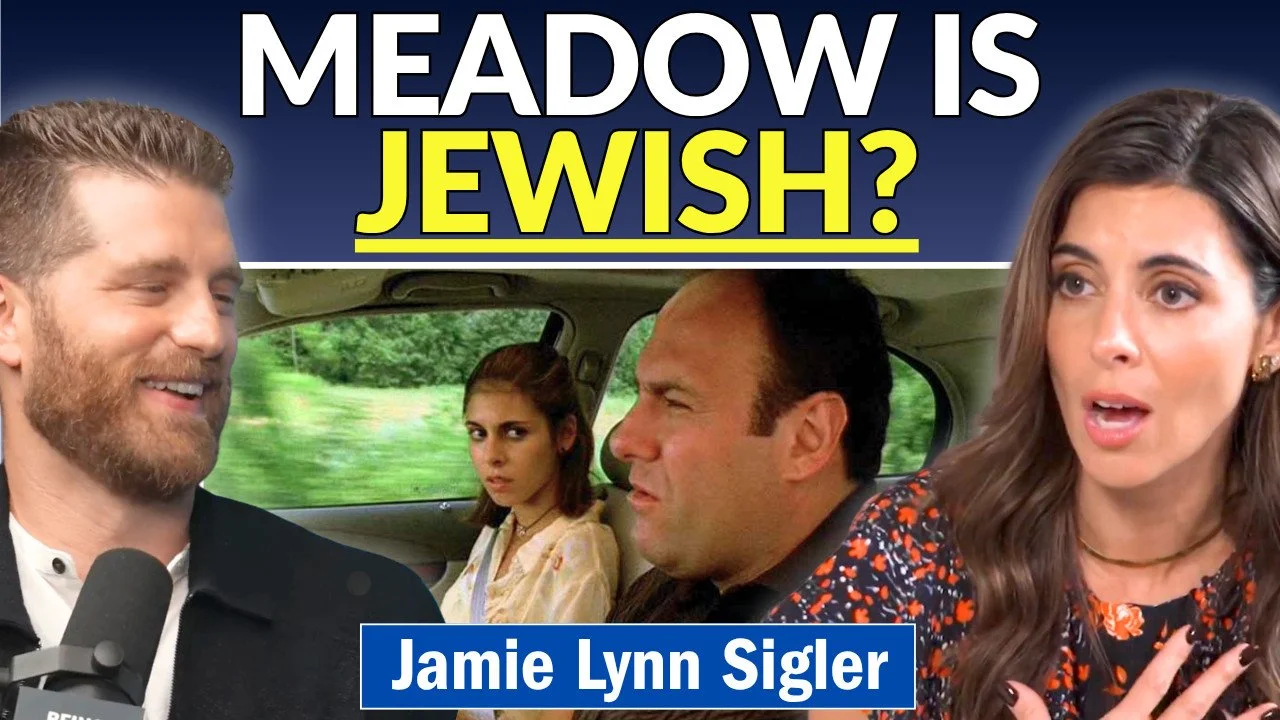
Are folks still surprised to find out that you're Jewish?
Every day.
Being aggressive, being in your face about your views.
I can't handle the pushback.
I think it's important for you to recognize the power of just doing the things that you've already done.
Comments on any Instagram post I make, "She's a Zionist.
She's a Zionist.
She's a Zionist." The two most common barrier to entries are I don't know enough, and the fear of people are gonna hate me or come after me, and that's a whole separate thing.
I have found my voice.
I have found my confidence even though I'm living in a body that is really disabled.
All right, youse guys, let's get into it.
My guest today is a true one of one with so many relatable qualities and experiences, many of which she tackles in her powerful new book, And So It Is: A Memoir of Acceptance and Hope.
But rarely are they all found in a single person.
She's like a snowflake, unique but familiar, which oddly enough is the nickname often given to multiple sclerosis, the snowflake disease, which looks a little different on everybody, and of which she, like my wife Courtney, is a carrier.
She's of Cuban, Greek, and Romanian Jewish descent.
She played a core character on an iconic TV show that many regard as the best in the history of the medium.
She also voiced Disney's first ever Jewish/Jewtina princess.
She recently said that coming public felt like the scariest thing in the world and ended up being the best thing in the world, and she wasn't even talking about her support for Israel.
She's one of the nicest celebrities you could ever meet, a hit podcaster in her own right, and she's here with me today to teach me how to monetize this show, for the love of God.
Please welcome Meadow Soprano herself, Miss Jamie-Lynn Sigler.
That was, I think, the best intro I've ever had.
Yes.
The streak continues.
It's great to be here with you today.
Uh, are, are folks still surprised to find out that you're Jewish?
Every day.
All the time.
What do you think that says about Jewish visibility?
Well, I mean, I think first and foremost, people are shocked that I'm not Italian- Right ...
like at all.
That's like what I come up against most.
I think people have an idea in their head of what a Jewish person looks like, acts like, sounds like, and maybe I don't fit that mold for them.
But for me, I grew up on Long Island, and like everyone was Jewish, and I j- I felt very identified as being Jewish.
Yeah.
Uh, do you feel responsibility as a public figure who is Jewish to be a Jewish public figure?
I don't know if I necessarily feel a responsibility, but I feel a pride about it, same way I feel about living with MS.
You know?
I'm, I'm happy to share these parts of me.
They make me who I am.
They make me an individual.
They're influential parts of- of what makes me, me in the past couple of years, I think, f- more than ever.
It's, it's something that I've led more with, of saying, "And I'm Jewish," because I think it's something that surprises people, and I'm happy to educate them on what being Jewish means to me.
Educate us, won't you?
What does being Jewish mean to you?
You know, I actually don't think I really understood what being Jewish meant to me until I went on Birthright.
Mm.
The Sopranos finished when I was 26 years old, and I was just in the window to make it, like, on that free Birthright trip, and I literally wrapped the show in November, December, and went the end of the month on my Birthright trip.
I went summer of 2008, so we, like- Oh, no way ...
we just missed each other.
Yeah.
Ah.
It was truly one of the most impactful trips of my life.
First of all, stepping foot on the land in Israel is just such an overwhelming experience.
I understand why it is such a charged territory where pe- where people want to claim, right?
It's just full of history and love and culture.
I thought that we were going to be sort of really inundated with the religion and what it means to be Jewish in that way, and it wasn't that at all.
It was about the pride of just the people and the culture.
And I remember the first thing that really moved me was on Friday, on Shabbat.
We happened to be in Jerusalem that night, and our guide purposely kept us out closer to sundown because he wanted us to see all the markets closed, all the streets, like, just not a car, not a person, just everyone home and just saying, "No matter what you do, no matter how you observe, you're home with your family.
This is your time to connect, reflect, put down the noise of the outside world, and be together." And I was so moved by that in such a profound way.
I mean, we had our Shabbat dinner that night, and we went out to a club after.
You know, it's like seeing how different people observe, but just understanding, to me, I felt like I really understood what it meant to be Jewish and the pride of being Jewish and keeping these traditions alive.
Obviously, going to the Holocaust Museum was incredibly moving.
I mean, you hear these stories as a child, and you're incredibly moved and affected by them, but- Being immersed in that experience that they've created there was also a whole other level.
Also traveling around with people my age in the IDF- Yeah speaking to them, understanding their intentions for peace, the reasons why they are, are feeling prideful of the work that they are doing.
It's just, it's like you get rid of the headlines and the noise, and you get to the humans, and you get their story, and I was just felt so connected in, in every which way, and I really, I came home from that trip really, I don't know, feeling like I really understood my being Jewish and what it, like f- what I resonated with, that it's always felt like a piece of me and I was like, "Oh, that's the Jewish part of me." I know their motto is, "One trip changes everything," and, you know, it, it seems like for you it really did have a, a lifelong kind of shift, something that's really stayed with you.
Absolutely.
I mean, even when I, my husband, who's not Jewish, when we m- were married and we had our son and we moved into our first house, we started having Friday night Shabbat, and it was for friends, uh, friends primarily that were Jewish, but other friends that weren't that ended up becoming this, like, beautiful gathering every Friday of this potluck and with our son, and we would end up outside and, you know, just talking all night till 2:00 in the morning, and it was just, it was with tradition we actually held for I think like two and a half years, and it was amazing.
It was just something that we all looked forward to.
We would, you know, go around the table, share what happened to us that week in a just a really honest and authentic way, felt really held.
It, I feel like I really understood what community meant in that way, too.
Hmm.
Um, which I think is a lot of what, um, being Jewish is about, too.
It's beautiful.
Do you, do you have any kind of Shabbat practice now?
Not as much because now my boys are older and they play sports.
Hmm.
And so my life revolves around their schedule, and we live in Texas, so Friday night is football.
Let's talk a little bit about your, your, your boys, Jack and Beau.
What sort of intention are you bringing with how you're raising them to understand what's important to you about being Jewish that you hope to im- impart to them?
You know, when I was growing up, my mom is Cuban and was raised Catholic, Cuban, by the church.
When she married my father she converted to Judaism, so she ended up kind of knowing more about being Jewish than anybody in the family because of her process.
To be honest, like, my relationship with God was very confusing because I had her sort of Catholic ways where, like, God's gonna punish you, God is judging you, and I, I didn't feel like in Hebrew school that that got rectified much.
It took me some time in my life to sort of have a better understanding of my relationship with God, and not it be so fearful, and feel like it was more supportive and loving and unconditional.
So for me, with my kids, I think first and foremost, I wanted to frame that for them, that when you hear of God and you hear of this, this is, this is an, this is a powerful being energy that loves you no matter what, that's like got your back, that is protecting you and guiding you in every which way.
Because my husband is not Jewish, we, we h- we're not attending temple, we're not necessarily celebrating all of the holidays.
But my brother's five kids are all Jewish, have been bar and bat mitzvahed, so they have been to those types of events.
They're interested.
So I, I really try to explain to them that you are half Jewish.
This is, this is your blood.
This is who you are.
If this is something you want to explore, I support that.
But no bar or bat mitzvah or going to temple will, or not, will take away the fact that you are part Jewish, and I want them to feel the pride and understand what that means.
And part of that is eventually, to me, taking them to Israel.
Like, I cannot wait until I can take them there and have them experience that.
Because again, I think that that was really life-changing and affirming for me of really connecting to a, a piece of myself that I wasn't quite sure how to before.
Yeah.
You've never been shy about embracing your Jewish identity publicly.
You've posted Shabbats, you've posted bat mitzvah photos.
You've t- talked about your love for Israel.
How intentional are you with what you'll post and what you'll say?
Is it, is it, again, like sort of what you said before, it's just, "Oh, it's just me being me off the cuff," or are you thinking about, "I need to, I, I really wanna put this out there for X reason"?
I mean, I think in the past couple of years, there's definitely a lot more thought that goes around things.
Um, it's been so devastating to see the way people are dividing and judging and discriminating.
And my strong suit is not in a fight.
I hate to say this, but like I don't shine in advocacy in the way of like being aggressive and being in your face because I d- can't handle the pushback.
It's just sort of not where I, I have found my voice quite yet.
I have many friends who have, and I will, you know, sort of share their posts and share their intention and share what they're doing, and I am grateful for them for having the courage and the words that sometimes I can't find for myself.
That being said, I, I try to make my voice and my identity very clear in where I stand and what I believe.
Those things end up penetrating and, and standing for themselves.
I've not been able to express myself maybe in ways that I would want to, um, out of fear and out of just- The lack of grace and ability to have the words to do so I think it's important for you to recognize the power of just doing the things that you've already done, where so many have done nothing.
The fact that you're out there posting your family bat mitzvah photo and saying on multiple podcasts, "I love Israel.
Israel's awesome," there are s- way more people not doing that than are in your position.
S- like, full stop.
So it's, I think it's very impactful and really important.
So I, you know, definitely support you and appreciate you- Thanks for that, for sure.
The thing I wanna ask is, what do you think is missing?
Like, what would it take for you to feel confident?
You know, you say it's something you, you might want to say, but you don't feel you, you have whatever...
Something's missing f- to allow you to do that.
What do you think that is?
I've been to Israel twice now.
I've r- I've gotten to spend time with so many people from there that are so beautiful and kind and loving and amazing, and I d- I, I hate to see an entire n- nation of people diluted into one single political view.
It's just, it's unfair, and it's wild to me, and I just don't under- it's the same way you could do about America.
Like, you, you can't do that.
You can't have one thing represent an entire nation of people and, and then reject why Israel exists.
Like, it's just, you're erasing history or you're erasing so many stories and so many things that have led to this moment, and I just...
I sometimes I feel like I'm such an emotional person, and I don't, I can't take on too much information.
Do you know what I mean?
It's like- Mm-hmm ...
I know what I know.
I know what I believe to be true.
I know I'm a good person.
I know I stand with what's right most of the time, or I try to, but because I don't have a lot of the facts and the information, I think that's what also keeps me from expressing myself because I'm not gonna be able to engage in a back and forth in the way that I want to.
And I'm also just trying not to engage in any type of conflict because that's what's getting us here in the first place.
So yes, maybe by me just representing myself with pride hopefully will be enough to stand on its own.
I was gonna say, you know, I want to encourage you and, and people listening who might be feeling the same thing you're feeling, which I know is a lot of people, like, what you just said is enough.
I know who I am.
I know who these people are.
I know this is unfair.
I know there's more, and I just wanna be proud of who I am, and, like, that's it, and I don't wanna fight anybody.
I just wanna...
I don't wanna get into a back and forth about this history or that fact or whatever.
That's enough.
Like, that, that really carries weight.
That's meaningful, and I, you know, I would encourage you to lean into that and feel confident in it.
Thank you for saying that.
That means a lot, 'cause I definitely had- internal conflict about it and feeling like, am I doing enough?
Am I saying enough?
So thank you for saying that.
That means a lot.
Yeah.
I know it's a barrier to entry for a lot of pe- Like, the two most common barrier to entries are I don't know enough, so I'm gonna say nothing, when, like, you certainly know enough about yourself and your experience and your life to, like, say anything about that.
And, or it's the fear of people are gonna hate me or come after me, and that's a whole separate thing.
But I will say, you know, I'm not sure what you've experienced, but in, in general, you just sort of swat away the flies and, and the love you get is so much more, uh, potent.
Yeah.
I mean, you know, you, you choose what to focus on.
Exactly.
What has been sort of your personal experience in the, the two years and change since October 7th in terms of, like, your own friend group or, or people you've worked with, your colleagues?
Like, are you feeling the hostility towards Jews, uh, in a- on a- in a personal way, in a way that's reached beyond just what you see on social media or in the news?
You know, what, what's it been for you?
Yeah.
Well, you know, I live in Texas now, so I'm not around a lot of Jews.
Post-October 7th, I've had multiple friends here reach out to me with such love and support and, like, "How can I support you?
What should I be doing?
What should I be saying?" It's like, you know, sometimes we think that the internet represents the world, and it doesn't.
The loudest voices on the internet sometimes are like the smallest groups of people in some cases.
And so I can only speak for my personal experience and the people that are around me, and I have felt nothing but love and support and kindness and understanding for all involved, for everything that's going on.
But especially from, like, let's just take the moment of October 7th.
Like, the fact that that can be denied or overlooked in any which way has been one of the more devastating things in history, uh, uh, when I've been alive- Yeah ...
to witness.
I just...
It's one of those things that, like, you cannot look away.
You cannot deny that.
And the fact that we are having any argument about, about the atrocities that, that happened on that day blows my mind, brings me to tears, brings me to my knees.
And I've had many friends, one of my dear friends being Emmanuel Shriki, where we've just had a lot of conversation.
And she's one of those examples to me of like, "Thank you, girl." Like, "Thank you for speaking.
Thank you for taking this torch for so many of us." I remember running into her in LA a couple of months after, and she was just exhausted just being like, "Jame, I feel like I'm living in the upside down.
I don't, I, I don't even understand what's going on, but I can't stop." And I just told her, "Thank you on behalf of so many of us.
Like, you're an angel." And she is somebody that I know I align with.
These are the people to listen to.
These are the people to, to believe.
These are the people that are so intentional with their lives and how they treat others.
Like, the fact that you could think that their support for Israel means that they are X, Y, Z, it, it's, it just blows my mind.
Well, I love Emmanuel too.
She's amazing.
Shout out to her.
She is.
Any bumps in, in terms of your Hollywood relationships, people who either, you, you know, you thought would be there and weren't, or people you were surprised were there?
I was really surprised by the division that was felt within our industry.
I was really, really shocked that these type of people could not see the nuance and could not see the complexity of the situation, and to, you know, boycott working with Israeli artists.
I mean, come on.
Like, artists and creatives, these are the people that are speaking from the heart and care about humanity and, and want to express through their medium healing and visibility and truth.
And to think about censoring anybody that can do that because of where they come from, it feels so contradictory to, like- Totally ...
the industry that we're in and what you're supposed to support.
And I get every day comments on any Instagram post I make, "She's a Zionist.
She's a Zionist.
She's a Zionist.
She's a Zionist." And I'm just like, what?
Is that...
What, what, what are you saying, even?
Part of me just wants to reply, "Yes, I'm Jewish.
Yes, I'm Jewish.
Yes, I'm Jewish." Yeah.
Like, end question mark?
End dot dot dot?
Like, I t- I don't understand why that is an attack.
I don't understand what you're trying to broadcast to the world about who I am.
Y- you know, that's, you're, you're not saying anything about me.
Right.
I think it's what, you know, you sort of alluded to earlier.
It's, it's, "Well, she's a Zionist because she said she likes Israel, which means she's an X, she's a Y, she's a Z.
She, she hates these people.
She wants those people dead," blah, blah, blah, blah, blah.
All the stuff that you've certainly never articulated in any sort of way and is, is not who you are, but because you went to Israel and are Jewish and feel a connection, you must be all these other things.
Correct.
Yeah.
Correct.
You mentioned, uh, that you've gone to Israel twice.
You went once on Birthright, and then you went once, you went once in 2017 with your bestie Lance Bass.
What spurred that trip, and what was that experience for you guys?
In that trip, it was really cool because we met, like, an Israeli clothing designer and, and, um, you know, Israeli restaurateur.
We went to many different places that I didn't go on Birthright, so it w- it felt like a different trip for me.
It felt like it was a, it was, um...
I don't know.
It was just, uh, more adult, but beautiful and just as effective and just as moving Uh, it, and you know, again, to just feel like you're sort of a little bit more grown, a little bit more mature.
You're able to take things in in an even better way.
Just the people, the food, like everything, it just, it reaffirmed everything that I remembered Israel to be and more.
And I remember coming home and telling my husband, like, "I have to take you here.
Like, this is, this is a, a once in a lifetime trip that you will, you will never forget." And we've yet to do it, but I think it's because now we're pushing it off to take both our boys with us.
Sure.
What was it like seeing it through Lance's eyes?
I remember him being so taken back by the food and how good it was.
He was shocked at how amazing the cuisine is.
And then also the fun, like, we would go to dinner at 9:00 PM, and then by 11:00 PM, the table was cleared and we were on it, dancing.
Right.
Right.
Like, he was not prepared for the liveliness and just the, the pride that people have being Israeli.
It's really infectious and beautiful.
I, I love, I love to travel for that reason.
I love to see people proud of their culture, proud where they're from, proud to show you what it means to be them, and I've felt that more than any place I've traveled in the world than Israel.
Like, just, they're, they're just so happy.
They're just s- so accommodating.
Like, I felt like anyone I would've met there would've been like, "I have a spare bedroom.
Come stay with me." You know what I mean?
It's just like they want people there.
They want people to experience it.
They want people to really know who they are and what they're about.
So true.
Okay, so now let's get into the book, the brand new book called And So It Is.
What is, why is it called And So It Is?
This book was about my healing journey and coming back to myself.
When I was approached to write this memoir, I wanted to really understand what the intention was behind it because I didn't write it for attention.
I didn't write it because I pe- felt people needed to hear my story.
I wanted it to be something that had a purpose and a meaning that other people could connect with.
So when I got the opportunity, I sort of sat down in front of my laptop to see what was gonna come out of me, and this letter to my younger self poured out, and it was basically acknowledging, like, this young woman that seemed to have everything, right, while I was on The Sopranos, but her life was falling apart.
And she always felt less than and not good enough, and all of these stories that I had told myself because of the things that happened to me.
And I wanted her to be validated, seen in her experience, receive the love that she didn't open herself up to, and also understand that, like, her story wasn't over yet and that pain can be turned into purpose, and we can alchemize what happens to us and grow from it and evolve from it.
And taking people on my difficult and beautiful healing journey feels like my service.
I was somebody that hid so much of myself, and knowing that so many of us do that.
So many of us carry pieces of ourself that we don't wanna share because we feel for fear of being judged or, um, that they wouldn't love us or understand us.
And I have slowly over the past couple of years learned to kind of take these walls down and take these stories and layers off myself and feel, be vulnerable and be raw.
And in that, I have found my voice.
I have found my confidence, even though I'm living in a body that is really disabled.
Like, to feel freer and happier than I ever have in my entire life despite my circumstances, really understanding that a miracle, all a miracle is, is a shift in perspective.
And I learned that when I started studying something called A Course in Miracles where it's basically a book of affirmations, lessons you do each and every day to help shift your perspective.
And at the end of each lesson every day, you say, "And so it is." And "And so it is" is an affirmation to this prayer.
It's an acceptance of what is, because the truth is, we can't change what is pr- in the present moment.
We can resist it, and when we do, that's where suffering really comes in.
So you don't have to like it, but when you accept it is when you can move forward with it.
And I didn't...
When I learned that, I didn't wanna forget it.
I was just, in that moment, I finally felt tethered.
I finally felt connected to other people.
I finally felt hope for myself.
And so I tattooed it on my arm to not forget, and then it was always just gonna be the title of the book because that's what it's about.
It's about the homecoming to myself and my healing journey.
And my hope with it, again, was just that anyone would read it and feel less alone in the moments that they felt un- misunderstood or fearful.
And if you can root for this girl through her story, that means you're rooting for yourself, and that's just what I hope to give other people when they read it.
Hmm.
That's so beautiful and, and so resonant and, and something that we've actually talked a lot about on this show before, which is, you know, I've talked about my journey, which is obviously very different from yours.
Everybody's individual journey is different, but, but that journey of return, of, of just simply getting rid of all the stuff that the, that you have convinced yourself the world requires you to pile on to return to that true, authentic self.
Where you, at last feel at peace no matter what's going on.
Everything feels better when you're aligned in that way.
And, and as you sort of said, when you're, you know, when you're swimming with the current and not trying to struggle upstream to where you think you need to go, and just going with what's right and where you're supposed to be going.
Yes.
And trusting, and trusting that, and trusting life.
And, you know, as somebody, especially in our industry, right, we can just...
I've, I've felt like such a failure for so long, for so many different reasons.
Whether it's I couldn't sustain the success of Sopranos or I couldn't sustain what I, everyone thought I should be or what I thought I should be.
To be able to just share that openly and honestly, because no matter what anybody says to me, I promise you I've said it 10 times worse to myself.
And just, just feel that freedom.
I finally feel like I've loosened my white-knuckle grip on my life.
I know what I wish and dream for, but I'm unattached to how it comes to me, but actually feel ready for when it does.
I'm curious, hearing you talk about the, the genesis of the book.
You know, ha- if you hadn't been approached, do you think you would have done this?
And, and also, like, is the, the healing and the, you know, the letting go and the freeing, all this that you've been experiencing, was...
Had that happened prior to the book or was it through the process of writing it that a lot of that unleashed?
Yeah.
I think much like looking back through my whole life, you just sort of see your evolution and you see the synchronicities and you see the universe at play.
I think podcasting over the past couple of years has started to open me up in ways that maybe I wouldn't have otherwise.
You know what I mean?
Started to allow me to sort of speak my mind and speak my truth and because it's...
You know, you kind of forget when you're podcasting, like, this is an intimate conversation between us.
You almost forget that- Yeah ...
other people are gonna be listening to it.
But it allowed me to feel more confident using my voice.
And then I think by the time I started doing my podcast, Messy with Christina Applegate, where I...
Even when I became public about MS, I was still very curated about how I expressed myself because I was afraid of not being hired.
So it was like, "Yes, I have MS, but like, don't worry.
Like, I'm still strong and I'm still capable and I've still got this." I didn't want people to know, understand how it affected me physically.
I was still very much like, "I'm a professional.
I'm gonna cover this up." And not that I feel like that's a lie.
Being able to also just be like, "No, but I have hard days and I still am devastated and this affects me this way and this affects me that way," I think just started to f- Like take those last few layers off of me.
And so I don't know if I would've chosen to write the book had I not been approached, but I think it was a divine thing that all of a sudden the literary agent at my agency was like, "I'm listening to you right now, and you sound kinda ready to share." Which is, I think, another thing that I've learned in this book process, and like looking back at my life, is that God will continue to put the same road in front of you until...
And you're gonna s- step down it when you're ready to take it, when you've had the experience, when you've had the knowledge, when you've got the tools to walk down.
So I feel also this sense of faith that I'm gonna do what I need to do and what I'm meant to do when I'm ready.
I listened to your audiobook of, of the memoir, which I, which I highly recommend to folks 'cause Jamie reads it, and it's very engaging.
Thanks.
I was struck by how terrible you are to yourself, or how terrible you were to yourself, let's say.
Yeah.
And clearly you've, you know, undergone a tremendous change.
But have you been able to unpack throughout this, like why you've been so cruel to yourself for so long?
I think part of it is I came in just wired that way.
I don't know if I was...
I, uh, and my mom is that way, and my grandmother was that way.
Sometimes I wonder if MS was brought into my life to stop me in my tracks and really make me go within.
Hmm.
I think that was the thing that really made me focus on myself, you know.
The MS was like first, first and foremost was just like heal the body, heal the body, heal the body.
But all of a sudden in, in, in that quest and meeting different healers, I didn't even think about healing myself and my...
I didn't even know it was possible.
That girl and that voice still is part of me.
She still is here, but I have like a softening around her.
It's almost like I have grace and forgiveness for her of like, "I understand.
You, you were doing it because you wanna be good, and you wanna be loved, and, and you don't wanna hurt anybody, and you would just, you would just s- you put so much pressure on yourself to do it right that you, you just were translating it wrong to yourself.
You were communicating wrong to yourself." And so I can stop and listen to that voice and understand its purpose and why it was there, but also choose to not listen to it.
And so it's also about our evolution is not like leaving parts of us behind or forget.
It's like just sort of allowing all of the parts of yourself to exist.
Do you know what I mean?
I think I've learned that I c- you can't really move through pain until you take it all.
You know what I mean?
You, you deal with it all.
You see it all.
And this has been Decades of work and different modalities and different ways of sort of dealing with it and therapies.
And that voice, I think, is one that's familiar to a lot of people, and it was really cathartic for me to say it out loud.
You know, to, to, to voice out loud a narrative that was living in my own head for so long was scary, but freeing.
And again, one of the things that I hope I can give to a reader is, like, just to not feel so alone in that struggle with yourself.
Of course.
Sopranos, which you were obviously on as you're experiencing a lot of what you talk about in the book, uh, is a show all about people keeping secrets.
Yeah.
And then here you are keeping all these secrets in your personal life, from eating disorder, marriage troubles, MS.
Were you ever struck while you were doing, like living that, by that parallel of like, "I'm, I am living this reality of secret keeping"?
You know what?
I actually have never thought about that till you said that right now.
That's so interesting.
N- you know, Sopranos, like, Meadow, my character, she was somebody that I could just disappear into.
She was confident.
She was self-assured.
She said what she thought.
She was not afraid of a reaction, and she was like the opposite of me.
Mm.
So in very many ways, I say, like, she was like my Sasha Fierce.
Like, she was my alter ego that I could just tap into that, like, saved me, that just allowed me to know what it was possibly like to live in a, in a different way, even in her own, you know, fucked up universe.
But- Right ...
just allowed me to sort of escape into that.
Sopranos, like, while my life was imploding, Sopranos was a safe haven for me, though.
Sure.
Even though I wasn't expressing my- what I was going through, and even though I wasn't opening myself up to the support I would have gotten had I, had I been able to, I was, like, f- wholly accepted there.
No matter what size I was, no matter what my last name was you know, like no matter what I was going through, I felt very loved in that place.
And I, I told David Chase that when we finished the show.
It was like our very last SAG Awards where I was like, "I know we're all gonna kind of go off and not have a lot of reasons to see each other all the time anymore." And I just wanted to let him know, obviously, what this show has done professionally will forever be a badge of honor, but my God, if you only knew how much being on this show has saved me as a human being, like, has given me purpose and family and- So much.
Um, that's what I take with me more than anything from that experience.
Totally understand that.
A lot of people listening, or I would say probably most, don't really know much about MS.
At least that's been my experience as I've- Mm-hmm ...
you know, been talking about it since I've been with Courtney.
There's different kinds of MS, so which, which kind do you have, and how does it most present for you in your day-to-day life?
So I have relapse remitting, which I think is the most common form of MS.
I think anybody who's- That's what Courtney has too.
Yeah.
And anyone who's probably initially diagnosed usually is diagnosed with relapse remitting, and then you sort of see where it goes.
Um, I've had it for 25 years.
It's been, I would say, a slow progression, which I'm fortunate for in that I'm able to sort of make the pivots that I need to make sort of gracefully.
You know, it's kind of this thing where if I'll think back to, like, three, four, five years ago, I'm like, "Ah, maybe I was able to work, walk a little further then.
Maybe I was able to little, do a little bit more then." But I've learned to not get so stuck in that, because that can end up really putting me in a really sad place.
Sure.
And I have daily heartbreak about this.
You know, I, especially I think when it comes to motherhood, there's so many things that I have to do because of the MS, not because it's my choice.
Sure.
Or there's so many things I can't do because of the MS.
But for me now, um, I walk with a significant limp.
You can't miss it.
I usually take out a cane, which took me a long time to bring out.
A lot of pride, a lot of shame around it.
You know, it's just kind of like I didn't wanna be at this place, but I finally had to understand, like, why am I denying myself any kind of support?
Right.
This is gonna make my life easier.
Like, what is that saying?
Like, why am I making myself suffer?
'Cause I'm worried about what people think of me.
Um, I've had bladder incontinence issues, which, you know, takes some time to sort of figure out, which is also, you know, devastating, embarrassing, all of the things.
But- Sure ...
in the spirit of just being honest and being vulnerable and also allowing other fe- people to be seen, it's a privilege now for me to just share, 'cause it's the truth about living with MS.
But what's kind of cool is, like, when it comes to work, like, when I first came out about it and I would go on a job, I would say, "Okay, here's my limitations.
I can't run, you know, stairs are hard, but, like, we can work around it.
You know, I can take a couple of steps and you can cut away." I was always met with love and support, and people being like, "Sure.
Yeah.
We've got you.
We've got you." But now I find myself Like, in the most recent job that I just did, I had a Zoom with the director before I got to set, and I said, you know, "I don't know if you know this, that I have MS." He said, "Yeah, I know." I said, "So I just wanna let you know, like, I walk with a limp.
It's just how it goes.
You know, I can't walk a long distance.
Walk and talks are kinda hard for me, unless you're okay with seeing me as I move." And he's like, "I'm okay with seeing you as you move." And I was like, "Great," because I'm no longer interested in performing a body.
It takes away my ability, and as, as an actress, to sort of pretend that I'm living in a body that I'm not.
Mm.
I wanna feel free.
I wanna feel present.
And if I, for so many years, I would over-rehearse what I had to do before I got to set so I could just think about the physicality when I got to work, which took away all the joy and all the fun.
By the way, the last job I did, we didn't mention MS on screen.
We didn't talk about it.
It's just this character, this is what she came with.
And I was so grateful to see how it could be and how it could continue to be.
And I have conversations with people in the industry, too, where they say, you know, "How can we best represent MS on screen?" And I was just like, "Hire me.
That's how." Mm.
Hire people with disabilities.
Hire people with differences.
Don't make them a sympathetic character.
Don't make them a villain all the time.
Like, make them fully formed, flawed, gorgeous human beings.
Like, I am so many things.
I am a mother.
I am a sister.
I am a friend.
I am a wife.
And m- and MS just comes along with that.
It, the MS is not the first thing that walks into a room before me, which I used to think would be the case.
I've kind of just taken people along on this ride with me of, like, kind of learning how to exist in this industry with what I have.
And I think because I've opened myself up to that, it feels like I'm not alone in that.
Like, I'm doing it for and with other people.
I've been able to advocate for myself better.
It's awesome.
And it's, a- again, you know, to bring it back to the Jewish part, because this is Being Jewish, like- Yeah ...
what you're describing, I think you could probably also say not just about being Jewish, but about, you know, anyone who is, quote, "in the closet" about something.
Yes.
The experience of coming out of that closet and just owning who you are.
And what always ends up happening, at, at least, you know, every experience I've heard, is that you find such acceptance and love.
And by, you're so afraid of the rejection, you don't wanna take the risk, but really, what you're risking is not getting the opportunity for all this amazing acceptance that's sort of waiting there for you, and people who are so ready to embrace you and see you and support you.
Exactly.
And people love to help.
Yeah.
They really do.
I used to feel so insecure about- Feeling like a burden or feeling extra, that I would, like- Sure ...
need this.
And I, I remember I was a guest star on this show, Big Sky, for a couple of episodes, and then they brought me on as a series regular.
And I remember when I first got there, you know, I don't wanna be a problem.
Like, "Jamie, do you need this, do you..." "No, no, no, you guys, I got it.
I'm good.
I'm cool.
I'm totally fine." And then after a couple of episodes, it's like, you know, the crew started to learn me, lear- and see me, and they were like, "Hey Jamie, we got a chair here waiting.
It's just a little closer to set.
Hey Jamie, we parked your trailer a little closer here." It's just like p- and I know that it made them happy to do that.
It made...
And it, they also showed me that it wasn't a big deal.
Right.
It wasn't a big deal to make es- an accommodation for somebody that needs one.
The reward just so outweighs the- Mm-hmm ...
the fear of, of, of- Totally ...
what could possibly happen.
So I'm glad you're experiencing that and, and as you said, I, I would encourage anyone who's holding back something of themselves to go for it.
The, the rewards are just so, so overwhelmingly worthwhile.
Absolutely.
You mentioned the Messy podcast that you co-host with Christina Applegate.
I listened to the, a recent episode where you had your husband, Cutter, on.
Oh, cool.
Yes.
Because obviously, you know, I've listened to a couple as I was preparing, but I was like, "Oh, it's the husband one." Yeah.
And, you know, I'm, I'm a husband- And it's a similar role for you.
Of course.
I'm a husband of an amazing woman who has MS also.
I really appreciated you sort of shining a light on that partner dynamic, which for me, and I know for any caretaker, partner, parent, whoever, who, who loves somebody who has MS, it's a very sort of hidden part of our existence.
Mm-hmm.
Um, where it's, you know, you don't really get to talk about it unless somebody knows you well enough to kind of really directly ask you about it.
'Cause, you know, it's not apparent and you're also, of course, always deferring to the person who actually has the MS.
Like, you know, it's their, it's their thing to talk about, it's not yours.
So I just, you know, I just wanted to give you guys props for having that conversation.
You know, I'm, like, the total target audience member for that episode.
It sounded like you guys were really discussing some stuff that you had not discussed before, and I'm curious if anything, like, shifted materially for you all since that conversation.
My first intention of having him on Messy was to highlight the caregiver's experience, because I think it is fair and I think it's important, because he is on this ride with me every day, and he is, anticipates things for me, he helps me.
MS is, affects our whole family, and I never want anyone to feel like their feelings and their experience is less valuable than mine.
I get the love and acknowledgement all the time of what I live with and what I persevere with, but I would not- ever want him to feel like I didn't wanna acknowledge his experience.
I think the thing that ex- that surprised me most was when he told me that the only thing that hurts him is when I say sometimes in a moment of struggle, "You don't understand what I'm going through." Mm.
And for him to tell me, like, "That hurts my feelings because the thing I care about the most in this world is what you're going through, and I do my best to understand what you are going through." And while he doesn't physically feel what I feel, he emotionally can connect with what I'm experiencing.
And to me, that was the biggest takeaway, was like, oh, wow, okay, I promise you that I will not say that to you anymore because he is too good of a man and too good of a partner for me to diminish any of his support and love and the way he shows up for me.
He's just a really he's really good at taking care of people, and I need someone like that.
I needed somebody to be like, "No, you're not doing this alone.
I'm going to take care of you now." And I, I credit so much of who I am today and how I'm able to share all the things that I f- feel comfortable sharing because he loves and accepts all of those parts of me, you know?
Yeah.
It's amazing.
I heard you use the word earlier, you said, you know, "I'm heavily disabled." Do you identify, like, as a person who is disabled now, and, and how has that mental shift been for you?
It's a hard one.
I can only imagine.
I think I say it out loud more 'cause I'm also still trying to, like, believe it.
Mm.
I wasn't born this way.
Right.
I mean, I've lived now more years with MS than not.
I mean, I was on Broadway once upon a time, and I, you know, I, I, I danced and I sang, and, like, to feel disconnected from that part of me is really hard.
So saying sometimes I'm disabled, like, I know it's not, but for me sometimes it feels like it's putting a fork in, like, that that will never be anymore.
That is not who I am and what I can do.
So, you know, just being really transparent, it's, it's, it's not that I am, I'm ashamed of having a disability.
It's just more the acceptance of, like, this is where my life is now.
What of the singing and dancing piece?
Like, wh- uh, what of that is off the table?
I can look, you know, decent on a dance floor if I don't have to move around and twirl around.
Mm-hmm.
Singing I can still do, and I've, I actually didn't sing for a really long time.
When I would go to sing, I would cry.
I would have grief, like such sadness that for me, singing was always theater and on stage and musicals.
And so it's like I would go to open my mouth, and I literally would, like, heave cry.
Mm.
And what I've- Kind of now come back to is, like, singing for me, and just singing to have that vibration and that resonance in my body again, and to just enjoy the sound and enjoy the feeling and that free, like, you know, open throat big C note that, like, I love so much.
Understanding that I can still sing without it being, like, inner performance has been good for me.
And I don't know.
I don't know.
I, I, I'm pretty confident that in this moment I could never do, like, a Broadway show.
Why couldn't you do a Broadway show?
There's a lot of shows today that aren't, like, you know, Thoroughly Modern Millie.
You're right.
You're right.
I should s- I should not limit myself.
You are absolutely right.
If you still, if you still got the pipes, you know, you can...
There's plenty of musicals, c- contemporary shows that are not dance heavy shows that are, you know, amazing.
You're right.
You're right.
And I have to preach, uh, practice what I preach, right?
In saying that, you know, adjustments can be made and anything's possible, so I'll put it out there.
Thanks, Jonah.
You got it.
Let's definitely put it out there.
If you just heard that sound, that means we just finished recording Five Deep Questions with Jamie-Lynn Sigler, which of course you can only hear if you are a member of the Kehillah, my subscriber only community, which you can join at beingjewishpodcast.com/community.
And, uh, we got into some really awesome stuff.
Here's a little taste.
I think it's the most beautiful expression, and when people do it well, it's like I'm taken to another world.
Which felt more like playing yourself, Dr.
Caplan or playing Jamie-Lynn Sigler on Entourage?
Great question.
I gotta ask it.
What happens at the end of The Sopranos?
So here's my thoughts.
Juicy stuff.
All right.
Jamie-Lynn, we are going to end things with a game that I created just for you that I am really excited about.
This is one of my fa- I try to create games for all the guests.
How cool.
This might be my finest work.
I'm, I'm just saying.
So th- this game is called Tony or Talmud.
I am going to read you a quote, and you're gonna tell me if it's a quote from The Sopranos or if it's a quote from the Talmud.
This is amazing.
More is lost by indecision than by wrong decision.
Talmud.
Tony.
Ugh.
Really?
Tony to Carmela in the season four finale, White Caps.
I'm gonna do so bad.
Okay.
Okay.
This is great.
In a place where there are no men, strive to be a man.
Tony?
Talmud.
Ugh.
Rabbi Hillel, Pirkei Avot.
Those who want respect, give respect.
Tony.
Correct.
Tony.
Season two, episode 11, The Knight in White Satin Armor.
If you can quote the rules, then you can obey them.
Talmud.
Tony to Dr.
Melfi.
Ugh.
Season four, episode nine.
When wine goes in, the secret comes out.
Talmud Correct.
Talmud.
I thought that was a tricky one, but you nailed that one.
Talmud Eruvin 65A.
Either friendship or death.
Tony.
Talmud.
Oh.
Ta'ani 23A.
There are no two people on earth exactly the same.
Talmud?
Christopher Moltisanti.
Wow.
That does sound like Christopher.
He's got a lot of rabbinic sounding stuff.
Oh, I bet.
Some really great...
Yeah.
That was in, uh, season three, episode two, after Tony's mom's funeral, like, at the wake, at the- Oh the house ...
when he's stoned at the wake.
When he's stoned- That's right ...
and giving that speech, yeah.
Some people take pleasure in the simple doing of things.
Tony.
Correct.
Tony to Dr.
Melfi, season two, episode 11.
He who steals from a thief is exempt.
Tony?
Talmud.
Wow.
Bava Kamma 27B.
A tragedy like a pebble in a lake, even the fish feel it.
Tony?
Christopher Moltisanti.
Oh, okay.
Season six, episode 16, talking about Vito Spatafore's death.
I had a feeling it was- There you go.
Yeah.
You got that one.
Okay.
Who is mighty?
One who conquers his own impulse.
Talmud.
Correct.
Ben Zoma Pirkei Avot.
I have forsaken what is right for what is easy.
Tony?
Carmela talking to Father Phil, season one- Oh ...
episode five.
I c- I have chills.
I remember her saying that.
The more wealth, the more worry.
Talmud?
Yes, Talmud.
Hillel Pirkei Avot.
The more wives, the more witchcraft.
Silvio?
Also Talmud.
Oh, wow.
The state can crush the individual.
Christopher?
You.
Oh, my God.
Meadow, season six, episode 21.
Wow.
Uh, when you're talking about being a, a civil rights attorney.
That's right.
That's right.
There is no man who does not have his hour, and nothing that does not have its place.
It sounds like David Chase's writing.
But is it?
It's from The Sopranos?
It's from Pirkei Avot.
Wow, beautiful.
Ben Azzai.
Way to throw him.
Yeah.
Some people are so far behind in a race that they actually believe they're leading.
I think it's from The Sopranos.
Yeah, it's Uncle Junior to Tony.
Wow, a lot of Uncle Junior- Yeah ...
dropping knowledge ...
he's got some good ones, too.
Wow.
All right.
An ignoramus cannot be pious.
That sounds like it's from The Sopranos, too.
But it's not, it's from- But it's not ...
the Talmud.
This is such a good game.
Isn't this good?
All right, here's a- I understand why you're proud of it.
Yeah, I'm psyched by this one.
All right, last one.
All due respect, you got no fucking idea what it's like to be number one.
The legend himself.
The legend himself.
Tony, Tony.
Tony to Silvio, season five, episode 13, all due respect.
Wow, that was awesome.
Thank you.
Jamie, thanks for playing.
Thanks for being here today.
It was so great to get to connect with you.
Yeah.
I meant it when I said you are one of the nicest celebrities that you could speak to.
L- just even organizing this conversation, you were just such a gem, and it, and it, it pours out of you in every way, and it's been such a pleasure.
That's so nice of you to say.
I've loved every minute of this conversation.
Thank you so much for having me.
The book is And So It Is: A Memoir of Acceptance and Hope.
It's available wherever books are sold, and again, it's read beautifully by Jamie herself.
If you're an audiobook person, 10 out of 10, highly recommend.
If you haven't done so yet, please head over to Apple Podcasts, give this show a five-star rating and a written review, even if you don't listen to the show there.
It takes less than a minute.
It helps us big time, and we sure do appreciate it.
All right.
I'll see y'all back here for the next oh episode of Being Jewish with me, Jonah Platt.