
Interview Transcript
Celebrating Judaism & Protesting Book Bans, Joanie Leeds' Music Does it All!
Watch and Listen
That's my duty to put these stories into songs.
Hey, if it's a little controversial, I'm okay with it.
As a Jewish artist in the children's music space, is there a difference between what you might have faced before October 7th and after?
I used to be a Democratic socialist, like I left that on October 8th.
Mm-hmm.
It's hard.
I'm getting emotional.
Welcome back to being Jewish with Jonah Platt 30 minute mentions.
Same vibe, same tribe, shorter episodes.
My guest today is a Grammy winning recording artist who is about to release her 11th studio album.
From CBGB to Jimboree, from Lollapalooza to lollipops, from Arlene's Grocery to buying groceries for her 10-year-old daughter.
She has built an amazing career crafting irresistible children's music with adult appeal, powerful messages, and plenty of Ruah.
She plays she slays, and she's obsessed with Ruth Bader Ginsburg.
Please welcome my friend, Joni Leeds.
Thank you so much for having me.
I'm such a fan of your podcast.
Oh, thank you.
I know it.
I appreciate it.
So you put a lot of yourself and your passions into your music.
You have your Grammy winning album, all The Ladies, which is all female empowerment and everything created by Women for Women.
You've got, uh, freedom, which is your sort of protest against book banning.
And then you got your albums like Ana and Kahala where your, your Jewish Pride is on display.
How did you decide, like.
I'm not just doing children's music, I'm doing Jewish children's music.
Every album, whether it's a Jewish album or not, has an element of Judaism.
There's a lot of Jewish values in there, whether it's about actual challah or if it's about like going to the beach.
There's always like something in there that has something to do with Judaism.
It's just kind of layered, like peeling back the, the layers of an onion.
But I think, you know, when I first started making music for children, it was very much like clap your hands, stomp your feet type of music.
And then as my kids.
That I was teaching and, and performing force started to grow older.
Then I realized like they can handle a little bit more.
So like the Mr.
Rogers mentality where they really can handle almost anything.
It's just the way that you show them, the way that you do it.
So I.
I started to tell more stories.
I started to pack in some political messaging, if you will, um, some progressive values, some Jewish values.
It's all in there, and it's actually my 12th album that's coming out.
Don't forget that one.
My bad.
Sorry, I left.
I thought I counted it very carefully.
I don't know which one I forgot.
No, it's okay.
It's okay.
I actually have the question as I was listening to some of your music, you know, like what makes it children's music because you know, it's very adult appealing, folk sounding, you know, adult singing music.
Well, thank you, because that's a compliment because I think what a lot of children's artists hear is like, oh, I can't hear this.
Because it just, it's like, so for my kid, like a baby shark type of song.
Right, right.
Which is not what you do at all.
No, I am like anti baby shark.
Although I, you know, I do understand the appeal of that, but I think for me it's really about like the music that I love, like Anita Franco and the Indigo Girls and Jonathan Brook.
Like that's my vibe.
Fiona Apple, I love Phish.
You know, like bands like that.
It's.
The jam band, the classic rock, the, the, the indie singer songwriter female rocker.
It's, it's like, that's my vibe and that's what I put into my music, or at least I try to.
So the fact that you said that makes me feel really good about it because I don't want it to only appeal to children.
I want the parents to listen to it.
And when the kids leave the car, if they leave it on and then they keep listening, that's the biggest compliment.
My question is, what makes it.
A children's song if I'm listening to it and you know, it's, it sounds musically to me like something else I might be listening to.
And it's not like content-wise, like you say, you're gonna clap your hand, stomp your feet, you know?
Right.
Yeah.
I always have the child in mind when I write the song.
I try to either.
Tell the story from a children's perspective, trying to put myself in the shoes of the child that's listening to the music, or I'm telling a story to the child, either educationally or, you know, just kind of in a silly way that has them in mind as the audience.
And, you know, I think that's really what sets it apart.
So, as some of your, your albums are Jewish focused, one, as I mentioned, is about, you know, ladies, et cetera, et cetera.
Have you found that your audience is sort of bifurcated along these subject matters?
Or is everybody kind of down for everything?
It's funny because I definitely lean politically left, so I sing a lot of songs.
Like what you were mentioning, Ruth Bader Ginsburg, my All the Ladies album that won the Grammy.
It is all about female empowerment and breaking glass ceilings.
And I think that album came at a time where the country really needed to hear something like that because it was right around the Me Too movement and everything was exploding in that vein.
And you know, the Grammys, for example, it was like all men won that.
Previous year, so I was really fueled to write those songs.
So I think everybody was really excited to hear that and support an album like that.
I can't say everybody like on the right perhaps.
I don't know.
I mean like, I guess maybe I'm in my little New York bubble, so my audiences really liked it, but I play, you're left, but like I play songs, like Jewish songs and songs that are politically left to all different audiences.
I was once in Colorado, in rural Colorado.
I think it was like.
Durango.
Mm-hmm.
And I'm sing Dra Dle dra on a stage, or you know, just mixed in with Christmas songs.
And I had kids that didn't even know what arael was spinning, like arael on stage with me.
So I'm saying like, I don't really hold back and I try to make things inclusive for everybody and use it as an educational experience because I want to share.
Love that I have for my Judaism and I'm not very religious at all.
Like for me it's more of a cultural connection.
I hear you talk about this a lot in your podcast and I feel like you're speaking my brain half the time because I'm the same way I am.
Like I'm not a religious Jew, but I'm like a very connected to my.
My ancestors, and I don't celebrate Shabbat every week, but I have my grand, my great-grandmother's candles on my mantle that I, you know, I don't like them, but they're there from Austria, like they brought them all the way to Austria.
So I'm, I'm obviously gonna honor my ancestors and put them there, so I just try to pack that all into my music and share it with the audiences, whether or not they're Jewish.
I wanna get your take on this as a musician, there's sort of two schools of thought, I'd say.
Like some people, the music is.
Protest.
Being an artist is inherently political and a stage to say something.
And then there are others and like what's popping to mind is Coldplay, you know, the messaging that's been coming outta their concerts is.
We should all be coming here together.
It's about bringing people together, whatever you think, wherever you're from.
This is not political.
It's music that's meant to unite and we all speak the same language.
So which is it?
I think it's both.
I really feel like it's the way that you do it.
I mean, when I go on stage, I'm trying not to be preachy, but you know, you mentioned my album Freedom, it's F-R-E-A-D-O-M, because I, the word read is in there.
Because there is a banned books movement that's happening, and I'm very much against it.
I, I'm very for the freedom of speech, so I put that into the album.
I took children's picture books that had been banned, and I lifted the ideas of these books and, and made my own music and my own songs based on a bunch of different books, and I wanted to.
Honor the LGBT community and I wanted to like, I realized like it shouldn't be political, right?
Mm-hmm.
But I wanted to make sure that Ant Tango makes three, for example, is a beautiful book that tells a beautiful story.
And as a New Yorker it's about Central Park.
So like I wanted to share that story with the world.
I don't think it's offensive.
Maybe some people would think it's offensive, but I feel like that's my duty to put.
These stories into songs and share them with the world.
And, hey, if it's a little controversial, I'm, I'm okay with it.
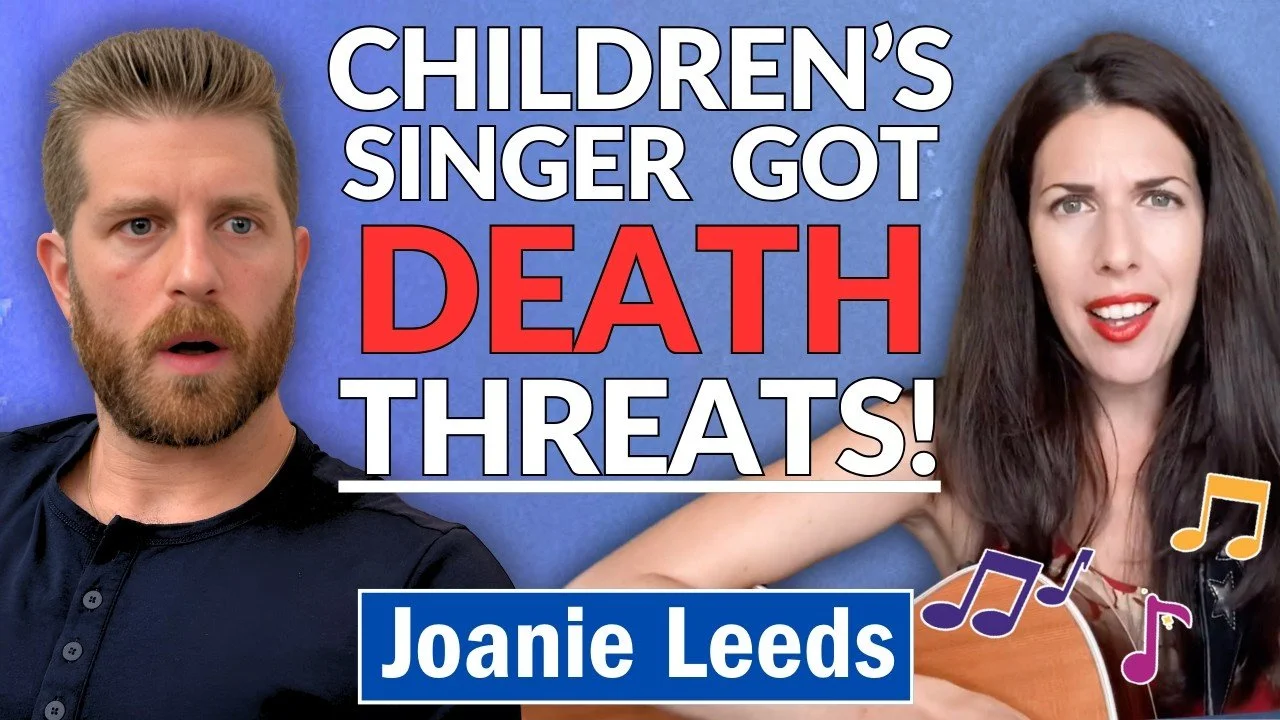
I, I actually did a song during COVID called Fauci OCI with my daughter, and I thank you for being somebody to rhyme, Fauci and oci.
Like, thank God you came along for that.
I did it.
Yeah.
Well, I basically wanted to make.
Children that were scared of getting their vaccines.
And if you remember, the children were the last ones to be able to get the vaccines at that time.
And there was that whole like, I'm not getting a vaccine.
You know, that whole movement.
It wasn't something that I was trying to do to persuade people that weren't going to get vaccines to get vaccinated, but I just wanted children that were maybe scared of getting a vaccine.
To feel comfortable, and so my daughter and I sing that duet together.
I got death threats.
I got all sorts of hate.
Wow.
We're all not a stranger to this at this point.
Sometimes that comes with the territory, but it, it is what it is.
Let's say you're at a, you were doing a, a live concert performance of freedom.
Mm-hmm.
Would you welcome book banners in your crowd?
Why not?
I think it's great.
I mean, I, I performed these songs in Miami, Florida.
That's my hometown.
And so I got together with Penn America and we did a huge event last September during, uh, band Books week.
We got a lot of press.
The news came, it was in the papers, and that's.
You know, that's a very controversial place to sing those songs, so, oh yeah.
I don't know.
I'm always in like the bring it on mentality.
I don't, I don't really try to shy away from things.
Just touching one more time on Ruth Bader Ginsburg.
I'm just curious, has your unabashed admiration changed at all in her legacy of not retiring and sort of blowing it for the Supreme Court?
That's a very complex thing to try to address, I think.
I don't know what she was thinking at the time, had I wish she had done things differently.
Yes.
I think a lot of people would agree, look, we can't go and change things.
We can only move forward.
And I just really admire her for all of the wonderful things that she did during her life and her legacy is so rich.
I mean, she allowed women to carry credit cards.
Did you know that women weren't able to have a credit card before her?
I did not know that.
There's so many different things.
She fought for women, but she also fought for people of all different genders and backgrounds and races.
She was really for equality and I think.
Everybody can really get behind that message.
Not to mention she was such a fashion icon.
And I have kids that were dressing like her for Halloween and they were in my music video and you know, I, I think.
She's beloved.
She's also a Jewish American hero.
Yeah.
She was only a second female to sit on the Supreme Court and she loved Jewish summer camp, you know, so I think she was just a wonderful lady.
As a Jewish artist in the children's music space, are there any unique challenges that you have faced, and is there a difference if you have between.
What you might have faced before October 7th and after.
You're gonna get me into so much trouble.
Jonah, can we go here?
I mean, I, I I will, I will go here a little bit.
Okay.
I just, I think it's a really difficult time.
You touch upon this on your podcast all the time, but to be a progressive or a Democrat Jew, it's a very.
Alienating place right now.
Like we are kind of in this gray area where we don't fully identify with the progressive left anymore.
You know, I used to be a Democratic socialist, like I left that on October 8th.
I was like, mm-hmm.
I saw their post and I was like, bye-bye.
Um, obviously I, I don't really feel comfortable with the right either.
So in the children's music space.
There's, uh, a lot of progressive people.
There is a group called Children's Music Network, CMN, and you know, they have conferences.
It's very progressive.
A lot of us don't see eye to eye on what's going on in with the war.
Many of them don't even call it a war.
It's a genocide.
Right.
And it's very difficult to have these conversations with them.
I always just try to find the common ground, but as somebody that is outspoken online.
Maybe, uh, it doesn't help me to do it, but I've had, I've had a lot of conversations with my friends.
I've, I would still call them friends, but we definitely don't see eye to eye and it's very difficult.
And I know everybody's going through this, like I'm not the only one.
Right.
But it's very hard because we are a very close knit group of people.
We all collaborate with each other.
I've done albums with many of them.
We've co-written music, our children play together, and yet we are so far divided on this one specific thing.
And no matter what I say, from my experience, trying to educate, it just does not resonate.
And it's, it's hard.
Getting emotional.
I can see that.
Well, it's, it's an emotional thing.
It's really a sucky time.
It is, yeah.
And anybody who's in any sort of space that sort of even remotely leans left is, is dealing with these challenges.
Yeah.
And I would say if people don't know that much about it, that they shouldn't speak on it.
But obviously that ship has sailed.
Yeah.
And you know, people are feeling very.
Empowered and emboldened to say whatever is on there.
As my grandmother would say, what's on your lung is on your tongue, and I think everybody is fully embracing that.
Unfortunately, you're very involved in the recording Academy, which is the, the body that awards the Grammys, of which, yes, you are recipient, uh, you've been a strong advocate for trying to get a Jewish music category, which does not currently exist.
Right.
When I hear that.
If I'm being like, fair, my first thought is like, it can't be that big of a community, right?
Like there, what is it, like two albums a year or something?
Like, it makes a little bit of sense to me, but I'm on the outside.
So like, talk to me about that a little bit in terms of like why you feel that's important, why it deserves to be there and why, what's stopping it from existing if it should exist?
There's definitely more than two albums a year.
Okay.
But it can, it can't be a very robust category, right?
No.
If you compare it to something like.
The Christian and gospel categories?
Yeah, I mean, this is a business, this is a big, big business there.
You know, they have the category, like the field, and then they have tons of subcategories underneath it.
As, as the Grammys would say, it's a healthy category, um, because there's a lot of people that submit.
There's a lot of people that would vote because they are members and you know, I'm not speaking as a governor now.
Mm-hmm.
I'm just speaking like as a, a person, a recording academy member.
But basically I'm trying to get the Jewish music makers, not people that are Jewish that make music, but people that make Jewish music.
And there is a difference to try to get them more involved in the recording Academy.
And over the past couple of years, playing the long game, I have gotten about.
I would say 20 new members.
And in a meeting that we had before the war, I had a lot of public support.
I mean, people were really excited about this and we had the spreadsheet going and wow, in order to have a category you need between 80 and a hundred entries on the ballot per year.
And that, that's a lot.
That's a lot.
Yeah.
Yeah.
I mean, I mean, I'm in the children's music category and we have that and there's, you know, new Age has that.
Those are smaller categories.
Sure.
However, Jewish would obviously be a smaller category, but there's a lot of people that make liturgical music.
There are temples that put out albums every year.
Mm-hmm.
Like that could be on the ballot.
There are Jewish music makers that tour all of the summer camps and they're making albums that mm-hmm.
That could be on the ballot.
And I'm just talking about America.
I'm not even talking about Israel or anywhere.
In the diaspora, really.
So there's a lot of Jewish music makers that I feel like it's such an insular community and they're just not taking their business seriously.
And I keep on saying like.
There are so many people that make this music, but they just do it for their temple.
To give Jewish music, a home would be so special.
I just need to get more people on board to submit their album on the ballot.
It's a little bit bigger than that because Spotify and all the streaming services, for example, a lot of people that make Jewish music and then try to upload it, it just gets dumped into Christian and gospel.
There's really no place for it to go.
So I feel like, I don't know, it's one of these chicken and egg situations, like do we get the streaming services to take us seriously first so that the Grammys will, or is it like the reverse?
So I, I don't know.
So my mission right now is to just saturate the ecosystem and try to get more people to become members and to get more people to submit onto the ballot.
And so I started a spreadsheet.
We've got until, I guess it's au, August 31st to get as many.
Uh, people to put their albums on the ballot before then, and this is gonna be an uphill battle, but I'm ready to take it on.
I love that.
And any Jewish music makers who may be watching or listening to this, you gotta find Joni.
Get your name in the spreadsheet.
That's right.
Get your name in the spreadsheet and tell all of your Jewish music Making friends.
You mentioned before we got into this category, you mentioned your grandmother said if it's on your lung, it's on your tongue.
Yes.
And now you're about to drop a new album called Ageless.
It's dropping in three days.
Alto, thank you.
Thank you so much.
I'm really excited about this album, ageless 100 Years Young, because she definitely has that like youthful air about her.
My grandmother Bubby, as I call her, her name is Sylvia Furman Ov, and she such an important person in my life and I just think that she deserves all the flowers.
She celebrates like her optimistic spirit every day and just she, her memorable sayings like she has these quotes, and I think it was on her 65th or 70th birthday, my family put together like a whole book of all of her famous sayings, and so I took a lot of those quotes and put them into the songs.
She's also just an incredible woman because she never went to college, but she read a page of the dictionary every day.
She had this incredible thirst for knowledge and curiosity and this amazing vocabulary.
We used to play Scrabble all the time in Boca, where she was living at the time, and so I made this album to Bridge Generations, but it's also like.
For my family, it tells the story.
I have a song called Genealogy.
Mm-hmm.
And it tells our family story.
Really.
She was able to, through genealogical research and having a computer early in the nineties when like nobody was surfing the net.
My bubby was surfing the net.
Yeah.
And she found our family.
Through these, you know, genealogical groups.
And so she didn't even know her family existed, but my grandmother's father gave her a letter when she was younger and it was written in Yiddish and she couldn't transcribe it.
And she finally, after like going to all these different people, were able to find where the letter was written and she was able to uncover that she had three cousins, her first cousins, um, that were still alive, that were rescued by nuns.
And a neighbor that their father had died in the Holocaust, but they were saved.
And so I actually took that entire story and inserted it into one of the songs on the album called Genealogy.
And it's, uh, you know, it's heavy.
But like I said before, with a Mr.
Rogers mentality, I believe you can serve heavy things to children as long as it's done in a certain way.
This song in particular is very special to me 'cause it tells our family story.
But she also was always about raising your hand in school and sitting at the front and being a leader, never a follower.
So I have a song about that and my daughter, who's, who's 10, she's all over the album.
She sings solo.
Um, she sings a, you're adorable.
I changed the refrain to have a be about my bubby and zadie.
Who they met when she was, they got married when she was 17 years old.
Her mother had to sign for her and they were married for almost 75 years when he passed.
So it was like one of those great, loves those great relationships.
It's all Jewish joy, but it's not a Jewish album right's, a secular album with the little sprinkling of Judaism in there like we were talking about before.
So.
Yeah, I'm excited for the world to hear it.
That's awesome.
I listened to the genealogy song.
It's definitely the only song I've ever heard that rhymes, Lithuania and Library of Congress.
So, so good.
Good job on that.
Thank you.
So you mentioned your daughter who plays heavily into this talk about intergenerational.
Yes.
What was that experience like?
This is your first time doing something like this with her, like Right.
Like really collaborating on an album in, in such a meaningful way.
Well, she has been on a couple of my albums before, right?
Like she was on the RBG song about Ruth Bader Ginsburg, and as I mentioned, the Fauci OCI song.
That was a duet, but this one before I started writing the song for it, she's like, mom, I wanna be singing songs on your next album.
Like she made it very known.
She's been taking voice lessons.
She's always in the musicals at the 92 Y.
She's like big into musical theater.
We see Broadway all the time, and she's just, she's a singer.
I'll have to send you like.
She's just, I mean, she's amazing.
So I was really excited to feature her.
And again, like I try to be as protective about her as I can, and I, I'm not looking to exploit.
This was all her.
She was like, I wanna be on the album.
So she's on the album.
It's nice that you said yes.
Yeah, well, I had to think about it, but yeah, I'd be like, oh, you know, this is my, this is my livelihood, sweetheart.
No, she, she's fantastic and I'm so glad to do this with her.
It's very special.
And she actually helped me write one of the songs.
There's a song called Curious All About Bubbie's Curiosity.
And I had written the chorus and she's like, mom, I think it would sound better.
If you said this and she changed a couple of the lyrics and I was like, you know what?
You're right.
She's got strong opinions.
Wow.
And wow.
Yes, she has strong opinions about what I wear and about my lyrics.
Is this gonna be like a blue Ivy thing now?
Like when you do your concerts, is she gonna like pop out and like lead a dance number?
We are doing our first concert together next week, actually.
Oh my gosh.
I'm paying her too, by the way.
Wow.
This is not for free.
She's gonna be a very important part.
We've been practicing our harmonies this week.
And she's so wonderful and she's got such a great ear.
But you know, it's challenging because you sing these songs on the recording.
You can do them over as many times as you'd like.
Then of course, there's a little pitch auto tuning that can happen.
Not to say that we relied on it, obviously not, but you know, it can happen.
So there's little tweaks, but when you're playing live and singing live, there's no, uh, catchall for that.
What do you hope?
Listeners take away from this album.
Obviously it's clearly very personal to you.
It's definitely a love letter to your family and from from your family.
What can non Joni Leeds family members look forward to, to taking from the album?
I think it's all about honoring our ancestors and bridging the older generation with the younger generation, there's so much wisdom.
That the older generation has just through life lessons and things that they've gone through, and just a memory of the past that the younger generation, I feel like it was probably the same when I was younger.
Like we feel like we know it all, but it's really nice to have the older generation to ground us.
And so, I mean, grandparents Day is September 7th this year, and so, so I, what is that like a national, one of the national holidays.
Yeah, it is.
It's every year, it's a grandparents' day, so I intentionally put this album out for my grandmother's birthday week, but it also happens to be right around grandparents' day.
So it's like a perfect time to celebrate grandparents.
And obviously, you know, I'm so lucky that I still have one.
I mean, I'm in my mid forties and I have my grandmother.
It's like pretty amazing.
Yeah.
And I had all four of my grandparents at my college graduation, so I'm so, so lucky.
And.
You know, I grew up in Miami and they were all in Florida, so I got to see them all the time, and we were very close.
And I know not everybody has that.
And so I'm hoping that people will start to do research of their history and get into genealogy.
That's really the takeaway.
Where are you from?
What were your roots?
What are your circumstances?
Why are we here?
Yeah.
Every day that we are here.
I think as a Jewish person, it is just a miracle to think about.
If you go back like a hundred years, a thousand years, like where is our family from?
It's so unbelievable.
The choices that they made every single day allowed us to be standing on this earth right now.
And you think about that, that is a pretty unbelievable thing.
It's a very special thing.
Are you planning anything?
Uh, like promotional or special to coincide with that grandparents day?
Well, I do have some events that are in the works that I'm planning, so if you wanna find out about them, you can follow me on Instagram and I'll be revealing those as they come.
Ah, I can't reveal it yet.
Okay?
Okay.
I'm gonna be touring a ton in the fall.
I'm all over the place, so if you wanna come see me live.
Then you can check out obviously all of the social media things and find out where I'll be.
Are you gonna be all, all over the country?
Yes.
I, there's a couple of shows I can't mention yet, but I have a, a Kennedy Center Show that's coming in October.
Cool.
There's another one that I can't mention, but.
Yeah.
It'll, it'll all be revealed in, in a couple of weeks.
Is your daughter coming on the tour with you?
No, she's not gonna come on the tour with me.
It's, she has school.
Yeah.
It's complicated.
Hard being a kid.
It is.
It is.
But there, you know, the New York City show she'll be at While we're on the subject, where can people find this information and, and where on social media should they look for you?
My website is joni leeds.com.
And I keep it updated and Instagram is pretty much where I live.
I'm really not on Facebook so much anymore.
I kind of check in every once in a while.
But yeah, Instagram, and I'm not a Twitter and I'm not a talker.
Mm-hmm.
Mm-hmm.
Sorry.
Well, we'll, we'll have links to her stuff in the show notes for those of you who aren't listening and driving in the car and can't write it down right now.
Before I let you go, I, I have to ask.
On the All the Ladies album, you did a song with Lisa Loeb.
Yeah.
Who is like, you know, I'm a kid from the nineties.
Her song stays like one of the all time greats.
Like everybody who hears that song falls in love with Lisa Loeb.
How was that experience getting to, to make music with such a, you know, icon from the nineties?
Well, she's the best, first of all.
One of the nicest people in the business, I will say.
Oh.
And she, uh, she does children's music.
I don't know if you know that.
I didn't know that at all.
She has a couple of children's albums.
She actually has an album all about summer camp.
Oh yeah.
So she's wonderful.
And I was really lucky to work with her.
It was the title track that she sang on all the ladies.
It was all over, uh, serious.
XM kids plays live.
They played it a ton.
And yeah, she's, she's a wonderful person.
Such an icon.
Such an icon.
And the children's music space is lucky to have you as well, Joni.
Uh, we wish you all the best of luck with the album release.
With the tour, and thank you so much for stopping by to share your experience and your music with us.
Thank you so much, Jonah, and keep on doing what you're doing.
I just, it's so important that the world hears your voice right now, and I just love the way that you serve everything that you say.
I appreciate that.
Alright.
She's a mensch.
It's been 30 minutes.
I'm Jonah Platt.
Y'all come back now here.