
Interview Transcript
Should We Have Attacked Iran? Pro-Israel Jewish Congressman Josh Gottheimer Doesn’t Hold Back!
You told the Jerusalem Post.
Most of my colleagues are very strong supporters of the US Israel relationship.
Do you still feel like that statement is true?
Is it popular to be out there and stick your head above the parapet?
No.
How much do you find you're having to defend your Jewish identity?
Should we have neo-Nazis come and then try to welcome them into the party as well?
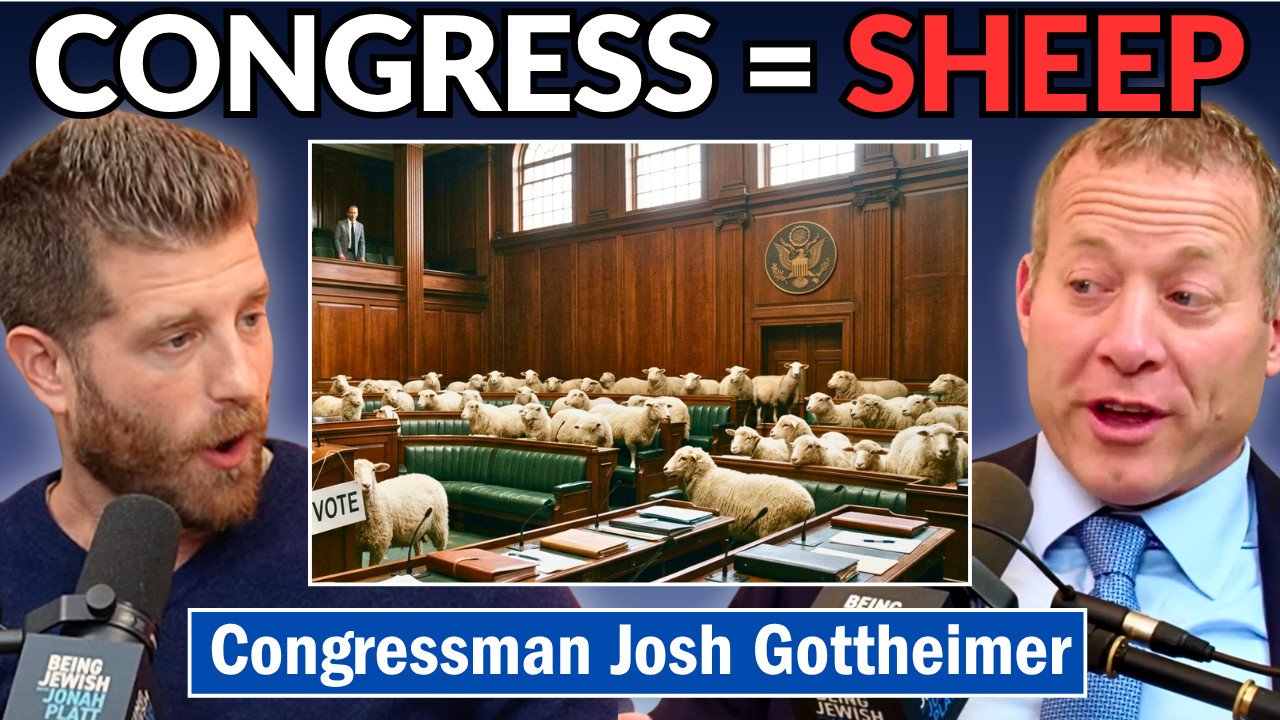
It's one thing when it's some Hollywood movie star who has no idea what they're talking about, but when it's like a Congress person, a lot of members of Congress are sheep.
Good morning friends from near and far in Dan Cnor style.
I will tell you it is 7:30 AM on a Monday morning and I am LA tired, which is to be expected, I suppose, as my guest today is a man who as his former speech writing partner and BJJP alum, Sarah Herwitz, told me never sleeps.
She also told me the dude is absolutely relentless and he's absolutely the person you want on your side in any fight.
Well, lucky for the Jews.
He's on our side, a five term Congressman from New Jersey.
He's one of the most outspoken and unapologetic pro-Israel voices in the Democratic Party.
Introducing numerous bills, repeatedly visiting the region and always calling out haters even within his own party.
Whether that's helped or hurt him politically, we'll find out today.
He's made a name for himself as a problem solver.
Literally as co-founder and current vice chair of the house's Problem Solver Caucus, the only bipartisan ideological group in Congress.
His colleague and roommate rep, Tom Swazi, calls him a big pain in the ass, but very thoughtful.
And that's right, we got him.
Please welcome the Hebrew Heimer Congressman Josh Gottheimer.
Welcome to the show.
Thanks for having me.
I don't, I never heard that Swazi quote.
Oh yeah.
Found it.
It's pretty, that's pretty funny.
As I said, major pro Israel Democrat, and you've repeatedly made clear that.
Your stance on that is strategic.
I I, I've read so many different quotes of yours laying that out.
You're also on the House Intelligence Committee and Finance subcommittee on national security, so you're deep in this stuff anyways.
When you're defending your position, how much are you defending that position and how much do you find you're having to.
Defend your Jewish identity?
It's a great question.
I mean, I feel they're very intertwined.
You know, these days, no matter what I talk about regarding the us, there's a relationship which probably like you, I believe, is critical to America's national security.
That's the oath I take protecting America, even though the haters, you know, decide question whether or not I'm.
Fighting for Israel versus the United States.
I know that people look at me and they're probably thinking in the back of their head, well, he's Jewish.
Right.
You know, and, and, but, which is an unusual thing because when I look at anybody else in any other identity in Congress, when they take a position about a country or a point of view, I don't think, like, wait, so what's their background?
You know, where are they from?
That, that's usually not what's popping in my head.
Sure.
Um, uh, but I, I think these days, as, as your mug says, being Jewish affects people's perception of an issue.
Yeah.
It's just, it's just reality.
Okay.
But, you know, sitting on the intelligence committee when I'm, especially right now with what's going on in Iran, but over the last couple years where I've been focused on Gaza and getting the hostages home and, and obviously the, the conflict there, you know, it, this is all about.
What, what's best for the United States, how we fight the terrorists, how we stop the bad guys who wanna undermine our freedom and democracy is what you're seeing in Iran right now.
Yeah.
And so, uh, but from the beginning, crushing Iran somehow was about, well, where, what's Israel doing in all this?
And what's their perspective?
And they're our partner.
Something's fishy there.
And I think that's what a lot of people automatically think.
I thought you made such a great statement, right?
When the, when the war began, you know, I'm someone who I consider myself at this point pretty centrist.
It's not how I always thought of myself, but these days Yeah.
And it's exactly what I would've wanted to hear from regardless of party, from a centrist, which is, by the way, it's not your fault.
The everything's moved.
You've, you've probably stayed, you've probably kept reviews.
Yes.
Of, and the whole thing shifted around you, your statement, you know, you support the action Iran.
Is our most threatening actor out there.
I'm glad we're taking this step.
I would like Congress to be involved procedurally.
Yep.
But this is a good thing and I support our troops and, and I support this action.
It seems like the only reason someone would not take that position is if they're anti-Israel.
Or if their whole agenda is opposing Donald Trump, whatever it is, doesn't matter.
I'm not even gonna look at the quality or, or the thing.
Do you agree with that assessment for me?
And if so, like how much of the opposed Donald Trump part of it is genuine in terms of like, I really don't agree with what he's doing versus.
This is good politics for us to just oppose Trump.
It's a great question.
You know, I think there's a few things going on right now of what people, how people are reacting to what's going on in Iran.
One, as you point out, there's a group of people who say, Donald Trump, whatever he does, we're gonna be opposed to it.
And do you find that to be from a place of, I really believe in that deeply, or I think that's gonna help me keep my seat.
Well, listen, I think a lot of people are rightly pissed off at the guy, you know?
Oh, sure, sure.
So, and he lies, and there's not exactly a lot of outreach to the other side, in a sense, to build relationships.
And we, of course, as Democrats and haven't exactly, uh, put an open hand out either, you know, so it's a chicken and egg of who's wrong here, but that's where we are.
So you have a group of people and Yes, a lot of it is.
Political survival for people.
Mm.
And a lot of it's just listen, pure anger.
And it's built up over many years and people have had it with the guy.
So that's a bucket of people.
Yeah.
And so no matter what he says and does, they're against it.
You know?
I think you lose a little credibility in that.
And sometimes you have to say, well actually I agree with him on this.
I may not like him.
Right.
But I agree with him on certain policy.
The second bucket of people are thinking, I don't want us to get stuck in a forever war.
Right.
And I think some of our veterans feel that way and some of the country feels that way of like, wait.
Where's this going?
And are we gonna be stuck there forever?
What's this gonna cost us in terms of, of human life, of treasure?
Like what?
What's gonna happen here?
So there's that group of people and that's actually, I put a lot of that blame on the, the administration they have as somebody like me who came out strong as you pointed out and says, we've got a crush.
Iran.
Yeah, right.
The governor of Iran.
This is not even a question.
We know that they are building strength in their ballistic missile program and their drone program.
The nuclear program obviously hangs out there.
We're worried about the strategically and being on the Intel committee, we see certain steps they're taking that that raise concern.
And they've killed scores of Americans.
Yeah.
Killed our service members.
Uh, right.
Uh, attacked our bases, killed our allies and their banner since the seventies has been death to America.
Yeah.
Right.
They do not believe in our way of life and our freedom, none of it.
And our democracy.
Forget the, and to boot, they just killed tens of thousands of their own people.
Right.
Mutilated them, which no one talks about.
But that still happened.
I know, I know.
None of the lefty groups like to bring that up, but that did happen.
But the president has completely failed from day one.
And going to the country and saying, Hey, listen, here's why we're in this right now.
Why we had to go in and here are our objectives now I get it.
Over time, objectives can change, but from the beginning they didn't say We wanna weaken or destroy their ballistic missile program and their drone program, or on the nuclear side, we wanna weaken it.
Or we want to completely obliterate it and remove all the uranium, right?
Those are two different objectives.
Three, the regime change piece that sometimes they said they want a regime change.
Other days they said they weren't aiming for a regime change.
What about the terror program?
Right?
Do they want to completely cut off the resources so they can't support?
Hamas and Hezbollah and Palestinian Islamic Jihad and the Houthis.
Like, what?
You know what, what's, is that part of the strategy?
They did bring up wanting to crush the Navy, right.
And and gut their Navy.
And from a straits of or moose perspective, you could see why they wanted to do it, but it shifted all the time.
And then the last thing they put out there, which was pulled back.
Quickly, but they put it out there, which we should talk about was Israel made us do it.
We had to do it right.
So you, so just keep in mind, you've had a lot of shifting objectives.
So the, the reason I think the public, not just Democrats, but I think broadly speaking, you've had challenges with the public, is that the president hasn't laid out the why and the objectives and, and that's caused a problem from the beginning.
'cause we don't know where, where's the goal to win?
Where, what exactly, how do we know when we've won or when we've achieved our objectives?
I, I would argue from where I'm sitting that the.
The greatest absence, at least for me, has been the thing being said that maybe should have been communicated differently is, this is gonna be over in a week.
This is gonna be over in two weeks.
This is gonna be over.
You know, that sort of talk as opposed to this is gonna be over when it's over and we've accomplished what we need to accomplish.
And because the whole way it's been, well we're, we're gonna be, well now it's like I'm looking at my watch.
Let's be honest about our public these days from the beginning, they're used to, as they saw in Venezuela, they're used to in and out.
We just crush and leave.
Right.
Right.
Do our mission, get it out and leave.
And, and this is much more complicated Sure.
Than that, than that conflict.
And people have no patience for this.
Especially if you don't lay out the predicate, keep in mind.
Right.
It's one thing if nine 11 happens, they, they take down the towers, people say, let's go get 'em.
Right.
Right.
Uh, in this case you didn't exactly explain things upfront of why the threat was imminent.
And then there were shifting reasons and then shifting objectives.
So.
Uh, you, you understand why the public is questions this every single day.
And the president says, don't worry.
Okay, we'll get out this thing tomorrow.
They have three more days, four more days.
And of course, if you're Iran, you're like, oh, this is great, right?
I know they, the country has no Pan.
America has no patience for this.
They're looking at their watch.
They just want to end.
So what will we do?
We're gonna drag this thing out as long as humanly possible.
We'll screw with 'em in the MOUs.
We'll, in the straits.
We'll, we'll, you know, lay minds.
We'll hold up their tankers.
We'll set oil prices higher where 20% of the oil is going through.
We can really screw with the oil prices.
They were going from sending dozens of missiles out a day.
They send out a few strategically, right?
The drone strikes.
They're hitting their neighbors in the region who are also on edge, right?
So just think about this.
You've got Iran's probably sitting there going, yeah, they took out the Ayatollah.
Yes, they killed many of our leaders, but we'll outlast these guys.
Right?
War of attrition.
So you sit on these committees.
That you're privy to, obviously information and intelligence that we don't necessarily hear all the time.
From where you're sitting and from what you understand, what are the greatest risks right now in that region and for America that maybe we're not thinking about as a public, because we're.
We don't know how to be thinking about them.
First of all, broadly speaking, we're seeing some of the risks right now, which is just instability.
Mm-hmm.
And instability spooks the markets.
Right?
So you, you're seeing the markets affected, the economy could be affected.
And I think when you have higher gas prices, prices shooting up, and the uncertainty of that, that, you know, higher gas prices affects.
Literally everything, right?
Any shipping, any, any goods.
It affects not just at the pump, it's, it's everything.
So that, that's a big impact on our economy and the great uncertainty of it.
You also have a lot of our friends, the Gulf States in the region that.
Are also now been destabilized.
Right?
So that affects the, their economies and their relationship with Israel.
And in some ways, if this goes a good way, in the end, this will bring everyone closer together.
That's what I was gonna ask.
Is it pushing them towards each other?
Is it.
You know, being, oh, I shouldn't have gotten in this mess in the first place.
Well, I mean, I'm sure some of the people, some of their citizens are saying, why'd you get into this?
Mm-hmm.
Did you get into it?
'cause of those guys.
Right.
So I'm sure there's some of that.
But if it's bringing them together and they're working more closely together behind the scenes and helping each other in the long run, that actually could, in terms of Abraham Accord's thinking mm-hmm.
Long term regional security, that could be a good thing.
Right?
Yeah.
In terms of, of.
Learning to cooperate, have those open channels, have those relationships which they may not have had and looking out for one another.
But you see like there were attacks in Kuwait overnight.
The UA e's been hit.
Yeah, regularly.
The Qataris, our bases in the region.
It's not just people who you'd think might get hit, but.
Like Oman got hit, they've always stayed outta these things.
Yeah.
So Iranians have actually like really gone after and haven't left anybody out.
Yeah.
So in some ways, I think also from a regional alignment, longer term, you could see a lot of these countries saying, okay, real, really US versus Iran.
Yeah.
Now keep in mind the Iran.
Relationship is not just about Iran, it's also of China, right?
It's Russia, it's North Korea, right?
So you've got this access that, that in some ways will also become stronger through this process.
So this, and, but, but remember the Chinese, uh.
Historically in, in the, in recent years, have gone after relationships in the Middle East, right?
In the Gulf States.
They've been trying to build strong relationships there.
They have bases there.
There's a deep connection.
They may be buying 90% of Iran's oil, but when it comes to other economics and other other business, they're doing a lot of business with other Gulf states.
And if they.
More involved and so far they've been more hands off.
Mm-hmm.
The Russians have been more hands on.
That's gonna affect longer term their relationships with the Gulf States where they have wanted better bonds with them.
Right.
So just thinking long term of realignment, what's the impact gonna be?
You've got a Bahrain that got hit early that has been close to the United States, but again, other countries like the UAE have have.
Played kind of both sides, the Chinese and the Americans.
Mm-hmm.
And so I just put that out there as something that from a, a global perspective, longer term could impact things.
And then there's AI and the AI relationships that they've, you know, you always have to be thinking longer term on as, as you have two AI superpowers, us and the Chinese.
Yeah.
Where are people gonna line up behind?
So, you know, it's kind of a, it's a very uncertain time, not just because of Israel, but because of, of ai, because of, of oil, and because of other global alignment.
Back to the Israel of it all.
Um, conditioning aid to Israel has always been a red line for you, uh, in the way that you voted.
W how do you respond to others within your party who make the argument that, Hey, I support Israel, but we can't give them a blank check.
And this is about leverage and it's important to send a message with conditioning aid.
I mean, it's absurd.
It's absurd in the sense that all aid has conditions.
Mm-hmm.
Right?
I mean, by law, all of our aid to any country has conditions they wanna put on super conditions on Israel, on our key ally.
That's been essential in our fight.
Against terror and bin our really representative democracy in the region, you know, for decades and decades and decades.
Maybe you could articulate that a little bit for, for us, like sure, because we hear that that line a lot, but what does that really mean from somebody on the inside that they're such strategic.
So think of, also, think of all you gotta, you know, you got Israel.
Surrounded by, in a tough neighborhood, Israel, size of jersey, in a tough neighborhood surrounded by many countries that have been America's friends.
Some years and other years, they have not been our friends.
Yeah.
And that's what I mean.
But who has stuck with us and, and who's kept an eye out for us in both an intelligence and also militarily and a lot of the terror proxies, Hezbollah, Hamas, Palestinian, Islamic Jihad are not.
Our friends and think more broadly, speaking of the wars in Iraq and Afghanistan with Al-Qaeda, isis.
Yeah.
And Bora and others.
You know, we, Israel has been very important to us in, in our fights against terror in the region.
You've got Syria next door, which is very complicated Turkey, which has had been a complicated relationship.
Yeah.
Obviously Iraq, Iran, they're all smushed together in this area.
The Saudis right, are our friends now, but there's been moments after nine 11 where we wouldn't exactly trust them.
Yeah, you've got Pakistan, but Israel has always stuck through it and helped us and been unrelenting in protecting us and our interest in the region.
And that's what I mean by that.
Yeah.
Right.
And, and it's a strategically critical relationship.
Uh, and now, now Israel of course, has had its share of crises over the years.
Sure.
And.
I'd say we've been generally a good friend to them.
Sometimes I think they'd like us to be a better friend to them.
And, and oh, by the way, they're the democracy in the region.
Right?
Right.
And I, people shouldn't make light of that.
You know, you go to all these other countries, there's no one, there's no, there are no open voting.
Right.
And people shouldn't belie that.
And I say to some of my colleagues who are so critical of Israel, um, do you like, tell me about, like the others in the neighborhood.
Like are you, you're okay with SRI Law?
You, you're, you're cool with the fact that women have no rights or that gay people get stoned.
Like, that's okay by you.
I said to one of my colleagues who was doing the whole gaze for, uh, Palestine, what was it?
The whole movement.
Queers for Palestine.
Queers for Palestine next.
Queers for Palestine, nevermind.
Who runs the LGBTQ q plus caucus in, in the house at the time.
And I said like, it's okay.
Both of us, we both go to Gaza.
You can wear a rainbow shirt.
I'll wear a kipa like I bet.
You get killed first.
Mm.
It's like, what do you think goes on, man?
Like, you think that they're gonna welcome you?
Th this is a, uh, these are societies that are just the opposite of welcoming to other perspectives and views.
Like that is reality and no one wants to talk about it, but they just erase that.
What was the response like?
What, what are your, what are your colleagues?
Say blank stare.
Like, that's just not true.
Or, you know, we, we like you, like, Israel has zero patience for anybody.
Complete and total ignorance of Israel, their history, their history toward women and, and people from all different backgrounds.
You know, it's disconcerting.
It's like it's one thing when it's.
Uh, some Hollywood movie star who has no idea what they're talking about, but when it's like a Congress person, you expect them to know a little bit of the facts on the ground.
Well, except when there's all these false facts out there.
I mean, if you don't actually spend time studying, I'm, listen, I'm in the region all the time, right?
I'm the intelligence committee.
I.
One of my, we, we split up the world generally informally, but we all kind of have our areas of focus.
And I do the Middle East.
Um, I oversee the, I'm the senior Democrat on the subcommittee that does, oversees the NSA and cyber.
And then my other hat is like, I, I focus really on the Middle East, right?
So I spend a lot of time.
Just drilling down, and obviously I know the history.
I've been there many, many times.
You know, I, I paid close attention and I don't blame my colleagues.
Listen, if it's not your thing, it's a big world.
There's a lot of things going on.
You have a lot of issues.
People focus on different things.
But like you do your homework on it.
And if you don't, one would, one would assume then, then they would defer to those who have and not take such a strong position.
No, because what did you, where did you start this conversation?
What'd you say?
Right.
You said, 'cause they like, oh yeah, Jewish, because you're Jewish.
So they're like, oh, he's got a jaundice perspective on this.
He's biased.
He's biased, right?
So they look at me and like, oh yeah, I can't have a neutral perspective on this because I'm Jewish.
And so, and I'm very supportive of the US' relationship and always have been.
So he's, he's in the, he must be in the tank.
He can't have, uh, a, a proper perspective on this.
It's a bummer.
I mean, I obviously Congress, Congress people are people too, but you sort of, you hope from the outside that there's some sort of higher level of.
Thinking and, and morality.
Yeah.
But Jon, it's also, we have on the street, it's also politically miserable right now to take that perspective.
Yeah.
Even if you believe, even like me, right?
Like punch me and I get back up and I'm like, bring it on.
Right.
But like that's, but.
Most members of Congress if this is not their thing, right?
And you are getting chased around everywhere and protested and just being saying, well, why won't you say the word genocide thanks to your governor?
Why won't you say the word apartheid?
You know, why won't you say these things?
Yeah.
And demanding that they do it and keep protesting them, you baby killer and everything else, they scream at you.
Mm-hmm.
Right?
And, and I had people running around the capitol tossing red paint at me, you know, and, and for blood and, and sitting in my office all the time.
And it's, it's miserable if you're thinking to yourself, well, this is not, you know, I think the average member of Congress was like, this is not my issue.
Right.
Well, so why am I getting attacked over this?
I could say a magic word and this will stop.
Mm-hmm.
Oh, I'll say that.
Oh, I have to sign that letter and this will stop.
You know, until the next time when they make me sign something else, hey.
And then me on the other side saying to them, wait, but you've always been supportive of this.
Lemme explain to you.
Let's talk about it.
You signed this before.
You've been supportive of the MOUs with Israel.
You've supported standing up to the BDS movement 'cause it's anti-Semitic.
You know, you, you've taken these steps in the past and their view now is, no, no, no.
Don't make me do that.
Because it's really miserable and unpleasant and I just want it to go away, by the way, not just a Democrat thing anymore.
Yeah.
This is now a Republican, a growing Republican problem, which is why you don't see votes in the House of Representatives.
This Congress, unlike last Congress on things like antisemitism or US Israel, because they've got problems on their side.
You called out.
My governor, uh, Gavin Newsom for using the word apartheid.
He said it was dangerous and asked whether it was worth throwing Jews under the bus for political ambition.
What about.
The context in which he used it, which was on this interview with Poe of America, and he is, as he was describing, they love, they love Me.
Oh yeah.
I'm sure those are your number one fans.
Huge.
Yeah.
Um, I'm going there after this.
Oh, perfect.
What, what about it crossed the line for you?
Is it, is it just the word itself?
Is it the context it was used?
Is it any, any public statement include?
Well, well, first of all, it's bullshit.
Mm.
Just, it's a historical, it's false, right?
There's that, I mean, I know we're, I know facts are, are, you know, shouldn't get in the way of things that we say these days, but, but yeah, it's just not true.
It is a cheap, uh, anti-Israel.
Talking point that extremists have used as part of the intersectionality movement, try to use for a long time, and I expected from Governor Newsom much better as somebody, especially someone who knows better, who's been to Israel, who understands.
The truth and, and I get that, that makes it gets, was gonna score, he hopes would score him points with the, with the left, with the progressives for his presidential run.
And, and I get that, that was I'm sure what he was thinking like, oh this is a new way, this is a new thing I can do to out, like to out left row or some han or something.
Right, right.
So let me just try to get to the left of these guys and there's a reason why I think he backed off because.
The outright, you know, people rightly flipped out, not just me.
Right?
Sure.
To push back on it a little bit, I, I actually found from a, you know, academic perspective, the way in which he used it, I didn't totally.
Disagree with.
He said basically, if the West Bank is annexed and there ostensibly are different laws for the Palestinians there and the Israelis, it would be sort of like apartheid, which is what he said, which.
It's sort of accurate.
I think he knew what he was doing by using the word apartheid.
That's sort of what I'm asking is like even is is there any way real, we, we talk about like there should be legit criticism should be allowed.
Sure.
But but with the impact of even mentioning a word, how do you do, it's a dog whistle word, right?
Yes.
And he knows that.
Right.
And that's my point.
Like we know that, that, that the, that the haters have for a long time claimed that Israel's an apartheid state.
Right.
Which, and they, they pounce on on that.
Yes.
And it's just go to the Knesset and see what the makeup of the Knesset is and see what the makeup of the country is.
And tell me that, it just makes no sense to say it's an apartheid state.
Are there different rules in different places?
Yes.
Because of ada, like there's a historically had to, for the safety and security people, you've had different rules that have developed over time.
But to call an apartheid state is a joke.
And he knew, but he, but even if I understand what you're saying about the context.
Yeah.
Even if he said, if this, if that happened, if this happened, if that happened by the way, so you could have the same conversation about the United States.
Mm-hmm.
If this happens, if that happens, you know?
Yeah.
Threaten our democracy, what that looks like.
But he, he purposely jumped the shark and used that word 'cause he knew it, he knew what would get picked up was that word.
I, I believe.
Right.
I, I, he's, he's, I, I don't, even though he makes his claims about his iq, he's a smart guy.
Um, and he knows what he is doing and, and he knew what he was doing there.
We have to be able to allow.
I think as Jews le quote unquote legitimate criticism of this.
Sure, of course.
So how do we do that in a way where the intention is pure, but we know the impact, even when it's legit, is gonna be harmful for Jews because of the way people pounce on any single negative anything that has to do with Israel.
Well, it's a great, it's a great point.
And listen, the good news, Jonah, is that there's no shortage of criticism.
Right?
Exactly.
You, in case you didn't get there.
Right?
Don't worry, someone's got me covered.
5,000 people today will have you covered criticizing Israel, right?
So don't, don't worry that your issue is not gonna be raised.
It will.
Um, uh, secondly, of course, you should be able to criticize the action of a government.
Um, and say you disagree with the decision of a government.
Right.
Which of course we do all the time.
Sure.
And especially within the Jewish community, we do of Israel all the time.
But it's, when you do it in public, it, it becomes, there's a line of like, you know, using words like genocide that are false.
There's a line where, where people jump over and say, um, uh, Israel doesn't have a right to exist.
Does it have a right to exist?
You shouldn't be able to, it should not have defensive weapons.
Like you, there's certain things that you, you, and, and by the way, I.
Would hope 'cause people are, you know, you've got a lot of countries in Europe that are not thrilled with Donald Trump and with us.
Mm-hmm.
Right.
I would hope that.
England doesn't wake up tomorrow and say, you know, I hate that Donald Trump guy, so I'm cutting off our relationship with the United States.
Oh, it's over.
Right, right.
And I said, you know, 'cause to me that's the same thing.
You may not like Prime Minister Netanyahu.
You know, I think very few people here do.
Um.
But that doesn't mean we should end the relationship, historical relationship with, with Israel and, and, but people are making that jump like that.
They've, they've made that, I don't know if you agree with me on this, but they've kind of said we should be done with Israel.
Right?
Yeah.
Because of Netanyahu.
No, you could say I'm done with that guy.
Just like, I don't like Trump.
But that doesn't mean we're done with the United States.
And unfortunately that's kind of what's happened with a lot of my colleagues and a lot of people that right now, including by the way, on the far right, the Candace Owens of the world, the isolationists, increasingly Vance.
You know, it's a lot like that, that a lot of their comments are, I don't know why we support this country over there.
I think part of the problem is.
You know, using that, the analogy you just brought up, like.
If you don't like Donald Trump, you, you, you know, I gotta wait four years and then I get another crack at it with Israel.
I mean, Bibi's been the prime Minister for forever, you know, and you never know when you're gonna get the next, how long you're waiting him out.
True.
But it's still a democracy.
Sure.
It's not a dictatorship.
It's not like in some of our Middle Eastern, in the Middle Eastern countries or African nations where like you're there for life.
Um, that's not the same thing Now.
Yes.
Netanyahu's been there a long time and after the budget they passed yesterday, um, uh, what might have been forced elections this summer could be the fall.
Yeah.
The bottom line is this, it's still a critical ally to us in the region.
Put aside the economic benefits of our relationship, the health or care relationship, the benefits of our relationship.
You know, it's a very deep relationship and an important one.
Yeah.
Before we continue, I want to take a moment to share something incredible.
Deep underground in Jerusalem.
As rockets fly and sirens blare, doctors and nurses urgently treat patients.
I'm talking operating rooms, ICUs, even maternity wards, moving below ground in a matter of minutes.
Hard to wrap your head around, but this is what Hadassah hospitals do.
Hadassah, the Women's Zionist Organization of America built these hospitals and now they're working feverishly to expand their underground capacity.
There's an urgent need to equip a new emergency zone with additional beds and to build an outfit.
Six advanced operating rooms so they can continue delivering life-saving care no matter the conditions.
If you're able to help, please consider making a gift@hadassah.org.
That's H-A-D-A-S-S-A h.org.
Your support helps Hadassah continue its life-changing work for the people of Israel.
Before we end, I'd like to thank Hadassah for their life-changing work in Israel in these challenging times.
To learn more, visit hadassah.org.
Almost a year ago to the day that we're recording this, you told the Jerusalem Post of the of the Democratic Party.
Most of my colleagues are very strong supporters of the US Israel relationship.
It's a year later.
Do you still feel like that statement is true?
That's a great point.
It's a year ago that I said that.
Yeah.
It was like March or March 29th.
That's incredible.
Yeah.
Um, so there's two ways I look at this.
Yeah.
One compared to like when I got to Congress in, in 2017, if you had on a vote on something to do with SS relationship on standing up to antisemitism in some way, if that came up, you'd get 90.
To 95% of the Congress behind it, you'd get 5% who were opposed.
Some of the isolationists, some far left, you know, early, far left.
Okay.
Squad shows up in 18, um, and I'm sure, uh, Alex or Rashid will be here later for the show.
Yes.
But there's a line out the door.
Yeah.
So they show up and then with that fir they make the comments about hypnosis on the world.
And if you remember this and all about the Benjamins.
Yeah, of course.
Yes.
I, I lead a resolution with Elaine, Laura, then Congresswoman Elaine, Laura, who's running again, who, um, uh, and we talk about, and then we, we pass this resolution criticizing their comments.
That was seen as a very big, like thunderous moment in, in the Democratic party in the congress.
Very controversial.
That seems like today that'd be like candy land if that were the only comments made today, right?
Mm-hmm.
Let's, let's, let's be honest.
Yeah.
If you looked at my any fo anything I post on social media, the comments of what people say, dirty Judes or a Zionist baby killer Genocide, Josh, whatever it is, you know, on anything I could post about the weather, I get those comments, right?
That's today.
As I said earlier, the incentives for being supportive of the USS relationship when you have a 17%.
Of Democrats according to that, that poll that was out a week or so ago, saying only 70% favor Israel's or sympathetic more to Israel than to the Palestinian issues.
Wow.
17%.
Wow.
Okay.
So now you go to Democratic primaries, say, uh, you know, being associated with APAC or with the Jewish lobby or anybody, any, any issues like that and not more sympathetic to the other side, costs you at a primary when you have 17%.
So now do I believe if.
Votes, big votes come up again on the MOU on, uh, interceptors and defensive weaponry and standing up to BDS or whatever the issue is.
If those votes come up, do I still believe I'd get a majority of Democrats to vote for it?
Yes.
Do I think they're gonna run around signing letters and waving the Israeli flag?
No dude.
Like is it popular to be out there and put you and stick your head above the parapet?
No.
Right.
Do I think when push comes to shove, you need the support?
Is it there?
Yes.
Mm-hmm.
A majority.
Now, again, majority is a lot different than losing.
5%.
As I said, when I did, when I got to Congress 10 years ago, it's a big spectrum there.
It's a massive shift.
Yeah.
And even in the last year with all these primaries and with what's gone on in the Middle East, a massive shift and what people said to me, I'm sure they said to you, John, on the show, maybe once the hostages are home, I'm sure things will calm down and maybe they'll back off.
Do you remember that?
People set people, I guess.
Yeah, no.
People were like, we just gotta get through this.
Right.
And then the war will be over the hostages go home, things will calm down.
People will stop being so critical and making this front or center.
Front and center.
Right, right.
Well that was bullshit.
Yeah.
Because the bottom line is, if you look at all of these primaries now, like in Jersey and around the country, look at these debates.
One or two questions of the 10 questions.
It is about something to do with Israel and Jews.
Yeah.
Like you could have 10 questions in debate and somehow why are you, why is that an issue coming up in a debate for Congress, there's a thousand issues to ask about, about affordability run out.
Why are those coming up?
Yeah, right.
Why?
Because you've got a surge of antisemitism and Jewish hate, and that is reality.
And I know you're not, like, I know people are like, oh, the Jews, they overplay that and they this and that.
Right.
That, uh, like go read the New York Times on any given day and tell me that.
Yeah.
Right.
The New York Times is like in the business now of just being an antisemite.
How much of that shift within Congress that you just spoke about is.
Like, is it a tail wagging the dog situation of, is it these Congress people setting this tone and then the people are following that?
Or is it the people are setting the tone and the Congress people are following that?
Well, I don't think it's just Congress.
I think it's, it's the media.
It's, I mean, why is it.
That you have Pod Save America.
Just 'cause now you mentioned that.
Yeah.
Why is that?
Pod Save America has Graham Platner on like their, like their like a folk hero.
Right?
Right.
The guy had a Nazi tattoo, right.
And put aside the tattoo.
His comments are insane.
Right, and, and shameless about his comments.
And so it was like, piker, what did, what did RO say about that?
That, uh, well, we need to have other perspectives outright, right?
We, Democrat party has to be open to other perspectives.
Oh, should we have neo-Nazis come?
We wanna listen to the skinheads.
Like, oh, should we bring their perspective in and try to welcome them into the party as well?
Holocaust deniers.
Right.
Is that who we are?
Those are the values that we wanna espouse and support as a party.
We should kick them to the curb.
Yeah.
Right.
But no, we're embracing them.
And, and listen, grant Plattner, uh, look at the polling, the guy's ahead.
Right.
No one seems to care about that.
And so is that Congress or is that the media in combination with social media and everything else?
Right, because remember, social media and disinformation that's on there, whether that's being pumped in by TikTok and the Chinese government or whoever is behind 'cause and the Russians.
And if someone doesn't Intel, let me just tell you like.
Our friends under, they, they know how to sew division.
Oh yeah.
In this country.
They're very good at it.
And they know that we live in our microcosms, they understand the algorithms and they are pushing us apart intentionally.
Sure.
'cause and, and, and they're very good.
Like people are angrier, they're feeding on each other, they're building conflict.
And then the product of that, it's when people are always like, well, Donald Trump.
And I'm like, no, no.
Donald Trump is a product of all of this.
He's able to use all of that to rise up and so is a Graham Plattner and so is Piker.
Like, you know, all these guys are able to do that.
They use the system and then Congress is like, a lot of members of Congress are sheep.
They see, oh, uh, look, this is not popular.
Let me go, or This is popular, let me go there.
And lemme, if I say this, it'll make me more popular.
Help me win my primary, right?
And they got people like me who are working with the other side, and they look at people like, you know what, you work in a bipartisan, you talk to the other side, right?
You're trying to govern and you talk to the other side, and you try to actually sit and engage with the Secretary of State or with the head of the CIA about an issue, right?
And they're like, well, you know, what are you doing that for?
That's not popular in the PRI Democratic primary.
It's so disappointing to hear, you know, just you, you, you hope that.
The people you elect to be leaders would be leading and not being sheep.
But here we are.
Yeah.
But Jonah, here's the good side.
The good side.
'cause it shouldn't be all just negative.
Yeah.
The good side is we also understand in the importance, the importance of the US relationship, the importance of fighting antisemitism, and we also now understand the, we see the field clearer than we did before October 7th, right?
We do.
We know who our friends are.
We know who wasn't there after October 7th.
People that we had embraced forever and worked together with and locked arms with who suddenly weren't there.
Okay, great.
We understand that we also understand what we have to do more in educating people in the, in K 12 and like about the Holocaust, about October 7th, about standing up to hate of all kinds, Islamophobia as well as antisemitism.
Like we, we, we understand what we've gotta teach.
Our kids, if we're gonna get them on side by the time they get to college, which half these colleges are totally screwed up.
Yeah.
But they're getting, some of 'em are getting better, but by the time they get to college, in my opinion, it's too late.
Yeah.
If you haven't done the work in K 12.
Mm-hmm.
So let's, let's go down that road.
Where should we be focusing our energy, our budget?
Like what do we need to be doing to start.
Flipping the script for, for the Jewish community here in America.
I think it's essential that we actually, uh, start focusing on K 12.
Like I, you know, I, I, I think we've been, I'd argue in general the, the community has been asleep of the switch.
Oh yeah.
Uh, the last couple decades.
And our enemies who have a different perspective on things have been very focused both at, at the college and K 12 level, you know, investing in.
Uh, departments, the college level and professors, and changing curriculum, uh, and putting groups together on campuses and funding those groups and giving them creative names like JVP, like, you know, they, they've been very good at this and we kind of were whistling, you know, past the graveyard and, and I think we completely blew it, and now we can't afford to blow it anymore.
And I, so I think you need, we need to focus on.
K 12 and the curriculum, you can't have, you should not be walking into a school in New York Postal, New York City and seeing a map on the wall without Israel on it.
And by the way, it means we're gonna have to invest in that and put resources behind it.
And they're not just, it's not just cutter cash.
Right.
Although the Qatari I, I believe, have put money in and I think, you know, we should go after 'em.
Yeah.
Hard when the president's getting planes from them, but, but harder.
Right.
But, but we should be doing that.
Um, and in an aggressive way.
Um, secondly, so we've got the K 12 piece and got the college piece.
We should be going after colleges that are not doing right and not be afraid we should stop writing checks to colleges that, that aren't doing the right thing.
And I know that means our kid's not gonna get into certain schools.
I get it.
Um, listen, my, uh, I went to Penn.
Penn wasn't great for a while, and people stood up to it and, and, and I think they're back on track.
Yeah.
Uh, largely 'cause people stood up and said something about it.
And I went after, I think I was part of, uh, investigating about 50 universities or more like right.
And my wife.
'cause I got two kids, uh, you know, one's, uh, gonna be applying to college.
My wife is like, you gotta leave a couple out, man, because Right.
My kid's like school.
And I said, no, no, there's good schools doing the right thing.
Like Vanderbilt or Emory or WashU or the Texas schools or the Florida schools doing great.
A great job, right?
And have been doing a great job.
Um, and other schools haven't.
They should be called out for it and we should not be afraid to call them out, right?
And be aggressive.
Uh, this investigation's going on.
Some of them are, they hide the money very well.
These universities, they take the money, foreign money, they, you know, we, we've tried to pass stricter laws.
Um, they have not been passed.
The universities don't want these laws, so they lobby hard against them.
Why?
'cause they like to take the cash, they want the money.
So they make it difficult.
They make, they make it difficult to pass these laws, but we have to be very focused on that.
Secondly, we've gotta really do a better job.
Politically and being aggressive and making it, explaining to members of Congress and, but not just members of Congress, local elected officials, state officials, school board members, like we gotta actually do more educating them as well and holding them accountable when they're wrong.
Right.
We, we have to not be afraid to be tough.
Like, you know, I know some people are like, well, you know, we've got, it's more of a outreach and a glove.
No.
No, that does not work.
It's bullshit.
Mm.
People in elected office like react to, which is what you're seeing now, reacting to these protests.
Yeah.
That's what they react to.
Yeah.
Right.
Like you need a little tough love and, and, and I think it's really important.
We shouldn't be afraid to do that.
We shouldn't be, and we gotta invest in that, but to stop bad people from coming in.
And also to hold those who are in accountable and like, we should not be afraid to do that and to be really, really aggressive.
And when you say we, do you mean the government, do you mean the people listening to this podcast?
Do you mean sorry, we, we, the Jewish community and, and on the ground people who are listening.
Yeah.
Probably listening to this podcast on the ground at all levels.
In those who, who invest in organizations, right?
Like listen, you know, which organizations that you've given money to in the past on October 8th, ran away from you?
Yeah.
Like, you probably shouldn't write a check there again right now.
Listen, I, I, uh, my, my mom passed from Sarcoid.
I, we write checks to Sarcoid for, for research.
Oh, yeah.
Um, uh, but a lot of the other groups that I used to support can go after themselves, like stick it.
I'm not writing 'em a check, like they didn't get my back.
They didn't get our back.
Why should we get their back?
We need to be smart and coordinated in our giving.
You can't have us all competing with each other, right?
I mean, like that doesn't do any good.
It's a huge problem.
We should sit around the table and strategize.
Someone should be focusing on the K 12 piece and education piece and make sure we are investing in education and being smart about that.
Somebody should be focused on.
Like actually communicating with members of Congress are all different levels of elected officials and saying like, Hey, tough love.
Here's what you should know.
Here's what you should learn.
And, and by the way, you're, if you're saying something crazy, we're, and you're antisemitic, we're gonna hold you accountable for that.
Um, and so these are the kind of things we should be thinking about more broadly.
And then of course, you got.
Then we, we also have to be smart and educating about global issues as well.
Alright, we're getting close to the end here.
So I'm gonna end with a little game that I've devised for you, Congressman, um, uhoh this, this one's called Problem Solver as that is your thing in Congress.
As I mentioned, part of the problem solvers caucus.
Bipartisan group.
Yeah.
I'm gonna, I'm gonna give you a scenario and, uh, you're gonna have to help these two sides come together and make a deal.
All right?
It's high holiday services.
Half the congregation wants to sign seats they've had for 30 years.
The other half wants open seating to feel more inclusive, make a deal.
I think you're gonna have to take half those seats and say, we're gonna keep half the seats as we did in the past, and we're gonna have the other half open seating.
And, you know, and we're gonna have a new tradition in our synagogue where we do that.
Uh, the people who's given up their seats for the inclusive people are probably gonna be pretty pissed off.
I know, but next year maybe they have a shot of the seats that they had the year before.
So like, get a rotation going.
Can rotate.
They can rotate.
And half will go in, half will go up.
You gotta give a, you know, we've got progress, we've gotta move forward and, and, and we gotta bring in the next generation.
Who wants open seating?
You got a deal, by the way.
Very synagogue president.
The worst, the worst job in America.
Okay.
Speaking of synagogue president, here we go.
Here's one.
The rabbi wants a tight 92nd announcement after services.
The temple president's got 14 thank yous and a personal story.
Let's make a deal.
By the way, I wish we had a buzzer.
Right?
And we, we definitely should have a buzzer.
And I, I think they should get two minutes.
And when I do, when we do debates, we have one of those big clocks.
Yeah.
And with the red, yellow, uh, green.
And they should be right next to the bema.
A big clock with red, yellow, green.
And should yellow mean like we're getting close to the end of your time?
I didn't know that they had, I thought it was just like one light.
It's like you're out.
No, no.
They tell, they give you like, they walk it down for they know that you're running out of time in case you can't see the clock.
It's a way of, so we should have that on the bema as well.
They should be given five minutes.
You can, if you can't say what you wanna say in five minutes, you got a bigger problem.
Yeah.
Um, you know, you could ask for money, thank people and move on.
They do it in the Oscars.
And then what you could do, I think, which would be a really good idea, is you have music playing.
Louder and louder.
There you go.
Just like in, uh, when you watch the Oscars.
Yeah.
And then their shut down.
It could be nice music.
The local school board is split half Want drag queen story?
Hour half.
Want Jesus story Hour.
Make a deal.
Uh.
That's a good one.
I, I, I think depending upon the school, um, because, you know, uh, I, I will, I'll, I'll defer to the school 'cause schools are very local controlled, not controlled by the federal government.
Um, I, I think it's really important that both sides are given time.
They have to learn to share.
And I, I think in general.
Uh, the bigger point here is people have to talk to each other, listen to one another, and be willing to get 80% of what they want.
I'd say the same thing should happen in any situation like that.
You know, the problem happens when everyone digs in on their side and isn't willing to talk to one another, and so I'm always like, there's two sides.
I want them to talk to each other and that'd be an interesting, they should have coffee first.
Make them have coffee, see what happens, and if any are still alive after that, I bet they can solve the problem.
Nice.
The answer we were looking for is drag queen Jesus.
But you know, that's fine.
Let's wrap it up here.
Your dad wants you to call him every day.
Your chief of staff says you don't have the time.
Make a deal.
Oh, that chief staff's gotta go.
Boom.
Family first.
Love that.
Talk to my dad every day.
Beautiful.
Um, you know, he is, uh, he's.
81 in May.
All right, pops, staying strong.
Congressman, thank you so much for time.
Thanks for having me.
It was fun.
Thank you for being here.
This was awesome.
Thanks.
Thanks for you're doing.
I appreciate it.
You too.
Thank you again to Representative Gottheimer and his team for making today happen on such short notice in such a short window.
They really wanted to be here for this conversation today, and I appreciate that so much and a special shout out to Zach Lutkey for connecting us in the first place and for joining us on set today.
And of course, thanks to all of you for tuning in today.
Alright, I gotta go take a nap.
I'll see you.
All right, back here for the next moderate episode of being Jewish with me, Jonah Plat.