
Interview Transcript
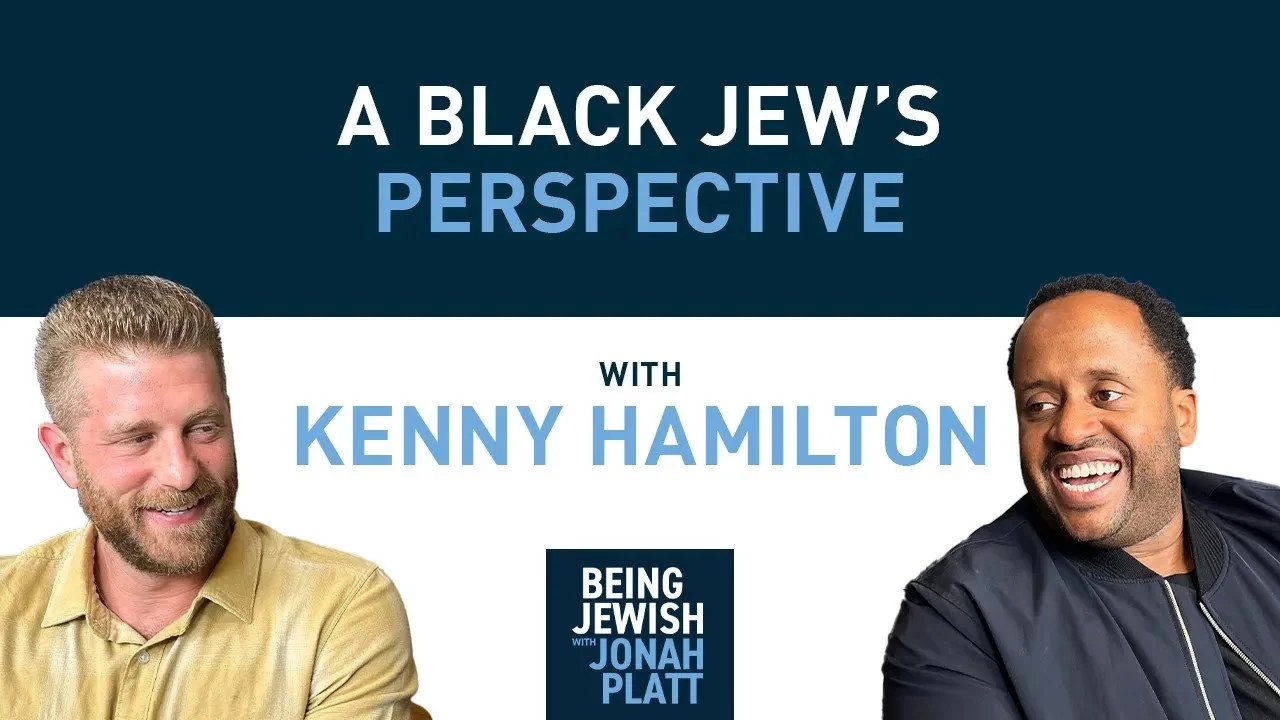
A Black Man’s Journey to Converting to Judaism & Fighting Bigotry
This is the third episode of Being Jewish with me, Jonah Platt.
[Music] That's better.
[Music] My guest today is one unique dude.
He served in the Navy.
He's worked in radio.
He toured the world as Justin Bieber's bodyguard.
He's touched many different facets of the music industry.
And since converting to Judaism, has been an advocate for young Jews everywhere in the fight against anti-Jewish hate.
Welcome, Kenny Hamilton.
Thank you, sir.
I appreciate being here.
It's great to have you, man.
Actually, funny connection.
And you met my wife before you met me because you took her class at Rise Nation.
Oh, wait.
Who's your wife?
Courtney.
Oh.
Oh, wow.
Oh, you waited to tell me that for the reaction.
Oh, yeah.
Yep.
That's dope.
I actually missed that place.
Right on.
Oh, I didn't realize that.
Yeah, that's so crazy.
Courtney and Platt.
That's right.
There you go.
Got it.
Okay.
Well, shout out to Courtney.
Shout out to every episode basically we have a shout out to Courtney, which you know, it's appropriate.
I love it.
Um, all right.
So, like you worked with the bees as his bodyguard and road manager from 2011 to 2013, right?
Is that right?
Yeah.
A little longer before that, but we'll get into it.
Yeah.
Okay.
So, like how did that come to be?
So, I got into radio to be able to work with artists.
That was my whole goal and plan.
Well, in college, I had a radio show.
I have a little bit of radio knowledge.
Maybe I can get a job in radio and that's where I'll meet artists.
So, I ended up meeting Germaine, meeting Scooter.
So, it worked out.
It's a good plan.
Yeah.
And it worked out.
Um, and then Scooter and I just started we were we were working together.
We had these rappers that he was managing.
I was like the road manager.
And during that time he found Justin.
So by the time he moved Justin to Atlanta, I was around like driving him around to brought him to my radio station.
I was like, "Hey, one day you're going to sit here." So before people knew Justin Bieber, two and a half years almost, we were already together and just like trying to figure it out.
Once Justin started getting bigger and bigger, um, you know, Scooter was like, "Oh, we need to find a security person for him." And I was like, "Oh, I know plenty of people." And he was like, "No, I want you to do it." Because I have a military background.
I have a martial arts background.
What kind of martial arts?
Uh, Wing Chong Kung Fu.
Whoa.
With all of that, it was like, "No, I want you to do it." But more so, it wasn't about security.
It was about having people around who he trusted, of course.
But he was 14, about to be 15 around this time.
Um, and then everything started rolling.
So, uh, speaking of Scooter, did he play any role in your journey towards Judaism where you eventually found yourself?
Inadvertently, yes.
Um, cuz now, I mean, now he's such a big vocal voice for the community, especially since October 7th.
So, I was just curious if that was a part of it.
It's so funny.
So, we were hanging out.
I remember opening his like freezer like we you know we're trying to find something to eat and he's like I don't know whatever you find in there and you open the refrigerator and you open the freezer you see all these like frozen Tupperware bowls.
Uhhuh.
And you're like what is this?
And he's like oh those are soups my mom sent down.
And one day you know you eat it and you're like oh this is great.
Yeah.
You know it's like he's like you can have them.
She sends them down all the time.
I was like she just send soups.
She's like yeah Jewish mom say all you do is make soups.
I was like oh interesting.
culturally.
He was the first Jew that I was ever around that I started seeing a lot more and a very close with his m mother and father.
Um, and I've gotten a lot of culture and things through there.
So, like when I decided to convert, his mom knew before anyone around me knew.
Wow.
But even before he knew.
She was like the first phone call.
She was the first phone call.
Oh, amazing.
When we went to Israel, the first trip that we did was in 2011.
Um, Justin had two concerts there.
Were you in Tel Aviv?
Jerusalem.
Tel Aviv.
And it's it's so funny because I remember landing there.
I was excited to go just because you're like, "Oh, we're going to the Holy Land." Like it's the holiest.
This is the epicenter of every religion, everything, right?
And we land there and it just felt like there was just a being like that a spirit that came through me.
It was like welcome home.
Like you feels like you're just you're here and I'm like ah I'm in the holy like the Holy Land.
It was just it was so invigorating.
Also, growing up in the south, I thought Jewish meant white, right?
And that's almost what we're taught because it's like, you know, it's a black and white thing, especially growing up in the south, growing, you know, all my family growing through the civil rights era, Jim Crow, you know, obviously through slavery and things of that nature.
My whole and my whole thing was if you're not black, then you're white, right?
And Jews are white people.
Yeah.
That's what I was told.
And I mean, that's not even just a southern thing.
I mean, that's people all over think that Jews are just white, right?
because you know 80 80% of US Jews are Ashkanazi descent.
So a lot of them are white presenting.
I mean the majority are.
So it's in some ways you know you can't blame people for thinking that without the the real knowledge and understanding but there is knowledge and understanding.
We we'll even talk about the Ashkanazi term because I never even heard that until maybe 10 years ago.
Okay.
Right.
And so now we're like all right I'm walking through here.
We're getting in the cars and driving.
Then I'm like, "That brother got a kip on." I'm like, "Why do these black people got kimps on?" And somebody looked at me and was like, "They're Jewish." And I was like, "Black people ain't Jewish." Literally, that was the the one thread from the kid from Decada to Georgia.
Yeah.
I was like, "Ain't no black people that's Jewish." They was like, "What are you talking about?
Like there's Jews all over the world." And I was like, "Huh?" So the rest of this trip, you know, we're going through, we went everywhere.
We went to Yadvashm.
We went to Oh, wow.
How was that?
Jerusalem.
That was meaningful.
Yeah.
Um, for people that don't know, I mean, I assume that everyone that watches your podcast or listens knows what maybe not everybody, but Yavashim is a Holocaust museum in Israel.
Um, and at the time we went with Scooter's grandmother who was with us.
His mom and dad was there as well.
Um, his grandmother is a Holocaust survivor was, God rest your soul, my um, but when we walked in, you walk into Yadvashm and they have Hitler's regime on the wall.
Yeah.
Yeah.
And I will never forget the feeling of standing next to her and she just froze because she saw the person that separated her from her brothers and sisters that killed them.
The exact person.
The exact person.
Oh man.
And it gave me chills.
And my I lost my grandmother in 2003 and I was very close to my grandmother.
My grandmother grew up in Jackson, Mississippi.
And I had the same feeling then that I did with my grandmother when she talked about the clan and told me different things that happened in Mississippi because a lot of things happen in Mississippi.
Yeah.
Um and I just so that that was just one of the things that like stuck in my head forever and ever.
Um but being in Israel and going through being through Jerusalem, the old city of David and seeing like all of these I started to start educating myself a little bit more.
It's like, hey, there are a lot of East African, you know, Sphartic Jews, but when you say Sphartic, you're like, well, what does that mean?
It's like, well, most people in this region are brownskinned or dark-kinned.
So then you start saying to yourself like, okay, Israel is not a European country, right?
of everyone from Africa, from these places here that are Jewish, and it's our homeland.
It's where we feel like we're most safe.
It's where we feel like we can go.
Every place is culture.
The food is incredible.
Doesn't matter where you go.
Any highlights from that trip specifically?
Things that really stick out in your mind on that first time through.
I learned what a Shabbat elevator is.
Yeah, we stayed at the Sherin.
I got in the elevator.
I'm pushing the buttons and I'm like, "Huh, there's something's wrong." But we were on like the 46th floor.
Oh man.
So after like three floors, I'm like, I'm going to get off and just get on another elevator.
And then I was like, see this one works.
And then you get downstairs and they're like I was like yo there's a problem with the elevator.
They're like which one?
And I said this one.
They're like oh that's a Shabbat elevator.
I was like what does that mean?
They're like for orthodox Jews observant Jews of Shabbat that you know you cannot.
And I was like oh you know it's I always say that that's like one of the funniest.
So funny.
Yeah.
What were the Israeli believers like?
Insane.
Insane.
Yeah.
Um that was every country.
It was it was we had barricades outside on the street so no one could pull into the driveway um cuz it was just hundreds of people outside.
Is it true that you discovered you have a cousin who lives in Israel?
Oh yes.
So uh during the pandemic that's funny.
I don't know who gave you that but I have amazing research assistant Samantha.
She finds it all.
During the pandemic um I did 23 and me the DNA testing and David Stein lives in Jerusalem and he's a six cousin.
sixth or seventh.
It said, yeah, it said sixth or seventh cousin.
So, I look on a map and I'm like, maybe that's So, I have 25% European um blood in me as well.
That's a whole other conversation when people try to say during slavery what was happening to the slaves and things of that nature as well.
And a lot of them are between Scotland, England, and that United Kingdom area.
Huh.
Um, and then David Stern, he was in Jerusalem.
Did you ever connect with him?
No, I I tried but no response.
Ah, come on, David.
If you're listening to this, you know, Kenny's looking for you.
Another email out.
But yeah, I saw that and I was like, h, you know, I read that one of your inspirations before converting was was Malcolm X, who famously converted to Islam.
What what's that connection?
And so, and it's very intriguing because when Malcolm talked about his different ways of when he was in the street life in New York converting to the Nation of Islam and when him and the Nation of Islam started kind of going at the head, I don't want to get into that.
There's a lot of speculation behind it.
But the there's one key point that I always thought was very interesting and it was when he took his pilgrimage to Mecca because as he stated he was told that Muslims were black that the nation was black men and black this and black that but he went on his pilgrimage to Mecca and he said that he was praying with all colored Muslims white Asian black you know all these different people from all over the world were praying to you Muhammad and they were all worshiping together.
And so he went back and his message changed because he was told one thing into another.
And and I I kind of felt that same feeling of when I'm in Israel and I'm like I'm thinking I'm going to another literally like a European country.
Like I I had more uh thoughts when I landed I went to South Africa.
We landed in Cape Town and I was so excited my first time in Africa and I get off the plane and I was like wait people is this Switzerland?
like where are we?
You know what I'm saying?
Like this don't feel like the Africa I was expecting to be in, right?
Um and that that was a lot of it because it was like well y'all told me Jews mean we're white, but I'm walking around with like African Jews and Middle Eastern, you know, you have your Persian Jews, you have Moroccans and Ethiopians, all these different types of of Jewish people.
And then I started learning, you know, the Ashkanazi Jews from Europe.
That's where you have majority that came here because after the Holocaust as well and people were escaping Eastern Europe.
So like Scooter's family is Hungarian, majority of them are from Hungary.
I have other friends that their families are Polish or some are Russian and things like that.
And then you start understanding the dynamic of why.
But then you talk to Ethiopian Jews.
So like a lot of people don't realize like Ethiopian Jews don't celebrate Hanukkah I want to say and it was another um purum as well I think is another holiday that they don't celebrate.
The reason that they don't celebrate it is because where a lot of other Jews that went back during this time after they had already left.
So Ethiopians when they were pushed out, they never went back.
They didn't start going back until a few hundred years ago when they were trying to get back.
And really there's a lot more recently in the last hundred years to be completely honest, right?
Oh yeah.
Um and you know about the migration even less than that.
So I I met a woman who came back over I think she said 7273 God gadula and she told me about the stories that their ancestors always talked about returning to the land of milk and honey and they said for over 1500 years this is what they were told this is what they thought about.
So a lot of the other holidays that I said that they don't observe I learned because they weren't there fighting in those wars or a part of that piece of history.
So, a lot of it was feeling like I was deceived, but then you start realizing as you get older, people just don't have the knowledge.
Yeah.
That you think they do.
So, I don't take it personal.
But now, I I looked at it as and it took me a long time to convert because I was worried about what everyone else thought.
Who's everyone else?
My family, my my father, my sisters, friends, because it's like, you know, you grow up in church.
And I was like, you know, why do I have to buy a new suit every Easter?
What's the bunny for like cuz it is like, okay, but I feel stressed now.
Now I got to get a new suit every time.
So I never thought about like, oh, it was resurrection Sunday.
I thought about I got to be the flyest one at church, right?
I ain't care about nothing else but like making sure I had my Stacy Adams and whatever color, you know, suit I could wear.
I would wear bright color suits at times.
I, you know, one of those get those pastels for Easter egg.
Yeah, you got to.
And it's like, oh, then Easter egg hunt.
But what does this have to do with anything?
I don't know.
But this is what we're told.
this is what we're taught and it's like it is this way because it is.
But I just felt more of a connection that I was like, well, I have a direct relationship with God.
The Old Testament or the Torah is God's word.
And again, I don't mean this in any um disrespectful way to the Christian community, but I look at the New Testament as people's opinions during that time.
And then I was kind of like, well, what if this was a left-wing opinion?
What if this was a right-wing opinion?
What if this one was the Green Party?
Like, so then I was like, you know what?
I don't know how to validate this, but we do know how to validate that we all agree that this is God's word.
So, from from Genesis to Psalms, these books are all God's word, and I want to follow that.
M and I'll be honest, I was telling somebody the other day, it's like since my conversion, I felt closer to God, like a direct relationship with God, like we speak more and I I pray more and um there's a lot of other aspects.
I love the idea of Shabbat.
And I don't observe every Friday, but I I would I like to, but I make sure I say a prayer.
I I um it's it's just everything feels more direct, more powerful in a sense to me.
Um you you said you have a son.
Mhm.
Do you have is he your only child?
You have Yeah, he's he's my only child biologically and then my girlfriend, we we have a family of four and she has a son as well.
Um our household is is very Jewish.
She's converting as well.
Oh, that's amazing.
Um she in the process now?
We haven't started just yet.
She said when the ring comes then she's ready.
Fair enough.
Yep.
So, working on that one.
All right.
All right.
No pressure.
I got a good jeweler.
He's in New York.
There you go.
So, we might have already picked it out.
But um but yeah, and so I don't force it on them, but I'm starting to teach my son everything.
Um his mother is is Southern Baptist as well, and you know, I I don't want to feel like I'm forcing anything on anyone, but we do plan to have more kids, and those kids will be born into into Judaism.
Um but there's just a lot of aspects, and you know what's so crazy that people don't realize?
There's so many experiences of of being black and being Jewish that are so similar, but people don't know it because they don't talk about it.
Tell please enlighten us.
You know, I was in Israel 2022.
Um I had an artist that I was managing at the time who we had a couple Afro beat records that did really well.
We did a show in Tel Aviv, but also had him do a record with um Eliad, who's a big um Israeli singer as well.
Eliad's family is Moroccan and Iraqi Jewish.
Mhm.
And he was like, "Hey, come to the house.
We're, you know, having a big celebration for Shoodwood." Of course, I'm coming over and, you know, I get there, you see all the food.
They have a huge spread.
And it's like black folks like anytime we celebrate, everybody's cooking.
But grandma was in the kitchen here.
You got the auntie that always drinks a lot of wine before the meal comes.
And people know what I'm talking about.
You got the one that's already sauced.
You got the cousins that are sitting at the table like, "Hey, you want to go smoke a joint after this?" You got the the uncle that you know y'all don't like him cuz he cheated on you know your auntie but he's still here cuz we got to celebrate.
You got while we're eating grandma's like oh you you want any more?
I said no I'm full.
She takes three more scoops puts it on your plate.
After the meal you out there all the OGs as we call them the big uncles.
You outside playing cards.
They smoking cigars.
They drinking liquor.
It's all the same.
I was I literally said if I close my eyes I might be back in Atlanta.
M like it's the same thing.
It it's like you know we celebrate family, we celebrate birthdays, but we do it big.
We have once a week we have big meals.
So it's like Sunday dinners.
Yep.
After church and and Shabbat you have big, you know what I'm saying?
It's like it's the observant of everything and it's like it's all rooted because we all come from this one region.
Do you feel like that's the link is based on where we're from or it's it's more of like a, you know, like a cultural thing and a heart thing and a soul thing?
That all is aspects of where we're rooted.
What was the reaction?
You know, you said you weren't nervous as you were approaching your conversion.
Like what was some of the responses and the reactions that you got from people close to you?
Was were was everybody supportive, not supportive?
Some of my Ashkanazi Jewish friends were like, "You sure you want to be oppressed twice?" Right.
And I I laughed it off, but then like over the last like 11 months now I really get now you get it.
It's like this is what I signed up for.
I really really get it.
Which is why I got even louder.
Um which we'll talk about also.
And you know other folks, you know, supposedly black folks was like there's a a a cloud over Jews in the entertainment business.
Like we just run everything and it's all through here.
And it's like that's not true either.
No, it was never like that.
But then you go back to like the actual history of Ashkanazis when they came to America and they didn't get opportunities as well.
They didn't get opportunities to it.
So it's like okay if I can't get hired at a firm I'll just start my own firm, right?
They didn't get jobs and people got started their own.
Right now on the surface when you're in America especially during this time it's still black versus white.
So, black people didn't have the same resources or opportunities as Jewish people did, as Italians, as other folks, because they stuck in their communities.
Now, you know, you go back to when slaveryy's over and people are like, "Oh, well, slaveryy's over.
Get over it." Well, you didn't let black folks learn how to read.
You didn't let black folks learn how to write.
Then slaveryy's over.
We push you outside and say, "Okay, you're free." Oh, but guess what?
You can't go in here.
You can't go in here.
You can't go in here.
You can't vote.
You can't do this.
Yeah.
So then you push them all to what became ghettos and redlinining, not letting black folks get loans and get houses.
That's where the systemic racism thing, the argument comes in.
Sure.
Because it's not an argument, it's just factual.
Yeah.
So I understand where a lot of it's rooted.
But now being Jewish and understanding Jewish culture, I understand where that's rooted because when we say never again and the Holocaust happened to so many Ashkanazis and Jews everywhere else were being murdered.
Jews throughout Africa were being murdered.
I just talked about how Ethiopians literally told me for generations how they had to leave the major cities in Ethiopia because Christians and Muslims were murdering Jews by the by the numbers and boatloads.
Yeah.
And you look at the number of Jews throughout the Middle East and where they were pushed to Israel that there's a reason why there's no Jews in Iraq or Iran and yeah, they're all gone.
They're all they were murdered and they had to leave and they had to flee.
And so you go through that, you move to a country where you have opportunity, whatever opportunities you can, yes, you're going to keep them within your households in here, right?
So there's a there's a lot of layers um yeah to that.
And you look at a lot of the white people that were freedom writers.
They were Jewish.
Yeah.
Freedom writers were ones that came down south to help blacks during civil rights and Jim Crow era and things of that nature.
And you know now like people talk about Dr.
King and um um Thank you.
Yeah.
But that's not the only one.
There were many others like Bernie Sanders was one and and we were all about helping each other's communities and sticking together.
Yeah.
Um and I just wish that more black people could see how more similar we are to the Jewish experience versus, you know, the the white like the Jewish experience isn't the white experience.
Yes, it's interchangeable in times, but you have to understand there's so many different um Jews around the world and so many different Jewish people and it's not just all in one.
And and the Jewish story is thousands of years older than the white American story, you know?
So, let's go back to your conversion.
What's the final step where you're like, I'm ready to do this.
I'm going to push the button.
Dr.
Broncooter's father actually asked me, he's like, so you want to convert.
So, are you are you going to go, you know, which way are you going with it?
And I didn't understand the question at first.
So, then I was like, let me really dive into the different sex to orthodox to um, you know, Cabala to reformed, which is what I ended up um, converting through.
Um, and I'm friends with uh, Yeshua.
It was Amari Stardom.
Um, and when he was playing in Jerusalem and studying, he converted Orthodox.
Yeah.
And he's very observant.
And we had a few conversations, you know, over the years, just texting here and there just about different things, but like he really studies the Torah, really goes into it.
And I was like, well, I kind of know the Old Testament and the Torah.
So, I was like, I think I'm I have a good foundation of it.
So, I did end up going reformed.
But, yeah, I went to the Cabala Center.
I went to just to like really learn doing your due diligence intercept between everything.
Yeah.
Yeah.
And then um I had a friend in New York who was like, "Hey, if you're ready, I'll help you, you know, find a caner and we'll go through it." And he ended up introducing me to Caner Emilleta, Steven Weiss, who's a good friend now.
And um ended up going through my conversion.
How long was the program like?
How long it take you to do?
Um about nine months.
Yeah.
Because they like to take you through like the calendar, right?
They take you through it.
Yeah.
They take you through the calendar and it's like one course a week and you know you just you go through it all with different speakers and different things there and it's like it's so funny because like when you convert to Christianity it's like you go to church say you want to be saved you like raise your hand you go up and you're good you're in and it's like welcome that like Jews are like why do you want to be Jewish and it's like you you go through a well because to make sure it's like rooted in your heart and things of that nature and Christianity is also rooted in the heart too uh I try to be very careful of course my words I think also Judaism, you're not just joining a religion, you're joining a tribe.
You know, it's not just something you can pick up and put down.
Exactly.
Now you're in it.
Now you're in it.
Yeah.
Um, was there like what was something surprising you learned during that conversion process that like you had had never heard of before, didn't know about Jews, and we're like, "Oh, that's interesting." The biggest thing was the holidays and the oppression and like when you really break down all the different wars throughout time and stuff like that.
That was more intriguing to me than anything else because then you start put in perspective like man it's always people coming after the Jews.
Yeah.
before, you know, when it was Judea and Samaria, each one of these went after Jewish people in this region to take control not only of the resources, but to take control of the holiest land of holy lands.
So, like this last trip I just took to um Israel and I went back through Jerusalem, I was able to see some of the new discovery that they found where they found this big pool where people went that led back up to the to the temple.
We're right by the Mount of Olives.
We're right here.
And then they're starting to find like shackles that had Hebrew writing on them.
They're they're finding all this stuff.
They're finding bones and skeletons because, you know, folks were murdered through there.
And this is right where the first mosque is right here.
Like all of this stuff is all around.
Yeah.
But you're finding relics of Judaism.
So it's like, you know, we we're in a time where history is either being, you know, whitewashed or just kind of wiped.
And it's like you can't wipe away the history that Jews are from here.
This is the ancestral.
All the other stuff's built on top of the Jewish stuff.
Everything's built on top.
and they keep digging and digging and finding more and more um evidence of such.
Is there something that you learned during that time that like you really loved that you hold on to?
I still love the aspect of Shabbat and the purpose and meaning of it.
And especially today, sitting down, no phones at the table, you speak to family, you're praying together, but we're losing that human connection with each other that I feel like Shabbat is the most important thing that we could ever do, not only as Jews, but just as humans in a technological society.
Yeah, it's a gift.
I love the fact that Shabbat is not only about us sitting down and just reflecting on the week and and you know paying our respects to God, but it's paying our respects to each other.
Yeah, I love that.
And it's a very um enlightening enlightening thing that I I think that still excites me the most.
That's awesome.
Everybody loves Shabbat.
I mean, it's great.
My my wife Courtney converted.
I don't know if you knew that.
Okay.
I didn't know that.
her her dad is uh so her family is like Italian American and every time her dad visits he's like we Shabbatan right he loves it but then you can bring your own um you bring your own flare to it like totally everybody's got their own family traditions their own things they like to do and that's the other thing that over the years you start learning like oh my family is from you know my Persian Jewish friends they're all from like different parts but they all have different things that they do on certain holidays that are different from you know Ashkenazi friends and like everybody has it.
So, um there's a there's a black Jewish chef called I think he's at the cooking gene on IG and he does all these different like soul food kosher recipes of just like food that you're like oh that's fire like and with this and with that.
It's not Michael Twitty, is it?
That is his name.
Michael Twitty.
Yeah.
He's like the famous like soul food Jewish does all these things and I was just like man I got to start you know.
So, I started trying to save some of his recipes and stuff.
So, now you're a black Jew.
Yep.
What's the most annoying questions you get?
Why did you want to be Jewish?
Or not even annoying, it's like, oh, what did you go and do that for?
I get more things now of like because of the war and everything else that's going on of like, oh, you should know better.
You speaking up for this and that.
And I was like, I do know better.
That's why I'm I'm speaking up.
What's been the reaction?
cuz you you you cover a couple of different circles that have been, you know, not necessarily the most supportive in in terms of the music industry and the black community and so and and and specifically, you're a manager, too.
So, I know a lot of, you know, talent reps have an issue with this stuff because they've got client relationships and business relationships.
So, I know there's a lot, you know, to navigate.
So, what what's the calculus for you and, you know, what's your re the response been as you've stepped forward?
It's been it's been hard.
It's been it's been stressful.
a lot of anxiety.
You know, I try to laugh through a lot of it in the sense of not laughing at the situation, but laughing at like what comes to me a lot of times because you get so many people that say things to you and you laugh because you're like they just really don't understand.
Yeah.
And it it it's it's twofold.
And I think it's difficult because if you really look at where we've where we have been headed as a society over the last 10 years, if you go against the majority, then you're looked at as like something just completely out of the norm.
I don't think that's a recent development.
That sounds like sort of human nature, right?
Yeah.
But because of the rise of social media, it's roared its head to a whole other being, right?
um politically, socially, I mean, you know, you look at cancel culture and rightfully so, like you can dig through the past of everything.
We can't change the way society was because I mean, if we want to go through it, then it's like, okay, well, let's go through everybody whose grandfather was racist and held black people back.
I just say all that to say like I get a there's it's been very difficult.
I've had clients who are jumping on the bandwagon of of things and saying things out loud that you can tell that even they don't have the full story about it.
Sure.
And then you're looking at people, you know, the the campus protest and all these things like folks haven't even been to the Middle East.
So then I have a wartime mindset when it comes to a lot of things that I can't speak about publicly because people will look at me like I'm crazy.
What What do you mean?
I was in a war, right?
So I understand that if there's somebody in this building who's responsible for killing over 500 to a thousand people and will probably try to do more because they want their Sharia law over anything and you don't understand what that means that he's embedding himself here you got to take him out right so you understand the state I understand it a thousand% point of view but you can't have we used to say this in the military and this is why when they they you know they say that they train your mind or whatever but you can't always talk to civilians about what you need to do to keep civilians safe, right?
And do I wish that there was no war?
Absolutely.
There's been war since the beginning of time.
Yeah.
There's certain things in in life that are just not going to change.
Unfortunately, right now, we wish one day that it will.
So, it's it's hard to have conversations with people and I try not to get in debates anymore.
I try to just lead with facts.
Have you been able to approach some of these clients and have Yeah, I've had I've never been I've never not had a conversation with somebody that approaches me.
I do know the difference between some folks that just don't listen to any other opinion outside of themselves or they just want to talk to people that affirm what they already believe, which happens a lot on both sides.
Sure.
Um, it's not pretty and it's never been pretty in this region, but they're also like I'm not going to let you tell me that like Israel is a white colonizing country.
There were Ethiopians that were murdered on October 7th.
Hezbollah has been attacking Israel since October 8th consistently.
I got the apps.
I'll show you.
I get my phone goes off and a lot of the same times every morning of just rocket attacks in the west, right?
But there are a lot of black and brown Israelis and people in Israel.
And so it's just like it's it's crazy when I hear people like, "Oh, you should know better." Like they're oppressing.
And I'm like, "Do you realize like I have Palestinian friends that will tell you the the equivalent of saying the N-word and how dark Arabs are treated in these other countries because colorism is a issue everywhere.
Yeah.
Um especially in these Arab nations, right?
And the things that happen in there, like I I've sat with people that live there.
I've talked to people that had to flee there and their families leave there because they tried to speak freely and they they know what Sharia law means and it's like, you know, you get a lot of young people here now that are yelling this and that and fighting the resistance and you see these Hamas flags and this and that and then something happens to them, they still going to pick up the phone and call 911, right?
And I I say that to say it's like you can't have it both ways.
So, it's either you try to educate yourself, but you can't fight with people that don't want to educate themselves, and you can't fight with people that want to affirm what they want to believe to be true and not want to hear any other side or any other factual things that happen with it.
Well, you can fight with them.
You just can't get anywhere.
You know, it's it's like it's the same.
It's like when I go to Israel, like I love being there and I've been there many times now, but you're also under the, you know, that hey, every border around us, they want to kill everyone here.
Yeah.
They want to kill the black Jews as well, the African Jews, and every I don't think people can comprehend that everyday lived experience of people who live.
It's like Israel is California, but Oregon wants to take us out.
Washington wants to take us out.
Arizona, Nevada, everything that borders us, New Mexico are all enemies.
Yeah.
And we didn't choose them, right?
Because we never start the fight.
But you have to protect yourself.
Yeah.
And that's one thing I don't understand that, you know, doesn't come into people's minds.
Since you converted, have have you felt welcomed by the Jewish community?
Very welcomed by the Jewish community.
Absolutely.
You know, I've been to differentads and like, you know, Steven Weiss has been my temple of choice.
It's very welcoming, but it's the same.
It's like, "Oh, you got to come to our house for Shabbat." It's literally the same as black folks saying, "Oh, y'all got to come over.
You know, you know, my wife, she cooks amazing dinner.
Come on over Sunday, man.
Y'all come for dinner?" It's the same thing that I grew up with.
Yeah.
You know, it's just rooted in in love and in Judaism.
In in terms of your connection to Judaism, has it changed since October 7th?
It's It's just changed because it's made it stronger.
Yeah.
Like it's got me to a point where I've had people to say like, "Oh, I didn't realize you were like so Jewish and I was like I was been saying this stuff before October 7th.
I was here and talking about it, but no one paid attention because it wasn't popular.
Now it's all on the brains again.
So now it's popular." Um, I think it's just reaffirmed it and made it a lot stronger.
Um, and almost in the senses where you feel like the world is against us and the world is against you being Jewish.
Like people are like, "Oh, you wear your necklaces out and so proud." And I'm in America, so it's like Americans are ignorant.
They they're looking for white Jews.
They don't look for us black Jews or sphartic Jews or any other type of Jewish people because they don't know they understand they exist.
So I walk around freely, but I still feel safer as a Jew in Israel than I do in America right now.
Yeah.
Which is a crazy thing to say.
Yep.
But it's actually not that crazy.
It's a common refrain.
We actually on the last episode of this podcast had Montana Tucker on and we touched on the exact same thing.
She feels the same way.
I used to manage Montana when she was 15.
Oh, no way.
Well, speaking of Montana and uh social media stars, you have a big following on social media across channels.
What has the reaction from that audience been?
Because I imagine most of them are know you from your music career.
Yeah.
Um and so what has the response been on social to to you being Jewish and speaking out about Jewish issues?
Um, I get a lot of little DMs here and there.
Supportive ones or hateful ones?
I get a lot of support.
I get a lot of hateful ones.
I mean, you know, I feel like if you can't be on social media and not get any hate, right?
You know, people want you to die and you get the clowns and the monkey little things that get through, you know, all stuff I've heard before.
Yeah.
But I just call them keyboard gangsters, you know.
That's right.
And then also too, like you have a lot of bots.
When I say bots, like they're literally Oh, yeah.
companies in third world countries that are paid through other proxies to be able to just throw out misinformation.
Absolutely.
Crap.
All right.
La last question.
Russia Shana is in a few days coming up.
Uh are you going to be celebrating Russia Shana?
Absolutely.
And uh so what's one resolution you have and one wish you have for the new year?
I'm working on the resolution.
My wish is that my business becomes more consistent.
Meaning what?
Meaning that the music business is hard.
Being a manager is hard, but I'm now partner with friends and we created a new like advisory firm to where we kind of work across a lot of different variables throughout entertainment.
Um, and I'm really liking that work a lot.
Cool.
Um, so I'm looking for the consistency in that because also too, like if you talk to a lot of actors and and producers and stuff, they'll tell you about the film world and how after the strike a lot of it hasn't really recovered.
Oh yeah.
It's wait it's uh survive to 25.
Yeah.
And so it's gotten really tough for everyone and I just I I wish for consistency across all levels.
Yeah.
Because it's we're all intertwined and it all affects each of us.
Sure.
And going through a lot of tough times.
My resolution is for this this new year to actually like start praying every morning because I get up pretty early but now I'm like you know by the time I get up it's still middle of the day on that side of the world.
So now like a resolution I have is to do my morning prayer into feeling every morning.
What does that do for you?
It just I don't know.
It felt like it was like it just I just felt even more connected to a whole other being and like almost like I just like kind of floated up to earth like I was talking to God face to face.
Wow.
You know, and um I didn't I hadn't felt that before.
So it was really weird to like really feel that and be, you know, pulling into that energy.
That's amazing.
Yeah.
All right.
So, those are my questions.
Now, we're going to take a couple questions from our Instagram followers.
Okay.
You can leave questions every week for whoever our guest is going to be.
Here's a couple of great ones.
And, uh, shout out, I got to say, some of these questions come from myra at the Jewish Federation's uh, national leadership cabinet.
So, thank you guys for showing up this week.
Um, RA.f asks, "Will you have a bar mitzvah?" Yeah, I will.
I will because I I I thought about just doing it in Israel, right?
Um but then I was like, well, I got a lot of friends here, too, so maybe I you know, we do something throw a little party.
Yeah.
You know.
Yeah.
You gonna have a theme?
That's what I'm thinking about cuz I I turned 44 next year and I'm like, huh, maybe we make it like, you know, Obama-ish and and combine it all together somehow.
You know what does an Obama themed bar mitzvah look like?
I have no idea.
So every year, so like when I turned 42, I was like, "Oh, this is my Jackie Robinson year." Yeah, I think of that.
I do it in jersey numbers, too.
Yes.
But then 43, I was like, there's no legends with 43.
I literally like went through the whole line.
Baseball, basketball, I was like, I can't find anybody.
So 44, the first thing you think of when I say 44, I think Obama.
Ran718 asks, "Was it the Lacas or the Cougall that sold you?" Ah, I love a chocolate cougall.
Chocolate coug.
Well, no, no, no.
Uh, babka.
Chocolate babka is my favorite.
Babkas is amazing.
Cougars are good, but it was the Bobka.
That was it.
The Bobka is what got me.
Um, and then I ain't not going to lie after I converted because I love Seinfeld and I always love Seinfeld, but like I started getting a lot of the jokes even more.
Yeah.
And you got the Bobka episode.
Oh my god, it's incredible.
So, there's a the second question from Ran718 is how do you like to blend tradition the traditions with which you were raised with how you like to celebrate Jewish culture?
I do it with food.
Yeah.
So like you know Yam Kapor is coming up.
Yeah.
So when I break fast it's like I got grits, we got turkey bacon.
Like my grits is fire.
Trust me.
Every Sunday.
I believe it.
Um you know we do the I do I have I'll have like locks cuz I already love like locks and uh bagels and stuff as well.
But like yeah I I bring the grits in.
We got pancakes.
Like we really break a fast.
If we going to do it, it's going to look like the whole lumberjack at Denny's plus everything at every soul food restaurant you done thought of.
Um, with the lock keys.
But yeah, I I I do it through food a lot.
I love it.
Um, and just adding my own because that's what it is.
It's like adding your own like flare to it.
And that's what you realize over the years and so many people have so many different traditions.
So, I've just kind of created some of my own within the within the customary traditions.
Amazing.
All right, last question.
Uh, Shalom Letters once says that Jewish teens are feeling really isolated right now.
How do we find Jewish joy in such intense times?
I feel like we find the joy in the moments because life is about moments and as much pain as a lot of the moments are.
There was just another attack at the University of Michigan.
Uh, and it's it's it's hard being Jewish everywhere because of people that don't have all the knowledge and that are just, you know, they're jumping on the bandwagon with things.
But we just have to know and keep telling ourselves that this will come to an end.
We're not going anywhere.
We've been resilient.
We remain resilient, but we remain together.
You find joy in your togetherness.
Um, for every young Jewish person out there that sees this or hears this, I would say, you know, stick with those who love you.
And, you know, you have to be careful and just like watch out for yourselves right now until we can get a rain on on all of the the craziness.
Hopefully, it doesn't get worse before it gets better.
But I I truly believe that it will get better.
After every storm, it's always clear blue skies.
That's right.
You heard it here.
It will get better.
Kenny, thank you so much for being here today.
That was such an enlightening conversation.
And talk too much.
Not at all, man.
That's what you're here for.
It's, you know, we we're here to learn.
And you know what this show is so much about is just showing people how different being Jewish can be to every different person individually.
There's a whole spectrum of identity and and ways that people connect and everybody's got a different endpoint.
And Absolutely.
So you you contributed so much to that conversation.
So thank you.
I appreciate you having me.