
Interview Transcript
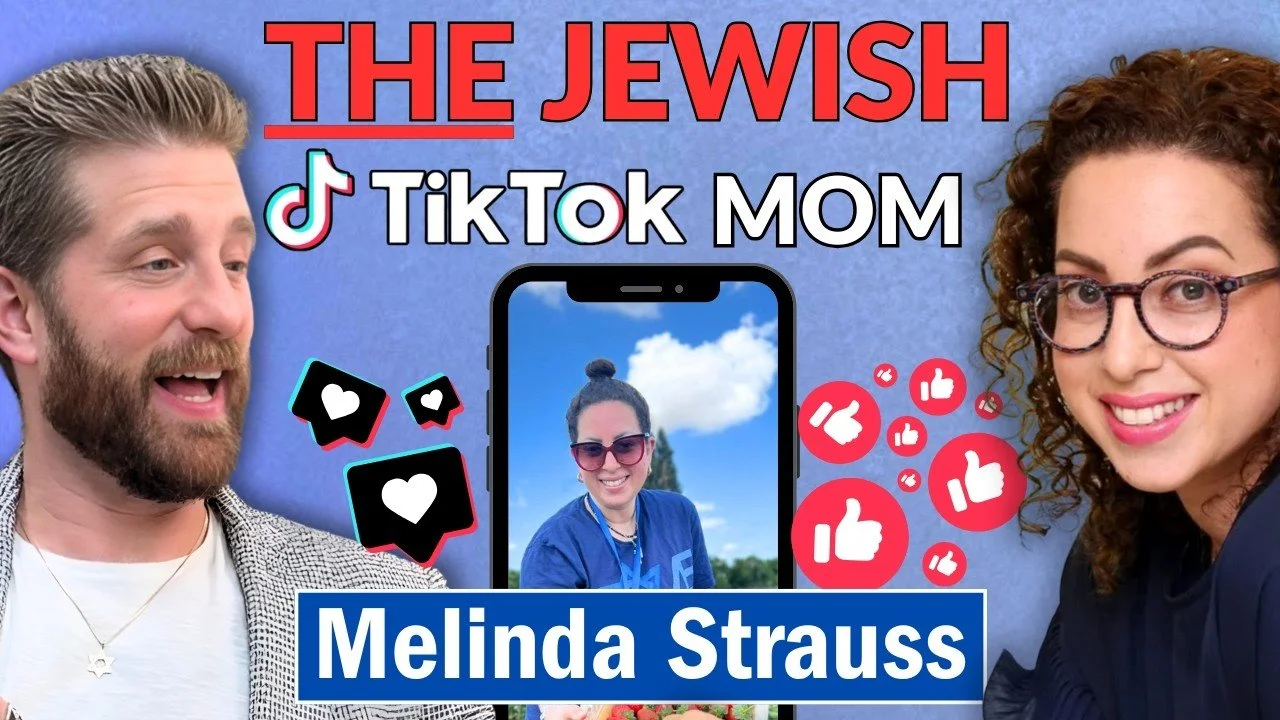
“The Jewish TikTok Mom” Melinda Strauss Showcases Modern Orthodox Life
Watch and Listen
What's something you wish more people understood about the Orthodox community?
That I can be orthodox and not look like what people think Orthodox is supposed to look like.
I think that's sort of the number one key to fighting anti ju bigotry.
Complain all you want, but unless you're doing something about it, you're just complaining that first night when you get home from the mikva.
Fantastic.
Let's go.
Right.
Let's go.
Welcome back to our summer edition of Being Jewish with Jonah Platt, 30 minute Menes.
Same vibe, same tribe.
Shorter episodes in season one of being Jewish.
We had two Jewish influencers on Montana, Tucker and baby Ariel Martin, both of whom were established social media stars who turned to Jewish content later in their careers.
Today's guest is the opposite.
It is because of her Jewish content that she has amassed over a million and a half followers across platforms.
She's known as the Jewish TikTok mom, and she's here to drop some motherly wisdom on us.
Please welcome Melinda Strauss.
Thank you for having me.
It is such an honor.
Oh, that's so sweet of you.
It's great to have you.
What does your shirt say?
I, I see when they go low.
When they go low, we go high.
Here.
I'll get the whole thing in.
Boom, there it is.
Oh, I love that.
That's so good.
Melinda, let's start sort of at the beginning when, when you started posting on TikTok, which is your main platform, were you just like, oh, this is something fun to do, or you like, I want to showcase life as a mother, an orthodox woman?
Like was there a mission or was it just messing around?
Oh, there was no mission.
There was zero mission.
I'd been a food blogger for years and I just love the idea of getting on different platforms.
You know, Gary V always says like, join every platform, and I was like, whatever Gary says to do, I do.
I joined and my daughter wanted to be on the platform and she was young so I figured I should see what she's getting into.
And so we just started making a few videos and she showed me what to do and I would talk about random things, even like political stuff, whatever I wanted to say.
'cause I had no followers.
It was like total freedom to say whatever I wanted.
And I would mention, you know, Sabbath, I would mention kosher and people would be like, what is that?
They had no clue.
And I was like, whoa, if they have no idea, and I'm someone who grew up like this, like I can really start sharing these things with people.
And with that came a whole like q and a style platform where people felt like they could ask me anything, like literally anything about Judaism and I wouldn't make them feel stupid for asking it.
When did the.
Tides start to turn, where suddenly all these people are showing up.
And who are these people?
Well, it started with non-Jewish people and it was just people who were curious about Jewish life and they really didn't know anything about us.
Yeah, unfortunately it's usually the negative stuff that gets people to grow.
You know that suddenly something goes viral and then everybody wants to know who you are.
And for me it was a video of my nephew putting on to fill in.
It was my son putting on, like showing his yamaka.
It was like an eight second video.
He wasn't even in it.
It was literally just the back of his head.
And those videos, they drew a lot of attention.
They drew a lot of negativity and antisemitism.
That's awful.
Yeah, it was insane.
I mean, it was millions and millions of people watching my nephew Izzy put onto Fillin millions, like 16, 17, 18 million people.
But with that came a lot of curiosity and positivity as well, and people started showing up.
That's amazing that the algorithm was pushing those clips to so many people.
TikTok likes drama.
How are the negative people even finding this random video of a kid's kipa on his head, like, that's wild to me.
Yeah.
The TikTok algorithm is its own special mystery that none of us understand and you'll see it with with a lot of viral videos.
The ones that go the most viral tend to have the most negativity on them, but they also have good stuff.
It's just once the comments start.
It just rolls.
And suddenly people across the world are making jokes about like, you know, again, the, to fill in a lot of the jokes were like GoPro jokes and things like that.
But then the Holocaust jokes started and it just like started small and then it wasn't even right away, it was like a month after the post where it just started going viral.
How does your family take the hate?
My husband's the, the, he hates it the most.
Like he'll like go after people hard.
I'm like, trust me, leave them alone.
'cause he's very protective.
My kids just.
I discuss it with them.
They're teenagers and they understand that this is part of social media.
Like even when they're, they decide they wanna pop into a video, they know.
This is the internet and this can happen and come with it.
I've turned off comments on a few videos, but for the most part it comes with the territory and there's too much good happening for me to stop doing it because of the negative stuff happening.
So let's talk about the good, like what, what do you think about what you're doing is resonating with so many people?
I love it so much.
Well, first of all, it's.
So cool to see how many Jews follow me now because at the beginning it was just non-Jews who were curious and then suddenly religious Jews were starting to follow me and I was like, this is fun.
And then a lot of Jews who just don't know anything about.
The religion, they know that they were born Jewish.
Maybe they never really showed their Jewish pride before.
And I clearly am like covered in my Jewish pride and always have been, although that since October 7th has like built and built.
I'm like, put all the Jewish stars on my body so I can show them off.
But I dunno, it's just, it's, it's like such a special thing to see the kind of people who are attracted to learning about Judaism.
Were a mystery to so many people.
Yeah, we are.
We are such a mystery and we kind of keep to ourselves in a lot of ways because we're protecting ourselves, but I've always seen it as a way of even fighting antisemitism by showing more people just who we are.
Like we're just regular people who follow a set of laws that might be different than yours.
I think that's sort of the number one key to fighting anti bigotry is dispelling.
The prejudices and fear and misunderstandings that are at the root of that bigotry.
So I think it's huge what you're doing as it's grown.
Has anybody left or you're just adding more people like, and have you sort of changed the way you're doing your content because of the new, oh now I got all these Orthodox people, I gotta start doing this Orthodox stuff, or, or you just doing you from the beginning the same way.
Yeah, I haven't changed at all.
I would say that I, I tend to not like cursing.
I curse a lot in real life, so I try not to curse a lot because I wanna respect the people who are following me of any religion who don't like cursing.
There's also a lot of children who watch my videos, whether it's because they have their own accounts or because they're watching with their mom.
Like I'll get people who are like, I love watching your videos with my 4-year-old.
I'm like, okay.
So it's, I'm always conscious of the types of noted things I do, just knowing that they're, they're out there and they're listening.
For the most part.
I try to be aware of who's watching, and I always like to think, does this help the Jewish community?
That's like my number one question is before I post a video, especially about Judaism.
There, we have a lot of controversy within our community too, because every community has it.
So before I share this, is this going to make things better?
Is it gonna make it worse?
Is this helping us?
When you ask that question, have there been times where you've, where you've been like, so I'm not gonna do this because I realize this is probably not gonna be super helpful.
Oh, a thousand percent.
Can you give an example?
Divorce is something that, that I think everybody should be okay talking about, but I don't like to talk about Getts.
I have a lot of issue with people who are withholding getts and the whole system of it and the fact that it's even supported still.
I think it should just literally be abolished.
Tell my audience what a get is.
'cause I'm sure most of them don't know it's a contract that you are giving someone that's saying, this is the end of our marriage.
Right?
So that that person can then go and remarry and it's a Jewish contract, whereas you can get divorced in the United States.
As a Jew, but without the get.
You're not divorced by Jewish standard.
Hmm.
It's technically the man gives it to the woman and the woman has to accept it.
So there's two sides to it.
There are some men who withhold it, and there are some women who say no to accepting it.
It's more, I've seen, more prevalent than men will withhold it for.
Whatever narcissistic reasons they have, and there's a lot of controversy.
You know, there are shuls that will allow a, a get with holder into their shul and there are people who support it.
And so I don't make videos about it because.
I, I just don't think it's helping our community and it's not something that my videos are going to make a difference with.
Right.
Have you gotten any pushback at all from more religious elements within the Jewish community who think you're too immodest or too secular, or too whatever?
Every day.
I don't cover my hair.
I'm a modern Orthodox Jew.
I wear pants, I'll wear a tank top.
Like I believe in modesty and I think modesty is a spectrum.
And I say I'm a modern Orthodox Jew.
Or sometimes I'll say I'm an Orthodox Jew.
My big thing is I don't ever say that everything is under one umbrella.
So I like to say Some do it this way, or many do it that way, versus saying this is what Orthodox Jews do, or Kosher Keeping Jews shop is observant Jews.
So I like to be.
More.
You know, I don't like everything to be so black and white or so in a box.
There are people who will tell me that I'm wrong or don't like, or will say like, oh, I don't like that you represent us, so then go use your voice.
I don't have to be the only one.
Right.
Complain all you want, but unless you're doing something about it, you're just complaining.
What's something about being modern Orthodox that you've seen like blew people's minds when you introduce them to the, the ritual or the idea or the custom?
Really the fact that I can be orthodox and not look like what people think Orthodox is supposed to look like.
That's a huge part because I'm.
Keeping Chaz, I'm keeping kosher.
I'm keeping the, the laws of, or most of the laws, um, that we follow as Orthodox Jews and Torah keeping Jews.
But it's really the outward appearance that shocks people the most.
It's the daily question of why I don't cover my hair and my answers.
'cause I choose not to.
I don't like to even give my full reasons because I do have reasons because I don't want other people to choose to not cover their hair because of my reasons.
I think it's a very personal decision that a person should get to make.
Will you share your reasons with me?
I won't because other people are gonna listen.
Okay.
If we were having a private conversation, I totally would.
I could go off for like hours.
Isn't that just more food for thought for people?
You're not saying do it the way I do it.
You're just saying, well, here's where I do it.
Do it and take that for what you will.
Yeah.
But people tend to just.
Do things because other people do them.
How do you distinguish for these folks the difference between Orthodox and modern?
Orthodox?
Modern Orthodox has a billion different reasons.
Like there's, there's so many different ways of describing it that I can't really even say what it means.
Like my joke is anybody who's not yeshi, Vish is modern.
Like anybody under Hasidic a Yeshi.
Vish is modern because I have friends who cover their hair and they consider themselves modern, and I have friends who keep kosher ish.
Consider themselves modern Orthodox.
So it's, it's really just a personal thing.
Let's flip the question.
What would you say is like a common denominator amongst all Orthodox that differentiates from less observant Jews?
Well, the main three pillars of orthodoxy are, and I consider it like I, I consider even with the main pillars, like not wanting to change the Torah law.
I may not follow everything correctly, but I don't wanna change it.
I just don't follow everything perfectly.
'cause that's life that we pick and choose.
But it's keeping the laws of shabbas, keeping the laws of kosher and keeping the marital purity laws.
Those are really the three main pillars in a sense of orthodoxy.
But on top of that, I like to think of it as.
I'm not trying to change the law.
I'm not trying, like we, we add the polls and we do add things so we can live a modern life, but we're not trying to change it.
We do believe that it's meant to be this way.
What are the marital purity laws?
The main things with marital purity are when a married couple.
Our, the woman has her period.
The husband and wife don't touch and like the mikvah, is that part of that too?
Correct.
So it's going to the mikvah at the end, there's like five days.
Then seven days is like all basically half the month that you're not touching and then you dip in a ritual bath and you become spiritually pure again.
Which people have a lot of trouble understanding 'cause it is confusing.
They're like, why are you dirty?
I'm like, we're not dirty, we're just, it's a spiritual cleansing that goes back thousands of years.
My wife's take on this and my, my wife is a real spitfire who converted to Judaism.
Her thing is always like, nah, this is just some like, dude thousands of years ago, like didn't want to touch his wife on her period, and was like, you go over there and made up this bullshit to like, you know, keep her away.
Obviously that's not how you feel about it.
Where do you take meaning from it?
Like, why do you enjoy having this be such a pillar in your life?
I think two parts.
So the first part is the fact that we're doing a, a ritual that's been done for thousands of years by Jewish people.
Yeah, that's so freaking cool.
Like making challah lighting, chais candles or certain things putting on to fill him for a man.
Like there's certain rituals that have been happening for hundreds to thousands of years.
So to be a part of that is really, really special.
And then, you know, there, there also is the fact that that time of not touching can be really nice.
It's, it's, it can be annoying and people follow different levels of it.
Some people will not touch at all.
Some people won't even like hand the salt shakers to each other.
But it's this fact that when you do come back together because you're allowed to talk, you hang out, you have this week and a half to two weeks where you're really connecting without physical touch.
Not, I'm not saying for everybody 'cause some people hate it, but for those who do appreciate it and like it, there's a time to connect with.
Talking and you're just spending time together.
And then the rest of it is fun and it's amazing.
And that's part of, you know, having a, a partner, but it has its time and then other times it's, it's not like overtaking the marriage.
And there's gotta be an element, I would imagine of sort of like an absence makes the heart grow fond kind of piece too.
Right?
Where because you're taking that break, you desire each other even more in a nice way.
Hell yeah.
That first night when you get home from the mikva.
Fantastic.
Let's go.
Let's go.
Yeah, for sure.
And you know what?
There's a lot of couples that, especially when you've been married, the longer you've been married, that same intimacy isn't always there.
Right.
Of course, some people just wanna go all the time.
Mm-hmm.
But it's not always like that.
So by having that separation, it gives you every single month an extra like urge to get back together.
Hmm.
That's really nice.
What's something you wish more people understood about the Orthodox community?
I mean, you've done so much explaining and showcasing, but is there still something that man, people just aren't getting?
No, we're not all the same.
We look different.
We act different.
We don't all even represent each other.
Like if you see an Orthodox person doing something or any Jew doing something, they don't represent the whole.
There are good, there are bad.
There's everything in between.
You see a Jewish person who looks religious, he maybe he's Hasidic, maybe he's wearing a black hat and he does something wrong, and suddenly all Jews are the problem.
Yeah, we're just people.
We're just people, again, following a set of laws and that's it.
To me, a big thing is I, as an Orthodox Jew, do not look down on somebody else who's Jewish or even not Jewish for the way they're living their life.
I don't care.
How you're living your life.
As long as you're being a good person.
I don't need you to be orthodox.
And like that's where even the judgment that passes on me, I'm like, look in the mirror, flip around because you should be looking at yourself.
'cause if you're coming to my page to say something nasty, then you've got work to do too.
Yeah, that's, that doesn't seem like a to of value to me.
Not at all.
Speaking of the antisemitism that you're mentioning today, you've been talking about this stuff well before October 7th, and being Jewish loudly and proudly online, all of that.
How, if at all, has your life and work changed post October 7th?
Or is it just.
The same, but more like, you know, is there a difference?
Same but more for sure.
It's, it's really continuing to do what I do, especially right after October 7th there was this feeling for a lot of us of, what do I talk about?
I was sharing about Judaism, I was sharing education and answering questions, and a lot of kosher food.
It's a big part of who I am.
How do I bring all of that out when our people are suffering?
Yeah.
When there are hundreds and hundreds of hostages and so many people murdered and taken from us, and all the things that happened on October 7th and after, like how do you continue to live your life?
I remember I made a video about it and I said, I'm going to keep posting those videos.
And I'm also going to post videos about Israel and about the war and about everything that's happening, but I'm also not a news source.
I never want to be a news source.
I tried it for like two seconds.
I hated it.
And I like specifically said to people, if you want news, go somewhere else.
Yeah.
I'll even share those sources with you so you can get your news from them.
But I'm gonna continue educating because a friend of mine who also shares on TikTok said, there's so many people out there who before us, didn't know anything about Jews.
And since October 7th, they don't hate us because they've learned about us through our videos.
Yeah.
A really powerful thing to think about that just by sharing and educating.
We're fighting antisemitism, so I wanna make sure that I continue to do that.
So I've just been a lot louder for sure since October 7th, but continuing to do what I do.
I love that.
I'm sure that's had to have impacted.
Some lives, people who have better understanding of what's going on and didn't react the way that their friends did because they get it through what they've seen through you.
I think that's really important, and they know that they can ask questions and that I'm not gonna make them feel stupid.
I ha I have a rule and, and not everybody agrees with the rule.
There are no stupid questions for the most part.
I want people to feel like even if the dumbest question comes to their mind, you're better off asking it.
Then coming up with your own answers because you're too afraid to ask.
So ask me.
Ask me what the question is.
Ask me if my dog keeps kosher.
It's cool, it's fine.
Ask me things about Israel that you're confused about.
And we'll talk about it privately.
'cause talk, talking to people in messages like, uh, you know, on your public page doesn't actually make any difference to anybody's minds.
But message me privately, we will have a conversation as long as you're willing to respectfully have a conversation.
Totally.
You also have been an advocate for diabetes and like education and awareness and living with diabetes.
Talk about the impact you've been able to have there.
And that's gotta be a different kind of audience.
Like, are there people who come?
Just for that to your page.
Ooh, that is a great question.
I, I actually don't know if there's anyone on my page who's there for just one thing, but I've been a type one diabetic for almost 24 years, and I have never been shy about it.
And I've learned through posting that there are people who are embarrassed, who are shy, who are afraid to say something about it to their friends.
Why?
Either they feel like they're broken.
They are not, if you're listening now and you have diabetes or any chronic illness, you are not broken.
Your body just has its things.
All of our bodies do.
Yeah.
We all got something.
Yeah.
But some people just don't wanna deal with the questions, or there are people who think type one and type two are the same.
So they're like, well, you can just lose some weight and you'll get rid of type one.
And we're like, no, you, you can't get rid of type one diabetes may one day please God.
But people just don't wanna deal with it.
So they just don't say anything.
And I want people to feel like it's.
And it's totally normal.
And look at my life and look at all the things that I've done in my life with diabetes.
Uh, people see it and a lot of parents will tell me that they feel hope for their children because they have little babies or little children, which is so hard with diabetes, but they see that you're gonna be an adult who's not just okay, but thriving.
What does it look like on a day-to-day basis living with type one diabetes?
I have an insulin pump.
It's always there.
You know, I gotta figure out where it's going on my clothing.
So it's always like little decisions that you make throughout the day.
How many carbs am I'm eating when I'm having, I dunno, my lunch Shabbas, oh my gosh, Shabbas, Pesach.
So like all these holidays are extra crazy because you're eating so much food and so much bread and so much matsa and all that affects your diabetes.
But in between those moments.
I'm just, everything else is just happening.
Where's the technology at?
Like are you tracking your carbs?
Do you have like a Bluetooth insulin, like reminder all of it.
I wish I had the Barbie on me.
I actually just got, there's a diabetes Barbie that just came out every year.
Barbie comes out, there's like a blind Barbie in this, Barbie in a wheelchair, and there's just Barbies that represent the type of people who are out there living with different diseases and illnesses.
And so this year they came out with a diabetes Barbie and she's got an insulin pump and she's got a little phone to track, like with her Bluetooth.
It's.
Amazing.
And it's just upstairs in my closet.
'cause that's where it's displayed right now.
That's so sweet.
Yeah.
Speaking of food and eating, you have a new cookbook coming out.
Where did this come from?
Oh my goodness.
Where did this come from?
Look at that beautiful cover.
See that?
It's called Eat Jewish.
Look at that.
Gorgeous.
Yes, gimme the pitch.
There's a lot of Jewish cooking books.
Why should I buy this one?
What's unique about it?
What am I gonna get from it?
So what's really beautiful about this book is that you're getting a lot of Jewish food, but you're also learning a lot about Jewish life, our holidays, where our food comes from.
So you're not just gonna get like, here's the ham toan recipe, but you're also gonna learn.
Why we eat Haitian, because there's so many people in the world who don't think that they're allowed to make Jewish food or food from any other culture.
And I want people to understand that you can make hala, you can make any of our Jewish foods.
Yeah, enjoy it.
It's food.
It's meant to be shared.
And with that, if you wanna learn about our culture, you wanna learn about our background, and it helps you to understand why you're making that food.
That's all in the book.
I have a lot of like, really cool little like clips all throughout the book of just explaining why we eat kosher pickles, um, where bagels come from.
Why do we eat kosher pickles?
Tell me about that one.
Oh, kosher pickles are a fun one.
So it's interesting that kosher pickles are usually not vinegar based and it's because in like the early 19 hundreds on the lower East side, that's how they started making their pickles and it was the Jewish people who were living on the lower side east side making them.
So they would brine them with kosher salt.
And that's where it came from and it became incredibly popular.
Not all kosher pickles are kosher.
They don't all have a kosher certification.
Um, they're all kosher style, but like that's confusing.
But that's a fun thing.
Yeah, a little bit.
And then like the slow cooker was invented by a Jew, which is just such an awesome thing.
Everybody's using their slow cookers and they don't even know.
So you learn about all that in this book, and you're also getting.
It's delicious food and it's not even modern.
There are some modern recipes, but one of the things that I think is really special about this book is we're kind of going back in time.
My softest recipes, recipes that have been made by Jews for hundreds of years are in this book.
So people are gonna open it up.
Jewish people are gonna open up and they might see a recipe that reminds them of their bubby.
So for Jewish people, you're gonna get something so special from it and from non-Jewish people, you get to learn about us.
Through the book, just like the way you learn about Judaism from my social media.
I love that.
Is there like, gimme like one or two that you think are like really delicious dishes in there that you're super proud of?
You're like, you gotta, if you got, you only have one day to cook from this book, you gotta make this thing.
So it's a little crazy.
But I'm gonna say that the sweet and sour tongue.
Sweet and sour tongue.
Yeah, it's one of my favorite recipes in the book.
I grew up on it.
So many of us have memories of like our grandmother cooking the entire tongue, maybe chasing us around with it, you know, things like that.
And that was me with my softa.
Like she used to boil the whole tongue, but it's.
So delicious.
And it's one of those things that I think people might be afraid to make.
Yeah.
But when you make, it's unbelievably delicious and just brings a lot of memories, it's, I'd say a lot of the recipes, my dad's kosher pickles are in here.
Nice.
And that's, they're just absolutely amazing.
And the picture, I wonder how easily I could find the picture.
'cause it's a really, really good, my dad's kosher pickles, there's lamb chops.
Oh, there's a lot of challah.
I want people to make challah.
Like I really, really want people to feel like they can.
Where are bit pickles?
See, there's so many things in here.
So many, oh yeah.
I see the garlic, I see the dill, garlic, dill, some chili flakes.
Um, whole pepper, salt and water.
That's it.
So that those are two for sure.
And a lot of these are very connected to my family and my history and my past.
So you're not gonna get every type of Jewish food on the planet in there.
Maybe one day we'll make a book like that, but it's a lot of Ashkenazi recipes that I grew up on.
There's some Sephardic Turkish recipes, a little Moroccan, so it's, it's got a big variety and.
I love that it's not pushing the boundaries of food.
It's actually taking us back in time.
When is the book out and where can we find it and where can people find you if they wanna follow on your amazing Jewish exploits through the world.
September 2nd is Pub Day.
That's when the book comes out.
So for everybody who's pre-ordering, you're gonna start getting your book then.
Nice.
I got Amazon, Barnes and Noble, target.
There's a ton of stores.
I in Canada, I'm forgetting the name of it.
There's a really big book, uh, book chain that has it in, um, the uk.
They're gonna have it.
We're.
Working on some stores in Israel right now so people can actually get it in store and not just having to order it through Amazon, um, but in, but I love, my publishers are international publishers, so they're working really hard to get it around the world and not just in the US and Canada.
Fantastic.
The real Melinda Strauss is my Instagram.
It's my TikTok, it's my YouTube that I don't really use so much, but everything goes there.
Also, my mother-in-law, that's where she watches me, and then my website's melinda strs.com.
So I have a little bit of everything there.
About like 15 years worth of recipes that are posted there too.
More than just, yeah.
Melinda, thank you so much.
Thank you for using your voice to normalize Jews living Jewish lives loudly and proudly.
I think it is so important and it's clear you're having an amazing impact.
So thank you for what you do, and thank you for being here and may many others follow in your footsteps.
You.
Amen.
That more voices like ours, we need as many voices as we can get.
No doubt.
Thank you everybody.
Check out her book, check out her stuff.
She's a mensch.
It's been 30 minutes.
I'm Jonah Platt.
S.