
Interview Transcript
Spreading Culture & Unity Through Jewish Food, Israeli-American Chef Michael Solomonov
This is the 13th episode of Being Jewish with me, Jonah Platt.
[Music] [Music] That's [Music] folks.
If you don't already have a snack handy to enjoy during the episode, now would be a good time to grab one because today I'm in Philadelphia sitting down with arguably the most well-known ambassador of Israeli cuisine in the world.
Check out these numbers.
By the end of this year, he'll have nine restaurants open.
He's a four-time cookbook co-author and a fivetime James Beard Award winner, including Outstanding Restaurant for his flagship Zahav, the first Israeli American restaurant to win the honor and where I absolutely demolished dinner last night.
We are not cooking today, but I'm hoping he'll still bring us some food for thought.
Please welcome Chef Michael Solomonov.
Thank you so much, Van.
On this weekend of all weekends, your son's bar mitzvah was this weekend, and here you are.
How was that?
It was very emotional.
It was like my son is named after my uh brother David uh who you know died um in the IDF.
He was killed in the IDF and so like it was I think it meant a lot to my family to be there to be able to celebrate him as well.
So yeah it was great man.
It was great.
You haven't done any barb mitzvah yet right?
Not for my kids.
No my oldest is five.
Yes.
You got some time.
We my nephew was bar mitzvah this past year.
That's he was the he's like the first of that generation.
It was amazing.
It's just what you described, you know, so nice to have everybody together now.
Totally.
Well, I think that that is, you know, something obviously you talk about all the time, which is like the most Jewish thing, which is like to, you know, Jews are great at like grieving.
We are great at mourning.
We are great at eating.
We are great at celebrating.
And all those things come with very good food, right?
Like, well, certainly at your gatherings, I'd imagine.
Well, my gatherings, but you know, it's like so we had the uh owner of Raden's Deli who uh used to own four street famous for street.
Um which you probably don't think so.
Oh, it was on Fourth and Bainbridge.
It's still there.
Um he's sold it.
But um Russ Cowan is like a multi-generation Delhi man.
And my mom, who passed away eight years ago, but is buried in Israel, um lived in Israel the last 20 years, 20 years of her life.
Every time she would come to Philly to visit us, she would get deli because like deli in Israel sucks, right?
Not good.
Not what everybody out there is thinking.
That's it, right?
Because they don't they don't have the the good livestock, right?
Yeah.
It's not good deli.
And so my mom, she would come to Philly and get hot fudge sundases at Franklin Fountain and wolf down these giant pastrami and like chopped liver sandwiches.
Now, she weighed like 90 lbs.
I don't know.
how she Thank God she was also like a very heavy smoker but um she like just loved this deli and so on her um birthday my ex-wife my wife my kids we all have which is on Christmas Eve we all go to this deli and we get pastrami sandwiches and so I asked Russ I was like listen man I know that you don't cater it's my son's bar mitzvah we like your cooking your deli is like part of our life and so He catered it.
That's so cool.
And I I saw you posted online the Shabbat dinner for the weekend was at FU75.
Yeah.
Exactly.
Exactly.
Tell me how that happened.
I lived in South Philly for a very long time.
My uh sons and my daughter like you know their first meals and restaurants were at F.
Everybody in Philly in the chef community eats at 575.
It's an amazing place.
I don't know if you've been there yet.
Hot tip everybody.
575 on 12th in Washington is the best breakfast, lunch, and dinner you will ever have.
Wow.
I get the number nine or number 14 small meat on top.
Amazing.
That's awesome.
Very nonchalant.
I know people probably expect me to have like multicourse whatever, but that's just not in the cards, man.
Yeah.
Was there a lot of cooking in your house growing up?
Yeah.
Yeah, there was a lot of cooking in my house.
Um my both my parents were really good cooks.
We didn't eat in restaurants very often.
Uh and so she did most of the cooking and it was phenomenal.
Yeah.
What was her like go-to cuisine or style?
Even though we were not we were very secular, Shabbat dinner was still kind of a thing.
Oh yeah.
And so like fresh kala and like the brisket or the roast chicken or like the you know rice pilaf or like when my grandmother would visit from Israel which was like every other year it was like boras and schnitle and like all that stuff.
So food was very important in our household.
Um, we were not fancy eaters and like we probably ate chicken like four nights out of the week.
What were some of the dishes that you really looked forward to having growing up?
My Israeli grandmother would make the most incredible stuffed peppers that my mom uh sort of learned how to make and so stuffed peppers were like big.
I mean, even when I would beef, beef and rice.
Yeah.
Or sometimes just rice, but like beef and rice.
My grandmother would use like green pepper.
She was like frugal or whatever.
So, green pepper.
We grew up with like green peppers, you know.
And um I didn't know they were the cheaper than the red.
They were cheaper than red and they were also delicious but like again not as like fancy as red but that kind of stuff I really enjoyed.
Periodically we would get like lamb chops.
My dad we had some lamb chops crush those on the grill.
So good.
The thing is my parents worked a ton.
My mom was like a teacher at a Solomon school.
My dad was a jeweler and then owned like a Subway sandwich place.
And so my parents worked like very very hard, you know.
And but priority to them was still home-cooked meals all the time.
That's amazing.
And it's so I mean I work nights, you know, but Sunday, Monday, and Tuesdays I really try to be at home.
And like only since co have I discovered how much I love not just the act of cooking in my home, not with like a professional kitchen, but really like cooking for my family.
And again, that sounds like so cliched, but it is so meaningful.
You're talking about growing up.
Did you you were born in Israel, but you do do you mostly feel like your childhood was in the States?
So, my childhood was in the States.
So, I was born in Israel.
We moved to Pittsburgh when I was three.
My mom grew up in uh East Liverpool, Ohio.
And then when whatever after college or whatever, she made Aliyah, met my dad, and then they moved to the States uh after they had me.
So from 3 to like 15, we grew up in Squirrel Hill, Pittsburgh, which is kind of a to like Squirrel Hill is I grew up thinking that most American cities had people speaking Yiddish in the streets.
Wow.
It was very cool.
We moved to Israel and then I was there for one year in boarding school in this place in a town called Partisana.
And when I got back to the States, I was like, something doesn't feel right.
Like I'm very American, right?
But I don't feel like I totally belong here.
But when I'm over there, I'm like, I need somebody to be polite, right?
Even if it's [ __ ] like just say, you know, just just bring it for a second.
Tone it down.
I I mean, that's informed my identity.
Obviously, that is my identity.
And also, as it relates to like bringing Israeli food to the US, it kind of, you know, it sort of fits like I I have a foot in the door kind of in both places.
And I'm not totally comfortable in either.
But it was a really incredible time.
Statistically, you're much safer over there than you are here.
And as a 15-year-old, we could like hitchhike to like Cesaria, go to Jerusalem for the weekend.
Every other weekend, we could be off campus and we could we would just try to get as far as we could with like 50 shekels.
Every time I go back, people are still like, "Well, don't you feel unsafe?" And I'm like, "Dude, I live in Philly, bro." like the likelihood of me getting murdered outside of the studio way greater even now than totally.
So you mentioned your brother was killed while serving in the IDF.
Your older younger brother younger brother.
Yeah.
I don't think people realize how common that is to be Israeli and have someone close to you have been killed in some conflict or some war or Well, Memorial Day over there is very different than here.
here there's like sales on electronics and people go to the beach and over there every single person is affected right so it's a very different thing and over there there's mandatory draft here most of our people don't know what that means and uh yeah David was um killed by his bullet snipers he was in Matula which is the northernmost right at the top yeah in an apple orchard and uh he was killed by his blood snipers fired through the border that were in Lebanon um on October 6th which happened to be Yumipur that year in 2003.
So it was like three days before his release too.
So yeah, it was a drag.
How did that impact the trajectory that you were on?
Changed everything.
In what way?
A month before he was killed.
I'd been working at Veterary Restaurant, which you probably Mark Mark um at that time would close for the month of August, which is like a very Italian thing to do.
And uh it just so right before your release in the idea if you get like a break and it so happened that they coincided.
So my mom bought me a plane ticket under the condition that I would cook dinner for friends and I flew over and David and I hung out for like 3 weeks together and like we'd been living on different continents for years so it was really meaningful and I had become kind of a chef and David was serving in Golani like an infantry you know he was a sniper in Golani brigade and so we had very different lives and it was there was no like younger or older we were just like very close and like it was like this realization that I had like discovered my best friend, you know, and so we had spent 3 weeks shopping around the country, betting getting food so I could cook dinner for my mom's friends, going to like clubs and hanging out at the beach and just like really, you know, I just have a lot of gratitude for that moment.
That was the first thing my mom said when I spoke to her after, you know, she called.
The first thing she said was, "I'm just so, you know, so happy you guys had that time together because uh it was incredibly meaningful." So after his funeral, I came back to the States and like whatever feeling I had coming back from boarding school, it was that times 100.
How do you relate to people in the States?
Right.
What do people know here about siblings getting killed in the military, especially where we live in the north?
We have no relationship to that.
Yeah.
What do people know about borders?
I mean, a terrorist organization that under condition of like either ceasefire or withdrawal from Israel should have been north of the Latani River.
Yeah.
And next to UN peacekeepers were firing across an international border at Israeli soldiers.
Right.
My brother killed by three snipers.
And I guess since we're getting real right now, where's the [ __ ] outrage?
Yeah.
Right.
Yeah.
Nothing.
Nothing.
And so I think it's very difficult, and again, we don't have to get very political about this, but as you can imagine, it's very difficult to come back and relate to people after that.
Totally.
Nobody knows what that means, right?
My friends, they have a lot of opinions, but they don't really know what it means.
Well, it's funny.
They have a lot of opinions now, but at the time it was just like, oh, war, terrible, or like, wow, that's really [ __ ] up.
How could that have happened?
I didn't even ask you if I could swear on your show here.
Okay, good.
Excellent.
But so, I think that people didn't really want to touch it.
But even when I talk about my brother right now, I mean, people are like, well, you know, IDF soldier.
And I'm like, what?
Think about think about how the US would tolerate something like this.
Right.
Right.
Think about what the outrage would be.
And so, at the time, my brother should have been alive.
I mean it was 3 days before his release and um you know I remember the apple farmer where he so he was killed in basically in an apple orchard and the farmer um uh Moshe who has since passed away but brought this bushel of apples to the shea and it was like they were so sweet you know and that part of the country is just shockingly beautiful and there was it's right by the good fence so there was a time where Lebanese citizens were in Israel like working or there was an open not exactly an open border, but it was like chill, right?
You know, right?
And so it was this was before the war with Lebanon in 2006, before the Israeli soldiers got taken hostage and before ultimately um on condition of a ceasefire, there should have been another withdraw to you north of the Lutani River, which has also never happened.
But so it is um yeah, I mean it changed everything.
I didn't really understand how something how this sort of land that produced these incredibly sweet apples could also have this sort of like stain of like my brother's blood and spirit and and it was just a hard thing to sort of explain to people here.
Listen, think about the border crisis that we talk about here in the States.
Yeah.
Very different.
Canada, Mexico.
Completely different.
Very different.
Canadian snipers.
Exactly.
And so I I came back um and I I was the sue chef at Veter and a few months later we would close for like Christmas and New Year's.
Um and I wanted to go back and cook for my brother's army unit which was still in Matula which is an old British mandate base.
And I told Mark Veter and he's like I'm going to come with you and cook.
Wow.
You know which was like hilarious cuz he was also like let's roast a suckling pig.
And I was like, "They're not going to let us do that, you know." And then he was like, "We'll make aubuko." And I was like, "Yeah, right." So we made like schnitle for, you know, 250 of my brother soldiers.
And he was about to get released.
So like he was the sort of veteran.
So everybody there knew him and really it's amazing to learn about him sort of afterwards.
I mean, he was really a great great guy.
And so we cooked this meal and Mark um just looked on the drive up even he looked like a zombie.
And I was like, "Dude, why didn't you sleep?" And he was like, "I was on one of those like birthright planes and it was just like kids like getting [ __ ] up partying the whole time." And so we looked like a zombie.
And then we cooked this meal and uh my brother's commander is like, "We're driving him around the border and then we cooked this amazing meal and at the end of it he looked like super emotional, right?
And I was like, "Dude, are you okay?" And he was like, "You know, this morning I was surrounded by these like 20-year-old American kids that were going on this like free vacation.
And now, you know, now I'm like surrounded by these like 20-year-old Israeli kids like your brother that are in uniform covered in mud that have 5 minutes to eat before they have to go out and like defend a country." Yeah.
And it just was like so um you know even 21 years later it's still very emotional right I totally understand.
And so for me I was like now he gets it.
And Mark grew up Jewish American had been to Israel once before that but didn't wasn't affected the way he was then.
Right.
And I was like, you know, I can't like I need to figure out how to become closer to my brother and it's [ __ ] hard because he's not around now, you know?
So after that, um, my business partner, my current business partner, Steve, it's like one of my best friends.
Nice.
I kept hearing about him because he was the other Jewish line cook in Philadelphia.
Right.
And so I met Steve Cook and Steve hired me to be the chef of Marold Kitchen.
Yes.
Yes.
On 45th Street, which I frequented with my college girlfriend.
Shout out to Rachel.
Hope you're doing great.
Yeah, Rachel's doing just fine.
It it it was fantastic.
I loved that place.
It was by which when you're in college, that's you know what you're looking for.
Lots of wine.
Yeah.
Exactly.
Bring your Carla Rossi or your yellow tail cooking.
So So you knew him before you got to Marold.
He brought you in.
I knew him because he wanted a chef for Marold cuz he was stepping down and he hired me as a chef.
Okay.
So that was your first real interaction.
That was my first chef's job at my first like head chef job and that was our first introduction.
Steve was like son and brother of a rabbi and was married to Shira who I knew from Squirrel Hill.
So that was like enough for me, right?
Yeah.
And I guess it was enough for him to hire me as the chef, too.
And so Steve was cooking more like new American but like very Ashkanaziheavy.
Mhm.
and I cook more I guess sphartic or misrai and we got a bunch of accolades and at some point I'd gone back to visit my family in Israel which I did every year and like the experience of sitting down at a restaurant having like 20 different salads having the humus the lafa the pa the shipuim everything cooked alesh that not only was like delicious such an exciting way to eat but also was so different than like what fancy chefs were doing in the states.
Mhm.
Was amazing.
And it also explained the story of Israeli cuisine kind of warts and all, right?
It was like dozens of diasporic Jewish, there was indigenous Palestinian, there was everything shooken up and just sort of spilled onto the table and I was like this, why are we not doing this?
You know, and that was the sort of uh the catalyst for opening Zahav.
So you you come back from that experience and these things have crystallized in your mind and you go to Steve like let's open an Israeli restaurant Israeli restaurant and Steve was like [ __ ] yeah let's do it you know.
Wow.
And now here we are seven restaurants later and 16 I mean Zahav is 16 years old.
16 years old.
That's like a hundred years.
Yeah.
You know I I I was a senior at Penn when it opened.
Yeah.
So I remember it.
Yeah.
Let me just say about Zahav.
I had like the greatest meal there last night.
Thank you so much.
Every bite was better than the next.
I mean, when you hear a restaurant so highly lauded, you're like, "Okay, let's let's see what it's about." It almost makes it harder to get people excited, but it's like it totally delivers.
It was just every bite of it was like the best cabbage dish I've ever had in the salad team.
Pickled cabbage.
Yeah.
At the beginning, it's like I I don't eat cabbage and this was so good.
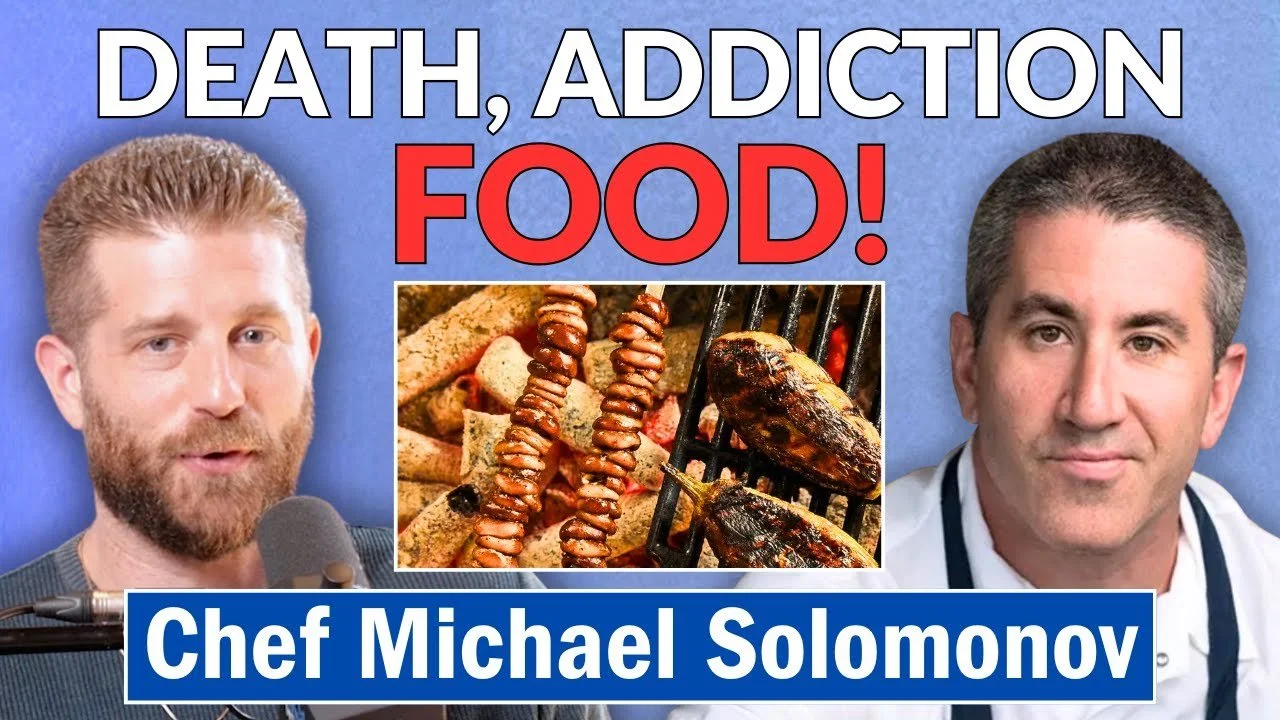
And uh my favorite dish of all I think was probably the oyster mushroom kebab.
Oh my god.
Yeah.
With the haresa and the Yeah.
It's like whatever it's soaked in that like makes it a little like sweet umami kind of some spice like all together.
It was just Yeah, we had the best time of summer.
It makes me happy, man.
Thank you.
Yeah, get get on the list.
You got to get yourself there if you haven't.
Just got to call.
We were going to put your cell phone number out here.
Yeah, there we go.
Perfect.
Yeah.
What do you think it is about your approach to the cuisine that's elevated it to this level?
For us, it was really about, you know, in a way advocating for this country that is like so continues to be so misunderstood.
Yeah.
And I was like, listen, if people leave here and they turn on the TV and there's imagery or messaging about Israel, and this was actually way easier 16 years ago than it is now.
Sure.
And they have this idea about Israel and they're like, "But you know what?
I ate at this Israeli place and like it was cool and I didn't, you know, find it to be problematic or whatever.
If people can leave our restaurant and say and have a better idea or something more positive to say about Israel, which is a country that they, let's face it, know nothing about, I'm okay with that.
You you mentioned, you know, that you you give credit to other cultures, cuisines that make their way into the Israeli cuisine.
Definitely.
Yeah.
H how how often are you hearing and how are you dealing with people being say, you know, Israeli food is appropriated from Palestinians?
Well, I guess there's like the truth which is that it's [ __ ] food and like everybody's eating what?
Yeah.
I don't know.
You're talking about pizza in LA.
Do you think there Italians that are like, "No, you've stole it from us." Or what?
I don't know.
I mean, we could just go on and on.
I think it's [ __ ] you know?
I think all of it, the older I get, the more I'm like, I just don't want to hear it.
Like, I don't know.
California and Texas were Mexico 100 years before Israeli independence.
You eat tacos there without people vandalizing your [ __ ] taco shop.
Like, I don't want to hear it.
It's stupid.
Okay.
It's stupid.
But if I were Palestinian living in the West Bank under occupation, going through checkpoints, having my olive trees burned, I'd be [ __ ] pissed off.
Yeah.
That I'm Mike Salmanov is has a homeless company is like doing really well.
Right.
I will say that both Israelis and Palestinians did not invent hummus.
Okay.
So like where did it come from?
It came from Egypt more than likely.
Is that where falafel came from too?
Falafel is fourth century Coptic Christian and it was like the answer to like meat on Lent.
Okay.
And I'll tell you the Coptic Christians are not doing very well right now.
No.
Either.
And nobody says a goddamn word about that.
Yeah.
Israelis helped market it and like they're good.
We are good at doing that and that's fine.
and like denying the fact that there's Palestine or Palestinians or Palestinian culture is also [ __ ] and that we have to, you know, when it comes to things like food, we have to be able to give credit to where it's due.
But most of the time when I'm hearing this, it's like, you've appropriated this.
Israeli food doesn't exist.
And really what they're saying is Israel doesn't exist, too.
Which I think people actually in a bizarre refreshing way is almost just easier to hear now.
If you don't think that Israel should exist or has the right to exist, just say it.
If you don't think the Jews have the right to their own homeland, just say it.
So we don't have to have these like pseudoacademic discussions about like food or like cultural appropriation.
Like it's a it's nonsense, you know?
It's nonsense.
But again, if I were Palestinian and I didn't have access to like land, water, or the right to do whatever, I would also be I rate, and I totally get it, you know, and so we support as much as we can.
It's obviously the relationships are like complicated.
We support Palestinian wineries.
We support Palestinian farmers.
You know, the door for us is always open and will continue to be open.
October 7th and up until now has made things tremendously complicated.
Yeah.
And I'm hoping that we're gonna get into that.
Yeah.
I can't wait cuz this has all been so easy, right?
Yeah.
Right.
We're just softball after softball.
Yeah.
Totally.
Speaking of a softball, it's hard enough to open a restaurant as it is, but you were also dealing with drug addiction at the time that you were opening Zahav.
Yes.
Most of those stories end terribly and yet here you are having pulled through it with a restaurant empire.
Yeah.
H what was that period like for you and how did you pull through it to to create the life you've made for yourself?
I mean the period was hell and right after Dave's death I came back to the states and I started smoking crack.
Not because I had I mean I had always had this like addictive sort of personality.
I always partied or whatever.
But it's it is interesting when you are sort of born an addict.
It is very hard and like from the addictive or addiction perspective having a brother killed three days before his release on Yom Kipur is just let's go like let's go something here.
Yeah.
So I get back um and immediately I started start smoking crack and eventually do heroin and but I was very good at hiding it.
Um and I you know met my business partner Steve.
we had opened Sahav and um things you know it's a progressive disease so it just got worse and worse obviously and you know eventually I couldn't hide it anymore and so 3 months after we had opened sahav Steve uh and my wife at the time drove me to rehab um and I spent 10 days in treatment and then came out and had a rough couple first couple months I mean it's hard to stay clean and sober especially when the economy is falling out you know I mean we almost closed of when I was in like very early recovery.
So, it was like no cakewalk.
It was no cakewalk.
But, I mean, the um you know, my now ex-wife who I love very much uh and my business partner, you know, in our my community really is the they're the ones that got me clean and sober and and you know, Steve used to pick me up every morning.
This is somebody that found out in years into a business partnership after we we've collateralized our homes to borrow money for Zaha found out that I was like hiding like a crack in heroin addiction from him and would and you know most people would be like you got to screw get out of here and Steve was like I'm going to pick you up every day from this a meeting and drive you into work.
It's amazing.
And I went to uh 12step meeting every day.
I went to outpatient rehab four days a week.
I went to uh uh personal therapy.
I started like working out.
I I did all the things.
Started rapping fillain.
Like I you know tried everything.
I found a Jewish uh sponsor.
And I was like I don't know a mantra.
Like he's like you need a mantra.
And I was like I don't have that.
And he was like well you went to Hebrews.
Can you just like recite the shama?
And I was like I can do that.
Yeah.
That's so I literally started saying the like I it was like so funny.
I know.
Which I still do.
Amazing.
So you and Steve, you've got since you have Goldie, Laser World, Federal Donuts, Llaya, Diesing Gooff, and Kafar Cafe.
Did I miss anything?
I think that's I think that's it.
Yeah, that's seven.
That would be seven.
Yeah, that sounds right.
Yeah.
Give me the one sentence description of each of those spots.
Federal Donuts is hot donuts.
Well, cake donuts, Korean fried chicken, coffee.
A little salad too, but you also get fried chicken on top of it.
Amazing.
Um, diesing off is like an Israeli cafe lunch and dinner.
Um, Laser Wolf is a shipya.
So, it's like a salad skewers.
Shepud means skewer.
So, it's like kebabs.
So, it's like that's everything is charcoal.
Not everything is kebabs.
Everything is cooked over charcoal.
And then it's a ton of salads when you get in fresh pa and hummus.
So, how's that different from zahav?
Zahav has got mezz.
Zahav is a bit more elaborate.
Zahav is a little bit less utilitarian.
Quick question and then you'll keep going.
My Broadway fans want to know is Laser Wolf has anything to do with Fiddler on the Roof?
[ __ ] yeah, dude.
Oh, hell yeah.
It's for the butcher.
Butcher, bro.
Okay, there it is.
I assumed, but you know.
Yeah, 100%.
I love it.
We still got Goldil and Kafar.
Kafar is an Israeli bakery cafe, right?
It's like the place where you go to get like salads like like like entree salads if you want pastries.
We do uh like a Jerusalem bagel that is like stuffed with uh like egg, you know, and cheese.
So, it's like a breakfast sandwich meats sort of Israeli snacking boras and pastries and then go falafel, right?
But it's actually vegan and we actually have a kosher.
Cool.
Um, and it is tahina and milkshakes.
So, it's tahina.
I've had that tahina milkshake.
It's like the greatest thing in the world.
Falafel either sandwich or salad and French fries.
And Laya is like a private event space.
Um, where you can get actually the Zahab experience for like a wedding or bar mitzvah just in case.
Cool.
Good.
I know you got eight years, but we're ready for you.
And what people call a modern Israeli restaurant.
Boom.
There.
You got the Jaffa actually is going to have shellfish.
I I heard that yesterday at the restaurant.
We don't have tray in any of our restaurants.
We don't do mix milk and meat together.
Right.
I noticed that.
Jaffa will have a cheeseburger.
Jaffa will have like a raw bar too.
And te tell me like what's the the impetus for Jaffa?
Why is it called Jaffa?
Why are we doing all the the trafe and stuff there?
Well, if you were to open a raw bar in Jaffa, like what would it be?
you know, and so that was kind of it.
And there's plenty of shellfish that's served in Israel.
And I think we just wanted just wanted, you know, we're like, we like shrimp.
We're Jews.
We like shrimp.
We let you I love shellfish.
I can't get enough of it.
And then Aviv, you're opening at the one hotel in Miami.
Yeah.
Yeah.
What's up with Aviv?
What's that vision?
I mean, Aviv is like if we Aviv is spring, right?
Aviv is spring.
Exactly.
In Hebrew.
And it's like I think if Zahav and Laser Wolf kind of had a baby, you know, but it's an amazing beautiful restaurant.
The one is just it's a magical experience.
It's sick.
It's beautiful.
It's beautiful and um they just did like the most incredible renovation to this restaurant and the team there is wonderful.
We love working with them.
They are like awesome.
So Aviv will be kind of like if we were to open Zahav now after having 16 years of experience of figuring out and answering some of the questions of like what Israeli cuisine is.
Aviv is kind of the answer.
Wow.
Sounds incredible.
It's going to be sick.
You should I'll definitely make my way there.
Yeah, I'm sure it'll be hard.
I won't twist your arm to come to Miami and stay at the one.
But like Yeah, I I'll find a way.
Yeah.
Speaking of like Aviv and the Hebrew name, I love seeing all these restaurants with Hebrew and Israeli names and you know the the menu at Tahav it's Alhayesh and Messiad and it's uh on the fire and party for like the the family dinner.
Um is that just like a natural choice or is that an effort on your part to like be introducing these Israeli Hebrew names into the scene?
Well, I think like the the way to answer that was like kind of when we decided to open Sahav and call it an Israeli restaurant, you know, and I think that like our publicist at the time was like, "Are you sure?
Not Mediterranean, not Middle Eastern, it's really is that too political?" And we're like, "This is what it is." Yeah.
So, we're just going to do it and we're going to we're going to go we're going to get in there, you know?
And so, you know, you can't really exclude like Hebrew.
You can't ex, you know, this is what it is.
So, I think that it sounds cool.
It is what it is.
Cooking meat a few inches over charcoal is an incredible way to cook and I feel like it should be celebrated.
And Hebrew, I think, helps sort of evoke that.
It's not just a Middle Eastern restaurant.
It's not just a Mediterranean.
It's certainly not just a Jewish restaurant.
It's an Israeli restaurant.
And this is the way that we want people to experience it.
What has been your biggest challenge?
I mean, you mentioned what your publicist sort of reaction was.
What's been the biggest challenge of trying to bring Israeli cuisine to America?
That's sort of the issue with anything Israeli is that you're always a political talking point, right?
You're just trying to be who you are and eat the food you want to eat and people are making a Oh, listen.
I'm like very I mean, this is sort of stopped publicly or on social media criticizing Israel entirely on October 7th.
Prior to that, I had no problem, right, doing that.
I had no problem flying to Israel and protesting the government, which I've done before.
Yeah.
You know, you just have to scroll back to see it's like whatever.
You know, I liked criticizing the government like every other Israeli.
Sure.
Um, you know, after October 7th, I I made a decision to stop doing that.
They don't like understand the nuance.
Yeah.
And I was like, well, if there's like a percentage of people that don't think that Israel has the right to exist, then I'm not giving them one inch of like fuel.
So, I I kind of like stopped doing I kind of feel the same way.
You know, I sometimes I'll get asked like, "Why aren't you talking about X or Y?" And I say, "There's a there's a lot of haters who are already sort of talking about X and Y.
I don't need to add to that contribution.
I can just be doing, you know, saying positive things." And uh and I like again, I'm very pro- state.
I would be probably categorized as very maybe not very, but like certainly center left when it comes to Israeli politics.
um and American politics.
Like I just want to cook Israeli food and open an Israeli restaurant.
I'm not sure why I need to like answer for like the policies of like a foreign government or whatever.
You know what I mean?
You shouldn't have to.
Did you come up against that a lot with We always come up against that and you do as well.
I will say that like when I order like Chinese food or go to a Chinese restaurant, I don't ask the servers or the owners what their stance is on like weager Muslims being in concentration camps, right?
I don't do that.
And I definitely don't do that when I go to like Arab restaurants or Palestinian restaurants or Indian restaurants.
I find that to be annoying.
Um, but it doesn't change.
I mean, we continue to open restaurants and they continue to do well.
They continue to do well.
And like listen, I understand like I understand why people behave the way that they do.
I do.
I sometimes have a problem with like double standards and this standard that Israel always has.
Yeah.
I also have a problem with Israeli policy.
Sure.
You know, the issue that I have is like Mike is making kumos.
He hates Palestinians.
He like, you know, it's just or he's stealing it from them the way that like the Israeli government has stolen land or whatever.
And I just like it's just come on.
Right.
You know, and also I just I'm like we're not I'm not shutting doors.
I don't that is not the way that we're going to like get to a solution that works for everybody.
Yeah.
So um I have no uh preconceived notion that I'm going to make kala or humos or a peta or malawak or any or jac or any of these things and then suddenly there will be like peace between Israelis and Palestinians.
However, I would say that formal historical diplomacy and you know diplomatic efforts also aren't working.
So like we got to keep it we got to keep it connection is connection.
I mean that's you got to have the peopleto people the the shared experience whatever it is whether it's athletics whether it's cooking you got to be bringing people together I mean it's so important there's it's it's we shouldn't be discrediting it just dialogue is is like frankly as far as we are concerned is the most important thing the problem is sort of post October 7th plus social media al algorithms make it very difficult but I mean you've experienced the same thing I would imagine yeah probably lesser degree than you no one's protested outside my place of business.
I know because your place of business is everywhere, but like you're still very very public.
So far so good.
Yeah.
See, so speaking of October 7th, what was that day like for you as somebody who is so connected to Israel, has lived in Israel, as people in Israel, and you were here, I'm assuming?
I was here.
It was directly after the 20 one year anniversary of your brother's death, right?
Literally the day later.
Yeah.
And I like all of us was like, I can't [ __ ] believe this is happening.
like I can't understand this.
And then I would say almost equally I was like I can't believe that people are doing this to other people and uploading it on social media in real time and then sending it to the victim's families.
What the [ __ ] And then I was like I can't believe that people in the US are rationalizing this and celebrating this and in while the blood is still fresh Yeah.
in Israel like people are then blaming this on Jew like Jews like it you know what I mean?
Like it was like, "Well, this is what do you expect?" And I was like, "I don't know.
I don't expect people to like rape and behead people and light them on fire and video it and then hold hostages." That's I don't expect that, you know.
Yeah.
The sense of bewilderment and surprise.
Yeah.
as we touched on have faced a good deal of controversy in the past year uh stemming from what most people would recognize as a very natural support for a Jewish Israeli chef for his own people and home during this terrible time.
But some people including some people on your staff were uh perturbed and um you know which most notoriously resulted in as I mentioned this large protest outside of Goldies.
Yeah.
Uh where they were chanting Goldie Goldie you can't hide we charge you with genocide.
Right.
What's the feeling when you like see that happening in a place that you care about?
A couple things.
One, I'm very proud that we live in a country that allows free speech and the uh freedom of protest.
Number one, right?
Like that's a great thing.
People can do whatever they want.
I think also it is absurd that I would be charged with genocide for making falafel, right?
Or for raising money for United, which is what we're talking about, which is that's what they were upset about.
first responder volunteerrun organization that is also trained trained Palestinian Red Crescent when the earthquakes were in Egypt sent over volunteers to go help people out.
So like I don't know what to tell you.
You know what I mean?
Like that's absurd.
Good.
I'm so I mean I'm glad that that was more the feeling than some deep traumatic impact.
Yeah.
I don't know.
We still like everybody's fine.
Speaking of the hot salah part of it, you you later apologized for saying, you know, you didn't realize they were also sharing supplies with the IDF.
We Right.
Did that actually make a difference to you or were you just like I don't morally we have no issue with that?
It was the Thursday after October 7th.
We donated 100% of all of our revenues of all of our restaurants except for federal donuts to United, right?
And um we were really proud of that.
The issue was was that um because of the amount of reserveists which it was 320,000 or something like that, they were giving metal medical treatment to soldiers.
That's who was being injured.
So United was doing that.
We did not know that.
It doesn't change anything for me morally, but the money that we raised went completely to civilians.
We just when we had announced it to our staff, we did not know that there was any affiliation um with the military and that so they felt taken by surprise by that part.
That was what we apologized for.
Okay.
And that was like on us entirely and uh but I don't think from a moral standpoint and we were giving medical aid to to or treatment to people and the money that we had raised did not go to any um anything having to do with the IDF and because it was through our restaurants and through our companies we just wanted to make sure that we were transparent with people.
So it wasn't an apology for like what we had done just the the messaging from our uh from us was could have been better.
How did it feel to see your own staff, people who are employed by an Israeli at an Israeli restaurant, taking issue with the ownership supporting Israel?
You know, the reality is there's like a ton of restaurant.
Like, you don't have to work for me if you don't want to.
There's other places.
I, you know, we try to be as considerate as possible.
The reality of like my identity is what it is.
Yeah.
Exactly.
So you don't have to work for me if you don't want to.
We try to like listen to people and hear people out as much as we can.
But the reality like these are Israeli restaurants, you know, and so this is what it is.
So I don't, you know, I don't really know what more I could possibly say about that.
This is a tricky question.
What's the next like level up for Israeli cuisine?
Like what what can you what is there still to be explored and discovered that you haven't done at all of these restaurants?
We haven't done schwarma yet, dude.
And I really want to do on your own your own diet.
The schwarma is like very very hard.
We're thinking about a couple different ideas.
What makes it so hard?
So you have to be like really busy, you know?
You have to make money as a business.
Not to be even make money as a business, but to make very good pharma, you need consistent foot traffic, right?
Like you don't want the meat just sitting right because you got to be able to be going through it.
Exactly.
So, I feel like to me, you need to be in a place that knows what this is and you need to be able to time it correctly.
Um, I had amazing schwarma at ABQ.
I was going to mention I haven't been there yet.
I know.
What the [ __ ] It's Wagyu schwarma, right?
It's so good.
I know.
It's in the valley, so I'm like I just haven't made it out there.
I'm like that's like how far is that?
It's probably like 25 30 minutes from my house.
It's not crazy, but it's like I don't really have occasion to be there and just be able in the neighborhood.
I'd have to really like destination it.
You got to make an occasion to go there, dude.
A barbecue is so good.
I know.
I've heard amazing things.
It's so good.
Um, and I've heard that uh and I haven't been yet to saf.
I haven't been to Safy's either.
Ori is like an amazing chef.
I've been to Bel and Bestia, but not Saf really good cook.
And then, uh, Leor's place, Spice Brothers in in New York, is like awesome, too.
But I want to do very much.
I we also want like weekends and vacations and things like that.
We are very busy.
Yeah, I don't know what the next thing is, but I guess to me, I mean, Jaffa is going to be exciting because it is there's like shellfish.
So different than the other.
Very, very different.
And then I would say Avivve, just because I really feel like it's almost like a best of.
So, you and I actually met when you were doing a cooking demo at my house with our mutual friend and chef, Alisa So, uh, which was awesome for me to get to just watch you guys assemble and then get to eat it.
Yeah.
Uh you were promoting your new cookbook, Zahav Home, which you graciously graciously signed for me in your home.
In my home.
Tell me about that book and like especially how it's different from the Zahav cookbook.
So Zahav cookbook was Israeli food through the lens of this Israeli restaurant in Philadelphia.
Zahav is basically like what happens after you have a bunch of kids and you're like, I just I want to be able to make food in my house.
I want to be able to cook like with one pot.
I need to get the [ __ ] on the table like fast.
It has to be nutritious and like very tasty.
And how do I do it realistically?
So, we disciplined ourselves.
And you know, most cookbooks have like a stylist, a this, a that.
This was like Steve and I just rolling up our sleeves and actually cooking together in my kitchen.
Wow.
Everything was done in my kitchen.
Everything was shot in real time, meaning there was no like design.
Right.
We just made food and we had somebody there literally document documenting recipes as we were freestyling.
Wow.
That's so it's like for normal people.
Was that fun to to do?
That sounds like a blast.
By far the most fun we've had.
You should do the cabbage.
We do like cabbage ketchup pepe and it's cabbage kacho pepe.
Yeah, it's dope.
It requires a broiler in your oven.
It's so easy.
We have a boiler.
Yeah, everybody does.
That's the thing.
Everybody has a broiler and it doesn't smoke out the kitchen when you like, you know, cuz you're not searing.
So, okay.
Yeah, that's top of the list.
Very good.
All right, now to we're almost at the end here.
I'm going to just run through some sort of light lightning round food questions for you.
Number one, go-to bagel order.
You know what I This is so basic.
I was I went to Courage, which is Oh, yeah.
I've been to Courage.
Very good.
So, um I am sesame toasted butter.
I mean, sounds delicious.
That's it.
I don't know if I've ever gone with that combo cuz I'm always like, I want the everything.
I want all this flavor.
I want the cream cheese.
See, to me, I'm like I feel like the sesame I don't know.
I just to me it's like a perfect bite, you know?
Gapilta fish, Ken or L.
Okay, so the why is this the hardest question we're talking about?
It's very controversial.
So, real gapilta fish I think is great.
I don't like jars of like the [ __ ] at room temperature that freaks me out or the jelly freaks me out.
Real geilta means stuffed.
I mean, or real stuffed fish is awesome.
You can make very good gapilta fish.
I don't know that I've ever had like a homemade gapilta fish.
Well, I would recommend you doing it.
There's gapilta in Brooklyn that will mail order you, I believe, gapilta fish.
Real gapilta fish.
Gafilteria.
Gafilteria.
It's dope.
All right.
Uh, what's the key to making great schnitle?
So, the key to making great schnitle is to not flour.
It is just to go egg wash and either mozzabil or breadcrumbs.
I like to put a ton of spices and salt in my egg egg egg wash and I will soak the chicken pard in that [ __ ] for like hours refrigerated and it'll season and almost cure it and then I will like roll it in the matal leftovers that you have.
Yeah.
And it and like sesame seeds sometimes whole cumin seeds.
I love that [ __ ] Very good.
Sounds delicious.
Yeah.
The crust gets really thin.
Nice.
What's the one spice we all need to have at home and how do we use it?
The one spice you need to have at your Well, it's a blend and it's called haj.
There's many different kinds.
It's the Yemeni blend, but haj just means it's like curry or like bajarat.
It just means blend of spice.
Like there's different kinds of them.
But the one that I like is the soup spice, which is turmeric, cumin, black pepper.
Match it in chicken broth with noodles or just chicken or with like beef or with whatever.
That is just my favorite.
Bam.
All right.
Uh, what's the key to great brisket?
The key to great brisket is actually when it's bra like braised brisket, like Jewish brisket.
Yeah.
Is cooking it, slicing it, letting it rest in the juices, sliced, refrigerating it, and then heating it the next day.
How long do you let kala rise for?
I like really, really slow rise, and I like it really sort of puffy.
So, I like to let kala rise, I mean, depending on air temperature, at least two hours.
Okay.
Yeah, that's a good one.
Oh, yeah.
Everybody better have their pens out.
Last thing, we take some questions from social media from people on our Instagram.
A Jewish_girl who's back again with more great questions.
Thank you.
Um, what one Jewish food do you think needs the most improvement?
And which one do you think gets too much hate but is actually delicious?
Kilta fish uh gets too much hate and I mean I'd say Ashkanazi food in general gets a really bad rep.
Like think about it.
All the Jews that left Europe with nothing, right?
They were I mean they were like leaving prams and coming to the new world either Montreal or New York or whatever and had no access to like forged mushrooms or berries or whatever.
So it was like they were cooking on a budget in a city.
Mhm.
The same thing with like Italians coming to New York and not having San Marzano tomatoes.
Like it's not they had to adapt, right?
So I feel like everybody thinks it's either what deli blitzes or like shitty chicken or whatever.
That's not Ashkanazi cooking.
So, in general, Ashkanazi cooking needs not a facelift, but like a connection to like what it actually was.
Jay Brookstein says, "For Philly cheese steaks, Angelos's on ninth.
Your thoughts?" Angelo's is an incredible cheese steak.
Del Rossi is an incredible cheese steak.
And I'm like still a Pats guy.
Yeah.
And actually, Dellesandro on Henry Avenue.
Yeah.
Okay, great.
Yeah.
I don't know if there's like a best.
I would say Angelos's changed the bar for cheese steaks, though.
Wow.
And I think Del Rosi is right behind it.
Yeah, I've never been to Angelos's.
It's on It's on my next visit list.
Danny is like, talk about great chef.
Danny is like the real thing, man.
He's His pizza, too, is so good.
His cutlet sandwiches and his hogies are like next level.
Is this all at the same restaurant?
Same restaurant.
All right.
Amazing.
Uh, last one.
Ra.f back again.
She says, "It's been a tough year.
What's your go-to comfort food and your favorite spot in Philly to get it?" I mean, F75.
I I figured that was going to be is really really good.
I think that um when my wife was pregnant with my son, it's like all she wanted every morning.
Yeah.
Well, I will say Okay, so Philly has an amazing Chinatown, too.
There's a place called Spicy that does handdrawn noodles that are like amazing as well.
So, I I think it's good.
But, you know, Ra is it ra Yeah.
Ra.
which you know I was getting into this before like we we mourn and we grieve and we celebrate and we do it around food and like I'm you know wolfing down pastries and kava like hava is like my cigarette right so I just wolf that [ __ ] down I think that's kind of what I've been doing but do you make it or do you get it from somewhere I get it I mean we make it it's not as good as like where you buy it and um seeden mill has really good halva too by the way and really good tina but um I really, you know, even just like doing this, I know it's all cheesy, but like this and the bar mitzvah and the fa and the family and being able to share and be heard has been um a really wonderful thing.
If there's anything that good that comes out of these like atrocities that we have to experience is the renewed importance of gratitude towards like community and through customs.
And if there's like anything, you know, I mean, I started rapping to fill in not because I grew up rapping to fill in.
It was because I had to deal with like addiction and there was an answer for it, you know, and to be able to celebrate and to eat together and to be together has been a gift that I think has been sort of crystallized through all this hardship and through all this grief and all this [ __ ] that we're all going through at the same time.
Amen.
Yeah.
Let's leave it there, Michael.
That was a perfect ending.
Thank you so much for being here.
Thank you so much.
I appreciate it.
Thank you so much to Chef Mike for being here and for his family for letting him be here getting away during the important bar mitzvah weekend.
Uh he's also got Zahav's hummus out now in Whole Foods so you can get your own little taste of Zahav at home.
Thanks to everybody at Zaha last night for a truly memorable meal, especially Chef Colin who showed me how to make lafa and our amazing server Kiana took us on a food adventure.
Uh, thanks to all of you as always for loving the show the way you do and I will see you all back here for the next delicious episode of Being Jewish with me, Jonah Platt.