
Episode Transcript
From Compton to Jerusalem: Bishop Michael Fisher Leads Black Jewish Alliance Post-BLM & October 7th
They want the black community to have a problem with the Jewish community.
We need to build the bridges now.
So when shit hits the fan, the bridges are already there.
I see something brewing.
Antisemitism is gonna come from the black community.
What do you think black people misunderstand about Jewish people?
Hamas is the oppressed.
Are you kidding me?
What up, what up?
And welcome to the show.
It is February, which means it is Black History Month here in North America.
And I can think of no better way for being Jewish to show love to our black brothers and sisters than by welcoming one of LA's most prominent black faith leaders who has always gone above and beyond to show love to us.
He's a master pastor with a long family lineage in both the church and Los Angeles, who uses his pulpit to uplift, unite, and challenge.
He has also been one of the most clarion voices standing with Israel and the Jewish people.
In our great moment of need, working passionately to bring the black, Christian and Jewish communities together, encourage and love.
Straight outta Compton and straight into Jerusalem.
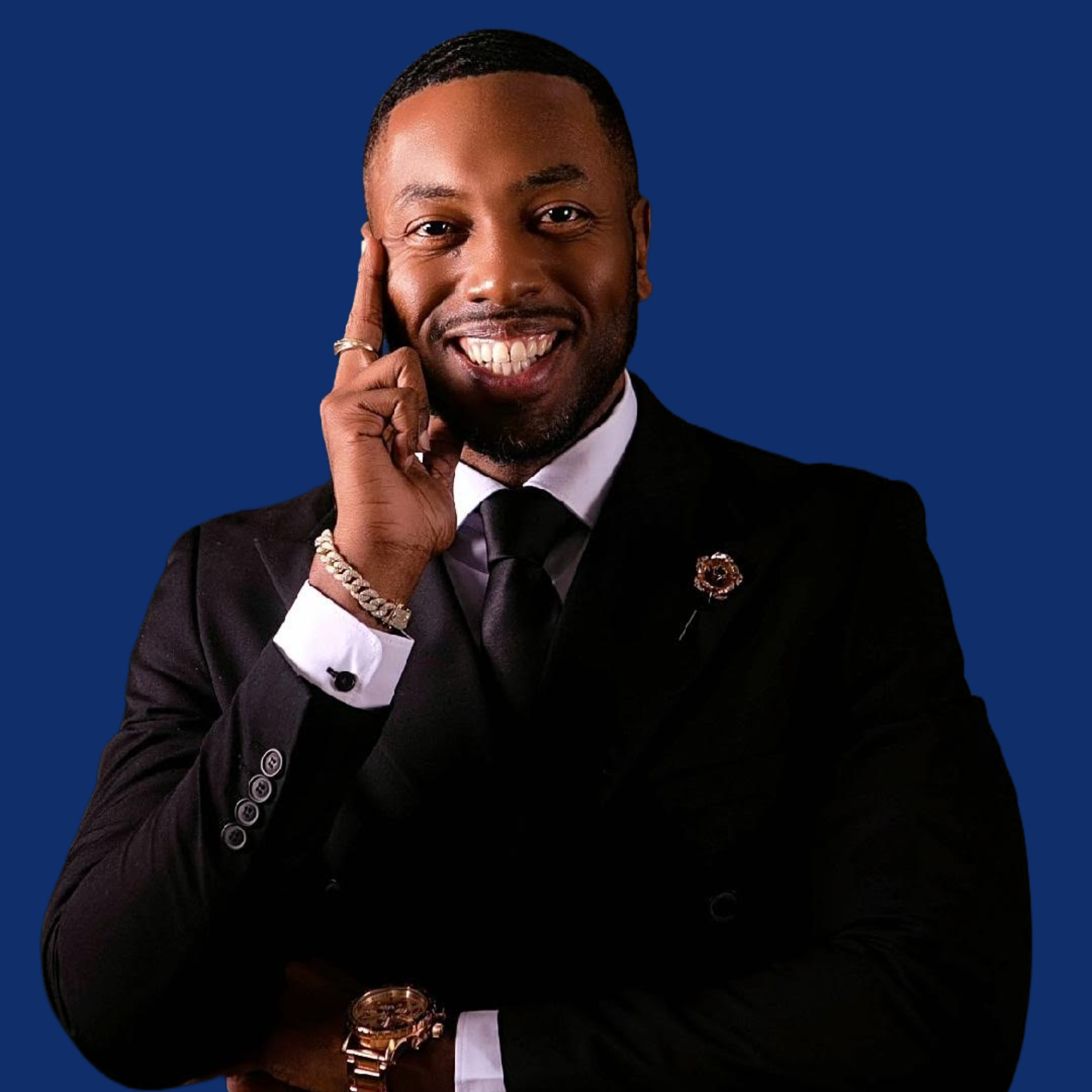
Please welcome the blessed best dressed guest, Bishop Michael J. Fisher.
I promise you that is one of the best introductions I've had, period.
I love to hear it.
Yeah, that's, I, I, I aim for the top.
You're clean.
You know, I, I try and I, I knew I had to show up nice to that to come correct for this one?
No, no, no.
I didn't know if I was gonna get, you know, the double breasted suit, you know?
Oh, yeah.
No, no, no, no, no.
I only do that on Sundays and when I have to go to really important like delegation places.
Yeah.
Okay.
So Bishop Fisher, you and I met, I believe the first time was last spring at this Freedom Seder, correct?
Uh, that we were connected.
I was connected through Van Jones.
I think you were probably connected through Rabbi Yoshi and Amanda and Van.
We'll get into all of those.
Amazing people as well.
And then we've also interacted at Van's, Exodus dinners, and we're on the advisory board.
You're clearly, deeply ingrained and committed to this work.
Yes.
Which is awesome.
So before we dig into the what, you know, what your work is and what you're doing, I want to get into the the when, the how, the why.
Uh, so let's start as most stories of sons often do with the father.
How has your dad's work?
The, the late Reverend w Jerome Fisher.
How did that help start you on your path, both, uh, towards your ministry and towards black Jewish allyship?
Yes.
My father was extremely important in shaping the man that I am now.
Both through faith.
I mean, he was a pastor who also was the son of a pastor.
Yeah.
Uh, so this is third generation.
And his father built eight churches across the country during the Jim Crow era.
Wow.
When that was unheard of and finally settled in Los Angeles.
And then my father leaped out from him and started his church.
First black church in the City of Compton in 1954.
Amazing.
With just $1 and a racist council that said, give it to him because.
Unfortunately, a derogatory term, they'll never last.
And we just celebrated 71 years being on that corner and doing powerful work.
I've learned everything about faith through watching a man of faith believe in God the way that he has, and, um, that's why I believe in God the way that I do.
Now with the relationship that I have with the Jewish community, my father greatly shaped that.
Yeah.
Um, at a young age, I was in the fifth grade and I remember going to school one day and looking across the street to the house that was right outside the fence of the school.
And, um, there was the, uh, symbol, the Nazi symbol mm-hmm.
That was on the garage.
Mm.
And I remember everyone.
Being like, oh my God, the teachers, I had never seen it.
I didn't know.
I went home and I asked my mom.
Hey today, you know, someone drew a symbol on, on the neighbor's yard and it was a big deal, like, you know, I don't know what happened.
And she said, what did it look like?
And so I drew it and she paused and she brought in my dad.
Mm-hmm.
And my dad said, that's a horrible symbol.
It's a reminder of some of the worst times in humanity.
And he told me about what happened.
With the Holocaust and how he, during that time, was serving in World War ii.
Mm-hmm.
He told me how he was a part of the, the team that went in to set free, uh, the Jews in the concentration camps in dow com.
Right.
He was a, a medic, right?
He was a medic, yes.
And he, uh, remembered the smell.
He remembered the horror, he remembered the bodies.
And, uh, he told me, you know, the Jewish people have gone through a lot, son.
And, um, so always treat them well.
And then he took, took me to the scripture and he said, and our faith comes from their faith and is deeply rooted in Judaism.
He said, you are their friend.
They're your friend.
And he said, and that's how it will be.
And from that day forward, I've always been an ally to the Jewish community.
I'm just curious if you, if you feel like you can name it, but like why isn't that.
The common story.
Mm-hmm.
Why aren't all Christians or all black Christians taught your origin comes from the, the Jewish Bible origin?
We, we are brothers and sisters in, in faith.
Yeah.
Well, you know, a lot of times the church, um, gets its roots from, uh, how can I say this, the forefathers of Christianity that during the Roman Empire days.
You know, they wanted to separate Christianity from Judaism.
Mm-hmm.
Because it was really just more marketable.
It was about power.
Yeah.
And they didn't wanna share that power with the Jewish community.
And so that's what created the narrative that Christians and Jews are completely separate.
And so if you remain ignorant, you'll never know.
But because I'm a studier, and, uh, my father was, I always knew that, I mean, our teacher, you know, uh, Jesus, he was a Jew.
So, uh, it just is always weird to me how Jesus, who would be like the founder of Christianity and then the forefathers, which would've been Paul and Peter and all of them, they were also Jews, right?
And they always celebrated the High Holy Days and they all would've went and made the of to Jerusalem.
And they, you know, they would all known the tradition.
So everything comes from Judaism.
So I just think that because a lot of people are ignorant to the true history of it, no one goes beyond the days of Constantine.
Mm-hmm.
And because of that, that's the reason why everyone is oblivious to the roots.
Okay.
So age 25.
You take over the, I mean that's, you're a young man and you're in, in a big position of leadership, right?
I dunno if this is one of the first things you do or if this happens later, but you change the name of the church from little Zion Missionary Baptist Church to Greater Zion Church family.
Yes.
So.
The two words that stay the same are church and Zion.
What does Zion mean to you?
Why is that the, the key thing that sticks around?
Yeah, so Zion, I mean, according to our tradition, our understanding, right, is that place of wholeness.
Like when God is gonna gather his people, you know, and his home, you know, he brings and reclaims the people of God.
To a sense of home security, safety, God reigns, the people are fine, the enemies are put at rest.
Mm-hmm.
For the black community, we also look to that same image to inspire us, you know, that God would bring us to a sense of safety and home and rest from our enemies.
And so the black church, oftentimes, if you see a lot of churches, they have Zion in there.
Yeah.
Our churches were founded during the slavery days.
Mm-hmm.
And Jim Crow.
And I feel like even in our day in our generation, there's still a lot of marginalized communities.
There's still a lot of people that are experiencing discrimination and hatred, unfortunately.
Why we're gonna talk how we're talking.
Mm.
And why we're doing what we're doing now.
And, uh, when they come to our church, they need to know that we are believing God to give you a sense of home and safety and rest from your enemies.
If not throughout the culture, at least right there in Compton at our church.
It doesn't literally mean it.
A specific place.
It's just this abstract sense of Correct.
A home, a redemption of, of, of, of safety.
Correct.
But, you know, I very proudly have embraced, since I've learned about the term, you know, a Zionism and Zionist and people coming, they're like, you know, you, you must be a Zionist.
And I, I, I didn't know.
Mm-hmm.
And I was like, well, yeah, I believe that everyone should be able to have rest from their enemies and have a place that they call home where they can worship freely.
Same idea.
You know?
Same.
It's the same idea, right?
Yeah.
But I am a true Zionist because I do believe that the Jewish people have a right to their own nation and that they should be able to have protection from their enemies, and they should be able to go and worship freely unto their God with no interruption.
We appreciate that.
Thank you for spelling it out.
Mm-hmm.
Let's talk about your connection to the Jewish community.
Mm-hmm.
We talked about just now, fifth grade is sort of like this key turning point moment for you.
Correct.
Anything that comes to your mind between.
That, that moment of your childhood, sort of up until you become the head pastor at, at, at your church?
Yeah, I mean, so I go to Cal State Long Beach and um, when I was 18 years old and I went to a black studies class, um, you know, this first thing you'd go to when you go to a predominantly white institution is you find your own tribe, if you will.
Oh, I get it.
Uh, there I am, introduced to Dr.
Milana Cara, who is the founder of Kwanza.
And Wow.
Yeah.
He actually became one of my mentors for a while and he, he began to really break down this narrative of how the Jewish community helped the black community in more ways than just working with Dr.
Martin Luther King.
Mm-hmm.
You know, I found out during, uh, sending under his class that it was the Jewish community that would fund a lot of our initiatives that was responsible for funding.
The naacp mm-hmm.
That was, uh, uh, responsible in helping out with Black Wall Street, you know, in the 1920s, responsible for helping establish communities and at the time the very racist and segregated, um, Atlanta, you know?
Mm-hmm.
And so when I found that out, that further helped me to understand this connection between our community and the Jewish community to help to foster how it is that I'm an advocate now.
That's awesome.
Okay, so then what about from 2005 when you, you're, you're taking over to, let's say 2020, the first 10, 15 years where you, you're the, the head honcho.
How, what, what sort of bridge building or allyship or, or Jewish community connection is there then?
So initially there wasn't a lot because the crisis wasn't really there as a parent as it is.
But around 2013, if anyone remembers.
We started hearing and seeing a rise and uh, it was a very small rise, but I started hearing it in the black community amongst the black Hebrew Israelites.
Mm-hmm.
That movement.
Yeah.
That allegedly has been around since the sixties, but they really started having an effect in the late two thousands, early 2000 tens.
And it started bothering me that this narrative was being pushed about the Jewish community, um, hating people of color.
Mm-hmm.
That they were colonizers and that we were the true Jews, you know, and I was sitting there saying to myself, this just doesn't sound.
Correct.
Yeah.
So I talked to a couple of my friends at the time who introduced me to a rabbi, that's local Rabbi Stewart Vogel, um, of, at the time Temple Aliya, it's called KO now.
And, uh, we sat down.
And we had dinner and lunch and we was talking about just doing something for MLK, and I spoke to him then and said, rabbi, I said, I don't know if I'm a prophet or not.
I said, but I can foresee in the future that we need to start.
Considering having a strong alliance between our communities, because I see something brewing that's gonna come down the pike where antisemitism is gonna come from the black community for the first time, like never before.
It always happened in the nation of Islam.
We know that.
Right.
But to be very honest, many of us never really listened to the Nation of Islam.
Right.
Um, but I felt like it was gonna come from the common black community.
Yeah.
And, um, lo and behold.
Unfortunately, it started coming up in a lot of our celebrities, a lot of people that had influence over our community, the next generation.
And um, that's when I started having moments where Rabbi Vogel and his congregation would come to my church, and we started finding unique ways to share the story, not just.
Of how both of our people have suffered atrocities.
But we began to share the story of how we both do kind kind of common things, both in Judaism and Christianity.
Yeah.
And so we started building the bridge of how we're more alike than the picture that was being painted, that we were a part.
I love to hear that.
Just not just as a Jew who's like glad to hear these things are happening, but as somebody who is also really engaged in bridge building work, I love hearing.
That your approach is, is what I feel like actual bridge building is all about.
Correct.
Which is we need to be inviting each other into each other's spaces.
Correct.
We, we need to build the bridges now, so when the shit hits the fan, yes.
The bridges are already there.
Otherwise we have no way to show up for each other if we haven't built the path already.
Correct.
It's not about.
Conversion is about commonality.
Yeah.
Yeah.
And that, that's, that's probably the crux of my bridge building is that I'm not here to convert you to Christianity.
Right.
You're not here to prove to me that Judaism is better, but I am here to find out where we are common.
Mm-hmm.
Because we can live there.
Yeah.
You know, and I feel like that's the problem with the world is everyone's so busy trying to prove their point.
Instead of just saying, well, where can we co-exist?
So every event we have, we can co-exist in the fact that people need to be fed.
We can co-exist in the fact that people need to have the rights, uh, same rights as everybody else.
We can coexist there.
And so I asked for both communities, Compton and those that work with me in the faith to.
Consider crossing the aisle and working with our Jewish communities and vice versa.
Yeah, that's the key.
And that, that, that was the key.
It's gotta be both ways.
Yeah.
We crossed the Red Sea of the 4 0 5 to get to you.
Love that you crossed the wilderness of the 91 to get to us.
And that's where it started.
And from there, article started picking it up.
You know, the tablet, the journal.
Mm-hmm.
You know, uh, LA Times and others Started seeing this unique.
Thing that we were doing.
At first, it was just a bunch of like food giveaways and, you know, showing up and having Sunday services and Shabbat and you know, and, and that's cute.
Which is amazing.
That's cute.
Yeah.
Then George Floyd, right.
And then that's when it really started getting serious.
Okay.
So let's keep going.
That's was my next question anyway, so yeah.
2020 hits.
Yeah.
It's this huge moment for the black community, obviously.
Were you.
Looking for Jewish allies, was that a consideration?
Did any show up?
I mean, tell me what you were just alluding to a moment ago.
Yes.
So 2020s is where it kind of became a little tricky, but I decided to lean in instead of lean out.
Mm-hmm.
Because George Floyd happened.
Everyone saw it, and I think a lot of people were blown away.
But I was a little taken back at the silence that I felt came from, um.
Some of our Jewish brothers and sisters, uh, where we thought that they would really show up.
You know, we have heard forever about, um, rabbi Haschel.
Yeah.
Haschel.
Yes.
Yeah.
I'm so sorry.
With Dr.
King.
Yes.
Right.
So we got that picture in our head, you know?
Mm-hmm.
They're walking across the bridge of Selma hand in hand.
Yeah.
And so I guess I, and I kind of thought that was gonna happen, and, um, it didn't happen initially.
It was a bunch of like, oh, so sad, so sorry.
I hate that.
You know?
But if he just would've obeyed, if he just would've, mm.
And I was like, no, that's not the reaction I was looking for.
Yeah.
The good thing was, was that the moment I brought it to like my fellow rabbinic brothers, like Rabbi Vogel, he immediately was like, you know what?
We do need to be there.
And he showed up when we, uh, rabbi Yoshi, um, he was like, how can we be there?
Do you tell us then you're right.
We need to be right there with you.
You know?
And he showed up.
We had a night of remembrance in Compton.
Everyone thing is outside 'cause this is happening during the pandemic.
Right.
And here comes Rabbi Yoshi.
Right.
Uh, a ra uh, a white presenting Jew.
Right.
And with his guitar.
Yep.
Yep.
Always in Compton walking into our event and standing up and very boldly saying that that was wrong.
You know, that was inhumane and nobody should, should die like that.
Yeah.
And he like ignited this fire in the city of Compton 'cause we were all there.
Wow.
And was like, we stand with you.
And uh, from there was when we started committing to showing up in each other's communities, we had no idea.
That very soon the pendulum was going to swing right in the other direction.
First of all, just, we're gonna talk more about him, but shout out to Rabbi Yoshi.
Yep.
Friend of the pod, friend of people, yes.
All over the place in so many walks of life.
We actually talked a lot about him when I had Tiffany Haddish on the show.
Yes.
He's her rabbi.
He's so cool.
He's awesome.
Cool dude.
And doing a lot of amazing work, obviously.
Yes.
Something that you just touched on that I think is really important to, to discuss is the notion of allyship.
What I'm sort of discovering from the black community and from the Jewish community is there, there's always this expectation of like, where are the allies?
Mm-hmm.
But there also.
Isn't enough of, Hey, here's what I need from you to be an ally.
So people who want to be allies don't really know what that means.
Uh, I think a lot of people think, does that mean I just have to like post on social media?
Correct.
I'm like, that doesn't really seem to do it for people.
Or in the case of a Jew asking a black friend to show up, I've heard from black folks like, well, I don't wanna post a bunch of pictures of Israeli flags on my social media, right?
Mm-hmm.
But the Jews' like, well, that's not.
That isn't even even what I want.
Right.
You know, like that's not what, but we don't communicate it well.
Mm-hmm.
And so it, it's, we have to sort of have grace and space to allow ourselves to say, Hey, I, I need help.
We have to make the, the implicit explicit.
It's like in a.
Marriage, I mean, correct.
Weekly.
Shout out to Courtney.
But it's like, we think our partner can read our mind.
Right.
And sometimes you just have to give them the opportunity to show up and they will.
Exactly.
I want bacon.
I don't like sausage.
Exactly.
Yeah.
Right.
You gotta just say it.
Yeah.
So, you know, I've, I've been telling the black community, uh, that very thing.
No community can sit back and say, well, you weren't there for me.
And then they say, well, how can I be there?
Well, I don't know.
Right, right.
Exactly.
But I want you there, right?
No, that's not how it works.
Um, I've been asked this question a couple of times and I had to sit with it before I could really come up with an answer, and I think for the most part, I have it advocacy.
You know, it's not necessarily, we don't need advertisement, we need advocacy.
And what I mean by that is that when we think that allyship is advertisement, then it is that mm-hmm.
Posting the flags, you know?
Okay.
It's Kwanza, so, you know, shout out to Kwanza, right?
Martin Luther King is coming up, so, oh, you know, he was a great man.
No, that's advertisement.
Yeah.
Advocacy is.
How do you speak up for me when I'm not in the room?
That's exactly how I define it.
I just was in a, uh, like a conference of Jewish leaders from a bunch of different nonprofits.
Mm-hmm.
And this came up and I said this exact thing and someone was like, well, what does allyship look like to you?
Yes.
And I said, it means standing up for me when I'm not in the room.
Exactly what I was saying.
Absolutely.
It is.
How are you willing to get up from the table if they are disrespecting me Right.
When I'm not in the room.
Right.
And then how can you leverage your influence?
And your platform to move the needle on my behalf.
Mm-hmm.
When I'm not in the room.
Right.
Those three areas is advocacy and I think that both communities are looking for that.
They just don't know how to express it.
I think that's exactly right.
That's really what's happening.
You mean the amount of times I've heard Jews be like, why isn't this person standing up?
And I wanna be like, what does that mean, standing up?
Right.
Right.
Like you and, and most people don't, they don't realize they don't have the definition Correct.
But I think what you have just outlined is exactly it.
Plus I would add one thing of the check-in, right.
Of just, what do you need from me?
How can I show up for you?
Absolutely.
When we see what happened.
Yeah.
Bondi Beach, uh, when we see the synagogues being, uh.
Uh, blown up and assaulted, and I think something just happened, uh, not too far from here, from the synagogue, uh, where protesters met outside.
Yeah, yeah.
Um, so someone, uh, I think was harassed and, and murdered outside of the Bible museum, you know, in dc DC a couple of the Jewish museum, right?
Yeah.
When we hear all of that happening, it does need to be a check-in.
It can be a text.
Yeah.
I know this hurts your heart.
You know, how can I be there for you right now?
And then already having the clear view of now is the time.
'cause these events raise up conversations.
How am I gonna show up for my friend in this conversation at the barbershop?
Yep.
While I'm getting my hair done Because they're not here.
And how can I leverage my influence?
When you're someone like me, an influencer, and I lead my city, when it's time for me to stand up and speak on a large platform, how will I use my influence to say, no, you have that wrong.
That's it right there.
Yeah, that's it.
Take note, folks.
So Rabbi Yoshi shows up.
You guys begin.
A very fruitful and, and significant partnership that has now carried on for several years.
One of the things I saw you guys did together, uh.
Your church and Stephen Wise Temple, where he works is you guys did a sort of a joint Shavuot Pentecost event.
Yes.
That's, I've never heard of such a thing.
I know.
Tell me about that.
Yeah, so again though, right with the whole thing about finding where do we coexist?
Me and Rabbi Yoshi started really deep diving into like where.
Do our faith share traditions.
Yeah.
Right.
So like a lot of people in the Christian faith have no idea that what we call the last supper would've been Jesus honoring the Passover.
Right.
It was a Seder.
It was a Seder.
Yeah.
Right.
So I went to a Seder.
Finally Right.
Nice.
About two or three years ago.
And the amount of wine that happens at the Seder is such a blessing.
Right, right.
At least four cups.
Yeah.
Yeah, yeah.
'cause you know, in the Christian faith, you know, I'm a bishop, they'll be like, you know, don't drink.
But I'm like, it is at the Seder, so, you know.
That's right.
But here's my point with that.
They would've been up all night.
Peter, James, and John.
There's a part where James, when Jesus goes and pray and they fall asleep, and the Christian faith that bashes Peter, James and John for falling asleep, but they would've been up all day.
First of all, they would've been up all night for the Seder.
They would've had a couple of cups of wine.
It's three o'clock in the morning.
Yeah.
Yeah.
This is not spiritual.
They're tired.
Yeah, I love that.
Right.
But you, you learn those things by actually experiencing other people's traditions.
With that being said, we were intentional in finding moments where the Christianity forms this.
Theological thought around this Judaism tradition.
Cool.
So, which is the end of the weeks of festivals?
The festival of weeks.
Yep.
Counting the, the omer as we call it.
Yeah.
Right.
And then, and then some traditions say, you know, that it was of the 50th day after, um, you know, Moses have gone up into the mountain.
He comes down with the law.
Right, right.
And so the day of Pentecost, which is the number 50, is where then the Holy Spirit comes down upon the disciples.
And so we show that connection there, that, you know, we're still ba, we're still bound together in some way.
Yeah.
And um.
All the people's minds were blown.
So the Jewish community was like, what?
Oh my God.
You know, we thought Pentecost was something mystical.
It's like, no, actually it was just a fulfillment of wo in a different way.
It had evolved.
Wow.
And then the Christians were blown away, like, wait, we really got this from like when Moses came down with the law.
Absolutely.
That's amazing.
It's just, you know, layered on top of each other.
Absolutely.
That's really cool.
Yes.
That was 2022 when you did that.
Yes.
Let's get to 2023.
October 7th happens?
Yes.
Really we can divide it into two parts.
The event itself and then the way the west reacted to the event.
Correct.
Over the past couple years.
So let's start with the event itself.
When did you become aware of what was going down on October 7th and how did you react?
I was in the airport and I'm looking up at CNN and I'm like, wait, what's going on?
What's happening?
No.
And so the whole airport is glued.
I immediately am.
Even deeper pulled in, because at the time, some of my friends were with a dear mutual friend of ours, Bishop Robert Sterns.
Mm-hmm.
On a trip, and I knew they were there.
Wow.
And so I'm immediately texting, are you okay?
What's going on?
No one's texting back, you know?
And, and, and like that fear, like, hit me.
I almost get emotional thinking about it.
Like, you can't do anything, you know?
And you're like, this.
This is happening now in, in our, in our lifetime.
This is stuff we read about.
No, this can't be happening at this moment.
Um, and I was devastated and I immediately started reaching out to like Rabbi Yoshi and everybody, like, how can we be there?
What do I need to do?
I felt, uh, as, as big of an influence that I have, I just felt so.
Helpless.
And then something interesting happened because after that, the reaction disturbed me.
Say more about that.
Yeah, because I thought while a lot of people were going to say, as we normally was doing, you know, pray for Israel, 'cause the people would be like, you know, pray for Sidney, pray for this, pray for that.
Yeah.
Instead, it was good.
That's what they get.
You know, it's only so long before you know this, the oppressed are gonna get tired.
And I'm like, whoa, whoa.
Wait, wait, wait, wait.
No, no, no, no.
Wait.
Hold on.
And this was coming from like Black Lives Matter and you know, people that I knew and you know, common colleagues and preachers and clergy.
And I was like, oh no, I know we're not swinging it.
This way, the oppressed, I like Hamas is the oppressed.
Are you kidding me?
I was like, this is not about policy here.
This is about terrorism and the fact that we who have experienced over 40 to a hundred.
200 years of terror in our own, you know, in our own way.
How will we ever align ourselves, you know, with this form of terrorism, this act of terrorism that we're seeing and call it righteous.
And uh, it made me very angry.
And I immediately took the social media, which was my tool, you know, at 30, 30 some thousand followers, y'all gonna hear me.
You know, y'all have this wrong, this is not this.
Whatever they're telling you, it is not right.
And we are choosing the wrong side of this to be on and you all need to wake up.
And what was the response to those posts?
Woo.
Yeah, well, I created a lot of enemies, which is fine.
Um, and I didn't care.
I didn't back down.
But it opened the door though for me to tell a lot of my friends, my colleagues, clergy, mega pastors that many of you all would know if I were to mention their name.
Here's why you have it wrong.
Yeah.
Because your perspective of this war has been shaped by an algorithm.
My knowledge of the people of Israel and what they're experiencing in that land has been defined by reality.
That's the difference I've been to by that time.
I had been to Israel three times.
Oh wow.
Yeah.
By that time I had forged many relationships with Jews and rabbis across the country, and by that time I also understood the diaspora of the Jewish people.
Which is something that to this day a lot of people are ignorant of.
Yeah.
And I'm like, you're sitting here buying into this trope, this, this straw man, you know, this thing that's this narrative that's just been created just to cause hatred between us.
That's not true.
I was like, Israel's one of the most diverse nations that exist.
Yeah.
You know, and um, the diaspora of the Jewish people spans way beyond.
What you all feel to be the white Jews, you know?
Right.
And no one in Israel is rah rah.
We're the only ones, the ones that look white we're the JI said, that's not the case.
That doesn't exist.
Um, some leaned in and then of course some just wanted to believe what they wanted to believe, because you get a lot of popularity.
Spewing hate.
Yeah.
What about your own community?
You know, the, the, the Jeezy.
C community?
Yes.
How do they respond to, to what you have to say?
Are they in alignment?
Do you get pushback?
For the most part, I don't get pushback for the most part in the City of Compton, I don't get a lot of pushback.
But that was because Rabbi Stewart Vogel and his community, and then Rabbi Yoshi and Steven Wise, when they came on board as well, um, they kept leaning into this, I'm gonna call it I guess, prophetic, you know, thing that I was saying, that something was coming.
By the time this hit, at least within our community, the work had been laid.
Right.
There is, yeah.
The Jewish people, we had relationship, that's the important word.
Yeah.
With them.
So no one saw it as propaganda.
When you say Jew, we saw the face of Rabbi Yos.
We saw the face of a Tiffany Haddish.
We saw the face of members of Rabbi Vogel's synagogue.
People we've sung with, we've ate, you know, at the Seder, we've, we've learned kosher, you know, we've embraced them in our community.
Yeah.
And we've experienced them embracing hours.
Right.
So.
It was a little bit harder for that rhetoric to seep into greater Zion and harder for it to seep into the city of Compton.
'cause city officials, I brought them to every event we had that celebrated Israel three, three years in a row.
Amazing.
We did a Compton Celebrate Israel's event where we had over 600 attendees there.
Was that something you did with Nexus?
That's what I did with Nexus.
Right.
With Robert Stearns, that's a, yeah.
Dr.
Stearns, you mentioned before, shout out to him.
Amazing.
Mm-hmm.
Bridge Builder.
Mm-hmm.
Yep.
But even before then, I would do these communion services with, like I said, rabbi Vogel, and then I would do joint services with Rabbi Yoshi.
And so the people couldn't be, you know, bought.
And so we remain an ally unshaken, and the few people that resist it, then they just have to move on.
Because I'm not, it's not open for discussion for me.
We, we gotta get, you know, Compton to be the sister city of Tel Aviv or something.
Oh no.
Okay.
I'm actually working on that.
Let's go.
It's actually a desire for me to do, to do that.
I, I got some things in the work to do an art exhibit and stuff like that.
That's awesome.
Yeah.
So we're, we're talking about these negative attitudes that some in the black community have towards Jews.
What have you found to be effective, other than, and perhaps there is no alternative to, to real life experience and relationship, but what else, if anything, have you found to be effective in breaking through those attitudes?
Yeah, so I, I, I found to be effective, which is why we just did a, a trip, you know, that, um, with Amanda Berman and, uh, rabbi Yoshi, what I took, influencers, civic leaders.
Clergy to Jerusalem for 10 days.
Unbelievable.
Called, uh, from Compton to Jerusalem.
From Compton to Jerusalem.
Yeah.
Amazing.
We got t-shirt.
We gotta get you a T-shirt.
I would love That's a cool t-shirt too.
It is.
Yeah.
Yeah.
Look it up.
Yeah, my stylist did it too.
Nice.
Shout out to Slim.
Alright.
Nice work.
Yeah, so I believe that, that that's what has to happen.
So I I, I sort of started this interview by saying we're gonna talk about, you know, I wanna know about the the, when, where, how, why, and then we get into the what.
Yeah.
I wanna circle back to that, that, just that one word question of why, so, like, for example, for Van Jones, who we both know and have worked with, he talks so much about how the greatest change in America, the way democracy only functions mm-hmm.
When, when the black community and the Jewish community stand together and make these changes happen.
Mm-hmm.
What's your why?
Yeah.
My why is really on the same lines.
Uh, we have a.
A very powerful alliance, so powerful that it helped to end segregation that's big in a country that did not give us our rights because they came into a moral consciousness.
They gave us our rights because they had no other choice but to do.
And that was because we as a community, both communities came together and, um, I believe that it's time to do it again.
When we are together, our communities thrive.
Um, there's protection on both, on both ends.
Yeah.
And I feel like after the civil rights movement and the murder and the assassination of Dr.
King and other influential leaders, um, that there was a intentional agenda.
To drive a wedge between the two communities.
And I just wanna say this on a podcast.
Yeah.
Because there, there'll be both people that are watching, 'cause we're shared on our platforms that I don't think neither forsook each other.
I think both communities were just trying to rebuild, and I think it's important to say that because the black community has this alt, it seems like, against the Jewish community because all this time it seemed like the Jewish community was doing great and the black community was still suffering.
When the truth of the matter is the Jewish community was fighting their footing.
Banks were still not giving to the Jewish community.
These communities that we see, they had no choice but to build them because they still were being redlined.
That's right.
This is, these are facts.
Yeah.
And when black people realized that, then it doesn't seem as if the Jewish community left us rather than they just went in unto themselves.
To take care of their own.
And we did the same thing.
And it wasn't that blacks didn't care about the Jewish community, it was that they were still fighting for their life with the crack epidemic that was happening with these school to prison pipeline that was happening.
You know, when you're fighting in your survivor mode, you don't have time to look outside of yourself.
Yeah.
However.
Now we have been given an opportunity to make all of that, right, to look outside of ourselves, to understand that the same person that hates the Jew hates the black.
The same person that hates the Latino, hates the Jew and the black, right?
Yeah.
This is the same person, the same person, whatever hatred is in someone's heart.
Hatred doesn't stop at one demographic.
It just hates and we have to come together 'cause it's gonna take unity to combat dysfunction.
Amen.
So let's get into the Freedom Seder.
Yes.
So this was the event that we first met at a really awesome event.
Yes.
Joyous celebration.
200 something people.
The choir sign choir was beautiful.
Jews.
Black folks.
Black Jewish folks.
Yes.
Um, what was your goal there with, with your participation and what did you try to bring programmatically to the evening?
Again, I mean, the thing that I've been doing over the last, you know, 10 or 12 years is coming into these spaces and showing where we, you know, have shared experiences, um, bringing the choir.
You know, is resemblance, you know, a lot of the, the black young people that were there had no idea, you know, that we sing, we dance.
Yeah.
And the Jewish people do as well, you know?
Mm-hmm.
They also celebrate.
We were very big on, we don't want to tell people how to feel.
We want them to have conversations with one another and be reminded that this is not just a Jew, this is my brother.
This is not just a black, this is my sister.
You see?
Yeah.
And that happens through conversation.
'cause only through conversation when you understand that that person experiences grief like you do, right?
That person experiences struggle like you do that you're reminded that they are human first.
You know?
And I have to care for this human no matter what I feel about the politics around our ethnicity.
So that's what I wanted to make sure we drove home with that and I wanted to teach my young people, if you remember, I brought a lot of young people.
Yeah.
'cause I wanna shape their minds 'cause they're in college and they're in the thick of all of this anti-Semitic rhetoric that's going on.
Yeah.
So.
Then as sort of a follow up to that, there was the, uh, freedom Seder Hope tour right.
As they called it.
Um, and, and I don't know if that traveled around the country or anything, but certainly in LA what it was was a day of service.
Yep.
At a Compton Academy of Technology and Innovation.
Yes.
Why is that piece of it important and and what was the experience of that day?
Well, because rebuilding is more than just, you know, being on these platforms or getting on live on Instagram.
Rebuilding is exactly what we've been talking about.
Showing up.
Yeah.
You know, and putting your like foot to the ground.
It was about the Jewish community coming into comp.
We went into the Jewish community for the Seder.
Now it was time for the Jewish community to come into Compton and not just to, you know, have another service, but to actually be of a service because that's also how you rebuild.
How you show up for somebody that needs help speaks louder than a, a grandiose speech you can give.
And seeing the Jewish community show up at a predominantly black and brown school repainting it.
Cleaning it out, tearing down the old stuff, getting rid of things that they didn't have the money to get rid of was a shot of the arm.
I mean, I remember the principal being really impressed by it.
The school board being impressed by it.
They kept being like, huh, what?
Who and what do we have to pay?
Nothing.
And so that, that was the beginning of that.
Will there be more of that stuff?
Absolutely.
We have another Seder coming up.
Um, and after that we want to identify an area of need, um, amongst the Jewish community because we have to tear down these stereotypes.
Yeah.
Because, uh, for some reason people think that the Jewish community don't need anything.
Right.
Well, I think that's fair to be, to be fair.
Like I give a little bit of grace to that because.
Sort of, as you alluded to earlier, like the Jews kind of have been okay for a minute and we're, we are not used to being this not okay.
We haven't been this not okay in a number of decades and we're not good at asking for help 'cause it's not a muscle that we've had to use.
And I think it's fair to say, you know, the black community is not used to Jews saying, can you guys come help us?
Correct.
You know?
Right.
But going back to that humanity piece, right.
Every community has their weak links.
You know, and how can we be a strength to that?
It may not look the same as when the Jewish community shows up to our community, but how can we show up and support?
I just wanted to give you a shout out for something.
So we did, we were on a phone call for the Exodus advisory board.
Oh, okay.
That, uh, with that with Van and some of these other awesome folks and you.
Quoted just a little bit of scripture mm-hmm.
That I have since repeated and used multiple times in multiple venues.
Something that I found to be just like a really healthy and grounding reminder that like, gives me hope and makes me feel good.
Uh, it was something having to do with, if you recall, Genesis, Genesis or the beginning genesis.
So I want to give you the opportunity just to, to say it again, if you would, and, and share it with everybody watching this.
Yeah.
It gives me a lot of inspiration.
Um, and that's what I lived by.
It wasn't a speech, like I had to find something, you know, as I'm watching people being drug through the streets and, you know, murdered in real time and you know, the justice system not working for us.
And then I'm watching what's happening amongst the Jewish people and then people being disappeared and snatched off the streets.
I'm like, God, you gotta make this make sense to me.
Yeah.
In our tradition in theological seminary, we are taught this principle of the law of first mention, and this law of first mention says in the Bible, it's this weird thing that where you meet the character in the Bible, that that usually encompasses who they are all throughout the scripture.
So we meet God in Genesis chapter one right in the beginning, and it makes it a point to say, you know, the earth was without form, but really the Hebrew word for there means that it was in chaos.
Right.
Tova who?
Yes.
Right.
And so it's in chaos.
And we meet God saying, let there be light.
And light literally is the scatteredness of darkness, right?
It is the control of the void.
We meet our God, right?
Very matter of factly walking into chaos and being like, yeah, you go over here and you go over there and the mountain's here, and the river's here.
Like he's putting this beautiful order to something that seems so destructive from there.
It is what I believe that God uses chaotic times and moments to show his greatest strength in his power.
And so why?
It may seem dark right now to us, and it may seem chaotic to us right now.
The same God that said, let there be light at the beginning, is the same God that would say, let there be light in 2026.
Whew.
Amen.
Amen.
I love that.
So I wanna talk a little bit more specifically about your incredible, from Compton to Jerusalem trip that you mentioned.
Yes.
Yeah, I'm jealous.
Should be, I mean, it looked like most amazing trip, like so many unique experiences.
Was it difficult to recruit folks to that?
I'm curious.
It was, yes.
Yeah.
Can you tell me a little bit about that process?
Yeah, it was, uh, okay.
So a lot of the people that went.
Went on the strength of my influence and my relationship, it was literally just that, you know, we're hearing in the news, you know, you go over there, you're gonna get blown up and you know you're gonna get kidnapped.
And I was like, trust me guys.
It's not, like I said, first of all, very seldom is Israel at rest from their enemies.
Period.
Yeah.
Was the primary concern just security, primary concern was security.
Then the secondary concern was how people would view them.
Right.
That, I mean, that's more what I was curious about.
Yeah, that was, that was right up and neck to neck.
Yeah.
You know, and it was, we, we can't be over there in Israel right now.
Like no one's standing with them, you know, they're murderers.
Right.
All of that was coming out.
You know, I said I'm bringing people that are on the borderline about supporting Israel and they have a heavy influence.
One of them was the past mayor of the City of Compton, good friend of mine and her husband, and they're very vocal.
I said, but I am just convinced if we can take them over there, sit them down with key leaders, let them experience Israel and not just the Christian stuff.
Let them experience Israel culture, the food, the restaurants, the fellowship that happens there.
And then we went to the sig.
Right.
Right.
Which blew everyone's mind.
Yeah.
It's so weird 'cause I didn't even know what it was.
And then it came up in conversation at breakfast with somebody yesterday.
Mm-hmm.
And then I started researching this and I was like, oh, you guys just went to it in Israel.
Yes.
So, so tell the folks at home what is sig?
Yeah.
So Sgd is the huge celebration of the Ethiopian Jews, right.
That come and they celebrate their return to Jerusalem.
Um, where, you know, the Jews, uh, went and got.
The Ethiopian tribes and Jews and brought them, you know, but many of them came through the desert because they just didn't think they was ever gonna get any kind of help.
Um, not because they thought that the white Jews didn't like them, but because they literally didn't think they were any other Jews that existed, period.
They thought they were alone on an island.
Right.
And these are the ones that you know, are told that were exiled during the destruction of the first temple.
So they've been out of the loop for a while.
That's right.
Yeah.
Just to be fair, and for folks that don't know, like there's a lot of Jewish holidays, they don't celebrate because they were off the map and they didn't know these, these other things were going down.
Right.
They thought it was just them left.
Correct.
So I, we built the whole thing around knowing that the last day was gonna be at the sick.
That was your last day of your trip?
Yes.
Oh, cool.
It was perfect.
And it takes place, uh, 50 days after Yom Kippur, correct.
Is when?
Yes.
So the whole time.
We're breaking down walls, right?
We're having conversations with black Jews.
We're having conversations with Latino Jews.
We're having conversations about the coexistence that happens there between the Jewish community and the Arab community.
All of this.
So now their minds are starting to change.
A lot of people dropped out.
I had more people that were supposed to come, but they dropped out and let me say this, live, they deeply.
Deeply regretted.
Yeah.
So now so many of them are ready to go on the next trip.
That's awesome.
And so when they went over there, you're seeing the walls come down each day.
Right.
And then me and Rabbi Yoshi have this thing and we are marrying the Bible with the Torah and the, the New Testament, this, that, and they're like, oh my God, they're getting blown away with that.
Then we come to the SIG and they're walking around looking at everyone who looks like them.
That are Jews, and then the President of Israel shows up, right?
So I say, oh, that's crazy that the president of Israel would show up to this if it's an apartheid state.
Right?
And that this would be a national holiday.
Yeah.
I said, look at all the colonizers celebrating the oppress.
Right?
And then we had Ethiopian Jews explaining to us simple things like the poverty spike that exists amongst the Ethiopian community.
Not because they don't have the right, the fairness to work, but because a lot of the old ancestral Ethiopian Jews, all they give their time to is just prayer.
You know, things of that nature.
Those little nuances.
And so it was really good to see under the hood of Israel.
Yeah, it was nothing to hide.
And so then they all came back completely trans.
Wow.
Completely changed.
Now their narrative is like, y'all don't know what you're talking about.
And I'm sitting back like, okay, we did it.
Now we just gotta do it again.
That's amazing.
Yeah.
The issue and just sort of the fact of the matter is these sorts of things are difficult to scale.
Correct.
I mean, you can really only affect 22 people at a time.
Correct.
Unless, you know, we start, and this is something that I've would love to see, but you know, it's got, there's gotta be birthright for non-Jews.
That's right.
You know, we gotta just start busting people over there and we just gotta fly em by the, by the planeload.
But when it's led by those who are.
Advocates for diversity, and you can see the diversity in Israel.
And we're not just going to key spots that just paint one narrative, right?
But we're seeing the whole gamut, you know, of Israel.
I think that that's when we'll see the needle move, at least within our, in our community.
So I've, I hope that we'll see the Nick Cannons and, and them, you know, uh, my aspirations are quite big.
That's awesome.
I would love to take them on these trips.
And let them spend 10 days, you know, over there and come back and at least, at the very least, struggle with their, their perception.
Yeah.
I'll take it.
Yeah.
We can't, you can't move everybody from one side of the board all the way to the other.
Correct.
You just move them one space up and that's, that's a win.
Correct.
Anything that you learned that was new or that surprised you this time around but I didn't know nothing about the diaspora of the Jewish people before that trip.
Yeah.
What do you mean?
To be honest, I just thought it was just white Jews.
I just thought all Jews were just white.
Then they even corrected us.
They was like, stop calling us white.
Right?
I was like, okay, that's fair.
Yeah, right.
They was like, yeah, no, you know, they was like, okay, maybe we can pass.
We're being white.
They was like, but we are Jews, and they told the whole story about Poland and you know, and, and the Ashkenazi and all, and all that, right?
Mm-hmm.
It really opened my eyes to the diaspora when I found out there were Asian Jews.
When I found out that they were Latin Jews.
Indian Jews, I was like, no.
It was like, yes.
And so yeah, that trip.
It.
It blew my mind.
Oh, that's amazing.
Yeah.
How much exposure had there been for your group to just not, not even Ethiopia, I'm talking in America, like the concept of a black Jew or black Jewish community.
Not at all, man.
Yeah, I know.
April Powers went with you guys.
April, right?
April Powers came.
Shout out to April.
Another great friend of the pod, love April, and so she came and she kept like, like knitting together.
Right.
Her experience as being a Jew and a black person.
Right.
You know, and being able to speak to things that maybe a white presenting Jew could not speak to.
Sure.
That we had to be like, oh, that's the cis.
Yeah.
That's why I, that's why I think she's so effective in her work.
Right.
I mean, she goes into spaces that, that, you know, have their sort of walls up.
But you can't deny her.
No.
She's a woman.
Yeah.
She's black.
Yes.
She's Jewish.
She has Latino family members.
Exactly.
You know, she's, she's, she's got it all.
So you have to listen.
Exactly.
You know, so we're sitting here like, oh, okay.
Go ahead, sis.
Yeah.
You know what I'm saying?
We say, you know, as we would say, talk your talk.
Yeah.
Up until then, no one knew at the most people knew that there were black people who converted to Judaism.
Mm-hmm.
That's usually the narrative we've been told versus someone that's like, no, I'm a black Jew.
You know?
Yeah.
And so just as much, I'm a black woman.
I'm a Jewish woman, and I experienced both racism.
And antisemitism.
Yeah.
You know, and that was an eyeopener all, all by itself.
And to see a Jewish person that can identify with gumbo and goulash and chitlins and was really, really.
Really good eye opening.
Yeah, and that's what immediately brought the wall down, right?
If you heard that sound, that means we just finished shooting our five deep questions.
It was all about black and Jewish relationships, understandings, misunderstandings the music industry.
Really deep, insightful conversation.
If you want to catch it, you need to sign up for the KeHE Law, our subscriber only community, which I hope you'll do.
You get all kinds of goodies, these amazing questions, bonus content, FaceTime with me.
You can sign up@beingjewishpodcast.com slash community.
Bishop, we're getting towards the end here.
Something I wanted to ask you about.
You're, you're definitely the swaggiest clergyman that I've ever met.
Thank you.
Oh yeah.
The backup dancers, like gorgeous double-breasted suits, social media picks and videos.
What is that about for you?
Mm-hmm.
And how does that, how you connect to your community?
I believe that God uses every bit of who we are.
Right.
It's all because I'm clergy, all because I'm a pastor, I'm a bishop, doesn't mean I have to be stale and boring.
Yeah.
To put it in the Old Testament fashion, Solomon prays one of the most powerful prayers.
You know?
Give me the wisdom to know how to go in and out amongst your people.
And so it's the, it's that same, that same thing, knowing how to be cool enough for like the person that had never come to church.
Yep.
Classy enough for the person who's super religious and then everything in between to catch those that are, you know, the stragglers, if you will.
Love that.
What what's interesting is.
It's tricky.
Like I'm, I'm thinking, I'm listening to what you're saying.
I'm taking it and I'm thinking like, well what would this look like for a rabbi, let's say?
Mm-hmm.
And what's tricky is we are sort of caught in the middle mm-hmm.
That if, if a rabbi came dressed to the nines looking good, got his Mercedes, people like, see there's that, that rich Jew that only cares about money.
Oh yeah.
We get punched up and we get punched down.
Yeah.
So, so it's interesting.
And yeah.
And um, you know, I'm not sure what the.
The answer is, but I do know the answer for sure.
Is, is the piece that you hit on, which is that self-respect Yes.
That, that coming in with the confidence, the presenting, the, the, the person you wanna present.
Correct.
I think we can all take a page outta that book for sure.
Yeah.
When I'm amongst my young people, though, I'm casual.
Because I want them to know that you can be anointed and powerful and influential and not forget where you come from.
Right.
But when I have to step into a room where I know I'm walking into a room that already has a stereotype that wants to treat me like they're giving me a handout.
Mm.
I come into the room very clear on I deserve to be here.
Yeah.
You're not doing me any favors.
So that's when I'll, I'll dress up in the double breasted.
Yeah.
You know, I gotta get one of those.
Man, the chain and the, the collar, you know, they're kind of like, oh.
Bishop?
Yes.
Yeah.
Bishop to you.
That's right.
I mentioned earlier it's February, it's Black History Month.
Yes.
What does that mean to you?
Black History Month for me is a reminder of just how special I am, you know?
Um, I know people argue like Black history is every single day.
Of course it is.
But I love that we have a month.
Set aside to remind us of our true heritage, the leaders, the fighters, um, that even go beyond slavery days.
You know, it is a time for us to reconnect to when we were kings and we were queens and we come from a wealthy land and the continent, um, the inventors, how witty we are, the talent, the music, the contributions we have given to this country, for this country to stand proudly and call themselves Americans.
I am proud to be a.
Part of that demographic that at least in February, we have to remind everyone, you know, of the part that we played.
So I can only pray that when May rolls around and it's Jewish American Heritage Month.
People are saying those words that you just said about yourself and your community?
Yes.
Jews have such a fear of celebrating Jewish excellence really openly.
Oh, big time.
Because it's always, they're gonna say that we're this, they're gonna say that we're that.
So we're just gonna be quiet about it.
We're gonna keep our head down about it.
It's a major, major thing.
That like Jews never wanna celebrate themselves.
Yeah.
Or their contributions.
And you know, we, we have won more Nobel prizes for, for any group, like 30% of them have gone to Jews who are 0.2% of the world population.
Right.
And like, we'll say that sort of quietly in our living rooms, but like, God forbid you say it out loud, they're gonna, they're gonna come after you and say, see the Jews or this, see the Jews or that.
Um, I always say that people that can't be, you hate when you, are you.
Last question for you.
The Black Jewish Alliance.
Yes.
What gives you hope moving forward?
I have a lot of hope in this.
That's why every meeting and room I'm in.
I'm like the bubbly person walking around and everyone's like, the world's on fire, right?
I'm like, yeah, but we have the water hose.
There you go.
Yeah, no, and it's not me being like unrealistic.
I've had my share of singing, pain, had my share of disappointment, but with the same platform that I talked about has been lying to the culture with the algorithm.
It's one of the first times ever that we can actually use that same platform, right?
Instagram.
Twitter, we can use that platform to unify us to share our stories.
One of my videos just went viral, like 1.8 million views.
Whoa.
It's so easy, you know, for us to get the message out there, you know, and tell the truth to combat the lies.
So I feel really good about this black and Jewish alliance because we are that next generation that will not remain silent.
We're not going to stay on that side of town and this side of town.
We're doing it right here.
Yeah.
On this podcast.
You know, I have to have you come to mind, you know, can't wait.
And if we continue to create these safe spaces and shared spaces, then we can move the dial just a little bit.
I, that's gonna happen.
I'm not closing my eyes until it happens.
It's gonna happen.
Happened before.
Yeah.
And we didn't have the tools then, right?
So imagine what we can do now.
Amazing.
Yeah.
I like to usually end the show with a game.
Okay, cool.
Usually I do like a lightning round, but I'm gonna do a special one for you.
Okay.
This is a game I'm calling Minister Me.
I'm gonna give you a scenario.
Okay.
I've heard you drop a lot of scripture already in this.
Mm-hmm.
So I'm gonna give you a couple scenarios, okay.
And I want you to drop some scripture on me to help me through these challenges, okay?
Okay.
A waiter told me to enjoy my meal and I said, you too, minister me.
Oh my gosh.
I don't have a scripture for.
Alright.
I'll give you a different one.
I want to be inspired, but every time I go to Temple and there's a sermon, I fall asleep because I'm just tired.
Minister me, I think you should become the next person to give the sermon.
There you go.
That's a good tip.
Okay.
I like that.
I'm working a job that pays well, supports my family, but it's passionless and unfulfilling.
What should I do?
Ooh, I think you should save up your money from the meaningless job and go out there and walk by faith and not by sight, and start moving towards the direction of your passion.
Nice.
Good advice.
I care about the world, but my community has needs right now, and I don't know how to show up for myself and everyone else minister me.
That's actually a good one, because that's something I face every single day.
Yeah, charity begins at home, then spreads abroad.
I think that you do what you can do for yourself, and then you make time when you can to do the bigger things later.
You don't have to tackle the whole world.
Rome was not built overnight, you know?
And the pyramids are really just tiny bits of grain, of sand stacked on top of each other.
Do what you can with what you have.
And last, there's so much anti-Zionist hate and racism all around me.
I feel depressed and hopeless.
Minister me, you are the change.
You only feel depressed and hopeless because you're waiting for somebody else to do what God has empowered you to do.
That's it right there.
Bishop, thank you so much, man has man.
I appreciate you, man.
This is been awesome.
I appreciate you and I know my audience will too.
Thank you.
Thank you for having me.
Thank you again to Bishop Fisher for his friendship, leadership, and inspiration.
Happy Black History Month to all of you out there and like I asked Bishop, how will you honor it this year?
Please remember to subscribe, like, and share.
Get this content out to the folks who need to see it.
Alright, I'll see y'all back here for the next swaggy episode of being Jewish with me, Jonah Platt.