
Interview Transcript
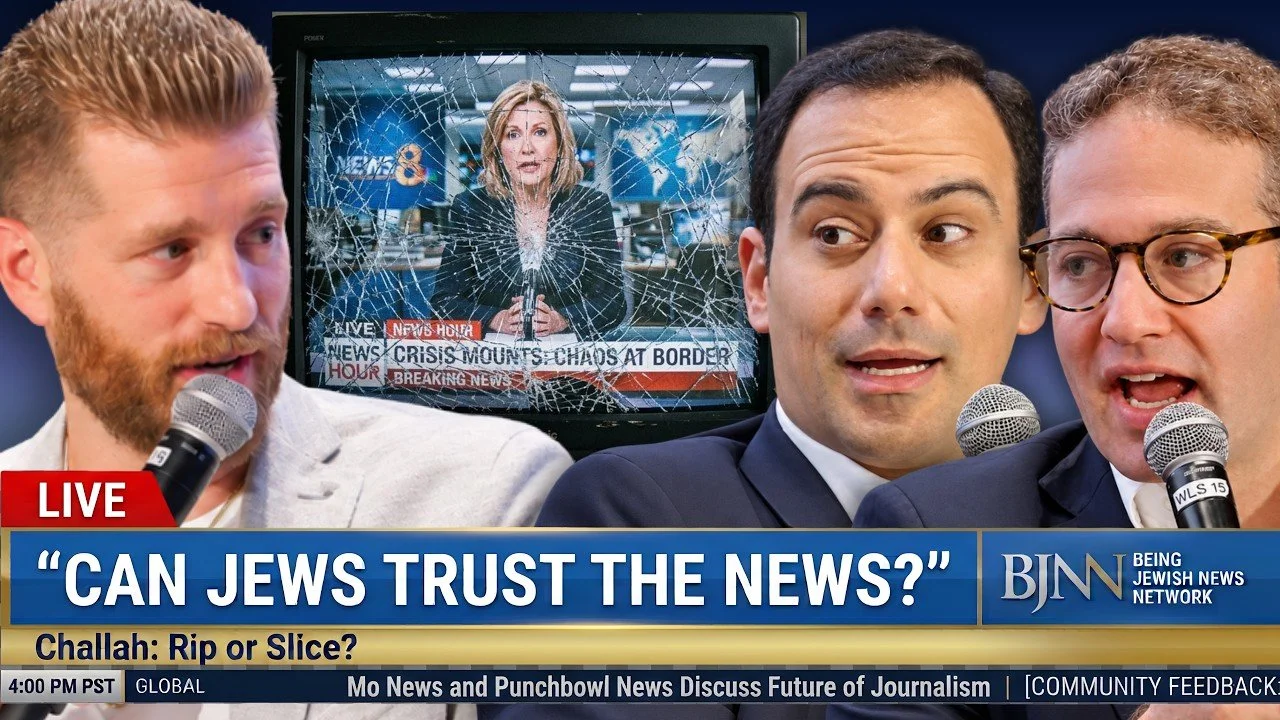
The TRUTH about Independent News, Jewish Journalists MoNews & Punchbowl News LIVE from Washington DC
This podcast is brought to you by Birthright Israel Foundation
They need your help to send the next generation of young Jews to Israel, so go ahead and donate at onetripchangeseverything
com
One of the foundational pillars of what it means to be Jewish is speaking our language, Hebrew, but wanting to speak Hebrew and actually doing it are two very different things
That's where today's sponsor, Citizen Cafe, comes in
They have completely reimagined learning Hebrew
No textbooks, no memorization, no waiting until you know enough grammar to start speaking
From day one, their teachers get you talking naturally and with confidence
At a time when most learning has been relegated to an app or an algorithm, Citizen Cafe has built something deeply human
Thousands of Hebrew learners connecting across more than 25 countries, sharing a single beautiful Jewish experience
Citizen Cafe, not just Hebrew you learn, Hebrew you actually live in
To schedule your free intro session, click the link in our show notes or go to citizencafetlv
com
From the Edlavitch DC JCC in Washington, DC, a Capital J program, this is Being Jewish Live
Hello
Hello, Washington, DC
Hello, hello, hello
All right
Thank you all
Thank you so much for being here
It is so great to see you
It is awesome that this show could happen
I, I am just thrilled to be here with all of you for a very special live episode of Being Jewish with Jonah Platt from the DC Edlavitch JCC
This is really exciting
Our top story tonight, independent news unfiltered
Joining me on stage in a moment are two successful news media entrepreneurs who both began their careers as undergrads and frat brothers at nearby George Washington University, where they both served as editors of legendary school paper, The Hatchet
One earned his stripes at Politico, the other at CBS News, and they've both built independent community-focused news platforms producing content across every imaginable digital platform
One's a New York Times bestselling author
The other is an Emmy winner
I mean, are you guys excited to see these two or what? They're both dads
They're both Jews, though one is Ashkenazi, the other Sephardic
I'll let you guess which one is which
Most importantly, one's married to his head of digital strategy, and the other's married to my cousin
Let's get 'em out here
Ladies and gentlemen, please welcome founder of Mo News, Moshe Wanunu, and co-founder of Punchbowl News, Jake Sherman
Perfect
Welcome
Welcome, gentlemen
Good intro
Yeah
You know, I take great pride in my introductions
That was amazing
Thank you
Thank you guys for being here
I've, I've been trying to put this show together for a while
I, once I realized these two were friends and had all these different things in common, I wanted to make a, a thing of it, and I appreciate you guys being here to, to do the thing
So you both left major news organizations to make startups and do your own thing
Wanna begin by asking both of you why? You know, what did you see that was missing from your life from the organizations you worked for and felt needed doing in the space? And, and Mo, we can start with you
I didn't leave CBS intending to do my own thing
Right
I sort of came into it by accident
So I, I'd spent about 15 years, I'd started my career
I… GW alum, I know there's some GW folks here, right? In the- We heard them earlier
Oh, loud
Okay, nice
Hometown crowd
Yes
And, uh, began my first job still a student at GW
I was interning at Fox News Channel over on Capitol Hill
Chris Wallace hires me as his researcher
Spent a number of years there
Went up to New York for Bloomberg Television
Spent a decade at CBS News, and then, uh, left right before the pandemic, and was sort of like figuring out what I wanna do next
I was like, "I gotta get out of the daily news thing
" It's like too much
It's a, it's a lifestyle, it's not a job, right? And then lo and behold, the pandemic happens, and my friends and family are like, "You're the news guy, what the hell is happening?" And so Twitter to me is a nasty place
I'm gonna post on Instagram to a few hundred friends and family
The few hundred friends and family become 1,000, become 10,000, become 50,000, to which my now wife, then girlfriend at the time, is like, "This is a thing that you need to figure out
" And so suddenly I'm like, "How do I create a business out of my Instagram following as a news person on Instagram?" And gradually we have figured it out over time
Uh, and so I sort of got into this whole independent media thing by accident
I never planned to go back
Really, never at all? It depends how many zeros they offer
Yeah
To sort of bring it back to the initial, and then we'll kick it to Jake, like w- what do you think it is that you're doing there that, like what service are you providing that I, I couldn't already find on Instagram? What's special and, and different that you were trying to fill differently? Think about it in a, a couple ways
I mean, first of all, now Instagram 2026 is very different from Instagram 2020
So I had the good fortune of doing something on Instagram at a time when it was still a place to share pictures of your pets and your brunch, right? Mm
And then 2020 was really the year Instagram got serious
As, you know, like the pandemic, BLM- Uh, through January 6th, Instagram suddenly becomes like, we talk about real issues on Instagram
But also just being a place where people already are and bringing them something that is useful
Mm
Right? Having a dialogue with your news person
We used to call ourselves like a news concierge
Like, "What do you wanna know about today? Let's dig into that for you
" That's something that I never did at CBS or Fox
And so being able to have a relationship with your reporter, uh, being able to have their questions answered, having that transparency, but also giving you a side of, like, my personal life, and so doing something that is very different from what you get on CNN
All right, Jake
You, you started, or at least certainly came up through Politico- Right and then went out and, and did your own thing with your partner, Anna Palmer
What, what did you see that you felt you could be doing differently or, or wasn't in the space that you wanted to attack? Yeah, well, I'll, I'll say I think large news companies are broken, uh, irreparably broken
Um, I think Moshe would agree with me on that
Um, I think they're too big to manage
I think they are unwieldy
I think that people have too much of everything, to be honest with you
And, um, we thought, I was at Politico for 11 years, 2009 to 2020
At the end of the pandemic, or really the end of 2020, which was not the end of the pandemic, I said to Anna, who was my writing partner for a long time, we wrote a book together, um, we wrote Politico Playbook together
I said, "Why don't we just do this on our own?" And what Moshe's saying is right
I mean, people want an intimacy with your audience
I think that's incredibly important in news, and actually you see a lot of the big networks and big news organizations trying to develop that
Um, so there were four of us
We started Punchbowl News, and we just said, "We're gonna do this on our own
We're gonna create content and news for Capitol Hill, and, uh, Capitol Hill only
And if Anna's mother in North Dakota," this is our saying, "wants to come along, then great
But we're never gonna write for Anna's mother in North Dakota
We're gonna write for, um, Capitol Hill
" W- we've grown considerably since then
We started with four, now we're 55, so it's a little bit a challenge to maintain that intimacy with your audience as we've grown and grown and grown
Uh- Was that focus on we're, we're speaking to Capitol Hill markedly different from what Politico was doing? Yes, I think so
Um, Politico got into a lot of different areas and kind of let their backyard become, uh, uh, unoccupied, and we marched right in and said, "We're here for you
" And listen, people see us every day on Capitol Hill
I'm in the Capitol every day
That's very important, I think, to our brand
It's owned by me and Anna, and, uh, a co- I mean, m- the vast majority of the company is
I, I think it's strange, but people identify with that
Is there anything you miss about being part of- No lar- nothing
Zero
Zero
Re- r- you don't miss anything? Zero, no
I think most people would agree that trust in news media right now is in the toilet
Um, why do you think your audiences trust you? And who do you trust? Jake, why don't you take it? So, uh, the answer's gonna be different for both of us, I think
I get some version of this question a lot, and I'll, I'll say this
I don't speak for the news media at large
I don't defend the news media at large
I think the news media has a lot of issues
My job every day is to get Republicans and Democrats to leak to me in equal measure
If I don't do that, I'm out of business
So I have no incentive to, to do, to put any spin on the ball
Like, I hate everybody the, the same
Um, no matter what, no matter what party you're in
I have to go talk to people every single day, to the Speaker of the House, to members of Congress
Every day I'm up there talking to people
It's my job to take that information, distill it, and kinda make heads or tails of it
I have to trust my instinct
I have to trust them
I have to, uh, you know, and I try to teach my reporters this, like, you're allowed to have opinions on a variety of matters
J- I mean, we all come from somewhere, right? Where I, I w- I'm a Jew from the East Coast, educated on the East Coast, right? Like, these are things that you can't take away from me
S- but it's your job to do your job even with those things in your, you know, with those things in your background, and do, do it fairly
You might have different opinions about abortion or, you know, whatever the issue is
So I tell our reporters that all the time, that they have to do their job fairly, no matter what they believe
I think that transparency and acknowledgement is super important
I, uh, did an appearance a few years ago when Don Lemon was still hosting the CNN Morning show, where, um, we sort of got into it 'cause he was like, "You know, it's all Trump's fault that people don't trust the media
" It's like, it's not all Trump's fault that people don't trust the media
You know, I think Jake makes a good point
Like, we all have our own biases
No one can claim to be unbiased
Some people like to be like, "I like Mo News, you're unbiased
" I'm like, "I'm not unbiased
" Like, I have my biases based on my, my gender, my religion, my, you know, origin, all of that
But how do I check those at the door and make sure that we're being, uh, as fair as possible? Now, as far as building trust with the audience, I think having a face and being an individual is super important
Talking to people conversationally, that's been one of our goals
You know, our tagline on our daily podcast is that, like, we read the news so you don't have to
We try to read between the lines so you don't have to
And so I'm literally going through all the news sources
I'm like, this is an interesting thing from Reuters
This is something you can trust from Axios
Literally, uh, this reporter has never traveled to the region before
So, you know, like, I, I try to use the way I read the media and bring that to people, and so I think that engenders some trust
I think also it's super important to acknowledge when we make mistakes
So I think that acknowledgement, like being out there with it, some media would be reluctant to do that
A lot of creators on Instagram, like, might delete something and you never hear about them
Like that, like, I will actually raise it to people who might not even been aware of the post, being like, "FYI
" You know, like, I think that's super important
I think having that conversation after the fact, like, "How do you think we covered this?" Um, putting up messages from people that I get that either are praise, but like, "Hey, I didn't like where you went with this," or, "I'm correcting you on this item or that item," I think that engenders trust
But, you know, when you look at it globally, it's super interesting
Pew or Gallup does this, uh, annual survey of, like, the most developed countries in the world and trust in media, and they put it out last week, and we've been in, like, dead last among 40 developed countries
Like literally compared to like England, Germany, France, et cetera
Dead last
Though weirdly enough, the number went slightly up last year, and it was like Republicans went from 8% trust in mass media back to 22%
They don't understand why, and I don't know how they figured that out
But still at 22%, that still means eight out of 10 Republicans don't trust the media, and liberals are down to like seven out of 10
Uh, but you look at like where we were, and the peak trust in mass media was 1974
Watergate, right? Right
The Washington Post
Woodward and Bernstein
That was peak trust, and it's been like that for 50 years
So there are a lot of factors you can look at when it comes to why and how we got here
Um, and you know, I think one of the big questions we have, and I think would, you know, to be written is, like will AI help us with this or make things even worse? Well, we can get there maybe if we have time, but what I wanna jump on is that talking about, uh, sort of Jake, what you were saying
I- you know, you train your reporters to be fair
Does fair mean neutral in terms of their, who they bring as a human being? Or is there a different definition that you're using there? It's a really good question
Um, most of the time it means neutral
I'll give you an example
I was traveling last week with, um, with Jim Jordan, the House Rep- the Republican congressman from Ohio, in, uh, Georgia
And a guy introduced him at a fundraiser and said something along the lines of, "You know, we can trust Jim Jordan
He stood up and voted against certifying the election in 2020, and he's been proven right
" And I was like I st- I was like… I was texting my colleagues
I was like, "I'm not sure how he's been proven right
" But like January 6th was the third day of Punchbowl News's existence
Wow
Um, there's no need to be neutral on that, right? W- there's no need to be neutral
It was a group of people who were pushed by Donald Trump to steal the election, right? Like that's just what it was
We don't give much credence to the other side that says, "No, it was just like a random tourist event
" Like that's not something we're interested in being neutral about
The truth is somewhere in between, right? You're, you know, there's waste, fraud, and abuse in government
I think we could all concede that
Republicans say it's X, Democrats say it's Y
There's a lot more neutrality that's needed and, and, and I would say nuance that's needed in that discussion
You know, the show is called Being Jewish, so let's, let's go down this path a little bit
We're pro- we're pros in that, Moshe
Yeah
Do Jewish journalists have a responsibility to cover Jewish stories? You know, it's so interesting 'cause having been in newsrooms, uh, by the way, you know, there's newsrooms with many Jews in them according to conspiracy theories and reality
We don't have a conference line or an email
That actually would be super useful if we could all be in touch
Right? Like, don't you wish we actually were all in touch? What they think, what they think we do, we actually, we've never actually come up with
It's so interesting because oftentimes you will see members of other minority groups cover issues that are sensitive to their world
But in many cases, I have seen, like, Jews being like, "Oh, I don't wanna touch that one
I don't wanna touch Israel
" One of the challenges we have, and we can get into this, right, whether it's coverage of Israel or other topics, is that, like We still are like 1% of America, and despite, you know, various assumptions, we're still minorities in most newsrooms
I think we're 2 or 3%
Oh, we're 2%, is it? Uh, yeah, something like that
And, and, and one of the issues we have is that, you know, I'm often… I remember I grew up in this little place called Morton Grove, Illinois
And until I moved out to the more Jewish suburbs of Chicago, I was like the only Jew in class
So I was like explaining to the other kids, like what Hanukkah was in second grade and, and whatever
And in some cases, like fast-forward many years to the CBS newsroom, and I'm explaining that a conservative Jew isn't a conservative Jew politically
I have to worry about that every time I say it, like in audio
Conservative Jew, right? Conservative Jew
Conservative, like what are they gonna think? So, uh, they vote Republican
No, they don't vote Republican
It's a different type of conservative, folks
There is a learning curve, and we, like, you know, depending on your Jewish upbringing and your background, uh, I mean, certainly some Jews who don't know that much about Judaism and whatever, like some of us may know a lot, and we can contribute a lot
And so, like I'm the first to raise my hand to go to Pittsburgh when the shooting happens and, you know, like stories like that
'Cause like I can explain with nuance and, you know, uh, my former colleague and friend, Bianna Golodryga, did an incredible job there
And so I think, you know, we do have a responsibility in newsrooms to raise our hands and say, "You know, I know stuff about that
Uh, I can guard against biases
" And, you know, we don't ask the Latino reporter, like if they, like they feel okay covering the border, right? Like you go, and you have expertise on that
And the same thing, you know, around any issue, whether your gender or your demographic
But then, y- I, I do feel like there are times where it's like, well, can the Jew cover Israel fairly? Yeah
Uh, is a question that's asked that I feel like is, is not fairly asked of, of other groups
I had the position for the beginning of my career, um, that I was gonna just stay away from covering domestic politics, American domestic politics, uh, around Israel
Mostly just because I just didn't want the headache of dealing with it, and I didn't wanna have to deal with the, um, you know, the criticism, the hatred, and God, uh, it's gotten much worse now
As a Jewish newsman, you didn't want to? Yes
Yeah
Yeah
Yeah
Um, now I, I don't have that problem
I, I interviewed Netanyahu a couple years ago when I was in Israel
I've traveled with, uh, two Speakers of the House to Israel before, so I've kind of, uh, let that go
Israel was truly a bipartisan issue in 2009, 2010
And now, I mean, I've, I, I've, I've told this to people in the Israeli government, I mean, they would be lucky to get a majority no matter who's in charge, uh, in a, on a lot of, uh, uh, in a lot of instances
So it's a little bit different 'cause we're not out there covering, you know, um, synagogue shootings or things like that
It's a little bit different when you're at a big newsroom
Um, but this issue is difficult for anybody to avoid now
How proactive are you each in trying to… And I don't mean manipulate, but I mean like shape narrative in terms of choosing like what story or angle to spotlight when it comes to- Israeli and, and Jewish issues
When it comes to, you know, covering anything, I think I take the same perspective
I'm trying to not necessarily kind of oversimplify or dumb things down, but, like, try to make things approachable and understandable and bring context
So when it comes to whatever topic I'm covering, whether it has to do with Jews in Israel or not, it's like, okay, what are the top lines you need to understand? What is the historical context you need to understand? But when it comes to topics around Jews in Israel, it's like happen to, you know, know a lot about the matter
That's where I feel like I can provide a level of depth and context going back decades or millennia, um, that will help, uh, people understand things
You know, I think part of the understanding or part of the difficulty people have when it comes to any, you know, news story around, you know, Jews, especially right now, right? Which is how can a group of people who appear to be so powerful also be vulnerable, right? I think unless you're a Jew, you don't understand that, right? And that's where I try to provide that extra insight and perspective, um, around those topics, given my personal knowledge of those matters, because the majority of my audience is not Jewish
Uh, in some cases, I get notes on Instagram being like, "You're the only Jew I know
" And they don't even know you
And they don't know about me
They think it's this personal thing
About, about 75% of the world will never meet a Jew, has never met a Jew
I mean, it- Joe Rogan, biggest podcast in the world, I think he said he thought there were 100 million Jews
Like pe- pe- s- uh, people, the Jewish community, and I have found this, you know, I speak to Jewish communities all over the country, vastly overestimates what anybody knows about us at all
It's mostly nothing
Yeah
The more we can demystify things, the more I can provide perspective around things, and I'm not even trying to shape the narrative
I'm just trying to give, uh, insight in a world that doesn't understand the first thing about it
Well, so let me give you an example like- I, I hate to bring him up 'cause he sucks, but like the Macklemore thing, for instance, right? Like, there's different ways that one could frame that story and explain it
Some, you know, so like how would you approach something like that in terms of what do I want my audience to actually glean and, and understand about this? Well, I mean, once you figure out the facts at hand, I think it's important for people to understand that, like, just as much as Macklemore has a right to say his piece, Robert Kraft has a right to say his piece, right? You know? He owns the stadium- He- … so he really has a right to say his piece
Yeah
And then you saw Zach Bryan over the weekend, like, make his statement- Yeah … with his Free Palestine shirt at Gillette Stadium
But then again, it's not, you know, it's apples and oranges in terms of Zach Bryan versus Macklemore and, and how they approach the shows, right? And so I think that, uh, you know, w- when you approach that story, once you get your basic facts, I think, I, you know, explaining… It's not even a Jewish thing there
It's, like, explaining how free speech works
That, like, it's the government's role when it comes to free speech, but, like, Kraft can do what he wants with the stadium
Macklemore can do what do… And by the way, it's crushing for Macklemore
Look at him
He's got- Right … his sold-out tour in Europe now, and, you know, he's doing his own thing
Uh, and you know, I think, uh, trying to explain… You know, I, we find ourselves a lot of times as Jews right now, like, being told how we should feel about our own faith and what our views should be, right? Like, you shouldn't be offended by that
Who are you to tell me, you know, w- how, how I feel about that? Yeah
Uh, we're sort of unique in that way, in an unfortunate way
And so, you know, I think at the end of the day, in this very bifurcated media world that we live in, like, for my audience, I will do the best job of trying to tell that story, and again, try to keep it as a conversation, which is like, what do you wanna know? What are the questions you have about it? Jake, I wanna go back to talking about The Hill and, and the attitudes that have been changing
I think something, I mean, I, I can speak to this personally, what is frustrating to me is looking at politicians and other news media who we expect to sort of be the most informed and the most on top of this stuff, oftentimes, especially on this specific issue, you know, literally not dealing with Hard facts and reality, and picking up the same sort of narratives that, you know, your random friend is picking up off of social media
H- how much do you see that in your interactions? How much of that is genuine, like they are picking up talking points off the internet, and how much is appealing to voters? Let me, let me demystify this a little bit
Most members of Congress know very little
And I'm not talking about Israel, I'm not talking about- In general
Yeah
There's, there's only, there's so many things to know, they can only know so much, and there's- Well, but you're- Not a lot of things going on … giving them a little bit too much credit
I mean, I've had a lot of members of Congress, younger members of Congress say to me, "Yeah, I read this on Instagram," or, "I saw someone riffing about this on…" Or, "I looked it up on ChatGPT
" Or there was an instance a couple months ago on a very technical matter about the House floor about a rule that a member of Congress said to me, "But I'm telling you, I saw this on Chat- " I'm like, "I understand
You're wrong, and I, I've seen…" You know, so, you know, and remember, even the best members of Congress have to know a little bit about a thousand different things- Right at all times, you know what I mean? I see that an alarming amount, and these are people that really should have… I mean, they could get any expert to talk to them about anything
They have an entire think tank that exists, the, uh, CRS, the Congressional Research Service, to provide them, like, hard facts on any topic on planet Earth, like at, within 24 hours
It- it's scary
I mean, it's scary that these are the people that are running our, our country
I mean, you saw our, um, some of my friends at Axios last week or two weeks ago, I'm sure you saw this, Josh
They went around and asked some of the older members of Congress, and there are a lot of them, um, uh, h- have you ever used any large language model, ChatGPT, uh, Claude, Grok, anything? And they're just like, "No
" Wow
You know? Like, and they're… Uh, we saw this with Facebook when, in the early days of social media, like they were trying to regulate social media or hold hearings on social media, and none of them knew anything about it
So on the topic of Israel specifically, there are probably, I don't know, I'm gonna make this number up, but this is probably… You know, there's several dozen who are just very steeped in the issue, who are traveling to the region a lot- Right … who are going there, who are on the committees of jurisdiction, who talk to experts
The rest of them are just kinda going with the wind and literally going off of what people see on, on Instagram and things like that
Which by the way, makes kind of the podcast ecosystem even more dangerous in my estimation
Say more on that
Well, just because there are podcasters who are, um, working off of a different set, a different set of facts perhaps, um, than, than others
And Like, like the one who was defending Hitler in World War II- Right this weekend? Right
I just was watching that in the, uh, in the car on the way over
Is- Um, uh, it was- Tucker Carlson
Right
Yeah
Yeah
So, it's a little, a little bit of a- I'll let, I'll let you get the death threat
Yeah
It's a little bit of a, of a null curriculum thing, right? It's like they're not getting it from the CRS, so they're gonna, that means go learn it somewhere else
So I'm gonna learn it from this podcaster
Right
And they're like, "Well, he has millions of view…" You know, some people say- Right … "Well, he has millions of views
" Like, I don't know, so great
That must, that must be legitimate
So does this stupid, like, dog dancing video, you know? Right
Exactly
Are you feeling that same sort of vibe shift on, on Israel within your industry, within your, your, your colleagues in journalism? I'll tell you that when I was there running the evening news at CBS, and I had, like, the London Bureau and we were covering whatever it was, the, um, the move of the, uh, embassy, the US Embassy to Jerusalem
And we had a interview with Bibi and some other stuff
Like, there was already built in, like a decade ago, among, like, our London Bureau, like a, uh, you know, uh, a dislike for Bibi, the Israeli government, skepticism of anything Israel says
Um, and you know, I'd even get like snar- like snide remarks when, like, we did a story
And, like, at Evening News, which I don't… Does anybody here still watch a 6:30 new- broadcast on one of the three channels? We have a couple
Yeah
Oh, yeah, we got some hands
We got a few hands
Yeah
We got a few hands
The median age of a, a network news viewer is 69 these days, everybody
Half is over the 69, half is younger
And, uh, we're doing a story, we got, it's 30 minutes, once you take out commercials, it's 20 minutes
Every story can go about, if you're generous, if I'm very generous, I'm giving you two minutes for the story to tell you the Middle East
Typically, I'm giving you 90 seconds
Sometimes it's a minute 15, keep it tight
You know, I was like, "Okay, let's, you know, let's, let's give an extra 10 seconds to Netanyahu's explanation on whatever
" They're like, "Oh, you're giving your buddy Netanyahu more time
" And I'm like, "My buddy? Guys, like, the piece is, like, the entire thing is Gaza
The Israelis have, like, 10 seconds at the end to say their piece
I'm giving them 20 seconds
" But, like, I already hear- you know, like, that was already there
Yeah, yeah
Now, the interesting trend line I saw, and that can speak to what you see a little bit, is generational among journalists
I think- A newer group coming in, and you, you know, you're a Columbia alum, and maybe can speak to this more, but, like, increasingly I'm seeing, especially sort of Gen Z journalists coming in, this feeling, and I hear it from journalism professors at some of these major schools, that, uh, this idea that, like, you know, Jake tries to train his journalists and I try to train my journalists on, which is, like, I don't care about your opinion
Your p- your goal is to just get to the facts
Doesn't ring true for a certain group of younger generational journalists who feel that, "No, I have a certain ideology, I have certain opinions, and we're gonna get those in there
" It's like there are organizations you can work at that you can push that, but that's not what we do here, and certainly confronted that
And so what I saw, especially around 2016, 2017, is a younger group of journalists starting to come out of school wi- like, being like, "I believe this
" Like, we need to, like… Whether it's a domestic issue, whether it's a foreign issue
And that is a bit of the DNA that I think you see evolving in some of these organizations as a younger group comes in with a different, different goals
Do you feel like that's, like, that speaks to the sort of creator economy that, that we're seeing where people, it's like personality-driven content? Yeah, I, I certainly do
I'm sure you do as well
Um, the bar to have a voice is incredibly low- Right … which is incredibly good, but also really dangerous
Yeah
And I think that just allows people to, to pick up bad information and amplify it and, and run with it
Um, I, I think it's a huge, I think it's a huge problem
But I could tell you what, I mean, wh- when we hire people, um, we do look at their social media, um, output over some period of time
I mean, I can't say we spend, you know, weeks on it and i- but we do look at that, um, to make sure that they're not somebody that's going to… Again, my name's on the door, so I… And they have to, they're representing me and what my theory of the case of, of the company is
I wanna make sure that they are not, you know, spouting off on just every topic under the sun or any topic for that matter
The incentive structure today is not, you're not incentivized to provide all perspectives
You're not incentivized to just, like, go with the facts
You're not marked down when you screw something up, right? Right
Like, if you say something incendiary, that might get you 100,000 followers
Yep
Right? You, like, go with, like, a completely incorrect set of facts, that might gain you a huge following
You don't need to correct yourself
There's no standards for any of this stuff unless somebody's suing you for defamation
We oftentimes hurt our own growth because I'm like, "I'm not gonna take the 12-second selective bite of Trump or a Democrat
" Like, I'm gonna give you the whole minute so you see what was happening in the lead up and out of that
That hurts me in terms of shareability
Mm
Right? Because if I have one opinion, I don't wanna hear the other opinion in the bite, I just wanna hear my side
I want, like, something that's bad for my- the other side and good for my team
So the entire way we've built the ecosystem incentivizes, in some ways, bad information
How lucky are we? So let's, let's go back again to the- sentiment within the government, in politics, Capitol Hill, but also more broadly
Where are you the most worried as a Jewish person in terms of what you're seeing on the left and the right? Because there are both, there are splits on both sides domestically and in terms of, of relationship to Israel
Who worries you more? What worries me more is the, um, the people who are not willing to call it out, to be honest with you
Um, I was at a dinner the other night, a Chabad dinner, um, at which Ted Cruz was being honored
Um, and he gave a speech, really went hard at Tucker Carlson, which is not easy in today's Republican Party
But I will say, I mean… And, and by the way, let's, let's just take a step back here
Every politician has, like, three goals, right? Get power, keep power, increase power
That's it
Those- That's the modicum
That's the, kinda the, the checklist
So every decision that a politician makes is to service one of those or all three of those goals
So he has his own incentive
I'm not saying he doesn't believe that Tucker Carlson is scum
Um, he d- clearly does, but that explains why some other people are not willing to call him out
I mean, when you have people, uh, in the, um, the podcast sphere who are on both sides, I don't know if either side alarms me more, but we've just seen both the leadership of both parties, um, have just not been willing to call out… I mean, you s- We saw the vice president the other day who said, "I don't agree with everything Tucker Carlson says, but…" I mean, right? Like- Yeah That's, that's, that's alarming
That is really alarming to me
Definitely
Yeah, I mean, it's hard to rank
Like, uh, on this day I am more worried about the far left than the far right on this stuff
I mean, it's been fascinating to watch sort of, you know, there's this old theory of politics, the horseshoe theory of politics, that eventually, like, you go extreme on, uh, enough on one side, you're actually closer to the extreme on the other side
And, you know, there are a handful of things that they tend to agree on these days, where you have this, like, bizarre alliance of like, or praise of, like, Ilhan Omar and Marjorie Taylor Greene
And, you know, it's, it's fascinating to see this play out
What do they agree on? Israel and the Jews
And so, you know, how this all plays out as we have a rise of populism, like, there's currents happening and that we just need to watch politically, right? And oftentimes, you know, you look historically, and we, for obvious reasons, as Jews, need to have a very, uh, deep understanding of our history because as, uh, Twain says, uh, it doesn't repeat itself, but it rhymes, right? Yeah
It's not gonna happen the same way, but we see the same trend line- Yeah … around the world going back several millennia
And so what do you have right now? We have record high income inequality
That's never worked out well for societies and/or the Jews
Um, so you have this rise of populism
You need people to blame for that
Then separately, um, as you, you know, look at where we are, like, you know, we haven't invested in infrastructure in this country, so it's like, well, what is our, you know, top, the country that gets the most amount of money, right? It's only 3 billion
It's technically a gift card
They buy US weapons
It's actually a jobs program across the country, but that's all irrelevant, right? So you start to see that, and you see, and you start to see the, the, you know, the political stump speeches of, you know, various Democrats, uh, including in Michigan and other places, uh, saying things like, "Well, if, you know, it wasn't for giving money to that country, you would have more healthcare or your schools would be better," et cetera
Yeah
You're seeing, like, a weaving of that narrative together
So, you know- Which by the way, is not true
Correct
Yeah, of course not
It, it is not true, uh, uh, that, like, a $3 billion, you know- Subsidy … subsidy that ends up getting spent at a weapons factory in Ohio is the reason why people in Michigan, like, you know, don't have enough money for a school in Detroit, right? Like, certifiably not true, but an easy thing to do
You don't need to fact-check it
As Jake just said, like, you got members of Congress going to ChatGPT
You know, like, the average person doesn't have time
They're just like, "Oh, that seems… That's a simple explanation for that
That's convenient
" Okay
And so, you know, it, it, it is, right, to be here concerning, the, to see this play out versus where we were even three years ago, six years ago, 10 years ago, et cetera
Who knew that, like, the '90s were gonna be, like, our peak period of time, right? Right
And that, like, I, the, the, the thing I took for granted, being able to go to temple or Jewish events and not have to think about security as a child or as a young person is not something my children now go through, right? Um, that's the first question we ask going, you know, to preschools in New York City, et cetera, is like, how much security are we talking about? What are the scenarios? What are… And, and that's the world we unfortunately live in
Mo, what are you, what are you learning about- sentiment out there in the world regarding Jews and Israel from social media, where you are so focused and have such an audience
You know, I think what gets lost in the shuffle, and what I find in my communities, is like there's a whole big group in the middle that has no i- like, what the hell is going on? Like, I wanna know more, right? Like, is it okay for me to criticize the Israeli government? I don't wanna be an antisemite, right? Yeah
Yeah
And there's some basic questions that I think we take for granted that like there's a lot of people who are like, "I wanna know more
I am genuinely curious, um, about this sort of thing
" Even in this world of like, you know, all the heat and the stuff that rises to the top when you go to your social media accounts, that like there's a lot of people just like y- living their life, right? Like- Yeah … it turns out that there's eight and a half billion people in the world, and there's a country with like 10 million people in it that gets like so much coverage, and people are just trying to live their life
They're told they have to have a p- opinion on stuff
Some of them don't
Some of them just say whatever
But like they generally wanna learn
There are a lot of people who wanna learn, who wanna know more about the issue, about Jews, et cetera
And so I think the more we can, as, like, experts, make ourselves experts on these issues, and approach people… not approach people, but be available to people as resources for information
Also, approach things from a place of curiosity, that I think sometimes knee-jerk, someone will say something they might have heard somewhere, and you're like, "Oh my God, you're an antis-", I just heard that s- like, like where did you hear that? Why do you think that? Like, I think, uh, there are times when for understandably, we get very defensive on things, when like if you approach sometimes, not always, some people with a place of curiosity, you might end up getting to a good place
I will say this, though, and this is what one thing that concerns me that I've been thinking about
Um, the, the, the- We're about to head into a midterm election
And actually, when, when this airs, it will be on election day
Wow
Yes
So tonight, people will be going to their ballot box
Um, and we have a, a really shaky economy that is underpinned by a whole host of factors that, um, are probably too complex or will take too long to talk about now, and we don't have to get into a discussion about that
But on top of that, we've been in now an eight or so month conflict with Iran that, um, Israel has been involved in, and there are, on top of the, just all of the antisemitism out there in the world, people are gonna be like, uh, the economy is crap because Trump bombed Iran at the behest of Israel
And that's scary to me
They're already saying that
Yeah
And, like, Trump is owned by Bibi, and he did this because of the Jews
And I mean, you hear this a lot
I mean, I, it's, it is true
Um, and it's, it's upsetting and scary
In the summer of 2008, I went on my Birthright trip to Israel, a free 10-day excursion to the Holy Land with a bunch of excited fellow college kids
You think it's gonna be a standard vacation, soaking in the Dead Sea, parties in Tel Aviv, and it was that
But what I didn't realize was how on top of having a great time, it could actually change your life
There's an indescribable comfort of being in a place that's for us, our Jewish family from all over the world, and the magic of seeing thriving Jews living peacefully alongside other Israelis of all races and religions
There's the wonder of the land itself, the Negev, the Galilee, the old city, and the clubs of Tel Aviv, the Western Wall and Masada, the tunnels and the kibbutzim
Returning to America, it's staggering to realize how strong your bond to Israel suddenly is
One trip really does change everything
But these free trips can only stay free with your help
If my story speaks to you at all, please donate to Birthright Israel Foundation, because for the next generation, a trip to Israel means more than ever before
So please, head to onetrippchangeseverything
com and make a donation today
Now, back to the show
Let's look at the future a little bit
Um, there's so many trends in digital news right now
I mean, it's just changing all the time
You have the scoop economy on social media
You have the deep dives and the podcasts
You got newsletters
Where do you see this industry heading? Like, what do you think are the trends developing where this can go in the next three, five years? So, you know, you watch the larger trend lines and, and you, you can go back a while and you see s- you know, over time like the bundling and the unbundling, and the bundling and the unbundling
What do you mean? Meaning like now we're in an unbundling phase where every single reporter's starting their own Substack and their own podcast and their own social page and their own YouTube page and everyone's going everywhere
Uh, some are being able to build real businesses that can pay the bills
Many cannot
Rebundling is like, okay, how do I put a group of these creators together under various umbrellas? And you see various examples of that
So, you know, I do think you live in a world now where you've seen, I mean, incredible success from Punchbowl and, and a whole bunch of digi- digital startups that are like, in some cases they'll pick a niche, a, a certain category, or they'll pick a certain platform and do very well on it
Um, and you as a consumer now you have to go to a lot of places to get all your information 'cause you have the podcast that you like and the Substack that you like and the TikTok page that you follow for this and the YouTube page that you follow for that, uh, which is at times incredibly inconvenient and at times getting expensive, right? With the streamers and- So many different subscriptions, yeah
So- This is how I consume news, from 10 different places
Right
So then the rebundling will happen, right? Who's gonna come and like bring all these people under, under one entity? You're not building ratings at The Today Show anymore
You're not building ratings on CNN anymore
You might get lucky with a big story, but over time that audience is going to other places
So these big companies, whether it's Comcast or Disney or Skydance, which is putting together Paramount and, and Warner Brothers, what are they doing and are- am I gonna buy Punchbowl? Am I gonna bring in Mo News? Am I gonna bring in v- you know, uh, Being Jewish like into some sort of larger new media space 'cause they have a connection with the audience? So hence the rebundling will happen over time here
The problem is these large n- news companies are not incentivized to build these lifeboats to a certain degree because they should be incentivized because they will save them
But like, if you look at any big, most of the big cable networks, they're like, "Well, we're not gonna do this digital thing
It's gonna cannibalize our ad revenue on linear, which is still profitable
" I think that news co- news outlets on television, or forget television, should just unbutton a little bit and find themselves just a like f- meet your audience where they are
I don't think they just want someone at a desk reading their, you know, reading news to them
That's my view
I mean, even what you do is like you're not in some studio like with a suit and tie and like a ton of makeup on your face, you know? Like it just, it just seems unnatural to me
Um, I do think the rebundling is going to happen
I think there's a huge risk for the people who are then bundled, that they become part of a large corporate overlord that takes away some of that special sauce that they had
Um, and it'll be interesting to see if people can keep that
And, and I'm super interested to see how consumers approach the world of like LLMs and ChatGPT and Claude and like, "Okay Claude, give me my morning news briefing
Here are the sources that I like
Put together the summary for me
" And then how does, how these businesses stay afloat
I mean, for many websites for years you lived off of Google traffic
That's collapsing right now
So if the story of the media was like they initially lost a lot of business when like Craigslist comes around, right? When Facebook comes around
Like you look at the digital evolution, and they haven't quite replaced that revenue, or they've been making good
Now Google's gonna collapse because when you search something on Google now, you're not going to the link, you know, for whatever news source, you're getting the AI answer- Yeah … that they've pulled
So how does that reality work, and then how does customization work when, uh, you know, we already live in a world where like we have, you know, different realities, and now everyone, like you and you and you and you guys are each gonna have your own news diet
"Oh, I didn't hear that," or, "This is, this is what ChatGPT, this is the daily summary they gave me today
" And we're still at very much the beginning of that
Say what you want about the newspaper, but it was great for that
For the op- for, for… You come across a story that you'd never seen before, right? You'd be turning the page and be like, "Oh, that's interesting
I didn't know there was this thing happening in Serbia
I'm kind of interested in that
" Yeah
The, uh, i- in terms of news discovery now, like you- you're only getting what you, exactly what… Like there's, uh, the greatness to that is you only get what you want, right? Right
The bad is like you don't read this story about women's volleyball in the newspaper today 'cause like you get The Athletic, and it's like here are the four teams that I like or the four sports that I like or whatever, and I'm only gonna get news about that
I'm not gonna discover this incredible profile about this player on a team that I've never seen before, you know? What about in terms of your individual companies? Like what are the things that you have felt, "Oh, I got to expand into this area or that area because it's the trend," and, and sort of what of those have you seen, "Oh wow, this is actually really something I enjoy and something the audience seems to enjoy"? And, and what do you see sort of developing that maybe we're at the beginning of now that you're, you know, you didn't think you would be doing but maybe three years from now is something that's a, a core part of your business? I actually have been thinking a lot about how AI is gonna impact all of us
That's where I want it to go anyways
Yes
We don't use AI for anything journalistic, you know, anything content creating, um, at all
No headlines, no editing
We still have people doing these things
I think there's gonna be a massive premium on really good reporters, um, like 1000x on really good reporters
Until an, uh, LLM could go into the capital and talk to Mike Johnson every day like I do, I think it's gonna be very difficult for an LLM to replace me
Yes, I do think AI's gonna be terribly disruptive
I do think it's gonna be a huge thing for, you know, fire on Main Street, you know, two people died, this guy arrested for arson
Like those kinds of stories AI will be great at creating
Stock market up, here are the five winners, here are the five losers
Great for AI
Um, explaining Mike Johnson's, uh, incentives when he's trying to keep the government open and going to talk to members of Congress about how they feel about Mike Johnson, not a great fit for AI
What about using AI in terms of fact-checking and real or not real? I mean, I see stuff on AI that's demonstrably false, on LLMs that are demonstrably false
And, and remember, a lot of people in our business, um, other media companies have licensed their content to a variety of AI companies
So that's the facts that it's based on
So, you know, those are not imperfect
Uh, I don't know if you have thoughts about that
Yeah
We try to use, uh, AI, or I try to use AI sometimes as a bias check on myself So we'll have, like, AI, can you read this caption from the perspective of Caroline Leavitt at the White House or as a Democrat? Like, what, uh, quibbles would you have with the story or the perspective or the emphasis? But when you look at the business the way it is, is we're talking about larger things, you know, the days of having hundreds of reporters and copy editors, like, those days are going by the wayside
And I would just say one more thing, Jonah, on this, which is the media business tried to outrun the internet, and was unsuccessful, like, in the early 2000s
And, you know, people paid, you know, people paid the price with their jobs, and people were fired, and newspapers closed because they didn't monetize their copy when they could on the internet, and they gave it away for free, and then they were like, "Actually, this is not free anymore
" We can't outrun AI
So, like, AI will d- definitely replace the function of some journalists
I, I just think it's not as dire as people think
So as I mentioned earlier, this episode will be coming out on midterm election day here in the States
I would love to hear what you think, uh, or how, how large of a role you think the, the Israel issue is going to play in the way that people are voting, and then I'm gonna put you on the spot and ask you guys to make predictions
Well, look at the time
Thank you
No
I think it makes a difference in some, in some districts
I don't think it's everywhere
I don't think any, um, election is gonna turn on, on Israel
I don't
Even, like, the Michigan Senate race? I, I don't think so
No
I think, I think Democrats have massive structural advantages in, in Michigan, and we've seen that time and time again as Republicans have poured unending sums of money into that
Um, listen, if you're… I don't bet on politics
Punchbowl News does not allow reporters to bet or wager on Kalshi or any other platform on politics
Um, listen, you have to bet today that Democrats, absent some insane intervening event between, you know, now and election day, or tonight, as it were, um, Democrats are likely to take the House
Based on decades of history, the party in power always loses seats in the House except for two instances, 1998 and 2002, Clinton's impeachment and right after 9/11
The Senate's much more complicated, but if you're a Senate Democrat today, I mean, Chuck Schumer told us a- a year ago he, there was a path for them to win the Senate, and we all thought he was crazy
So I mean, Democrats have a good chance
I mean, they could win Iowa, Alaska, Texas, Ohio
They're gonna win North Carolina
They're gonna win Georgia
So- The president's victory in 2024 was predicated on, like, three big things, right? I'm gonna make things cheaper
I'm gonna take care of the immigration issue
No stupid wars, right? So there are people who are now looking at that a year and a half later and saying, "Things are more expensive
Um, I was, m- maybe I was with you on certain immigration aspects, but ICE went too far
" Right? Even hear that from some Republicans
A lot of Republicans say that
Right
Yep
And then stupid war, right, as far as, uh, majority of Americans are concerned
And so by the way, a war that has then contributed to issue one, which is affordability
Right
So when you look at, like you ask Americans, like top issues, certainly for a certain portion of Americans, right, I don't even know what the latest numbers are, like, you know, Israel comes up somewhere
Uh, and Israel's certainly a background to that
But as far as like, what am I voting on? I'm voting on like, how much did it cost me to fill my gas? What is my winter heating temperature gonna be on? Um, how much are things at the grocery store right now, right? Like, those are the core issues
And then even like other issues have risen to the top, right? Like this summer we were worried about AI taking our jobs
Starting around the first week of September, worried about AI killing us, right? That was like a thing in September
Now we're worried about data centers
Data centers, et cetera
Yeah
I mean, these are all issues
Like look at the political ads playing out in your states, and that gives you a good gauge for what is the most important issue
There are very few playing out on, you know, Middle East
Which I hope will give some people comfort to, to realize that most people aren't, ain't thinking about us
They're thinking about their, their gas bill
Yeah
We're, we're thinking about us- Right … because we have to
Of course
But most people aren't
Yeah
In a good way
Um, all right fellas, we're gonna wrap things up here as I like to do with a little lightning round
Jake, favorite Jewish holiday? Uh, Passover That's said with almost a question mark again
Yeah, I had to think for a second
Probably Rosh Hashanah, actually
Okay
Wh- why the switch and why Rosh Hashanah? Because I actually realized I really hate matzah and… You're just figuring that out now? Well, I just- Yeah
Um, and, uh, I don't know, I like the renewal
I like the sense of renewal
Beautiful
Mo? I, I mean, I don't mean to be boring here, but I'm also gonna go with Rosh Hashanah as well
It's a great holiday
We have, uh, if you ever had the Sephardic, the Moroccan traditions, we also have our own version of, like, the Seder plate, um, the Sephards do for Rosh Hashanah, and various blessings we do over, like, pomegranate seeds and sesame seeds, et cetera
So, um, always enjoy that aspect of the holiday
What about Mimouna? Mimouna
Mimouna
Mimouna
Uh, so Mimouna takes us back to Passover, and that would actually be, uh, the best part of Passover, the end of Passover
The Moroccans have a tradition called Mimouna, which is, like, a huge party we throw at the end of Passover
Where you eat mufleta
Among many things
Amo- among many things
Yes
Uh, if you have not been to a Mimouna party, I highly suggest you try to find one
You're invited to Moshe's house
Yeah
Yeah, I, I, have to, I have to inform my parents that, uh- They'll take you on a tour of- For a hundred and… Yeah, they now live in Fort Worth, Texas
Everybody come for the, uh, the holiday in April
Yeah
Jake, DC's best bagel
You know, we just had Call Your Mother this morning
Um, I'm not a hater on DC bagels
Like, I think Bethesda Bagels is fine
I think Call Your Mother's fine
So, like, I'm very happy with the DC bagel situation
I, I, that's an unpopular view
Mo, New York City
I'm going with my convenience option
We moved to the Upper East Side recently, and so I'm a Tal Bagels guy right now
I don't know that one
No
I- What's your favorite New York bagel? I don't know, I don't really eat carbs Or is this- Stand like a true LA guy
I don't know
Right? Although LA is now, we're exploding with amazing bagels
We now have Papa bagels, Pops bagels, Courage bagels, Layla bagels
They have a Papa bagel here in DC now
Yeah, we have, like, really, really good- A Chicken Guy … bagels
All different styles
Yeah, Connecticut has it too
Yeah
Jake, DC's best deli? God, we have no delis
I hate to tell you
Oh, bummer
Mo, New York best deli
What's your pick? Had a cold last week and got Second Avenue delivery
That's a good one
Carnegie just reopened in Midtown
I'm not a huge Carnegie
I like Katz's
Oh, Katz's, I mean- I'm a, I'm a Katz pastrami dude
Yeah
If you could interview any Jewish person alive, who would it be? That's a good question
Any Jewish person alive right now? There's only, like, 16 million to pick from, so
Yeah
I want to… Well, you know what? I want to spend some time with the plumber who took out the pilot
Mm
Mm
What's his name? Yaniv, uh, Hayun
First of all, is he really a plumber? Survey says- No
Jake doesn't think so
But yeah, if you ask me today, I, I mean, it might be irrelevant when this podcast comes out, but that guy- No, we'll never, we'll never forget the plumber
Yeah, the plumber
Yeah
And I, I've interviewed Netanyahu, but I find- Right … endlessly fascinating
Um, especially coming up on this election where, um, I, I… His campaign tactics fascinate me
I mean, now he's basically saying, "If they woke me up on October 7th earlier, I would've been able to stop it," which is, um, it's a ma- it's an amazing claim, but he's endlessly fascinating to me
Breaking news or deep analysis? Breaking news
News, news, news
There is nothing more exciting and thrilling than breaking news
Uh, interesting
You don't know where the story's gonna go
N- I didn't, I didn't necessarily think that was gonna be the answer
I'm, I'm- 100%
Oh, it's so interesting
100%
Democrat or Republican? Now I really have to go
That's, that's… You don't have to answer
Um, what, what… We've talked about a lot of negative things, uh, happening and, and downward trends
What gives you hope for our country's future? What are some positive trends that you can point to? You know, I… This is a, th- this is gonna seem like a cop-out, but it's truly not
I really do think that we have a very elastic country, meaning we bounce back incredibly quickly
If you don't… Kevin McCarthy used to say to me about polls, "If you don't like the weather today, just, like, go outside tomorrow, it'll be better
" You know? Um, Kevin McCarthy, the former speaker
Uh, and I think that's, that's also true with America
I mean, people don't dwell on this enough, and maybe it's just 'cause it's my world
When Trump left office in 20- uh, when Joe Biden won in, in 2020, like, there was a whole spate of legislating on Capitol Hill
It was almost like a, a, you know, like a vice had been taken off
And every president- Leads to a president that is almost the exact opposite of the previous one
I mean, H
W
led to Bill Clinton to Bush to Obama
I mean, it's just, it's amazing to see
So I really do think that I, I am not one that believes that the world is coming to an end, that our country's coming to an end
I think people need to, like, drink decaf and maybe turn off television, close TikTok for a moment
Um, I do think that there's a lot of things that we have to be worried about as a country, but I really do think we live in a pretty elastic country
Y- you know, it's, this is where, like, history is so important, right? Like, we survived a Civil War, we survived a Great Depression
Like, we've been through a lot of shit in this country
We've been through, even in our, you know, in our lives if you're relatively young, whether it's 9/11 or it's the financial collapse or it's COVID, and think about how things felt in that, like, exact moment, right? Think about how you felt in September 2008 or in March 2020 And so, you know, I think that, you know, for all of its flaws, this country has been on a pretty incredible ride for 250 years
And, uh, you know, for all the issues and the things we would love to fix about the Constitution and the way this country works, I, you know, I think elastic's the right word
Like, we're, we, we have this bounce back ability that, um, you know, Chur- I think they attribute this to Winston Churchill, that, like, America always does the right thing after it does the wrong thing first, right? We have a lot to be proud of in this country, and we've accomplished a lot, and we've overcome, and we have our demons
Uh, and, you know, we'll have those demons forever, and we're gonna make mistakes forever
It's just the nature of who we are
But, like, we, uh, are incredibly lucky also as Jews to be minorities in this country versus many other countries, and you're watching some of the trend lines play out even to the north of us in Canada and some other places
Yeah
And one other thing I d- I feel good about is we're hyper-engaged right now
I mean, sometimes for the wrong… You know, unfortunately because of some of the negative things that have occurred, we're hyper-engaged, and that also means that, like, we're learning more about ourselves, uh, and we're hyper-engaged in politics and- We as Jews? As Jews
Yeah
I mean, as society, but- Yeah, yeah … particularly as Jews
I was talking to the former CIA director, Michael Morell, recently, and he was talking about meetings he used to have in China, where in China he'd have his meetings, uh, you know, US intelligence leader with the Chinese intelligence leader, and they would talk about like, "Oh, that was a good year or a bad year in America
" And the Chinese would be like, "That was a good century or a bad century, or a good millennia and a bad millennia
" We as Jews have millennia behind us
Post-World War II, we had, you know, a upward trajectory and a good few decades
But now we see sort of where trend lines are, and we have to be very cognizant of what's going on, but we're hyper-aware and hyper-connected, and we do have a homeland, right? And so, you know, ultimately there is, a- as much as, you know, we've presented some negativity here tonight, and we have to be engaged on that stuff, we have a lot going for us
Amen
Amen
Yeah
And the last question that I ask of all my guests, challah, rip or slice? Rip
Although my son re- really wanted to slice it this week and said it would taste better, but I told him he's so wrong
Doesn't affect the flavor so much
You, you rip, and as a, uh, Moroccans, you throw it across the Shabbat table at other people
Ladies and gentlemen, Jake Sherman and Moshe Juan Uno
Thank you, fellas
Thank you for watching
This has been Being Jewish with Jonah Platt
I'll see you all for the next news-breaking episode
Thank you, guys, so much
Thank you
Get home safe
Good night