
Episode Transcript
And Here's Modi! The Gay Orthodox Jewish Catskills Comedian Taking the World By Storm
They’re there to lecture you.
I'm a comedian.
Who's a better audience Dems or Republicans?
He had an opportunity to bring peace, who calls the chosen people.
We're more the choosing people, but Dave Chappelle is part of your mind being like, this guy says so much shit about the Jews.
It says nothing better than when I hit them with I have a husband.
And you literally see people in the audience.
He's gay.
Welcome to the show.
Today's episode has been generously sponsored by our good friends, Jacob Fenton and Phil Castle, who believe that finding ways to laugh together has never been more important to healing and building community than it is right now.
Jacob and Phil, thank you both so much.
If you'd like to personally sponsor an episode, I'd sure love it.
Shoot us an email at beingjewishpodcast@gmail.com.
Alright, speaking of laughs.
My guest today is your typical modern Orthodox Jew.
He lives in New York, wraps tefillin, studied cantorial music at Yeshiva University, and speaks constantly about the Miciah.
He's also proudly gay.
Married to a Catholic and a hugely successful standup comedian, you know, typical orthodox guy.
Born in Tel Aviv and raised on Long Island like Alba.
He is a child of both worlds, fusing his rich, unapologetic Jewish identity into a singular voice that unites audiences in sold out houses all over the country.
He's one of the Hollywood reporters, top 10 New York comedians.
But to his Ima, he'll always be number one.
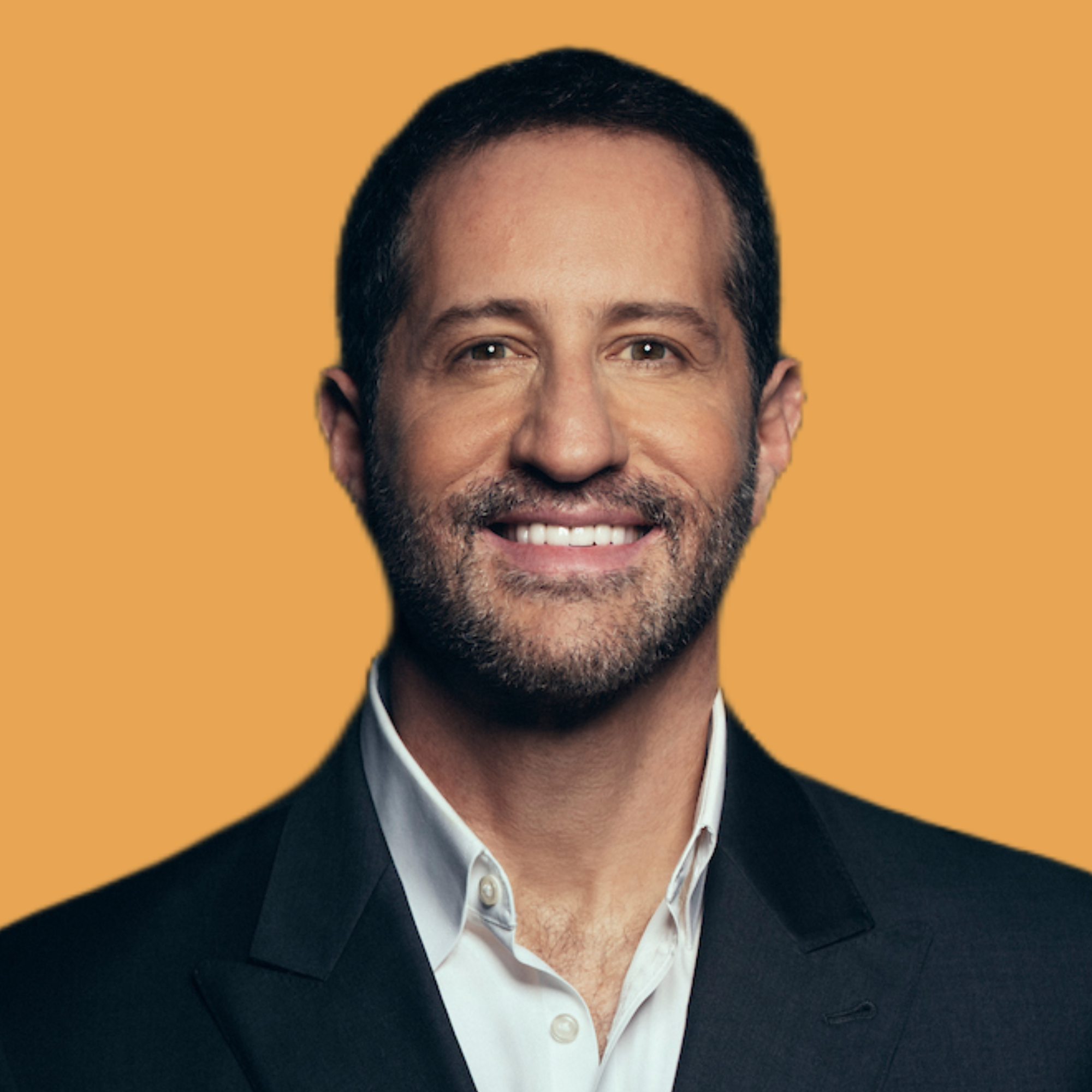
Please welcome the hilarious Modi Rosenfeld.
Oh, that's what a nice introduction.
Thank you.
My pleasure.
Sometimes they come out like, like a spi, like a eulogy comes out.
But this was a very nice one.
I, I do my best.
You did.
Alright.
So I wanna ask you some burning questions that I've had that are like sort of the top of my list for you, which is, you know, about being a Jewish comic today.
Um, would you say that you're a comedian who's Jewish?
Or are you a Jewish comedian?
I'm a Jewish comedian.
Okay.
Very easy question.
I am, I am a Jewish comedian.
There are comedians who are comedians who happen to be Jewish.
Right.
Um, David Attell one of my favorite comedians.
Yeah.
He's a comedian who happens to be Jewish.
Right.
Uh, Jeff Ross is a comedian who's Jewish.
Uh, Jerry Seinfeld is, a comedian that is, that is Jewish, uh, but it's, he's not a Jewish comedian.
Right.
Is there a cap on the sort of audience that you feel that you have the potential to reach?
As a Jewish comedian.
And do you even think about that?
That's like asking Chris Rock if he has a cap.
Is he?
'cause he is a black comedian.
Mm.
Right.
He can go and be a comedian anywhere he is and they know he is a black comedian.
When they watch my set and they watch my show, uh, they know we just saw a Jewish guy from New York doing comedy.
You know, so it's, our audience has become very, very diverse.
Uh, we.
Goem Gazen days have been showing up to this show.
Sweet Spot Show.
That's a sweet spot.
Yeah.
They've been coming in.
When I, every show I ask who, here's not Jewish, and it just gets louder and louder and louder.
Interfaith couples have found a, a space where they can, oh wow.
We can laugh together here, even though I'm a Jewish comedian.
I am.
Uh, it's for, it's for everybody.
That's amazing.
Yeah.
I mean, it really is.
What a, a great way to humanize Jewish experience for people who.
Don't get to touch it in their daily lives.
100%.
It opens a portal to, to people to see a Jewish life through, through, through comedy and pride.
'cause anything we see with Jewish now is all there.
They hate us.
They antisemite us.
They hate Israel, they da da da.
I mean, Epstein all over the place, but, but, but all of a sudden, hey, let's go and.
Wow.
They, they, they also laugh.
They also laugh.
I was especially curious because like a lot of your jokes are so, like inside baseball for Jews, the ones you see, the ones I see, the ones you see.
Mm.
My first comedy special, which was, uh, know Your Audience I gave it to, I said, let me, let me give it to the Jews.
Let me give it to them.
The people who are not Jewish.
I get it too.
There was a whole, there was somebody in the audience that's not Jewish, and I explained the whole show to him.
It's a level and the layer of the show.
Yeah.
Um, and so they understand the jokes and um, obviously like when someone like, um, John Leguizamo mm-hmm.
When he's doing a show that people who are Latin get it on another level than anybody else, but everybody else is also dying and laughing.
Right.
Do audiences ever surprise you in the way that they react to some of the material?
I get surprised by audiences.
Like, you know when you look at it and you see hijabs in the, in the audience.
Whoa.
Yes.
And then you find out why, why they're there.
I had this show in Long Island and I'm looking at it and I see three hijabs and I, I was, I said, I have to find out what, how they got here.
Yeah.
And their nurses.
And they work with Jewish nurses and they found me on Instagram and they told their Jewish friends, do you know about this Jewish comedian?
And they go, no.
And they brought them to see my show.
And that's Michi Ji.
That's magic.
That is, that's beyond my favorite thing.
What a, what A beautiful thing.
Just to see, I have to assume.
When you began doing comedy, you didn't have this sort of greater.
Purpose to it in mind?
No, but so it's something you've just sort of discovered.
Has, has it, is it a just like a beautiful byproduct or has it become sort of something that you're cultivating?
When I began doing comedy, it, it was over the top.
It was, I was, I was, I was in finance.
Right.
I was in finance and I used to come home and imitate the secretaries and my friends said, do that on stage.
What, what, what are you doing?
It just puts at the table and they organized it, and I would go on stage and do over the top characters, nothing Jewish, just a Latin secretary, a gay secretary, uh, a black secretary, all these different types of, of over the top characters.
This sounds like it had to have been in the nineties.
It was Okay.
And it's, none of it could be air today.
Right.
Then the Jewish voice came out.
I also, I, I worked clean, so, so what was great was, um, uh, like synagogues would hire me, and then I caught the tail end of the Catskills, which I talk about in my new special, um, to, to work in the Catskills, like the tail, tail end of it.
The last few years.
Yeah.
Where they were like four or five hotels left and the Jewish voice came out.
Hmm, because I'm a Jew, everything about me is Jewish.
I love going to synagogue.
I got put onto Phil, and, and, and once you develop your voice and you can get what's real in your life out, um, that came out and, um, I began to become more of a Jewish comedian.
That's awesome.
And getting to perform on the, on the borsch belts, it's like, you know, it was, yeah.
You right now are sitting with the last of the Catskill comedians.
It's amazing.
I'm, I'm the last of them.
There's, there's, they're all dead.
There are comics around that have performed in the Cats.
Of course, I worked there on such a consistency.
I bought my first apartment from the money I made in the Catskill Mountains.
Wow.
Yeah.
Wow.
Do you have a different approach when you're performing at, say, a synagogue versus a comedy club?
Know your audience across the board last night, the, the age was a little older.
Mm-hmm.
You know the jokes they want Hmm.
They don't want, they don't, they're not looking for your brilliance.
Take on They're looking for a joke.
Joke.
Yeah.
They're looking for, you know.
90-year-old man marries a 60-year-old woman on the wedding night.
She says, Irving, come upstairs and make love to me.
Irving says I can't do both.
And they explode.
And they know that.
I know that that's what they want.
Right.
And they're not looking for my big take on politics.
Right.
Which I don't really have.
Is that something you're.
Uh, sort of sussing out on the fly as you're performing, or like you show up and you know, I'm, this is the set, these are the jokes.
No, no, no.
There's no, this is the set.
This is the joke.
No, you walk in, there's a set, you have your artillery.
Right?
Right.
You have your, the US army has their artillery.
Mm-hmm.
What do we need for this battle, right?
Yep.
And then you, you hit them with it, you know, you, and then you, you, you feel, and sometimes you need to change on the spot.
You know what crazy is to go do a show with a Maza?
No.
Yeah.
Yeah, that's insane.
I guess what in, in like an orthodox synagogue In Done show in New York, they have these companies that are run by Hasidic people and they have the event for their, for their, for their audiences, you know, and um, you get this, so the women are on one side, the men are on the other.
You go on, the guy says to you in Yiddish, before you go on Kni, Dogen, the don't look in the eyes of the women.
So like, even though you're in the middle, work towards the men.
Yeah, but they, they're amazing and they love and they know, they follow me and they know it.
And then, you know, then you do radio city music hall, right.
That also everything's out there.
Do you ever face, you know, anti Jew sentiment in your audiences?
Like people who are there to see someone else on the, on the bill and they're like, I didn't know I was gonna be seeing this Jew comedy.
Great question.
So I, I, um, I've been on the road so much.
Yeah.
But the past, uh, this past month, I've had.
Two weeks that were free.
And I was in New York City and I put in spots at the Comedy Cellar Home.
It's Home.
Sure.
It's my second home.
The Comedy Cellar.
And, you know, you're going up there and there's five comedians, black, lesbian, gay, Latino, Asian, and you're a part of the show and they don't know who you are sometimes.
Mm-hmm.
Sometimes you go, ah, I'm always here.
Or, or, but, so, and you just, you, you don't go Jewish.
You go to whatever there's with them, you know?
And even though sometimes it is Jewishy, but it's, you have to give what that show needs.
You're a part of a bigger show, you know, so I, I don't, I, I, I don't surprise someone with Jewish stuff.
So you have a whole other sort of bag of tricks that's not even Jewish related.
Yeah.
Yeah.
So where do you go with that stuff?
The husband material, the New York material, current stuff.
The best about the comedy seller is when things happen fast, you can go up, tape it and, and it goes on, right?
Like, um, um, what did we put on?
Oh, when, when President Trump pulled out the guy from Venezuela mm-hmm.
That had a shelf type of a week.
Right.
If I did a joke about that, now no one cares anymore.
Right.
It's so you go to the comedy cell tape it, they have amazing cameras.
Mm-hmm.
You get the clip at home, you chop it up, put the, the video, the, the, the social media team puts up the, the thing and you're up.
And there's good days and bad travel days.
Recently I saw, uh, a really bad travel day.
Duo.
Yeah.
That was a bad travel day.
What about with other comics?
Have you ever gotten any anti Jew, anything?
No.
Great.
No.
So glad to hear that.
I'm a Jewish comedian, but, but I'm a comedian.
I'm a comedian.
Mm-hmm.
My, my, what I do is comedy.
I'm not looking for what's called clater.
What is cl no, clater is when you, uh, do your joke and hoping to end on an ending on something like pro-Israel.
It's a clap and that's why Israel has the right to exist and everybody's like, um, that's Clater, right?
I'm not looking for that.
And my jokes and, and my, it, it, it bring it's unity.
I talk about Christians and Catholics and I talk about Muslims and all getting along and all being in a Messianic era.
Mm-hmm.
Rather than they did this to us, but we deserve this in this, you know, and or we, we, we, oh, we, this is our land and you're da, da, da, da.
And according to the Bible, it is, it's not what comedy is.
Right.
I'm not, I'm not.
There to, to lecture you.
This is an NYU class on Israel's mandates and all of that.
It, I'm a comedian.
Sure.
Yeah.
But I mean, I was curious just because, uh, from.
Certain circles on the, on the left of which, you know, a a lot of entertainers are, it didn't, it wouldn't matter even with the content of your material was, there's some people who just think, I mean, there's people, the bagel shop is our baby killers.
'cause they, because they sell bagels.
Yeah.
You know, I'm doing comedy 31 years, so when I sit at a table.
Dave Chappelle and I sit at a table.
We're not, we're not doing that.
Right.
That's not, that's not happening.
Do you have, in your, when you're sitting at a table with Dave Chappelle is part of your mind being like, this guy says so much shit about the Jews.
Uh, this, his body of work is brilliant and he, I wouldn't have ended the last special, the way he had an opportunity to bring peace and he, he did the opposite way.
You know, he'd bring riff, you know, and so, but it's not something I'm gonna be talking to him about.
And it's not, it's like, it's, wow.
It's just good to see you.
Alright, so I was watching some of your material prepping for the interview, and I watched you roast Ben Shapiro at a Commentary magazine event.
Yeah.
He was a virgin till he was married.
Shocking, but Ben, just like homosexuality, not every choice is really a choice as as a gay man.
What's the feeling performing around or in spaces of people who are sort of diametrically opposed to.
Who you are and the way that you live.
So that, that, that Ben Shapiro roast was for Commentary Magazine.
Yeah.
A magazine I can't read 'cause I can't read the words they use.
Have you read this magazine?
Uh, I've read some articles online.
How.
Every word is this big.
It's got, it's every SAT word you've ever heard of is in that magazine.
I did pretty well on my SATs.
I didn't, and so, but, but whatever.
So the guy, uh, John, John Pot Harts called me and he goes, we're doing a roast of Ben Shapiro.
I go, who?
And, uh, I, I didn't know who it was.
I got Ben Shapiro.
I go, I, I know 45 Ben Shapiros.
He goes, my Rabbi Galino who, who's the great and besides rabbi, a good writing partner.
And I go, should we do this?
He goes, he goes.
Absolutely.
Wait, your writing partner is your rabbi?
No.
For different stuff.
For certain stuff.
That's amazing though.
It's not a writing partner, it's someone you run material by.
Right, right.
There's people I call up, I go, hi, he, he, here's my premise, here's my punchlines.
What?
What do you have?
He's somebody that I do that with.
That's amazing.
So, yeah.
And so he goes, yes, let's definitely do it.
And I really never really saw Ben Shapiro until then.
I, that's when I began to watch his videos.
Mm-hmm.
And watch what he was about.
And this was a few years back.
This was before he became a little bit more.
Ben Shapiro.
Right.
And it, and he was the, he had the best time.
Oh yeah.
He cracked up, he was cracking up.
And people then like, oh my God, he, how can you and how can you do that?
He's pro-Israel and he is, I'm like, you gotta be kidding me.
Oh yeah.
He had the best time of his laugh of, of his life.
He laughed nonstop and it was just great.
To rephrase my question then, maybe like, does it, it sounds like, I mean, from the, from the Chappelle conversation we just had that like, you're able to sort of put these things away.
To in, in the name of doing your thing with commentary, which is like a right-leaning place.
Yeah.
A lot of those people are, you know, openly think like being gay is a choice or against it or against those rights or whatever.
And I'm just curious if that's a, you know, something that you're thinking about before you're performing.
So common climate, I should be up there making, making jokes.
So now they see, oh, this is a gay guy.
It is nothing better than when I hit them with, I have a husband.
They're like, and you literally see people in the audience, oh, he's gay.
And then I address the fact that I don't have a gay vibe.
And then I, I did, and then I, I bring it all to the fact that my husband's a millennial.
And you don't go into gay, you don't, don't paint the picture of gay sex in their mind.
Right.
This guy lives with another man and it's a different thing.
And this is funny.
It's funny that his husband's that much younger.
You steer it in a way, again, towards comedy.
The goal is laughter and unity, not making someone uncomfortable and like, wow, that guy was hysterical.
He's the last of the Catskill comedians and he's gay.
I think that's awesome.
I think that's great.
Who's, who's a better audience?
Like who laughs better and gives you a better, a better vibe?
Dems or Republicans?
I don't know.
Um, both.
Yeah, both.
I performed at the Republican Jewish Coalition, and the reason I did that is because the Democrats didn't call.
Yeah, yeah.
They, they said, here, we have a thousand people.
There's gonna be in Nevada.
You wanna do I go, yes.
Yes.
And I followed Donald Trump.
Whoa.
Donald Trump.
I mean, that's a big spot.
They were all there.
Everybody was there.
They were all there.
How was the room?
How'd you do?
They were on fire and I did game material and it was funny 'cause Mike Johnson had just been appointed, um, uh, speaker of the house.
And he was there.
He showed up.
Wow.
And I thought, and I said I was doing the, he goes, it's okay.
My Johnson's not here.
And, uh, and you know, and again, and big fans from that, from that, that, that, that event.
That's awesome.
What a great approach.
All right, so if we could, I want to get into a little bit of your, I.
The gay side of your story.
Okay.
Uh, how old were you when you realized that you were gay and, and what was the feeling growing up in, you know, an Orthodox community and coming to that realization?
I, I wasn't in an Orthodox community.
I was, we were in Long Island.
It was Jewish.
My parents were Israeli.
I was born in Israel.
My parents were born in Israel.
We came to America and Hebrews in the house.
All their friends were Israel.
It was, it was more really traditional than Orthodox.
Okay.
But gay wasn't cute back then.
Mm-hmm.
You also didn't really know you were gay.
Do you understand?
So this is, you're talking about I'm 55.
Okay.
So looking great.
Thank you.
I'm 55.
And then, so, um, when I was, let's say when, when, when I was 20, it was 1990.
Okay.
When I was, uh, 15, it was, uh, 85.
Right.
Height of aids.
Right, right.
So you knew you like men, but you don't think you're gay.
'cause gay wasn't.
As it is today.
Today, your congressman's, gay senators are gay.
The doctors are gay.
This is everybody.
Right?
Everybody around you.
It's a nor it, it's, it's normalized, right?
It's normalized.
It's, it's like, this is, okay, this, the people are gay, and that's it.
Back then it wasn't, back then it was just aids.
I, I say, okay, I, I, I like men, but I don't, but I'm not gay, right?
'cause gay men are the feminine thing.
You, you, you see.
And so you didn't realize that until la Later on you realize, oh, oh, okay, I'm gay.
How old were you when you like realized you liked men and then how old were you when like, I'm a gay guy?
Well, you realized men right away.
It's always childhood.
Yeah, yeah, yeah, yeah.
Um, and then you have, um, in college, like, oh, okay.
Yeah.
Mm.
But also like the women, so it was confusing.
It was very, very confusing.
Yeah.
How did your community and your family take that and was that, you know, difficult to, to express?
I mean, they had other plans.
They weren't looking for this, but, uh, it happened slowly and, um, and I, I really wasn't dating anybody till very late in life.
My, my, I found my husband when I was 4 45.
Right.
And so I, I'd never really been in a relationship until then.
So it, it was, it was just, it was just too busy being a comedian.
Sure.
Right.
Then it became a partner, then it became a husband.
So, um, so it's, it wasn't that much of a deal.
It wasn't that big of a deal.
Oh, that's good.
But listen, we get dms and emails from people who are going through hell yeah.
Um, through hell, uh, from Orthodox Homes, and they say, it is just so great that my parents know that you're gay.
And like they, they, you know, it's like they, oh, the, the guy that they love watching every night on their, on their phone.
The guy who they watch putting out film and, and, and synagogue and uh, and all of this stuff.
I know you've been involved with a, an organization called Eshel.
Is that right?
Eshel, yes.
Yeah.
Can you tell us about that a little bit?
It's an organization in New York that, um, they, they are, it, it's people who are Orthodox Jews.
Who are also gay and they have a lifestyle and they, they, they, they're partnered and they want to go to an Orthodox synagogue and they want an Orthodox service and they keep kosher and they learn Torah and they just happen to be with a same sex partner, uh, or, or whatever their journey is.
And it's just it, and they're completely comfortable and free.
And we did a, uh, an event for them where it was me.
My husband and my rabbi were, were on a panel and they were asking questions, and we spoke about it and it was wonderful.
Are you seeing that?
Sort of ripple through the Orthodox community more widely, or does it still feel like it's, it's just this pocket?
Uh, there is definitely a movement in, I, I believe, and I feel it and I see it in the Orthodox community for accepting gay people.
You know, you, you, you have a gay son or gay daughter, and do you want to cut off ties with them?
No.
You would think that you want 'em to be a part of your life.
You want them, you know, you want them to, to, to, to, to keep being Jewish.
Mm-hmm.
You know?
Of course, but I, I, I know that traditionally there are many people who have.
Yeah.
But I think, I think it's really pro progressing forward.
That's fantastic.
Yeah.
What other ways have you witnessed the Orthodox world sort of changing in real time as we move further and further into the 21st century?
It's not all or none.
You can, uh, you know, I say we we're, the people call us the chosen people.
Right.
But we're more the choosing people, right.
Like that.
Yeah.
Yeah.
I cover my hair.
I don't cover my hair in the morning.
I, I do nevo.
I don't do ne V.
You do.
But do whatever.
Do whatever you can do to connect to God.
And, and of course, what's God?
God is, is one, right?
Mm-hmm.
Hero, Israel, the Lord God.
The Lord is one.
So it's literally defining what God is.
It's one, it's oneness.
So whatever, however you can connect to that one, if it is eating kosher, if it is keeping shaaba, if it is giving staca, whatever you can do to connect to one to God, do it.
So that's.
That's it, but you don't have to do all of it.
Where do you think the, the Orthodox world could use a little more change?
A little kick in the behind and keep it moving?
The acceptance.
Yeah, acceptance.
So, and, and, and, and identifying what's, what's not real Crazy rabbis that are online screaming and creating rifts rather than bringing people together.
That's, you know, that's what, that's where there's improvement.
What does, uh, your daily Jewish practice look like right now?
My daily juice practice.
Yeah.
I wake up in the morning, I have a cup of water with.
Uh, lemon, and then my coffee, and I, and I, and I say, I say the, the, the, the, the blessing.
And then do the nego.
Vasa.
What is that?
I don't know what word that you're saying.
You know what nego, vasa is?
No.
When you, when you wash your hands three times, like before you do Zi.
I didn't know.
I didn't know it was a three thing, and I didn't know that there was the, that was the term for it.
So when, when you, when you're washing for bread, it's three on each side.
Three on each side when you're washing for purity.
So you wake up in the morning and you do it on your hands.
Some people do right?
The first thing, right, right.
By their bed.
But it's to remind yourself that you have a pure, that you, you have a pure soul.
Right?
It's a kinda like a mini mikvah in your house.
So you do that in the morning and, oh, I'm a, there's a pure soul somewhere in there.
Whatever happened last night, whatever.
I oughta said this way.
There's a pure soul in there that's nice.
And then I put on my fill, it's my favorite part of the day.
Yeah.
I, I get my bag out, take my es out, a es that my husband bought me, and then you put your Es on and that, that's the energy of your aura.
So you, you, you say, this is the aura I want to have today.
I want to be inspired, inspiring.
I want to be, I wanna give an aura of success and happiness and gratitude.
And that's your tallest, that's, that's the energy of your talent.
And you put on your fill in.
Right?
Mm-hmm.
Which is leather like skin.
You can skin to skin with a Torah inside you, you're wearing your Torah.
Isn't that amazing?
And the sch is right in there.
So you're connecting to connecting to the one which is God, and then you do your prayers, and then you continue with your day.
You'd be like the most successful habad.
Dude of, of all time mean you'd be pulling people in off the street left and right.
What about the rest of your day?
Is there any, does it show up in, in other ways all day long?
All I'm in full conversation with God all day long.
That's what being Jewish is.
Being Jewish is, is creating hir energy.
Be, be being Jewish is being, it's an insane name you have for your podcast.
Do you understand that?
No.
Tell me why being Jewish, what is being Jewish?
Well, that's what the show is taking a look at.
So what, what's the number one thing that j.
J Jews are here to do is create a Messianic era?
Right.
There's, there's, if you ask some people what's important by being Jewish, every Jewish kid could have a Jewish education.
Everybody should be kosher, we should have securities.
But the main, main, main goal is that we create a Messianic era.
That we live in the time of, of Hir.
And what does that, what does that mean for people who dunno.
Oh, I don't mean just harmony.
No bombing.
Just get along here.
Help do laugh laughing.
When you, when you, when you look out into an audience, you see everybody laughing.
Uh, that's, that's hir energy.
Mm.
We're all in one head space.
No one's suffering.
No one's thinking about horrible things in their lives.
Just laughing and obviously only an hour and a half.
But you want that for the whole, the whole time.
You want that?
That's, that's, that is the goal of That's what being machir.
Creating a messianic, obviously it can't be like that.
Right.
So you do small things.
Mm.
You do.
You help people.
You do.
I'm a comedian.
That's my, that's what you are a podcaster.
What?
However else you ident.
I dunno what else you do.
Yeah.
Right now it's close to this magazine you have, look at your magazine.
You have a magazine called Aura.
Yeah.
How did you come up with that name?
Light we're being the light, right?
Aura.
Is that also how you spell Aura?
Like a person's Aura?
No.
A URA is that one.
That's a URA?
Yeah.
Okay.
I was worried it was gonna be a little confusing.
To be honest, it should, it should confuse it.
It should confuse people.
What aura is it?
A hundred percent Aura is your, your aura.
Mm-hmm.
Look at you, your sexy hair and that, oh, thank you.
Who that woman is, but bless her heart, Elizabeth pco.
That's the aura we should have.
That is the aura, the the Jewish people.
Yes.
Yes.
That's it.
That's the vibe.
Yeah.
That is the vibe.
Aura mag.co I think to, uh, to get your subscription while we're plugging it.
Yeah, that's the vibe.
Aura.
And have your aura too, even though it's spelled different.
I'm dyslexic so that, so by the way, that for me is okay.
Yeah.
Perfect.
That for me is the same aura.
Yeah.
How do we harness what you're creating in that room for 90 minutes, that m energy and, and have it sustain beyond, you know, those 90 minutes, like when people are in that room.
They feel the unity, they feel the humanity.
And then it's like the lights come up and we forget and we like flip back into, you know, our, our regular mode.
So I always say be the friend that brings the friends to the comedy show, right?
You, you, Maori's coming to town, any community's coming to town.
Let's, instead of buying two tickets on the.
By six.
Hmm.
By four by four you'll find two people to come with you, right?
And you'll see and more will wanna come and try to get tickets, right?
But, but, and now, now you brought two people in who are laughing.
You've just created laughter and you don't know what they're going through or what, they've just lost somebody.
Or, or someone's going through something horrendous and they just had an hour and a half of laughter.
So you've already created Hir energy.
In that little space, they've, you've laughed, you've hugged it, it, when you go home the next day, you still have that energy in you.
So you might be nicer to somebody.
And that's, that's, that's how it keeps going.
That, that's how it keeps going.
It's beautiful.
Okay.
So you mentioned your husband, the millennial.
Yes.
Who, who you met later in life.
Leo.
Uh, Leo.
Yeah.
Shout out to Leo, uh, who is also your manager.
Right.
I mean, how, how did that come to be and how does that work?
So again, here, here's how God works here.
Here is how God works.
I'm a comedian.
I'm doing, I'm doing fine.
I'm doing fine.
Making a living.
Making a living.
I was on the Jewish circuit.
I had whatever I had in the regular circuit comedy club and this and that.
And I meet this, I meet my husband on, on the sixth train.
Right on the sixth train, we met each other.
We had three dates, and he moved in.
It's the dream.
And then, and then we had COVID.
He started a business and I was doing mine, and then COVID happened and we're together, and I, I was like, oh, wow.
I have a year off.
Right.
I mean, I, I'm, I'm, I'm good.
And it's not how it went.
Mm-hmm.
I began doing, uh, zoom shows.
Right.
And killing it.
I was, I was the, I was the king of Zoom shows.
And Were you monetizing those Very much.
That's so interesting.
And Leo Re and Leo's bi business was bought out.
It was amazing.
Wow.
It was a gift from God.
And so he was, he goes like, who's doing this?
Who's managing?
Who is this and that?
And you're getting really big.
And my, I had 7,000 followers.
On Instagram.
Okay.
And he built that to half a million.
Wow.
And more.
Wow.
And yeah.
Yeah.
So he began taking care of it and, and seeing it.
And then he found me an agent and then changed agents and then found me a management company and changed the management company.
And we got, now we're in a great place, social media company.
Uh, he runs the podcast.
That's amazing.
COVID happened and people were stuck at home and we just started putting videos out in different characters.
We had the, the, the, the Hasidic character I did, and then the Israeli character I did.
And then we realized we have to stop doing that because people thought that was all I did.
And so we, we also, through COVID and through the Zoom shows, we began to build a market in England, in Australia.
'cause people needed to do events.
Sure, yeah.
And we figured out how to do Zoom shows in a very special way.
Yeah.
That's awesome.
Yeah.
And he's not Jewish.
Right.
And he does more for the Jewish people than most Jews.
He's raised more money for Israel, for, for, for, for, uh, kids in crisis and all of that.
He has done all of that.
He came from a traumatic Catholic background.
Okay.
And he just, and in my new special, I talk about the, all of this stuff and it's really great.
Let's get into a little bit more of that.
Was that an issue for you or anyone around you that.
Your husband's not Jewish?
No.
It, it really wasn't.
You know, he's very smart.
So when we realized we are getting big, our main bread and butter at that time was Orthodox Jews.
Um, we have to get ahead of the narrative.
Okay.
He found this wonderful woman who was a fan of mine at Variety Magazine and we, we did an article with her about me being gay.
And so he was on top of that.
And then we did an article with the Jewish shop.
Press, uh, with my angle on it.
So we were ahead of like, before, did you know that the Modi is a gay, you know, horrible, some horrible article on some horrible right wing ana, orthodox, uh, situation.
Yeah.
But.
Till today, I get calls from very, very religious organizations and sometimes they, they usually can't afford me now, but, but, but they still looking to do shows and amazing orthodox synagogues, chabads, and then, I mean, amazing organizations that, that, that are still, and they know I'm gonna deliver a show, you know, that, that, that's appropriate for their audience.
How much is Leo able to share, you know, the, the Jewish parts of your life?
He sees my, my spiritual connection to it.
He, he loves it.
He doesn't share exactly the same thing, but he knows that Iman, I have a connection, you know, there's a connect.
He sees it, of course he sees it and he, he, he understands it.
You know, I've taken him to see great grapes of some of the biggest rabbis, and he know, he sees it's a connection there.
He doesn't exactly.
Like nowhere he falls in, but he knows just let's keep making people happy and let's be profitable at it.
And let's, let's, and and he's, what's the next thing?
What's the next thing?
There's a book, there's a documentary, there's another special, there's a, and he keeps, he keeps it moving forward.
Has there ever been like a conversion conversation?
Yes.
And it's no.
From him or from you?
From both.
He, he, he has no connection to it.
He, he loves it.
He's loves being around you.
He loves me, but it's not, it's not, it's not burning inside him.
Mm-hmm.
It's not like, you know, you see it when, when someone's a real con, but you see there's a burning inside them.
They're looking and they're learning and they.
Wow.
And how is this, and how is that?
And he doesn't have that in him.
He sees this is the Jewish people and I helping him here and this is what, but there's no, there's no, it's not even an issue.
Do people around you try to make it an issue?
Nah.
No, they really don't.
Hmm.
Did they ask like you ever thought of converting goes?
Yeah, and we, we said, no.
We, it was never like a, it wasn't a it, it wasn't a CA conversion is a, is a, is a serious thing.
My wife converted.
Yeah.
Yeah, she did.
It's like, did you see her soul change?
Not in the moment, not in those first moments.
I've seen it change.
Now she's like, you know, the mayor of our kids' Jewish day school.
Right.
And then it runs the joint.
A hundred percent.
But it took, it took a minute.
Yeah.
No, no.
It doesn't happen when they come out of the mikvah.
Right, right.
The soul.
But the, if someone who has a real conversion, you see the soul changing.
You see it.
I I've seen it.
Yeah.
I've seen it.
Yeah.
Yeah.
It's amazing.
I have friends that married women who weren't Jewish, and they became more religious, and they, they keep a kosher house.
Right, right.
They, they, they ask him, could you.
Do a little more with Shabbat, try to connect with Shabbat more.
It's, it's, it's a thing.
Yeah.
Yeah.
Okay.
So now I wanna get a little bit into your, your upbringing, your childhood.
We, we, we talked about it a little bit, but, um, you grew up in Israel.
Do you remember anything of your childhood In Israel?
Yeah.
Oh yeah.
It's a big, big culture change in the house.
We were Israel, right?
The house is, the parents are speaking in Hebrew.
All the parents' friends were Israeli.
You know?
Yeah.
And their kids were also Israeli ish.
Mm-hmm.
And so we were all, it was all Hebrew.
And then you got out of the school and you got out of the, out of, you got out of the house and you were in America, right?
Yeah.
But Jewish.
Right.
So you, you weren't that far out.
But it was a different cultural thing.
But it, it, I I, I think it was much smoother than, than, than, than people would think it was.
It's just funny hearing, like your answers to so many of these questions, like you walk around with such.
Ease and then it, you know, I'm, I'm, and you're like, well, yeah, it was kind of easy.
So, I mean, you've had, you've had like a, a beautiful path to, to leading you where you are.
That's, it's, it's just, it's nice to, to hear that like so much of your, your confidence and your authenticity is.
Was not necessarily hard earned.
It's you, you got to just live in it.
I, I joke around that I didn't have such a bad childhood.
I maybe if I would've had a worse childhood, it'd be funnier or I'd be, I, I didn't, and these comics were abused and depression and alcohol and I didn't have any of that.
Right.
We didn't have any of that.
I used, I used to feel that way.
Like when I would read about John Lennon, I'd be like, I can't write songs like this guy's.
Like his mom died and he did this and that, and Yeah.
Yeah, yeah.
Yeah.
You've said that, uh, an Israeli mindset is part of your DNAI read you said that once.
Yeah.
Uh, how does, how does the Israelis of you shape your humor?
My parents were Israeli, my father's super Israeli with no editing skills.
You just say whatever you Yeah.
It's like that.
I, I, I don't wanna say macho, but it's no's.
But it's like, you know, when you, in Israel, you'd see all the Americans, when they go to Israel, they, they wanna become Israeli.
Yeah.
They wanna.
Start to speak like Israeli, like speak Hebrew, like Israelis, and they see that it's, that was, that was like, you know, and you exude that on stage and it's, it's, it comes out it, but that's what, that's, that's what that is.
Yeah.
I feel like Israelis, they like.
Go first and then apologize.
And Americans like ask permission and then go a hundred percent.
Do you feel like you're an Israeli living in America or an American with Israeli heritage?
It d depends.
When I'm with my friends, I'm Israeli.
When I'm with Israelis, I'm American.
Mm.
You know, when I do shows in Israel, it's.
It's my favorite.
It's unbelievable.
Yeah.
Tell me about that.
Because I'm Israeli, the audience is half Israeli and half expats.
So you, you have Israelis and then you have people that move from America and England and Australia and Europe.
They think I'm one of them, and the Israelis think I'm one of them.
And you know, you're, you're, you're hitting them punchlines in Hebrew and you're building the story up and you're talking about things that are, um.
Or, uh, that only they would know.
So it's really, it was incredible.
I just did an event for the IAC and I followed the spokesman of the Israeli army.
You know who he is?
Yes.
Yeah.
Mm-hmm.
So, um, and he spoke before me and he is a big war hero and he's a big, um, and he told how he became the.
These missions he used to be on with these, with the, um, this unit he was in.
And then he became a spokesperson.
And then I followed, and I told him I was also in a very elite unit and I was in this, uh, it was called, which is this like Israeli camp program that they had in Israel for American, for Israeli kids that lived in America.
Mm.
And it was just funny, like, but who else in the world's ever gonna get that job right?
Except for these Israeli Americans in the room?
Except that exact room.
Yeah.
And so they've just exploded in laughter, like, you know, so when you do a show in Israel, it's like, what percent English?
What percent Hebrew?
It's, it's in English.
It's an English show.
It's an English show, but you throw in a little bit of Hebrew, but we throw in a lot of Hebrew.
And is it, is that like its own set that you have to prepare when you go there?
Or is it, can you use the same material?
I do a lot of material.
That's just for, for that.
And then I do my, my material too.
My, my, my regular material that I'm, I'm currently touring with.
Right.
Yeah.
So, but it's, it's definitely special to that.
I, I have to imagine like the specialty stuff is really what kills it's, it really kills.
Okay.
And in Europe, when they are watching me.
They're in shock that there's someone on stage screaming that he's a Jew.
They're just there in shock.
They don't walk around with stars, they don't walk around with their yamikas.
They're still in hiding, kind of, especially now, since October 7th, even more.
But it's, it's, it's, it's a crazy energy.
Crazy energy.
That's really interesting to be in Berlin.
It's insane to do, to do with all the, the what happened there.
Yeah.
You know, there are other Jewish comedians out there, uh, very successfully.
Some hilarious ones.
What, what makes your voice unique?
Like, what's your avenue in the space?
Your job as a Jewish comedian is in the Talmud.
It's, it's, it specifically says, this is what you are here to do.
Right it in the Tama there's a story, it's in the marketplace where, uh, Elijah, the prophet's there and someone asked Elijah, the prophet who here has bba, a portion in the world to come, the two people over there, and they went, asked them, well, what do you do?
What is it you do that you have BBA and a portion of the world?
We are, we are, uh, people of laughter.
Right.
We make people who are sad, happy.
Mm.
And when there's a riff, we bring peace through laughter.
That's, that's my job.
Making people who are sad, happy, and bringing peace.
That's my focus.
Whatever other comics are doing, bless their hearts, get laughs, make people happy.
But my, that's my, that's my, my path to getting into.
The world to come.
So being Jewish, your, your goal is that you create and your own personal path is to make sure you get into the world to come.
So that's, that's that, those, those are the, the paths I'm on.
I've heard you say that you specifically, you don't do jokes about, you know, the war.
Or October 7th, any of that stuff, what's the, you know, how do you approach that and make that decision?
It's not that I don't do that, you know, in the beginning, um, you know, I did a sh so we, when the October 7th happened, we were in Israel, right?
I had, I had, uh, shows, um, for the whole week of Kot and we went to, to, to bed that night.
We woke up and we, we went to, um, to Europe, and we had shows on Monday, October 9th.
We had shows in Paris.
And already the hatred of Jews was starting.
It was still fresh.
Israel hadn't gone into Tag Gaza yet.
It was just people were like, yes, thank God they took hostages.
Thank God they're killing babies.
There was that.
That was the energy in the, you felt that walking around there.
You saw it.
You saw it.
So we had Monday, Tuesday, Wednesday, Thursday shows, and the police were amazing and they got, and the shows took, we went on.
I did, I did the show as if nothing happened.
My, my se didn't mention the war, didn't mention October 7th.
Didn't mention any, I can't tell you.
No one remembers how raw it was.
So I was in the back of the theater looking out and all you see was people on their phones getting updates of the horrific things.
It was just still coming out.
Oh, yeah.
Did the show, luckily I had this, this little, this little idea that God gave me.
Sing at the end.
Just you had an hour and a half of laughter.
Sing Hatikvah, just to remind everybody where our hearts, our souls, our prayers, everything where it is, and that'll make it okay.
And it did.
And then we did three shows.
Our, our, our last show was canceled.
Keep on.
This is before Israel went in, right?
There was a, a Palestinian protest outside where the theater was not because of my show, because we, we were directly across from, um, the Plaza, the Republic, this big thing.
So just a big public.
Square and they wanted to make a big deal of it, and the police wanted to show that they were in charge, not them.
And so they brought police from all over Paris and they had tear gas and they had all, all it was that, is this during your show?
No, no.
Leading up to it.
The police us very nicely to cancel the show.
Oh.
On Thursday.
So we, we, we said, no problem.
We changed it to a matinee on Friday, which was me and a hundred people.
Yeah, because it was a Friday matinee.
Yeah.
And it wasn't, it, it just, but it was That was, that was it.
So then I didn't do material.
Then slowly I began to incorporate it and, um, I talked about the missions, women going to Israel.
Mm-hmm.
When you're doing comedy and addressing things that are horrific, you address them in special ways.
Right.
So whenever I talk about the Holocaust, I never say Holocaust, never say Auschwitz.
I never say Bergen.
Belsen.
World War ii.
Mm-hmm.
And they know what you're talking about, right?
They, they're, they're in your head space.
They need to get those, those triggering words out.
So, am I gonna talk about hostages and No, but.
Women are going to, uh, to Israel on missions.
That's where the, that's where the laugh is, right?
That's where the laugh is.
Smart folks, if you just heard that sound, that means Modi and I just did our five deep questions, which of course you can only catch if you're a member of our subscriber community.
The you can sign up@beingjewishpodcast.com slash community for exclusive content like our weekly five deep Questions, other bonus content.
Office hours with me once a month and all kinds of other goodies.
Alright, couple more questions as we get towards the end here.
Go for it.
So as we are filming this, you're about to begin your new national tour like.
Next week, uh, called Pause for Laughter.
What's that title about?
It's not new.
It's the, the tour's been going on for about, so the next continuation.
Yeah, the next leg.
The next leg.
Leg is, yeah.
Okay.
So why pause for laughter?
You have to pause for laughter.
When you're scrolling and you're seeing all this horrific stuff, pause.
Have a laugh.
Don't forget, laughter's an important thing to bring into your life.
It's just pause, laugh.
Laugh a little bit, find a way to laugh a little bit.
Could go to a comedy show, watch a video, invite everybody to come over and watch a special together.
It's just important to pause for, for laughter.
That's, it's funny, I read it from the other way as someone who's like a writer and an actor like.
Pause for the laughs, like before you move on to the next thing.
It came that way.
Mm, it came that way.
So I had a bit in my last special where I talk about the honorees and like when the honoree reads her speech and like she thinks she's gonna get a big laugh, she writes, writes in there.
Pause for the laughter.
Yeah.
But so that's where that came from.
Mm.
But pause for laughter really means just to pause for just a minute.
When you're going crazy scrolling on there, you know that, that's why on my page, I never put anything horrendous.
I don't show you bombs going off in Tel Aviv.
I don't show you crazy things politicians said, I got, we hit my page.
You can have a laugh.
You are gonna find that where I am, but you're also gonna find that you have a laugh and that's that.
That's the goal.
That's it.
The pause for laughter and we just taped the special, which would probably be called the same thing too.
Where'd you tape it?
We taped in Atlanta.
How was that crowd?
Wow.
Yeah.
Amazing.
Amazing.
It was just great.
When you do shows and there's Jewish audiences outside of the New York.
LA Miami area.
They're so tight knit.
Oh yeah.
They're like Montreal.
Montreal.
There's no orthodox and conservative and this, they're just, we're just the Jewish community.
Mm.
That's what it is.
And then the allies and the people that come with them, and it's, it just keeps growing and growing.
And until Kam is a Jewish community, come see him is like a, it's, it's just great.
Yeah.
That's awesome.
But Atlanta was, Atlanta was amazing.
What was the venue center stage?
Beautiful, beautiful stage, and we had top of the line people taping the special and it's, it's being edited now and it'll land someplace.
Great.
Then we're looking for it.
Will you try, try to sell it to like a streamer or something?
That's, that's, that's my manage depart.
Okay.
That's not my, that's, that's not okay.
That's what we hope.
Not my job.
It's not my job.
Well, we're putting it out there.
Yeah.
We'll manifest it.
Um.
And by the time this episode airs, you'll have already performed in San Francisco and Aspen.
Mm-hmm.
How did those shows go?
Those shows were amazing.
That's what I heard.
I heard they were great.
San Francisco is amazing.
They, there's a beautiful venue.
We found Plaza Arts.
Yeah.
That place is awesome.
Have you been there?
But no.
I've been in San Francisco to know it.
I've never seen a show there, but I know the, oh, San Francisco is the next level.
It's a huge hub of Jewish life and comedy and they, we keep going back there for private events for, these were two shows we did in.
Theater.
We saw that the first one, but there was no date available.
So we said we'll come back again when we have something else in LA and then we'll go to Brea, California.
This is, I don't even know where that is.
Yeah, it's in California.
Brea.
I mean, I know what it's called.
I don't, I say re Yeah, it's where God was created.
Oh, whoa.
Okay.
That's new.
So, um, so Brayer California, and then we have Detroit and we have Missouri and we have all over America.
Have you played Missouri before?
Nope.
Wow.
Nope.
I'm, I'll be interested to hear how that crowd is.
Yeah, that's all.
That's awesome.
Yeah.
You are closing the leg basically with these, these radio city shows.
Yes.
You've played Radio City before?
Never.
No, never.
This is the first time.
It's first time.
How psyched are you for that?
If you, have you been in there?
Yes, I have.
I saw a Ringo Star at Radio City.
It's, it's, you forget when you go back in there.
You are in awe.
Awe of, of like, oh my God.
It, it's, um, we, we walked in to do promo pictures and we were like, oh my God, this is in 6,000 seats.
There's a lot of seats.
It's a lot of seats.
That's a big space.
Lot of seats.
Yeah.
And how many of those 6,000 are gonna be your friends and family coming to see you at Radio City Fans are just people who haven't become friends yet.
I just, I haven't met them, but it's all people that, and I, I really feel like it's, it's, it's not my show.
It's their show too.
Like, here we are here, we as a juice community, we're not doing shows in synagogue.
We're not in this little comedy club.
We are not, we're not in the cat.
We're, we're, we made it.
We are in, we are a Jewish community and our allies.
In Radio City Music Hall.
That's real.
This is it.
It's real.
Yeah, it's real.
Is there another venue that you're like dying to play at Madison Square Garden?
Wow.
And then, um, a couple more than 6,000.
It's a couple more, but it's not that much more.
But it's the two six thousands is 12.
Right.
And you add another few It's and it Square Garden.
Yeah.
I never imagined radio city music.
It just happened.
And, um, it didn't just happen.
You sure.
You, you sometimes, you know, you don't wanna limit what you can think.
Right.
You know?
'cause it could just be bigger and bigger and bigger.
I, I'm, I'm excited to see what the future's holding.
What's next for your comedy?
For Jewish comedy?
Like how does it.
Evolve.
Like what?
What's exciting to you about where it can go?
Jewish comedy is for everybody.
When it's done right and it's done openly.
Everybody should be able to be like, okay, he's a Jew and it's fun and it's not Zionism and it's not antisemitism.
It's just funny.
It's just fun and it's all that they wanna laugh.
We wanna laugh.
Everybody wants to laugh.
That's just, that's, that's it.
That's what we want.
Yeah.
So speaking of laughs, we are gonna finish up the episode with a little game that I've devised just for you, Modi.
Okay.
Uh, this game's called, there's a Yiddish.
For that I am gonna give you, uh, a phrase, an action.
A, a person, something.
And you give me what the Yiddish is for that action or phrase or person.
Oh, I'm I excited.
It can be real Yiddish or it can be fake Yiddish.
I won't know the difference.
Okay.
Go ahead.
Okay.
Okay.
There's a Yiddish for that.
Okay.
Tying your shoes.
Tying your shoes.
Um, if you're out of shape, it's a correct.
Dipping Apples and honey.
Ah, gma.
Delicious.
Delicious.
It's, it's a zekie.
I'm, I'm, I need more than just one.
I can't just have one y It's a z kite.
It's a sweetness for, for a, for a zio, for a sweet year.
Making a pass at someone in the Equinox.
Steam room chutzpah.
That's a chutzpah.
No doubt.
It's chutzpah.
It's, it's also chutzpah for someone to not look at you when you sneeze so hard.
A little P comes out a little when you sneeze so hard and a little P comes out, it's.
Um, but it, yeah.
Perfect.
What's the Yiddish for?
An old white lady at an anti-Israel protest who doesn't really understand why she's there.
So is she Jewish?
No, she, who doesn't really even understand why she's there.
What is uz?
What is this?
A children's show host who spreads subtle anti Jew hate and then says Jews are mean when they call her out on it.
Antisemite.
This is an anti-Semite, but not anti-Semite.
Say it with the antisemite.
It's so much, so much better.
Yeah.
Yeah.
Agreed.
Um, you walk into a room of friends, but nobody's talking.
They're all looking at their phones.
You say to them, ha two, listen.
Listen to, you have to have something to say.
You go HA two.
Kick, kick, kick off.
Meal.
Look at me.
All right, last one.
Your husband sneezes so hard.
A little P comes out.
You say, good Vault.
Modi, thank you so much for being here.
So happy to be here.
This was so great.
I see your podcast, I see everything and I, I, again, I mean it's, you pop up all over my thing, so you Oh, good.
So whoever's doing your thing is doing good and this Aura Magazine should just be fully successful.
And that's you.
That's the vibe.
The Jewish vibe right there.
We'll get you in there.
We'll do a movie piece.
Yeah, for sure.
For no doubt.
Yeah.
Have an amazing tour.
You can find out all the information about his tour on his website, which is mur love.com for all the touring.
And the Instagram is mor live, and we love hearing from you.
Uh, especially if you have, if you have nice things to say.
Yeah.
And uh, and again, thank you so much.
Of course.
And the tour's happening right now, so don't wait.
Go catch 'em all.
You can.
Thank you so much.
Thank you.
Another huge round of applause for Modi.
Catch 'em on tour while you can.
And another shout out to our amazing sponsors, Jacob and Phil for supporting some Rock and Jew on Jew action.
If you enjoyed the show, please leave us a five star review on the podcast platform of your choice.
It helps make the show more searchable and we sure would appreciate that.
Alright, I'll see you right back here for the next Octa episode of being Jewish with me, Jonah Platt.