
Monologue Transcript
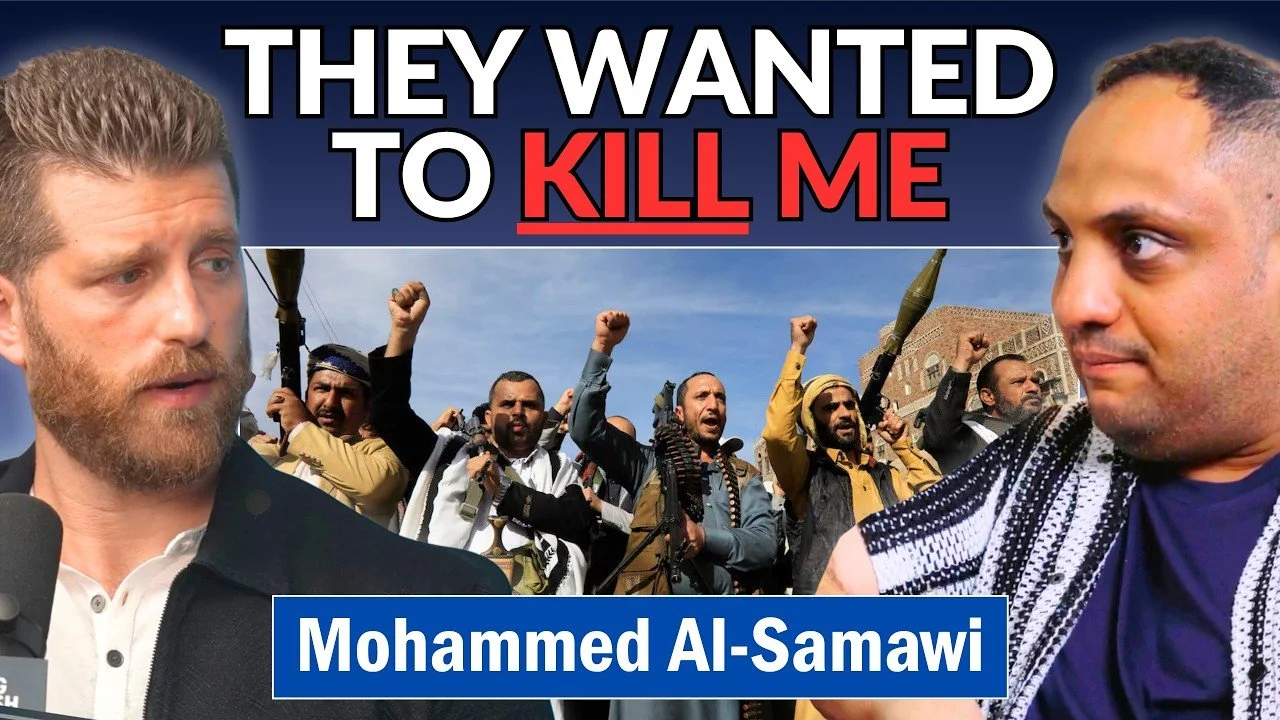
He ESCAPED Yemen to Pursue Interfaith Friendship in the USA - Mohammed Al Samawi’s Incredible Story
Welcome to an extra special on location episode of Being Jewish, your home for deeply candid conversations on Jewish identity, culture, and current events.
I'm your host, Jonah Platt, and today I'm here on the streets of our nation's capital, Washington, D.C., and on my way to bring you to a house unlike any other in America.
Now, what makes this particular townhouse so special?
It's a multi-faith, multicultural co-living space called Abrahamic House, where Christian, Jewish, Muslim, and Baha'i fellows live together, work together, celebrate together, and build real community together over the course of a two-year program.
And if you think that's special, wait until you meet the man who dreamed it all up.
His name is Mohamed El-Samaawi.
He's a Muslim Yemeni who's devoted his life to growing connections between different faith communities.
And what's more miraculous than what he's accomplished with Abrahamic House is that he's even alive to do it.
He's got an incredible story.
I can't wait for you to hear it.
So let's go meet him, shall we?
I've actually never met Mohammed in person before, so I'm really excited.
Here he comes.
Hello, hello.
Hello.
There he is.
How are you?
Finally.
Great to see you.
Hello.
Come on, come into the house.
Thank you.
Thanks for having me.
Thank you.
Thank you.
This is actually Abrahamic House.
Beautiful.
This looks like a dining room.
It's actually where we do Shabbats, um, almost every week, and also we do some Ramadan celebration here, Eid celebration.
We share bread together.
It's a small table.
It's a very large table.
Oh.
We actually make it, like, all the way to- Oh, nice … to the living room.
Nice.
But, um, this is kind of like, you know, where is the heart of Abrahamic house, where it's happening everything here.
Upstairs, there's the living… uh, the, uh, bedrooms.
Where the fellows live.
Where live the fellows.
'Cause th- I mean, this is where they live.
It's their house.
It's for- This is, this is their house.
I see the kitchen.
That's where they- The kitchen is there.
We also have- Is that where they make these meals?
We cook the, uh, everything from the kitchen.
Oh, wow.
And then we bring it here.
It's kind of like hospitality.
Yeah.
And we show the love that, you know, how we want to show it to the others, like, in a, in a way family-style thing.
So we don't like really to buy foods from outside.
We like to cook it here and, like, ge- serve it to the community.
Amazing.
What is this?
Oh, uh, this is actually a Muslim, uh, sihah, we call it.
So that's when you want to say blessings to God or, like, you know, you want to remember God, like, you know, we do it in Islam.
I love it, and it's resting on the mezuzah.
It is.
It is.
So it's- Amazing … a celebration of our interfaith thing in Abrahamic House.
Awesome.
Yes.
All right.
Let's, let's check out this room.
This wall actually represent a lot of the fellows who's staying here.
So each picture, it has mean- meaning thing- Mm-hmm for our fellows.
For example, like, you know, for this year, our Christian fellow, he's or- like, his origin is, like, his family is from, uh, South Korea.
Okay.
So he's want to bring this kind of stuff also, like, from his tradition, from his culture to the house.
So you can see, for example, like, this is a phrase actually from the Bible but in actually Korean.
Nice.
So he's putting it there.
And then, like, you know, you can see that this is, like, the Baha'i gardens.
Mm-hmm.
So our Baha'i fellow is putting it- I see, uh, there's a picture of Seoul, Korea.
Yes, yes, yes.
Okay.
Well, this is awesome.
Yes.
This looks like a good place to have a conversation.
I think that would be a pl- a better place for us to have- All right conversation.
Let's do it.
Let's do it.
You wrote an autobiography.
You wrote a book about your life, your journey.
It's called The Fox Hunt: A Refugee's Memoir of Coming to America, and the intro begins with, "God is great.
Death to America.
Death to Israel.
Damn the Jews.
Victory to Islam." What is the significance of those slogans?
It's interesting that you actually ask me this question because you remind me of my first speech I did in the United States.
As a refugee who comes to United States, the first day I was in San Francisco and I just discovered Uber, I discovered KFC, and I was so amazed about the freedom of, like, things that you can do in the United States.
The second day, I was in front of 300 students at Stanford University.
And that when I realized that I'm actually will be speaking about my trauma, or speaking about why I cannot go back to Yemen anymore.
These slogans that you just read right now is a way of, like, why, um, I was almost being killed in Yemen.
And it's, it's not what represent definitely Yemenis.
It's not rep- definitely represent what Islam is about.
It represent a group of people who has full of hate, and they want you to focus on something, instead of focusing about their corruption they are having, and how they are trying to destroy our country.
So they make an, an, in a way that, you know, you want, they want you to f- to focus on an enemy, and that's enemy that you can blame them for everything that's happened.
I think, like, if there is an earthquake happened, they will say it's because of Jews.
Mm.
So let's take it back to beginning.
Tell, tell me, tell us, like, where exactly are you from?
Like, what was your family like growing up?
I'm from the heaven of the world.
Mm.
I'm from Yemen.
Where in Yemen?
I'm from Sana'a.
And if you go to Yemen, you will see how people know how to be happy without spending money.
You will see kids playing football without wearing shoes.
You will see neighbors who know each other.
A neighbor can knock your door at 12:00 PM and ask you if you have sugar to give it to them.
Um, I miss Yemen so much.
I was lucky because I was born with an educated family.
Both of my parents are medical doctors.
All my family are actually medical doctors.
I'm the only one in the family who's not a doctor.
Wow.
Uh, and the reason behind it is because of my disability.
And when I was a kid, I went to my mom, and I said, "Mama, why me?" Why God gave me such disability, why he didn't give it to the other kids who was taking, uh, fun of me.
Hmm.
And she said, she said two things, which actually resonate to me a lot today.
She said, "First, God doesn't give you everything that you want." And if you think about it, not, you cannot find anyone in the world who has everything that they want.
Mm-hmm.
You always have something that's missing in your life, and I think that's a way of, like, spirituality also.
Like, you, the way when you pray to God and ask him for something, it's actually give a taste for life in a certain way when you don't have it.
The second thing she said, like, "If God takes something from you, he give you something in return." As a kid, I was thinking that God will give me $1 million- … uh, because of my disability.
But it didn't happen.
What happened is something else.
I was able to be a person who want to create friendship since I was a kid.
Hmm.
And it was so hard for me to create friendships because of my disability.
I think because of the way of, like, I couldn't play sport, I couldn't ride a bicycle, so it was hard for me to do other activities that other kids can do.
But again, because I have an amazing parents, they were giving me a lot of movies and a lot of, like, music so I can listen to it, and that's actually how I learned English.
And I think if you ask a lot of, like, um, immigrants who come to United States, they will tell you they learned English by watching Friends.
Yeah, I hear that all the time.
I'm one of them.
Oh, wow.
And I think that was the first experience in my life of, like, thinking about America as a beautiful country.
Because in Yemen, we are a family-oriented culture.
You live in the same house with your family.
But in Friends, you saw people from different perspective, different backgrounds living together.
Hmm.
If you ask me why did I create Abrahamic House, this actually came from that idea.
Wow.
And for me, I felt like it was so amazing that, you know, you have Monica and Ross, who are, like, Jewish, and then you have Catholic, like Joey, and they still are bestie friends and they staying together, and that was an amazing thing for me.
But, you know, when I was growing up, and it's all resonating to what's happening right now, actually When I was 13 years old, I had a dream.
Okay.
My dream was exactly like October 7th.
Really?
I dreamed that I wanted to go to Israel and kill all the Jews.
And there is, there was a reason about that.
It's not because I'm a bad kid and I was just dreaming to kill someone.
When I was 13 years old, I saw a video in school.
I saw a video of Mohammed al-Durrah, a Palestinian kid who was killed by Israeli soldiers.
This was the cause of the Second Intifada.
Hmm.
And at that moment, when I saw the video of Mohammed al-Durrah was killed, I went back to my parents' house.
I was just listening to Britney Spears and dreaming my dream that I want, I want to go to Israel and kill Jews.
That was, I was thinking about it.
But I think God is so merciful because in a way that I was able to do investigation, and it didn't come from a way that I want to know about the others.
No.
Hmm.
It came first because I was so religious, and I'm, I'm spiritual.
But at that moment, I was praying five times a day.
I was, like, going to the mosque, and I asked the imam, and I ask everyone, like, you know, "What's the best thing to do?" I read in the book, you know, at every level, at home, at school, at the mosque, constant d- drilling to hate Jews in all these different ways.
I mean, that Jews killed Mohammed, that Jews eat pork, that Jewish texts are demonic, that Jews are overly sexual.
W- why is that so critical to the upbringing that, that you receive in your community and in your culture?
Like, why does, why is it not enough to just have, you know, the Muslim teachings, but also the anti-Jewish teachings as part of it?
I think, again, because of the way what you're seeing on TV, the way what you're seeing, like, you know, Intifada or, like, you know, a conflict.
You're always seeing a Jew and a Muslim as a conflict, and the way how you're seeing it, that you want to justify it.
So you say, like, "The Jews are bad.
The Jews want to kill us." And that the way that you feel like you need to defend yourself.
You need actually to react about it.
And as I told you before, I think, like, it's a, it's a, it's really easy way of creating a fake enemy in a certain way, and you're just blaming this enemy for everything.
In Yemen, and I'm talking even before the Houthis was exist.
I'm speaking about, like, before that even.
If you are lying, for example, you will see people saying, "You're a, you're a Jew," because they think that, you know, Jews are liars, things like this.
Why this happened, it's just, like, because of all the stereotypes that you've been taught about Jews.
But the truth is, the Jewish community is a very, uh, structural thing in Yemen community.
Within, if you go to the kitchen, to the music, to the, uh, design of buildings, I mean, old Sanaa is mostly was designed in a very beautiful ways, and you can, until today, if you go to old Sanaa, you would see doors that has the stars of David on them, and just show how much the Jewish community is very one big thing from the Yemen community.
What happened to us is that we had a corrupted, uh, in a way, um, political system, leadership.
And for them, it's easy to say like, "No, we couldn't build, build hospitals because of this, because of that." So they creating, uh, things easier of Jewish, because you don't know anything about Jewish.
For example, like, I used to believe that Jew- Jewish people, like, you know, eat pork.
Right.
Then you discover actually they don't eat pork.
They're actually like us.
And the reason why I discovered all the stereotypes that are being taught about Jews are not s- uh, like, true, and also, like, the way how I discovered that we are so similar to each other, is actually by reading the Torah.
And once I was reading the Torah, I was discovering, like, why they… I was not learn about how much we are actually having similarities.
Instead, I was learning how much we have differences.
Yeah, I mean, that's what I'm sort of trying to wrap my head around, is what is the, the real motivation for teaching so doggedly to hate Jews, hate Jews, hate Jews?
Listen, I mean, I'm not a political guy.
Yeah.
I think I, I hate politics so much, and sometimes I feel like politics is part of the problem that we are having in this world right now.
But I think also, like, you know, in a way, when you have someone who trying to represent the Jewish people, like, in a way, um, either like, you know, in Israel or other, other people, and they, they're not acting from the perspective of Tikkun Olam, or what tzedakah is ab- all about.
Mm.
Like, you know, for me, you know, when I came to United States, how I came to United States is through the Jewish values, and that's what ha- actually brought me.
But unfortunately, what you're seeing right now in the media doesn't reflect that.
Right.
Specif- specifically in the Arab world, like, you know, what you're seeing right now in the media is you're seeing only one side of the, one side of the story.
Yeah.
Does anybody anywhere question this narrative?
Even if you go to the Jewish community right now in Israel, uh, who are Yemenite, and ask them about what they think about Yemen.
They will show them, uh, they will show you how much they are proud to be Yemeni.
They still want to go back to Yemen one day.
Mm.
Because they love the country.
They love the people themselves.
They didn't see that hate that came.
Of course, as I told you, like, you know, you can, if you lie, you say you're a Jew, or things like that.
Right.
Or in the days of the imam, for example, like, a Jew was not able to ride a donkey.
Uh, only Muslims can ride a donkey, but like, you know, the, uh, Jews cannot do that.
But still, they were feeling that they are safe.
They can still be a Jew, and they can feel safe in a certain community in Yemen.
But everything changed, it is because of the Houthis.
And the Houthis, the way, when you s- say the logo, "Death to America, death to Israel, damn the Jews," that's not even a Houthi logo.
That actually came from the Iranian regime.
Right.
And they take it from the Iranian regime, and they broke it as, as their own logo.
You received one lesson in school that I believe influenced the name of your book, The Fox Hunt.
Yeah.
What was that lesson?
Jews.
Um, I learned that, you know, you cannot trust Jews because, you know, if they, even if they smile in your fa- in your face, they will try to kill you from the back.
It's like foxes.
And it's, it's funny, because if you read my book, you will think, you will see how much I was actually, in the end- a fox who was trying to hide from being hunting.
Mm.
So that's why I named my book The Fox Hunt.
And in the way that you're taught about Jews, is there a distinction at all between Jews and Israel in the way that you, you know, what, what they're indoctrinating folks with?
Some and some.
Like, you know, sometimes you hear from the media that just, like, Jews in general are bad.
Just Jews.
And sometimes also, like, you also hear, like, you know, Israel.
So, like, there is the sometimes definition, but you can say, like, you know, you have a message of also hating Jews.
Like, its antisemitic message is out there, and, like, you can see it in everywhere, even in songs, even in things like that sometimes.
Uh, and I'm s- I'm literally not speaking only about Yemen- Right … but also about the Arab, the Arab world in general.
Like, you know, you have some songs that say, like, "Because you are a son of a Jew," or something like this.
The, so, like, I think, like, there is a kind of hate about someone who is different from you because you are Jewish.
How does that all jive with Watching Friends, and you're watching, like, these Jewish characters, and you said, like, a lot of people- Yeah … did that to learn English.
Yeah.
Were pe- I mean, how do people feel about those characters?
Or how do, does it or does it not change the way you think about Jews?
It, it, like, actually, I like that what you're saying, 'cause I think movies play the big role of us trying thinking about Jews like, "Ah, they're actually not that bad, actually." By the way, a lot of people also watch, was watching these movies of Adam S- Adam Sandler … Sand- for example.
Yeah.
His movies, like, you know, was playing a big role, like, you know, there.
But, like, even in Friends, there was actually, it's, I think it's one of the few sh- cities in the whole world where actually Yemen was mentioned.
Chandler actually was, w- he went to Yemen because he wanted to escape.
He went to Yemen, and he had an experience in Yemen and came back.
Uh.
So Yemen was mentioned, actually, in Friends a couple of times, and I know how much Yemenis were so proud of that, like, you know, by, by seeing this.
And I think, again, like, uh, when you start seeing Jewish people as actually a human beings, you start thinking about all this kind of stereotype that you've been taught.
How do you reconcile this, you know, hateful, antisemitic ideology with the rest of Islam and the parts that you love about Islam?
I don't think so it's related to Islam itself.
For example, the Prophet Moses was mentioned in the Quran more than the Prophet Muhammad.
Jesus was, too, right?
Also Prophet Jesus- was also mentioned about it.
And, like, uh, when we speak about Judaism also, we, we realize about it as a holy faith.
We don't say that it's not a faith.
Actually, it's something else.
We consider it as a holy faith.
I think a big, a big conception happened really is, like, when Israel was created.
Yeah.
And, like, that made the way of, like, you know, trying to, okay, now we are angry more toward Jews and all this kind of stories.
What do you think is it that changed for the Arab world once that Israel was created that created that, that shift?
I think it was, like, about, about, like, why it's this land, why they take it from Palestinians.
That's the way how the concepts come from.
And, like, you know, okay, now they're trying to attack us.
Now the Jews trying to attack the Muslims by going to this land and trying to take it and, uh, uh, like, trying to let the Palestinians leave to another place.
So from that concept, this kind of, like, hate comes more about the Jews themselves.
But what they don't understand that, uh, like I, I have some Israeli friends who are wonderful human rights.
They actually care a lot about Palestinians.
Yeah.
And they care about Israelis.
But they don't, you don't see that in the media.
That seems to be mostly what we see in Western media- 100% … from, from the other side.
Yeah.
Is there a big group of Muslims who don't feel that way, that we're just not seeing?
You need to understand that there was some religious teachings that teach you to hate Jews or something like this.
For example, there is a theory, it says that, you know, the last day on Earth will not come unless the last Muslim kill the last Jew.
So, like, just to have such hate from this perspective, that's interesting.
Then when you go to the other side, when you go speak about someone J- Jewish and you say, like, to him, "What do you think happened in the last day of Earth?" He said like, "Oh, everyone else will be our servants." So, like, you feel like if you're not Jewish, if your m- if your mother will not be Jewish, then everyone else will be just servants that serve Jews.
I've never heard that before.
Some people believe about that.
And so you will see, you have c- couple of groups, different perspectives, and all comes about hate, and they think about it.
And if you think about it, like, you know, when October 7 happened, unfortunately, and the war in Gaza, you will see a lot of people who are motivated by believing in these legends, and they think that that's part of their identity.
What we do, and that's why interfaith is very important, is I can show you that that's not true.
And what we d- when we come to Abrahamic House, or not Abrahamic House, just interfaith in general, you start seeing that we're actually so similar to each other, and even our differences, it's not about, like, demolish you.
It's actually being how we can live together in this world, in this Earth.
Okay.
So now let- let's jump back to you're 23 years old.
Yes.
You're learning English, and you have this teacher.
Yes.
Pick it up from there.
Imagine that finally you have the chance to convert someone to your religion.
In Judaism, you don't have that in- Right … in a lot of ways.
But in Islam, we love it.
And I was having the moment to finally met the first kind of Christian teacher that I was able to convert him to Islam.
I was in the mosque.
I, I was not thinking to convert him to Islam.
I was thinking like, you know, he told me the bad news that he's going back to his country, and I felt like I created friendship with him, so I don't want him to leave to his country without remembering me.
So I thought I want to want to give him a gift like a ring or a perfumes when he go, when he go back to his country, he will remember me.
But then I went to the mosque, and the imam start kind of like giving his speech, and one of his speech he was giving is that, you know, when the day of the judgment came, Muslims will go to heaven, but Jews and Christians will not go to heaven.
And again, you have all these extreme kind of zones from everywhere.
And for me, I felt like, oh my God, Luke will go to heaven.
I won't save him.
I don't want him to go to heaven.
So my gift for him is actually bring, bring him to heaven.
Yeah.
So I tried to convert him to Islam.
So I gave him a copy of the Quran, and I told him, "If you care about our friendship, I want you to read it." And he told me, "Okay, but in one condition And I didn't know at that time that Luke was actually a missionary in Yemen.
Ah.
He was trying to convert others actually to know about Jesus Christ.
So he gave me the Bible, and he told me, "In the same time I'm reading your book, you need to read my book." So imagine I went back to my home, and he didn't give me the way-- the Bible the way how I gave him the Quran.
He gave it to me hiding in a, in a green plastic bag because if anyone saw a Bible with me in the street, I would be in a big problem.
Why?
Because you shouldn't have a Bible, like, with you in easy way.
Like, how-- people ask you, "From where did you get it?
Who gave it to you?" And then he will be in a problem.
And again, remember, like, you know, he cannot even say like, "I'm a missionary working in Yemen." Like, you know, he has-- need to have a secondary job, like, working on it, and then tell people about, like, what he believe about.
So I went back home, and I started reading the Bible, and I was so fascinating about it, but he didn't tell me, and nobody taught me even in school, that the Bible has Old Testament.
If you're actually reading it from the beginning, you're actually reading the book of, uh, the Jews.
Yeah.
For me at, at that time it was the book of aiming.
I didn't know that.
So I was reading, and I was so fascinating about the similarities b- about it, and I felt like it's a really beautiful book.
You know, for me when I'm reading the Quran, I just feel some sweet in my mouth when I'm reading it, and when I was reading the Old Testament, I had the same feeling- Yeah when I w- uh, even though when I was reading it.
So I called him.
I said like, "You know, I just, uh, want to have some question for you." And he said like, "Actually, Mohammed, can you go to the middle of the book?" I said like, "What kind of people w- want, want to read the book from the middle?" And then all the stereotypes that I was being taught about it back when I was a kid, that the Bible is a holy book that is being changed by priests and rabbis and things like that, and they make it unholy.
And I told him, "Why you want me to read it from the half?
Why you don't want to read it from the beginning?" Yeah.
"Is it because I'm, uh, I will discover something?" He said, "No, because you are reading now the Torah, and I want you to, to, to read the Christian Bible." And that's when it hit me.
I'm reading the book of Jews.
It-- this is actually what the Jews believe about it.
And the more that I'm reading about it, the more I feel like, "Oh, my God, we are so similar to each other." Actually, there is phrases in the Torah, if you convert it to Arabic, it would be exactly how it is in the Quran.
Mm.
So at that time I was able to find Christians in Yemen and ask them questions.
At that time, the Jews in Yemen were suffering because of the Houthis, and they were coming after them from village to another village to another village, so I was not able to contact really with Jews from Yemen.
But I discovered something new in Yemen, was called Facebook.
And through Facebook, it was a window of hope.
And by the way, a lot of people until today, in Yemen and other places, they're using social media so totally different from the way how you're using social media in America.
They're using social media because it can be a window of, like, outside of the propaganda of the government, outside of wh- what they want you just to watch on the TV.
So for me, it was the chance to actually ask Jews questions.
The question is, how can you find a Jew on Facebook?
For me, it was writing the word Israel.
That's what I did.
So I was writing the word Israel and try to find people from Israel, and I'm assuming that anyone from Israel is Jewish.
So I will ask them these questions.
And the first thing attracted me to was, um, um, I was, like, watching, like, you know, some, some profiles, and sometimes I would still see beautiful ladies, and I say… I, I message them, and I say, "Greetings from Yemen.
My name is Mohammed.
I know that you're a Jew.
I know that you're from Israel.
What do you think of Yemenis?
What do you think of Muslims?
Yours sincerely, Mohammed." So imagine how many people responded.
But the more that I was sending these messages to everyone, I was so lucky that, lucky that the first person who responded to me is named Nimrud.
At that time, he was living in Israel.
Now he lives in United States.
And he told me, he told me, like, "Uh, by the way, I don't hate Muslims.
I have actually many Muslims friends, and many Palestinians friends," he also said to me, "And I'm happy to connect you with them." And it's like, but that's not what I've been taught, and what, that's not what I'm seeing, actually.
So he put me in a group on Facebook when I actually met for the first time Jews, Muslims, Christians, people from different religions, talking each other on Facebook about how we can live together in peace.
And for the first time in my life, I started realizing now I'm so happy that God gave me such a disability Because if I didn't have my disability, I wouldn't learn English, and because if I didn't learn English, I wouldn't meet Luke.
And if I didn't meet Luke, I wouldn't be on Facebook.
And in that moment, I start opening the Torah, opening the Bible, and just posting about the similarities and differences about us every Friday, and I became a public figure in that group.
Everyone was watching my posts on Friday when I post about it, and that's how I start my interfaith journey.
What did the discovery of that Bible and, and the truth in there, like, what did that unlock for you?
Like, s- not everybody would see that, read that and go, "Okay, now I wanna go on Facebook and become friends with Jews." Again, I think that's blessing from God to have such disability.
Uh, it created me that I want to investigate more and ask questions more, and do adventurous things in some way.
Like, you know, others might not doing it.
Maybe just to tell them like, you know, even if I have a disability, I can do things that they cannot do- Mm in a certain way.
But I think, like, the one that struck me a lot is that w- even when I was on Facebook, I remember there was also like, um, not a war war, but there was also like airstrikes in Gaza and stuff like that, and people start ta- just not… just stopping talking to each other in the group itself.
Mm.
And I felt like, okay, that's a fake, a fake, a fake world.
Like, you know, what's in reality happening is something different.
Until I decided that I will go to a conference in Bosnia because I want to meet the first Jew in my life, and that what shifted my perspective totally from being just someone who's celebrating about the, uh, the similarities and differences about us to someone who actually want to do interfaith in the field and trying to change the communities and speaking against hate.
You go to this Muslim-Jewish conference.
Yeah.
Do you tell your parents?
Yes.
I told them actually that I'm going there to convert people to be Muslims.
Ah.
Imagine like this.
Again, my parents are very educated and doctors, but like when you tell them like, "I'm going to a conference to meet Jews," like, you know, what they will say?
And especially that my parents are a very They care about me a lot.
They worry about me a lot.
So I never actually traveled alone by myself before that.
This was the first time ever- Wow … in my life that I was able actually to travel by myself, because they all always trying to protect me because of my disability.
Mm.
When I told them like, you know, I'm going to convert others to be Muslims, in some way they felt proud of me, and also they felt like, you know, I know exactly why I want to go there and they shouldn't be afraid about me.
So I went to Bosnia.
I went to actually Turkey first, um, because I… in Yemen we don't have visa for, uh, Bo- uh, we don't have a embassy for Bosnia at that time.
Mm.
You have to go somewhere else first.
So I went somewhere else, and then I, I lost all my money just to see a Jew in my life.
I went to Istanbul and I met the first Jew in my life, who wasn't only a Jew.
He was a Jew, Israeli, and gay.
Wow.
Like three in one from someone from Yemen to me.
Can you remember what that initial experience was?
I was afraid when he told me, "I'm gay," because he told me he's gay from the first time I met him.
It's like why he's telling me that?
What does he want from me?
That was the first reaction for me.
Mm-hmm.
Like, you know, why he's telling me that?
But also in the conference, I need to be honest, uh, I discovered a lot of things about me, about my own faiths.
For the first time, I met Muslims who doesn't wear hijab.
I also, I only was thinking that Muslim woman only wearing hijab.
I met Muslims who doesn't speak Arabic.
Mm.
And that's when I realized that it's actually not everything that I was thinking about Muslims that, you know, is actually the truth.
So you always has different things, different people who's different from everyone, and that's what changed me really in that conference.
I met someone who was dancing break dance.
For the first time in, in his- uh, in my life, seeing someone dancing such dance.
So all those experiences for me, it was a rich experience for my life that I wanted to reflect it to my community back in Yemen.
Because again, I'm a person who likes to give gifts, and I want them also to see what I'm seeing.
You come back from this conference And there's, things start to change for you.
Yeah.
T- take, take me there.
I mean, like, the first thing is just, like, the sweet of doing interfaith and felt, I felt the purpose of my life.
Like, you know, gathering people together, tell them about my experience, like, meeting Jews.
You're telling people back home in Yemen.
Yeah.
Yeah.
But I tell people who I trust.
Right.
Because, and if, when you know me very well, you will understand how much I'm trying to be careful and trying not to put, put myself in problems.
So I didn't go to public screaming to everyone, like, "I met a Jew and they're nice." I'm actually trying to choose the people who I can speaking about it and how I can make this kind of conversation with them, including my family.
And I, you can understand how much this was hard also for them.
Uh, and one time my dad decided that he will cut the internet from all of our house because he doesn't want me to connect with Jews.
He's afraid about me.
They found a Bible in my room, and they felt like, "Okay, he's now, instead of converting others to Muslims, he might convert to something else." Are they afraid that, like, you're being indoctrinated?
That I will be killed, and that- Well, that's different.
So who- they're afraid that you're gonna be in danger because of it?
Yes.
By who?
You have extreme groups that, you know, like Houthis and other extreme groups, Al-Qaeda, ISIS, all these kind of extreme groups.
Someone like me who's trying to do something outside of the box, it would be an easy target for everyone.
Yeah.
Take me now to January 2015.
Tell me about the situation at that time between northern and southern Yemen.
Listen, my background My mom is from the south of Yemen.
My mom's Sunni.
My dad is from the north of Yemen.
My dad is Shia.
So Shia, Sunni, you can say I'm Sushi in a certain way.
But I'm not the unique person in Yemen who's doing that.
Okay.
Yemen is a diverse country.
Like, people was doing that a lot until the Houthis came to the power.
They gave this kind of distinct, uh, differences between people from the north, not only from the north, but based on your bloodline.
They can tell you you are from the Prophet family, so you don't need to marry someone who's not from the Prophet family.
Uh, if you are from this family, you have privileges more than the other, the, the other families.
And that's really what happened in Yemen in that, in that period.
We start seeing this kind of like this quench, uh, we can say like, you know, distance between people from the north and the south.
Led by the Houthis?
Led by the Houthis.
And the Houthis, the way how they did it really is like when the Arab Spring happened, every young people, person in Yemen was happy that, you know, finally you can protest and say your opinion and make you feel safe in a certain way.
But then the Houthis came and they said like, "We will protect the people in, in, in the protesting because the government want to kill them." So everyone's saying like, "Okay," like they just came up the way from the mountains.
They were just protecting us.
But the opposite happened, and they just took advantage of the situation, and they took control of the whole country in the north.
And then that's when I was in, in threat for my life.
When I escaped in the south, I felt that I would be safe, but I wasn't safe also.
Okay.
Why, what made you feel like you had to leave and go to the south?
I received threats, and the threats was like that, uh, I'll be killed.
And in the beginning, I didn't take it seriously until they really actually was searching for me Searching for you?
Yeah.
How do you know they were searching for you?
They would come to me.
They were searching actually for me.
They called my parents' house, and I know at that time that I would be in danger.
Did you have to leave that day?
Yeah, and that day I was actually staying in a hotel.
Because I thought that, you know, if they would come to kill me, it's better to kill me away from my family, because I don't want my family to see death.
And this is because you're doing this interfaith work.
Yeah.
There are Houthis that wanna kill you.
The rumor was that I'm an agent from Mossad, and the call that I, I received, like, I cannot say, like, it's from the Houthis or not, but it's from the extreme groups.
And at that time you could not go to any police station because the Houthis are controlling the police stations.
Okay, so you go to the south to, to protect your own life.
Yeah.
When do you realize you're not safe there either?
When the Houthis also came to the south.
So they started in the north, and then they came to the south as well.
They came to the south.
Are they still pursuing you individually?
Not only me.
I mean, they pursued all the Yemenis.
Unfortunately, the people in Yemen are not living in safe at all these days.
Imagine like you're living under the Iranian regime and how the Iranian regime are take care, uh, taking care of the Iranians and their, uh, rights.
The Houthis doing that ev- even more so worse.
Now in Yemen you cannot open any business un- unless if you are, you will let the Houthi be a partner with you, and they take a big percentage of it.
So a lot of people are feeling endangered.
If we had another hour, I'd make you tell me all about the Houthis and how they got in there, but we're, we're gonna have to save that.
You're gonna have to Google that one.
So you're in southern Yemen and you decide you wanna get out.
It's getting unsafe.
The Houthis are there.
Who do you turn to?
I'd… First of all, I was hiding in a small apartment.
Imagine like this.
When I escaped from Sana'a, I went to Aden.
I was working for Oxfam, and I found this apartment, and I stayed with it.
And the Houthis came all the way to Aden, and they made checkpoints, and one of the checkpoints was even next to my home, next to the apartment.
And then you also see another checkpoints of Al-Qaeda also was there also as well.
So you see all these extreme groups next to you, and I was hiding in this small apartment.
I was connec- con- contacting Oxfam, contacting other organizations, anyone that I know in Aden.
I had some family over in, in Aden.
And at that time I didn't even have food or drinks, and I cannot get out from my, my house, because if I get out from my house, they would recognize me.
So I wanted just to hide.
But then because I believe in God, I love praying to God a lot.
Okay.
So while I was hiding, I actually was hiding in the bathroom because I felt it to be the safest area.
Even if they come searching for me in the apartment, they will not find me in the bathroom.
Like how long are we talking that you're hiding in a bathroom?
13 days.
Not leaving the bathroom?
Not leaving the apartment at all.
Not leaving the apartment for 13 days.
I had some neighbors who was trying to help me out in a way or another.
What made you so certain, like, "If I show my face, I'm in, I'm in trouble"?
Because it happened because there was a checkpoints next to the house itself.
Like- Like- … I literally, if I go down, there will be- They're gonna… And, and they're- Yeah … gonna know who you are and- I remember, like, you know, when the people who trying to help me out, uh, when… And I know we will get to this, but, like, when I post on Facebook and said, like, "Is there anyone can help me out?" And the people who would say, like, "We want to help you," the first thing they th- they said, like, "Okay, we will send a helicopter, and the helicopter will just take you from the building where you are." And I told them, like, "What helicopter can take me out and the checkpoints are there?" Yeah.
Do you think they will say like, "Oh, yes, hi, you can take him"?
Right.
They will shut down the whole helicopter and me also in the same time, so it was a hard situation.
And I will be honest, like until today, this is, um, even when I do my speaking engagements- Yeah and I do everything, I don't speak about that day.
Because, like, th- these 15, 15 days was the most difficult days in my life, and I didn't know that I would make it safe.
I thought I would be just killed.
Mm.
And then when, um, I, when I prayed to God, I was using my laptop as a charger for my phone.
I had 2G internet in my phone.
And I prayed, and then I had this idea.
I say like, "Why you don't post about it on Facebook?
Maybe there's someone who can help me out.
Maybe there's someone who can evacuate me, and I get back to Sana'a." That was my dream.
Okay.
But the people who respond is people who I met in conferences, from Bosnia to Jordan to diff- other conferences.
They don't know each other, the four of them.
Uh, it's funny, actually, one of them, I met him in Jordan, and he received an email from Megan.
Megan at that time was living in Tel Aviv, and she sends an email to all her friends about- Who's Megan?
One of the four people who helped me out of my house.
So f- you have four friends- Yeah from the conferences you've met.
Yeah, but they don't know each other.
They don't know each other.
They don't.
You just know each of them.
I know each one of them.
And, and they're all American, right?
They are Americans, and then, uh- Three Jews and a Christian?
Three Jews and one Christian.
And Megan sent a message to, uh, all her friends, email, and saying to them like, "Do you know anyone in Yemen who can help a friend of mine escaping, uh, from extreme groups?" And Justin saw her email, and he replied by saying like, "Hi, Megan.
I actually met someone named Mohammed, and I think he can… He will be able to help your friend." So he gave her my contact information to be able to help his friend, her friend, which is me.
Right.
Uh, and then when she told him, "I am speaking about Mohammed," that's when he realized like, "What's happened with Mohammed?" So he saw my Facebook post, and he said he want to help.
The four of them, they didn't know anything about Yemen.
They didn't know nothing about evacuation, and they barely know me.
They just met me in conferences.
Wow.
But because they believed of me as someone who wanted to be safe, uh, they didn't give up.
And what happened next?
Um, it's a long story, and that's why I wrote, I wrote The Fox Hunt.
But they were able to do, eventually, a military operation, and I was evacuated with another 100 Yemeni- Wow … by the Indian Navy, and I escaped actually on Passover.
I crossed the Red Sea- Whoa … like the Moses but in the wrong direction, actually, from Yemen to Djibouti.
And then I was in Djibouti, and I didn't know what will happen to me.
And then these four people told me, "Do you want to come to United States?" I said, "Of course." They said, "Okay, we will see what we can do." So they post on Facebook, "Is there anyone who want to invite Mohammed to come to United States?" And at that time, their friends, friends of friends, everyone is knowing the story, and they're looking at what happened to me.
And they said, "We want to help him." So I received invitations from different organizations, different universities, and that's when I start doing my second day, uh, in United States, speaking at Stanford University.
Is that your first time speaking at all?
I never even spoke about myself in Arabic, how about even speak about in English?
And not only that, I didn't realize that I'm coming … At that time, they would tell me, "Okay, we, we, we need to do this, you know, for you to come to United States and do the tour, so you can be safe in coming to America." And I said, "Yeah, yeah," but, like, I never thought about it like, oh, I would speak about myself.
And then I was in front of all the students, and everyone want me to speak about myself.
Speak about what?
If you want me to speak, I would like to speak about how much I love Yemen and how much I miss Yemen so much.
Speak about what happened to me.
At that time, it was a very traumatizing experience, and I start talking, and it seems people think that I'm good public speaking.
So the more that I start speaking about it, the more people, like, was hearing about it, and I think that's something wh- when you, when you actually, like, contacted with me, and I wanted to speak about something very important, because I think your dad played a big role in my life in a way that I never actually talked to a lot of people about it, except the people who close to me.
I came to United States.
I was in San Francisco, and I talked about what happened to me, and everyone like, "Oh my God, that's amazing story." And then the next time, I was in New York, and I start talking more, and people, like, listening.
And at that time, I didn't know how to tell my story in, like, 30 minutes- Right or 10 minutes.
If I, if you want me to tell you, I would tell you everything, es- especially even things that now it's hard for me then talk about it, in five hours.
And I was speaking Shabbat dinner in New York, and a friend of your dad, Ben Jipasic, heard me speaking, and he's like … And he was crying.
Actually, like, I had to stop my talk, uh, in the middle and say, like, to him, like, "By the way, you know that I made it safe." Right.
"Like, I'm here in United States.
Like, nothing happened." And he, then he came to me.
He said to me, "I wanted to meet, like, an amazing human being.
I think he would love to hear your story." So I remember, like, he told me about, like, "Listen, like, he's a really busy guy, so if you can tell him just 15 minutes of the story." I met your dad in New York, and I said … I remember, like, he was wearing black, you know, a T-shirt and, like, you know, pajama, things like that.
I'm like, "Okay, tell me," and I start talking to him.
I try and rush, and he told me, "Why you're rushing?" I said like, "Because they told me you're important person.
I only have 15 minutes to tell you the story." He said to me, "Forget what they tell you.
Like, tell me whatever you want me to say." So I start telling him the whole story.
I took fi- five hours from his time, and he told me, "This is one of the most amazing stories I ever heard.
I want to be in touch with you And then I d- didn't realize that he actually wanted to make a movie about me.
And your dad changed my life in a lot of ways.
Because when he did it, he invited me to come to Los Angeles to meet some people from the movie industry.
I told them the story, and he came to me, he said like, "Mohammed, I have to be in their side, because now they want to make a movie about you, and I will be part of the team.
But I want to protect you, so please go find a good lawyer that can represent you and can negotiate on your behalf." Not a lot of people will do that.
Hmm.
A lot of people actually will take advantage of the situation, and I saw that actually in a lot of ways.
But in your dad, not was the case like this.
So when we start, like, negotiating and writing the rights for the movie, he came to me and he said like, "Just to let you know, this is a story based on true story.
And if you want to keep the real story of what happened to you, maybe you can write a book." And because of that, I received 12 offers to write my book, The Fox Hunt.
Wow.
A lot of people thinks that the movie deal came after the book.
It was the opposite.
Interesting.
The movie, movie deal came first, and then because of that, everyone was else was fighting to have the rights for me to write the book, without even them know exactly what I'm writing in the book.
Thank God the book became very successful, and I was able to write it in six months.
Wow.
Because everything was on Facebook.
That's amazing.
It was an easy thing.
Yo, fam, if you wanna make sure you never miss a beat with what's happening in my world, make sure you get signed up for my weekly newsletter.
I use it as a central hub for everything that's going on in my life, from extra thoughts on these episodes, to new projects I'm working on, to my live appearances, and just things that are inspiring me week to week.
It's zero spam, just us hanging out once a week in your inbox.
Head over to beingjewishpodcast.com or click the link in the show notes and drop your email.
Would love to see you over there.
All right, back to the show.
You start in San Francisco, you end up in New York.
Now we're in Washington, DC, and you've created Abrahamic House.
Like, where did this come from?
' Cause I hated speaking more and more about myself I don't like to speak about my trauma.
It-- My trauma doesn't identify me as a human being.
I'm Mohammed.
I used to love a lot of things back in Yemen.
I love interfaith for a reason.
Why did I love fri-friend, uh, uh, like, uh, interfaith?
It's because of friendship.
It's because of the image of Friends that when I was seeing it in the shows and, like, you know, how you can c-create connection.
But then, like, also, like, I see the hate that is happening.
This before the October 7th.
Yeah, yeah.
Before the war of Gaza, before everything.
I started f-seeing that America, the dream that I was thinking about it, it's not reality.
People actually don't talk to each other, and there is a lot of stereotypes against each one.
I came to United States as a refugee.
It's really hard to create a community for yourself.
So when I created the Abrahamic House, in the beginning, I created it for myself.
Mm.
I wanted to create it through the Friends, f- like, through the, uh, style of Friends, having four people staying in the house.
They invite their friends and families, doing interfaith, and I will be part of this community, and enjoying it, and that's it.
But I didn't know that it has a much bigger, um mission for it.
In the beginning, I just wanted to do interfaith, but then I saw how much change people lives.
In an, in Abrahamic House, you have people who was exactly like me, was believing exactly the same thing against Jews or Muslims or people who are different from each oth- uh, from them, and they come to the house and discover the truth, and they change their lives people who are not living here, but who are guests who are get brought in.
community.
Even the fellows themselves, we have fellows who have their own experience.
We have people who have been hurt by religion themselves, and they want to rediscover again their love for the religion.
We also have people who comes to Abrahamic House who just really want to create community and friendship.
We have people who are sick of social media, sick of the hate that they're seeing aro-around it, and they want to find space, like, you know, beyond of that.
And then we have people who are actually also, which is really interesting to see them, we have people who are religious, and they want to see how people thinks about the religion from their eyes.
Mm.
So they come to the Abrahamic House, but then they start discovering about other faiths, and that's, you know, they open that.
What I love about Abrahamic House is the safety about it and the hospitality that we do.
But then October 7 happened.
So let's talk about what happened here around October 7th and, and post-October 7th.
Tell, tell me what shifted for the house.
First of all, I was depressed in my apartment.
I didn't want to see anyone.
I was, like, reaching out to all my Jewish friends and Muslim friends, and I would tell them like, "You know, this does not identify us.
Like, you know, we need to keep talking to each other." And then I received a call from the fellows and say like, "Mo, where are you?
We don't see you this week." And I told them, "Okay." And they say like, "Oh, we just want to let you know what the event that we are doing for this w- uh, for this month." And I said, "What are you doing?" And they said, "First, we will go to, um, a mosque, and we will hear the imam speaking about the war in Gaza.
And then we will go to a synagogue, and we'll speak about the hostages and what happened October 7.
And after that, we will go to a church, and we would like you if you can come to us and because we have a lots of community members who want to go." I went there, and I saw that, you know, what Abrahamic House means to the community We had people from all the perspectives coming to us, to the Abrahamic House.
But you know what's fascinating?
When we went to the mosque, people saw, like Jewish people, Christians, people from different religions coming and hearing about what happened in Gaza.
They came to us, they said like, "Who are you?" Like, you know, "Why you come here?" It's like we tell them about Abrahamic House.
They, you know what they did?
They come to us for the first time in their lives in the synagogue, and they heard about October 7th, and they heard about the hostages.
Who did?
M- members of that mosque who- Of the, of the- … were not part of the Abrahamic House group?
Then the part of the Abrahamic House.
Just because so they saw a different community coming, and they want to actually listen to them and just like seeing what they're talking about.
And then we go to the synagogue, and then we go to the church.
And then we understand, like you know what?
Abrahamic House is a healing perspective of what we need right now.
We can be different in different perspectives.
Do we want to feel safe that who we, wherever who we are, we can be in a space, and we can be who we are.
And that's what I think, like the way how Abrahamic House shifted.
In the beginning, we had like 30, 40 people coming to each event for Abrahamic House.
Now, we had to close the registration as soon as we are post about the events, because everyone around Washington, D.C., they want to come to events.
We have people even outside of Washington, D.C., they literally come by train to come to our events.
Wow.
It's not just, "Oh, I'm interested in what's going on," it's, "I need this for myself." 100%, 100%.
Yeah.
Because it gives you like a, a hope.
It gives you a better perspective of the world.
You coming to the, uh, to the house, whether you're wearing a kippah or hijab or whatever it is, and like you feel like you're still safe.
You are from the LGBT community, and you're still feeling safe.
You are, you are actually religious, and you feel like you're, you're being heard.
And I think that's what America is all about, and how it should be America.
And what we've seen right now in America, unfortunately, is something else.
We've seen that you cannot actually being who you are.
You have to act it in a certain way, or you need to be angry, or you need to shout on others.
But to have a space, and like that's why we all come to America in a certain way, because I think it is a land of privileges.
People coming from different perspectives to America because they want to feel safe, and they want to celebrate their, the, their diversity.
Are there rules that people have to follow here?
Are, and do people break those rules when they're at these events?
And which is fascinating a lot.
Like, I was thinking that will happen because of like, you know, what we see in the protest things, when we see how people are angry and things like that.
Yeah.
Not in Abrahamic House.
I think, A, because the love and the compassion that the fellows are bringing to the Abrahamic House.
And the way when they do their events, they're doing it from the heart to the heart.
Mm.
I told you that, you know, we start our events in the kitchen, and they, we cook everything there in the kitchen, and then they provide this to the, to the community.
We don't take money from the community when they come to our events.
We only give them a good time so they can be together.
And I think that was a great perspective about hospital- hospitality.
When someone comes to your house, they don't want to be, to be rude to you and to your house.
So they come, even if they are angry, or even if they want to say something, they come and they respect themselves.
And then when they see how people are coming to Abrahamic House, not to actually ha- hate each other, but actually to feel safe with each other, they change their perspective.
Right.
So thank God we didn't see anything, any kind of hate about, about Abrahamic House, except from extreme groups, who sometimes rece- we receive threats from them.
For us, I think when we started, we started as a community for me, and then it's growing up, growing up.
And then I discovered that there's a big mission for Abrahamic House, because we don't want just to be a house in Washington, DC.
We want to do the same impact that we're doing right now everywhere.
And that's when I realized that I'm the worst manager ever.
Because I enjoy doing the events.
I enjoy, as you, you can tell, like, you know, I create friendship with the fellows.
Yeah.
And that's why also I think it's unique about it.
But I didn't know how to scale the organization to be- Right … other houses.
And that's when God helped me in a way with the, with the help of the board, to start searching for exe- executive director for Abrahamic House, who knows exactly how to expand the Abrahamic House to other location.
Mo, you mentioned that there's some Yemeni coffee in the kitchen, which I have never tried before.
I love coffee.
On this show, I've had Ethiopian coffee with Bidji Borhani, but not Yemeni coffee, which I know is totally different, its own thing.
And we're gonna take it outside to your beautiful patio to chat with two of your Abrahamic House fellows.
We're gonna chat with Alex, who's a former Christian fellow, and Rachel, who's an incoming Jewish fellow.
But if you wanna catch that conversation, you need to be part of my Kehillah.
That is my subscriber-only community, where you're gonna get exclusive footage every week, exclusive merch drops, uh, exclusive ticketing to some of my live events, monthly FaceTime with me, and all kinds of other goodies.
So you can join right now or anytime, but you should do it now at beingjewishpodcast.com/community.
If you're not part of the Kehillah, we're gonna cut, and this conversation's just gonna keep going like nothing ever happened.
Uh, but otherwise, Mo, let's go grab that coffee.
I wanna take it a little bit too as we wrap up here, just some questions more specifically about Judaism and Islam.
Mm-hmm.
Muslims and Jews.
The fact of the matter is most of the world's most violent terrorists are extremist Muslims, so that extreme Islamist ideology.
How do you convince people that Islam is not fundamentally dangerous when they see you know, the, the worst coming from the worst of that community and hearing, you know, the story of the way that people are being indoctrinated around the Muslim world.
I think they need to do a journey the same way I did a journey about Judaism.
Uh, you need to do your own in- your own investigation about Islam and Muslims, and you need to meet Muslims.
I mean, Muslims are very… If we're speaking about America, they're a very active community here in the United States.
You can meet Muslims and understand that extremism is not part in any way of Islam.
A- as I told you before, my dad used to say, "In every bathroom, in every house, there is a bathroom." So in every community, you will see some extreme people from there and there.
But I think we as an individual, we need to do our own journey of ex- ex- uh, ex- uh, explore and investigate, and that's why I created Abrahamic House.
Because in, for example, in Abrahamic House, we have one thing we say: we don't have an agenda.
So when people are coming, either you are a fellow or even you, if you are a community member, we don't speak about like, "Oh, we need to do this event because we want to change this people perspective or that people perspective." This is about either the fellow or want to do.
Sometimes we just do parties, and I am the DJ.
I'm the wo- I'm the worst, I'm the worst DJ.
But because we are trying to create a space where people can actually ask questions.
You know when Luke, the teacher, gave me the Bible, he didn't give me the Bible and he's like, "Now you want to convert to Christianity." No.
He gave me the Bible, and he said like, "In the same time I'm reading your book, you read my book, and that's it." So it is my choice to do whatever I want to do with it, and that's exactly what p- people need to do.
They do their own journey, their own investigation, and then they would now understand their own explanation about it.
Listen, you'll have people who thinks Muslims are extreme, and also you'll find people who think like Jews are extreme.
And the only way how you can actually divide that is just like by do your own ex- uh, uh, like coffee, uh, meetings with Muslims and Jews, and just see it from yourself.
Are they really a bad people or good people?
Where would you suggest people look to find moderate Muslim voices like yours?
I think everywhere.
I think if you just go in your own road, in your own coffee shop, and you see someone who you feel like they are Muslims, whether they're wearing a hijab or they're reading Quran, go talk to them.
If you go to a Uber driver, a lot of Uber drivers, like, you know, they came from immigrant com- communities, and you can see their name Muhammad or Ahmed, talk to them.
Ask them questions.
What do they think about this?
What do they think about that?
And see their perspective, and have a real conversation with them.
But also, like, I think it's wrong to start asking them questions about, like, you know, "What do you think about that?
What do you think about this?" Because that's c- uh, that's meaning that you are actually investigating or interviewing them.
Mm-hmm.
How about you know them as a human being?
See what they, what are the common things about you, you and them like.
What kind of football team they like, what kind of food they like, and then after that, you have this conversation, then ask them in a friendly way about things that you think they believe about it, and see what their reaction will be about.
That's the real conversation that you do.
Not in the other way when you start just investigate with them by asking them hard questions about themselves.
Is there an awareness, you think, within the Muslim community of the fear that non-Muslims have of them?
I think there, there is some organizations who's trying to represent Muslims, but they're representing Muslims in the wrong way.
In a way that, you know, if you're saying to them, for example, "I'm doing interfaith," or I'm doing something like that, they will try actually to push you back from, from, from, from, from doing it.
And from this perspective, this organization trying to represent the Muslims, the majority of the Muslims who lives here in United States.
So they gave a bad image for us who lives here in this country, and we love this country.
I think there's, uh, some work need to be done to these organizations and, like, uh, like, you know, knowing more about what their values really.
Is it American values based on the American, uh, what we believe here in America, that diversity, uh, even if we are different from each other, we need to live in this land together in peace and harmony or not?
I think that's a very important thing to ask.
Okay, last question before we do our little lightning round game to finish things off.
What gives you hope for the future?
God.
I'm a big believer of God, and I'm, like, imagine like this.
Imagine if you have all this, like, stress in your life, and you have someone who says to you, "Bring all stress and br- brought it to me," how light you will feel?
And for me, when I pray to God every day, I just feel like all the stress that I have… Listen, I'm far away from my family.
Yeah.
I have all this kind of things happen, and every day when I pray to God, I feel like there's nothing to worry about, because God is there and I know that He is the best planner for us.
When I was a kid, I was thinking like, "No, why God gave me such disability?" But look to this, I'm right now sitting with Jonah Platt, like, and I'm talk, talking to him.
And I think, like, you know, there are certain things that can happen to our lives, and we always say like, "Why this happen thing to me?" But if you believe good in God, I think we will have a better results that come to you in future.
So for me, even like, you know, that October 7 and the war in Gaza and all this, like, things that we've seen right now, I know that there is a better thing that God planning for us.
Inshallah.
Inshallah.
It's time for the lightning round.
What's one of your favorite Jewish dishes you've tried?
Ooh, um, uh, matzah.
Really?
Yeah.
I really like matzah.
Okay.
It… Like, in Yemen we have something similar to it, actually, so, like, it remind me of- It remind you of home.
Yeah.
Okay, nice.
Uh, what's one of your favorite Jewish holidays you've experienced?
Passover.
Why do you love Passover?
It's my memory of, like, also escaping from, from, from extremely Yemen.
Oh, sure.
What's one of your favorite Arabic words that has no good English translation?
Ahsan.
How would you translate that?
Doing something good that your left right doesn't know what your right hand did.
So you do it not because we want people to g- uh, to have credit for it.
You do it because you want to do it for other people and without no credit for it.
I can tell why you like that one.
What was the first American food that blew your mind?
KFC, but in the wrong way.
I mean, I loved it in, in a way, but then when I start eating it more, I feel like, okay, that's not the fried chicken experience that I really wanted to have.
But yeah, I think I, I… Also in America, I think it's unique from other countries.
We have a lot of different cuisines.
Oh, yeah.
And I love that so much.
Yeah.
You can have kosher and halal, and you can have food from all these lands.
Yeah.
So I love it so much.
Which worship service is more fun, Jewish Shabbat, Christian Sunday service, or Islamic Jummah?
Listen, I, I, I love everything, but, uh, I would say Shabbat has a, a meaningful thing for me because including food.
Mm.
And also, um, it's so nice to be, like, with other people, like, and just, like, celebrating the end of the week in a relaxing way and, like, also praying to God and things like that.
It has something very meaningful for me.
Me too.
Uh, who's got it harder, Yom Kippur, Lent, or Ramadan?
Sorry, that's an amazing question.
I think, um, all of them hard.
Yeah.
I think all of them are beautiful in a, in a lot of meaning way.
Listen- You would say that.
I would tell you something.
I think fasting by itself is so beautiful thing because it remind you of the people who doesn't have food like you or doesn't have blessings like you.
So you have one day, twen- 25, 26 hours.
Yeah.
Mm-hmm.
And then you have 30, 30 days in, in Islam and from the sunrise to the sundown.
You are knowing exactly what are people who doesn't have food or poor or doesn't have that same thing that you have, and you, you understand their pain.
So next time when you see someone who's suffering, you understand that.
But also when you don't have food- Because we as a human being, we need to have two kind of foods.
We need to have food of body and we need to have food for spirituality, and we forget a lot of the food of spirituality.
When you do fasting for Yom Kippur, for Ramadan, for other things, you start focusing more on the spirituality and you have an amazing quality of it.
I love that.
I wanna bring that into my next holiday, for sure.
Which leader had it harder, Moses, Jesus, or Muhammad?
All of them, they brought a way, a rev- revolutionarily way that, you know, we need to see it from, from this perspective.
I love about Muhammad the way how, like, he, he defeated about slavery and that we are equal, like, you know, in this life.
Like, you know, nobody… No- there's no difference between white and Black.
It's a difference, like, you know, how you worship God, and that, I think that's a very beautiful way.
I love the way how Jesus Christ teach us about forgiveness and the way that, you know, if someone hurt you, ah, you need to sacrifice yourself for others, and I think that's something that we're missing right now.
Mm.
Where everyone want to be me, me, me instead of thinking about others.
I love about Moses how he stand for his people, and he did all what he thinks because he trust God.
And a lot of people forget about how trusting God, and these days specifically, we need to trust God.
So I think that's something that we need to learn a lot about.
And, like, from Bahá'u'lláh and how he teach us, like, you know, how, like, you know, stand up for woman rights and man rights and how we are equal as, as, as a bird who's flying in the sky.
So I think everyone has their own, like, uh, thing that we need to learn from it.
Amazing.
Beautiful.
What's a Jewish tradition you wish Islam had?
I love the way how Jewish community believe in interfaith and, like, even if you're speaking about philanthropy or, like, you know, fundraising and stuff like that for interfaith, you would see, like, the biggest community who actually, like, believing about communicating with each other, it's Jewish community.
And I wish if other communities also believe the same way, how the Jewish community is believing about it.
Amen.
One thing that Jews and Muslims agree on that would surprise people.
I think, like, for, for a lot of people who are, are, are listening to us, I think, like, you know, even the way how we pray, the way how we fast is similar to a lot of, like, you know, our tradition that other faith doesn't have it.
The way how we think about God, the way how we pray to God, it's, like, in the morning, in the night.
Mm-hmm.
It's so fascinating, similar to Islam and Judaism.
What I learned is that the Eid al-Adha- Yes … yeah, is celebrating Abraham's willingness to sacrifice Isaac.
Your, for you, it's al-Adha.
For us, it's, um, Akedah.
Mm-hmm.
Really close.
I was just surprised to, to learn that that was something that, that Muslims celebrate.
Speaking of Abraham, I think a lot of people, like, they don't ask me this question and I would love to just say it to you.
Please.
Please.
Why I named the house Abrahamic House.
Yeah.
It's not just because we all believe in Abraham as a prophet, but also there is a story of Abraham that I really love it, and that's why I created the Abrahamic House.
Says one day that Abraham was having… He loves hospitality.
So every day he was opening his house, looking for anyone who's walking the street and want to see someone who want to eat.
Mm-hmm.
So he invite them to come, and that's something I love.
And one day he saw someone, he's like, "Come, come with me," like, you know, "Let's break the bread together." So he come inside, and they start chatting and they start eating, and before eating Abraham said, "Let's pray to God." And the man said, like, "Okay." And so he go to the fire and he start pray to the fire.
And Abraham was angry, like, "What are you doing?" And he said, like, "Oh, I worship, I wo- I worship fire." And Abraham's like, "How could I bring someone to my home who doesn't believe in God and give him food?
Get away from m- my house." So he yelled on him, and the man left the house.
And God talked to Abraham.
He said, "How dare you?" Mm.
" This man, who has not worshiped me for 50 years and more, and I never tell him, like, no.
I even, I extended him all the way to you so you can give him food, and you rejected to give him food." And Abraham realized God doesn't want you to denounce someone because he's different from you, doesn't believe the same way.
It's actually the opposite.
So he start running to the street until he found the man, and he start inviting him back into the house.
And I think that's the core what's Abrahamic House all about.
It doesn't matter, like, you know, if we are, are similar of what we believes or not.
It's important for us to live in the house in a way that, you know, we can share meals together.
What a beautiful way to finish the episode.
Mo, thank you so much.
This has been such an honor, such a pleasure.
Uh, thank you for, for welcoming me into Abrahamic House.
If this episode spoke to you, take the core message of Abrahamic House to heart: gathering, not othering.
Share the episode with people who you think will be inspired by it.
Bring people into your home.
Go into others'.
Let's, let's bring this dream from one house into all of our homes.
You can learn more about Abrahamic House at AbrahamicHouse.org, and I'll see you all right back here for the next bridge-building episode of Being Jewish with me, Jonah Platt.