
Interview Transcript
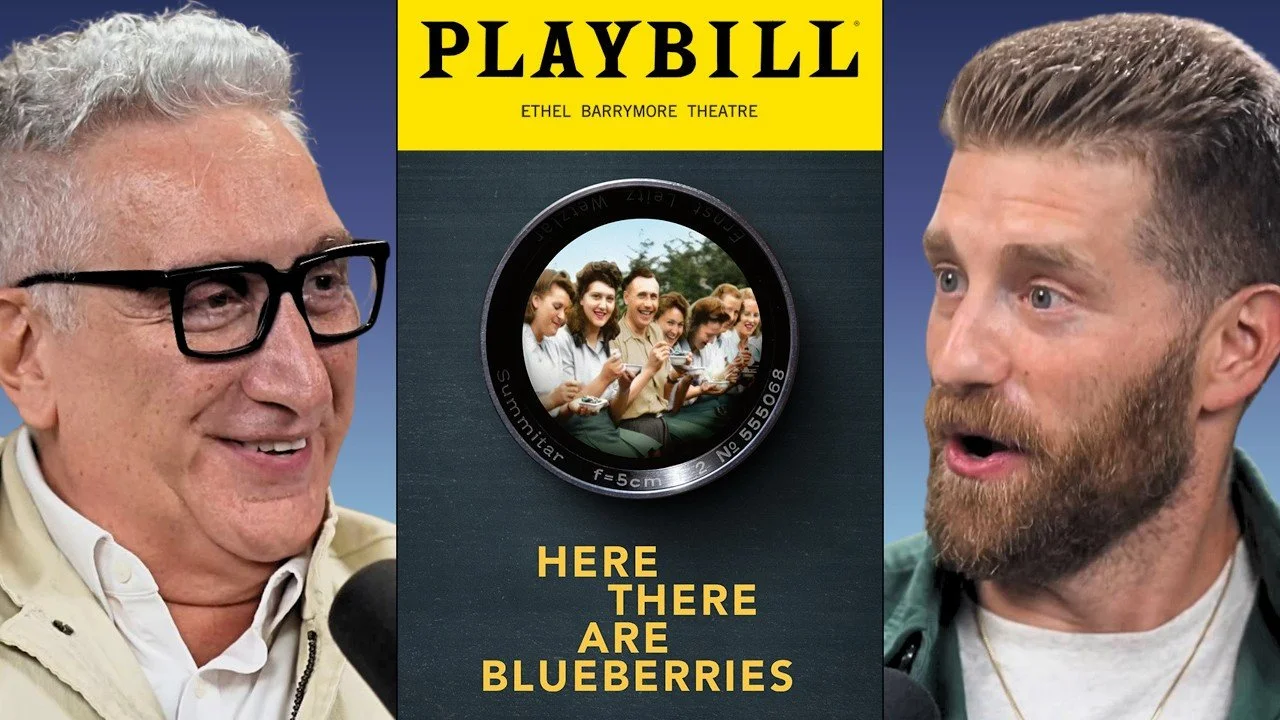
Untold Holocaust Story You MUST See! Broadway Director Moisés Kaufman’s Here There Are Blueberries
This podcast is brought to you by Birthright Israel Foundation
They need your help to send the next generation of young Jews to Israel
So go ahead and donate at onetripchangesverthing
com
A quick shout out to our official Jewish television partner, JBS
That's Jewish Broadcasting Service
You can catch Being Jewish with Jonah Platt on JBS
And while you're there, go check out their other great shows
A special shout out to the wonderful Judy Kaylor
Thank you so much for supporting Being Jewish
It means the world to me
And shout out to Rabbi Taff, too
Love you guys
Shalom
Shalom
And welcome to Being Jewish, your home for deeply candid conversations on Jewish identity, culture, and current events
I'm your host, Jonah Platt, and today I'm in the Big Apple, New York City, which is appropriate because my guest today is an award-winning playwright and director who is returning to Broadway with an incredible new play for which I'm proud to say I am also a co-producer
But before he began his legendary career in the theater arts, he was just your run-of-the-mill pacewearing gay Orthodox Venezuelan kid surrounded by Jews who were not gay and goys who were not Jews
As co-founder of Tectonic Theater Company, he has spent the last four decades honing his own unique theatermaking methodology, utilizing not just the written word, but trial transcripts, interviews, sheet music, and with his newest play, photographs, as the building blocks of his groundbreaking work for which he's been recognized as a Pulitzer finalist, a Tony and Emmy nominee, and recipient of the National Medal of Arts from President Barack Obama
He's bringing the ruckus from Karacus
Please welcome the co-writer and director of Broadway's Here There Are Are Blueberries, Mr
Moises Kaufman
>> That was quite an introduction
Thank you
>> Yeah, it's it's all you, man
>> Thank you
>> So, Here There Are Blueberries
So excited to be sitting here and getting to talk with you about this incredible show
When this airs, it will be the day after you have opened
>> Oh, wow
>> Yes
So, right now, you are still in rehearsals
>> Yes
>> How's it going? >> It's going well
We just finished our first week, just began our second week, and the actors are doing well
So, I'm excited
>> That's so low-key for it's like a big deal
I mean, the the show has been playing around the country regionally, a lot of different places, and you're finally getting this crack at Broadway
Why is that important? >> Was the opportunity to reach a whole new audience
It's also the biggest stage in the country, right? And it gets a certain amount of attention
We were fortunate
We already did it at New York Theater Workshop first
Um, and then we did a national tour and then I just directed it in London
Uh but yes, we are super excited to to bring it to Broadway
>> So I got the chance to see it at the Wallace in Los Angeles and my takeaway from it is it felt sort of like watching a living documentary
So I I would love for you to tell the audience like the log line of this show and the origin story of where this idea came from and what made you go, "Huh, that should be a play
" I don't personally like the word documentary for what I do because I think uh it evokes certain things that is not exactly what we do
I think that that when you see a documentary is uh the the conceit and the contract with the viewer is these are the facts
And we know now that as soon as you put two pieces of text together, they're no longer the facts
There's a kind of narrative that the creator is creating
>> Mhm
And especially in the theater because you have actors playing the roles of the people to call it documentary feels you know these are this is not the facts and these are not the people these are actors recreating the people as soon as an actor plays a person that's an interpretation >> of what that person is so that's why I'm just uncom I'm comfortable with the word >> I think that what we try to do in tectonic is that we try to really deal with stories that are uh very contemporary but als also that allow us to explore what theatricality is
How do you create stories that that talk to contemporary audiences using the vocabulary of the stage? I think if you're going to do a play instead of a film or a or a television series, you have to ask why this medium
>> Yeah
>> And I think we've devoted the entire life of the company asking that question
So that's why uh when you look at blueberries, it doesn't look like other plays or it doesn't sound like other plays
The story began because I saw an article in the front page of the New York Times that there was this mysterious uh album of photograph uh from the Nazi era that had just been donated to the United States Holocaust Memorial Museum and they had photos
The photos of the album were in the front page of the New York Times and basically it showed Nazis uh the Nazis who run the concentration camp Avitz
um but it didn't show any victims
>> So it's an album of photographs of the concentration camp Avitz without a single victim
>> So it's a document that records the daily life of the people who ran the camp
And it was so interesting the photos were, you know, them lighting a Christmas tree or petting their dogs or uh eating blueberries, you know, or sunbathing
Um, and that was shocking
You know, there's a lot of things happening in the scholarship around the Holocaust now that has to do with the perpetrators, right? >> For the longest time, we focus correctly on the victims
Now, there has been a turn to focus on the perpetrators and try to really understand how they did what they did
>> My father is a Holocaust survivor
He was from Romania and he hid in a basement of a building for two years >> with other people by himself >> with his family with his mother and his brother
>> Um, and so I always thought that that I would eventually at some point in my career as a theater maker have to deal with this issue of the Holocaust
But what always stopped me was that there's been so much already written about it
>> Yeah
>> What is new? What can you tell that people have not already talked about and see that these photos are new? These photos just emerged in 2007
And um so what I did is I went on Facebook and I texted uh the head archivist of the United States Holocaust Memorial Museum, the woman who had received the album, and I said, "Can I come and talk to you?" and she said, "Uh, we did your plays at my school at my university and yes, I would love to talk to you
" So, she was familiar with the work
>> Amazing
>> And, um, and I went and I talked to her and I thought, you know, Tectonic is an experimental theater company, and we are always thinking, can something be a play? And, you know, an album of photographs, can an album of photographs be a play? How do you make a play out of an album of photographs? And I went and I met with with Dr
Rebecca Belding and she walked me through the process that she went through trying to figure out what this album was
Um she opened the album and she saw a photograph of Mangal
>> Wow
>> And she immediately recognized him and she realized immediately that it was an important artifact because there are no photographs of Mangal in outfits
>> Wow
>> Yes
And when I say there are no that means nobody has any
This is the when she saw that photo she said this is the first photo of Mangallay Ashitz that we have ever seen
>> Wow
>> Um and so she decided to start identifying all the people in the album
That took months and months and months of work
But in the album there was uh Ru Hus who was the man who created Avitz
There was um Bayer who was the commandant of Avitz at the end when they did the Hungarian mission
And also there was I don't want to tell too much because I want I want to encourage your listeners and your viewers to come see it of course
>> But but but it was all of this
It's a record of their daily lives
>> Yeah
>> And it shed so much light about what it is
So as she was talking to me as she was telling me all these things I realized that what the play had to be was a detective story because she was playing detective
She was trying to figure out, it took her about two years of work to figure out who everyone was, what was happening in each photograph
Um, there's a vacation resort in one of the photographs, and she's asking what is a vacation resort >> during a concentration camp, so she had to figure that out
>> Um, and the play is basically that detective story
What do those photographs tell us about that time period and what do they tell us about this time period about us now? now in 2026 take some of that a little bit for granted because we've had all these movies and TV shows now like the idea of seeing a a commonant struting around like I I can picture like five right but at in 2007 we hadn't seen a lot of that and we haven't seen it explored so specifically in the way that this play does and also you you sort of without giving too much away you jump around in time you jump around in location
It's a very kaleidoscopic view of of this story in a way that's very very interesting and very novel and I certainly found it extremely impactful
>> Thank you
I think the thing that's interesting is that as you say, yes, we've seen common dads walking around and striding around, but there is so much more than the album reveals about the daytoday life of of them
>> You know, there is uh a man the man who made the album
Why did he make the album, >> right? um who was he and you can see a lot of his life in this in this in these photos
Um so I think there's something about that and also you know historically there is a desire to say well the Nazis were monsters
Right
>> Right
This is really the key thing >> to me
It's very problematic to say that the dances were monsters because the moment you say the dances were monsters, you're distancing yourself >> from them, right? Because well, of course, they could do what they did because they were monsters
>> They came from outer space and they're this uniquely evil breed of of creature
>> I could never do that because I'm not a monster, >> right? >> And what you see in these in these photos is that that they were not monsters
there were human beings who did monstrous things
Yeah
>> Right
And you can hold both of those ideas uh as you're watching the play
>> And I think that that makes you question, you know, what would you do in a situation like that? You know, we talk a lot about in the play about the there's a continuum between, you know, culpability, >> right? We know who were the people who were comp culpable, >> people who are complicit, right? >> What's the distinction? Well, there's a there's photos in the album of uh secretaries who worked in the offices of the camp
>> They never killed anybody, >> right? >> Right
They never put anybody in the gas chamber
They didn't select who went where
They were in an office
They were sending telixes to Berlin
>> So to me, they're not culpable
They're complicit
Right
They participated in the >> in the you know industrial infrastructure of the camp
Um and then there is complacent meaning the people who lived in the town of Aitz right >> who were outside and were seeing what was happening and didn't do anything right >> but I think if you look at that continuum right culpable complicit uncomplacent >> we all fall somewhere in there and I think that the more that we can look at that and own that uh the more hope there is for the human race surviving one another
Well, there's a there's a small few who don't fall on that spectrum who go who actually do things and take action, right? >> Yeah
Mother Teresa, [laughter] >> right? It's a it's a statistically very very small group
>> But I would say that even people who fall into that category that you're saying, G, Mother Teresa, you know, they are you are focus they are focused on one subject, >> right? They can only hold so much
>> Exactly
And I think that that the more we take responsibility for that, the the better, you know, the more we can do
Mhm
>> So you discovered this in 2007
Why does it take almost 20 years from the the germ of this idea to its realization? >> Because the theater project is a developmental theater company
So we always have three or four plays in development
At the time this happened, I was doing my last play on Broadway called uh 33 variations with Jane Fonda
So that took two years
And then after that, you know, it takes a long time to do all the research
We went to Awitz
We interviewed a lot of people
>> Had you been there before? >> Uh, no
I had been to DAO
>> And you and you had family killed in Awitz
Is that right? >> Yes, I had a lot of family killed
>> So, what was that experience returning there under these opaces and not having been there as you know a survivor of that of that place? >> In a way, because I knew that I was writing a play, I had something to protect me from the experience, right? because I had my writer's hat on and um so you know this sense of trying to make it you know to go there for something that I was going to make a play that would elucidate something about that place >> made it a little more bearable
Uh but I'll tell you what really struck me cuz by the time I got to Ashitz I had read everything I needed to read and I like I I knew what I was going to see
>> Sure
But after the second day I was there, I got home and uh I took my shoes off and then I took a shower and then I came back and I saw my shoes and I thought now what do I do with those shoes? Because the earth that is on those shoes, who knows what it's holding, right? How many ashes of people is it holding? what what what is in in I have uh a lot of friends who are kohanim and you know kohhanim cannot walk into because you cannot go to a cemetery you cannot go into >> right >> and um and I don't know there was but you know life comes to you in those details right when I looked at the shoes and I saw the earth that had been gathered in those shoes and they were now in my hotel room something clicked about the magnitude of the event that I had just witnessed
>> Wow
We went in the spring and the thing that that that I that for some reason got me the angriest is that there was one area where there was one beautiful red tulip >> coming out from the ground
>> Steven Spielberg put it there [laughter] >> and I saw it and and I know this is entirely irrational but I was so angry
I was like there should be no tulips in this place
There should be no beauty
>> There should be nothing growing in this
There should never ever again be anything growing here
and the the the the person who was taking us around who's the the major uh tour guide in Avitz, he said, "But think about that and about the play you're writing
Of course, there has to be life, right?" Yeah
>> The the contrast and the contradiction
Isn't that what your play is about? >> So, I hated to admit that he was right
>> Right
Damn you, tour guide
So, you obviously began work on this well before October 7th and the period we've been in since
You could never have imagined the environment in which this play would be debuting
How do you feel it's situating itself in in the environment we're in today? When you go to the theater, you're always bringing in the outside world with you
How how do you feel this play is sitting and and are you are you trying to draw attention to anything or just this just happens to be the time and place where this play has found itself? >> Look, I think as you say the nature of theater is that is contextual, right? Um whatever happens outside the theater before you walk in will, you know, color what what you're watching
To me, it was really important to make a play about the people in the photographs, right? in 1944 >> in that room because why? While we were working of it, there was the the war between Russia and Ukraine, right? >> There were so many episodes of different things that happened that you were looking at the play differently, right? Every time there's some some conflict between human beings, the play speaks to the person watching it
So no, we never try to make it about any one historical event except the historical event that is portrayed in the album, >> right? >> You know, and 20 years from now, if the play continues to be done, it'll be about, you know, three or four other events
And that's good because it is about something about human nature
The question that we ask is, how can you eat blueberries next to a concentration camp? How can you sunbathe next to a concentration camp? What is that? And I think that that is a question that is, you know, eternal
Unfortunately, >> I was reading while doing research for this a great quote that you got from an ethicist that you interviewed while you were researching
I'm going to read that quote
It's the thing about ethics is that unless you have a strong ethical system before it gets tested, you're going to end up constructing an ethical system that justifies your behavior
It's just very well said and it's something worth pondering
Um, talk about bringing the outside world into the experience
I mean, I guess I'm I'm looking for, you know, what are the conversations people are having around what Jews are experiencing today as a result of anti-Zionism and the rise of anti-semitism on the right and the left
uh in regards to sort of this this thought and sort of depending on where you fall on the political spectrum, you might be applying this to a totally different group of people
>> I think the reason why this person said this is because he gave this example
He said, imagine that that you know the first thing that Hitler did is that he um he fired all of the Jewish civil servants, >> right? He didn't want any Jews in the civil service
So imagine that you're a a non-Jewish civil servant and imagine that your boss is a Jewish civil servant who gets fired
>> Right? >> So the first thing that happens is that they come to you and they say, "Oh, you know, the job is open
Your boss's job is open
Do you want to take it?" And you go home and you're conflicted, right? So you talk to your wife and you say, "What do I do that this job? They're offering me this job
I don't know if I should take it because they, you know, they took this guy who was perfectly well suited for the job
They only took him away because he's Jewish
I don't want to take that job
And the wife says, "Are you nuts?" Says, "If you don't take that job, somebody else will take the job
You want a different boss
This is a this is a raise
They're going to raise your salary
You know, it's not your fault
You didn't fire the guy
You didn't take him
Take the job
" >> Mhm
>> So, begrudgingly, he takes the job
Then, couple months go by and then they started taking the houses away from the Jews
So they come to him and they say, you know, there's this house
Do you want this house? And he goes back home and he talks to his wife and the wife says,"Absolutely not
We have to draw the line somewhere, right?" >> And he says, "Well, but look, you're pregnant
We're about to have another baby
We need more room
I didn't kick the person out of the house
If we don't get it, it's going to go to somebody else
Why shouldn't we get it?" So at every moment you're making a negotiation with your moral system and your ethical system and uh and so that's why the ethsist said that is that the most important thing is that you have to have a very clear and structured ethical system uh before it gets tested because if not you're going to end up building an ethical system to justify exactly what you wanted to do >> which is probably what 99% of people on planet Earth
That is correct
>> Do at any given time
>> As I mentioned before, Broadway, you've done this national tour
You've been in London, Florida, LA
What's been the response and and sort of what of the responses perhaps has surprised you that you didn't expect to hear? >> It has been really wonderful because the responses have been more or less what we wanted people to think about
We're asking people to look at at at the these officers in their daily life
You're going to have a strong response
And that has been true every time that the play has been done
But it is an invitation to look at it from a different angle and that's also been very very very successful
What was really interesting is that everywhere in the US the response was more or less the same
>> But when we took to London it was very different
Why? Because the people in those photographs bombed >> the people who are in the coming to the theater
>> Yeah
>> So there was an immediacy there
It was much more I felt the audience was much more raw
>> Um, that was the big difference
>> That's interesting
You've you said that you've never heard silence in a theater like the silence this play gets
What What is the silence about? >> I think because Rebecca Belding was such an incredible detective, what she was doing is she was looking at the photographs for clues
What happens in the theater is that we are sharing all those pictures, all those photographs with the audience >> and the audience becomes co-detectives in the play
So they are too scanning the photographs to see clues and they're trying to figure out what the photographs can reveal
>> And that creates a kind of silence that I have never I've been doing theater for 30 years
I have never heard that kind of silence
It's also that it's asking the audience to look at themselves in a very very very very clear way
And I think that there's a certain kind of introspection that requires a certain kind of silence
I hope that's true
We could all use a whole lot more introspection
So, anything you're doing that's getting people to think about their own ethics and and behavior and, you know, the slippery slope between good and evil is is a good thing
I want to just give a quick shout out to your lead producers, Brian and and Dana Lee, who are this millennial Jewish couple who are doing what I talk about a lot on this show, which is doing what they do well, taking their skills, their passion, their sphere of influence in their work, and telling Jewish stories with it
Uh, they also brought Giant to Broadway, which is the story about Rald Doll's anti-semitism
Um, how did you two get connected on this project? before we started the play, they they connected with us and I have to tell you, I have such admiration for the two of them
It's exactly what you say
They are not only they're brilliant, but they are they're putting their heart and their soul behind uh the work in a way that it is so inspiring
Um, and they're both men and they so >> we're very fortunate
You know, they're partnering with Tectonic
Tectonic is the other >> lead producer in the com in the show
But it's it's been >> I don't know, you know, the fact that that two people from that generation are that committed to creating good work and creating work that addresses a certain Jewish identity is I couldn't love them more
>> The operative word there really is good, right? I mean, especially when it comes to media and Jews trying to tell Jewish stories, a lot of the times you get the Jewish before you get the good
And I love that they're these are great of their own merit pieces of theater that they're putting out there
They just happen to be of a certain kind of story
I think that's the the great thing that they're doing is that um you know as you say a lot of political work sometime lacks in the artistic side >> right >> and they are really only interested in the highest artistic standards um and I think that's what differentiates them from other producers
>> It's a great lesson sort of I think broadly of the the quality really has to be there for anything to matter
It can't just be as you say that political messaging >> because then it becomes agit prop right then it becomes like I'm telling you what I want you to think as opposed to >> what art can do you know what theater can do theater has a much more sublime purpose and and uh landscape than politics or or or social sciences right because theater and the arts in general are much more holistic approach to the way that it communicates from one human being to another human being
It talks, you know, the theater addresses your brain when it's done well
It addresses your heart
It addresses your spirit
Um, and it does so through human behavior
>> It's kind of an alchemical magical thing
>> Totally
I as you as you mentioned I went to a yeshiva all my life and there was something about you know all of us sitting around looking at you know different interpretations of text you know uh textual analysis and looking and trying to understand words um that has influenced me tremendously as a theater maker
Some critics have called my work rabbitical and I I think they meant it as a as a as an insult, but I take it as a great compliment
>> Hey, they're right on the money
>> Well, because I I I I think that that it's what you're saying about there's a certain rigor that you learn in >> Yesh, >> right? And a certain you you have to look at every text and understand, you know, everything with the idea that that that'll bring you closer to to God
How much does entertainment play into your mind as you are creating your theatrical works? >> Very much
>> Okay
>> Very much
Because you know I'm not interested in procelitizing
I'm interested in entertaining
I'm interested in making you think, making you feel
Uh yes
If you if you don't have the the basics of, you know, entertainment, of storytelling, then you cannot what is it? You need a spoonful of sugar to make the medicine go down
>> I don't think what we do is medicine, but I think that you have to have your craft in order
>> Just to let everybody know, I I'm sadly not going to be at the opening uh which again will have been the night before this airs, but I will be at Here There Are Blueberries on December 20th leading a talkback after that matinea
So, if you don't have your tickets yet, that would be a really great one to go to
And if you miss out on that one, you've got 79 performances otherwise to choose from
So even then, don't wait
In the summer of 2008, I went on my birthright trip to Israel
A free 10-day excursion to the Holy Land with a bunch of excited fellow college kids
You think it's going to be a standard vacation, soaking in the Dead Sea, parties in Tel Aviv, and it was that
But what I didn't realize was how on top of having a great time, it could actually change your life
There's an indescribable comfort of being in a place that's for us, our Jewish family, from all over the world, and the magic of seeing thriving Jews living peacefully alongside other Israelis of all races and religions
There's the wonder of the land itself, the Negev, the Galilee, the old city, and the clubs of Tel Aviv, the Western Wall and Msada, the tunnels, and the kibbutim
Returning to America, it's staggering to realize how strong your bond to Israel suddenly is
One trip really does change everything
But these free trips can only stay free with your help
If my story speaks to you at all, please donate to Birthright Israel Foundation because for the next generation, a trip to Israel means more than ever before
So, please [music] head to one tripverthing
com and make a donation today
Now, back to the show
You mentioned, oh, eventually I'm I'm going to have to sort of deal with my Holocaust family inheritance background, but you have done other works dealing with this time period in the subject matter
Um, you directed the Pulitzer Tony winning I am my own wife, which I saw, by the way, in New York as a teenager, which was I still I can picture it vividly
It was very moving and unique theater experience
Um, and you also directed in LA a revival of Bent at the Mark Taber Forum
Both of these shows deal with the same time period
Um, and with Nazis
I mean, do do you know that you're like the guy who does plays about Nazis? >> No, [laughter] I think I think you know the thing that was different about those plays is that those plays were from very different perspectives
>> Very different
you know, one was uh from um a gay person in during the concentration camp era and the other one was a a trans person who survived the Nazis and the Stasachis wearing a dress
So, no, it's not the same
>> No, of course not
>> I'm interested in current affairs and I'm interested in history
Like I I think that that looking at history through the lens of theater is something very powerful
You're also interested in gay characters as Bent being one of them, uh, most famously the Laramie Project and as you already mentioned, Gross Indecency
Um, how much of the stories that you have told in your adult life do you trace back to this upbringing as as this gay Orthodox kid? Um, afraid your yeshiva mates would find out that you're gay, uh, inheriting this Holocaust history
There there's a lot in there for any kid to deal with, let alone work out over a theater career
>> All of it
>> All of it
>> You know the there was a time where playwrights were very upset if you said, "Oh, he's a gay playright
" They they often ask me, "Are you a gay playright?" Said, "Yes, absolutely
I'm a gay playright
I'm also a Jewish playwright
I'm also a Venezuelan playwright
" Right? I'm also an upper westside playwright
Like if you if you do this kind of work and you do it remotely well, you are drawing from all of your identities and from all of your histories
>> I I think you know we hear the cliche write what you know
Like a lot of people have heard that and I think a lot of people think about that too literally in the sense of oh well that means I I can only write about being a director right but it's it's you know write who you are and what you know know at a deep level and you've clearly done that your whole career
I think it was Hemingway, but I may be misquing him, who said, "All art is a form of autobiography
" >> And I like to think of it that way because yes, when I'm writing a play about Oscar Wild, I'm not writing a play about me, >> right? >> But I'm writing about Oscar Wild through my sensibility, right? And that's why it becomes part of my autobiography
>> Right
>> So the the style of theater making that you and Tectonic have devised over these four decades, you call moment work
What does that mean? We started the company because we were very um it was as a reaction to what was the most common uh kind of theater that was being made in America at the time
And it was kind of realistic and naturalistic
It was like I was tired of going to a theater and seeing a sofa on stage or going to a theater and seeing a kitchen sink on stage, right? This kind of >> which you know those are beautiful theatrical vocabularies, but it was it was 99% of the work was in those vocabularies
And I sometimes wonder if film and television don't do realism and naturalism better than the stage
>> So how can we use the theatrical space in contemporary ways to speak to contemporary audiences? So none of our plays are realistic
None of our plays are naturalistic
All of our plays are pushing the boundaries of what the art form can take
Right? In here there are blueberries
The point of departure is the photographs
So we use every surface on that stage to project the photographs and have the audience see you know 20 feet tall images that they're asked to confront
You know uh gross indecency as you said was based on the transcripts of the trial
Um the Laram project was based on us a theater company going to Laram spending a year in Laram talking to the people of the town coming back and writing a play about that
um 33 variations was about looking at the sketches of Beethoven
So this question of of of how do we use theatricality to inspire people? How do we use theatricality to give people an experience that they cannot have at home watching television or that they cannot have watching a film? Um and I think that that's what we've devoted the entire life of the company
Tectonic means the art and science of structure, architecture, architectonic form, right? What is the new forms? What are the things that can only happen on the stage? You know, whenever you ask what can happen on the stage that can only happen on the stage, invariably the answer is, oh, it's about the live presence of the actor, >> right? >> Which is true
>> Sure
>> But I don't think that's enough of an answer
I think we have to question what is about the theatrical language? What is theatricality? What can you do on a stage? How do you tell stories on stage using the power of the stage? And perhaps that's a a very highutin way of saying what we're doing, but I think that it is it has guided us
Well, >> why do you call it moment work? >> Because when we started doing it, the first four years of the company, we were doing mostly other writers work, >> but other writers that were also really interested in this question of what is not realism and naturalism
So we were doing a lot of Samuel Beckett and Berto Bre and Sophie Treadwell and you know people like that and then at one moment we realized if we're really being rigorous about this question it's not enough to do other people's work we have to start writing our own texts and so we created a way of writing theatrical performance that wasn't based on a writer going into a room and writing a play and coming giving it to somebody on the stage but a group of actors writers designers directors all in a room together playing theatrical games and from those theatrical games we created theatrical moments
So we didn't feel like we were um proficient enough to write entire plays in these new ideas that we had
So this kind of of devising process gave us the tools to create one small theatrical moment at a time
>> And is that still how you build all your shows? >> Exactly how we build
>> Wow
So very collaborative like even more so than regular theater
very collaborative
>> Interesting
And I I would love if you could give an example just for the folks who maybe have never seen one of your plays performed
Um I don't we've spoken about blueberries, but using one of the other ones sort of explaining visually what you mean when you say these are theatrical
This is not naturalistic realist
Like what is what are they seeing? What is that experience? [sighs] >> What is it talking about? Uh what is it? Talking about theater is like dancing about architecture >> that it's always hard to kind of articulate what happens on the stage
Uh in words what is would be a perfect example? Um well for example in 33 variations my play about Beethoven um there was a moment you know it's about a woman a musicologist who gets obsessed about trying to figure out why Beethoven wrote a piece of music
And in the play you have the scenes with Beethoven and then you have the scenes with with this musiccologist and uh they happen at different times and at a certain moment she gets very tired
She sits on the bed and all of a sudden he sits on the bed and these two time periods who have been completely kept absolutely apart at one moment she just leans her head on Beethoven >> and you know and it breaks the construct that you know time is is very uh stable
Um and it reminds us that that when you get obsessed about something the the membrane between the past and the present becomes very permeable but we do that in a very theatrical way
We're not speak, we're not saying, "Oh, the membrane between the P and the we're showing it, right? >> She leans her body on the body of Beethoven >> and that communicates all of that
" >> And that communicates all of it
And that's a theatrical way of doing it that that would not work on film, that would not work on television, that it is about the body of those two actors, >> right, >> sharing that stage
>> Beautiful
Let's talk a little bit about the Laram Project, which has become one of the most produced plays in American history, which is, you know, tip of the cap to you, sir
Thank you, sir
>> Um, a devastating story
Uh, thank God we we have shifted since this story took place and since this play first came into existence from if not full normalization of of gay life and queer culture, certainly tolerance of its existence in a way that did not exist when when Matthew Shepard was murdered
Where was this country when you wanted to tell this story? And as the the life of this show has just gone on and on and on, how have you seen that shift? >> Well, for your viewers, um Matthew Shepard was a young gay man in Laramie, Wyoming, and he was 21
He went to um a bar one night, and there were two guys, and they recognized that he was gay
Um, and they said, "Come with us and come to our house and have a drink
" And he got in the car with them and they took him to the outskirts of town
They tied him to a fence and they beat him up and they left him there for 24 hours
Uh, he was found and he survived for three more days and then he died
>> Yes
>> And the thing that struck me when I heard the news, number one, you know, the brutality of the crime
Yeah
>> And the imagery of the crime, right? It was it it it read like a crucifixion
>> Yeah
And you cannot deal with that kind of imagery in this country without getting an incredible amount of attention
But the year that he was attacked, there were around a thousand anti-gay hate crimes
And I kept thinking, what is it about this one? Why is this one the one that we're all paying attention to? I mean, you couldn't open a newspaper
You couldn't turn on the television or the radio or it was everywhere
Matthew Shepard was everywhere
>> This was when what year? >> It was in the year 1998
>> Okay
>> And it struck me
like why why is it that it's him right and there are many reasons but but I think that one of the things that that that incited me to do was what if we take our theater company to Laram and talk to the people of the town the town is 26,000 people and you know I live in the upper west side of Manhattan if there's a murder that occurs a block away from me I never think what did I do to participate in a society where this murder is possible >> but if you're in a town of 26,000 people where everybody knows everybody you're going to ask yourself, what kind of children are we raising here that are doing this? And that's what we did
We went and we and we uh interviewed the people of the town
I think one of the reasons why it has resonated, why it has gone so many productions over the years is because we captured this X-ray of America at that moment
And if you are, you know, a right-winger who believes that marriage shouldn't be legal between, you know, same-sex partners, somebody in the play will articulate your point of view
>> And if you are, you know, a person on the left or a person who has different point, you know, so what we captured was a nation at war with itself and that unfortunately is still the case
>> Yeah
>> And you say that we have made a lot of progress in the in the in the And it's true
We have made a great deal of progress
But if you look now, there are more anti-gay crimes now than there were when Matthew Shepard was murdered
>> Seriously, violent crimes
>> Violent crimes
The only difference is that now they're much more uh directed toward the trans part of our community
>> Right
>> But there are more more anti-gay crimes being committed now
So, yes, we've made a great deal of progress and we've also seen a lot of uh push back
>> Yeah
you know, um, so I think that's why the play has resonated
>> Thank you for sharing that
Um, we've talked about now some of the the Jewish part of your of your theater work, the gay part of your theater work
Let's talk now about the Venezuelan part of your theater work
But if you want to keep chatting with me and Moises, you got to be part of the Kahila, my subscriberonly community
To the hundreds of you who are already members, thank you
I love you
And it's been so fun meeting many of you all over the country as I travel around
If you're not a member yet and you want to get in on this exclusive content, free tickets to live events, and a whole lot more, head to beingjweishpodcast
com/join after the episode and get in on the action
Whoosh! There it is
So, Venezuela, we've seen, you know, you see what happens when socialism leads to authoritarianism
In this country, we're seeing sort of pulls on both sides towards both of those directions in different ways
There's sort of this new crop of socialists coming up on the left
You've got, you know, an administration on the right that's making authoritarian lunges at times
Where do you find yourself politically these days as you know I know especially I mean you are your own person but I know Venezuelans and people who have lived through regimes like this have a very unique perspective on on what we're seeing in this country
So I'm just interested in yours
>> I think one of the things that I'm finding most troublesome is that the right has gone so far to the right and the left has gone so far to the left
>> Yeah
>> So we're a country that is more divided now than ever before
You know, we throw around the word socialism very very easily, but you know, Chavis was never a socialist
You know, he was a communist dictator
>> Mhm
>> So, we can look at him and say, you know, oh, he was, look at what socialism does
That's not social, as far as I understand it, that's not socialism
That's just communism disguised as something to be able to be more palatable
>> I guess that's usually how it works, right? We call it socialism
It ends up being communism and it ends up being a dictatorship
>> I think so
I think but I also think you know both both sides have become so extreme that that I I am talking more and more to artists and to activists who feel that they have been abandoned by both sides >> right that there's a part of the left that doesn't speak for me anymore and that there's a part of the right that doesn't speak for people who are conservative and I think that's the biggest problem is that the both sides have become so extreme that there's, you know, it was always hard to find a middle ground, but now it's almost impossible, >> even though that's where most of us live
>> Yes
And that's what I mean that I'm that I am meeting with a lot of activists and a lot of artists who do feel that where most of us lived is not represented
>> My last question before we get to uh our little game that I always like to end with is, you know, Blueberries is only on Broadway for a couple of weeks
It's a very limited run
>> 10 weeks
>> 10 weeks
What will success in these 10 weeks look like for you? >> What's always been exciting about Blueberries is that you enter the theater thinking you know about this time period and you leave the theater saying I didn't know that >> and it elicits certain kind of different conversations that you've had about the subject matter
That's success
>> Amazing
Well then may you have much of it and and may it go very well for you
>> Amen
Uh, all right
We're going to finish off as I love to do with a little lightning round
Paracus or New York City? >> Summers in New York, winters in Karacas
>> Nice
Uh, Spanish, English, or Hebrew? >> Spanish
>> Bagel with cream cheese or aripas? >> Areas
>> Me, too
Is there like a Venezuelan Jewish [music] food? >> The same Jewish food that that you find here
Exactly the same
>> Interesting
Peter Brookke or Pina Bosch? >> Oh, both
But Peter Brookke, >> Harvey Firestein or Tony Kushner? >> Harvey because I directed each [music] play
>> Jane Fonda or Robin Williams? >> These are very difficult
I love I love both of them
Um yeah, both of them
>> Oscar Wild or Lud Von Beethoven? >> Oscar Wild
>> How come? >> Because there was a depth of thought in Wild that that you can always return to a Wild book and be shocked by how [music] much he got right
so early on
>> Uh I think Beethoven, you know, his music does many amazing things, but but it lacks that kind of intellectual depth that I crave
>> Writing or directing? >> Depends on the day
>> First rehearsal or opening night? >> Opening night
>> National Medal of Arts or a Tony? [laughter] >> Can I have both? >> Yeah, please
Favorite Jewish holiday? >> Roshashana
>> How come? >> The promise of sweetness
>> Beautiful
Do you have a a favorite bit of Talmud? Something that sticks with you from all your years in the yeshiva? >> What I have become really obsessed with right now recently is >> Balshamtov >> and I've been reading a lot of how he thought about religion
And this idea that you did need to be that erudition wasn't the only way to arrive at spirituality, but joy was a way to arrive at spirituality
Unadulterated joy
And there's uh so there's something about that that that is really speaking to me right now
>> Love that
I think to to a lot of people today who are greatly in search of Jewish joy in a time where it can feel like [music] we don't have as much as we might like
If you could do any play about any famous Jewish figure, who would it be? >> Shalom
>> About Shalom
Interesting
The man behind the stories
That that sounds very Moses to me
And the last question that I ask of all my guests, Kala, rip or slice? >> Ripped
>> Obviously, Venezuelan, you're ripping
Moises, thank you so much
This has been awesome
Best of luck with everything
And break a leg
[music] Thank you
>> Here
There are blueberries is open right now on Broadway for only 79 more performances
So, don't wait
Get your tickets today
And remember, I will be there December 20th
It's a Sunday matinea if you want to join me for the talkback after the show
When you go, if you're Jewish, bring a non-Jewish friend with you
That's what I did when I saw it in LA and it was an extremely powerful experience
And hey, I've also got events coming up in Daytona Beach, Houston, and Palm Beach, Florida
So, be sure you're following me on Instagram, Jonah Plat, and subscribe to my newsletter at beingjweishpodcast
com so you [music] don't miss me when I head to your town
and join the Kahila for discounted and even free tickets to those events and more
[music] All right, that's it for me
I'll see you all right back here for the next momentous episode of Being Jewish with me, Jonah Platt
[music]