
Episode Transcript
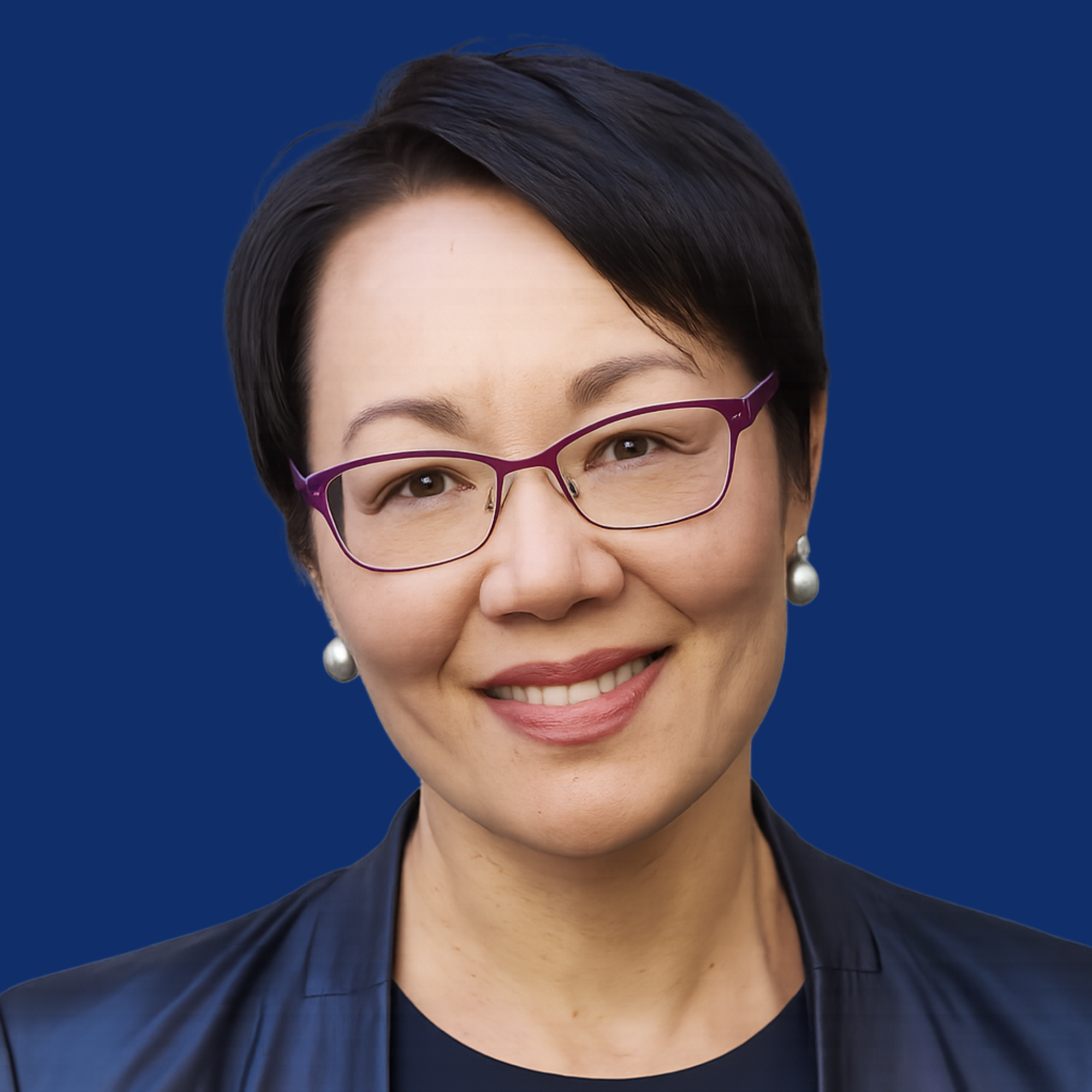
MILLIONS Watch History’s First Asian-American Rabbi, Angela Buchdahl of New York’s Central Synagogue
You're born in Korea, you move to the States.
Dayenu, your parents are an interracial couple.
Dayenu Interfaith couple Dayenu.
You move to Tacoma where there's like no Jews.
Dayenu and you're a woman in a male dominated field.
This is a Hollywood story.
I did feel this is who I had to be.
I didn't have a choice to be a Jew or to be a rabbi at the same time.
You better believe that on the inside.
I was like, how am I going to do this?
One of the most repeated directives in the Torah is that as Jews, we should love the stranger, the outsider, the foreigner in our midst.
If you had to give the Jewish people a grade on how well we honor this edict, what would it be?
What about for yourself?
Do you get an a?
My guest today could write the book on what it means to love the stranger, understand the stranger, or even be the stranger.
And in fact, she has written that book as only she could write it.
She's history's first Asian American Rabbi and its first Asian American cantor Booyah.
She's the senior rabbi of New York's Fabled Central Synagogue, reaching more people with her words and melodies than any other Jewish leader in North America through her live stream services, which you can watch if you're a watcher right here on JBS.
Please welcome the legend, the icon, the Judean Korean Rabbi Angela Bal.
Thank you Jonah.
Wow.
The Judean Korean.
I've never heard that.
I'm, I'm, boom.
I love that.
Boom.
Thank you.
I'm, I wanted to be the first.
You can take that.
It's a, it's yours, runaway.
Thank you.
So usually when we, we set these up, we do a ton of research.
We have to go through your whole life story, but you went ahead and made it easy for us and wrote a book.
You're welcome.
Yes.
Thank you.
Thank you so much.
Thank you.
It was fantastic.
And the book is out next week.
It's called Heart of a Stranger, an Unlikely Rabbi Story, A Faith Identity and Belonging.
I'm gonna immediately push back on this title.
Mm-hmm.
Because having read the book, you are the most likely rabbi I've ever imagined.
Well, as I was reading it, it's like, it's like reading a biography of Michael Jordan being, oh, that guy's gonna be like a star basketball player.
Like you.
You were destined to be a rabbi from when you were a small child.
I think there is something funny about the fact that when you can look retrospectively, everything seems like, of course it was inevitable, but.
Michael Jordan too.
You know, he didn't make his high school basketball team.
That's true.
So if you're gonna use that example, I'm just gonna say that when you're in it, it doesn't feel at all likely, right?
Like for me, along the way, every time any signpost came, it felt like, of course this doesn't seem like the right path.
Now that I'm.
In my position 20 years at Central Synagogue, I'm marking my 20th year.
Yeah.
It kind of feels like, well of course you'd be there.
You were the kid that was singing to God and you know, you, you went on all these Israel programs and you know, you had, you know, looking back, you can see all those things, but in the moment, none of it felt inevitable.
That that's totally fair.
And I, I totally understand that.
And I mean, as people will find out when they read this book, there, there are moments like at age nine, your sister brings you a dead bird to say Kaddish over.
Like that's not normal.
That is like no one else is doing that, except the people destined to be rabbis.
It is, it's true.
And it, the funny thing is when you write a memoir, a lot of the things in your own life you don't think of as particularly unusual until you like.
Look back on them.
Right.
You put it all out late in front of you from Yeah.
From, yeah.
And I had the gift also of working on this book with my dear friend Abby Poman, who also has a show on JBS.
That's right.
And she could reflect back and say, you know, Angela, that's not normal.
The, the, the, the praying to God thing you used to do with your sister, that's not normal.
You understand?
So it sort of takes someone else's eyes Right.
To help you understand.
Oh yeah.
'cause you grow up and you kind of realize that's, you just think that's your reality course and everyone's reality.
Of course, we all have blind spots about ourselves.
Yes, for sure.
That's what I felt as reading it, that like.
I was getting to see you from a distance, and a lot of my questions are sort of gonna be around, did you realize this or is this just me as the third party kind of seeing this from, from a distance?
So the, the book is part memoir, part spiritual Guidebook.
Mm-hmm.
As you say.
And what struck me about the memoir, part of it is.
As the outsider observing, sort of what I would identify as sort of your tragic flaw, we all have one.
Mm-hmm.
And yours is that you are absolutely built for this, like what you're doing in a, in a prodigious way, and throughout your whole life story, you're constantly doubting yourself and you know, seeking permission from others.
When it looks like it was written in the sars, have you identified that in yourself or did it take writing the book to clarify it?
Or did you feel that, or is this news to you?
I'm gonna already say that I can tell a gift of this memoir is, is seeing my life reflected back through someone who reads it.
So, I love this question.
The, the interesting thing about identity is you can feel something about yourself, but if you have no community that is reaffirming that identity, it's very, very hard to hold that.
So, you know, I had a deep sense that.
From the beginning that I was a Jew, but if you find yourself in communities in which people are not reflecting that back or will not accept that status, it's very hard to persist in that understanding of yourself.
And it wasn't just about having a non-Jewish mother and a Korean face in the Jewish community.
There were also issues around gender in the Rabbinet, which were also like the rules were changing in the generation that I was growing up in.
Right?
I was the first generation.
That grew up at birth with the existence of a female rabbi, but it was still not common.
It was still unusual.
There's still plenty of sexism around it.
So I think that, um, anytime that you kind of feel like, well, but I should be a female rabbi, but, but there's a lot of noise around you that says that's not true.
It takes a lot to persist through that, and I think that was a, you're right, a fundamental tension in my life.
You're born in Korea, you move to the states like Dayenu, you're already outsider, stranger.
Your parents are an interracial couple.
Dayenu Interfaith couple, Dayenu.
You move to Tacoma where there's like no Jews.
Dayenu mm-hmm.
And you're a woman in a male dominated field.
So like stack on, stack on stack.
On stack.
That's a lot.
For any one person to deal with.
To me, I'm like, oh, it's like this is a Hollywood story.
It's like you, you have your heroine and the, the key to a good story is you throw as much crap at them as you can that's gonna like shape the ultimate outcome and you end up becoming sort of exactly that thing that you were meant to become.
Being hardened by all of that stuff.
Does it feel like destiny at all to you, or it's just the way it worked out?
Well, it might not surprise you, but I'm a believer.
I'm a believer that there is a kind of divine hand Yeah.
In everything, and that you listen to those little.
That, I guess that little voice or that spark or that thing that pushes you through.
I would say that something I learned about my own personality, and I think I get this a lot from my mother, who you probably, having read the book, knows in many ways the hero of my book.
I love your mother, we're gonna talk about her.
She seems absolutely amazing.
Yeah, she really is.
And um, and my father too wonderful as well, and each in their own way, shaped me.
Of course.
What I learned about myself was when people said, oh, Angela, you can do this.
You can do this.
I came up with every reason I couldn't.
But interestingly, when someone would say, Angela, you can't do that.
That was suddenly when I was up against a wall.
That would would be when I would say, wait a minute, is that really true?
And that would actually be when I'd find my strength.
So I guess that the, the.
The benefit of so many people doubting me is ultimately that was much more fire for me than having, having people say, of course you were meant to do this.
Of course you should be a female rabbi running this synagogue.
It was actually much more helpful given my own personality when people said.
There's no way you can do that with three kids.
Nobody does that.
Right?
So, um, I actually think that that's some combination of like, you know, the way I'm hardwired and the way the world works.
And, um, and I also some very deep desire that I did feel this is who I had to be.
I didn't have a choice, thank goodness.
I didn't feel like I had a choice to be a Jew or to be a rabbi.
You speak about in the book how you're American, you're Jewish, Korean, and, and growing up you felt like you didn't fully check any of those boxes, right?
Not, not Christian enough to be part of the Korean American community.
Not observant enough to be in the Jewish community, not apple pie enough to be American.
Was the voice that said you don't belong in those places.
Was that all external or was there an internal voice?
And, and where do you think the internal voice came from, if there was one?
It's very perceptive, that question you're asking.
Um, it definitely was both external and internal.
I would say, you know, for an example of, of, of this was.
Going to Israel for the first time when I was 16, which I share in the book.
Mm-hmm.
And um, it was the first time that I actually was around more observant Jews.
'cause in Tacoma, my little bubble of Jewish Tacoma in the reform community with patrilineal descent, with outreach that had been kind of in the seventies.
My family was accepted.
I was a Jew.
There wasn't a question about it.
And that was in some ways a gift for me as a young Jewish kid growing up.
But.
It was then a shock when I was 16 and someone said, well, you know, that's not the traditional Jewish halachic definition of Judaism.
It's traced through your mother so you're not actually Jewish.
So that was extremely, um, shocking to me.
And so this was of course an external charge that could shake my sense of identity.
But that wasn't the only thing.
There was an internal, uh, question because I, for the first time, met Jews who lived these incredibly wholly Jewish lives.
I don't mean wholly with an HI mean like completely holy, right?
Um, and they were living in Jewish communities.
They were going to Jewish day school.
They were so much more Jewishly literate than I was.
And suddenly I thought to myself, wow, that.
What it looks like to be really Jewish.
Mm-hmm.
And I'm not that either.
So I had internal questions for sure about, um, how I could fit in and, and, and it worked with all the questions about being a female rabbi.
Yes.
It, it challenged me when people said, how are you gonna do this job with your three kids, for example?
And on the one hand, I was.
You know, upset that people would ask that question of me, that they never ask of my male colleagues at the same time, you better believe that on the inside I was like, how am I gonna do this with my three kids?
Um, 'cause I didn't see the model before me, right?
And so I had to kind of.
It's like if you're a trailblazer, which literally like the idea of it, and I, I have in-laws who live in Vermont, who actually blaze trails on there, um, the property behind them.
Oh, it's a thing, you know, which it's a, it's a real thing.
You, you, you just look at a thicket of brush and you have to decide, what do I hacking away to actually make a path here?
You can't see it, you don't see the, the groove that's been tread before you.
Right.
And you actually have to blaze that.
And, um, it's not so easy and you co you constantly think maybe I'm doing this wrong, so.
Mm-hmm.
So let's go back to your mom, your mother, remarkable woman.
I mean, as, as much as you are a credit to her, she is a credit to you.
The book is filled with her wisdom and her excellent parenting.
I, I love children are like bamboo.
Bend them while they're young.
I love that.
I'm, we're, we're keeping that weekly shout out to Courtney.
And she was really like literally a one woman community builder.
That's the part that was right.
The most impressive to me.
Um, what do you most admire about your mother and, and what in her do you try to emulate?
So much about my mom.
I mean, I think she really is my hero.
I watched her live her life with a sense of deep purpose.
I think that she recognized that she was here for a reason, and that she was here to make the world better, and that she wasn't gonna wait around for somebody else to make things better.
And so.
I watched her kind of almost single handedly create this Korean Women's Association in Tacoma, which started really as like almost a social gathering for immigrant Korean women who were lonely, frankly, and looking for community.
And it was like 30 women in a living room.
It is now like the second largest social service organization in all of Washington state.
Yeah, that's crazy.
You know, serving not just Korean immigrants, but elderly immigrants from all other places, feeding people domestic shelters, um, English tutoring.
It's just, it's, it's an incredible organization.
And it started though with just.
Meet the need that's in front of me.
No one else is gonna do this.
And so I think that that drive was really important.
I think my mother cared more about being respected and doing the right thing than being loved.
Mm-hmm.
Which had its hardships as well as its benefits.
And do you mean as, as a parent or within the community?
In the community?
Yeah.
She was also a tough love parent as you probably picked up.
Yeah.
But, but also I never for a second doubted how much.
How intensely she loved me and my sister.
Yeah.
You, you say, you know, feared and revered.
It's like the perfect combo.
There was, it was a, and she came from a particular kind of generation of Koreans that grew up with a lot of hardship.
And so, I mean, she kind of came by that and understood that like, in know you don't get too soft here.
You gotta, and, and, and I think that there is, um.
That has served her well and I think that I'm growing up in a different environment, but it also has served me in certain ways as well.
So I admire so much about her.
But I think I would say the last thing that she really taught me that is relevant in this moment to me, is just I watched my very capable, brilliant, you know, strong mother come to this country, and I watched how people treated her because of her thick.
Accent.
Um, and, you know, sometimes broken English as a person who was not intelligent, who didn't have anything to offer, who could be dismissed.
And, um, I watched this countless times and it made me furious and, and, and ashamed and at times and, and deeply upset somehow.
My mother never let that get to her.
She never let it break her dignity or self-respect.
And in many ways, she always felt like.
It's too bad that you will miss out on what I can offer.
Yeah.
Uh, and um, and just watching how she walked through the world, always with her head held high and with her own self-respect, uh, was a lesson that I carry with me.
Mean, it's important for us as Jews right now too.
I was just gonna say that, like what an example for us to follow.
I mean, those are the words I use.
You know, head held high and the hater's gonna hate you gotta do your own thing.
Like talking about what we as a community need and so she can be everybody's role model.
Yeah, absolutely.
For sure.
Oh, also before we move on from your mom, shout out to replacing bitter herbs with kimchi.
That is a boss move.
I love that.
That's so fun and delicious and way better than you know.
There we go, Maro.
So, you know, let's hook up the kimchi this year.
As a child, you sort of have this innate.
Profound spirituality that I think, you know, is rare.
And a lot of kids, most kids are picking their nose and you're, you know, thinking about God and praying and stuff, which again, it like, it brought me back to thinking about, you know, other prodigies in other fields who like just have this innate.
If you're gonna end up being a great jazz musician, you just like sit down at the piano when you're two and like vibe with it and you just like vibe with the spiritual connection thing.
I might argue with you on this actually.
Oh, okay.
Hit me.
I mean, you have young kids.
Yeah.
I actually think that all children are born.
Innately deeply spiritual.
Mm.
And what I mean by that is not that they're necessarily talking about God, that's different.
I mean, they recognize that they are part of something much bigger than themselves.
I mean, just think about the fact that a child is born and they don't actually even understand that they're separate from their mother for at least nine months.
Right, right.
This whole idea that they, because they understand that they're.
Deeply connected.
Even if they're outside the body now, they remembered when they were inside.
And somehow it takes us a long time to learn that we are a separate being.
But the fact is spirituality at its core is actually understanding that we are, that you and I, like, we're sitting separately, but we are actually part of something much bigger that is just a part of a big oneness.
Right?
And that's, that's not just some woo woo spirituality.
That's in some ways how I interpret even what it is when we say.
Aha, that God is one is ultimately that deep spirituality is the recognition that somehow we are all part of the original one.
And so I think kids actually start out feeling that way.
It's like the way they can talk to the trees and sing their way through the world.
And if you look at a child, they are innately spiritual.
I think what happens is most of the times they get, um, they, they'll start asking questions and it's the adults in their lives who are a little embarrassed.
By God or who squash it out of them, or who, who look at the world with more rationalize or say that's not how the world works.
Um, and I think it's that that actually takes away the innate spirituality that all kids have.
Um, I just was blessed with parents who, or, and especially a mother who was like, yes, you're absolutely right that God made the sky blue so you could enjoy it and like just love it.
You know, meaning like, yeah.
Sort of encouraged the ability to sort of continue to see the meaning and purpose and the miracle and the wonder that's around us all the time as as meaning something.
Yeah.
I think that's what I was gifted with.
That's, that's beautiful.
It's one, one of the first anecdotes in the book is that the hike that you all go onto this mountain and you're mom sort of grounding you there and saying, yeah, this is all one thing.
Yeah.
What a beautiful lesson.
Yeah.
Part of your childhood spirituality, a big part was your sister Gina.
Who, you know, played a significant role following in your footsteps.
Mm-hmm.
And being your sort of buddy.
And then, you know, you sadly reflect on the fact that she no longer practices as a Jew because of, you know, whatever her path was and the way people treated her along that path.
Does that weigh on you now?
My sister, who I.
Adore and admire so much.
She would say she is a Jew.
Right.
But, but she does not connect to the Jewish community.
Right.
And I think that she and I shared so many similar childhood experiences, but I told you how I'm kind of wired as sort of like the fighter.
She is wired.
As an artist, as a, an empathic, you know, um, feeling creative, human being.
And so when she experienced a lot of the same kind of pushback and challenge and interrogation, um, in many ways her experience of that less was less like, oh, I'm gonna show you and more like.
Wow.
If that's actually the way you see Judaism and the way you see the world, I don't know that I wanna have anything to do with this.
Yeah.
And so, um, I think that music became her spiritual outlet in a different way.
She's a professional musician and, um, classical viola player, and.
Also I think that, you know, life circumstances who she ended up marrying all these things impacted and, but it does make me sad that sometimes I'm with her around Jewish holidays and, and her family is really just not celebrating.
So it is, it's a sadness mostly because, um, I wanna share in it with her.
Yeah.
Continue to share in it with her.
And, because I think that the community, the beauty, the ritual, the holidays, all of these things add, I bel, I really deeply believe it adds so much meaning to our lives.
And I feel.
Deeply sad that there hasn't been a community that has felt like it's resonated for her.
Yeah.
Yeah.
It's a bummer.
Yeah.
Your bat mitzvah again, so prodigious, the way you describe how, how sort of maturely you understood the responsibility of that moment to, to your Jewish ancestors, to your non-Jewish community, you had come to watch you.
How do you impart that understanding to students now?
Because I don't think everybody comes to the bar and bat mitzvah with that maturity.
I think.
Growing up in New York, which, you know, I lead a community in New York now, it's very easy to take for granted.
Oh sure.
Your Judaism and in LA in these big cities, when you grow up a Jew in Tacoma, you do not take your Judaism for granted.
So I did from a very early age, feel like I was responsible to be the Jewish representative and I.
Carried that with pride.
Um, there were times when I felt a little, almost embarrassed by the attention of it or felt like I had to defend what it was.
And, um, and it, it is a funny thing to imagine that because my sister and I were like two of the three Jews growing up, that, you know, people thought Jews looked like us.
We were the Jewish representatives of Tacoma.
So if you're in Tacoma, that's, I'm a what a Jew looks like, right?
So, but the gift of being.
Um, a Jew who cannot take their Judaism for granted is you really feel the sense that my Judaism matters, my speaking up matters.
Right?
What's interesting in this moment in a kind of a post-OC October 7th world is, I think even New York Jews.
La Jews, Chicago Jews from big cities where they maybe took their Judaism for granted.
I think that in this moment, every Jew is being asked to speak up.
Mm-hmm.
To not take it for granted, to be a representative of what Judaism can stand for in the most beautiful, purposeful, meaningful way.
So, um, that kind of small town Jewish experience prepared me, um, for this moment, but I also think that each one of us now has to, has to rise to that challenge.
Yeah.
You talk about sort of being this Jewish representative in Tacoma and something that stuck out to me from the book is, you know, you're this token Jew in the school band and it's the Christmas concert and you light the menorah on behalf of our people.
Yes.
And, and you take pride in that moment of difference.
What struck me about that is that it seemed like you're more at home being the lone Jew.
In a, in a room full of Christians than you often were as being a patrilineal Jew or Korean Jew among Jews.
I hate that for you.
I mean, like, I find that shameful that, that you were made to feel that way within the Jewish community.
Does, does that sound accurate to you?
Yeah, I.
That's so interesting.
It seems so obvious when you're saying it, but I'm not sure I ever thought about it that way before.
So I appreciate Jonah, how carefully you read the book, um, and got into my heart.
So.
It is a weird thing about human nature that oftentimes the more similar we get, the more we can be threatened by, um, the little differences between us.
And so why is it that we as a Jewish community, often can have even more violent in fighting within our Jewish community than those who are so different?
And yes, in some ways it was much easier for me when I got to represent to a group of non-Jews, this is what Judaism is, and I got to be the definer.
Amongst a group who didn't get to argue with me versus what it felt like to be the patrilineal Korean, non-Jewish, you know, um, female reformed Jew from Tacoma, right.
In a highly Jewish environment in which I felt I didn't know enough.
I didn't, I wasn't playing by the right rules.
And um, and I do think that in many ways I am more threatening to other Jews sometimes than.
To a Christian who says, oh, this is nice.
What are we missing as a Jewish community?
Like what aren't we learning or teaching or discussing that is allowing.
That sort of treatment to happen to members of our own community and, and, and certainly not in a way that's unique to you.
It seems like a real shortcoming of, of our modern Judaism.
Yes.
I think it's particularly modern American Judaism, and I think that the, that sticking point comes around this idea that's very deep and important of Jewish peoplehood.
We are for sure not just a religious community.
Oh yeah.
We are a people, but I think because.
90% of American Jews for um, a good hundred years were Ashkenazi Jews.
There was a sense that Jewish Peoplehood was a particular bloodline, a particular DNA, a particular look.
So it was very easy.
We had lots of Jewish jokes about like.
What do Jews look like?
Um, and not only that, but like if you go historically back, there are certainly lots of ways that people have used that idea of Jews as almost like a racialized group against us, right?
And there is a certain comfort in feeling that you belong to the Jewish people and that you can pick out who the Jews are in the room.
And for a long time in American Judaism and sort of kind of the ashkin normative sort of like, you know, culture, there was a sense that you.
You had the Judah, you could pick out the Jews.
So it could feel threatening to have Jews who look different than you, who might eat different foods, who might have different, um, expressions that are not Yiddish expressions, but maybe something else.
Um, who puts kimchi on the Seder plate?
Wow.
That's diluting Judaism.
That is a threat to our Peoplehood in some way, especially if their Judaism is particularly.
Cultural and there's not a lot of else that they're kind of hanging their Judaism on.
Mm-hmm.
So that feels particularly threatening.
So I think these are some of the reasons that when you see a Jew who looks like me, or someone who looks black, or someone who is, you know, from a very different place, this is why we often push out.
It just feels so not Jewish to me.
It feels very beneath us to behave that way.
It's, and it's not us.
And by the way, you're right that it's not Jewish.
If you go all the way back.
To the first time we are called Amm Israel, coming out of Egypt.
What does it say?
We were an aiv rah.
We were a mixed multitude.
And that idea that we were never just like, and the rabbis are actually confused by that term.
Why does it say we're a mixed multitude, aren't we, the Israelites who were slaves and coming out of Egypt?
So the rabbis have all sorts of answers for what mixed multitude is.
Some of them say it's like all these people from different countries that convert.
Okay.
That's interesting.
We didn't, probably didn't have conversion back then, but that's okay.
At least one of the commentators says, no.
They were Egyptians.
They were Egyptians who also felt oppressed by the horrible Pharaoh.
They came with us.
Imagine the people we think of as Rael included.
The people we thought were our biggest enemies in that moment.
Egyptians and people who converted from all races.
We were never just one monolithic people.
And so I agree, it's not just some modern Korean rabbi that's telling you, right, that we have always been a mixed multitude that's there in the Torah and that's there from the start of our people.
And then of course, for 2000 years we lived in countries all around the world.
And so, um, of course when you go to Israel now.
Everyone in Israel, Jews in Israel, they of course recognize that Jews are not a monolithic looking ethnicity.
That's like the most diverse place on Earth ethnicity.
Exactly.
And and more than 50% of Israeli Jews, they wouldn't call themselves Jews of color because they don't use that term.
Right.
But they are Jews from African, Asian, middle Eastern countries.
Right.
They're not Ashkenazi.
So we, it's only kind of an American, um, Jewish phenomenon that we continue to be surprised.
Jews look different than you.
Yeah.
And, and I also want to drill down a little bit on the, on the Patrilineal law, which to me the, the maintenance of that law seems so arbitrary because in the Torah we were patrilineal.
That's right.
Then the rabbis, you know, around the second temple exile time, they flipped it because of circumstances.
Right.
And now it feels like, okay, it's time to flip it again.
Circumstances are different.
It, it should change to reflect.
Today's needs, and we should be wanting more people to connect and engage with the Jewish parts of themselves, not shut that down.
So h help me as a rabbi to like understand how I jive exclusion with, with Jewish values like human dignity and shaming someone as like drawing their blood and that we're all equal in God's eyes.
Like it's so contradictory to me.
I think that when Jews feel.
Under threat and behave out of a place of fear.
We often react in ways that build bigger walls.
So that switch that happens from patrilineal descent to matrilineal descent, it's not a coincidence that it happens kind of around the time of Ezra when Jews are coming back, but they're only, the remnant is really coming back.
We're allowed to come back.
Um, you know, in the time of the second temple, and Ezra basically says.
We see all these intermarried Jews and he feels that's so threatening at a time when he thinks Judaism is disappearing, right?
That he decides that you can only be Jewish if you have Zara Kodish, which is this holy seed.
And he really tries to make Judaism a racialized kind of identity, which is really not what it was for a long time.
Um, and for all of Judaism up to that point and that.
Term doesn't stick around.
Actually, the rabbis basically reject it.
But you understand that like when he was feeling like we're under threat, we've gotta, we've got, and he actually literally forces people who are intermarried to divorce their wives and cast out their children.
I mean, it's a very extreme moment.
And this is all in the tour.
People don't, uh, in the 10 and the Hebrew Bible, and people don't often know this story, but when we are in periods of, um.
Feeling that we are disappearing somehow or under threat.
And I, I could argue that we are in that place right now.
I think that Jews often will build greater walls.
We'll try to draw harsher lines of like, who's in and who's out.
It feels like it should be the opposite.
I guess that's what I struggle with.
I agree.
If we feel it should be the opposite, we need the numbers.
Like, why aren't we bringing more people and why are, why are we cutting ourselves off at the knees?
Yeah.
It's not only does it feel morally wrong to me, but strategically it feels backwards.
I mean, it's sort of stupid, honestly.
So I, I, I struggle with it.
Um.
I'm sure you've seen some of this data.
The Jewish Federation has put out data about what they call the surge.
Yes.
About how Postoc October 7th, huge surge in people wanting to engage Jewishly, signing kids up for day school, joining temples, all this stuff.
And then there's been a recession from that surge.
And the, the, the groups that have receded the most are, are marginalized Jewish communities.
Mm.
Which, you know, tells the story of these people showed up looking for engagement and didn't find it.
Mm.
And are going back.
And to me it's like, it's heartbreaking.
It's what, what a, what a shame.
Like what a Shonda that we.
Are losing people who wanna be here In your eyes, what's, what's a practical solution here?
Like, how do we build inclusivity more deeply into the bedrock of what it means to be a Jew today?
So I've, I've been fortunate to experience, uh, the surge in, in my own, um, synagogue community as well.
You know, just, um, incredible attendance at services, um, you know, up into the balconies every week and now.
And actually a very moving surge of people who are interested in converting to Judaism.
Almost a doubling of the number of people in our already very large program for people exploring Judaism.
Um, but I think you're right.
We have this opportunity in this crisis moment and we do not wanna squander it.
And I think that the thing that we want to lean into is.
What is it about Judaism that is most meaningful, beautiful, joyful, and purposeful?
We need to lean into that because that is something that actually is going to keep people for the long haul.
Yeah.
If we lean into the sort of most tribal aspects of us, the things that is, are the most sort of like insular, provincial and sort of like we're gonna stick with our own and only think of our own.
Um, then for anyone who comes from a more marginalized community, they're gonna say, if that's what Judaism is, why do I wanna be a part of that?
Because.
And in this day and age, especially in America, people are navigating multiple identities.
Yeah.
And they are Jews, but that does not take away from the fact that they also might be part of the L-G-B-T-Q community or they are Jewish and they also might be part of another ethnic or cultural community as well.
And I think for us to say.
This is the heart of Judaism.
These values, these teachings, this, this way that we serve humanity and ourselves and bring light to the world.
Um, I would, I would say that people would then say, I wanna be a part of that.
I'm gonna hitch my, my start to that.
Yeah.
And we need to lean into that more.
When it becomes more and more about we can only find empathy for our people, we're gonna stick to our own.
Um, I would understand why lots of people who are saying.
I am this and I carry a sense of my humanity in other ways, how that's gonna be a turnoff.
Inclusivity for me is one of these core pillars that we need going forward.
What's one of your pillars?
What's something that you wanna focus on?
You know, what does Jewish 2045 look like?
'cause we've built it around a bedrock of X, so our ancestors.
Brilliantly, the word for crisis in Hebrew mush bear is also the same word for birthing stool.
This idea that a crisis is the seat of new birth.
Yeah.
Of something that new that will be born.
And I think that, um, what I've really come to appreciate is Judaism was built for crisis.
So much of our liturgy of the holidays that we just.
Celebrated together.
Um, were born out of times when Jews were martyred, uh, like the Martyrology or Un to, or Cole Nidre, which was about when people had to make vowels that they didn't, they couldn't keep 'cause they were done under duress.
So we know, and you look at these texts and they were built for this time.
I think one of the things that we want to, um, build on is recognizing that life is full of a lot of pain and suffering, and actually Judaism gives us.
Tools, technologies, rituals, to actually work through it.
And I don't mean just it's, it's both for the joy and the o as they say.
Mm-hmm.
But, um, I want Jews to lean into learning more about what Judaism actually teaches.
Right.
The deep wisdom tradition that is here.
This can't be just about, um, fighting antisemitism.
This can't just be about, um.
Engaging with what's going on in Israel.
These are important parts of our Peoplehood of course, but actually, what is your spiritual life all about?
Like what is your Jewish life going to be made of and how does Judaism speak to the lived experience of everything that you're going through right now?
It's not a coincidence that Judaism is not just about.
How do you pray or do you fast on Yom Kippur?
Right?
Judaism has wisdom on how you do your business dealings, how you treat your parents, how you deal with parenting your children, how, how you deal with the other, all of these things.
And so it's actually for your everyday life, the difficult decisions you are encountering every single day.
How much have adult Jews looked into any of this deep wisdom that help us live these difficult days that we're in right now?
Right.
That is the opportunity I hope people take.
And our, our guest next week surprise Sarah Herwitz.
That's like her whole thing's, right?
And so we're gonna talk a lot more about that too.
Going back to your life story, um, checking back in, you decide to convert, even though you're fully accepted by the reform movement of which you're a part.
Why did that feel important to you to do?
Well, as I said, I'm, I'm a deep believer in ritual, and I would say that that conversion ritual, which conversion I explain in this book mm-hmm.
There's a way that the Christian connotation of conversion is sort of like a complete turnaround.
Right.
Whereas UR, in Hebrew it, I call that a reaffirmation ceremony.
Right.
Because when we think of someone who chooses Judaism, we often say they're kind of recognizing a Jewish soul that's always been in them.
Mm-hmm.
So that is not.
A complete turn, that's a return.
That's like a kind of return to something is true to you.
And when someone helped frame that for me that way, suddenly it felt like this wasn't somehow, um, a concession to somebody else.
This was me affirming something that was deep and I wanted a ritual to market.
It was almost like a culmination of five years of identity crisis that I went through.
So it was a culmination of that.
And also I wanted something that I thought would feel transformative.
And it de and it deeply was the, you know, when you dip in a mikvah, a mikvah is a thousands year old ritual.
And it was like I was connecting not just with my family, with my Judaism, with God, but with like something deep that.
Stretches across like, you know, centuries of Jews.
I can't explain in words exactly why that was so powerful, but it deeply was.
And um, I think it's interesting that ur, which, um, is the word for conversion in Judaism and, and I called it a reaffirmation, but you probably recognize in there the word gere, which in Hebrew is stranger or convert.
Gere is the word for convert and stranger.
It does feel weird that the word for conversion to Judaism for someone to become a Jew comes from the word stranger.
Mm-hmm.
You would think that it would be a word that actually appears in the book of Esther that is, that comes from to become yehudi.
Um, why isn't it that to become a Jew?
Is that word?
Like la Hiya head, like to become a, a Jew.
Right.
Um, instead it's like lehi aire to become a stranger.
Hmm.
This is my thesis of the entire book, but essentially to become a Jew is to decide that you are going to be the existential stranger, right?
Like that is who Jews are.
So there is something profound about my embracing that, recognizing that, not apologizing for that, and saying, um, this is in many ways what it is to be a Jew.
One of the sort of repeating motifs throughout the book is you feeling like you aren't being accepted while simultaneously being continuously invited by Jewish institutions to lead things and run programs and like lead their services and teach their children.
So, e, explain that.
That juxtaposition for me.
'cause I just, it would be one sentence.
It's like, you know, I didn't feel like I belong and then I was running the Hillels thing and I was running W RA's thing and blah blah.
And so explain that to me.
Um, I think there's a combination of a couple of things.
One, I do recognize that I did, um.
Develop some skills.
I was a good song leader.
Like I learned how to do that.
So people asked me because they recognized that I could do something that they needed.
Um, I recognized that, but it was also hard not to get over the feeling sometimes that I was being tokenized and asked because I was the other or the different.
That especially happened when I was younger In my career, I remember very profoundly being asked to contribute to a book.
I won't name it 'cause I don't wanna, um.
In any way embarrass anyone, but it was a collection of like Jewish luminaries.
I was very young at the time.
I had not made a name for myself as a rabbi, but I knew I was clearly being asked to contribute to this volume because.
I was an Asian rabbi, um, a very young Asian rabbi, and they certainly put my picture on the cover of the book, but when they listed the people, the 30 of the 100 people who were contributors, I wasn't one of the contributors they named because I wasn't important enough for that.
So there was a certain way that I held that tension of feeling like, am I being asked because I'm representing something.
I'm this young woman who's Asian and they wanna put my face on and be the poster child of, look, we're diverse or for something else, I share this.
Story in the book too, but when President Obama invited me to offer blessings at the White House, right, my initial response was.
No, I'm just being asked because I'm the Asian rabbi and, and I'm young, and it was my first few months as rabbi of Central Synagogue, so I hadn't really, I still was feeling a little like imposter syndrome that I had been picked to be the rabbi of this congregation.
Yeah.
And it was my husband who was like, are you nuts?
Uh, I was like, yeah, but I'm just being picked because I'm, because I'm like the Asian female rabbi.
And he was like, well, that's exactly why you've got to do it.
So that tension of um, whether or not I'm being picked in part because of my difference or because I had developed some skills that actually people needed, I have now come to accept that I think.
I'm supposed to do this job.
And I guess that sense of being different than other, that's actually been the thing that has enabled me to connect with so many people.
Sure.
Um, and so instead of feeling apologetic for that, now I now actually recognize that like, I mean, it is just who I am.
So if we can just be authentic in ourselves, it, it opens doors.
It opens doors.
Amen.
There are also a, a sort of repeating motif is, uh, stories of observant Jews shaming you for, you know, in one instance using the Parv spoon in the meat bowl.
And, and you quote Heschel as saying, some Jews are willing to break a de to save a yid, a, a rule to save a Jew.
And some are willing to break a yid to save a din a, a Jew to save a rule.
What is our text?
Say about choosing to honor a rule over a person for a really observant Jew.
Who takes halacha seriously, as, as, um, I really appreciate and admire.
Um, oftentimes I think that there is a sense that who are you to decide how you interpret God's law and that you have to take the entire system and you don't get to pick and choose which ones you like and which ones you don't.
But isn't that what the entire.
History and tradition of Jewish text is, is interpreting God's word and re, you know, rediscovering it and debating it and changing it over and over.
Well, I really appreciate that you say that, Jonah, and I agree with you completely, and I think that even the most Orthodox Jew recognizes that they're not observing Judaism the way that it was done at the time of the Talmud or at the time of the Bible, because of course.
Revelation is ongoing.
And of course we have to reinterpret it.
And even the most orthodox Jew, you know, if they're comfortable with a shabbas elevator, hello.
That's, that is a, an, an enabling of a reimagining of Jewish law.
So as someone has said, I don't know who originated this, it's not mine, but like when there is a rabbinic will, there is a halachic way, meaning like you can always figure out some way around the things that you want.
That being said, I still appreciate that there is a sense that many people live within a cultural system and a, uh, an observant system in which there are certain boundaries and rules, and they don't feel like they get to decide, um, which ones they're following or not.
I think all of us are making interpretations.
We're just drawing our lines in different places.
For me, like there's, I'm, there's no shade on following the rules.
Let's say you wanna follow them to the absolute letter of the law, fine with that.
I guess, you know, shouldn't there be within the Jewish faith a hierarchy of, you know, the, the rule about.
Shaming someone is like, you know, shedding their blood.
Right.
Shouldn't that come above putting the wrong spoon in the wrong bowl?
Yes, I am totally with you.
You know, and I think that, um, the idea even that, that there can be rules that can be broken for things like saving a life.
Right.
Exactly.
We have.
Example, obviously that's already there and you're absolutely right to shame someone is as if you've shed their blood.
So like, if that is so premier, then, then why is it that you would say it's more important that, uh, you kind of follow the letter of the law here than to publicly embarrass someone?
That's what I'm talking about.
I feel like that's a real missing.
Peace in a lot of how we're going about things.
I think we need to grapple with that line much more.
Yeah.
Okay.
So Central Synagogue, you're home since 2006.
Stunningly gorgeous.
Building and long history.
Uh, oldest synagogue in New York, you're the first Asian American cantor, and then in 2014 you become the first Asian American rabbi ever, and also Central's first female rabbi ever.
Did you feel that sense of shattering these boundaries as you took these roles, or was it still very much of like, this is just my life and these are the things that I'm doing?
I think when I was in it, I was sort of just, um, trying to, you know.
Grapple with like whether or not I could do the job, you know, get the job, uh, you know, even, even like dress for the job, someone was like, you need a new personal shopper.
You gotta, you've gotta look the part.
All of these things, right?
There were moments along the way where I could take a step back and I felt the weight of what this was and, um, both the weight of like, even like, or the difficulty of trying to do this and, and that was sometimes brought up to me.
Um, by others who would challenge, um, if I could do the job, if it was possible.
And it was, it was in those moments that I recognized how much I was already standing on the shoulders of so many women who had shattered the, the, the ceilings before me.
There was already a female cantor before I got there.
That made it much easier for me when I got there at Central Synagogue, even though there were still people who said, yeah, but Cole Nidre should be sung by a baritone.
But I realized what it.
Felt like to actually be, uh, the first in something and how much harder it was to kind of be hitting up against what I would call the stained glass ceiling in this case.
And, um, it wasn't until actually, I think I.
Was nominated for the position and I, very soon after that actually went to this giant biennial conference of the Jewish community.
And when I was there, the response of people to the fact that I was named when people said, this is historic.
This means so much to me as a cantor.
This means so much to me as a woman.
This means so much to me as a Jew of color.
When I started to feel that, I recognized the symbolism of this for so many people and it, I, I try not to.
Think about it too much because honestly, at that moment it would've been almost, um, too much to carry.
Mm-hmm.
Um, and I did feel like if I do not do well in this job, I will make this harder for every single woman who wants to follow after me.
So that kind of pressure, I really, really felt it.
And, um, it's easy now that I'm in my 20th year at Central, my 12th year as rabbi, it's easy for me to say, oh yeah, the inevitability of like, of course I could do it.
I, I would say that for the first few years, if I'm being really honest, there were, there were times in every one of those early years where I thought, I don't know that I can keep doing this job.
Wow.
And I, in some way stayed in it because I felt like I would be letting everybody down, um, if I didn't.
When you came in as cantor, it, it was clear, at least from reading the book, you had a very clear vision of like, we need to change some things musically in our approach.
And there's things I wanna, I have a vision for this.
Um, you've been at Central now, as we said, 20 years.
What's, what's the next chapter?
What's your vision now?
What's on the agenda?
I think we are re-imagining in a profound way what it means to be part.
Of a community to belong to a Jewish community or to a a wider community?
To a Jewish community.
Mm-hmm.
I mean, I think that the standard way that, uh, synagogue life has run and Jewish life has run for so long is like you belong to a synagogue by being a member, by paying membership dues.
Mm-hmm.
Now, there have been a little bit of around the edges of what that can look like, but that's kind of what it's been.
Um, and it was localized.
You would, you would attend a particular synagogue and that was what it meant to belong and to be a part of and be affiliated.
And all those rules have kind of been thrown out the window.
And in many ways, the pandemic exacerbated right, and blew this open because, um, first of all, people were attending.
Attending Shuls only by streaming to begin with.
Right.
And they were attending all over the place.
Right.
And, um, we already had been live streaming for 15 years now.
Oh, wow.
Um, we, we, um, definitely ahead of the curve on that way ahead of the curve.
I, I credit my predecessor Rabbi Peter Rubenstein, we had a tragic fire in 1998.
Right.
Which gutted the sanctuary.
And it was interesting when they rebuilt it in 2001.
They wired the sanctuary for a future they did not know.
Wow.
So think about wiring for the future.
That is like maybe a message and a metaphor for all of us, but there was no live stream at that point.
They just said, there's gonna be something where we're gonna want this whole thing wired.
Anyway, so we started live streaming.
I wanna say in, uh, 2008 and when no one was doing that.
Yeah.
That's really early.
And when the picture was like a little box like this on, uh, on your TV screen and, um, and I was like, no one would do this unless they had zero choice.
So it was mostly for home bound people.
Sure.
And people who were maybe in a hospital for a little while.
Anyway, we improved it.
We went to, you know, bigger screen, then we went have a bigger screen.
You gotta get high def cameras.
So we upgraded our cameras.
The next thing we knew, we had a pretty good system going on.
Then we needed a full-time AV director.
And he was like, if he's gonna be there, then like, why don't we have multiple camera angles and make this like not static.
Okay.
So all of this developed way before the pandemic.
Mm-hmm.
So that when the pandemic happened, we already had.
13 high definition cameras.
Wow.
A fulltime head of AV and a pretty good production.
What this meant was that we went from maybe a hundred thousand viewers on high holidays to a million viewers over the Wow, over the pandemic and in more than a hundred countries.
And not only that, it wasn't just they were watching, they.
Belonged.
They were like, this is my Jewish home.
Mm-hmm.
You were speaking to me and they kind of demanded that we do more than just a kind of one way interaction.
So we created a neighborhood at Central, which is actually a virtual membership.
What does that mean?
What does that look like?
People become neighbors of Central and they actually make a donation that.
Not, not insignificant.
They are part of a, um, a platform and it's now Mighty Networks.
They used to have a dedicated Facebook page, but now they're on Mighty Networks together.
We hired a rabbi who just does virtual engagement.
Wow.
And he puts daily interaction and content.
On this platform for neighbors.
Some of them are stranded where there are literally no Jews in the middle of Wyoming.
Right.
Some of them are home bound.
Some of them live in communities where perhaps they're part of the LGBT community and the only synagogue is not, is not welcoming of them.
Mm-hmm.
So there are lots of reasons that Jews are seeking a community from where they are that is not local to them, not.
Not where they can touch.
So they, they do everything from, like on Mondays they'll deconstruct the Friday night sermon together.
Um, on the platform.
They'll pray for each other.
They'll give each other advice, they'll swap recipes.
It is amazing.
They have small groups.
Some, we have groups of neighbors who are learning Hebrew together in small groups who are doing book clubs together, who are doing voting rights registration together.
So it's actually what I realized and couldn't believe is how much community building is possible completely.
Yeah, I mean I guess people know that, but through the short of shared value of doing this in Jewish community, so there is a new frontier of what it is to belong, um, to a Jewish community.
And some of this is a little frightening and scary, but I have heard from enough people that this is actually a Jewish lifeline that I think we have to continue to explore it.
And it is challenging and interesting for us every week now in our sanctuary.
I have dozens of people who introduce themselves as people who are live streamers, regular live streamers, and they come and when they come through New York, they make their pilgrimage.
And it's very interesting to, to meet people and recognize that this family is so extensive.
Um, and I feel the responsibility, which is very big of the platform that Central is now.
And, um, in terms of what we are saying and what we're re representing, who we are honoring, who we're giving.
The microphone too.
Mm-hmm.
It's a profound, uh, responsibility and, um.
Privilege, honestly, I mean, a million people is a hugely significant slice of global jewelry Judaism.
I mean, that's wild.
That's a, that's a big deal.
Yeah.
I mean, it's, it's amazing.
It's amazing what you all are doing.
Okay, so when this airs, it's gonna be.
Of Sim Torah, which for me, and I'm sure most people, has a new meaning since October 7th.
Mm-hmm.
2023.
Um, without stealing whatever sermon or everything you're gonna have without trying to steal your thunder, can, can you drop a little.
Simha Torah wisdom on us and perhaps a way to approach this day that that makes space for this ancient holiday that we've been celebrating and honoring and means so much in one way, but also our new, our new modern reality.
It's really hard to believe that we're gonna be at two full years this year.
Rah.
It is such a joyous holiday.
Yeah.
And yet when you think about.
What our Torah cycle is doing.
There's a real paradox there because we get all the way to the cusp of the promised land at the end of Deuteronomy.
Moses gets to look over and see it, and then he doesn't get there, and we go right back to the beginning.
We like literally go from the end of Deuteronomy, the death of Moses, and not making it to the promised Land.
Very unsatisfying ending and then back to there was Tohu Vavohu
Right.
There was nothingness.
And we create again.
So I think that those of us who are looking for some sort of perfect ending, I don't know that we're gonna get a perfect ending, but what we do get is another fresh start, another opportunity to create the world that we wanna see.
Um, that's the promise of this, like kind of, um, beginning this ending and new beginning that Simchat Torah embodies every year.
Take that with you into your services, your prayers, your hearts, however you celebrate.
If you celebrate
Also, if, if tonight is gonna be air of Simchat Torah, that means we're about to also be at Air of Shemini Atzeret, which, uh, Shemini Atzeret every year marks.
One year since I forgot what Shemini Atzeret it is.
So can you remind me what it is?
I literally, I get told and then I forget and I don't really get it.
Shemini from the number Shmoneh.
Eight.
Okay.
Eight.
Um, and it is the end of the important holiday of sukkot.
We celebrate this agricultural holiday for eight days.
And it was a pilgrimage festival, which meant that it needed to be eight days because people were coming in from all around the Jewish world and gathering.
So this isn't one of those ones where like Americans have an extra day, like even in Israel it's eight days.
Yes.
Okay.
And um, I think what's significant about this whole season, it is called Z'man Simchateinu,
this period of Sukkot, and we are literally commanded to feel joy and, uh, and so.
Let's do that for eight days.
Let's find a way to find the joy.
And it, it's not a thin joy, it's the kind of joy that comes from, um, holding onto the people you love.
Being in community, remembering that there are, there's beauty and wonder in the world, and making sure you get out there and experience it.
So, Shemini Atzeret outside is, is what?
Just the, the, the period at the end of the sentence?
Yes.
Sure.
That's a good way to think about it.
Okay.
Rock.
Rock on.
Happy Shemini Atzeret.
Okay.
As I often like to do.
We're gonna end our episode today with a lightning round.
I'm gonna throw just a, a whole bunch at you.
All right.
So here we go.
Lightning round with Rabbi Angela Tal.
You're a cantor and a rabbi.
Which would you prefer to be called?
Crab or ranter?
Let's do ranter.
What about I, we don't really do this that much, but what would be your dream temple to like do a guest rabbi popup in?
Wow, we should do that more, right?
Do little, little popups here and there.
Okay.
Here.
This is like way out of the box.
Yeah.
But how about, um, really changing things up at the hotel.
Yeah.
Yeah.
I'm here for that at the women's side.
Rocking.
Let's go.
Favorite Jewish holiday as a mom?
Pe.
Why?
Because it is.
It is a really meaningful time of conversation where the things that gets discussed around the Seder table are not the things that I normally get to learn about my kids, but the, but the, but the conversation sparks deeper conversation.
Love that.
Favorite Jewish holiday as a cantor, I actually really love the high Holidays as a cantor.
I have to imagine big, big music.
Big, big, amazing music with awesome musicians I get to sing with.
Yeah.
That's like your solo moment.
It's the World Series.
Yeah.
There you go.
Favorite Jewish holidays?
A rabbi.
Same thing or different?
Hmm.
No, I'm tortured by writing sermons.
It's, it's, um, so I, I think that, uh, um, I actually really, really love Shabbat every week.
I'm so grateful for Shabbat.
Couldn't be Friday night or Saturday morning, Friday night.
Hmm.
With my community.
Bulgogi or Galbi.
Bulgogi for sure.
Galbi can be a little chewy for me.
Oh my God.
I’m a Galbi guy all the way.
Uh, bibimbap or japchae.
Bibimbap
I’m a japchae guy.
My God.
Yep.
We're gonna have to go out for Korean and we put it all out.
No, it would be good.
We we'll share.
We're we're good sharing friends?
Yes.
Daniel Day Kim or Daniel Day Lewis.
Daniel Day.
Kim.
Yeah.
There we go.
Good.
Uh, and I'm, I'm really interested to hear your answer.
I asked this of all my guests, challah, rip or Slice.
Oh, for sure ripped.
Oh, you're a ripper.
Yes, I'm a ripper.
I, I just like, I kind of like that organic, like sensuous, like, just get in there.
Mm.
Love that.
Last question.
So again, the, the book is called Heart of a Stranger.
So many Jews feel like strangers right now.
Liberal Jews feeling politically homeless.
People who feel abandoned by their friends, by their colleagues, by allies, celebrities, institutions.
As our resident expert on stranger-dom, what can you say to guide or comfort those of us who are feeling like strangers right now?
Let that feeling, um, be your point of connection to others, because I promise you that if you dig below the surface, they feel like a stranger too.
So if we can learn to let that heart of a stranger increase our empathy and compassion and connection with someone else, um, the whole world would be a place where we could all belong.
Amen to that.
Rabbi, thank you so much.
Thank you.
It's been such a pleasure, getting to know you.
I realy enjoyed this conversation.
Good.
Thank you.
The book is Heart of a Stranger and it's out next Tuesday, October 21st, wherever books are sold and you can of course pre-order your copy online right now.
We'll put a link in our show notes, chag simchat torah sameach to those who celebrate.
May We all go from strength to strength and be strengthened.
Oh and happy Shemini Atzeret, I guess.
I'll see you back here for the next groundbreaking episode of being Jewish with me, Jonah Platt.