
30mm Transcript
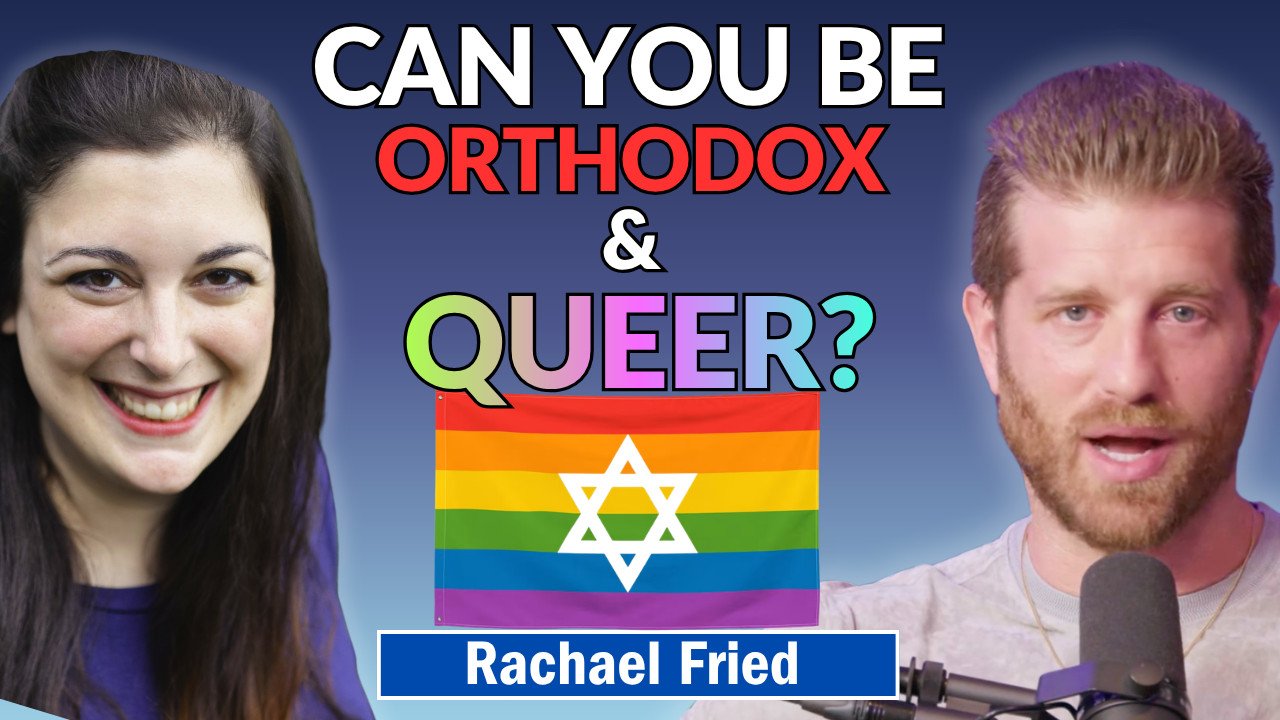
Jewish Queer Youth - How One Org is Helping LGBTQIA+ Jews Find Acceptance with JQY’s Rachael Fried
People will probably really not like that answer.
Here it is.
Queer people aren't welcome in Jewish spaces.
Jewish people aren't always welcome in queer spaces.
Is it more a cultural thing or this law says you can't be this way and end a story?
We don't ask rabbis for their or like stamp of approval.
Sure.
We are the only adults in their lives who know that they're even struggling with their identity or questioning anything.
Oh.
Welcome back to our apparently never ending series, being Jewish with Jonah Platt, 30 minute Menes.
Same vibe, same tribe, shorter episodes.
My guest today has spent the past decade in change creating space for queer Jewish teens from traditional Orthodox Sephardi and Miss Rocky communities to feel safe, seen and celebrated.
She's the executive director of JQY Jewish Queer Youth and Organization.
She helped grow from a grassroots initiative to a professionally staffed nonprofit with a $2 million budget and a center in New York's Times Square.
She's a master of social work, a master of fine arts, and a master of fighting bigotry and isolation.
Please welcome Rachel free.
Thank you so much.
Thank you.
I just gave the, the quick one sentence version of, of JQY.
Why don't we hear it from, from the executive director herself.
Tell me what is JQY?
What's the work that you guys are doing?
So we are a mental health organization that empowers Jewish queer teens and young adults to live joyful and healthy lives.
We work specifically with Jewish youth who come from what we call historically non accepting communities.
So that usually means.
Um, Orthodox communities or Sardi Rahi homes, but.
You know, right now, unfortunately, there are still a number of different types of Jewish communities that are not, uh, super queer affirming or accepting.
Um, so that includes a whole bunch of others, including Russian speaking Jewish homes.
Mm.
That's like our, our target audience.
Um, and we connect youth to one another.
And to providers and to resources that they need in order to, uh, survive and thrive.
And what drew you to this work?
I actually started in JQI as a participant.
I grew up orthodox and super closeted and, you know, figured out my way through.
Those worlds.
Um, and with the identities that I held, didn't, you know, never really felt, felt like I fully fit in anywhere that it went.
There was one day where a friend of mine had just come out to me and he said like, there's this organization called JQI, they're having this, um, like support group kind of thing at the JCC and will you come with me to be like a, a wing person?
And I had said.
You know, I don't feel like I really need support.
I'm fine.
Mm-hmm.
But if you need, you know, if my friend needs a wing person, then I'm happy to help my friend.
And so that was sort of how I got involved.
And obviously I stepped into this space and it was totally the community and the support that I needed that I didn't even know that I needed.
Um.
And so, yeah, that, that's how I originally got involved.
But, um, I noticed that everyone else who came to the space, like nobody looked like me.
It was like 40 cis gay men and then me.
Hmm.
And I thought there's no way that I, that somebody could like, muster up the courage to come to a space like this that's for people who are orthodox and queer and, you know, get there and still feel like they're not a part of it.
Still feel like they don't belong there.
So I pretty quickly got involved and started, uh, uh, JQI Women's Initiative and, you know, my, my role snowballed significantly from there.
Amazing.
How, let's see, if, like, can you put it into context for us a little bit?
You know, how, how big of an issue.
Is this for these traditionally non accepting communities, uh, to to continue to, to not accept their, their queer youth?
It's a pretty big issue.
I mean, I know that people sometimes will hear about JQI and think, well, that's so niche.
Like how can that be a whole organization that that works on that specific topic?
But the truth is there are.
Many, many, many people that we serve.
And the risks are really high.
And the people that we work with and the communities we work with, um, you know, they're, they are, yes, they're small, but they're actually not that small.
And there are a lot of people we're talking about.
Are we, are we talking thousands, tens of thousands, hundreds of thousands.
Like, just give, gimme a, a, a frame.
So let's say in the US alone, six or 7 million Jews, and roughly, depending on what study you go by, 10% to 25% of the population, specifically of youth are LGBTQ plus identifying in some way.
So if you go even with the like lowest number of 10%, we're talking about hundreds of thousands.
Yeah.
Yeah.
It is a lot of people, we're not talking only about people that outwardly identify as LGBTQ plus.
We're also looking at who are the people that are falling through the cracks that are not necessarily outwardly saying that they're LGBTQ plus, um, but that they exist and they're struggling in whatever ways they are, and how can we be proactively thinking about them so that they don't fall through the cracks in the Jewish community.
Um, especially ones who come from communities where the assumption is actually.
That there aren't queer people in those communities, or even if there is sort of a, okay, there are queer people in our community, we're gonna like, we write it off like it's nothing.
Or this is a fad in society or you know, name any kind of reason that somebody would write off why there are queer people in their communities.
Um.
And yet we know that they do exist and that the rates of suicide, um, homelessness, addiction, just it's, they're super at risk and that there isn't really anyone who is, who's proactively thinking about them.
For a lot of people who come to JQI, we are the only like adults in their lives who know that they're even struggling with their identity or questioning anything, there's no one that even knows that they need the support, let alone is then able to support them.
How do those folks find you?
Is it always through friends or do you have partners within the communities or institutions that are helping funnel teens to you?
We're always working on this 'cause it's not super easy to advertise.
Yeah.
Word of mouth is definitely high up there.
So you know, somebody comes out to the right person, they tell their friend, their friend's, older sister knows about JQI and that's sort of how they find us.
Similarly with what we call sort of call the gatekeepers in the community.
Who are the people, the adults that somebody would come out to, um, that, you know, if they know about JQI, they can then make a referral and send somebody our way.
So that includes, um, doctors, mental health professionals, guidance counselors, camp division heads, you know, basically, you name it.
Anyone that, um, that a youth would consider potentially coming out to so that we can make sure, we we're always trying to reach out to those people to make sure that they know about JQI and that they can.
Um, send people our way as needed.
Google is a big one, so when you type in Jewish and queer, Orthodox, gay, trans, you know, any of those, buzzword, any of the keywords where you come up top of the search engine, and so that's something that we're always working on.
There are orthodox communities specifically, or any insular community where it's just super hard to a, to access.
The youth in those communities.
Um, so for example, in ultra Orthodox communities where internet is not obvious, where they don't necessarily have, or they have something called, um, kosher phones, which is like kind of a smartphone, but it blocks a certain type of website and certain interactions and certain apps, and it's just like.
Actually, this is just not available to them.
They won't find it.
So there's a lot of ways that are a lot of barriers to figuring out how we can reach those people.
And arguably those are the people that would need support most, who have least access, um, to the support that there is to offer in the world.
So we are always trying to figure out how to creatively.
Reach those people, what we call it, um, gorilla Marketing, where we can do, you know, stickers on bus stops or bookmarks in certain books in the library so that if somebody is going to a library in a certain neighborhood and we know that maybe they're gonna take out a book that has to do with something around like sexuality or gender identity, you know, what can we put in there that helps people?
To find out about who we are.
Um, you know, it's, it's super hard to measure, like, to gauge success and see who called us because of that sticker on the bus stop versus the, you know, bookmark in the library.
You gotta collect that data.
You gotta, you gotta give people, you gotta ask 'em the, the intake form.
Yes.
Do you have any institutional.
Buy-in or partners, like, are there any, uh, you know, rabbis, teachers, uh, community leaders in any of these spaces who are perhaps more inclusive and, and progressive?
Who, who want to help steer people towards you?
Also a tricky question.
We often work with like every loophole that we can find.
So yes, there are many institutions and people that support us.
Most of them will support us, like behind closed doors.
Mm-hmm.
And won't say out loud that they support JQI or that they, you know, they won't back us publicly because of all the ramifications that they are afraid that might have for them.
It's extremely rare that somebody says like, no, we won't meet with you.
We won't.
We'll, we'll have nothing to do with you and we won't even have a conversation with you.
So I'll start by saying that, and it's been really hard to get institutional backing in a more public facing kind of way.
We're a mental health organization and so we always work, we're, we're always making sure that the thing that sort of gauges how we make decisions and how we.
Um, function.
Like we're actually, we don't ask rabbis necessarily for their like, uh, or like, stamp of approval.
Sure.
We are, we're a mental health organization, which means that we take our, um, our guidance and our policies and the ways that we do things from the mental health world.
So the a PA, the National Association of Social Workers, you know, that, that those are the places that we are looking for sort of the, um.
I guess stamp of approval from, like, those are the ones that, that help us guide and make decisions.
Um, and sometimes that's really hard for people in religious communities to hear that, you know, actually we're not going by a rabbi for this specifically, or we're not even, we're not even really trying, um, to get sort of the stamp of approval.
We always wanna make sure they know about us and that we are working with them as much as possible because we want people to know that.
You know, we're actually not trying to cause a ruckus in the communities.
We're not, um, an activisty advocacy organization where we're not like, we're not the radical protesting liberals that people assume that we are.
Not that there's anything wrong with those people, but as an organization that's not our mission.
We're just mental health and so.
Sometimes when we say, actually we want, we're not trying to change your community.
We're not trying to get into Halaka or Jewish law or Torah or any of those kinds of things.
We're actually just here to make sure that the youth in your community are healthy and safe and again, can have the tools that they need to survive and thrive.
And sometimes that makes people more comfortable working with us, um, because we're not trying to like change everything about them or the ways that they think, um.
But you know, we're always controversial to somebody, so.
Right.
What does the halaka say about this?
Like is it, is it more for the non accepting communities?
Is it more a cultural thing or, it literally comes down to this law says you can't be this way.
And end of story.
I will preface, but I'm not a rabbi.
I do have, of course not.
Like, I don't know, 20 years of Jewish day school education, however many I went to, like Ushi University for 12 years in a row from high school through grad school.
Whoa.
Um, I, so, I, I, but still am not a rabbi in my understanding and experience.
There are different sentences in the Torah that talk about things that are relevant to LGBTQ plus identities.
The most prominent one is in Leviticus 1822, which talks about a man not lying with another man like he would with a woman.
And there's all different, you know, people have different ways of interpreting that, so I'm, I'm not gonna get into all of that, but that, to me, the part that feels relevant to me about that is that that sentence is only talking about a, a small portion of the Lgbtqiaa Plus community.
And so we're talking about the G and the B.
Maybe the T but I, you know, there's like some things that overlap in there, but I know that when somebody has used that sentence against me as a person who identifies as a lesbian, I like the sentence actually doesn't include me.
And yet the response and the sort of like, pushback.
And I would go so far as to say like the hate and the homophobia that I have received has been sort of the same.
Mm-hmm.
And the response mm-hmm.
Has been as if I'm in that sentence.
There are other things, there are things about, um, changing parts of your body.
Which is similar to like getting a tattoo.
That's some, you know, permanently changing something on your body.
There are things about not dressing in more feminine or, or masculine clothing.
There are many sentences that apply to each, each letter, sort of a different category.
And yet I believe and have experienced this to really be a cultural thing much more than anything else.
Yeah.
Because the way that people have responded to anything LGBTQIA plus, um, is, is more about.
Just like the societal things, how this impacts the community, how, like, I was taught that, that Judaism is all about asking questions, looking at things, turning them over.
Mm-hmm.
And there's like sentences about, you know, turn it over, turn it over, everything's in it.
There's like 70 faces of Torah and different ways of translating, um, every kind of thing that there are, that there is to discuss and translate.
And yet when it comes to queer.
Conversations somehow.
It's sort of, I, we've been met with this like, oh no, this is like the worst sin and there's no talking about it.
And I have found that to be really anti everything I was taught.
Yeah.
Like what if we ask questions about this?
What if we looked at this a different way?
What if we actually considered the.
Asexual people in the acronym and how those people are impacted.
But there isn't really room for discussion.
And, and so to me that points to something that's just, there's like a, a, it's deeper rooted than actually what this the text says and what the rabbis say.
There's something else going on there.
Yeah, I, I mean, I, I have to imagine that's the case, especially when you have, you know, one of these core Jewish tenets of Sela Elohim.
Of everybody being made in God's image and then Yeah.
You know, we're, we're isolating certain people who are apparently not of the same quality, uh, which feels quite contradictory to me.
Yeah, totally.
So that, that's my experience.
Um, people will probably really not like that answer.
So here it is.
Um, do you find that within the, the distinct communities, safari, Mizrahi, and even within those, you know, very distinct.
Geographical origin, ethnic communities, that, that the challenges are different depending on, you know, if it's a Russian family, if it's a Syrian family, if it's a Hasidic family, whatever, or is it generally these, these teens are kind of all coping with the same.
Kind of parents and the same kind of issues.
It's a lot of both of those things, right?
So sometimes there's, there are specific things where it's like, it's more likely that an Ashkenazi family would respond like this, and a sardi, uh, like cultural thing would respond and it would say a different thing about that.
Um, same with Russian speaking.
Um, I think there are.
Yeah, there are different sort of challenges of like why something is wrong and yet the pro, the challenges that the youth who come to JQI are, are dealing with all really have a similar root, a similar, the similar situation where it's like other people in my community, one, they assume something different of me and they want me to be something different than what I am or they, they always assumed that I was.
Cis straight, all of name the things that people assume of somebody.
Um, and then I sort of, and, and I am different than what they assume and.
There is a lot of similarities of like what happens when I come out, who will, who will disown me, who will still be my friend, who will kick me outta school, who won't mind similar feelings of what I call projected rejection.
So assuming even if the community like actually might totally be accepting and loving to people who are queer, identifying.
If they don't say that out loud, the assumption is, if I were my whole self here, if people knew who I was, I would not be accepted.
And so there's a lot of that feeling of the anticipation.
What does it mean?
Um, and, and maybe how people respond or the words they say might be different, but the, the, the sort of like fears and the, the issues are actually pretty similar across the board.
How do you guide young adults who have not?
Come out of the closet to their families or communities.
In doing so, do you guide them in doing so?
I mean it, I guess what I'm trying to ask is like, is there a preferred sort of pathway or like a general playbook?
It really depends on the person and the situation.
So, um.
But I don't, we don't just have like a blanket, like yeah, your goal is to like get to this point and then come out right.
And then be living as X, Y, and Z.
We're very much about, um, meeting each person where they are and what is best for each individual person.
So there are times where actually it makes more sense for somebody to not come out right this second.
Like that might be.
Um, less safe for them and for them to, you know, what are the coping mechanisms and the skills and tools that they need in order to get to the place where, um, you know, when they turn 18 or when they can go to college and live in a dorm.
You know, how can we help people figure out what those moments are?
What are the weighing the costs and benefits, pros and cons and, um, helping people wherever they're at.
So I think it's interesting that it also plays out sort of in.
How people view religion and their own place and how, how their parents want them to be involved in religion.
People assume a lot of things of us, people say that like we're trying to make their kids, um, queer.
We're trying to make their kids straight.
We're trying to make their kids religious.
We're trying to make them not religious.
We're, you know, you name it, there's any, any kind of thing that, any agenda that people wanna assume of us.
Um, they, they can and do.
Um, and, but the truth is like we actually have no agenda in that regard.
So we work with people who come from a certain type of community.
Our goal is not that they stay in those communities or that they leave, it's, you know, and, and that can look really different for different people.
So somebody who grew up Orthodox and feels like orthodoxy was incredibly harmful to them and they want nothing to do with it.
Is one type of person.
And then there's another who says like, I grew up orthodox.
All I want is for my queerness and my orthodoxy to, to like fit together and be able to be my whole self without having to live these sort of separate lives.
And that those two people come to JQI and we say, okay, for you orthodoxy is a trigger for you.
It's healing.
And those are both equally like valid and great and we're gonna help you with which, whichever part.
Um, makes sense for you.
So that's sort of a good segue to one of the, the core concepts of JQI, which is Ilu Ilu, uh, yeah, both these and those, which is a concept I actually talk a lot about on the show of holding two truths and, and at the same time, which we're fully capable of doing and.
Don't need to believe in this false paradigm that we have to pick one or the other.
And in the case of JQI, it's, you know that queer and Jewish identities can coexist even when others see them as conflicting.
But also you, you said it's about working with the Jewish community and holding the Jewish community to task is another sort of two truths at the same time.
So how much does JQI engage with?
Communities to try to foster acceptance and, and get them, if at all, to change their tune.
Yeah, it's a good question.
So yes, ELU, ELU, these and those, it, it's like the Hebrew version of Yes and right, the, um, the idea that there can be truths at one time that seem like they're conflicting and yet still be true at one time.
So that works sort of in terms of like one's own identity, like I am Orthodox and I'm queer, I am spart miserable, I'm also queer and, and just.
Other people saying like, well actually you can't be those and someone, and you know, just because someone says they don't make sense together doesn't mean that they, that they don't.
And actually can we get comfortable with having things that seem like they don't make sense, but just both be true and, and be proud of that and, and, and be comfort.
Get comfortable in that sort of like.
Almost dissonance.
Um, and so that, that's definitely true here in terms of like one's own identity, but also political beliefs, religious observance, all the different ways of all the different things that one might disagree on or have like totally different viewpoints on is about holding.
Communities to task if there is harm that is happening on behalf, uh, from the community towards our youth.
Sometimes there is, you know, they do have the ability, they're out and they're able to speak out for themselves, but actually there's a lot at stake.
Like, you're not gonna go up against your entire university or institution, um, by yourself because there's a lot at stake there.
And so how can we play a role in sort of being the voice on behalf of this population?
Well, what, what does that look like when you, when you are.
Acting as the voice to, to, for the, those who can't use their own.
I mean, the, the best example that I can think of is with, uh, Yeshiva University.
I don't know if you followed or know of the, um, the Yeshiva University, um, had a, has had a lawsuit and a case with their L-G-B-T-Q students, um, about having a queer club on campus and.
There was the unofficial club that was run by students, and then there were also students who were at YU at the time who weren't out, who weren't part of the club, who didn't have the same kind of voice, um, as others might have.
And so it is our role to one, we, we work with those people behind the scenes and we also make sure that we are speaking out.
In line with what are, uh, best practices for the wellness and mental health of the students in one school.
And you know, it's a complicated thing to say.
We're not trying to change the whole community.
And we are speaking out on behalf of this population that doesn't really have, uh, the, the, the voice yet the, the strength in numbers or the ability to speak out.
And, and so we're going to, we're gonna do that.
It also plays out with, in, in, in things like pride where there's sort of like, can be messaging that is.
Queer people aren't welcome in Jewish spaces.
Jewish people aren't always welcome in queer spaces.
And how do we as an organization say, actually no.
Like we can be all of these things and we're gonna, this is like where the Jewish contingent is marching in pride this year.
This is how we're doing it with our heads held high.
This is, uh, you know, this is sort of what the community is experiencing right now, so that we don't just have.
Other leaders saying, well, this must be what they're thinking when actually they don't really know that.
Um, so, and I think one of the things to note is that while it is not our mission to change the Jewish communities, it is there is sort of the theory of change around it is.
If we can empower our youth and equip them with the tools to be their whole selves and to be able to be contributing full members of the communities that are celebrated and just like.
Honestly just like kick ass amazing people, which they are.
Um, the, the thing that changes people's minds most about queerness is actually just knowing another out queer person.
Right.
How much, if at all, are you at JQI focused on or, or able to help Jews outside the New York area?
I know that's where you're based and where your physical location is.
Are you able to reach.
Teens who, who don't live in New York.
Yeah, totally.
So over COVID, we went virtual like everyone had to do.
Mm.
And we started, um, a virtual drop-in center, which at the time was actually really thriving.
Um, since that was the, the thing that sort of opened us up to.
Oh my God, obviously, but also shockingly, there are so many more queer Jewish youth around the country and world who actually need this resource.
And we haven't been, you know, really able to, we haven't been focusing on them and now we know they exist and now we're gonna like shift our focus, um, to make sure that we are reaching all kinds of people, both people who are in communities where there is sort of a critical mass of like Jewish queer community can be built, but also places like.
Mobile, Alabama, where there might be like one Jewish queer kid who doesn't feel like they belong or fit in and, you know, help them know that they're not the only ones like them.
So we have a number of like national initiatives that we're working on.
Um, one of them we, we offer, um, mentoring and Microgrants for anyone who wants to build sort of their own community initiatives locally.
So we can help with find a space, um, with funding, with sort of helping to organize and mentor people to be able to, to build those kinds of things in their own communities.
So that's one thing.
And, and the, the plan is sort of like, as that happens, can we sort of start building JQI chapters in different locations?
We have a Jewish queer book club where anyone in the country who is within our, our age range, which is 13 to 23.
Um, signs up and we send them a Jewish queer book of the month.
Um, and part of that is just.
There's like a few things going on there.
One is that you can read this book about another Jewish queer experience and know that you're not the only one, like you who experienced it.
You know, be able to see the representation and visibility that books bring, but then also be able to be part of a group of people that.
Around the country are all reading this book together.
We also have an app, so there's a, a reading corner in the app where people talk about the book.
Um, and sometimes we have like meetings with the author, virtual meetings with the author.
It turns out people don't love Zoom programming as much as they once did.
You know now that, um, we're back in person again.
I feel that.
Yeah, exactly.
So we're, we're always looking for ways to reach different people.
Um, we also focus really hard, our social media content is.
Very much focused on how do we make people who are part of the, like our target demographic, but have never really stepped foot in JQI before, haven't been to a virtual event or resource.
How do we make those people feel like they're also part of the community and that they have this experience that's like universal and not just them alone come to something, uh, in person or virtually.
Um, but you, you know, you still are part of this community and, and that this is like an amazing, strong community that we are, that we can all be.
Part of this, this is called collective self-esteem, right?
So the idea that you're part of something bigger than yourself, um, it's not just you.
It's like I can be, I, I view it as like, I'm super proud that Ruth Bader Ginsburg was a Jewish person, and I'm super embarrassed that Jeffrey Epstein was a Jewish person, right?
Mm-hmm.
That those, like, that parts of my identity are tied to the greater.
Picture and that, um, we can make sure to, to boost that by saying like, look, you're part of this amazing group that you can be really proud of, even if you've never met them.
And even if they don't know who you are, this is like, we're amazing and, and, um.
You know, for anyone who hasn't yet connected with the community like we are here and we are ready and willing to welcome people.
Um, and that there's like already love for them here.
How, how do people find you?
So if anybody, anybody listening wants to know more, if they want to to connect, they want to look into the programs you just mentioned, where do they go?
Social media.
We're at Jewish Queer Youth, um, and online our website is JQY as in Jewish queer youth.org.
Um.
And, you know, you'll find contact information there.
Ways to connect with us and information about our programs and our resources.
Um, if anyone's interested in volunteering, you know, there are a lot of different ways to get involved.
And what about, uh, to the physical location in New York?
Where exactly is that?
Yeah, we're in Times Square, so we are careful about when and how we share our address for security reasons, but sure.
We're, we're located in Times Square on 41st and Broadway.
And people get the information through the website or through communication with you of where to go.
Yeah, exactly.
Yeah.
Fantastic.
Rachel, thank you for everything you're doing.
You know, on behalf of the wider Jewish community, thank you for making other Jews feel safe and seen and and secure.
And, uh, it's been a pleasure learning about you and your work today.
Thank you so much and great, great to be here.
And thank you so much for all you're doing.
Alright.
She's a mensch.
It's been 30 minutes.
I'm Jonah Platt.
Be excellent to each other.