
Episode Transcript
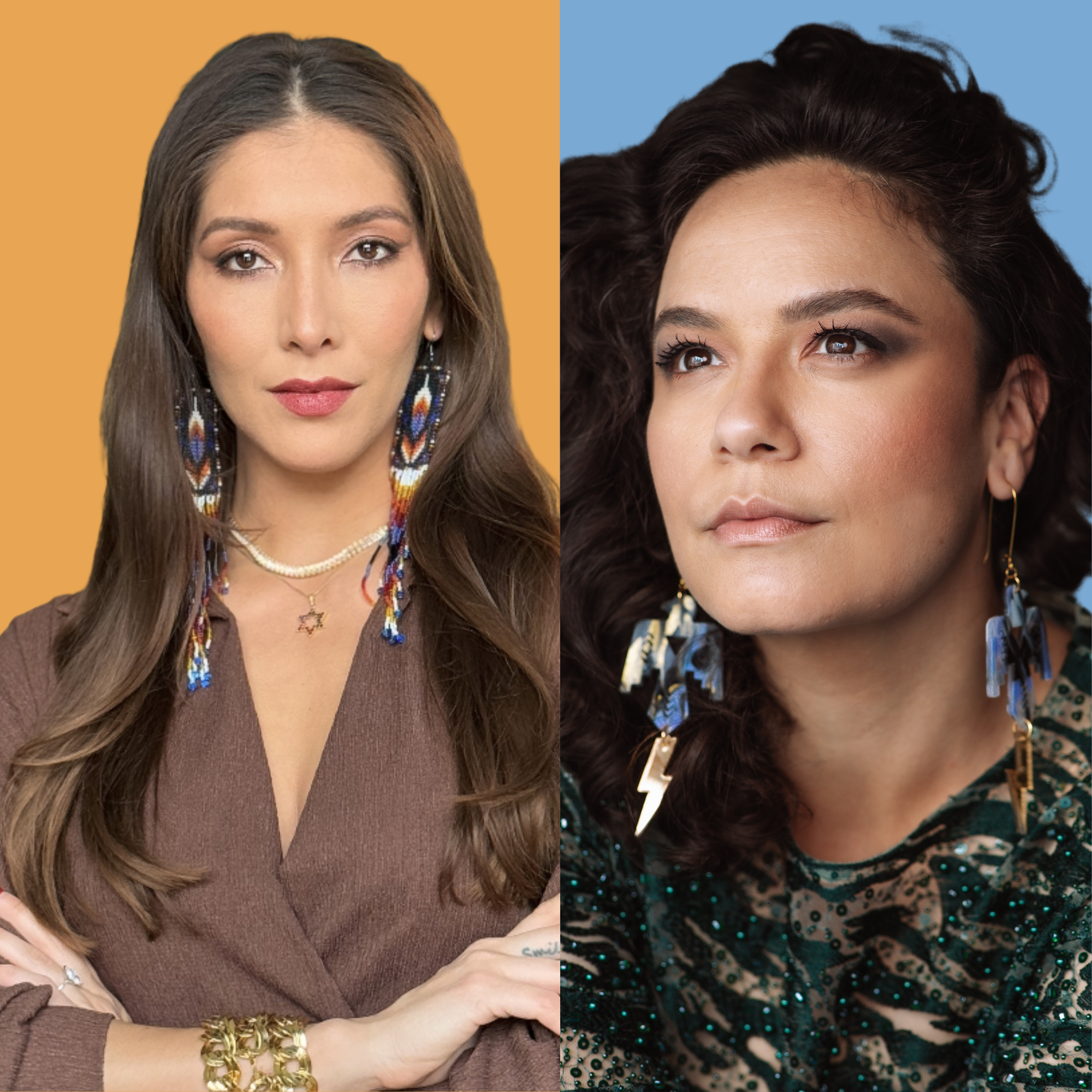
Jewish AND Native: Being Jewish w/ Jonah Platt LIVE from the Weitzman w/ Sarah Podemski & Lani Anpo
What is it inside that people get so offended?
See your mere existence?
Give it a second.
The trauma's gonna pop right back up.
A very stupid producer I once worked with said, I've seen your mother, you're not Jewish.
You know, I've been called a grifter, told I'm not a real Jew.
Why are we pushing our own people out?
It makes absolutely no sense to me.
Weitzman Museum friends, please welcome Jonah Plat.
Hello.
Hello.
Thank you.
Thank you.
Wow.
Thank you so much you guys.
Oh, I feel the Philadelphia love.
I love it.
Thank you guys so much.
Thank you.
Thank you.
It is so fantastic to be with you all here tonight.
In a city that is so near and dear to my heart as a graduate.
As Dan mentioned of the college, formerly known as the JEWniversity of Pennsylvania, um, I have spent many a month in this Ferris City, so I'm thrilled to be here in Philly at the Weitzman, doing my first ever east coast being Jewish with Jonah Platt Live.
So the, the museum is actually the perfect location for tonight's conversation because my show, like The Weitzman, is all about who Jews are, how we feel, what we think, how we live.
That's what live means, right?
It means alive.
We're alive, we're here, we are together.
And of the many other things that you could be doing tonight, you have chosen to be here to engage in a conversation about what it means to be Jewish today in America in 2025, your choice to actively participate in Jewish life.
Those of you here in the audience, and those of you watching this at home is not something I wanna leave unappreciated.
Whether you're a Jew in search of community, or a way to deepen your sense of your own identity, or you're a non-Jew who's looking to learn and hold hands with your Jewish brothers and sisters, your presence here makes you a leader.
Okay.
You are intentionally getting off your butts and you are making an investment of your time and your energy in something meaningful and real.
Choosing to engage is the only way that we will ever change our status quo.
And by you being here or tuning in, you are taking a step towards doing just that.
And for that, I would like you to all give yourselves a big round of applause, truly.
And with that, it's time for the main event weighing in.
No, I'm just kidding.
They would kill me if I did that.
My guests tonight are two extraordinary women, not just for their myriad accomplishments or for their impressive eloquence on very sensitive topics or for their beauty in front of a camera, but because like all of you, they choose to engage when they do not have to.
They don't shy from difficult work of public discourse or thoughtful self-examination or leading others through their own example of what it looks like to be confident, clear, and proud of one's unique identity and heritage.
My first guest is a film and TV actress, best known for her award-winning work on the FX series reservation dogs.
She also makes handmade dream catchers and her latest film.
The Floaters is all about Jewish summer camp.
Yeah, Kai's 2025.
My second guest is a fashion model turned full-time activist who uses her voice to educate.
Advocate and empower Jews, indigenous communities, and indi folks like herself.
No matter how heated the conversation, she always keeps it cool, calm, and collected, emphasis on cool.
They're smart, they're strong, and they give member of the tribe a whole new meaning.
Please welcome Sarah Podemski and Lani Anpo.
Welcome, welcome, welcome.
Thank you.
Thank you.
Alright, welcome ladies.
It's such a pleasure to have you both here.
Thank you for being here tonight.
This is so exciting.
I, I'm so excited.
Thank you for having us.
Oh, you're so welcome.
So, um, in, in the Plant Family, when we are saying something that's unequivocally true, like that you're net you cannot be lying about, we say WOH what stands for Word of Honor and WOHI have been thinking about wanting to do this conversation for like a year.
Obviously you're both very impressive and interesting people, but also according to my best friend, Chachi PT, um, less than 1% of Jews in the US and Canada identifies both Jewish and native.
Whoa.
Um, that's like a couple thousand people on earth.
Yeah.
So you guys are unicorns.
Yeah.
How does that feel?
I mean, do you feel like I am this.
Unicorn.
I do identify as a unicorn.
Yeah.
I mean, do and and yeah.
No, please.
I mean, I actually meet like Native Jews like every once in a while and it is this like mitzvah and you're just like, oh my goodness, this is wild.
What is your story and how did you, how did you become this?
Um, so it is, it's like a special little celebratory thing, like when we meet other people in the community because it feels very rare, but then it also feels like so in alignment sometimes, like the two cultures.
So yeah, I get that.
I mean, we're definitely gonna get, dig into these parallels.
I find that like.
That idea of, you know, non-native people who feel connected to the native community, they really identify with this idea of just how we build our communities and how we build our family structures and how important it is our relationship with the creator and with the land.
Yeah, I think that's something that people also aspire to and find really inspiring.
I would agree with that.
Lani, you, you've been pointed in saying that you're not part native, part Jewish.
You are a hundred percent native, you are a hundred percent Jewish.
Why is that important to you to articulate and, and how do we like flip that switch for people who are thinking of themselves as, oh, I'm half of something, I'm half of something.
For me, um, being mixed has been a huge challenge throughout most of my life.
When I was younger, I was met with a lot of blood quantum rhetoric, so being mixed meant that I was less native, and there's this idea that being mixed.
Means you're automatically less of whatever you're, you're mixed with.
And that's just not scientifically true.
It's not any kind of true, any kind of true.
Um, and my identity, because of my experience, has been a very deep rooted challenge for me.
And as I started reconnecting, um, with my Jewish side and as well as my native side, um, it was really important to me to represent the connection in myself as as being whole because I know that there's so many other people, especially youth, who face that same challenge every day and feeling like they're less than because they're not full-blooded.
Yeah, I mean, I, I have that same conversation with anybody who says sort of, they're half Jewish.
And I'm like, no, you're not.
You're the whole shebang.
You're all Jewish.
Right?
You, you used a phrase in there that I hadn't heard before.
Blood quantum.
What?
I've not heard that.
Blood quantum is a system that was created by the US government, um, to control native populations and breed native populations out of existence.
Have you heard of the, the one drop rule?
No.
Where if you're one drop of black, you're black.
It was the opposite for native communities.
So whatever you are mixed with as a native, whether it was being black or whether it was being white in, you know, the racial structure here in America, um, it meant, meant that you were less native.
And this helped control the, the populations of each.
Tribal nation and allowed the US government to basically violate treaties or what's the right word?
Um, I was gonna say dick around, but Yeah.
Avoid treaties.
Yeah, exactly that.
Exactly that.
Um, very big digging around.
Yeah.
Very big.
Yeah.
Um, yeah, blood quantum is something that I've had to hear about and deal with my whole life and it's something that I think really impacts the native com native community still to this day.
Sure.
I just wanna add something because for me in Canada, it's not the same as the US coming to Canada, but my mom is a hundred percent indigenous.
That's how we would call her full-blooded Indian.
So I had to provide a letter from my band, uh, my reserve that said that I was 51% native to get a status card so that I could have rights in America.
To cross the border without a problem because that was a treaty, the Jay Treaty.
But like, this is a blood quantum letter.
So this is what native people travel with.
It's a blood quantum letter that lets the, the US border and customs, um, know if you are like legally a native person that can move back and forth in the border.
It's like an, like an everyday conversation kind of thing for people in the community.
It doesn't work the other way.
Native Americans can't go to Canada.
Wow.
The more you know.
Yeah.
That's why we're here.
Yeah.
Getting back to just sort of talking about the, the parallels between.
The Jewish tribe and the, the native tribes a lot in common.
And, and the word, the operative word is tribe.
They're both tribal, you know, shared language, shared homeland, shared culture, shared oral history, and yes, religion is generally a piece of that.
Lani, you've actually gotten a lot of Jew hate from indigenous communities, which I know is especially disappointing for you.
Why don't you think our similarities are, are translating between Jews and and indigenous people?
What I can make of the situation is a lot of indigenous communities here in the us um, our understanding of Jewish history and Jewish people comes through a Christian lens.
There's a very distorted and limited expression of Jewish peoplehood.
I think that very few Native Americans or indigenous people here in the Americas have been exposed to anything.
Beyond the Eurocentric narrative, right?
The, the flattening of Jews into a religious group like Christians or something.
Sarah, you, when, when you've spoken publicly.
You know, especially around Israel and Palestine stuff, you've been really measured and like peace focused and the word I like to use is like bulletproof.
At least in my eyes.
It seems very well communicated.
Do you get hate for that, even though it's as I'm describing, or do you feel like people are respect the way that you've approached these conversations?
I think there's gonna be people upset with no ma, like whatever you say.
At this time, since October 7th, I found that no matter, like my, myself and my sisters, I think we, you know, we grew up in a home where like my dad, you know, worked for Giva Ha Viva, which was like, you know, a big organization for peace.
You know, I lived in Israel, my sister Jen lived in Israel, half of our family lived in Israel.
My grandfather's a Holocaust survivor.
Like we grew up in an environment where we constantly spoke about peace.
So that's the only real thing that I know how to communicate about.
And, and you, you do it very well.
I, I appreciate you saying that, but it's definitely every time like we say anything, there's gonna be people that aren't interested that you're either not on one side enough or you're not on the other side and you're not dealing with the specifics and you can't just say peace and it's tough.
That's so annoying.
'cause I mean, the way that you do approach it and, you know, you can all go check out her Instagram, you know, you stick up for Israel, you point out all the things that somebody who supports Israel would wanna point out and you're not anti Palestinian as you do it.
And you are supportive of, of peace and their, their freedom and Yeah.
You know, existence in a way that seems very reasonable to me.
It seems reasonable.
Yeah.
All right.
So let's get into your, your, your families a little bit.
So you said your mother is a hundred percent native.
Yeah.
Help me decipher this.
'cause here's what I, we found researching your mom.
Oh gosh.
We've got Salto Heritage, Moscow, Pitton, first Nation Ojibwe, and an Anishinabe.
Anishnabe.
Anishinabe.
So what, Musk mu what did I just say?
Like, what are those words?
So, Soto is a tight, the Ojibwe part, Musco competing is the, the reservation, the reserve.
And Anishnabe, I believe means our people.
So that we, my mom's, uh, reserve is in near Regina in Saskatchewan.
Um, in America we would call it Regina, but it's Regina, um, it's like a middle schooler over here.
So, I'm sorry.
Wait, what's, what's it called again?
Regina.
Have you heard of Regina?
Um.
I think Anishnabe is the one that I would refer to just, um, because Soto was given to us.
There's like a lot of names that were given, um, and translated from either French or English.
So I would say that Anishnabe is the one that we would, we would use to describe ourselves.
And also I think too, there's like a big push to, to really honor those nuances in our communities because this idea, we use words like indigenous or Native American, but like there's, you know, hundreds of, you know, communities that most people don't know of.
So I think there's a good, great push to like, be very specific about, you know, what community that you come from.
Totally.
That's why, you know, I want, I needed you to, yeah.
Break down the taxonomy for me.
Your parents were divorced when you were young.
Uh, is your mother still a big part of your life?
'cause I know you were raised primarily by your father.
Yeah, she wasn't for a little bit, you know, she came from a lot of trauma.
And I think we're all very grateful that we are at a point where she has, you know, such a close relationship with our children and that we've been able to be in community with her.
That she's been able to participate in our success as, you know, indigenous actors and you know, performers.
And that we've been able to participate kind of in telling the story of our family.
My sister, specifically Jen, who has a show called Little Bird, which is just this beautiful show and, you know, took a lot from, you know, the community that we're from.
So I think it's really beautiful to be able to experience that with my mom now.
So we are at the point where, you know, the good part, yeah, the good part.
And my father too, like even when they were divorced, like my father was very supportive.
Of us continuing this relationship and, you know, being in community.
So we're very lucky.
'cause I know that that's not sometimes the case.
Yeah.
We're just happy that, you know, we have such a close relationship with her now.
Nice.
Yeah.
Lani, you're also native through your mother, um, and you, you describe yourself as multi tribal.
Yeah, up top.
Uh, me, member of the MHA nation, the Ang Lakota Nation ish and Hiza.
Did I get 'em all?
You got them all the, the pronunciation?
Yes.
I don't know.
We'll work on it.
Teach me, teach me.
Um, Manan, MHA Nation.
MIT Nation is Mandan, Hiza and Ara, which a Rick Raw is also a name given to us.
I believe.
Uh, it's actually Sanish.
You, you are very close.
Okay.
My bad.
Yeah, very.
Um, what does multi tribal mean in the context of your family?
Well, I descend from multiple tribes.
Those are all distinct tribes.
Do you know the tracks or you just have been told this is where we come from?
I do have my family tree.
Nice.
Um, we, growing up, we always, um, identified as Lakota.
It wasn't until recently when I started reconnecting that I found out that we weren't enrolled with the Lakota tribe.
We were enrolled with MHA nation.
But I do have family lineage from, from all four.
When you say enrolled, what does that mean?
The US government requires tribes to enroll their members originally, so the US could track the population of each tribe because once a tribe was below a certain, um, number, it was deemed.
Extinct, and therefore they didn't have to uphold any treaties, which they don't really do anyways.
So I'm not sure why that matters.
Um, but now the tribes, um, have some sovereignty over their enrollment.
They determine who is and who is not a part of their tribe.
Each tribe has its own rules.
So a lot of tribes, you can only be enrolled with one tribe.
Um, MHA nation is three tribes together.
They created a, a tribal affiliation.
Um, but that's part of how blood quantum and enrollment was used to minimize the indigenous populations here is by only permitting people to be enrolled with one tribe.
So even if someone is a hundred percent native, but they're a hundred percent Lakota and a hundred percent Mandan, they can only be 50% of.
I'm sensing a theme.
Yeah.
So both of you, your fathers are Jewish, but uh, very different, uh, way that was expressed in your lives coming up, Sarah, as you mentioned, your father born in Israel to a Polish Holocaust survivor.
How much does being a 3G define your experience and your identity?
It defines like everything because I, every, like, the lens that I live and work and exist from is so much.
Tied to this legacy that I feel from both sides.
The fact that my mother's parents survived residential school in Canada and my grandfather survived the Holocaust, it's a lot.
It's a big responsibility to say like, yeah, so there's a reason that you're here and don't take that for granted.
And also, I'm very lucky because my Saba was very vocal and very included us in, you know, his stories and his history.
I know you went to Germany and Poland with him, right?
Yeah, yeah.
So being able to have someone who was open to talk about that and, and be able to hear, you know, his personal stories, I think is just, you know, it just opened a world for me too.
Understand things that I don't think I would have if I, if I didn't have him as a Jew.
And I very, I'm very, you know, grateful for that.
He always used the word continuity and that's like something that's really big I think in mind and my sister's vocabulary, especially when we're, you know, speaking about, you know, our, our blood.
Like, it, this continuity of, you know, it's all kind of coming together always in parallel with everything.
It's always coming back to kind of this existence.
Lani, uh, like Sarah, your father's family also fled violence.
They fled from Russia, uh, the pogroms 1905.
How much do you know about that from your family or, or just learning sort of on your own now as you, as you reconnect?
I knew very little growing up.
My dad always said that we were Jewish, but I had no connection with his side of the family and other than him.
Claiming to be Jewish, always claiming that we had no cultural connection.
No cultural influence.
And so I had a lot of misconceptions about being Jewish.
I thought it was just a religion.
I had a lot of skepticism about claiming my Jewish side.
And actually my, my mom is also Jewish.
Oh, I didn't know that.
Yeah.
My mom's dad is native and her mom is Jewish, but we didn't know her mom.
Her mom abandoned her when she was around three years old.
So we knew nothing about her until I did an ancestry test.
And it came back that her mom was Jewish and also my dad was Jewish.
And that was the first time that I was like, if, if it's just a religion, why is it coming up on my DNA test?
Yeah.
Um, and that's actually what led me to start.
Exploring my Jewish heritage.
Wow.
And how did you begin that journey?
Like what was the first step?
I had just gotten out of a very toxic, abusive relationship.
I had moved to California to find myself, and my modeling agency told me I needed to be more active on social media.
And I was receiving so much hate for being, for being mixed.
Um, and just for, I don't know, you know, the things that people wanna hate, just putting yourself up saying, hello, I'm Lani and you're getting hate.
Yeah.
Yeah.
I mean, there was a, there was a lot to it.
Um, I've always kind of used my platforms for some level of advocacy, um, and I received a ton of hate.
It really amplified a lot of wounds that I had buried, a lot of childhood wounds that I had buried.
Um, and I fell into a very deep depression and had.
What I can only describe as an identity crisis, um, I had become very disconnected from my native side, so I felt a lot of imposter syndrome.
Um, I never felt comfortable identifying as white, and I was being bombarded with, you are white, you're not a real native, you're mixed, you're white online.
And all of this just for whatever reason, led me to take an ancestry test when I found out that I was Jewish.
And it sparked that inquisitive feeling to, to understand more about what it meant because like I said, I thought it was just a religion.
Um, I just started researching random things online and, and came to understand that the Jewish people are an indigenous people.
From Israel.
As I was researching more, you know, more and more into the history, I started to see so many similarities between my native side and my Jewish side.
And I started to ask more questions about, um, you know, my, my dad's side of the family through, um, not my dad, we don't speak, but, um, through his mom, I reconnected with his mom.
And before she passed I started asking her more questions.
She was very uncomfortable ask, uh, answering questions about being Jewish.
Um, it was something that she had sort of tried to hide.
Uh, she converted to Christianity and when I told her what I was doing, she got very nervous.
Do you have a sense of why and what that was about for her?
Her mom was.
Jewish and her grandmother was Jewish.
They came over in 1905 and they were very secretive about practicing Judaism.
They, they didn't allow her to be involved in any of it, and as she was growing up, she was still targeted for being Jewish.
The other kids on the block weren't allowed to play with her.
People would throw rocks at her.
The neighbors would call her a heathen and a dirty Jew and a little girl that she wanted to be friends with.
Um, there was a, a time when they were outside playing together and the other girl's mom came outside and yanked her away and scolded her for playing with my grandmother.
And, um, you know, said, you're not allowed to play with that heathen, or, or whatever word she used.
And the little girl asked, well, if she comes to church with us, can we be friends?
And her mom.
Allowed it.
And, uh, she ended up converting to Christianity.
And I think from that point on, um, even though, you know, she, she still experienced antisemitism throughout her life, um, she continued to try to like hide the fact that she was Jewish.
And so by the time it got to us, it, we knew nothing.
Wow.
We've been talking about some of the parallels between the two communities.
Uh, let's get a little specific.
Are there any like, holidays, rituals, ideas that sort of remind you of each other from your two communities?
I mean, like the singing and the dancing.
Yeah, like we all love singing and dancing like it's in our bones.
I, I was watching an episode of reservation Dogs.
When, when Mabel dies and the way they're like gathered around her and singing and it felt so familiar, the connectedness.
And it was, you know, the, the praying, I mean, it seems like it had to have been some kind of prayer.
It felt like, you know, people gathering around to say Kaddish or something over somebody.
It was really moving.
Yeah.
And, and I, I totally felt that.
I always, like, when I hear, you know, a drum group, I always cry.
And then, you know, when I hear someone sing in synagogue, I also cry.
Like, it, it, it invokes the same thing about just how we connect to creator through song mm-hmm.
And music.
And that I just think is really powerful and has just always made me feel connected to creator.
Love that.
Yeah.
Lani, what I've found very comforting is, um.
As I'm learning slowly about the, the different traditions and holidays and, and ceremonies is how deeply rooted they are in the land and in the oral history of our people.
Um, and I think that's one thing that a lot of indigenous people here don't know, again, because they learn about Judaism right through the lens of Christianity and it's just different.
You learned that you were Jewish through both of your parents, but for a while you thought you were a patrilineal Jew.
Sarah, you're a patrilineal Jew.
Have you had any issue with acceptance within the Jewish community because of either your indigenous side or the, the patrilineal ness?
It's one of the things that bothers me the most.
Yeah.
Um, and I'm just curious what your experience has been.
Um.
I ha I haven't, like I know it exists.
I haven't personally experienced it.
Great.
I did, you know, we were converted when I was very young, but that was something that I think was important to him or the family.
Um, and then I had this very interesting conversation with Rabbi Shera stuntman, who I met through the Weitzman, um, three years ago.
Shout out to Rabbi Shera.
Yeah.
I believe that we chatted about.
Judaism originally being patrilineal?
That's correct, yeah.
Oh, okay.
Okay, great.
Yeah, the forefathers, Abraham, Isaac, Jacob as patrilineal and then it changed somewhere and then, and then it flipped in like the, the exile period when Jews had been sort of kicked out and had started to intermarry and mix around.
That's true.
They were starting to come back and the rabbis were like, oh, we gotta, we gotta make sure we know who's who here, so it's gotta come through the mom.
Right?
Yeah.
Yes.
Terrible.
You can't trust women.
No, no, no.
And uh, and now and now, you know, I feel like, okay now it's 2025, let's change it again.
I thought it was not really serving us.
I just thought that was so interesting.
'cause it just shows you that like.
You know, this oral history, you know, it becomes so set in stone and there's very little flexibility in that.
We get so attached to these ideas and even this idea of being like half Jewish or something.
And also Shira told me, 'cause I said I was half Jewish, she's like, that's not a thing being half Jewish.
So it is, I, I, I, when I heard that, it kind of made me feel seen in the way that I always felt, I didn't need anyone to prove it, but it was just like, why does it need to be something that's named and that people really believe in.
Yeah.
Um, so I haven't per like, personally had anyone, you know, attack me with that.
But it was definitely something I knew of.
And, oh, actually, sorry.
A very stupid producer I once worked with said, I've seen your mother.
You're not Jewish.
That that was, that did happen to me.
Sorry, I put that somewhere very far back in my memory.
You're welcome.
Yes.
Just bringing up trauma.
But yeah, so that was the only time.
That was the only time.
And I was just like, what a thing to say to someone.
Like, what is that?
Like, what is that?
And I, and I think that's so interesting too.
Like what is it inside that people get so offended by what we're seeing by your me existence.
Our, like our lived experience.
So defensive about it.
Yeah.
Like it's, I found it so fascinating 'cause he was just so adamant that like he knew who I was and my, who my mother was and who my family was.
And it was so, it was like just such an aha moment of like, whoa, I didn't even do anything.
And he seemed so like, riled up about me being Jewish or not Jewish.
It's lame.
It's an issue.
It's, it's so weird.
Yeah.
It was very strange.
Strange.
It's something that I hope over the next.
Generation of American Jewry, it's something we're gonna deal with because there's, it's, it is time to get rid of that one.
Lani, have you faced any sort of experience to this nature?
Yeah, I have not experienced that.
I can think of, um, anything about being a Patrilineal Jew, but I just give it a second.
The trauma's gonna pop right back up.
Yeah.
Um, but I've, you know, I've been called a, a grifter.
I've been, um, you know, told I'm not a real Jew because I wasn't raised with any cultural influence or awareness.
Um, I've been told that, you know, I'm, I'm only claiming my j my Jewishness now, um, for money and fame.
How's that working out for you?
Not very well.
Not very well.
In fact, that's, that's always my favorite one.
It's like, oh, you're just doing it for the money.
I'm like, no one is doing this for the money.
If only sometimes you can't pay us enough to be Jewish.
Right?
No, there's to have, to like deal with what we do.
We want to be a bigger, more unified, stronger community.
Like why are we pushing our own people out?
It makes absolutely no sense to me.
I hate it.
You both have sisters.
What's another thing you have in common?
Um, do your sisters identify with themselves the same way that you two identify with yourselves or are there differences between y'all?
There are differences.
Uh, we, we all acknowledge our Jewishness.
We've all always grown up claiming and knowing and identifying as native and Jewish.
Um, but I would say that we're each on our own journey of.
Personal acceptance of, of and how we express that.
So like where would you say, you know, if this is the Jewish journey, like where are you and where are your, your sibs?
I'm so far ahead of all of that.
You're so far ahead.
All right.
I'm definitely winning.
Yeah.
Only winners on this show.
That's right.
Sarah, what about you?
I know you have two sisters.
Yeah, I think we're, I think we're in alignment we're, I think too, because we've just spent our whole careers kind of like defending ourselves, you know, in terms of, you know, are we native enough, um, you know, to be in front of the camera as native actresses.
And I mean, I experienced it through them and then I experienced it myself.
So like, we're pretty much a tight knit, you know, group.
Can, can you say a little bit more about what you just mentioned before that about.
You know, having to pass a test to be native Yeah.
On camera.
I, I would love for you to speak more about that.
Well, I would call myself like a white passing native person.
Um, I would say in the community people would call me that.
Um, I've been called it to my face.
Um, it's something that's a thing I, you know, understand that I benefit from privileges because of the color of my skin.
So that's just something that's in the ether of my career.
Like, it's something that's always like, looming a bit.
I think, you know, growing up I didn't maybe feel native enough or didn't feel like I could have a voice because I wasn't like walking in the same shoes that a lot of native women are, you know, have to deal with or issues.
Um, and then I went, I went to Musca competing my, my mom's reserve.
And I looked around.
It was the first time I went there in my twenties and every woman looked like me.
Uh, they're all, you know, say a hundred, a hundred percent native or what you would, you know, blood quantum wise describe them.
Um, and I think that kind of changed my perception of how I viewed myself.
And I find it so funny about like this also this Jewish conversation because I feel like in the last, you know, almost two years, I have felt even more confident in my identity because of what I've had to kind of deal with growing up, of not feeling enough of each and even in, you know.
The space of, you know, we have a lot of people that pretend to be native.
They're called pretend Indian.
Um, you know, and then I see these, these people.
What is, what does that mean?
Who, ooh, it's means someone who pretends to be an Indian to, but like, in what context?
Like to further their career.
There's a lot of them in education, there's a lot of them in, in Hollywood.
What sort of opportunities are afforded because they're passing in this way?
In Canada specifically, there's a lot of funding and a lot of money, uh, and grants for native people who are doing some, you know, either research or, um, you know, working in communities.
So people lie about their identity or they really do believe, they feel like they're family lore.
Is true and they continue to present themselves in the community and take jobs and take opportunities.
Take money, money.
Same thing with film and film and television.
There's a lot of government funding, uh, for native, for like indigenous filmmakers.
So we see a lot of that in Hollywood as well.
It seems like both of you are so undeterred by whatever negativity or questioning has come at you.
What's, what safeguarded you from, you know, succumbing to those doubts or that questioning and, and how you continue to just, do you, I, I don't know how you feel, but I wouldn't say I'm un unbothered or un well not unbothered, but un undeterred what it did.
Undeterred, um, being who you wanna be and doing what you wanna do.
It's, it's resistance to erasure.
Um, it's a responsibility of claiming our identity and not allowing.
Uh, external forces to erase us.
Um, and I, I feel that responsibility both as a Native American and as a Jewish woman to, to those who came before you or just, you know, self-respect, those who came before me, um, and those who are gonna come after me.
Sarah, same question.
I don't think I could do it without, like, the support of my sisters and my family.
Having similar lived experiences with people makes everything much easier to deal with, but we have tears about it.
Like this last, almost two years has been tough in our communities because of where we sit, you know, in the native community.
And it's like on this kind of precipice of could you finish that more trauma?
Yeah.
But this, it's like.
If you don't have some kind of support or people that are on this journey, it's very easy to get lost in it.
And I think so, even though we, you know, talk about it on a regular basis and there has been lots of tears over it over the years, we're at least in it together, which helps always as a sibling like this is Right.
Yeah, I get that.
So, Sarah, let's, let's go back a little bit to some of the, to the Israel part of your identity.
How much is it part of your identity?
Like, how much do you feel Israeli?
I mean, I don't feel Israeli because I, I, I don't wanna take up that space to people who have that lived experience.
Sure.
I guess how much does it feel like part of your family?
Yeah.
Heritage.
I mean, it's been a big part of my family.
I, you know, the first time I went there I was four, and then we went, you know, all throughout my.
My, I guess, adolescence.
And then I ended up going to school on Kibo's Beta.
My dad moved back to Israel with me for a year.
It was such a pivotal point in my development that it's always, it's always been held very like dear to me and it's always been a place that I just loved.
I loved the vibrancy.
I love the culture.
I love the food, I loved everything about it.
I loved going there.
It's such an incredible place.
Um, but living and growing up in a family that spoke about peace and understanding what was happening, you know, in the settlements in Gaza with Palestinians, that always, I held that very close to me as well, knowing that just like every other country, it's not perfect.
We have a lot of trauma.
And there's many people that have a right to live, you know, peacefully with integrity.
The, the same with any country we speak of.
Mm-hmm.
That's, you know, riddled with history and trauma.
So I always, we were always able to hold space for that, but I could also, I know it's very difficult for a lot of people at this time, but like I was always able to hold space for those two ideas that I could love a place so dearly and feel so connected when I'm there and feel like I'm home and also know that there's people that are suffering in a way that I can't imagine.
Like you said, it's a country.
Yeah.
And we can all feel that way about our, our own countries, wherever we live.
Um, I just want to jump back for a second then, Lani, I'll get to you.
What was it like living on a kibbutz for a year as a teenager?
Oh my god, it was crazy.
What did they have you doing?
I, first of all, we were the Pickle Kibbutz.
We were the pickles, be Rashita pickles, which are the delicious.
Nice.
Um, I mean, it's such a different, it's so hard to describe living on a kibbutz at that age and like, you know, there's just, it's so, it's so different culturally.
It's like nothing really.
I came back to Canada and like couldn't, people wouldn't be able to wrap their heads around, like the diversity of the community and the way that, you know, there was just like a sense of independence.
People are a bit more mature there.
All my friends were in the Army.
Like there was just this kind of like intensity of people living because they didn't know what was gonna happen the next day.
And then like, being at the bus stop and like them there being like a, you know, like a bomb warning.
And so you're like living in this weird, like, upside down world, but it's so normal.
So it was like really shocking as like a Canadian, young Canadian, it was indescribable, like it was.
It was like being home kind of thing.
Sounds amazing.
Yeah.
Lani, when we had Van Jones on my show last year, he said that, you know, people are misconstruing this conflict as a people versus a people.
It's really about two indigenous peoples in one land.
You speak so much about indigeneity online and on your platform.
Are both peoples, in your mind, indigenous to the land as you understand it to be the term indigenous has involved It's modern political form.
I reference undrip.
It's the United United Nations, um, declaration of Rights for Indigenous People and it describes indigenous people as people who have maintained or revived, um, their pre-invasion peoplehood identity, um, culture, language, systems of self-governance that are distinct.
From the colonial or imperial dominant society.
So based on that definition, um, no.
Both people are not indigenous, but both people are in the general sense, native to the land Palestinians.
Um, they descend from a variety, a multitude of, um, pre Arab in indigenous societies from across the region, all the way from North Africa, all the way across the Middle East, um, who have migrated into the Levant.
And there's also many who have actual indigenous roots in the Levant.
Um, but they have been arabis and Islamized, and they align themselves.
The Arab identity and political agenda, and that's not an indigenous nation or people.
Um, it's the dominant imperial society.
Um, but that doesn't mean that they don't have a right to self-determination or to develop their own, their own peoplehood or nationhood.
Um, and it definitely doesn't mean that they don't have the right to live with safety and dignity.
Um, both people, you know, when we look at the history of the land all the way back as far as we can, um, we're both deeply, deeply connected to one another and to the land.
And we have to find a way to keep that connection between us at the forefront of our, of our mind and, and of the discussions around the, the current conflict.
Thank you, professor.
Um, Lani, you've said before, instead of questioning the Jewish connection to Israel, indigenous communities might look to it as a model for their own sovereignty.
Can you unpack that statement for us?
A lot of Native Americans struggle to recognize the state of Israel as a sovereign indigenous nation, which it is, um, partly because of the history surrounding the, the revival of Israel, um, or the reestablishment of Israel, as I like to say.
Um, because, you know, it happened during a time that is referred to as the, the post-colonial era or the de-colonial era.
Right after World War ii, a lot of European empires withdrew, um, from, I guess what the, what's the right term?
Um, they're colonies.
They're colonies, yeah.
Um, and the way that the history is described is that.
Uh, that was decolonization, right?
But really what it was is either a, an exchange of power back to previous, um, imperial, uh, powers such as Arabs, um, or like America.
Um, it's not decolonized, right?
Uh, they, they established or they declared independence, but it's still technically a colonial country.
Um, this was the same case during the Decolonial era.
And so I think what indigenous people here can learn is one, Jewish people maintained a connection to their homeland through their culture, language, um, and Peoplehood for 2000 years, despite facing the same types of colonial violence that we have faced here.
The same.
Types of erasure and appropriation of our cultures and our identities, distortions of our, our identities.
And instead of villainizing Israel for having to operate on the global stage with historically colonial or imperial countries, um, we really need to recognize the amount of strength and intelligence and strategy that went into Jewish people reclaiming their homeland.
After that long, there was support on a global scale, you know, for the state of Israel when it was being born, there was support from allies.
There is no support for Native Americans to have anything of their own or have any sovereignty.
So I think that's 100%.
So that's also a thing to say, like, whoa, it's, imagine that fight.
Because, you know, my mother's husband does it.
I know a lot of people in the community that are constantly doing this, you know, in politics and it's just like there's no support to push this through.
Yeah.
I think the more, more than natives having to continue pushing for full sovereignty, America and international countries need to support indigenous nations here.
It also took Jewish people 2000 years Yeah.
To re, to position themselves, to be able to reestablish Israel.
We are what, 500 years into our experience of colonization.
Um, and I think one of the, the, one of the most dangerous things that I see indigenous people, um, weaponizing against Israel right now and against Jews is the diaspora period.
Mm-hmm.
And the fact that that Diaspora Jews returned.
To Israel.
Um, they target or, or hyperfocus on Europe, European Jews.
Um, and without the recognition or, or the, the awareness that many indigenous people here in the US are living in diaspora, despite the fact we're within US borders.
Many of us live in diaspora from our traditional territories.
Um, and to say that Jewish indigeneity expired after 2000 years and they no longer have the right to sovereignty and self-determination also puts an expiration date on our sovereignty.
Do you think that maybe part of what one of the challenges is the fact that there are so many distinct tribes and they're not able to unify?
Yes.
Um, I think that that is a, a huge factor.
And it's by design too.
Like it's was designed by the governments.
To displace us and pull us apart and be in competition for that stuff.
Like, it's so, I mean, we can't get into it.
That's a whole other show.
But like it's, we're fighting like very highly designed, specific ways to tear our communities apart.
One of them was, you know, taking our children away.
Like way to destroy people, right.
And their communities.
So it's like everything was very specifically done.
Take our food source away.
Take us away from our traditional territories.
Like, and when you say take the children away, that's the schools, boarding schools, residential schools.
And like wiping out the culture from them.
Yeah, yeah.
And wiping out the culture.
And also, you know, traumatizing adults, right?
So you're kind of breaking this tie that, you know, people just didn't recover from you.
You know, it was very systemic and very specific.
And that's hard.
I remember my grandfather, we had this conversation.
He says, why?
He said, why is it so hard for native communities?
'cause he's coming from the lens of being a Holocaust survivor.
Like, wow, look at what he accomplished and look at what people accomplished after the Holocaust in the diaspora.
And even look at Israel like he, you know, and he was, he said, and it wasn't like anything cruel, he just said, why do you think it's so difficult for native communities to kind of come back from this genocide?
And I was like, you know, you guys spoke Hebrew in the camps and you celebrated the holidays in the camps.
Like you were able to still hold on to these, this language and the thing that like kept you guys Jewish, they killed you and they killed your family, but you still secretly were able to do that.
When you take away the language and someone's understanding of where they come from and their culture, you destroy them.
Like there's not there.
The fact that we are still here and still like celebrating and thriving is insane because it was such a different genocide, right?
And it's been so difficult to get to recognize it.
And I think from the conversations I've had in different communities, like, you know, my grandfather got reparations that helped him build his wealth, that helped him.
You know, I know there's Jews that didn't get reparations from the Holocaust, but like there has been no reparations for our communities, for slavery, for like, these are things that helped, you know, money isn't gonna help everything, but it helped acknowledge this trauma that happened.
For people to kind of move forward in a way, even though it's terrible.
Sure.
But like, so I think these things, like, it's so hard to describe and quantify because there's so little that has been done.
And I think that that also breeds a lot of resentment towards Jews in terms of what we've been able to make the world aware of and get support for our trauma and our genocide.
And so I can only imagine, because I used to feel like that when I didn't identify as much as a Jew and I, you know, was in a lot in the native community, I felt very resentful that Jews had this ability to kind of come out of this trauma and succeed.
And so I, I'm not saying that that's what people think, but I can see how there is a misunderstanding of our ability to succeed in certain ways because we have had a lot of support from people to help us through the trauma of the Holocaust.
Sorry.
I agree.
Um, I wa I, I wanna add to that by saying the, you know, Jewish people, our, our culture and our way of preserving our identity and our culture, it evolved in a region that was very imperialistic.
We had to adopt, adapt to a number of imperial societies trying to impose their laws and impose their systems onto us.
And we were persecuted.
That's part of what led to, um, you know, our oral histories and things being codified and being written down and being preserved.
And by the time colonial violence landed on Amer, you know, what's now American soil, um, it had been refined.
Time and time again to the, to the point where it was a, I don't even know how, how you describe it, but Yeah.
It, it's a, a system and a structure that is a, was a very well-oiled machine.
Right.
And the way that our cultures were err eradicated here is quite different than what Jewish people experienced at the time of the, the onset of colonial violence or imperial violence 2000 years ago.
Right.
I, I said we get back to it now.
You brought us there Sarah.
Um, you know, Canada has tried in certain ways to.
You know, speak to this deep sit issue, but you, you've called it, you've described it as plugging holes into a boat that's sinking.
I said that.
You sure did.
Brilliant.
Um, as they're the, the way that they're attempting to, I agree with this to react this.
I still agree with this.
I stand behind it.
Yeah.
When, when you say they're just plugging holes on a ship that's sinking, what do you mean by that?
The ship that's sinking is like the process which the government is trying to maybe cover their ass, but the sinking ship is reconciliation.
I think because it's very performative for a lot of people.
I think it benefits people politically to, to say certain things to help them get reelected and then they don't really do what they said they were gonna do.
I think there's just a lot of healing that needs to happen in the community.
I think reparations are very important.
I think that is the beginning of something, at least an attempt to say, we have gained so much from the land we took, we can't even quantify how much we've gained.
And you don't have any of it, right?
The numbers that you talk about that should be owed for all of the land, um, that was destroyed through either, um, you know, resources, extraction, you know, dam building, um, and just like land theft, like the numbers can't compute for a government.
Like you can't pay that money because it's, it's been, you know, hundreds of years of families and government benefiting from this.
So.
And then you can't take away the fact that there was just no wealth building.
And then like, what do you do with people that haven't had wealth and you just give them money.
That's not the answer.
So I don't know what it is.
I know there's, you know, brilliant people that have ideas, but I just feel from the people that I know who work in those spaces, that it's very far from where we need to be.
And you still see it in our communities.
I mean, we have an epidemic of missing and murdered indigenous women.
You know, that's like, we have like resource extraction that just doesn't care about the people who are living near that.
And it's making our community sick.
Like there's just so much that could just be done to stop, but it's gonna affect Canadians and it's gonna affect Americans.
And like nobody wants to be affected.
So it's big.
I don't know.
Yeah, I think we can start by returning unseated territories.
Territories that were claimed through treaty violations.
The US government can.
Restore indigenous authority over resource extraction, especially on, uh, tribal territories.
Yes.
And also too non-indigenous people need to educate themselves and understand how much we've benefited from this and know that that is every single person's responsibility either to get to know the community or the land that you live on, you know, and not in a performative way really understanding, you know, especially I think especially as Jews, the way that we, we wanted to be supported and we needed to be supported in our most desperate times.
That we have these beautiful guides in our, you know, in our teachings to say like, this is how you show up for community even when it's not your family.
Okay, so when this episode airs, we will be days away from Native American Heritage Month.
It is what you make it, is it, if it helps people, does it feel like a performative thing or does it feel like a like supportive thing that we wanna celebrate?
It can be performative or you can get it in the community and participate in nar, native American, I don't know what it's called.
Sorry.
It's Native American Heritage One.
Yes.
It's different than Canada.
It's an American thing.
Yeah.
Yeah.
Just like anything, it can be performative or you, we can make it not performative by actually engaging in community, finding out what's going on locally and, and participating.
Um, if anyone has kids in schools, I know from my experience, I mean, maybe it's changed.
Uh, I hope it's changed.
You know, native American History Month was often accompanied with the classroom dressing up as Native Americans.
And, you know, I would sit there to, I had to sit there and watch everyone dress up in all around the classroom.
So Advocat.
After schools against things like that.
It's very, I don't, I don't know if I'd call it traumatic, but it's painful.
It's painful to sit through.
Sarah, you are currently making the festival rounds with your film, the Floaters, about Jewish summer camp, uh, co-starring BJJP alum.
Jackie, to shout out to Jackie.
Uh, did you go to sleepaway camp or was this I did.
Okay.
Right on.
I went to Shari.
It was Hashi hater.
I went to Sleepaway camp and it was the best.
Yeah.
Yeah.
And so what was it like getting to relive it?
It was so crazy when I saw the script, I was like, oh my gosh, I've never seen this on film before.
That's so weird.
Um, and you, do you play the director of the camp?
Yeah.
Yeah.
And like I just, oh my gosh.
And even setting foot, um, on the camp that we shot at, it was like, it's all the same.
It doesn't matter what city you're in.
Like Jews do it the same everywhere.
Like it was.
It was so wild and just so cool.
Um, and I just love that we can share like this Jewish joy of what our, that experience is because it's so unique and so many people don't know about it.
Um, but yeah, I loved Jewish summer camp.
It was just such a, such a specific, you know, experience that really, and also like kham hater, like we were just like little lefties.
Like we were, oh my gosh.
They would like wake us up in the middle of the night like shaking the beds because it was like, um, this is so awful.
It was like going, like marching us like to the camps.
Like they were, it was like they were, they wanted us to know.
The trauma that Jews went through and we're like children and they're like winding, you know, they're like winding us up and like getting us in lines and we're walking through the forest.
Like they just, it was like, so what happened?
Like at the end?
And then they put us on a train and the train left the camp.
It's so terrible.
We actually, it was, we would, we lit fire to, um, I can't remember this and I'm gonna, someone's going to just totally roast me.
Um, we walked into the main field, um, and we lit, uh, I dunno if it was like ha mats or something.
We lit some slogan, slogans on fire.
And it was kind of like, it came to like, we're here and we're surviving.
Mm-hmm.
But like, we went through trauma, but it was like.
It was just remembering kid, like reminding kids like, don't take this for granted.
It sounds so horrible and I may be misremembering it.
No.
So we did something similar, but it, it wasn't the camps.
It was, it was, maybe it wasn't the camps, but I remember it was like, it was a refugee thing for us.
Okay.
It was like they would wake you up in the night and be like, you have to grab your stuff.
Yes, we have to go now.
And, but like at the end it would be like, and you would like, they would take you in the night, but you'd end up in Israel was like the end.
So maybe that's what it was.
Yeah.
And then we, yes.
Oh my God.
It was something like that.
People cannot believe this is a thing.
I, it, it was a thing.
I, I, I liked that program.
This one is whacked out.
I remember I, this crazy thing is that I did it as a counselor and maybe I didn't even realize what I was doing to my, my, uh, my suicide.
I don't know why they had us yelling Schnell at these kids.
I, God, I'm total, I, this is in my mind.
This is what I thought it was, but it was totally this, it was about Israel.
All right, good.
Anyway, so yeah, so that was really important.
Um, to my development.
But I think the beautiful thing about, um, uh, as with about Hamir was that when I bump into like, shaim, like around the world or like people that I went to camp with, like we're all still very involved politically.
It was something that was like, talked to us at a very young age and it's so beautiful to see, like when you instill the importance of like, community in kids, like they will run with it.
Yeah.
And that was really important.
And I feel like that continuity that my grandfather spoke about, like my dad went to that camp, my aunt went to that camp, like my sisters went.
Like it was really something was something special.
Totally.
Yeah.
So Lani, you know, what, what are you focused on right now?
And, you know, do you have any projects in the, in the pipeline you want to tell us about?
I do.
I am working on a comprehensive.
Critical analysis of settler colonial studies and the foundational essay written by Patrick Wolf, um, where I believe the, the narrative that Israel is a colonial state actually comes from.
I'm hoping I will get that published within the next month.
All right, professor.
Thank you.
Um, okay.
And as I like to do on my show, we're gonna end things with a lightning round.
Who makes better soup?
Jews or Native Americans or First Nations?
You can't ask us that.
Sure, I can, I can ask whatever I want.
I'm not gonna answer 'cause I'll get in trouble.
Okay.
All right.
Lani, you Oh, you're gonna answer it.
I know, I know.
Native soup normally comes with fry bread, but then matzo balls.
Matz balls.
Matzo balls.
I can't decide.
Okay, everybody.
All right.
Let's, let's, let's flip it to like, what's a great.
Native soup that we don't maybe don't know about, that you can inform this audience about.
I was thinking of corn soup.
My mom never gave the soup that she made.
Names.
Oh.
Or like stew.
Stew.
Like a bi, like bison or venison.
Yeah.
Okay.
We love that.
Um, what is a Jewish tradition that you think native tribes should adopt?
Oh my God, these are very hard questions.
Kvetching.
Kelling.
I would say being more open-minded to actually documenting, writing down our oral history and preserving it.
Yeah.
Love that.
That's a good one.
What, what is a, uh, native tradition that you think Jews should adopt?
Ooh.
Pointing with your lips.
Just 'cause it's funny.
Yeah.
Or your nose.
We did our nose.
Oh yeah.
Oh yeah.
Love that.
Um, and I feel like we have good pointers.
Yeah.
Yeah.
Um, if you had to sum up your Jewish identity in a word that's sort of the foundation of it, what would that word be?
I would say continuity.
Mm, resilient.
Mm.
Love it.
What is a meaningful message that you've received from somebody?
So, my first time in Israel, um, at Hins uh, lab, there was a trans rabbi and I can never remember her name.
I know who it is.
She was the very first person that told me that I'm allowed to be both native and Jewish.
And that was such a pivotal moment in, in my life and my understanding or my, my acceptance of myself.
That's awesome.
I'd say similar with Rabbi Shira when she told me not to say that I was half Jewish.
I feel like that kind of unlocked this idea of my identity as well.
That just felt like it made sense to how I felt.
It was kind of a reminder to be like, who cares what everyone says?
Just do what you wanna do.
Yes.
Just do what you feel.
Totally.
All right.
Bring us home.
Some final words for people who may be struggling to fit in or struggling with their identity or struggling even just to find the light in the world right now.
I've definitely found, like throughout my career, I always tried to be, I'm going to simplify by saying like, act more white.
Like as an actor, it was like, don't be jewishy, don't be too native.
Like, just act more what everybody wanted.
Do to what you wanna be.
Like, don't be silly, don't be obnoxious.
Don't you know?
And I always, I always felt like I just wasn't good enough.
And then as soon as I like leaned into my weirdness and my own uniqueness is when my world kind of started opening up.
So I would say instead of shying away.
From the things that you feel like make you different?
I think the key is to lean into them and to harness them and to pet them nicely and to encourage them.
Them, yes.
And just celebrate them.
I think that's when my world kind of opened up.
Amen.
Yeah.
I would say celebrate yourself.
It's, you have enough people hating on you and causing self-doubt.
It's, I mean, we were talking about this in the back.
I, I struggle with it constantly.
I have such severe imposter syndrome, um, from the position, you know, I'm in as, as being reconnecting.
And when I give myself the leniency to understand the history of my own family and, and, and the, the traumas that we went through and, and what caused me to be in this position of having to learn.
All of my indigenous cultures and languages all over again, it gives me empowerment and strength.
And so I think embracing the journey, not not only your, your own journey, but the, the journey of your ancestors and the history that has led to you being all that you are.
Lani, Sarah, thank you both for your candor, for opening up, your vulnerability for teaching us.
Thanks for having us.
Thank you to the Whitesman.
Thank you to the BJJP team.
Thank you to all of you for being here.
Thank you, Sarah and Lani.
That's our show.
Goodnight Philadelphia.