
Interview Transcript
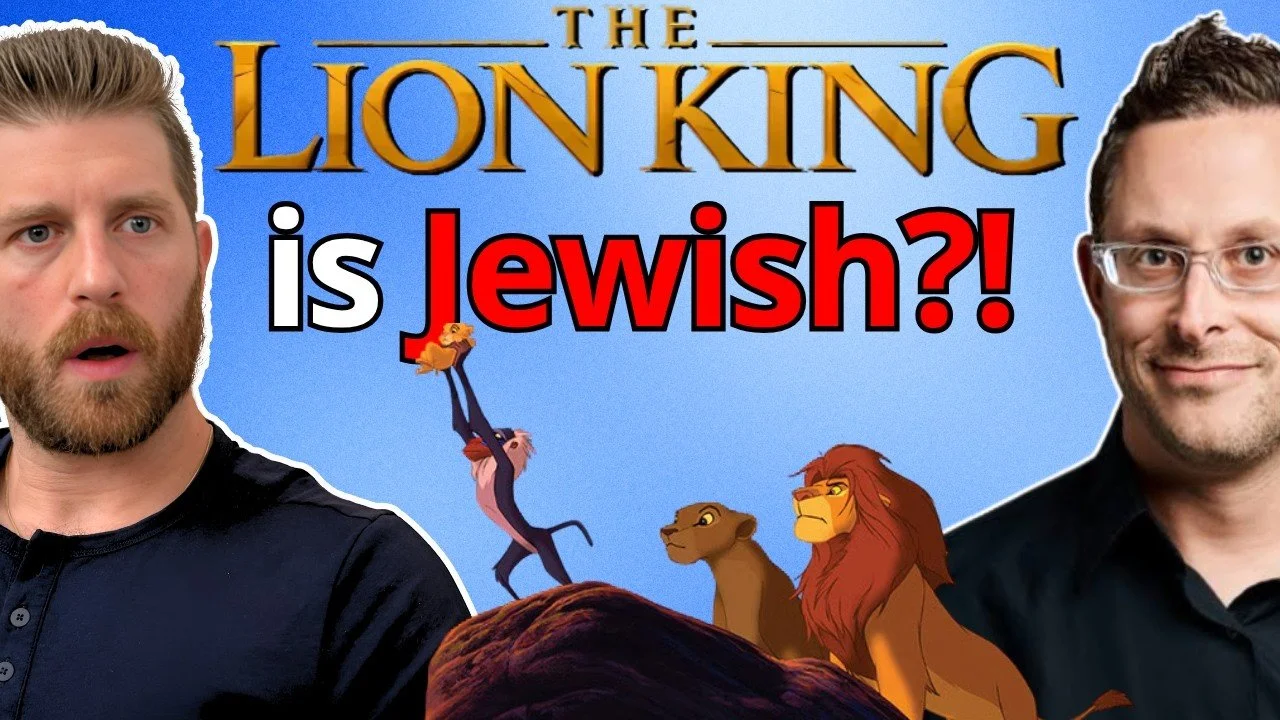
Profound Jewish Lessons that Made ‘The Lion King’ Great w/ Legendary Disney Animator Saul Blinkoff
Watch and Listen
Remember who you are.
How are you gonna bring those Jewish values to the world?
You know, the number one question I get asked when I speak around the world is, was Walt Disney, anti-Semitic?
Am I the first to sing Disney songs with you on your podcast?
Yes, you are.
Okay, good.
Welcome back to our summer series, being Jewish with Jonah Plat.
30 minute mentions.
Same vibe, same tribe.
Shorter episodes.
Today we're gonna be exploring how creativity and personal narrative intersect with Jewish values in the modern world, and to help us do that is my esteemed guest who has very literally had his hands all over some of the world's most beloved animated Charact.
And films.
He's been a Disney animator and director for decades, and he continues to spread that Disney magic as a highly sought after motivational speaker who inspires people all over the world to wish upon a star.
Please welcome to the show, Mr.
Saul.
Blink off.
Oh, thank you Jonna.
Thank you for that intro.
Of course.
I, I, I'm happy to have you here and happy for my audience to, to learn what you're all about.
So you have found a way to sort of combine your worlds of Disney animation and Jewish values into this unique.
Inspirational programming.
You give workshops and talks with names like Dream Awesome, and lead yourself and master your story.
T tell me a little bit about, you know, what your whole ethos is and what you're trying to do and how you do it, and then we'll get into where that all came from.
Well, look, here's the thing, when you mention the word Jewish, uh, I see that word of course as my identity.
I, I like to see it as an adjective, specifically before my identity.
So what do I mean?
Okay.
Yes, I'm Jewish, but I'm also a Jewish father.
I'm not just a father, I'm a Jewish father, so that means my Judaism or Jewish values should dictate how I am as a father, or should at least give me tools to become a more successful father.
I'm a Jewish filmmaker.
I'm a Jewish storyteller, so that means I'm gonna use the greatest, most incredible.
Directions for life or the like.
The best seller of all time.
If you think of the best sellers of all time.
Fourth, best seller of all time.
Harry Potter.
Third, the Little Prince.
Wow.
Second best seller of all time.
A Tale of Two Cities, which is my favorite of all time.
That was a left turn.
Yeah, but the number one bestseller of all Time, the Bible, the Torah, and Torah is a Hebrew word.
It means instructions.
It's literally instructions for living.
So I take my Judaism and I say, how can that incorporate into the values of what I do in the creative world?
If you look in Disney films, you will find Jewish values in those films.
Look at the Lion King, lion King, you know, the biggest animated movie of all time, bf.
Before Frozen.
So look, lion King has Jewish values in them.
It's about taking responsibility for the world.
Simba has to learn that, you know, in the beginning of life, he thinks being a leader is, I can do whatever I want.
His father, Mufasa says, Simba, being a king is more than just getting your way all the time.
Simba's like, there's more what could be better.
And Simba goes off and lives in Haku matata world, right?
Remember?
Yeah, of course.
Una matata.
Am I the first Brown Bryan?
Am I the first to sing Disney songs with you on your podcast?
Uh, yes You are for sure.
Okay.
Maybe not the last.
So he goes and lives there and Haku, Matata means you remember what it means, Jonah.
It means no worries for the rest of your days.
No worries.
And do you know who wants a life of No worries?
All of us.
You know, and it's one thing I tell people, like, if you want a life of no worries, don't get married.
You know, if you want a life of no worries, don't have teenagers.
Right, right.
Look, we all wanna subscribe to a life that's carefree and relaxing.
We all want that Hawaii feel of a vacation sitting in a jacuzzi.
But at the end of the movie, do you remember who shows up and finds him at the end of the movie?
Nala.
Nala.
So Nala shows up and she's all grown up now.
She's got the big eyelashes, you know, and they sing their song.
Can you Feel The Love Tune?
There's another Disney song.
I sang that in my senior year, like we did this thing called Cabaret.
Every year was basically like a musical review and our senior year was Disney and uh, my solo was Canyon Field of Love Tonight.
Stop.
Yeah.
Is that right?
The title of the cabaret every year would be like a play on the theme.
So I pitched and you vote on it as a class, and my pitch that won was Lion King two Simba's Cabaret, which I thought was a hilarious title, but the teacher was so mad and he changed it like unilaterally and made it wonderful world of cabaret.
Oh man.
And I like never forgave him for that.
You shouldn't have kept your title dude, but like after they sing that song.
They're catching up and she's like, Simba, it's good to see you, but you gotta come back with me.
He's like, what do you mean look where I live?
She's like, no, no, no.
Scars taken over everything.
And if you don't come back with me, everyone is gonna die and you are responsible.
And then you know what he says, una matata, I'm staying right here.
And she's like, when are you gonna grow up?
She actually sings.
Why won't he be the king?
I know he is the king.
King, the king I see.
Inside.
Inside, right?
What a line.
Yeah.
You know?
And she's basically saying, when are you gonna grow up?
And you know what she does?
She leaves him.
She leaves him 'cause she sees the potential in him that he doesn't even see in himself.
Mm-hmm.
And then finally, Rafiki shows up, hits him on the head with a stick.
Simba looks up, sees Mufasa in the clouds, and hears his father.
Say the words, remember who you are, remember who you are.
And whenever I hear that scene in the movie, you know what I think?
I think it's the, it's God, it's our creator speaking to the Jewish people.
Mm.
Remember who you are.
How are you gonna bring those Jewish values to the world?
When are we the Jewish people gonna wake up?
You know, you look around the world right now, these people like you, Jonah, and so many others who are, you know, on the forefront of sharing these messages.
But the majority of the Jewish people are sleeping.
Yeah.
When are we as a people gonna wake up?
That's our mission.
So after that.
Happens.
Simba goes back, defeats Scar and Lion King becomes the biggest animated movie in history.
Bf bf.
What made that movie great.
Okay.
Yeah.
Hans Zimmer score.
Elton Johns songs.
James Earl Jones.
But put all that aside.
The movie became so profoundly meaningful because it gave us a taste of something great.
And it wasn't that we just loved movies about Lions.
It's that that movie gave us a taste of what a real life is.
It's waking up with a singular mission.
How do I take responsibility for the world?
And that's how we have to look at our lives as responsibility.
Because if you ask most people in the world, Jonah, they're gonna tell you, you know what?
Life's about happiness.
If you ask a 10-year-old, they're gonna tell you, I want this to be happy.
I need that to be happy.
If you ask a 40-year-old, what do you want?
They're gonna probably say the same thing.
I need this to be happy.
I need this to be happy.
Judaism says, the goal of life is not happiness.
It's a life that's meaningful.
Mm-hmm.
And how do I have a life of meaning?
Singular mindset.
Take responsibility for the world.
So whether I'm speaking to Jewish organizations, you mentioned me, my doing, my keynote speaking.
Yeah.
Or if I'm speaking to secular companies like Abbott Pharmaceuticals or Paul Mitchell, I did their, um, yearly thing for their leaders at the Beverly Hilton Hotel, 300 leaders, and I get up on that stage and I'm sharing Jewish values, alright?
I don't call it Torah, but I'm giving Jewish values about responsibility and all these kinds of things into what I do.
And also, of course, as a storyteller.
I'm working on a show right now, which is really cool.
Um, I, I can mention this, I can mention this.
Been Okay.
We love that public.
So you know who the Sherman brothers are, right?
Yes, of course.
Mary Poppins and, yeah.
Right.
The, the, uh, Winnie the Poh, bang bang.
Uh, it's a small world, right?
They wrote, wow, it's a small world now.
Song will be in your head the rest of the day.
It's been in there for like 30 years, so it's fine.
I know, right?
So they wrote this music and 40 years ago, by the way, they were both Jewish.
You know, the number one question I get asked when I speak around the world is, was Walt Disney, anti-Semitic?
Gimme times.
I've been asked that for 25 years.
It's the number one question.
Interesting.
And the answer that I have is, I can tell you this, he hired Jews.
His favorite writing duo was the Sherman Brothers.
Um, and there's no real proof that he was antisemitic.
Apparently he showed up to some meeting in someone's home and there was someone there.
Who was known as not a supporter of the Jewish people.
It wasn't the main speaker or something, and the media took it and whatever they ran with it.
But other than that moment, there's no nothing.
Hmm.
The Sherman brothers 40 years ago wrote this musical, they wrote like 20 songs and, um, it was about a dinosaur, I guess I can say that.
Okay.
Their son, uh, approached my manager and brought me in and I just connected with him.
On the Jewish values of this project, and now we're developing it as a, as a preschool television show.
It's very cool.
I love that song.
What I, I want to ask you is you talk about, you know, using the Lion King, let's say, responsibility for the world.
That's the charge, that's the mission.
That's right.
But Simba isn't really responsible for the world.
He's responsible for his.
World, sort of his people.
How do you deal with that distinction?
Love it.
Oh man, that is the great question.
That may be the greatest question I've ever been asked.
You're going so deep cuts right now, dude.
No, that's, that's what we do on being Jewish.
Man.
Just take your little mic that's screwed in and just drop it.
I'll give it to you like this.
I'm gonna give you a Jewish text to support the answer.
Ooh, love that.
So one of my favorite, um, Jewish, um, books of.
Of all time besides the Torah is a book called The Path of the Just, um, in Hebrew, miss Laia Shari.
It's written by Rabbi Mosha and Sato in the 17 hundreds.
One of the most brilliant, prolific teachers of.
Of all time, and there's one line in there.
Whatever you're gonna do in life, you gotta have clarity and you gotta make real.
She gives bar to a person.
One thing.
What is a person responsible for in a.
His world.
Mm.
Right.
It's not Ola in the world, it's in his world.
So I asked my rabbi the same question.
Yeah, man.
And the rabbi says, well just keep reading, he says to me.
So I kept reading and then the answer came on the next page where basically the raha, this rabbi, he's just known as the roha.
He says that when you approach your world, meaning whatever's in your purview.
Whatever's in your, your, your space, your home, your community, and if you can change that, it will ripple to the rest of the world.
Mm-hmm.
The greatest battle that any of us will ever have is, is, is right here.
It's one of the thing to battle on the battlefield.
It's another thing to battle through life.
When you're in your home, you know, when you're with your kids, am I gonna yell at them?
Am I gonna be patient?
Am I gonna be a good listener with my husband or my wife?
Right.
That's the real battle, and it tells us if you really want to change the world, it starts right here.
It starts right here.
So Simba taking responsibility for the world, he's taking responsibility in the where he can respond.
Yeah.
You have a passion, you have an ability to accomplish something.
You know what Judaism says?
You're responsible.
I love that.
I think that's a great way to think about it.
And I think a lot of people feel they want to do more right now and be more involved Jewishly, but, ah, I can't start a podcast.
I can't change my job.
I can't run a nonprofit or whatever it is.
And I'm always saying, you don't have to do any of those things.
Beautiful.
It's about.
Your sphere of influence and your abilities and, and your passions and putting your energies there.
And I, I think it's the exact same thing you're talking about.
Yeah.
You don't need to have 200,000 followers on Instagram.
Of course not.
If you have five followers.
That means, guess what you are, you're an influencer.
Mm-hmm.
Mm-hmm.
One of the things that I, I do is I lead trips to Israel.
There's an organization called Momentum, and I've led eight trips in about 10 years.
It's usually a hundred to 150 dads.
It's a dad's trip.
It's ferment.
Oh, I thought momentum was like mom meant him, right?
I thought it was like a women's organization.
It is mainly a women's org organization.
You're exactly right.
Again, Jonah, you know this, this is, you're, you're talking my territory here.
They've taken almost 25,000 women to Israel over the past 12 or 15 years.
It's incredible, incredible.
And post-OC October 7th, it's really become more of a mission to contribute to the land, to the people.
You know, one thing I tell people a lot is post-OC October 7th.
If you haven't gone to Israel and you love Israel, if you wake up and you love Israel, you gotta go.
Yeah.
Because the entire people of Israel, they're still sitting Shiva for the pain of what's happened.
They're still sitting Shiva.
Well, ' cause it's still happening.
If your best friend lost somebody and they say, Hey, I lost my dad.
Here's when Shivas, you're not gonna be like, you know what?
I got any golf games.
I can't do it.
You go because they mean something to you.
If the Jewish people in the state of Israel means something to you, you have to go before the whole, we didn't have a state of Israel.
We couldn't go anywhere.
But now you can go there.
And you can support.
And if we realize, if we wake up and go, my security and my children's security is in the hands of a bunch of 20-year-old soldiers.
They're 20 years old.
Yeah, they're 19 years old.
You have an 18 or 19-year-old and they want to go to Zara and they want to go to Sephora.
Like, think how different the culture is in Israel.
These people are, they're not just willing to die for the Jewish people, they're dying for the Jewish people.
The question we have to ask ourselves.
Is, do I live for the Jewish people?
Mm, great.
Rabbi Rabbi Noah Weinberg, who started Ashe Torah, he said, if we don't know what we're willing to die for, then we're not living for anything.
Choose what you're willing to die for, and now live for it.
And that's something that each of us has to do.
Wherever you live, wherever you are in the world, we wake up as a Jew, we have to realize, you know what?
I gotta live for this.
'cause people are dying for it.
I have to live for it.
Yeah, we may be winning the war on the ground, but in social media and the media, like we we're losing the war.
So every one of us has to do something to influence one more person.
Change one more person.
It changes the world.
I'm telling you.
And you know this 'cause you've been right.
A handful.
Yeah.
When you step off the plane and you walk down that ramp and you see the pictures of the hostages mm-hmm.
Just being there, it's already more meaningful in that one moment.
In that one moment than anything you could possibly do anywhere else.
That's exactly right.
That's the thing about the Jewish people.
You know, we empathize with our Jewish brothers and sisters wherever they are, and not only is there a lot of death in Israel, but there's so much life.
Yeah.
You know, we went to a, a barbecue and, and for these displaced families who've, who've not been able to go to their homes in the north at the time, I think they actually recently just went back, but.
We went to this barbecue and there was women, children, grandmothers, most of their fathers were away fighting.
And you had these moms and these little babies and they were dancing and singing and me and these other guys on my trip from all over the world, we'd put these kids on our shoulders.
We were dancing with them.
There's so much life there, and that's the most amazing thing about the Jewish people.
The resilience.
Yeah.
I've been going to Israel since I was 11, and one of the best burger places is, um.
Oh man, what's the name now?
It's in the show.
Burger King.
No, no, no.
It's um, I feel like I went to a Kosher Burger King once in, in Israel.
It's, oh, there is one.
Yeah, yeah, yeah.
No, it's, uh, it's Crave, crave, crave.
Right.
It's like they have like this amazing burger and every time I've gone to Crave for the past, I don't know, 12 years, everyone talks about, oh, you gotta go to crave the burger's.
Amazing.
But the last three trips I was there.
We took our guys into Crave and the owner, this woman, this little woman, gets up on this counter and she is packing sandwiches for the Haile, for the soldiers, and we spent two hours like packing sandwiches.
I drew Mickey Mouses on every single little sandwich wrapper because I was hoping that some soldier somewhere would open up that burger, whatever they packed.
And just see a little Disney magic, you know?
That's awesome.
Yeah.
You can go to Crave and have a great meal or you can go to Crave and you can have a great experience that'll impact someone else.
That's the hardest part about leaving Israel.
'cause every moment you're there, it's meaningful.
Yeah.
I think it's also like a key word, at least for me when I was there, is healing.
Oh yeah.
Like e even in the, the heavy moments.
There's a relief and a healing and a comfort to, to being there and being in community with your brothers and sisters.
It's sort of like, I mean, Shiva's sort of an apt word for it.
It's like those, obviously it's sad and, and you're grieving.
Yeah.
But there's a comfort and a lightness you get when you, by being together and knowing that you are experiencing so Right.
What everybody else.
Is experience, which is such a different experience than we have here in the diaspora where it's, you know, wherever Jews are, you're you.
You know you're connecting with them, but you're not walking down the street.
Everybody's feeling the same way.
You're feeling the way it is in Israel.
By the way, this is so important.
A lot of people, when they think October 7th, most people are gonna go to Nova.
They're gonna think Nova.
Well, the festival.
If something happened to one person at Nova, we'd be talking about it.
But look at the amount of people that were raped, butchered, murdered, I mean, all of the hostage.
But put that aside, what happened in stay rote in the police station.
Yeah.
Just that itself is enough to make October 7th horrific.
Yeah.
Then you take one of the bomb shelters on Route 2 32 and it was many bomb shelters.
Yeah.
Kind of shelters.
Right.
Where people were gunned down and, uh, OV was taken and, and, um, Hirsch Goldberg, right where he was taken, his arm was blown off.
Yep.
Right.
Any one of those shelters, one story there would've been enough for a miniseries in the future.
Right.
Put all that aside.
The kibbutz, and by the way, kibbutz, plural, many.
If it happened to one family, yeah, on one kibbutz, then you'd take Neros and all of them.
Then, by the way, then there's NAOs.
That's the base.
Yeah.
Where these 18-year-old girls who were the ones that were right next to Gaza, their job was to look at the computer screens and tell their superiors, Hey, there's something going on with Gaza.
They were always watching it, and on that day.
They had told their superiors, Hey, there's a breach coming.
No one came.
And when the terrorists got there, these girls locked themselves in the door into this room.
Mm-hmm.
And were eventually burned alive.
And eventually, when the Israelis came in the next day, their bodies were all hovered together in a corner.
They were burned.
So that NAOs, and by the way, some of you listening right now have never heard of nas.
There's so much that happened on that day.
And if you take all of it together and you start to hear it, and you start to watch the documentaries, there's incredible documentary.
It's called The Killing Roads.
It's on YouTube.
It's free.
It'll tell you everything that basically happened on that day with all the footage.
It's not graphic, but it's heart wrenching.
You're gonna hear the stories, it's amazing.
And then the question is, what do I do with the pain?
What do I do with the anger?
There's anger and you, you hit it.
Jonah, you, you said it's healing, right?
How do we direct that energy?
Here's what we do.
You gotta do something, whether it's doing a post or something, but the greatest thing to do right now is you gotta go.
Yeah, you gotta go.
And if you've ever gone before, you gotta go again.
What do you say to the people who wanna go, but it's the fear of their physical safety in, in the moment right now, if the government of Israel.
Thought it was unsafe, then we, they wouldn't allow you to fly in.
True.
Yeah.
And there have been times, and actually my son just got to Israel.
He's on a program, uh, you know, a teen tour for the summer, and there was like a week and the, and El la was shut down.
Yeah, that's right.
And if it was shut down, that means it's unsafe.
Mm-hmm.
But once they opened up again, we were like, okay, we trust the state of Israel.
Let's go.
And my son is having the summer of his life.
He's only been there two days already.
He's having the summer of his life.
You know, right now there's something so beautiful happening.
I know the Jewish people in the media look like victims a lot, but we also have strength right now.
This is incredible.
This is an incredible time.
We're witnessing.
We got the state of Israel, we have our homeland.
You don't have to go hide us behind your bookcase somewhere.
Europe.
Hmm.
We have our own state.
We are back in our homeland.
That is awesome.
And not only that, we have the strongest air force on planet Earth.
Look what we did with the beepers.
Who are you talking about?
You're messing with the Jewish people here, dude.
You know what I mean?
Yeah, yeah.
You see what Israel did to Iran.
It's incredible.
We went in and with pinpoint accuracy, boom, boom, boom.
Iran, I read a stat yesterday that I, Iran has lost more generals.
Uh, in this 12 day war, then America lost Generals in World War I and two combined.
Oh my gosh.
Look at that.
You, you know what the message is.
Don't don't mess with the Jews.
Yeah, man.
Don't mess with the Jews.
We're strong.
I guarantee you saw from, from the last.
Eight minutes of this conversation, you're, you're gonna get some momentum signups.
I know there are gonna be some listeners who heard the way you just spoke about those trips.
You're gonna get some moms, you're gonna get some dads.
It's, it's, we're gonna get the, being Jewish bump to those, to those numbers.
I hope so.
I hope so.
And by the way, just so you also know if you are considering going anybody, it's not, it's not just a heavy trip.
It is, it is.
It's just a very meaningful trip.
You're still gonna go to the Dead Sea, you're still gonna go eat great and you're gonna have great, you know, incredible music and it's gonna be, the Shabbat there is incredible.
So, I mean, I, I wanted to end on this question and it's, it's sort of.
This is a, either a good segue or you're about to repeat yourself, but what is the core belief that allows you, Saul to always stay positive and, and, and bright?
You know, no matter what's going on in the world, I have two things that give me the ability to, to remain positive and bright.
The first, none of you can get, it's my wife.
Aw, it's my wife.
That's so nice.
She's just my light, you know, she's.
There's certain times, certain pains, certain days where we, I don't even have to say anything to her.
You know, when I got back from my first trip of leaving this men's trip, she picked me up at the airport and I get in the car and I just burst into tears.
Mm.
I'm, I'm not a crier.
Yeah, same.
Not that there's anything wrong with it.
Okay.
Right, right, right.
This is my Seinfeld line.
Not that there's anything wrong with it.
No.
There's anything wrong with it.
I had to be strong for these guys.
I was leading.
And she picks me up at LAX and I just burst into tears and she just pulls the car over and she just hugged me and just wouldn't let go.
The other way that I get I get by is because of the creator of the world.
It's 'cause of God.
If you look at history, it is nothing short of a miraculous that Jews even exist today.
100%.
It's incredible time for us right now to embrace our Jewish identity and have it.
Inform every moment of our lives, not just when we're at synagogue or temple, but every moment of our lives.
You know, when you see that Israeli flag and you see that star, you see that star, you know, Omer OV was, uh, he was one of the hostages from Nova.
This is, I gotta tell you one more story.
Yeah.
Please.
OV 20 something year old kid taken from Nova and he was a hostage.
When I was in Israel with my wife, we went to Hostage Square in Tel Aviv.
Mm-hmm.
And Oberto's mother gets up and she's pleading, telling her son's story.
It's unbelievable.
And one thing she says in her story is that after a couple weeks, two of EM'S friends were released as hostages.
Released and they came back and they sat down with Oberto's mother and father to tell their parents, his parents what he's been up to.
How he is.
Yeah.
And they're like, you don't even know what your son's done as a hostage, your son listening to like the Arab call and the prayer wherever they are in Gaza, was able somehow to mark the days and know when Shabbat was.
And your son, who by the way, was not religious at all.
Forget about religious, not orthodox.
Your son was somehow able to grab some bread and some salt and some kind of juice or something, and was able to make kiddish Friday night for Shabbat.
Like that's what your son was doing.
And kiddish, which comes from the word kodesh, which means holy.
Mm-hmm.
Your son is basically telling the world that even though I'm in hell in Gaza, I'm still holy.
I'm still a Jew.
Mm.
You know, you hear the national anthem of the Jewish people Hatikva.
Hatikva is a Hebrew word.
It means hope.
That's what we have.
And if this woman could speak real sincerely about hope, what about the rest of us?
Mm.
And after she's done speaking, she's holding in her hands a yellow manila envelope, like a package.
And I'm like, what's in her hand?
What is that?
All of a sudden she reaches out of the package she takes out.
David, a Jewish star made of sticks that was like, tied together with twill.
And she told us how only two weeks earlier the IDF got close to Whereto was, and then the, the terrorists moved him to another place.
Mm-hmm.
And OTO had left this Jewish star of S sticks in that spot.
The idea found this thing, they didn't know it was him.
They did some fingerprint, whatever, DNA and it, it was Himm that made it.
And while he's still a hostage, his mother's holding this Jewish star, if OV can make a Jewish star out of sticks and Gaza in hell, then we can wear, am IG David?
Then we can proudly look at that Jewish star on the Israeli flag and say, you know what?
That's my identity.
The beautiful part of the story is Omar MTO has been released.
Yeah.
He was freed and now he's touring the world, sharing his story.
Mm-hmm.
So once you hear a story like that, we have to ask ourselves, how will I be part of the narrative for my own story?
Amazing.
Saul, this has been so fantastic.
I know so many people are gonna be inspired by this.
You have a podcast of your own where people can continue to be inspired by you called Life of Awesome.
Yeah.
Where can people find the pod everywhere you listen to podcasts?
Spotify, apple, everywhere.
You know, I love movies, so every podcast episode I'm bringing clips from movies, gladiator, a few Good Men, Disney movies, and I'm showing Jewish values.
In film.
So it's a really fun podcast.
Uh, so check it out.
Saul, thank you so much for the time, the stories, the inspiration.
It's, it's been great having you on the show.
Thank you, Jonah.
And I have to say one more thing to be embracing this platform, the way you are inspires me and my wife and my kids.
They, they all know about you.
And I'm sure all of your listeners are inspired by your courage, so thank you for impacting all of us.
That's very generous.
Thank you, Saul.
Thank you.
He's a mensch.
It's been 30 minutes.
I'm Jonah Platt, and uh, we'll see you Allall real soon.