
Episode Transcript
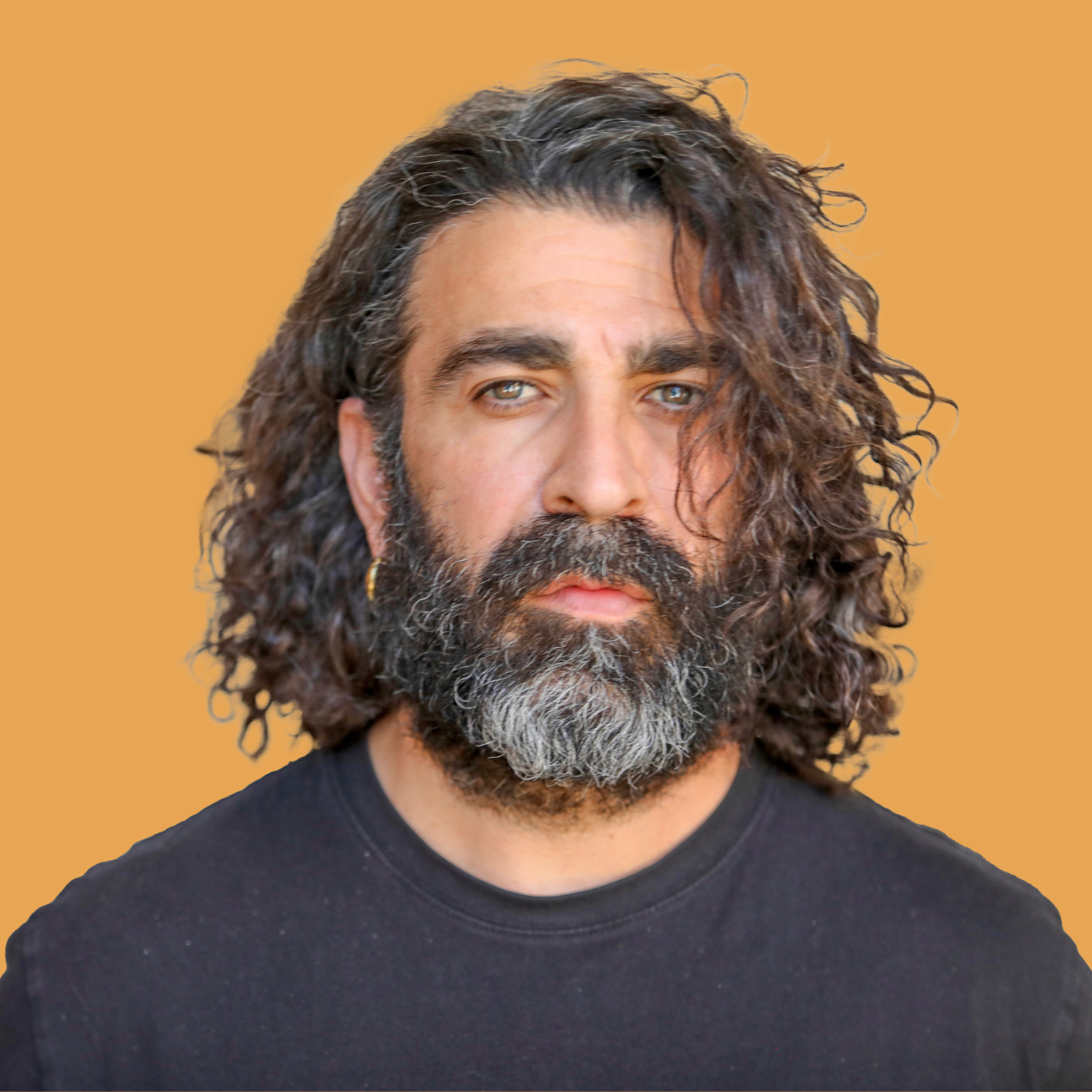
On October 7, He Buried the Dead, 2 Years Later He Helps Survivors LIVE- Israeli Artist Tomer Peretz
I don't feel there is a conversation right now.
I don't think it should be a conversation.
I think we are in the middle of a fight.
Was there any way that anyone could have been prepared for what you saw?
No one.
There is no bridges, man.
What bridge with someone who wants to kill you?
You know what?
Sorry that F*ck that Sh*t.
Welcome everybody.
This is Being Jewish with Jonah Platt and it is great to be here with you all especially on today of all days.
If you're watching or listening to this episode on its day of release, it is October 7th, 2025, the 2-year anniversary of the most horrific massacre of Jewish people, certainly in my lifetime.
A year ago today, I was in Israel at the Nova site, at the Kibbutzim, at the memorials, and I shared my reflections on an episode of this show.
The year before that, my guest was in Israel on October 7th.
And on October 8th, he entered the kibbutzim as one of the first people to see the nightmarish devastation firsthand as a volunteer for Zak’a, the organization charged with the retrieval, identification, and burial of bodies after a terrorist attack.
Think about what that means, that such an organization should even exist.
But I digress.
By trade, my guest is an internationally acclaimed visual artist who has long expressed the painful calamities of war and its aftermath through his brush.
But the atrocities he witnessed two years ago changed the path of his life and the lives of the hundreds of trauma survivors he has since taken under his wing forever.
He's climbed Mount Everest base camp, painted soccer murals in South America, and he's banned from Art Basil.
Please give a hearty bim to my friend Tomer Peretz.
How's it going, Jonah?
It's great, man.
It's great to be here with you.
Thank you.
I appreciate that.
Yeah, no doubt.
So, today it's the 2-year anniversary of October 7th.
Where's your head at right now?
Do you feel this day in particular more than other days when I know this is still such a part of your day-to-day life and so heavy on you.
It's just a symbol, you know.
It's just it's symbolic.
Every day is a is an interesting day now.
But, um um that day, you know, it's because of the media and everything.
It just it's uh it brings a lot of memories, you know, that day.
So, let's talk about that day.
You were in Israel for a wedding.
You just happened to be there.
You live here in LA.
Obviously, you're from Israel, but where were you as the news broke?
Like, how how were you starting to hear about what was going on?
So, I was in a Airbnb apartment in Tel Aiv with my nephews on Friday.
We went to the beach and then uh we had a great dinner Friday night.
Then we went to bed and we woke up to the alarm with nephews.
Yeah.
The rockets.
And it was really for me shocking because I didn't really hear alarm um for many many many years, right?
And I was like, wait, I'm in Tel Aiv.
This is not really uh normal, you know?
Right.
Usually you're hearing them maybe if you're in the south, you're near the border, right?
Up north, you know.
Tel Aiv is like a little bit extreme.
So, uh, I jumped out of bed, ran to, um, the safe room and my nephews and my, uh, kids.
They were up already on the iPad.
Didn't even care about that.
Like, they they didn't even understand what's going on.
And then I started to look online, of course, and all the footage came up right away, like immediately.
[Music] And in seconds I realized that this is this is uh no joke.
Something is really serious going on.
I was locked on the phone for like few hours until I look up and start to plan my next move which is what?
Volunteering.
Cuz every person I called to or were not was not available or or picked up or answer with a text message.
I'm busy.
I'm doing this and this.
And so I realized that everyone is doing something around me.
Most people that I know, which is my family, my extended family, my cousins, uh they're all put uniform on themselves and jumped down south.
And each one of them in um serving in reserves and and some of them even their daily work is in um um in a defense in in Israel.
So everyone in my surrounding did something.
So obviously I couldn't stay and you know watching the whole thing out of my phone.
So right you felt like you had to do something.
Yeah.
I started texting everyone.
I know how can I help somehow.
Obviously I didn't do any reserve duty um up until then which I'm going soon by the way into the reserves.
Yeah.
Yeah.
I'm I'm waiting uh November December probably.
So I'm waiting for the call.
So okay.
So, why haven't you done it till now?
And why are you doing it now?
And what what sort of reserve duty will you be doing?
Great question.
When I left Israel, you were how old?
23.
Right after my service, I really didn't want to come back because you were just so shaken by your experience.
This is a whole other podcast right now.
I mean, we're going to get into it, so might as well go there.
Yeah.
It's uh look I had a very tough 4 and 1/2 years and I wanted to go far farther as I can but it was not just the 4 and 1/2 years.
My whole life childhood I grew up in a war kind of a zone.
I grew up in Saudi Jerusalem.
Um and and and the military for me was I just don't want to continue this this war and and I wanted to leave.
So I left and I when I left Israel I uh like I'm not Israeli civilian kind of anymore.
I'm a you know I don't live in Israel.
So I was not called to reserve right for 20 years.
But through the years slowly slowly I started to feel guilt you know when I uh had a lot of conversation with a lot of friends.
I get that.
And this guilt you know hit me very hard when we we when October 7 happened.
So I volunteered with Zaka because it's the first people that got back to me.
I was like, "Yeah." You were just reaching out left and right and they were like, "Yeah, we'll take you." Yeah.
My friend from Jerusalem from childhood got back to me and he's like, "Tomer, do you know do you know what you're signing up for?
You're I'm like, "Bro, like you have 5 minutes to pick me up.
If not, I'm like we are not friends anymore." He's like, "Listen, we're already down south.
We come tomorrow.
be ready 7 a.m.
Now, typically, correct me if I'm wrong, but the people who usually are involved in Zach are are sort of orthodox, right?
Yeah.
Like, so what was that like?
Because you're clearly not, dude, it was it was a whole trip cuz um and why is that?
Why why is that who trends to to be a part of that group?
You cannot do something like this if you don't have a very very strong spiritual belief about the actual action of picking up dead buddies.
It's not something that you do just because you want to volunteer.
You you you can mentally you have to have something very strong in you.
Some very strong belief that we're supposed to do it as as a religion, you know, right?
And this is really above me.
This is really I'm not that deep.
I'm not that religious even though I grew up in a religious family but I kind of left that part in a very early age in my life and u I obviously didn't care like I I wanted to be there I wanted to do something anything I didn't really think honestly yeah you know it's it was an instinct and I just follow my instincts was there any way that anyone including yourself could have been prepared for what you saw no No one even them and you know you asked me how it was to be a non religious.
I got so many eyes on me in what way?
I'm covered tattoos just like a who's this guy kind of eyes.
Yeah.
Yeah.
Who's this guy?
So I felt like I have to prove myself.
I just worked as hard as I can um with jumping on everybody basically and recovering everybody even if it was a terrorist.
Even though it was very hard.
I did it because I I really wanted to prove myself and I I'm like, okay, if I got the chance to do and the honor to do something so impactful, I I can't mess it up and I need to do the work that those people doing.
And I didn't I didn't feel comfortable with the eyes on me, honestly.
So, it really pushed me to um to work harder, right?
And where was the first place you entered?
The Nova site.
That was your first stop.
Yeah.
232.
And then 232 was the first one because that's the way to get there.
and then an oversight.
Many of us have now seen photos, videos, documentaries, a lot of horrible things.
Some have seen more than others.
Without getting, you know, too graphic or maybe getting graphic like what was the most shocking sort of things to find or what stays with you and haunts you?
Burning bodies.
The burned bodies, ashes, bones.
Yeah.
the way that they've been left, meaning the way that they were killed.
That was very odd, very strange, and very hard to look at.
I saw when I was in Israel, I got to see some sort of unreleased photos of, you know, faces burned, but bodies, you know, frozen, heads smashed.
I mean, finger cuts, finger cuts.
Finger cut.
Yeah.
No, cut off.
Yeah.
Cut offs.
Like, no.
No fingers, no arms.
Partial of the body burnt and a partial knot, right?
A lot of weird marks like stabs, not just like a buddy laying on the ground on the ground and like a bullet in the hat, you know, like and sometimes you see few holes in the body and it it just it just um this wasn't what you had seen in your IDF.
No, not at all.
Not at all.
Not even close.
the time that was spent before the killing.
That was something that ran a lot in our head.
We spoke about it the whole time, every every time we picked up someone.
How how did it got to that point, you know, and a lot of um rumors and different people say different things.
I heard about this one and the one was raped.
This one was not raped.
It was a lot of questions and it was very chaotic because you don't know what had really happened before but you can imagine and you come up with a lot of story.
The last thing I'll ask about this then we'll move on from this is is there anything you saw that you're like you guys have to believe me I saw this.
I know the people who found heads.
Okay.
I know them.
Mhm.
I was not the person who found actual heads.
I know um some heads were in different in different places.
not in Ber, but I know the people who found the actual heads that were hanging on a fence, literally heads of soldiers and some of them of um not Israeli citizens, like Thai people from Thailand, right, the workers, immigrants, the workers, a lot of soldiers um body parts and I know the people who found it.
While you were there, you also, you know, filmed yourself a bit and put it on social media.
Not really the the graphic stuff, but lots of, you know, bags, body bags, and and the the the volume.
I filmed the graphic stuff.
I just did not share.
But you didn't post it.
I'm talking about, you know, what you put on.
So, do you still have the graphic videos?
Why do you hold on to those?
I don't want to forget.
and I release sometimes and I send it to few people.
It's not sacred for me.
Everyone need to see it.
This brings me to another question which is I I'd say one of my biggest frustrations with how Israel has handled the communications war is the fact that those videos and that footage is not everywhere all the time.
How do you feel about that?
I think the whole world should be blasted with all those footage right now.
Right now.
I agree.
Look, I had those arguments the first day already with Zaka.
Yeah.
At the first day.
And what was the what was the response?
Wow.
I got almost got kicked out from Kibbutzberry few times just for suggesting we need to be showing almost got into fights with few of them and I realized and I got the point of what's going to happen soon.
I think in the first hour I got into the Nova site.
I I I told everyone the entire world should see it and because I'm in touch with a lot of people from LA and I went with people from Jerusalem who barely even using Instagram with barely even communicating with some people out out of Israel.
So I realized that there is a whole miscommunication right now.
No one know what's going on.
And right away I started to film that the team leader I took him to the side and I hold his face.
I'm like listen to me.
I don't care about your rules.
I'm Everyone should see it.
He's like, Tormer, I get it.
Just when you pull up your phone, just hide your phone.
I get it.
I'm with you.
So, and that's what I did for the entire week.
And I got caught a few times by the Zakab guys because they are like, "No, you cannot film or take a photo of a dead body." I'm like, you know what?
Like a religious thing.
Yeah.
Mhm.
Yeah.
Yeah.
Because of a respect for the family.
I understand the respect for the family, but like I'm not going to share any face, right?
I don't know how I saw it coming.
I saw the fact that we are not sharing enough coming and we're still not sharing enough.
Oh, yeah.
Big time.
Frustrates me, that's for sure.
So, you finish that that experience, you come back to the States and you fall into a heavy depression.
Yeah.
Right away.
Right away.
Right away.
where you know I read you've said you know you you're not wanting to get out of bed you don't want to do anything.
Yeah.
Look you know I had a manager and I had a gallery and I had a whole life and real estate and this and I was doing a lot and I uh decided I don't want to do anything anymore.
So, I had to leave business operations and business ventures and just stop responding to messages.
Um, I was in bed.
I um didn't want to do anything anymore.
I wanted to go back to Israel.
Mhm.
Um to help Zaka and to see how can I join the reserve.
And that's all I thought about.
And in the meantime, when I'm just trying to figure out how can I go back to Israel, I I'm getting into arguments at home because I have three kids, right?
And I have a wife and people depend on me, but I uh I just didn't want to do anything.
So, it created a very big gap between the current tumor and everything I had in my life.
So, um, it just added to the depression of I know I'm messing up other things I started before.
A lot of people got upset with me and I just didn't care about anything anymore.
How much are those days, if at all, still with you?
That that feeling that you had in the early days, are is there still remnants of it or now that you're on this new path and with purpose, it's gone?
No, of course it is.
Every day.
Every day.
every day.
Look, you know, I got into depression not because I saw dead bodies.
I got into depression because I everything was meaningless for me.
You know, everything I was doing and every person that is in my life right now is not important anymore.
And I and I am completely in a different place right now.
And I don't want to do anything related to what I did before October 7th.
And it's um and um and that's why I got into depression because if I'm not joining the military or picking up dead bodies for me, um I don't want to do anything, right?
You get a call at some point that changes everything that sets you on a new path.
Before we get into that new path, I want to go back a little bit and sort of set up who you are even more up until this point so we can really see how big of a shift you make.
You mentioned that you grew up in southeast Jerusalem, sort of surrounded by war.
I I've heard you say, you know, you grew up rough.
What does that mean?
What did that look like?
What was your childhood like for you there?
I grew up in a neighborhood called Arman and Nativ and it's in between two very radical Muslim villages.
Every Arab you see on the street, you're about to get into a fight with as a kid.
So or you walk alone and you need to know how you run away or getting into that fight because they always walk around with groups and if they walk around with groups you're going to get into a fight.
If you see one of them or two of them they're not looking for something.
So it's they always going to be looking for a fight as a kid as a child 10 12 13 14 years old if you see them in groups.
And that was my entire childhood.
you go to play soccer and you might going to come back with a few bruises because uh because of a fight.
It was a daily thing.
And you know what?
With with that being said, I think I had a great childhood.
Yeah.
Yeah.
Cuz I don't I don't feel like I went through some kind of a trauma as a kid, you know.
I I like the fact that I got into a fight.
Sometimes I got some kicks in my ass and sometimes I gave, you know.
So So it's like it was a mutual thing, you know.
They were stealing our bikes.
We were stealing um their donkeys.
You know, I was riding a donkey at least once a week that I stole from uh the Arab village next to me because they stole my bike three times.
Definitely the first person on this podcast to say they've stolen and ridden a donkey.
Yeah, that was that was a childhood in a neighborhood.
Wow.
I mean, that's different.
A little different than how I grew up, I'll tell you.
Um when did you first turn to art?
Where did you discover that outlet?
It it was not art for me.
It was it was a getaway, right?
Um I did not call it art.
I did not think about artists.
I did not even investigate.
But I I don't think I've ever heard the word artist until I moved to America uh which was in 2005.
So when I was teenager, I was doing a lot of graffiti, a lot of tagging in Israel.
Uh a lot of political tagging.
It was not art.
It was expression damaged a lot damaged.
And then from writing a lot of um stupid things on walls, I I started to paint bedrooms, my bedroom, my friends bedrooms.
And now I look back, I'm like that this is not that good for that.
Even for that age, your friends still let you do it on their walls.
Yeah.
You know, good friends.
When do you decide, okay, actually like this is a thing that I want to pursue and like I think this should be my path because you apply to art school, right?
No, I did not apply.
I called and they say, okay, do you have the final exams as you finish high school?
I'm like, no.
Like, okay, so you can't you have to go complete that and come back?
I'm like, okay, no.
And then the other option was to leave to travel go travel in South America.
I remember I called my father and my father bought a ticket and a day after I discharged I was in a bakum on Tuesday and Thursday morning I was already on the airplane to Brazil and since then I don't live in Israel.
Wow.
So you joined the IDF during the time of the second inif.
What was the environment like before you joined?
Wow, it just started.
I joined the military right after the lynching of Amala and I was very very motivated.
I trained two years in advance.
By the way, I have the Golani flag in my in my bedroom since I was 10 years old.
My father was in Golani.
My brother was in Golani.
my entire extended family all in um high rank units and special forces.
So the pressure was already in a very early age and I knew that I'm going to be um in the best unit in Golani before I even joined the military.
So I got prepared for it.
Tell my audience who don't know about Golani and the different sort of you know brigades you can be in.
It's the most desirable brigade in the IDF.
Golani is number one brigade that usually getting the most complicated operations.
I actually joined um say Golani which was um it's the special forces of Golani and after one year I left my team and joined Loshasa which is Golani 13.
We were up up north Janine and then I went to uh course to be an officer Kuskanimin and came back went back to the same unit.
It was very very rough.
I was fighting for over two and a half years with no breaks for over two and a half years.
Jeez.
And that was really rough.
We lost a lot of friends and we saw a lot at that time.
And the second was very new tactic war game inside Janine and Kabon.
And as the fighting in the neighborhoods like in um the urban warfare, urban warfare was very new to us.
But up until that point, most warfare had been what?
Like open field.
But Lebanon is a lot of open spaces, a lot of boulders, a lot of rocks, open spaces.
uh less urban, you know, much more open.
Uh the the villages in the south of Lebanon are not tight and built as Aza or Janine.
So yeah, it was it was very very very rough time.
Uh was very similar to what's going on right now.
It just internet was not like as it is, but it was very very similar like we went from a house to a house through the walls because um explosive devices were all over, right?
And we got caught in explosive device a lot.
So we went through from a wall to wall and that was super rough.
It was very noisy and um uh we were tired a lot as soldiers, you know.
I remember I was we were very tired.
It wasn't easy fight at all.
What made you decide that you wanted to become an officer?
I did not think about it.
I uh the magada the colise I I guess came and um told me you're going and I'm like no wait.
Yeah.
He's like now next week pack your stuff and my father was proud and this and the family.
Wow.
Wow.
You know I was like I felt it was the first uh good things I did in my life.
So like maybe I should do something good cuz I was very wild kid and right um it was an honor.
It was I felt proud but I did not plan it.
Wow.
A lot more responsibility.
A lot different game.
When people outside are watching a war unfold.
You sort of you can see that the like the narrative that's being drawn.
And it seems like the army is sort of an extension of the government and the country.
I imagine being on the ground it doesn't feel like that at all.
It feels like you're doing dayto-day what you need to do for your people and and you know the the task at hand.
H how much do you are you even aware of that bigger picture as you're on the ground you know going after your objectives?
Was not aware.
Nothing at all.
They didn't care about that.
Right.
Nothing.
Zero.
Don't forget we didn't have internet so I was not exposed to what's going on around but we only when I left the military I looked back and I started to realize but um no when I was there now no connection to the outside world at all I'm assuming you know many people who have been in and out of the military over the last couple of years during this current conflict have has that come up sort of that how different that makes the experience of course the fight is a little bit different the rules are different.
The pressure from around the world is much different.
And they feel that now in the moment when they need to be focused on what they're doing, some of them.
Yeah.
Reserves, right?
Cuz I mean, the reserves are coming out and going in.
Yeah.
That's tough.
Yeah.
Interesting.
And they they have more connection to the outside world, the reserves, than the young soldiers.
Right.
They have jobs, they have spouses, they have kids.
Exactly.
Right.
It's different considerations.
How many even living in outside the country, right?
Right.
And they came back.
They came back out.
So during your military service, uh, this was something that I learned when I was in your studio recently.
You were doing a presentation for your new nonprofit, The Ape Project, which we're going to get into.
Uh, and you are doing this, you know, slideshow sort of about who you are and your story and how you got to this point.
And you put up a picture of David Solomonov, the younger brother of Mike Solomonov.
Shout out to Mike.
I was just with him in Philly and he was one of the earliest guests on this podcast.
We love him.
He's a great friend of the show and we spent a long, you know, significant portion of our conversation talking about the death of his brother at the hands of Hezbollah snipers and how, you know, that changed Mike's life obviously forever.
And there all of a sudden he's in your slideshow and you are his officer.
Can you talk about that experience and how and you said that was one of sort of the the pivotal traumas of your experience.
It was one of the biggest shocking for um our unit.
It was in Yonipur.
Uh we did um uh two group um ambush.
I don't know how to call in in in English but it's like one uh one group is you know ambushing for few hours like 12 hours and then there is another one that replacing them and back and forth back and forth back and forth.
and was right behind David and they got recognized.
Of course, they got identified and um he got his shot right away.
Right away.
He recognized something also, but as soon as he I think lift his head in maybe an inch.
Um they shot him.
It was a sniper sniper.
Mike said it was in an apple orchard.
Is that right?
I guess so.
Yeah.
And um look, it's uh I I I you know, the biggest thing that I um remember and doesn't leave me was uh was the fight after because um we recognized the terrorist running into a house and we told the tank because we had a backup of the tank, right?
When you're ambushing, you have a backups, right?
So the tank was in backups and we we literally I told it.
So I was I was the officer of the operation that moment.
Um, and I was commanding the tank bomb the house and he's like, "Yeah, but you rec you guys recognize two running and there's a lot of people inside the house, so I guess there was not involved." I'm like, "Take the house." And we started to get into argument.
And that was that was the biggest thing um um that I u remember and we didn't take the house down.
And that was my uh one of my biggest um um disappointment from the IDF since then.
And because of so many regulation and rules that we had as soldiers and this is something that people don't know for example you know my friend just got shot and we cannot even respond to the right place because there is uninvolved.
Was he killed right in front of you?
You're right.
You're right.
Yeah.
Yeah.
It was a whole scene over there and we carry David uh through the boulders all the way to the back and um the doctor um that was on site um know um obviously said that he's dead.
I was the first one who who got that on the radio and I was the one who transferred that to everyone.
What about David's death was so painful?
Uh, one of the closest people that was to me that it was very close.
It was, you know, it's it's Do you mean close like your relationship?
Physically physically physically and relationship physically and relationship.
And it was it was just I think few days before he was supposed to right be done be done.
And David was not supposed to be in the ambush.
It was another guy was supposed to be in the ambush.
And the other guy came to David and he's like, David, I wanna because it was Yumipool like I want to pray and I'm fasting.
Like, yeah, I'll go.
Don't worry about it.
David was not supposed to be there.
Damn.
Yeah, that hurts.
Yeah, very much.
As an officer, obviously, you mean you can't control everything in that environment at all.
How much responsibility do you end up feeling when something like that happens?
You do a lot.
It's tough.
Look, guilt is um is one of the biggest um and the hardest um feeling that you take and I don't think it can be ever um change that feeling.
Guilt is is um something uh a lot of us carrying and um we all have guilt of course with David's death.
It's it's even even though I didn't shoot that, you know, it's still it goes everywhere.
Another tie that you and I have other than that one is how we met.
You and I first met uh filming a YouTube show called Middle Ground.
Uh it was you, me, Shaunie Swissa, friend of the pod.
Shout out to Shaunie and Ariel Engal from Israel.
It was the four of us around the table with four Palestinian Americans.
You can watch this episode.
We'll we'll put a link to it in the show notes.
One of the things that stands out to me from that experience is remembering you sort of trying to describe the ethos, the value system of the IDF and seeing how frustrating that is.
And you know, we see it today at large where someone says, "You guys are monsters." and you have to say, "No, no, you don't understand.
Like, our whole vibe is to protect and to value life and this and that." How does it feel having, you know, so many people around the world telling you who you and your friends are?
You know, I'm very upset with myself, by the way, about this uh debate.
Oh, yeah.
Yeah.
I have a lot of regrets about this.
And in that time, I was trying to bridge I don't know why.
trying to bridge to to to have like a bridge common.
It's called middle ground.
You know what?
Sorry.
[ ] that [ ] Yeah.
[ ] that [ ] Yeah.
Remembering what I uh uh what I saw on October 8th, what I've been through as a kid.
There is no bridges, man.
What bridge with someone who wants to kill you?
So I uh I was very upset with few things about this um stupid debate.
First of all, these people don't know [ __ ] And the people who edit the debate, they edit it in a way that they didn't show how they lost got got they lost it few times on us, right?
And we were very cold and empathetic and and you know, we we we were the coolest people there, right?
And they did they did not show it.
They did not show that they were their aggressive people.
But you know what I thought about maybe we can have a conversation.
Look, there is no conversations.
That's it.
When someone is coming into inside your house and is killing everyone and they can, there is no conversations and they support this.
And if they came over to this debate and they act like they want peace and they don't.
I see their I see those people what they're posting all day, right?
They don't.
So that's what that's why I think they lied and I thought I can have a conversation with some of them.
I realized that I after the debate I looked at it I'm like you know what I I regret some of the things that I said or didn't say over there.
Actually I don't feel there is a conversation right now.
I don't think should be a conversation.
I think we are in the middle of a fight.
After the fight we'll talk.
After we get the hostages back we'll talk.
after um we'll finish what we supposed to finish, we'll talk.
How does it feel then to be constantly hearing from people who are not in that fight telling you you should stop having that fight?
So, so I had some times when it was very upsetting and I spoke a lot about husb and I really don't care anymore really.
I I stopped convincing.
I look I appreciate what you do with with the podcast and explaining people about it.
Just you know what?
I'm not here to explain anymore.
I care only about my brothers and sister and I care only about helping my brothers and sisters because these are the people need that needs that.
So I will put my entire energy to help my brothers and sisters and when I will finish with that part I will start thinking about a bridge between other um the other side because it doesn't matter what I'm going to do.
Listen, I posted everything the day after I I shared everything.
I I you know I I I the actual dead body everything even if I would bring the bag they will tell me okay it's a stuffed animal even if I will you know whatever I will do there is a whole propaganda to it you know every you know you're going to try to be the best most beautiful Jew out there peace lover and and and they they they want to kill you anyway it doesn't matter even look what people live in kibbut the left side right these people believed the people organizing peace marches when I was there.
You know how surreal was it to carry those those kids and and and body parts in Kibut and you see the sign of uh the left of we want peace and stuff like that.
It was so surreal.
I'm like can you believe these people that gave them the housing gave them let them come in and work in their houses.
It was like they were like families to them.
So um I had some times in my uh in different times in my life when I really wanted to bridge and to talk about peace and conversations.
I'm now in a point where the only people I care about are my brothers and sisters who are spending time in reserves and I care about them.
What would you say is the biggest misconception that people have about the way the IDF operates?
So many rules until you can really shoot.
You have no idea what you need to go through for this from this guy who gets approval from that guy who gets approval from that guy.
One of the biggest commanders in the in the military right now.
His name is Barakam.
I don't know if you know that name.
It's a famous name in Israel right now because it was very active during October 7.
He's a be caller right now.
He was my officer and every operation he uh we went back home before the operation to you know to for a break and we came back.
Every time we went back home, they told us bring toys when you're coming back because when we arresting different um u terrorist um the kids are home and we don't want them to be so afraid to bring toys, giving them toys and the protocol of how to deal with the families when we do something like was very strict meaning I learned in the IDF that your enemy you need to respect your enemy in a level that sometimes was weird.
Can you give an example?
Yeah.
Giving toys or um the way you hand them, the way you hold their hand next to their kids, next to their wives.
Um the way you go inside the house.
Um long time ago, we used to have the rule of keshbag like we before we we even coming in, we tell them we are coming in.
What military does that?
You can't shoot.
you know, as a soldier, even as an officer, I can't shoot because I think that I see something.
There were so many approval I was supposed to get before I'm shooting.
You could not do whatever you want to do.
And um was a lot of regulation, a lot of rules that make our job much harder, much harder.
I see it as a beautiful thing really because you know I still even though I losing my empathy I'm sorry you know because look what's going on I I I still have respect you know to humans and and even to the uninvolved you know I I I feel bad for them because they don't know any other reality so I don't even blame blame them sometimes you know let's say right now we'll go to an operation I'm not upset set with the kids or the entire families or I don't I don't even have emotions involved, you know.
I I I I do what's supposed to do and I respect the IDF.
I was always respecting the IDF uh rules and it was always over overprotected of the other side.
Always overprotected.
And there you go.
You know, when I told the tank, take take the house, I was so upset.
David David just got killed.
David just got killed.
take over the house.
He didn't.
So, this is the idea.
But it's something that you cannot ever convince anyone with this.
And I lost my, you know, um, my motivation to try to explain it.
Right.
I get that.
Do you think those approvals are there because it's important to be careful or we have to be careful because if we aren't, everyone's going to say that we're monsters.
Those kids don't know anything else.
They were born to it, right?
They don't know that we are the good people.
It's like you being born in that neighborhood and being like this is Exactly.
Exactly.
Exactly.
And that's where the empathy start, right?
And we were very like empathetic to those kids, you know, and sometimes we to so I had one situation and that in Janine that a lot of kids now throwing rocks and we ran after one group and I got I caught one of them.
We took the kid, we put them in a car and we asked him to show us where his family.
So we went to his father and we told him what he did.
The father bit the [ __ ] out of that kid in front of me and I felt I told him no no no no like I told please stop listen I felt so bad for that kid I felt even a guilt like I would never bit that kid like that never even he threw rocks on us right and I told him please stop please stop please stop and the father we had a long conversation and I felt bad for the kids.
The older people did not want the problems.
The young kids, they get taught by other kids.
Now, it's not like, you know, they're not home.
The those kids are in the street all day.
Yeah.
So, they learn more from other kids what to do.
So, look, they they they that's what I know.
That's how been they've been educated.
And that's why this war is super complicated.
Okay.
So, you're serving in the IDF.
you finish, you go to travel the world, you got to get away from here.
At what point do you start using art to express your experiences?
When I uh moved to the state, second Lebanon started.
I uh lost three friends in Second Lebanon.
I was in LA.
I didn't go back.
I didn't go back.
That's where the guild started to come up.
And uh I started to work on my own exhibit.
The first solo show I had was a called I called it Unbreakable.
and it the conflict Israeli Palestinian from a point of view of a soldier and that was my first solo show in 2011 and 12 and that's when I started to express my time and experience from the military.
What was the theme of that show?
The spirit of the EF soldier that even if it is in this different countries is unbreakable.
you know, it was mainly about the experience of the actual soldier.
So, yeah, it was pretty much about how I saw it from my point of view.
How does it feel to be in a funeral and how does it feel to be in front of a protest of some European uh females coming to the border and tried to trig?
You know, that's already started back then and bunch of different stories of this conflict from a point of view of a soldier.
What was the reaction from from the public and the art world to your to your show?
Nothing.
Nothing.
I got zero reaction, zero exposure.
So, not a successful show.
Very not successful at all.
I No one cared.
I I didn't know anyone.
I was new in town.
I was not part of the art world.
I was I come from the street.
And then what happens?
I mean, what what changes?
Nothing.
I kept going.
When did it become interesting for people?
I mean, when did people start to take notice of the stuff you're doing?
Now, October 7th, between all these years, all the attention I got was about different art, not about this.
Interesting.
Yeah.
So, then now we're back to where I took the break from.
It's post October 7th.
You're in this depression.
You're here in LA and you find out that there's a group of 120 people coming from Israel, survivors of October 7th, first responders, hostage families.
They're coming to LA for a change of scene, some some activity, some relaxation, some treatment, and you get contacted about it.
Where do you go from getting that call to I know what I'm going to do.
I'm going to bring them in.
We're going to make art together.
Look, it started actually not from this.
It started with uh the project I did when the music stopped when I uh wanted to create a NASCAR.
Like I wanted to see just for myself how a thousand people dead on the ground looks like.
When I got into Lukberry was a lot of dead bodies all over right on on the patios, inside the houses, outside the houses, on the roads, everywhere.
And I wanted to redo it as an art piece.
And I did.
That's was the first project I did.
And by the way, that time my phone was I think I got interviewed four times a day for every channel you can even think of in the world.
And that that kind of got me out of bed like speaking about that about this piece that you were doing about everything about about the experience in Berry.
And that piece also brought a lot of attention 1,200 people we brought into Grand Park.
I rented Grant Park out of my pocket.
Wow.
I did everything out of my pocket.
You can rent Grant Park.
Yeah.
Whoa.
Yeah.
And then and then I got a lot of different messages from bunch of different organization about bunch of it just got different offers to do certain things.
But I was very depressed that time.
It was very hard for me.
So I I got a lot of help from a lot of Jewish and Israelis advocate who helped me a lot cuz I say the idea and I told him I I I I really cannot do certain thing.
I need your help.
And that painting with 120 Nova survivors I didn't know what I'm going to do.
I just went with bunch of canvases with three huge canvas and I cut it to three pieces over there.
And I did not have any plans.
All I wanted and I know I want to do is just to paint with them and create with them and just to speak with them.
And what was the experience?
What what did you experience with those people and then learn through that that's now led you to the path that we are exactly in the same place.
We want to talk about that, but we want to talk about it with someone who understand us and can channel like we I realize that every person who was there, Nova or soldier or any kind of an experience in the war, I can relate and they can relate to me very easy, very quick and we can share certain things.
we cannot share with others um certain feelings and um and and I realized that uh every person who was there that comes to my studio breaks like let everything go and it helped them.
I saw how much it helped me of course and and and I got addicted to it.
And just so I mean I know but so that people who don't know like these were not artists.
These were just people.
And so how did you you know how did you guide them?
What did you just put a brush in their hand and say have at it?
I mean what was the the process cuz you you'd never done anything like this before.
So how did what did you tell them?
I think when you really um feel open and someone is helping you removing your boundaries and and and obstacles of sharing something and you feel very comfortable in sharing certain things.
Um that's how it started start first of all with with feeling comfortable with each other and I think that's how we felt that's how I felt with them.
That's how they felt with me.
And then the painting is the simple part you know just to bring a visual aspect to what do you think with words or colors or anything.
I don't know it just happened very easily and they felt very comfortable with me and I felt very comfortable with them and we cried together and we hugged each other and some of them even came a day after to the studio and two days after and they kept on coming and kept on painting on this.
So he'd open something that uh helped them to um share their fear, experience, dreams, hopes, everything.
And on those canvases, you added some of your own sort of touches once they were done.
Um including the phrase, "The light will win," right?
Where did that come from?
Why those words?
the phrase was for me, you know, because I felt really in in the dark, but I knew that I need to, you know, light up my life somehow.
And it was that process of understanding how can I um, you know, be normal again.
I don't know.
I because I felt like I'm going crazy.
Yeah.
So um I had a hope that um something will get changed and I and I will be able to get back to my life after that because I couldn't think about anything else besides this.
How much of the healing do you think is about the you know the connection and the conversation that you're having around an activity which is art or how much is it the the getting out of stuff onto the canvas?
Both equally important.
very very and I'll tell you what I um I think um just the fact that we have a whole psychology problems and the world of psychology right now therapists don't even know how to deal with some of the problems that are coming up right now and I believe that um if you bring someone that experienced that not from a therapist point of view not from someone who went to school someone who was there served in the IDF it wasn't a war He saw some dead people.
He was part of the October 7 game thing in Israel.
But that person brings different medium to process and honestly 100% success.
I can get to all of them because I know how does it feel.
And when you really authentically know how does it feel now because they learn at school, you can connect with them on a much different level than any other person.
So and the countries is the medium I'm using.
I'm not using a therapy talk, right?
I don't have those important smart questions that the therapists have.
I use my medium and I use my paintings and I inspire them with my work.
So instead of speaking about a situation, can speak about the work.
So it's like an entrance from the back door.
So um art is my toolbox of doing this.
you've started your own organization now to sort of formalize the work that you were doing.
So actually let's I want to like from that first group of 120 to I have a nonprofit now what like what goes on in between there and how many people are you helping in that in that period you know I sometimes when I look back on the past two years how much uh uh I did and I went through it was like maybe 10 years of work right it's well you got to get me the slide from your slideshow presentation that shows the timeline it's like a hundred projects I mean so much stuff insane that's How I know that I was in a very rough trauma, by the way, because I was in my mana, you know?
Yeah, I was like in manic depression.
You were just go go go go go go go, dude.
I I was creating I didn't sleep.
Yeah, I was I lost a lot of weight.
I um I went crazy really hard on this.
Look, I started to help these people.
I have a lot of ego cuz I was making money and because I threw everything, all the projects and businesses I had, I started to lose a lot of money, but I also paid everything in the first few months out of my pocket.
And then I we got to a point where no money anymore.
Like we and I have three kids and I have a wife and you know, if you want to keep doing this, you need support.
Yes.
So I had a hard time even realizing that I need to start getting support from others in order to continue the work I do.
That's how the nonprofit organization was born.
And um the model I have right now is completely different than the model I had at the beginning.
Tell me them both.
What was the beginning and what are you now?
So for a full year, right, I was doing a lot of groups, hosted everyone in my studio, doing I did a lot of projects.
I was saying yes to everything.
They're all coming to you.
People are just sort of hearing through the grapevine.
you we go to to he does this art thing and everybody's loving it.
Yeah, I collaborated with a lot of different organizations and I had a lot of questions of how much they're really helping and I asked myself a very hard question.
Tomer, let's put [ __ ] aside.
Let's put all the fame, social media, everybody likes what we do.
Yeah, we worked with 900 survivors, over a thousand survivors.
We have an exhibition in the Museum of Tolerance.
But the question was, how much do I really help?
Do I want to be that person that give them good experiences?
No, bro.
No.
I I I if I'm already doing something, if I'm putting all my life to it, I want to change.
I want to make a change.
You're looking for transformation.
I want to make a change, but I want to know.
I don't want to I don't want to think maybe I want to know for sure that I'm making a change.
So I started to look back and I started to go over all the people who worked at my studio and ask a lot of questions.
I called a lot of them.
I I start I I sent a lot of messages, a lot of back and forth and I realized that the group work are amazing that come to creating my studio.
But I realized that every person that came to the studio for at least three weeks every day and worked on their story.
these are the people that I could see a change in them.
At least three weeks is a long time to to throw yourself into anything.
I mean that's that's an intensive very amount of time.
And then I realized that you know what um I will not work in groups like I used to.
I would do individual work one by one because that's how I know I can make an impact.
I can I can help them and make a change and and this is what we do.
So, so the second uh uh uh phase of the eight project was artist residency program where we worked on one by one.
We are investing all the sources we have, everything we know, everything we can on one at the time.
Full disclosure, I am a founding board member of the eight project.
Proudly so.
Why is it called the eight project?
You remember Serena, right?
Yeah, of course.
Serena was shout out to Serena Overse.
Shout out to Serena.
She she actually um was, you know, helping creating the whole eight project cuz cuz she knows nonprofit.
I'm You're an artist.
I'm just a painter, right?
I don't know anything about nonprofits.
So, and then at the beginning I called it I don't know what's the name.
What's the name?
Yeah.
Peretz Foundation just for cuz I wanted to do it really quick.
I had to come up with going and then she's like eight is all over you.
The number everything I do is with eight.
My whole life it started as a kid as a lucky number.
You know, as a kid, you have another number.
Yeah.
I just like this number.
Yeah.
Yeah.
Mine's 11.
I don't know why.
And slowly slowly I started to really stick to this number.
At four years, all my art prices, everything I do is around the eight number.
And then we had a very long conversation about a project.
So October 8 is when I joined.
Um 710 is if you put the numbers together, you get eight.
Eight.
Wait, what?
Oh yeah, got it.
1 zero and seven.
Okay.
uh you know God created uh the world in seven days that's how we live in the you know Jewish people and and on the eth day we started on living right so also in the cabala 8 is the number that is above nature meaning it's everything that we don't see it's that power of the behind of everything is really happening that's powerful number so we call the eight project because uh once you are part of the eight project your new beginning is starting so right it's the day after it's the day after yeah I love that what's next for the A project?
Like what do you have coming down down the pipe?
What I'm doing right now is the most meaningful thing I've ever done in my life and I think I uh make some dream through right now and and I I I wake up every day with a big smile cuz I know where I'm going and what I'm doing.
And honestly the only thing that I care about right now is to grow eight because more people need need to take a part in this.
We have a lot of applications.
Um it's growing.
There was a lot of need for it and I believe that uh the eight project need to be um multiply in a different states and countries and these model need to be um used in any mental hospital in Israel.
Where can we see the art?
Um some of it is in the exhibition art will set you free in the museum of tolerance which is here in LA.
I know that exhibition is coming to a close or maybe we'll have already closed but it's been playing.
It's been available for people to come and see.
Is it going to move anywhere else?
You going to do anything else with it?
I believe what will set you free will keep going.
Oh great.
What work we'll have over there?
I don't know yet.
But but yes, a lot of the work we're creating will continue to be continue to be display.
Absolutely.
It's one of our uh mission statement of the eight project to keep on showing the artwork.
The idea is to get to as many museums and different institutions, galleries to expose those creators and artists and and and people who got affected by the war to show their stories through art.
All right.
So, if you run a museum or an institution, hit up the Ape Project.
Let's let's get it moving.
Tor, usually we end the show with a lightning round, but it doesn't feel quite appropriate for this episode.
So today we're going to end just with a moment of silence for all the lives lost on October 7th since October 7th that will continue to be lost before this war ends and also for the hope the the possibility of what can be and and a prayer for that the light will Tomer, thank you so much for sharing your truth, your story, all of it.
We need to hear it.
Glad talking to you.
Good to see you, too, as always.
And with that day, I hope um that very soon we will be able to see all of us a full full light without any darkness around.
So, amen.
Amen.
Amen.
Again, Tomer, thank you so much for being here and for the amazing work you're doing to heal so many of our people who need it the most.
Please make sure to check out the 8 Project at the number 8 project .org
and support the incredible service Tomer and his team are providing.
Survivors need Tomer's support and Tomer needs yours to keep doing it.
So, please use this opportunity to go out instead of going in, especially today.
And in the words of Bill and Ted, please be excellent to each other.
And I'll see you back here for the next healing episode of Being Jewish with me, Jonah Platt.