
Episode Transcript
VOICES OF IRAN: 3 Persian Jewish Activists on the Uprising, Exile, & the Dream of Going Home
The end of this regime in Iran for me is cutting off the head of the snake.
Well, you've mentioned this moment of having a gun put to your head as a four-year-old.
I think Mamdani is a perfect example of something that like really freaked out a lot of Iranians.
When the Ayatollah Kmeni came into Iran, he came in in a very similar fashion.
I feel like a piece of me is always going to be missing if I don't go there and and see it.
Like, who who am I?
Boy oh boy is today's episode of Humdinger.
Not one, not two, but three sensational human beings are sitting on a couch across from me right now.
And believe me, you're going to want to hear what they have to say.
In late December of last year,
the brave citizens of Iran took to the streets by the millions,
risking everything for the hope of bringing down the Islamic Republic of Iran,
a brutal theocratic authoritarian regime that has oppressed, imprisoned, and killed its own people since overthrowing the Shaw in 1979.
Abandoned by much of the western left and without any international military support,
the protests were violently squashed, leaving tens of thousands dead and millions of others both in Iran and around the world wondering what happens now.
Each of today's guests possesses a wealth of knowledge,
experience, and insight that more than fill three separate episodes,
but I wanted to bring them here together because the moment we are living through today calls not for one voice,
but a chorus of clarion voices to bring attention to the very specific experience of what it is to be an Iranian American Jew right now.
All three of my guests fled Iran as children or before being born and have since dedicated their lives to education and advocacy for Iranians, Jews, misraim, voters, the queer community, women, pluralism, students, interfaith couples, and more.
One is the first Farsy-speaking Persian female reformed rabbi in the United States who currently runs the most successful intro to Judaism program on planet Earth.
Another is a digital activist whose unique intersectionality as a queer non-binary British-born politically independent Jewish Iranian American who went to Orthodox day school makes them a veritable one of one.
And the third is a friend to movie stars, princes and presidents, a serial builder of industry leading brands and nonprofit initiatives across multiple sectors and still finds time to be a devoted wife and mother.
They're all brilliant.
They're all role models.
and I'm proud to say they're all my friends.
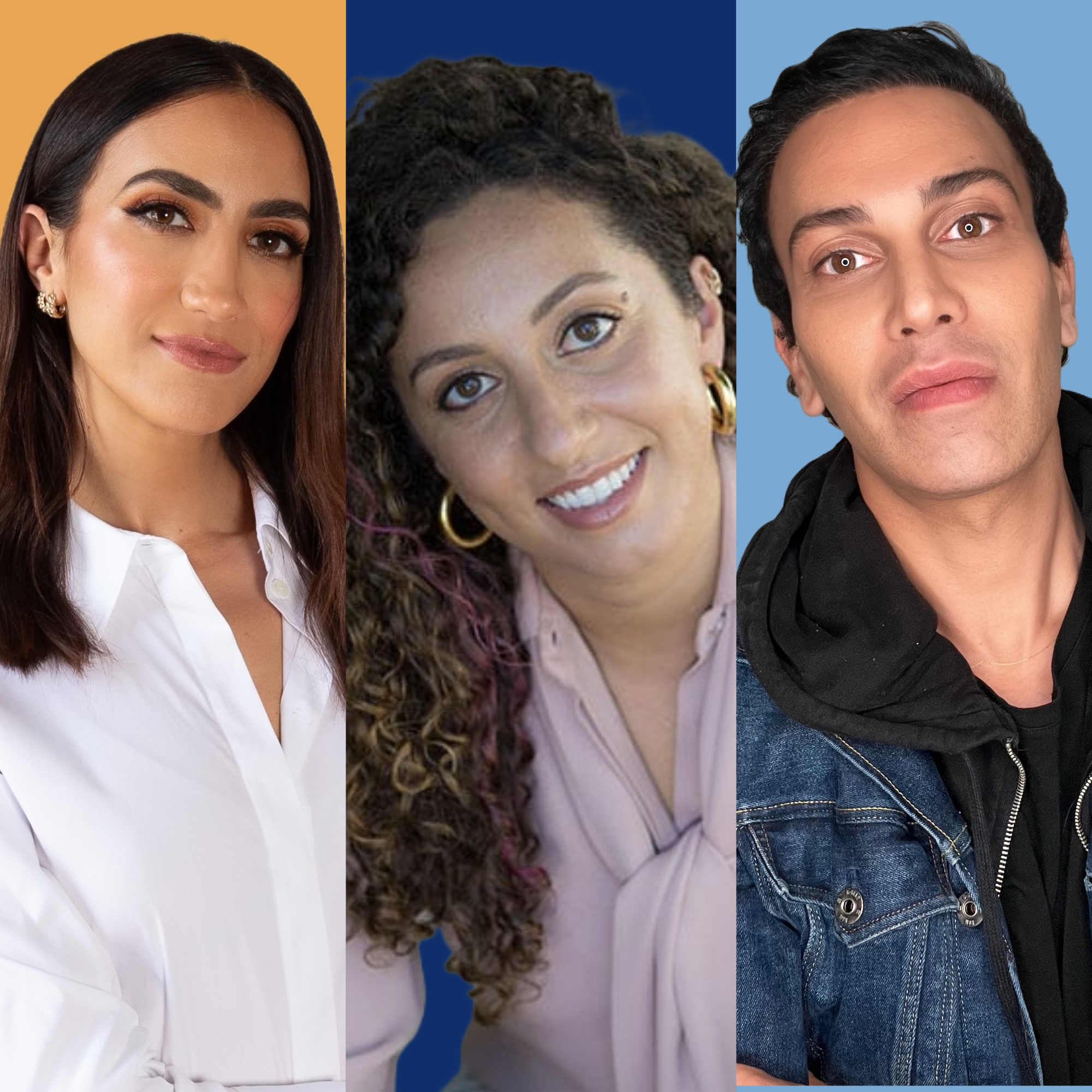
Please welcome to the show Rabbi Tarlan Rabizadeh, Matthew Nouriel, and Mandana Dayani.
That was an amazing introduction.
Incredible.
Thank you.
I was so impressed with myself.
It was amazing.
You are impressive people.
This is a hell of a panel.
So for the for the unconnected citizen of the world, today is another day.
Iran is another story in an old news cycle.
for you three.
We're still in the midst of of an urgent moment of of terrifying uncertainty.
Stack that on top of domestic issues, Israel issues, your own lives.
So, I just want to start with like a check-in, like how are you, where are you, how are you doing, Tarlin?
I feel like when I'm at work, I put all of that stuff kind of away.
Yeah.
And then when I come home or I'm I'm checking my phone or Instagram, it's everywhere.
If I go over to my parents house, which I do once in a while on the week night, they're all glued to the Iranian television watching every move.
My dad has like all kinds of newscasts up there, all jazera, everything.
He's like, and I asked him the other night, I'm like, why?
He goes, we always have to see what everybody's saying.
What's the other side saying?
He's right.
So, it's hard.
So, it's hard and it feels lonely and um yeah, that's what's happening.
It's like I'm living in two different worlds.
Madonna, I sort of think of myself as a hopeful idiot.
Like I think you have to be one as an activist.
Like you just have to wake up every day and believe that the world can be better.
The end of this regime in Iran for me is cutting off the head of the snake.
It's like the greatest hope I've ever had for peace in that region and for me to go back home and to be able to take my kids to the park I used to go to as a child and to think about this nation and all these people that have been effectively held hostage by this insane regime for nearly 50 years.
to have the same liberties that we have here.
It's unbelievable and I can't function because I just want this to be true and I just want to get there and yeah, it's so hard to be away and not be able to help.
Yeah, I understand.
Matthew, um it's been a really really challenging month nay three four year five years almost.
What are you dating that to?
So for me, I did I kind of fell into I mean I've always been a loudmouth and outspoken, but I fell into activism in May and May of 2021 quite by accident.
Me too.
I wonder if it was the same global events.
I wonder you the [ __ ] sh situation.
Yes, same for me.
And gradually started recognizing that maybe I have a perspective that's not being talked about very much.
And so I got more and more into it.
About a year and a half later, then in September of 2022 was the murder of Masa Amini.
And I just threw myself a head strong like full force into that movement.
Tell us who that is.
I know Taran, you've spoken publicly about this too.
So just fill my audience in on exactly what happened and who that is.
Sure.
So Masa Amini or Masa Amini, she's a Kurdish Iranian woman.
Her Kurdish name being Gina.
Um, in Iran, uh, apparently there's some legality around having a Kurdish name.
So, she had a Persian name and a Kurdish name.
So, I want to acknowledge that.
Um, she was a young lady who was not from Thrron, but visiting Tehran.
And she, as most young ladies do do or did in Iran, she the way she wore her hijab was with a little bit of the front of her hair showing.
Um, in Iran, what they have is something called the morality police, which are basically people who patrol the streets looking out for anybody who's breaking any of these so-called morality laws based on how you present yourself.
Um, and one of the rules is your hair has to be completely covered.
They arrested her for having some of her hair showing.
She did get physically assaulted by these patrolmen.
Um, within a day she was in a coma and within another day she had passed away.
due to the injuries that she sustained.
Um, and that sparked a a huge uprising within Iran which became known as the women life freedom movement where it was basically the women of Iran had had enough.
You know, throughout the history of Iran since the Islamic revolution, there are these moments that that ignite these uprisings and then they get kind of stifled after a while.
And the woman life freedom movement was one of the bigger ones.
And beyond that, as an LGBT person, um I I stood with LGBT rights.
And to me, Iran and the situation Iran is very much an LGBT issue as much as it is a woman's rights issue, uh an ethnic um and religious minorities issue.
Now, fast forward to uh the this past month is this current uprising in Iran.
So, I feel tired to answer your question.
I don't blame you.
The Western progressive left, meant to be sort of the vanguard of liberal values, has abandoned the Jews, the Iranians, the Israelis, who live by these liberal values that you would think this group would uh support, but instead they seem to be supporting Islamist extremists.
Mandana, I want to ask you like what you've essentially been betrayed twice, you know, once as a Jew, once as an Iranian.
What is that feeling?
It took me a while to admit that I was just heartbroken.
I think that I I really believed in the values that we stood by.
Like I taught this, I studied it, you know, I stood with all of these groups.
Not I mean to your point, it wasn't some quid proquo.
It was the right thing to do.
And those same values extend to these issues and the hypocrisy of the people that I thought was my community.
Like I really thought these are my people.
We've done all this work together.
We were at the table.
We signed times up and stop Asian.
It was all about doing the right thing.
Even when I spoke at the United Nations about the sexual violence that was perpetuated against Israeli women as an act of war, I sent it to all my feminist friends and it was just silence.
And I'm like, I don't understand.
We're not upset about this.
And so, it's very hard to reconcile how they cannot extend the compassion to these issues.
I really revered so many of these thought leaders and realized I guess in the last two years that they're cowards and that they can't stand up to Instagram comments.
I'm like I don't even understand the barrier like Yeah.
And then I think realizing like, oh, that was all [ __ ] Yeah.
I I feel the exact same way when it comes to the quote unquote backlash.
People always like, well, I'm worried about the backlash.
And it seems like what they're worried about is mean comments from strangers on the internet, which just shouldn't be that strong of a barrier to your integrity and doing the right thing, I would think.
I also just think it's like what what is the thing that's going to bring you in?
And and it seems like at least the line is never anti-semitism.
Matthew, you've been betrayed thrice by the as a Jew, as an Iranian, and as a member of the queer community.
I mean, h-how does that feel?
I'm kind of proud of it to be honest with you.
Yeah.
In a weird way, in a weird way, I'm kind of proud of it because what's happened in terms of people's political ideologies, it's it's somewhere the line crossed from uh these are a set of things that I believe in to becoming almost like religious doctrine, right?
Really, if you're on the left, you have to believe A, B, C, and D.
And if you're on the right, it's ABC, B, C, and D.
And if you stray from it, you're out.
As someone with a naturally rebellious nature, I'm kind of proud of the fact that I'm able to recognize that [ __ ] and be like, "No, I'm not afraid to speak up about it." And more so, I'll tell you why.
Because I take my work as an activist very, very seriously.
And when I see people sticking by a doctrine rather than standing up for what's right, it makes me realize how many activists are not actually activists.
Because to be an activist is to mean you're willing to stand up for what's unpopular.
If it was popular, you wouldn't need to stand up for it in the first place.
I'm proud of the fact that I don't give a [ __ ] enough to stand up to what I believe in despite the fact that all of those people are abandoning me for it.
I'm okay with that.
And I'm okay with holding a mirror up and being like, "You're all a bunch of hypocrites.
You're doing it for popularity, not because it's the right thing to do." So that side of it I'm proud of.
The other side of it, yeah, it sucks.
I've lost friends.
There are people I thought who were genuine real friends um who have just not even a word like just gone after October 7th.
You know, I was having this conversation with Matthew in the in the car, which was one of the challenges that I have is, you know, as a rabbi, you're trained to speak to the people in the room.
And sometimes when I'm speaking on Instagram, I have no idea who the heck is on the other side.
And then, you know, we have the Miller students who I teach, you know, people learning the basics of Judaism, and they're coming from all over the world, too.
So, my head is spinning learning how much people do know and don't know.
And I guess when I'm talking and when I'm teaching and when I'm thinking about how to amplify the voices of what's happening in Iran, I think about the average American who doesn't really know, no offense, what Iran is, where Iran is.
What is the difference between Iran and Iraq?
And oh, I got that.
I got that from students that that are around and should know actually more.
And it's so confusing to me in researching this episode.
I think because I've grown up in LA and because the, you know, Iranian community is all around me.
Um, I didn't realize how small the Iranian community and within that the Jewish Iranian community is in America.
Totally.
It is a very very very small minority of this country.
Right.
So part of it it's like I get why people don't know about it that most people in America have probably never met around.
They haven't.
I mean, when I was working in North Carolina, they were like, "Rabbi, when did you convert?" Right?
I mean, they had never seen a Persian Jew.
And to me, I was like, "Dude, you know, we're kind of the OG Jews.
We were brown and y'all kept moving east and lightened up and we were still there." And I think, you know, we got Porm coming up and some of these holidays really highlight the fact that there were Persians.
You know, after we got kicked out of Israel, we were lingering around there and it was a it was the longest continued living diasporic Jews are Persian.
Shushan represent.
Yeah.
Yeah.
You know, so back in 2022, as as Matthew was alluding to earlier, you wrote a Jewish Journal article called Why are we so silent about the uprising in Iran?
Calling out the wider Jewish community for lack of solidarity.
How are we doing this time around in this new time of crisis?
Have things changed?
Are you feeling the same lack of solidarity?
I literally could just republish that article right now.
You feel the same way?
Yeah.
They don't see a connection to to to to what's going on.
The rabbis in the community, all of my colleagues, you know, my algorithms are all over the place.
I got my own family.
I got the world.
I got these, you know, rabbis, reform and otherwise.
They're not really talking about it on the pulpit as much as I they should.
You know, I I have maybe a handful of rabbis who even reached out to be like, "I'm thinking of you." Don't you feel like it's Israelis feel very connected to this and and Well, I'm talking about American liberal rabbis, not so much.
Israelis.
Yeah.
I don't know why they don't see the connection.
I mean, Israel and Gaza, yes.
Iran, not so much.
And for me, it's guys, you are all Jews.
You're all rabbis.
Do you know who funded Gaza?
It was Iran.
Right.
And it's like ah but even the feedback now is like could you please tell us like what to post which which I'm really thankful for because they're asking me questions I guess as a human right now I'm feeling very alone like yes we live in Irangelus here in LA I worked in San Francisco 5 hours north people didn't know about Persians so it's it's real in the circles of activism and specifically Jewish and Israeli activism and the unity that I've seen between the Iranian activist world for not everybody for but in large part and the Jewish activist world has been absolutely breathtaking and beautiful to see and one it's it's a unity that needs to be nurtured.
So it's I'm I'm sorry it wasn't in disagreement with you now that I think about it.
It's just that we're seeing different sides of it.
Yeah.
Because that feels like home to me.
I mean, and not in a I I I wish I could feel more at home in in in in the in the world that I not even just where I work, but my comrades, my colleagues, they still don't quite understand me and where I come from.
And uh it's my job to educate and just like really open that up and and make those connections.
So, that's the challenge.
I want to get into um politics a little bit if we could.
Matthew, I know you identify as non-binary.
I feel like you're also politically non-binary.
100%.
Yeah.
I personally have enjoyed I don't know if enjoyed is the word, but like I've been compelled by a lot of your videos online and seeing you grapple with the nuance and the difference and the calling out this side and calling out that side and siding with this side and, you know, being fluid with all of that.
Where would you situate yourself politically now?
Right in the middle, I guess.
I think I I don't know and I'm not as concerned with it anymore.
I used to be a lot more concerned with it when I was more part of the doctrine, I guess, because it didn't really affect me in a negative way.
But once I think once you see it, you can't unsee it.
And then for me, it's like I don't want anything to do with any political binary whatsoever.
Yeah.
Right now, for example, Donald Trump is the president.
I've never been a fan of Donald Trump.
Right.
But right now, the way he's been about Israel, the way he's been about Iran, which still is kind of like I'm I'm not 100% sure about, I've had to train myself to be like, you know what, I'm not going to discount something Donald Trump has done because he's Donald Trump.
If he's doing something that's a positive, I think that we should say so and we shouldn't be afraid to say so.
And the same in the other direction.
And also I got a lot of people mad at me from the Democrat side because I had concerns about Kla Harris and things that I saw and I called it out.
I called it out like few weeks before the election.
I've never had so many unfollows in my life.
Yeah.
And I was like really I'm asking a question as an Iranian.
When I see Kla Harris shaking hands with someone who's affiliated a known affiliate of the regime in Iran, my heckles go up.
I grew up as a little kid watching my mom hysterical on the phone every other day with her parents, her brothers, her family who were all still in Iran because they didn't understand what the hell was going on, when they could get out, who was able to get their passport back.
When you grow up with that trauma, you have a different sensibility of seeing someone shaking hands with one of the people that are associated with the regime that enforced that.
I think also just to piggyback a little bit on what you're saying is again these issues are so linked like they're so interconnected and it's hard to step on one side or to look at any of these issues as being solely right or left.
I don't even know how to explain how difficult it is to not ever be able to go back home when you flee your country.
Like when I mean we were there thousands of years, right?
I mean my I was talking to you earlier about this.
My dad is Kurdish.
His dad was actually the rabbitical leader for the Kurdish Jewish tribe that lived um in this little village called Sanandage.
You're a Persian.
And so all of a sudden it's like, "No, no, you you don't belong here.
You need to leave." We fled.
We didn't take a dollar or a thing with us.
And you come to this country and I couldn't I mean I'm so deeply patriotic and I love this country so much for saving our lives and letting us live the full American dream.
But our safety is inextricably linked to Israel because I know that I can't go back to Iran.
And if this happens again, the only place on earth that I can go home to that will always open its arms to me is Israel.
And Israel is the only place that will make sure that what happened to us there doesn't happen again.
You did such an amazing video about this, but all the Jews in all of these territories, in all of these different countries, so at the Middle East where they were hundreds of thousands and now there's two.
I mean, the expulsion of all of us from the Middle East um is really hard to reconcile.
And I mean, when you call us the diaspora, like, yeah, but that that's not where we're, you know, we all have a home, too.
The Israel thing is super super real.
I think I don't know if we've been indoctrinated or just like realize that that's actually the truth the more and more I grow up.
But, well, that being that how critical it is as a as a a secure location for Jews.
Yeah.
Because you see how quickly like I think I mean I think the problem with having me on the show is that I'm pretty transparent and one of my ch I know when I applied to rabbitical school I wrote about Israel because in the back of my head I thought to myself you know the three options were Israel, Torah or God.
So I was like you know what I'm going to talk about Israel cuz like doesn't matter where you're from.
Like you all know we all pray to Israel.
We all face Israel.
Israel.
I got like four or five friends of mine do not write about Israel.
Israel is political.
I mean talk about anything.
Talk about God if you want.
Do not talk about Israel on a rabbitic school application.
Yeah, man.
I I don't understand that at all.
What does that What does that even mean?
Come to my world.
So, like I when I went to school there, that was a that was a real thing that like Israel was like rabbis have to tread carefully around speaking about Israel.
Yes.
It's a political topic.
And to me, I I'm I'm still confused as to how that's politics.
I don't think it is.
I know that sounds like something we got to look into.
Yeah.
But do you feel it's within certain sectors?
I mean that's got to be a reform thing.
Yeah.
I mean I don't think well now we're getting everybody in trouble.
I would say the conservative movement also.
I mean there's I mean I think they have traditionally been seen as more Zionist and that's one of the reasons I even work at the American Jewish University.
It is Zionist.
But I think you know we're we're moving towards that too.
I mean, there's a lot of anti-ionists, so-called anti-ionists, now becoming rabbitical students.
So, that's a whole world that's a reality.
Yes, there is still a majority of rabbis who are Zionists and are even working with some of these seminaries to try to work with that and undo that or be like, what is going to happen in 20 years if you keep bringing these students in?
But it's a real thing.
Politically, the Persian community tends to be more conservative, as do most immigrant communities, I have found, certainly at least first generation.
What's the conversation like politically like right now within the Iranian Jewish community?
Part of being Iranian, part of being Jewish is this ability that for thousands of years, we've sat around the table from people we loved and disagreed with them, and we did it with love.
And it was like, I don't agree with anything you're saying.
Maybe I'll learn something from it.
Cool.
Pass me the chicken.
I don't know why we have to agree.
Like I don't know.
And I and I hear so much about people being like, "Well, are you going to go home for Thanksgiving if your family voted for blah blah blah?" And it's like, "What are you talking I voted differently than every single person in my family." And cool.
Like that is what an election is.
They have the right to vote.
I believe in a free and fair democracy.
I think this idea that people use algorithms to create worlds that agree with them is really, really, really dangerous.
But putting that aside, um I think politically it is hard um because even within the parties there are such there's such a large spectrum.
I'm so openly anti-Mani and I am I love Shapiro, right?
So there's like clearly a spectrum of people on every side of the party.
Um I consider myself like left of center.
Um but it really depends on the issue there.
You know, we started one mitzvah a day together.
We think Republicans all the time.
We think Democrats all the time.
We think, you know, anybody who does something that is the right thing to do.
And I think if you can't hold space to say, "Hey, maybe not my favorite person, but great job.
Thank you so much." Then I think you've lost like humanity.
I think Mana is a perfect example of something that like really freaked out a lot of Iranians because when the Ayatollah Kmeni came into Iran, he came in in a very similar fashion.
They're very scared of socialism.
My mom thinks socialism is the end of the world.
So like when Bernie Sanders would talk, my mom would start shivering.
it they they are so afraid of that rhetoric because people who have seen it play out right they know what happens it's never really ends well and it was the end of you know the sha and that's what right that's what you're saying and also I mean actually also to think of it um I've noticed this in u uh Jews who have come from uh Soviet Russia is going to say Ukrainian Jews they left for the same reasons you know the majority of Ashkanazi Jews fled fascism they fed like right hate and sphartic and fled hate.
So they both have a sort of a different danger.
Yeah.
And I also think that Mizrai communities are a little bit more recent to the US.
Yes.
And I think that there's a lot of uh American Jews who whose families came here even before the Holocaust.
Right.
So there's Right.
So there's been more time to kind of assimilate and and figure out what your place is in society.
And I think what's interesting about what we're seeing happen right now is that a lot of people are beginning to realize that maybe those mis rocking weren't a bunch of crazy people.
Like maybe they're right.
Maybe they maybe we should listen to them.
And that is actually a bit of a silver lining.
The other thing I'll also add to that is I think they just very much do not believe in diplomacy as a policy.
And I think with especially with Iran and so I think they've seen past Democratic presidents try to have conversations with the regime and you can't because they're pathological liars and they're insane and tyrannical.
So like it's not really like cool.
It doesn't.
So why are we having coffee meetings?
Correct.
Like let's bomb them.
Oh you're they're going to give you a list of promises that they're going to keep.
Okay.
Sure.
Um, so that I think they like a more hardline approach and they actually, at least from my family perspective, they like the unpredictability of Trump because they believe that that that scares the regime and it it just works in their favor.
It was Carter who sort of could have stopped the revolution from happening and wasn't only him.
It was a prime minister of London of England and the president of France as well.
He he was quite pivotal in that and they a lot of them were traumatized by the Democratic party because of that.
And then who came in after him was Reagan and Reagan was the one who got [ __ ] done with the regime, right?
Got the hostages back.
So there's this already this idea that the Democrats in their mind are are weak.
Fast forward to Obama who's literally all about like diplomacy and let's bring them back on the world stage and let's send them $1.7 billion in cash and and then fast forward to Joe Biden and it was kind of a similar thing.
So that you have to understand the history as well to understand where people are coming from.
Sometimes anecdotally when I'm watching my family really get excited about Melania or Trump, I think to myself, this must be reminiscent of a monarch, like a king and a queen.
And he wishes he was a king.
Yeah, he gets stuff done, but but it's also like that vibe.
So, it's just what it feels more familiar.
Yeah, I think you know when people unfollow me or get mad at me or whatever it is and they're like, "How could you vote for something like this or something like that?" Or, "How could you support this?" And it's like, "Is it possible for someone to be really good for Israel and Iran and be really bad for the for ICE in the United States?" The answer is yes.
And I'm holding both and and I'm saying that.
And so, imagine being in high school and being like, "Bye everyone.
I'm going to go for college." Like my family was all here pretty much at university.
There's not enough universities in Iran.
They thought they were going to go back and the revolution happens and they never went back.
Yeah.
That's why there's hype.
I mean, if you see what's happening, everyone is protesting.
I didn't even know there were so many Persians everywhere.
I mean, there forget about Canada, Australia, America, they're in Italy, they're in Hamburg, Germany, they're I mean, what is going on?
And so, everyone is just they want to go home.
They want to show us what they've been telling us all the time.
I mean, every time I have a piece of fruit, they're like, "Oh, wait till you taste the fruit in Iran." You know, we are a we are children of immigrants.
This was a vote to try to go home before they die and show us and show us.
During the path era was what we call the golden era of of of Jewry in Iran where Jews had full equal citizenship for the first time.
They were let out of the ghettos and by the time Res um I'll come Muhammad Resa.
Yeah.
By the time he came around, there was uh Jews in all sectors of society.
And then all of a sudden, it was like I feel like there's a sort of gen intergenerational historical memory within all Jews.
And when the revolution happened, you know, the first civilian execution that took place was Hhabib Alan, who was one of the most wealthy, most well-known Iranian uh Jewish community leaders in Iran.
And that set that one execution within 6 months about 30,000 Jews left.
And there was this internal thing I think that just said it's time to go.
And I think when you are aware of your history and you know your history, which Jews tend to know, we know internally when it's time to go.
And I think it's really interesting that right now Jews in the US are kind of grappling with that.
I don't think it's going to be time to go in this country.
I'm not going anywhere.
No, I think we're going to be all right here.
But I think that's the point.
It's like you have your history and we have our history and our job in Jewish world is to check ourselves and say this rabbi said that, that rabbi said that, both of you are right.
And to just not be so so comfortable.
Maybe not be as heightened like us where our, you know, suitcases are half packed, half unpacked, but also not be like so chill, you know, like this is America.
That could never happen.
It happened like that in Iran.
America is different than a lot of these other places just because of the way that it's built and what it's about.
You're laughing at me like I'm naive.
We thought Iran was different.
We're not like the Arab nations around us.
We got a good king.
I mean, he just said Jews Jews weren't even, you know, fully free until the 20th century in Iran.
Yeah.
But, you know, it's it's America's, you know, a little bit different.
It is.
It's like the place where everybody who's oppressed gets to go and ostensibly be But that's only like 100 years old, too.
that idea.
Yeah, we weren't allowed in country class.
The idea I think is older than 100 years.
Maybe not in practice, but I think the idea of that is there.
Okay.
But I just I I agree.
We have to have our eyes open.
You can't be asleep at the wheel.
But I think having the bag packed becomes somewhat of a self-fulfilling prophecy.
Half packed.
Half packed.
Even still, I think as Jews, we move, man.
And I think we just got to keep that.
We do.
But I I feel like if we if we want to stop moving, we have to this is the place to do it and say we're not moving from this place and we're going to ensure that we, you know, are participating enough and mobilizing enough and building enough coalitions that we won't have to move again.
Yeah.
I have this conversation a lot.
I think you and I have talked about this a lot too, which is I I try to encourage Jewish leaders to stay in their places.
It's like if you are on the board of a school or the board of a company and people are saying really horrible things that are anti-semitic, please stay because I know who they will replace you with.
And sometimes the hard work is staying in these deeply uncomfortable positions to try and reform as much as you can and try to represent the voices.
But it is really really hard.
I sort of live between both of you which is like I really deeply believe in in the American dream and I and I do think America is different than every other place in the world.
I mean as someone again who has who led my life uh on these deep progressive values that they would be throwing rocks at Jewish students at UCLA and students at Yale would be interlocking arms and preventing Jewish kids from going in their houses and nobody would raise an eyebrow.
I'd be like you're insane.
I mean that was like that would never happen.
and the extent of how bad it is and how bad it got without really disrupting the like general public.
It it's uh that I'm I'm shock I'm floored.
I find that concerning too.
I think what gives me um comfort is that at least not yet but the the government has not been where I've seen that level of apathy.
certain people of course, but generally speaking, I'm just saying sometimes we bring in our perspective and our history and what we're used to and and it's just with us.
All right.
So, I want to talk a little bit about your connection personally to Iran.
Mandana, I'd love to start with you.
What do you remember?
I have a lot of trauma that I'm recently dealing with.
I think I spent most of my life trying to forget it and not deal with it.
Um, and actually it wasn't until Woman Like Freedom when I started seeing all these videos in my feed for the first time of Iran and these little girls that look like me and that it all like so much of my childhood started coming back to me.
Um, and so yes, I do remember the morality police and the fear.
I remember the hijabs.
I remember, you know, my mom for a long period when I was a kid cut off all my hair because she didn't want anyone to know I was a girl.
So, so many of the photos of me that I was able to get from neighbors and family members cuz we didn't take anything when we fled.
There were so many memories I could share with you like my first memories of Shabbat in Iran that were so formative.
Leaving fleeing was such a crazy traumatic experience.
And I remember, you know, even like we because I also grew up during the Iran Iraq war.
So, we had bomb sirens that would go off like multiple times a day.
Um, and so we'd have to go and hide and turn off all the lights.
And that was crazy.
Even when I turned 40 and I tried to ask my parents if they knew what time I was born, "How was I born, Mom?" And she's like, "Um, well, there was an explosion from the bomb and it sent me into early labor." And so my sister came and grabbed me and we ran to the hospital and I was like, "I was born from the impact of a bomb." You talk about your childhood in these ways that you're just it's so crazy to put into perspective given like how great life is today in some ways, but it is impossible to not feel those feelings and that fear to see the fear in people's eyes every day as you walk down the streets and women and these kids.
Um I had to chant death to America, death to Israel every single day in school.
Um, and I mean that the betrayal that you feel when you say something like that every single day.
And you felt that even at that age, you couldn't have had much of a concept of America at all.
And not because of America, but Israel.
But Israel, you knew that that was not right because you're also told like, don't talk about being Jewish.
Don't, you know, it was very, very quiet.
You know, I remember my brother being like, you know, how we learned math today?
It was like, there's 10 Jews, they killed seven.
How many Jews are left?
You know, it was you, you know, this is this is real life.
This is who we are.
It's your identity.
I learned how lucky and privileged I am to be Jewish and how important it is to protect it because look at what all of these people have sacrificed for us to have these traditions and these rituals and like they've all undergone so many different forms of trauma for thousands of years to preserve this.
And so like that is my responsibility now and that was so formative.
Um, and you also realize like we came to America through Highest, um, which is this amazing organization that helps, um, Jewish refugees resettle and gain asylum.
And I mean, it's just so weird when you think about how you get to where you are.
Can you take us a little deeper into that flight?
Yeah.
My dad uh was impacted from an a different explosion um, and lost vision in one eye.
And at that point, so many of the doctors had fled Iran.
He needed surgery.
We didn't know was wrong.
He was in bed.
And so, um, my mom tried to get us asylum for him to go to France to have surgery.
And they kept saying, "You can't you can leave your kids here if and go." And obviously she wasn't going to do that.
And she tried over and over and over again.
Um, and at some point they said, "Okay, if you sign your home and your bank accounts as collateral, you can get a one-day visa to take him for surgery." Um, and so they basically take you, we took nothing.
Um, the next day, obviously, they seized everything we had.
um they being the Iranian government.
My dad went to France to get his surgery.
We went to this little village in uh it's called Ladispully in Italy.
Um and we stay neighbors in separate boats or planes.
My and my dad ended up having a retinal detachment.
So they were able to help him which is why my brother's a retina surgery today.
It's a beautiful story.
Um, we went to Lisboli and I remember because so much as a kid like um the sounds were so scary from the aan that you would hear multiple times, the call to prayer which I associated with like oh my god something's going to happen and then the bomb sounds like you just don't know what any of these were.
And I remember when we got to Italy and we stayed we got to our friend's house and I was holding my mom's hand.
We were walking over this bridge and there was this really loud sound and I just started shaking and my mom held me and she goes, "Those are church bells.
You're okay." That was the I viscerally remember that moment as the first moment I'd ever experienced safety.
And if I may, you don't have to go there, but you mentioned this moment of having a gun put to your head as a four-year-old.
Can you tell us about that moment?
Yeah, it wasn't the only time either, but um you are we had a park, this beautiful park called La Park across the street from where we lived, and we used to go there all the time.
And again, back to the story Matthew was sharing earlier, if you wore improper hijab, they would jump out of these like Toyota trucks and point these guns to you and and ask you to fix it.
And I just remember this moment of standing with my mom again.
We were walking and they um both of us I think I don't know there was some issue with our hijab and you have no idea if they're going to kill you, kidnap you.
I mean, they have no I mean there's no restrictions on what they're allowed to do.
There's no accountability for their behavior.
It was one of the scariest moments of my life because you just you really have no idea what's going to happen and my mom is begging them and trying to explain to them and this and that.
I'm sorry it was windy.
You know, it's just it's really really crazy.
How much of this do you impart to your daughters?
It's hard to know how much to share.
And I think, you know, with my older daughter who's eight, she I mean, she was so in on Woman life freedom when we went to the marches and she understood it and she cared and she would sing the song and she was so in.
And now she just read her first Holocaust book and I was so nervous cuz I serve on the Holocaust Memorial Council and I was like, Andy, I know you just read this book and you know, I I I obviously know a lot about this issue and I'm sure this was really hard, especially because of your grandfather and is there anything you want to talk about?
How did this make you feel?
and she said, "I've never been more proud to be a Jew." Wow.
Taran, I would love to know about your family's story.
There's not a lot of universities in in in Iran.
I mean, you have to be like topnotch to get in.
So, my parents were both in the United States when the revolution happened.
My mom was in San Francisco.
My dad was uh in Villanova outside of Philly.
And the revolution happened and they stayed put all their siblings, cousins, parents, everybody was still in Iran.
It was just like and they were just save yourself 20 years old and stay there.
Yeah.
I mean there was protests happening at first.
There was like mini bombs here and there at restaurants and then it just escalated and then schools were starting to become dangerous.
So a lot of people who had younger kids if they had means again would would come somewhere else.
So my family came to um San Jose like different parts of the United States.
I had a uncle in Alabama.
It was just like whoever you had a connection with you came.
1979 revolution happens.
They say don't come back.
My family came in waves.
I mean, I was born here and um my grandparents were here by the time I was born, but they weren't at my parents wedding.
Wow.
And I often talk about, you know, my story of becoming a rabbi.
One of the main reasons was I didn't speak English.
I mean, I I was actually held back a year when I went to school at Steven Wise because I couldn't speak English.
I spoke Farsy fluently.
And um that propelled me to be really good in languages, Hebrew, and then, you know, just it just I excelled in classes and it kind of feels like it just kind of was destined.
But So your last name Rabizade, right, means born of a rabbi.
Yeah.
So hello.
And there's no rabbis in my family.
So they're in shock right now.
But I think um I think when I look back at their the way they raised me, because now my sister, you know, they did the opposite.
Like she spoke English and so she speaks Farsy, but with an accent a little bit.
Um and so I think that they did that because maybe they wanted to go back or they weren't sure if they were going to go back one day.
I don't know.
I can't get into their head.
But those are the people that were here when the revolution happened.
My great aunts and like anyone who was there when the revolution happened, they don't want to go back.
When we have these conversations on a Friday night dinner, they do not want to go back.
I mean, I know stories of my grandmother who would hide people almost like what you're seeing now.
I think that's what's wild.
What I'm seeing online now must have been an inkling of what happened in 1979 with the revolution.
Except now we have cell phones and now we can broadcast it.
And so I'm watching it and it's wild.
Talk about what's been going on with the protests.
With the protest.
Yeah.
With the crackdown and the protest and the killing and suppress all of that stuff and the revolution and here's a mini version of what that regime is capable of.
But my grandmother like hiding people in in the back could be beheaded, could be killed.
That's bravery.
So I don't know.
I think to go back to your question, I feel like a piece of me is always going to be missing if I don't go there and and see it.
Like who who am I?
Who are these people?
Um really it's like how could I speak a language and cook a food and all of this stuff and like not go there and like just see it?
But there was a comment someone made to me that I'll never forget that yeah, we're really fighting for Iran because it's our home, but you have a backup.
you have Israel and it's still like such a it's so wrong.
It's like not even a it's like not true.
It's like someone telling me like America is not really your home, you know?
It's they're all our homes.
I don't know how to explain it.
Why do I have to choose one?
They're all our homes.
And when I was living in Israel, people kept calling me America.
Like I I wanted customer service.
Where's the line?
I don't understand.
I was an American, you know, and here I'm a Persian.
It's like everywhere I go, another ism comes out.
So yeah, I want these people to be free.
I watch these women these people, but these women who just take off their hijab and scream.
I'm like, God, I I don't even know how to get a word out at a staff meeting.
Like, how are these people have so much courage?
So, I want to meet them.
I want to hug them.
And I just want to thank Cyrus the Great and for building these people and it's in my soul and it's in my DNA and it's who I am.
It's beautiful.
What's interesting about my story, my family's story is that my mother's family's experience and my father's family's experience was very different.
My father's family did well for themselves at a time when not a lot of Jews did well for themselves and had a goal of leaving Iran back in the 1930s.
The story goes that he moved to Austria, bought a department store with a Austrian Jewish business partner and would go back and forth while preparing to move the entire family.
Apparently, not everybody knew exactly what the Nazis were doing or what the hell was going on.
It's and I was like, really?
And then I was like, well, I guess that makes sense.
Like they had a radio.
Like it's not like they had Instagram or Facebook.
The story goes that one day he shows up to the department store going to work and there's Nazi officers everywhere.
The place is ransacked and he keeps asking where is my business partner and apparently they'd arrested him.
My great-grandfather's name was Shalom Nuriel.
I mean it doesn't get more Jewish than that.
But because he was an Iranian citizen and there was some kind of an agreement between uh Iran and uh Germany at that time, he knew his time was limited.
And that day, the story goes that day he went back to Iran.
And then for him to build up his finances again took until the 1970s, by what point I think he actually may have passed away close to that time.
So right before the 1979 revolution, my dad's entire family moved from uh Iran to the UK.
And right before that, my parents got married.
So my mom went with him.
And then I actually had visited Iran when I was about a year old to meet my mom's family.
And the plan was it's what, a 5-h hour flight or 6 hours from from the UK that you know you'd go two, three times a year back and forth to be with your family.
Well, the revolution uh happened and that wasn't feasible anymore.
So what I grew up with was watching that.
So, it's almost like the other side of what your experience was because like they didn't want the Jews to leave.
There's various theories as to why.
I'm not sure which is correct.
Um, but eventually they gave my grandmother her passport.
So, she went on a trip to Austria and that same week my grandfather then was smuggled into Pakistan through the mountains illegally.
Um, he ended up having a stroke in Pakistan and was stuck there for 6 months and then he got to go to Austria all through highest as well.
So then when I remember visiting Austria as a kid to visit to to meet them and then a year or two later my mom's brother got out and so we went to Switzerland to meet him and so I got to go to all these random countries as a kid which was really cool just to meet my mom's family and then by like the early 90s her entire posi like big fat Iranian Jewish family were all in LA um and my parents divorced in the early 90s and then my mom wanted to be with that big fat Jewish, you know, Persian family.
Um, so that's when I came here.
What is it about LA that has been such a a welcoming environment for the Iranian weather?
I think the weather is like more reminiscent of the way the way I understood it like some people came and were like this way, you know, and and people and people came.
So they're in Florida.
Yeah.
I mean, we moved to New York.
They put us in Queens.
My they gave my dad got a job working as a shoe salesman making $410 an hour not speaking English and we all slept in like one bed in in the studio and whatever we just they put us in a yeshiva so we got to go to school um and the highest paid for which was amazing and then um someone called my dad after like we were there like two years and one of my dad's cousins called him and said Beverly Hills has the best public schools in the country and you have to bring your kids here.
I mean there's no like credit card.
We had no credit.
We had nothing.
He came to LA with an an like an envelope of cash that he got from people I don't know.
Came to LA, walked the perimeter trying to find an apartment that we could afford so that we could go to the Beverly Hill schools and found like the last apartment that and there was um a Chinese immigrant landlord and he looked at my dad and said like I'm not supposed to do this but I I've been where you are.
Please don't screw me over cuz you have no credit.
And then we moved to LA.
And I bring that up because I do think so many people came here for the financial opportunities, for education for their kids, definitely weather.
Um, and because there was a community.
I think that it's really they want to feel like it's a little bit of home.
And it's also important, I think, to say that there was a lot of adjustment.
Like I think my my parents generation, like all their cousins, everyone their age, a lot of them had studied engineering, things like that, assuming they're going to go back and use it.
They didn't.
So we have a lot of people that had certain degrees that never ended up using it and had to take care of not only their parents' generation, most of them retiring coming here and then also having kids and trying to understand how to navigate.
So it was a lot.
Yeah, we are the largest population of Persians outside of Iran is here in LA.
But now I look back and I have these distinct memories of I remember going for example in in Austria going to a local park where it was a Iranian takeover.
Okay, these are people who literally left everything behind and there must have been two 300 people there.
They were barbecuing kebabs on the grill playing music like Mayuni, you know.
And I was like, I have these memories of looking back and thinking like what a resilient like are they all just so traumatized they don't understand what they didn't understand what was happening or what was it?
And I realized it was in hindsight like no matter what we're not letting go of who we are and we're not letting go of our our passion for life.
And that to me is one of the most inspiring things in the world.
Let's talk a little bit about Jewish Iranian identity.
Rabbi Charlan, by default, a lot of your education and training has been through more Ashkanazi institutions just because that's the majority of the Jews who live in this country and who have been here the longest and that would allow a female rabbi to become a rabbi.
Allow a female rabbi.
So, what's been your experience moving through this world?
Is it reasonable?
Is it egregious?
Is it inclusive?
Is it is it othering?
like how are we doing right now as an American Jewish community?
Listen, it's all by comparison.
So, I mean, in many ways, we're doing great.
I mean, thank you for allowing me to be a rabbi.
Thank you for giving me choices and thank you for allowing me to grow.
And, you know, I mean, sometimes there's moments where I'm like, "God, I wish I was, you know, in Iran." When they talk about something and my dad's like, "You couldn't have been a rabbi in Iran." You know, and it's it's a real reminder of freedom.
M and of course you know there's ways we can all grow right um you know some of the challenges were you know we all have cheesecake on shàuote there's no cheesecake in Iran and I assure you that our ancestors didn't eat cheesecake on shàuote what do the Iranians eat for dairy on shavo we don't eat meat um so there's things like that Moroccans have like different traditions also where they drizzle honey on everything honey because of the milk and honey situation of coming to the land of Israel So there's various traditions, but it's still I mean the word ashanormativity is there for a reason, you know, that still they wrote the curriculum, they wrote the books, and we're still a footnote.
And so I'm I'm working on it.
I'm working on it, especially because of what's happening in the world after October 7th.
You know, when I was in seminary, we had to learn about Jesus.
We had to actually learn about Christianity, but we didn't really learn about Islam.
And so I think that it's super important now, especially when we're pointing fingers at BB Netanyahu and the government and saying, you know, white Jews oppressing Palestinians that are brown.
And I'm like, guys, it might look like the majority are white Jews here around you.
But I'm telling you, that is not the case, right?
And we actually were the minorities that lived amongst the Muslim majority.
So let me just tell you a little bit about how anti-semitism, you know, unfolds in those millions.
There's a lack of exposure.
So I think the best thing to do is to have people have conversations like this.
It's this is holy.
I think we can't keep stop talking because we've haven't had the opportunity to really engage.
Um and I think uh the more we do that the less insular we are and the more we get to actually see how similar we are.
Yeah.
Like it's really the same laws.
They just you guys, you know, didn't have uh you know karass the way we did.
So you dip a potato or parsley and Do you know what I I learned that like the reason that the we don't do like beans or rice or whatever is because like the it's something like the way that it used to be transported there might be comets in there.
So like and you don't know so better just to not have any of it to which I say no I fi on on that law.
Welcome.
Yeah.
Matthew, you work, as you've mentioned, for Jimena, Jews, indigenous to the Middle East and North Africa.
As a native Angelino, I assumed it was Jimea when I first saw it.
I did too at my job interview.
I was so embarrassed.
I'm like, of course, it's Ja.
Educate us a little bit about the difference between Misraim and Spafardim.
In terms of like where do you fall like how do you categorize yourselves and also Iranian versus Persian?
Well, first of all, at Jimena, we use the term Sphartic and Misrai interchangeably.
I know there are some people who have very strong opinions about it.
Um the term misrai translates to eastern um and so it sort of gained prominence as a term and there's this misunderstanding that Ashkenazim came up with this term as a racial slur uh with the establishment of the state of Israel.
There's a little bit of truth to that in terms of the the racial hierarchy which I I think Israel has done an very good job of for the most part um overcoming.
Um but the term was around before that.
Uh for sure it was around.
Um so when Israel was established and this influx of Jews started coming from the Middle East and North Africa, which a lot of North African Jews would say we're not we're not uh east of Israel.
We're west of Israel.
So we're not Misrai.
But when this influx came in, it became sort of this umbrella term uh for for brown Jews basically from Middle East and North Africa.
In the early to mid 2000s is when it started gaining a little bit of traction in the US.
And I love the term because I love a good umbrella term.
But more and more I'm realizing, you know, I just don't think any of these terms fully work for us.
I think I'm a Persian Jew or an Iranian Jew describes where my diasporic experience or family's diasporic experience took place.
Um the the term sphartic translates to Spanish and it's in reference to the lurgical style.
Um which is why a lot of Middle Eastern Jews were called Sphartic.
Like when I grew up in England, I went to Ashkanazi Orthodox uh school and I was always referred to as Sphartic and I never questioned it.
I was like, I'm Spharti.
Um when I found out it meant Spanish later in life, I was like, what the hell?
My understanding is that it's people who were, you know, left Spain after the Inquisition.
There were Syrian Sphartic communities that escaped um the Inquisition that took many years to become uh uh integrated with the greater Syrian Jewish community.
The Ottoman Empire welcomed a lot of them except that they thought this would be good for business.
I remember my dad asking me, you know, what are we?
Safari?
What are we?
I mean, it was just not a term people used.
And it's for me, I don't really like it because I don't think it's helpful.
I think that, you know, when I invite all the Jews over to my house, I hear someone's a Yemenite, I'm like, "Oh, this is spicy.
You'll like this." You know, that that it really colors it to say everybody's misra or safari, it just feels like another umbrella that I don't I don't necessarily love.
But in terms of liturgy, it's far.
So when you look at the sided, you look at the prayer book, the prayers are a little bit different.
Like so we don't have anything that's like we don't have yiskar.
We don't have a lot of services that came after the crusades um you know in Ashkenazi land.
And so it's it's very very different.
But the way they sing it obviously like we don't have Latino, we don't have some of the music that accompanies Spanish music.
What about Iranian versus Persian?
Well, how do we feel about that?
I I'm hearing it interchangeably.
I'm 100% Persian.
I've not an Iranian citizen.
Haven't been to Iran.
I hate this government.
I'm Persian.
I associate myself with the food, with the culture, with the things that bring Judaism alive for me.
Iran feels like citizenship, like American, you know, it, you know, versus Persian is like a culture.
You know, there's no more Persia anymore.
Cyus the Great owned all of this land, you know, allowed us to live there.
The Torah during Ezra Nhemia was in this empire and everything that came alive was Persian.
It's interesting because but internally historically it was Iran.
Sure.
So it was Persian was the term used by mostly by outsiders which is why Resakan came and said no we're Iran.
Arian.
Yeah.
Yeah.
I always look at it kind of like Persian is refers to culture and also an ethnicity and Iranian refers to nationality.
Nationality.
Yeah, that's how I see it.
Do they hit you differently when someone calls you or something?
One or the other?
I personally don't put too much stock into Persian or Iranian.
I I say Iranian now because as an Iranian activist, my job is to follow the lead of the people of Iran and amplify what they're saying and they say Iran.
So, I'll say Iran.
Tarlon, as I mentioned at the top, you're the vice president for Jewish engagement at the AJU, American Jewish University.
We had your boss, uh, Jay Sanderson on the show recently.
You head a lot of different programming there, a lot of different ways for people to engage Jewishly, but I'm going to focus on the Miller Intro to Judaism program, which I've talked about on the show.
I'm an advisory board member for amazing program.
What are the trends that you've seen with the the people in that program and you know their vibe and what they're curious about and who they are pre-occtober 7th, post October 7th and right now.
What is kind of crazy is that these are students from all over the world.
So I'm no longer really teaching Americans on how to, you know, go into a synagogue here and and learning about the basics of Judaism of how they're going to find it in the United States.
But I got people tuning in from Bangladesh.
I got people tuning in from Abu Dhabi.
I got Japan.
I mean, it's it's wild.
Are those Jews in those places or just curious Japanese people or Japanese people looking to become Jewish?
Like who who are these people?
So, the class is for anyone who wants to take an introduction to Judaism.
We got we often have Jews who want to take a refresher, people who haven't been there since their bar mitzvah.
It's generally mostly for people who want to convert or are interested in learning about Judaism because they work around Jews or they're curious.
We had a huge spike right after October 7th, right?
which was actually fantastic, right?
You you look at these algorithms and you think to yourself, "God, everybody hates us." But no, people actually want to learn.
And so that was really really fantastic.
The challenge was ignorance and the lack of knowledge.
And so it was hard to talk about Israel when no one had any basics about anything.
Like we hadn't gone into history or where we're from or how can you be Persian Jew and Russian Jew.
No one knew anything.
So that was really challenging.
Right now the average age of students who take Miller is actually becoming a lot later.
So it used to be like 33 now it's about 35 38.
Um but a lot of Jenzers you know a lot of people taking their news from Tik Tok it's out of context and so when they ask a question it's like that's right but you have to understand that like who poked the bear first or what happened that caused this to happen.
So it's been really really um challenging.
So it sounds like you you get a lot of Israel questions.
Tons of Israel questions.
Tons.
Even though you're there to talk about, you know, Russia, Shana.
Yeah.
They're there to talk about high holidays, but you know, like I had a student once ask me, you know, I grew up Catholic.
I don't care about the Vatican.
Like why should I care about Israel when I become Jewish?
I feel like that's kind of a fair question.
It is.
And it's also you don't know what you're talking about.
Like that I I get that parallel if you are new to the game.
Totally.
So, as a Jew in the class, you're like, "That's a great question." And you sit back and you watch me take a huge exhale and be like, "How the heck am I going to answer this?" Right.
There's a dynamic that I'm also interested in that I know you've told me about is like um where it's an interfaith couple and sort of the lack of understanding of them them showing up and the non-Jewish member of the partnership not understanding what their Jewish partner is going through.
How how has that been like to deal with?
It was really challenging and the the stories that they had shared were a little bit different but similar in that they were going through all of these things that they're watching on October 7th.
people being raped, killed.
I mean, just all these atrocities.
And their husband would say something like, "Enough of that." Like, "Stop talking to me about that." Or or, "Why are you sharing that?
You're embarrassing me in front of my friends." Um, and it was hard because, you know, a lot of these people were in interfaith couples.
They were either deciding to raise the kids Jewish, so it was on her, or deciding to raise them both.
and people they just didn't know where to start or how to have these conversations.
So, it's very lonely.
You know, it's it's it's really really hard to to get married in a certain context and then suddenly feel like, wow, I have to represent all of me to my kids and there's a little bit of a lack of support.
For the most part, they had Jewish education, but it was they're Zionist or their grandmother, you know, went through the Holocaust, and they have these memories, but they don't have knowledge to back it up.
Right.
And by the way, it's the same when I was working at UCLA.
The students, they were like, "Rabbi, this is what they're saying to me on the on the, you know, on the square.
They're yelling at me." That is that true?
It's like they don't have the the basic knowledge.
And they grew up in Jewish homes.
Yeah.
So, it it was a lot.
And um it has changed the way I'm I'm starting to write a new curriculum and really think about how to teach Israel cuz it was a lot of just like basics and now it feels like we need to explain a little bit of facts of what happened.
Like where are we now two years post October 7th?
Is it is it different vibes than in the immediate aftermath or we're sort of in the same zone?
I still get things like Hamas is not a terrorist organization.
And it's it's resistance.
And I really want to log off when I hear that.
But like a good arguments I've gotten, I'm like, I who are these people and why are you teaching them?
People don't know.
And I'm so proud of them for taking this class.
Yeah.
Do you know what I mean?
What an opportunity for you to educate them.
They're asking me questions.
Are they ignorant?
Do they not know?
Yeah.
There's tons of things I'm ignorant about.
It's fantastic that they want to know, but it's hard to go through it like and be a leader.
So many therapists didn't know how to therapize during October 7th.
They had to actually tell clients like, "I can't work with you if you're going to talk like this because I am Jewish and this is hard." Yeah.
So, it's really hard for me to stay objective.
You know, sometimes at the end of class they say, "Rabbi, how do you believe in God?" I'm like, "You don't know that God is my best friend after this class." But it's because I did a good job of not sharing that.
But with Israel, it's hard.
It's like I don't want to indoctrinate them, but I also want to be like, you know, you have to believe this.
So often I bring in a speaker that has a completely different view than I do.
Um, and you know, I try to explain to them that Jews are not the same and we have different views and and why we disagree so that they can really learn.
If you just heard that sound, that means we just finished recording five deep questions, which you can only listen to if you are a member of the Kahila, our community.
You can sign up at beingjishwishpodcast.com/ community.
This was a really great one.
We got into a lot of interesting stuff.
Come check it out.
Okay, as I love to do on this show, we're going to finish with a game.
And um I've created a very specific game for this episode for the three of you.
Taran, you'll correct me if I pronounce this incorrectly.
This game's going to be called finish the jumble.
Oh, good job.
Very good.
Thank you.
Thank you.
Finish the sentence.
Um, so I'm going to just throw out some sentences.
You're going to finish them.
Anybody can jump in with an answer.
We can have multiple answers.
We can have one.
Doesn't matter.
A Persian Shabbat dinner is called for 7:00 p.m.
You arrive at 8:30.
8:30.
8:30.
Okay, great.
90 minutes is the Persian time adjustment.
Good to know.
The sentence I heard the most growing up is what does that mean?
Don't do it.
Shut up.
Basically, our friends swearing at us.
Persians curse a lot.
God forbid you come home and say the slightest curse word in English.
But the curses that come out of their mouths is all their swear.
The fastest way to offend an Iranian Jewish parent is don't eat their food.
Ask them if they're speaking Arabic.
Oh my gosh.
Oh, do they get that a lot?
Anything Arabic?
Yeah.
All right.
The best Persian Jewish tradition is gundi.
What's that?
It's like this chicken um chickpea meatball that we have at Shabbat.
It's like mozza balls on steroids.
Chicken put in a moat ball box.
They're so different.
My parents biggest fear about me is I plead the fifth.
I think it used to be not marrying a Jew.
It's always something.
I don't know.
My dad like freaks out about stuff like I'm going to run out of money or something.
Oh, that's all every my dad and every single time my dad gets my husband, my brother, my sister-in-law, my aunt, anyone on the phone, he's like, so what does Mandana do?
Like, are they going to be okay?
Do they have money?
And I'm like, I literally don't even know.
My job is kind of wild for them.
He's like, I'm playing poker with my buddies and they were like, do you do brea?
I was like, no, Dad.
I don't do a brea, but I'll be there for the ceremony.
And then he's like, what about shafting?
Do you kill animals to make them kosher?
I'm like, "No, Dad.
I don't do that." He goes, "In Iran, the rabbi did everything." I was like, "Okay, well, mine is just my dad freaking out every time someone sends him a post of mine and then he'll call me and be like, Bobby, you have to be very, very careful.
There's crazy people everywhere." I'm like, "I know, Dad.
It's okay.
It's fine." Dating as an Iranian Jew means it means being completely on the low lowkey low end and only letting your family know when you're feeling good about it.
For me, it's that they I don't think I've ever dated a Middle Eastern.
It's always been a white guy or or American, not just white, but like they always think I'm yelling.
They're always like, "Why are you yelling?" I'm like, "I'm not yelling, I'm talking to you." Like, this is how I talk.
Like we I remember getting in arguments with exes cuz I'm not [ __ ] Now I'm yelling.
Like I'm not yelling, we're just talking.
Peter always thinks I'm fighting with my family.
Always.
He's always like, "Why are I was like, "What do you mean?
I told them to come over at 7:00.
My mom wants to have Shabbat at 6:00." And like that's what we're talking like.
The first question people ask when they find out that you're a Persian Jew is you don't look like it's always some version.
Yeah, I get that.
You don't look like a Persian Jew.
I get that.
I mean, I don't get that in LA, but I get that a lot when I'm traveling.
The stereotype about us that is painfully accurate is we're superficial.
Yeah, I'm superficial.
We do fight about money a lot, like who's paying the bills and all that.
I don't think it's even money.
It's like looks and all of that, too.
Like presentation, you know?
It's it's it's exhausting.
I think I feel like that's a very LA Persian.
I don't think so.
I think that I think beauty has always been a thing for Iranians, you know, and people still go to Iran to like get their eyebrows and their nose and whatever they're doing fixed and better.
It's like most nose jobs per capita in the world.
Yeah.
Is Iran?
Really?
Yeah.
People fly.
Huh.
Yeah.
And for a period of time it was like a trend to not take off the bandaging because it was like a stat like oh you got but I had to go to the men go to Turkey for hair now that's like the stereotype about Iranian Jews that's totally wrong is that we're cheap.
Yeah.
I don't think Mhm.
Yeah.
I don't think we are.
I think we just negotiate well.
If I had to explain our community in one sentence it would be dynamic family.
We're very warm people.
We're not really insular actually.
Like we're insular because we're trying to hold a culture together, but we're actually very welcoming and we're not like Israelis and aggressive.
We're actually very polite, you know, and so giving, really giving.
Yeah.
Yeah, hospitality is kind of like the center of like being a good host, welcoming people in, making there's this um tradition called Tarov, which is so fundamental to being Iranian or Persian, which is it kind of goes both ways, but it's like eat, you have to eat something, you have to eat something.
No, no, it's okay.
I'm fine.
No, no, please, please eat.
Both of us are taring to play that game.
And there's so much around those like formalities and kindness and showing up and respect and you know when you go into someone's house or how you treat people when they walk through your door that are really really beautiful.
But I also I mean I feel this way for a lot of Jews but particularly Persian Jews.
Like I literally feel like I could go to any Persian Jews house on earth and they would just like welcome me in, give me food, let me sleep over and it just like it's instant family.
And the last question of this episode, the thing I feel most proud of as an Iranian Jew is survival instinct and our ancient culture and heritage.
I'm so incredibly proud of it.
Like the the of all Jews in general, but specifically being one of the oldest diaspora exper um communities in the world.
I am so proud.
There's no reason we should still be around, but we are.
And we've maintained our identity and we've I'm so proud of that.
again, Jews as a whole, but specifically Persian Jews.
Beautiful.
Yeah, we're resilient and we're warm.
I just think we're brilliant.
I mean, like the the contributions starting from Cyrus the Great till now.
I mean, of what we've contributed from everything from like gardening and architecture to mathematics and science to like philosophy and civil rights and all these things.
It's it's so beautiful.
And I think one of the the worst I mean the everything this regime has done has been so awful and so horrible and one of the most damaging is it's taken us back.
Yeah.
I mean thousands of years and also the all of these brilliant minds left and like killed.
Yeah.
Tarlin Mandana Matthew, thank you so much for spending your afternoon with me and with us and teaching all of us so much and and being so open and and sharing your stories.
I know everyone's going to be a lot more smarter, more informed, and more engaged as a result.
So, thank you.
Thank you.
Thank you for having us.
A big mamoon to Mandana, Matthew, and Rabbi Tarlin for sharing their wisdom and stories with us and for the tireless work they do every day to expand our understanding of what's possible in this world.
Be sure to check the show notes for links for where you can learn more about them and the incredible work they do.
My guest next week is a hilarious comedian taking the country by storm.
You don't want to miss that one.
So, make sure to hit that subscribe button and I'll see you right back here for the next fiery episode of Being Jewish with me, Jonah Platt.